Upper & Lowercase Letters Worksheets for Ages 3-7 - Page 3
50 filtered results
-
From - To
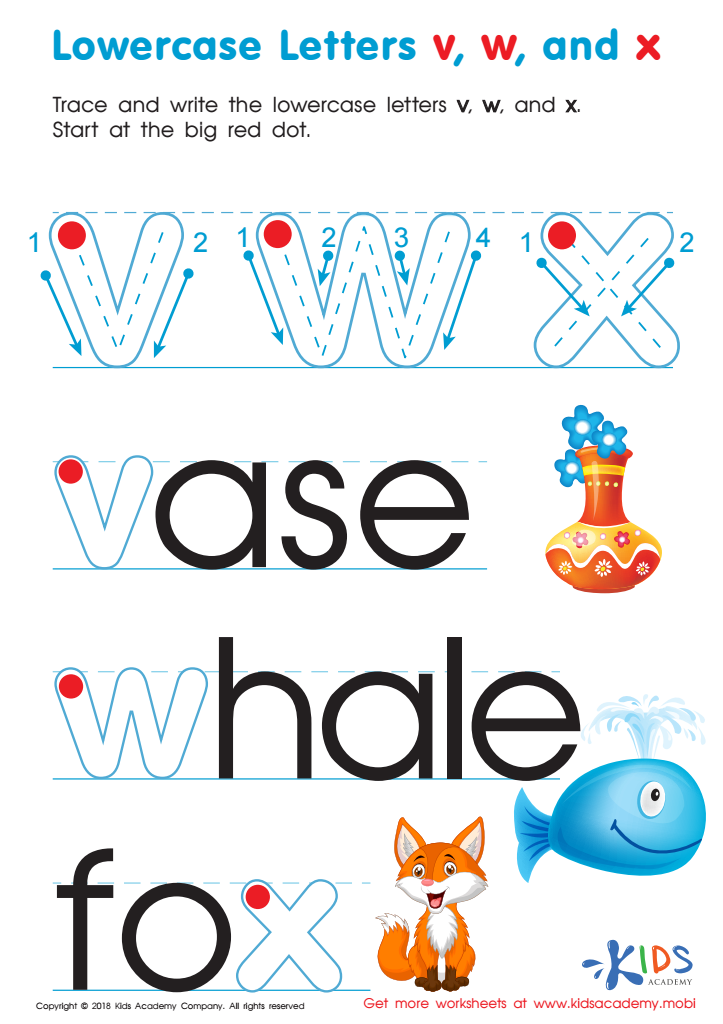
Lowercase Letters v w x Worksheet
 Assign to My Students

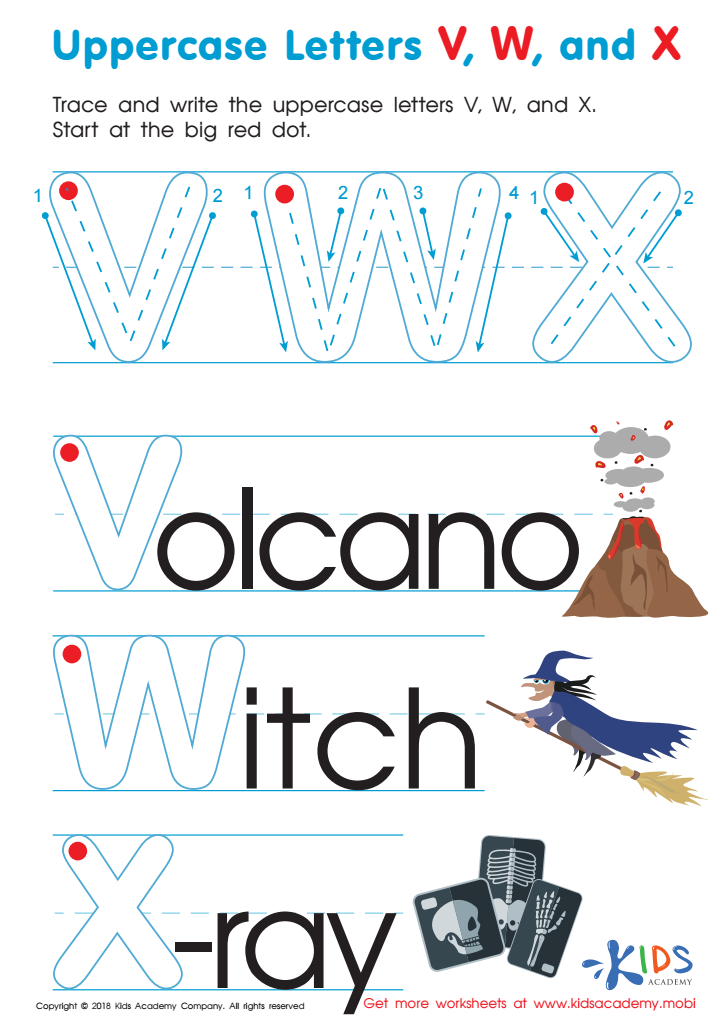
Uppercase Letters V, W, and X Worksheet






Understanding upper and lowercase letters is fundamental for children aged 3-7 as they form the building blocks of literacy. Early exposure to both forms of lettering aids in word recognition, spelling, and writing skills. These skills are crucial as children advance in their education and begin to read independently.
Uppercase letters, often the first that children learn, provide a way to identify important beginnings, such as the first letters in names and sentences. Recognizing that these letters represent the same phonetic sounds as their lowercase counterparts helps develop more flexible reading abilities.
Moreover, distinguishing between upper and lowercase letters reinforces cognitive skills. Children learn to categorize letters, notice patterns, and engage in fine motor skills through writing. As they practice forming both styles, they develop hand-eye coordination necessary for writing effectively.
Furthermore, exposing children to the difference between the two cases fosters a deeper understanding of language structure and begins their journey toward grasping grammar concepts. In a world filled with print—from storybooks to signs—being proficient in recognizing and utilizing both upper and lowercase letters is a stepping stone for future academic success. Thus, teachers and parents play a vital role in nurturing this foundational literacy knowledge.







