Graphs Worksheets for Ages 3-7
13 filtered results
-
From - To
Welcome to our engaging collection of Graphs Worksheets designed for children ages 3-7! These stimulating resources introduce young learners to basic graph concepts through fun activities that promote critical thinking and problem-solving skills. Our worksheets cover various topics, including pictographs, bar graphs, and simple data representation, making learning interactive and enjoyable. Each worksheet is crafted to nurture an early understanding of mathematical concepts while enhancing fine motor skills through tracing and coloring. Perfect for both classroom settings and home learning, our Graphs Worksheets will ignite your child's curiosity and enthusiasm for math! Explore and watch their confidence soar!
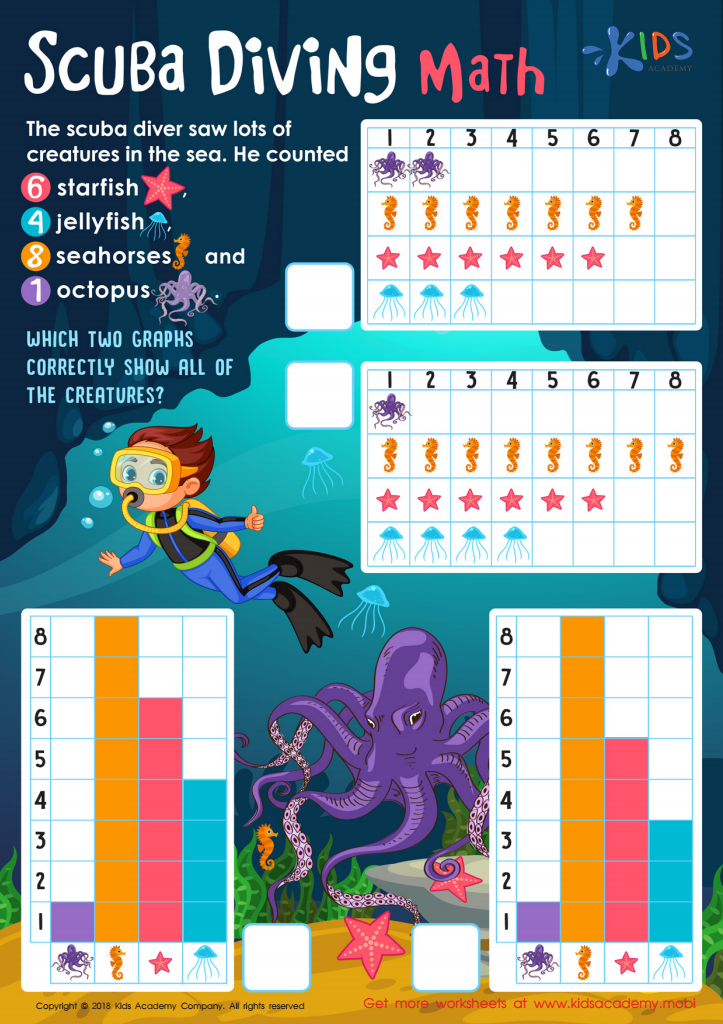
Scuba Diving Math Worksheet
 Assign to My Students
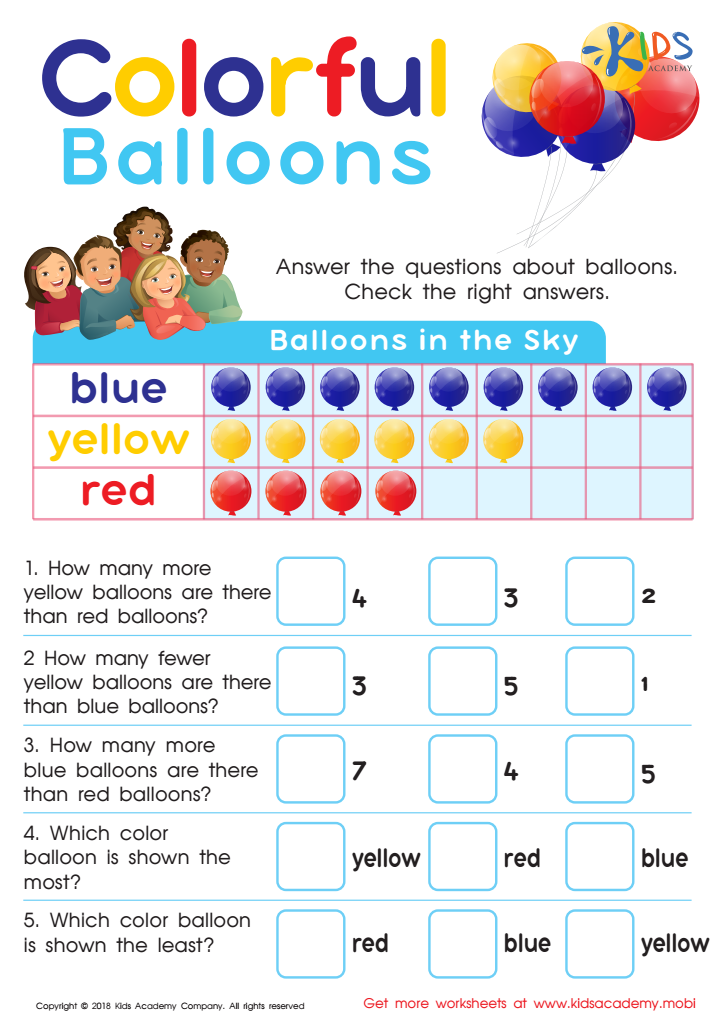
Picture Graphs: Colorful Balloons Worksheet
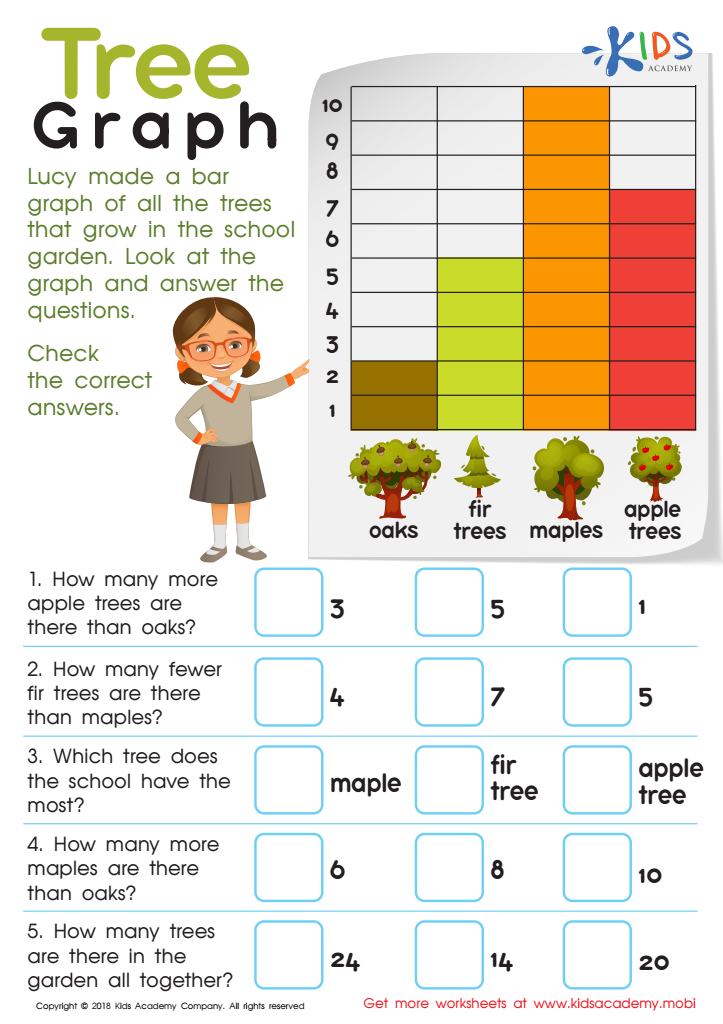
Tree Graph Worksheet
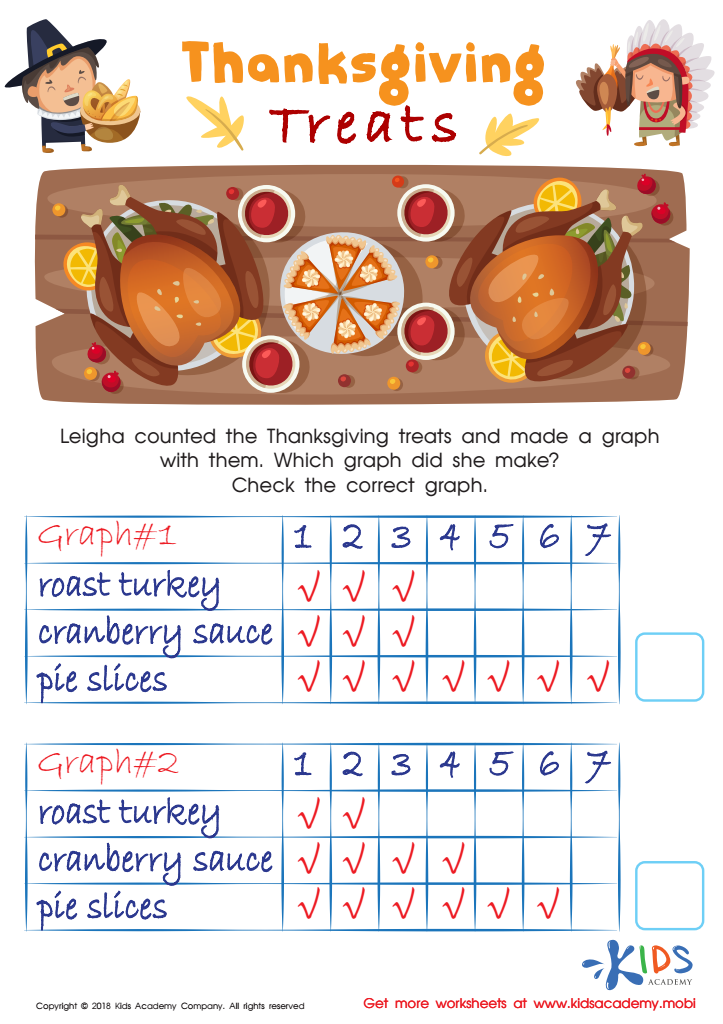
Graphs: Thanksgiving Treats Worksheet
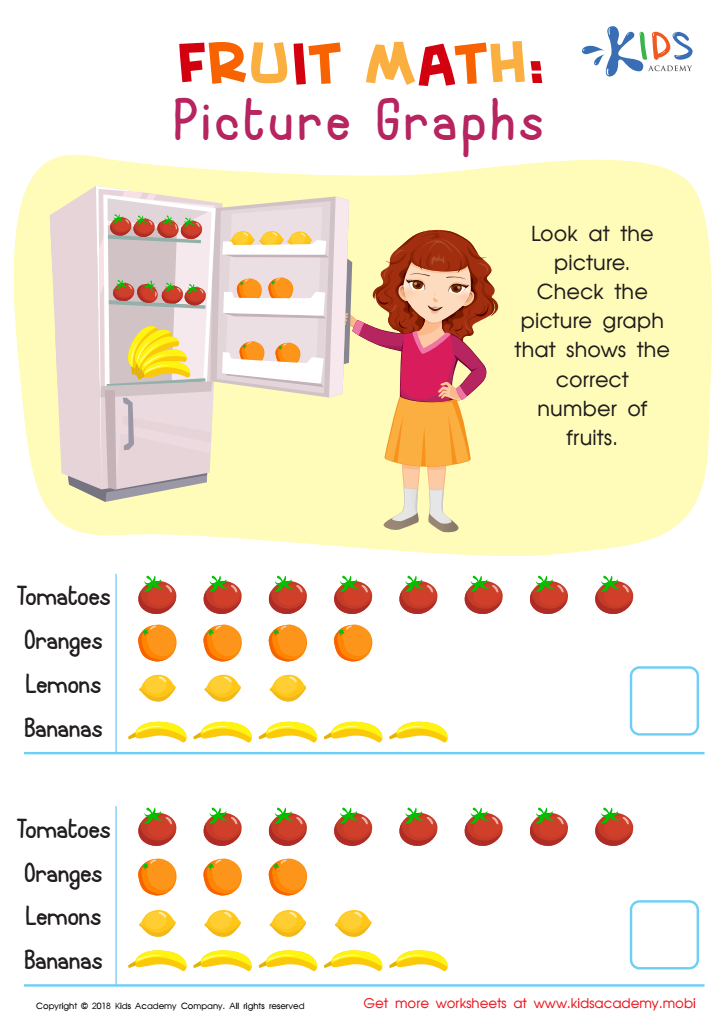
Fruit Math: Picture Graphs Worksheet
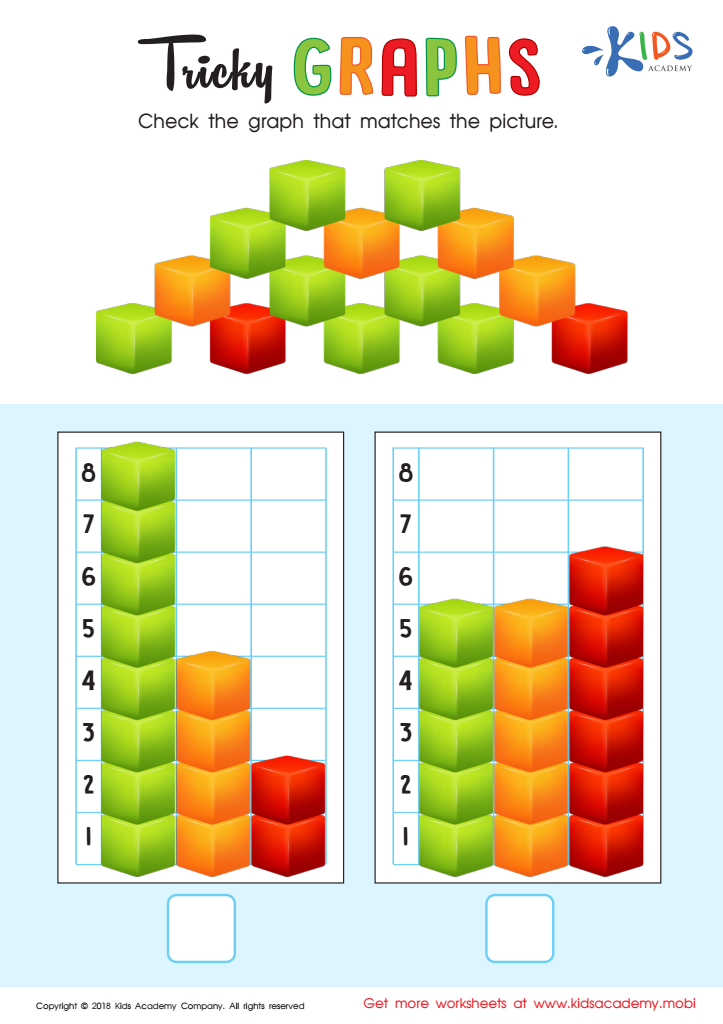
Tricky Graphs Worksheet
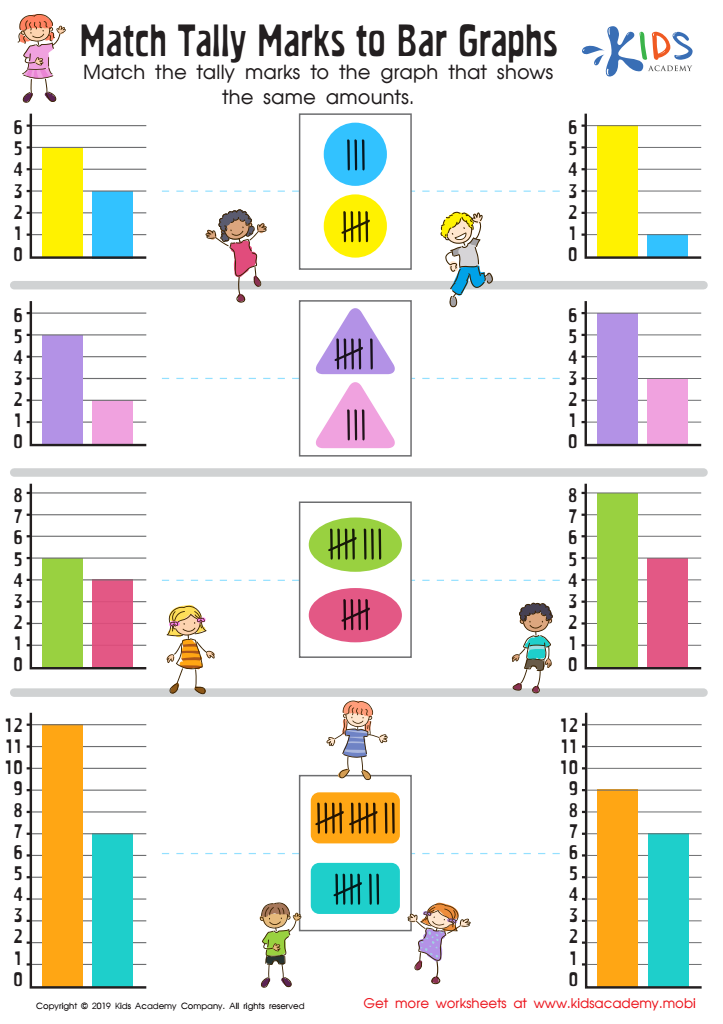
Match Tally Marks to Bar Graphs Worksheet
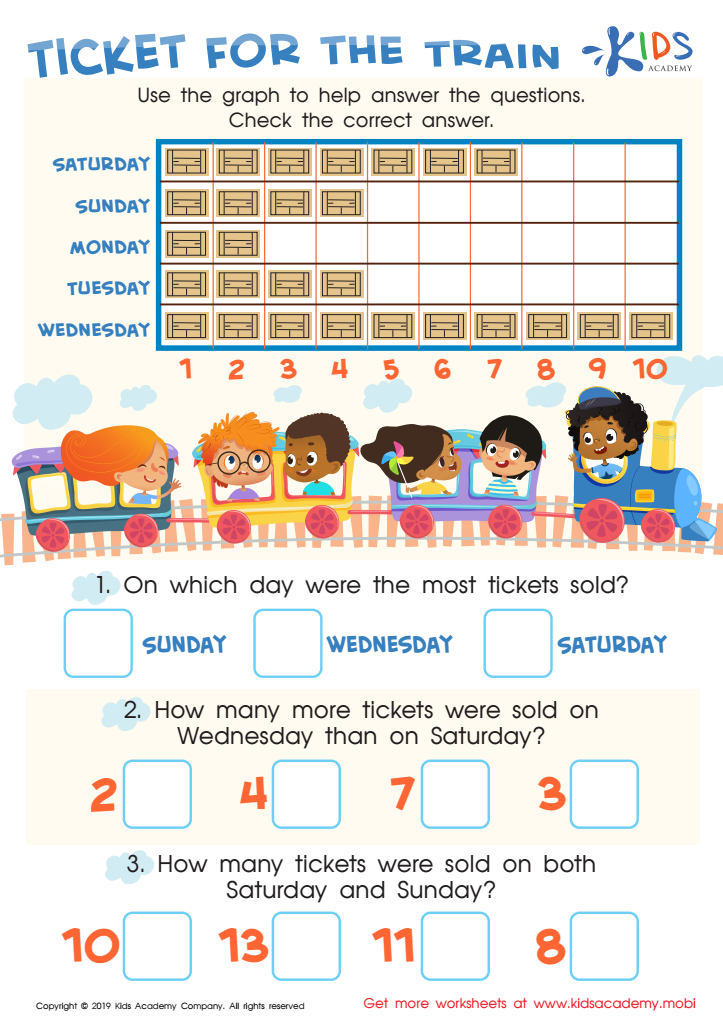
Ticket for the Train Worksheet
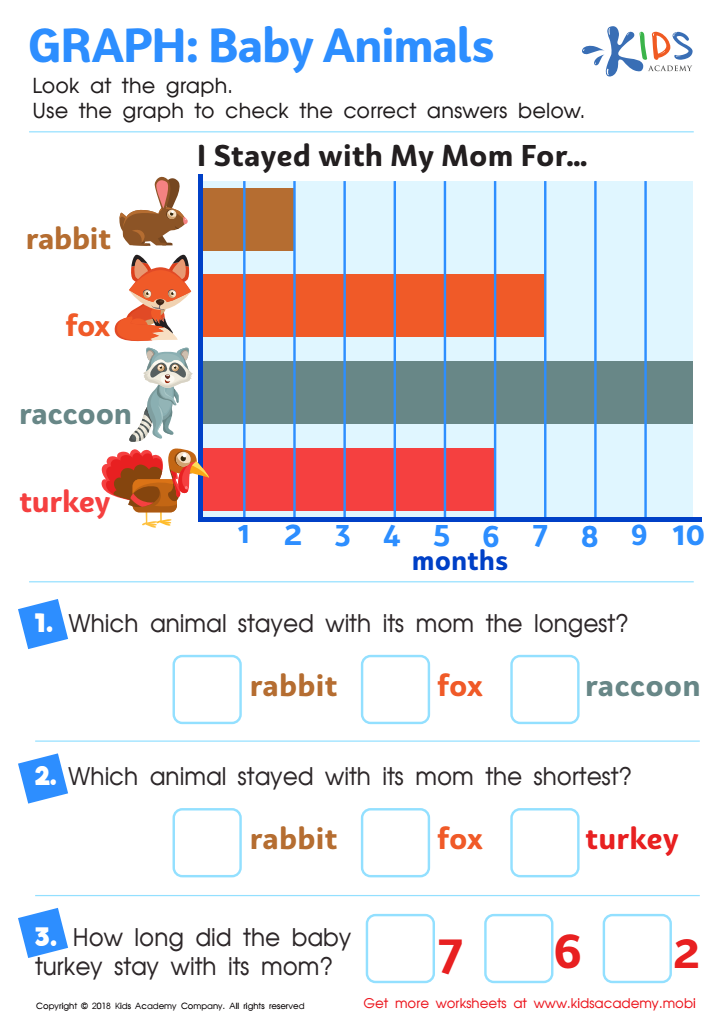
Graph: Baby Animals Worksheet
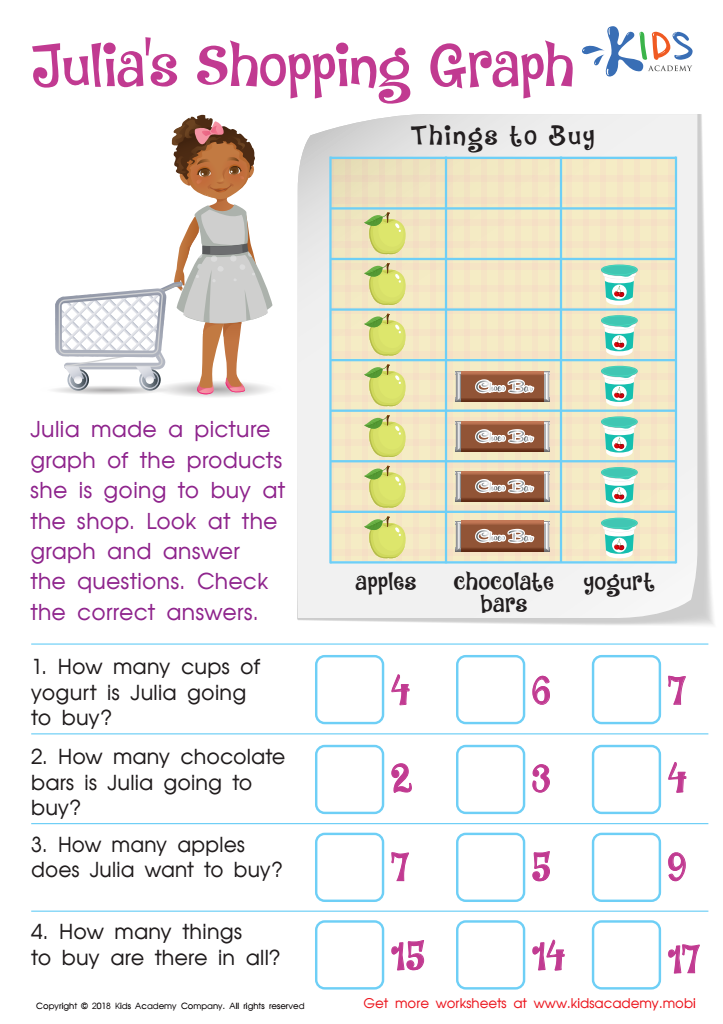
Julia's Shopping Graph Worksheet
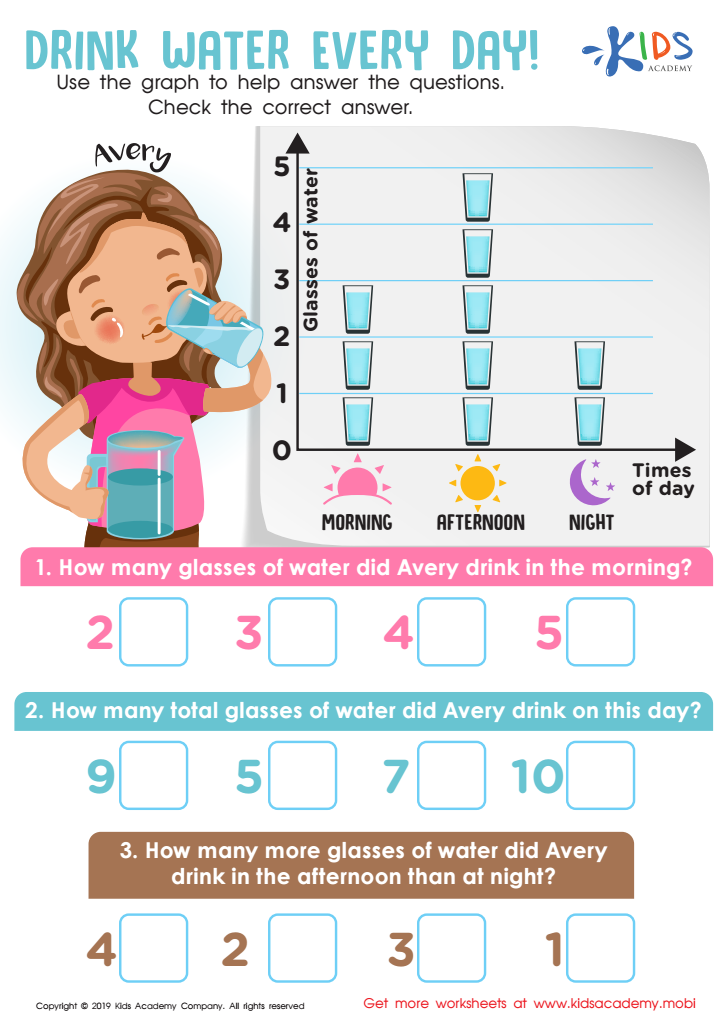
Drink Water Every Day! Worksheet
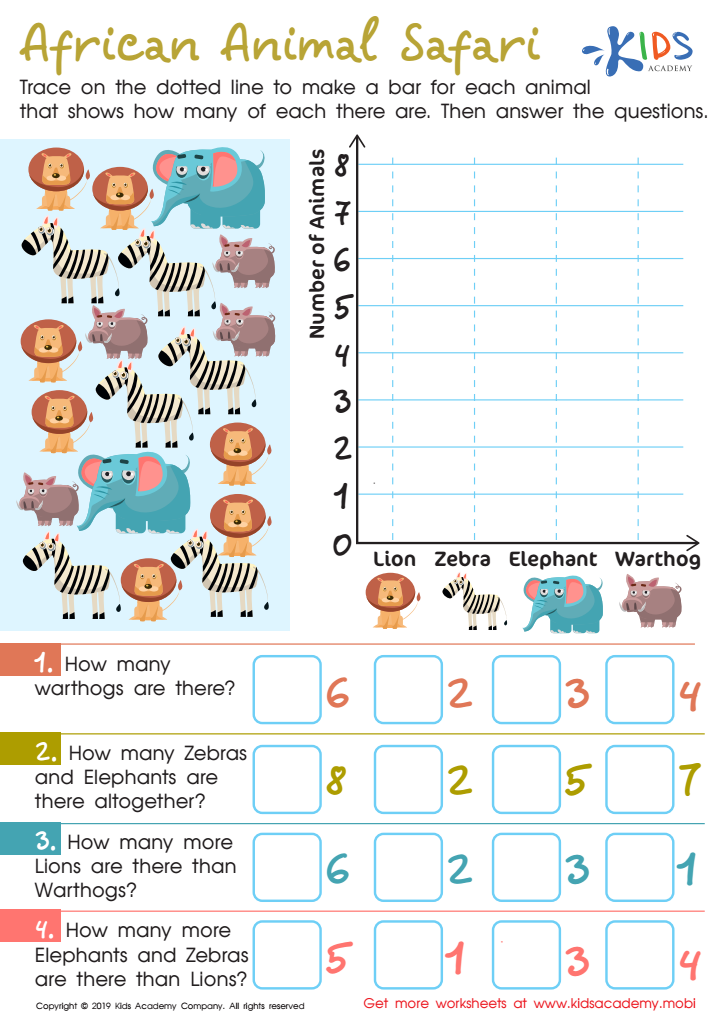
African Animal Safari Worksheet
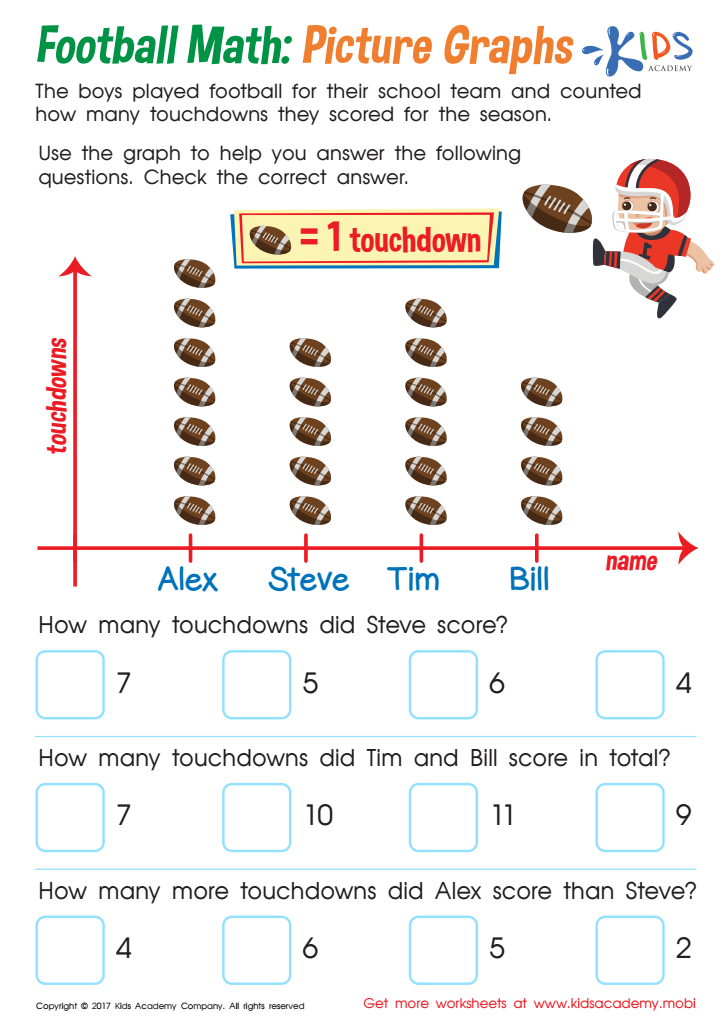
Football Math Worksheet








Graphs play a crucial role in the early development of children aged 3-7, as they lay the foundation for important cognitive and analytical skills. By introducing young learners to graphs, parents and teachers can enhance their ability to interpret data and make informed decisions. At this age, children are naturally curious about the world around them; graphs provide a visual representation that makes learning engaging and accessible.
Learning through graphs improves critical thinking and problem-solving capabilities. For instance, when children explore bar graphs or pictographs, they begin to understand concepts like measurement, comparison, and distribution. Additionally, discussions around graphs promote language development, as kids learn new vocabulary related to data representation and analysis.
Graphs also support social skills through collaborative activities where children can collect and organize data together, fostering teamwork. Moreover, incorporating graph-related activities into the curriculum reinforces numeracy skills—like counting and categorization—essential for later learning in mathematics.
Overall, embracing the use of graphs in early education cultivates a sense of curiosity about data and the environment, equips children with tools for data literacy, and empowers parents and teachers to create a meaningful learning experience that impacts children’s long-term academic success.








