Subtraction Worksheets for Ages 3-7 - Page 4
86 filtered results
-
From - To
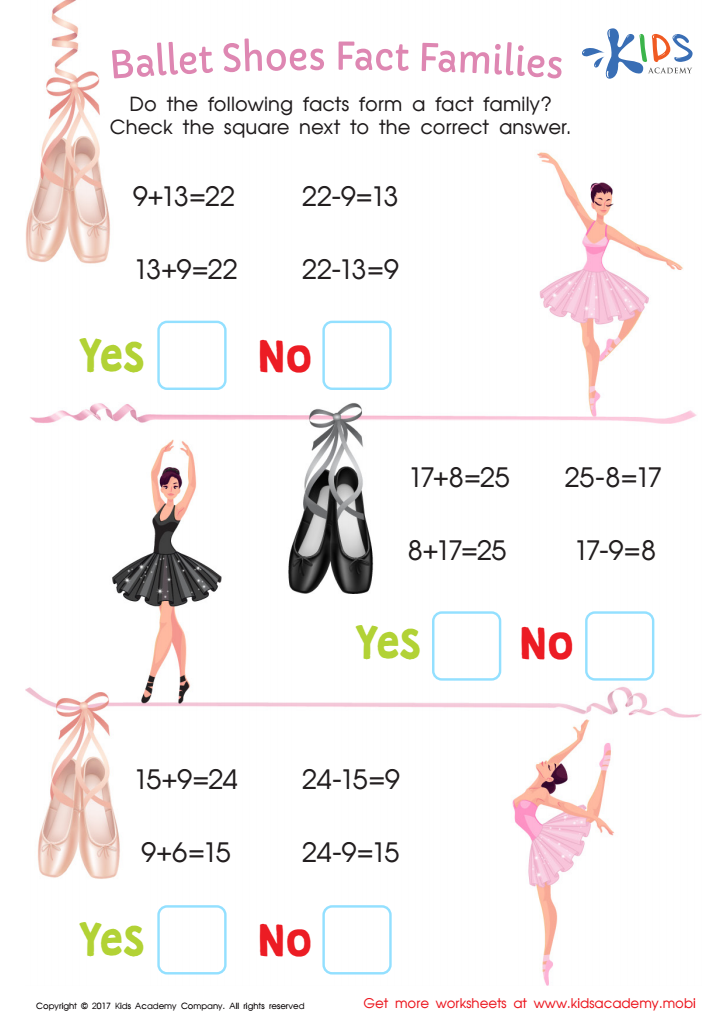
Ballet Shoes Fact Family Printable
 Assign to My Students
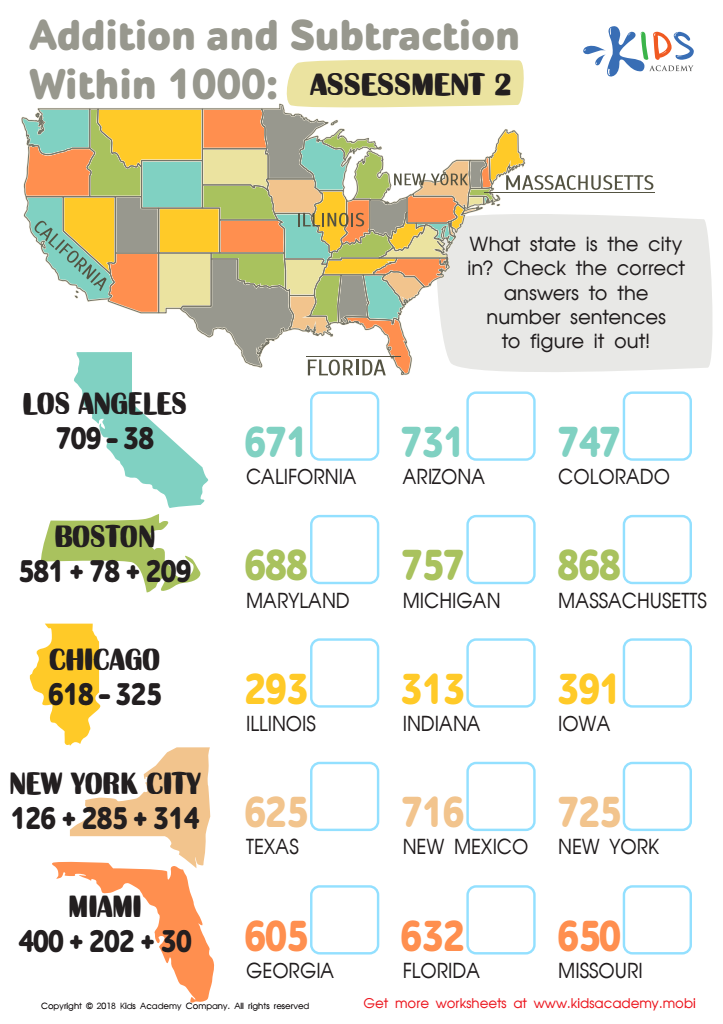
Addition and Subtraction Within 1000: Assessment 2 Worksheet
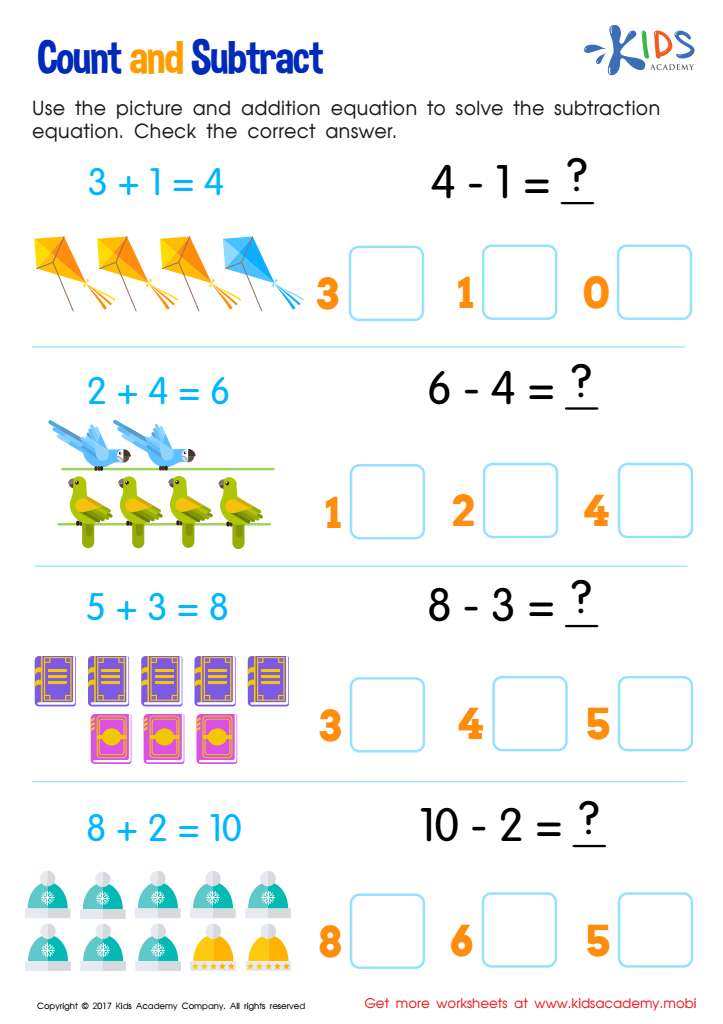
Count and Subtract Worksheet
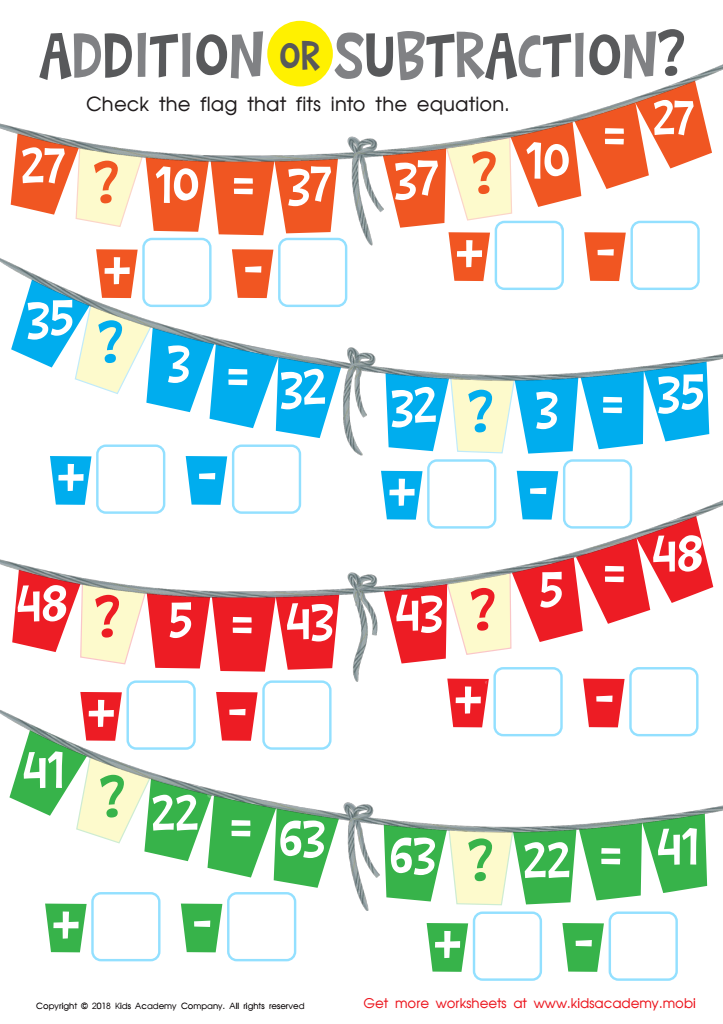
Addition or Subtraction? Worksheet
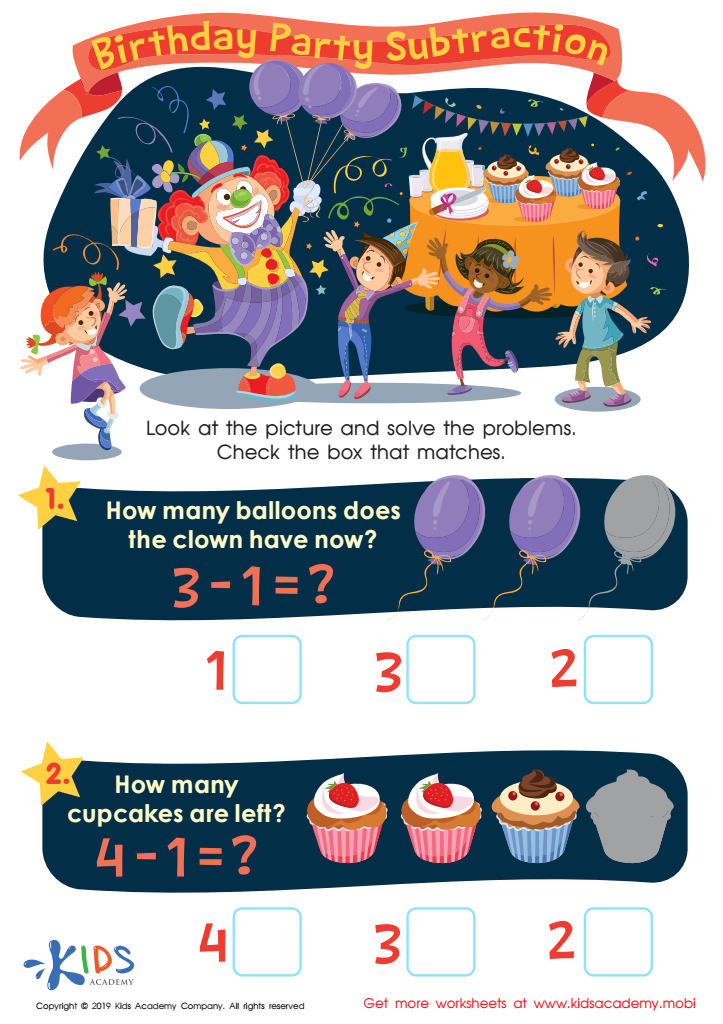
Birthday Party Subtraction Worksheet
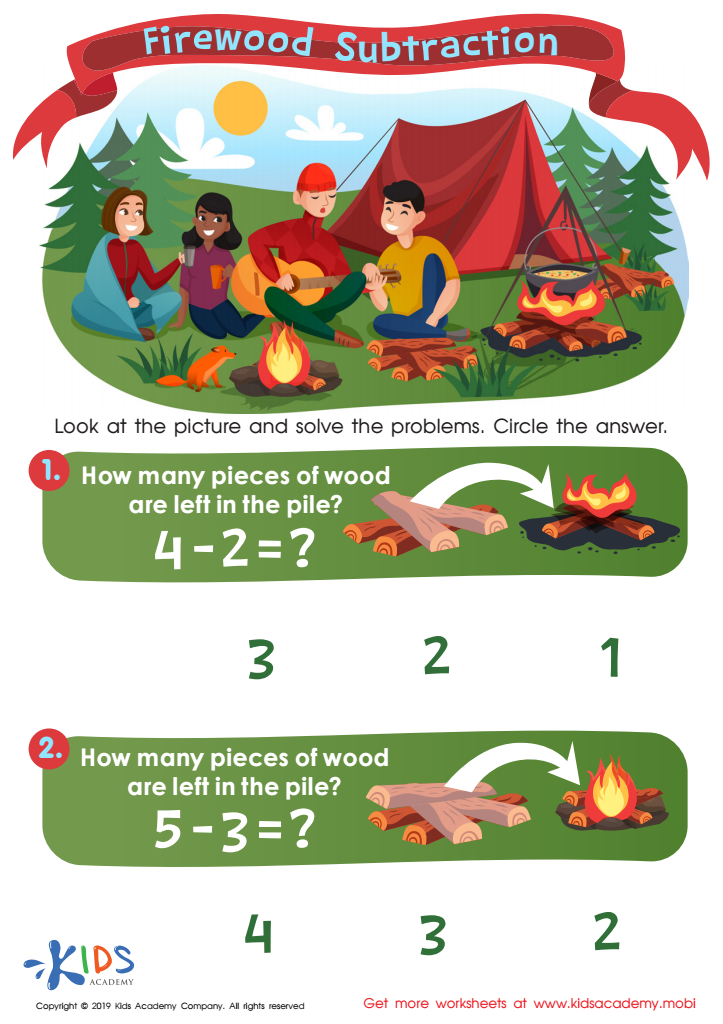
Firewood Subtraction Worksheet
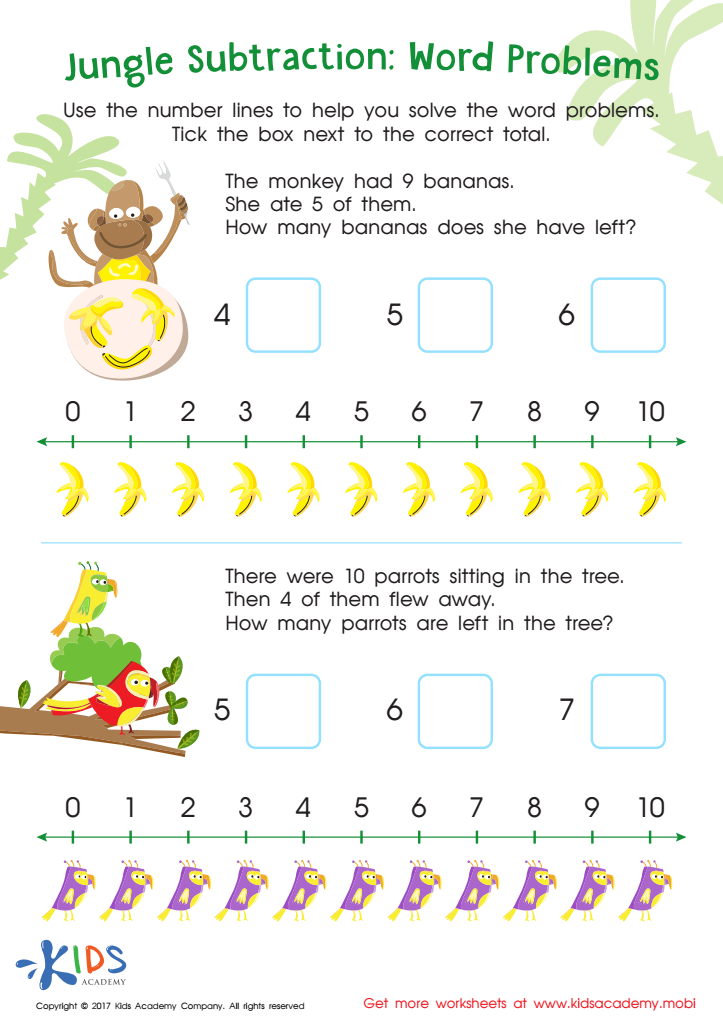
Jungle Subtraction Word Problems Substraction Worksheet
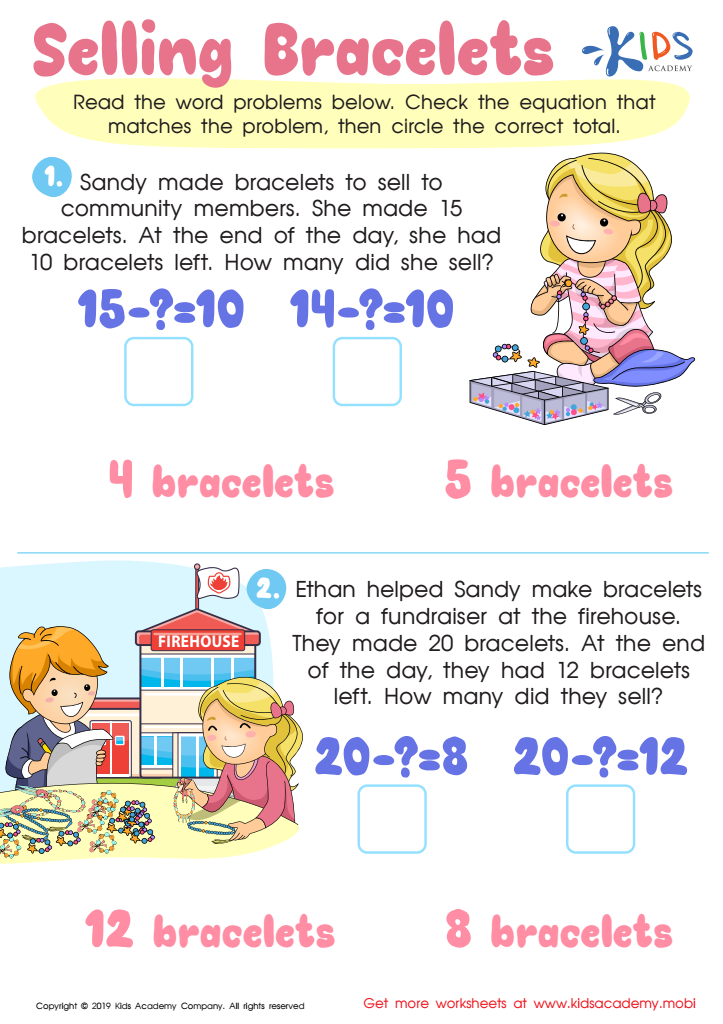
Selling the Bracelets Worksheet
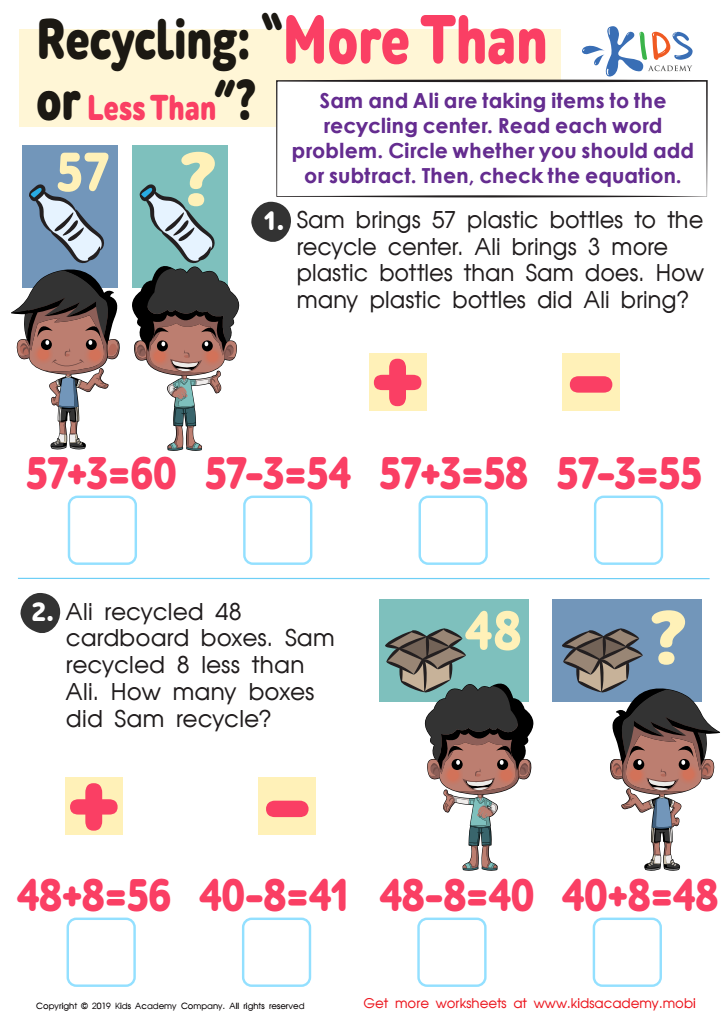
Recycling - More or Less Worksheet
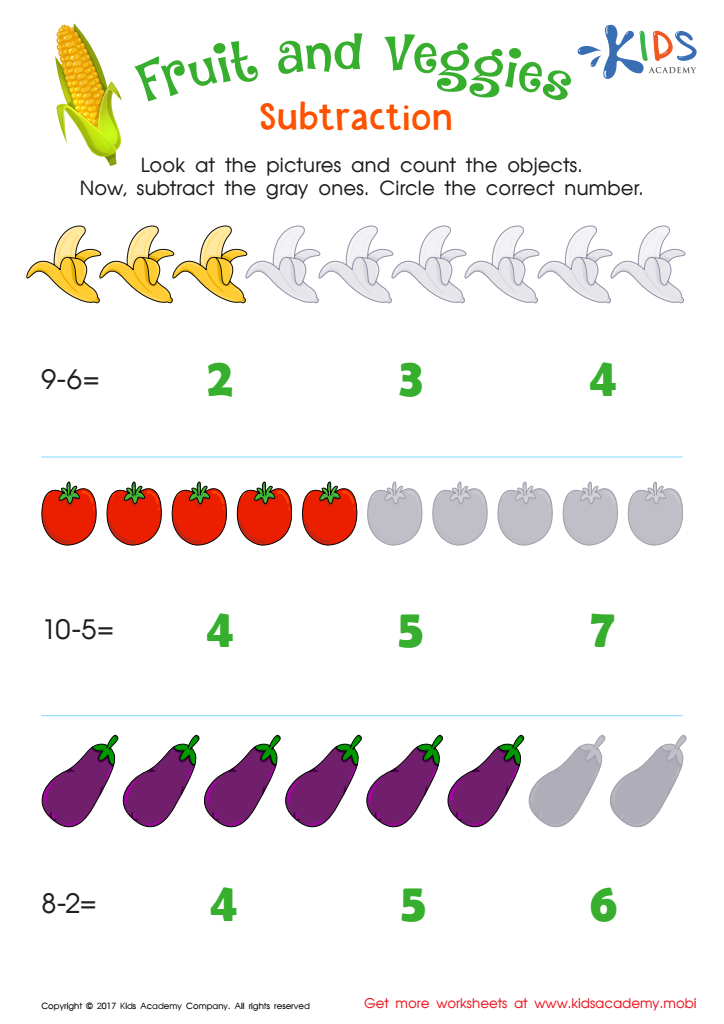
Fruit and Veggies Subtraction Worksheet
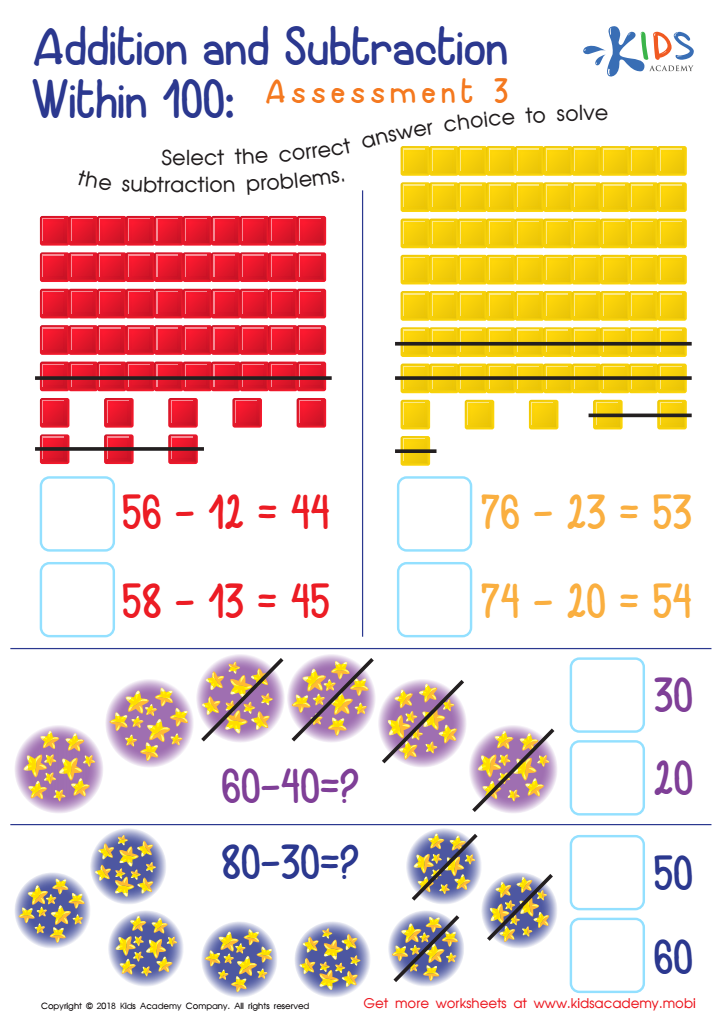
Addition and Subtraction Within 1: Assessment 3 Worksheet
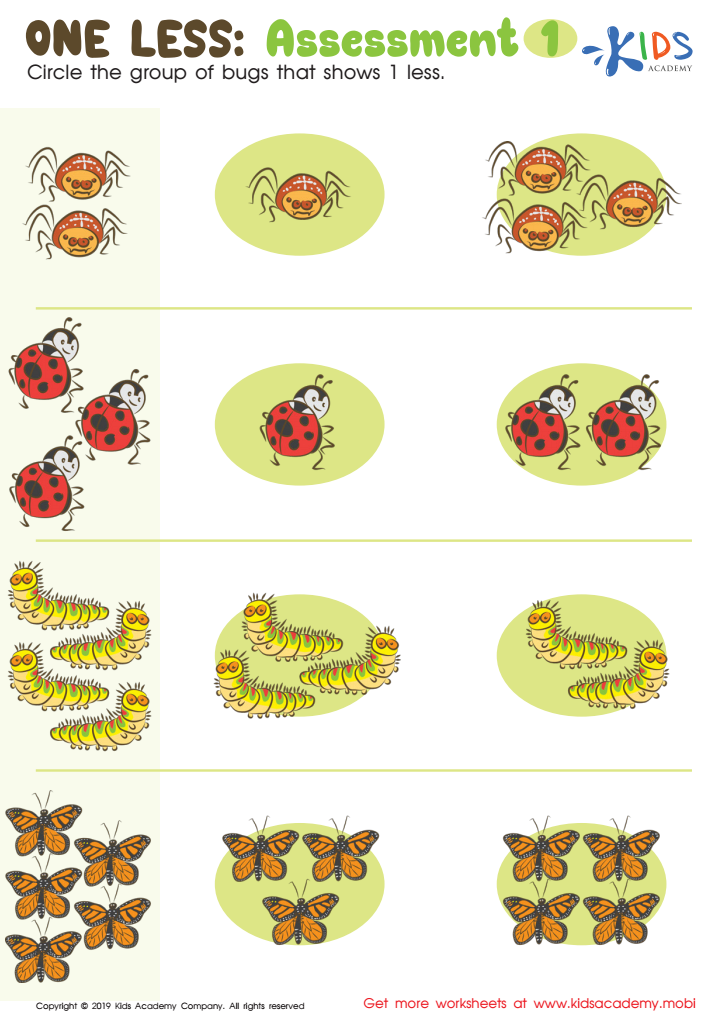
One Less: Assessment 1 Worksheet
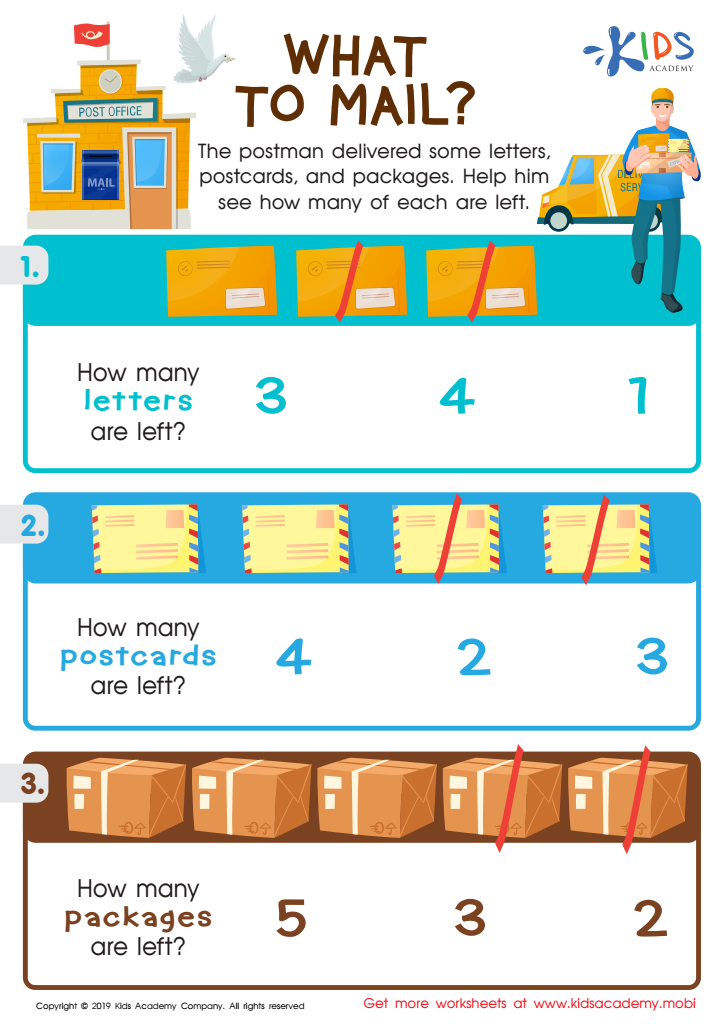
What to Mail? Worksheet
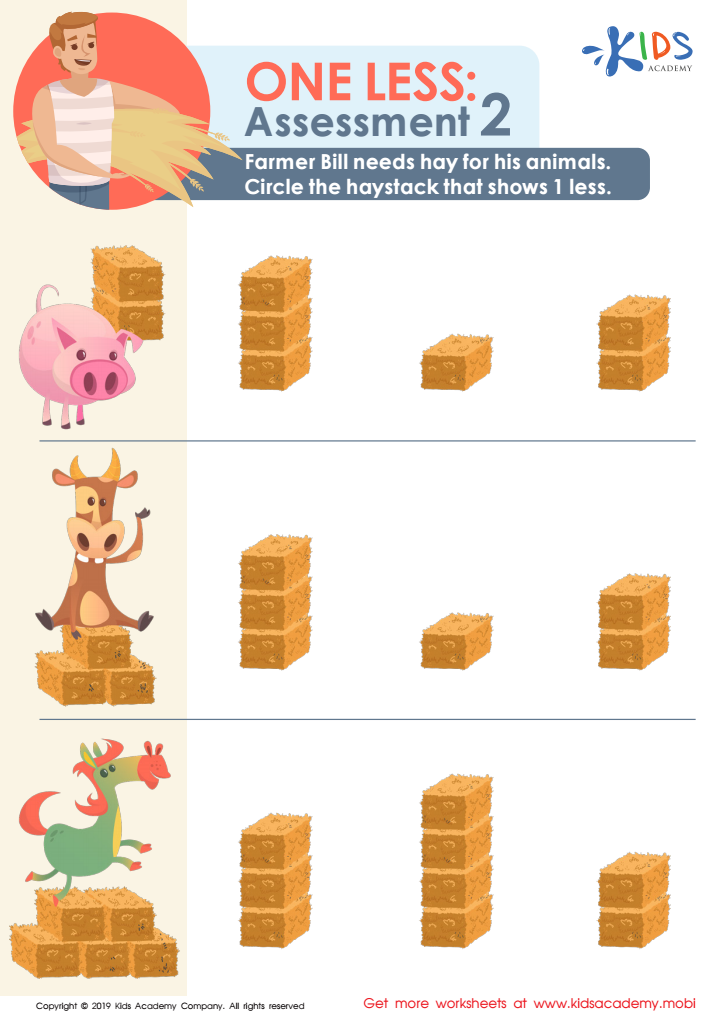
One Less: Assessment 2 Worksheet







Parents and teachers should care about subtraction for ages 3-7 because it lays the foundation for essential mathematical skills that will benefit children throughout their academic journey and daily life. At this stage, children are developing their cognitive abilities, and introducing subtraction helps them understand the concept of taking away, which is fundamental to more complex mathematical operations.
Subtraction also encourages critical thinking and problem-solving. By learning to subtract, children begin to engage with numbers in meaningful ways, promoting their numeracy skills. It helps them grasp concepts like quantity, comparison, and logical reasoning, which are vital in their early cognitive development.
Moreover, subtraction has practical applications. Children encounter subtraction in everyday contexts, such as sharing toys, understanding sizes, and counting. This makes math relatable and instills a sense of responsibility in managing quantities. Early familiarity with subtraction fosters a positive attitude towards math, reducing anxiety and cultivating confidence in their abilities.
Finally, proficiency in subtraction aids in the smooth transition to further mathematical concepts, laying the groundwork for addition, multiplication, and problem-solving in later years. Thus, nurturing these skills early on can lead to a more robust foundation for future learning.








