Animals Worksheets for Ages 3-7 - Page 3
52 filtered results
-
From - To
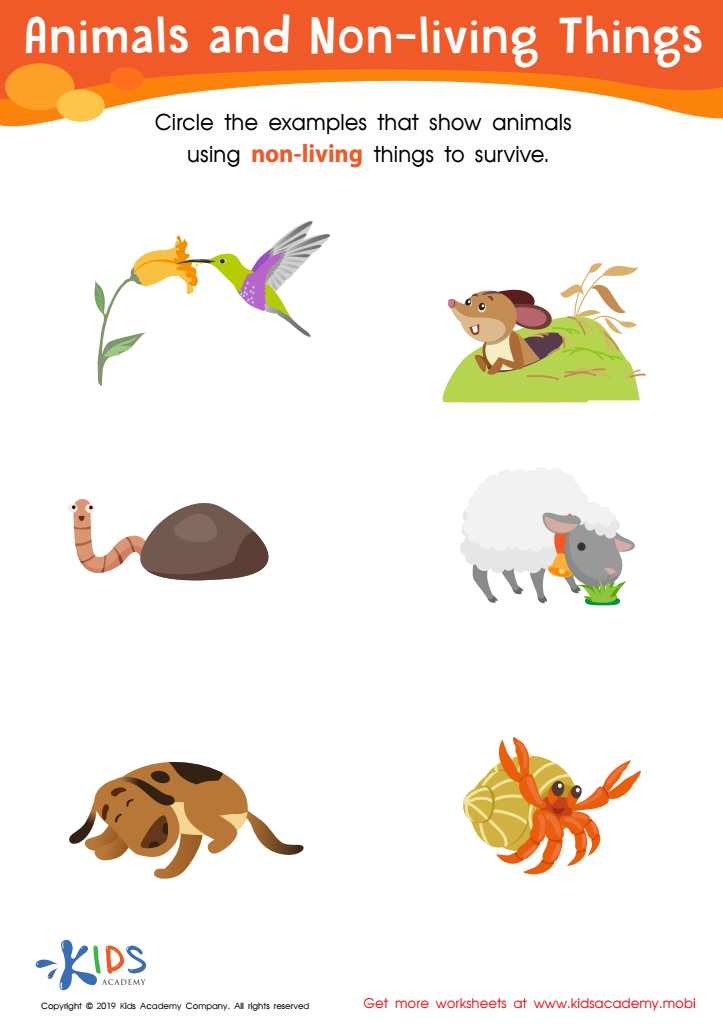
Animals and Non-Living Things Worksheet
 Assign to My Students
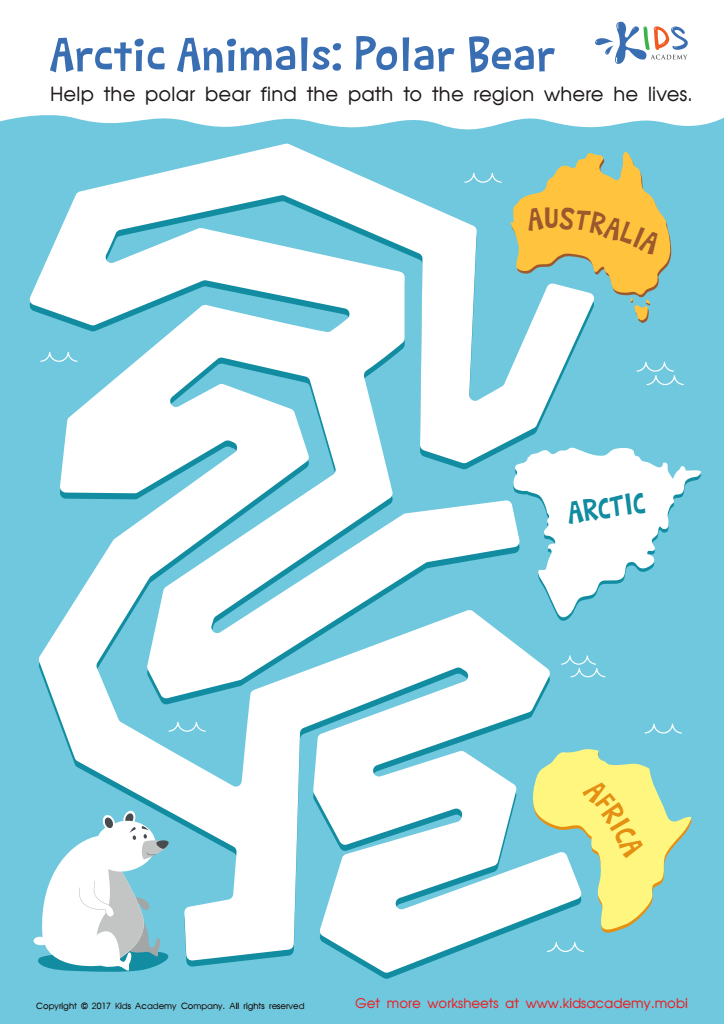
Arctic Animals: Polar Bear Worksheet
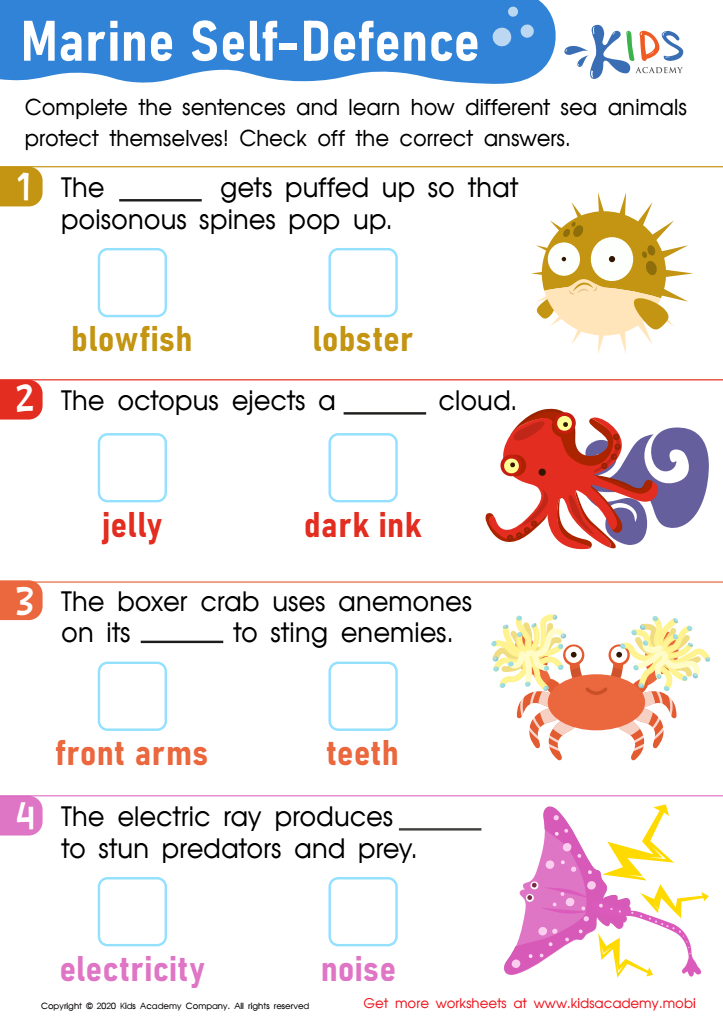
Marine Self-Defence Worksheet
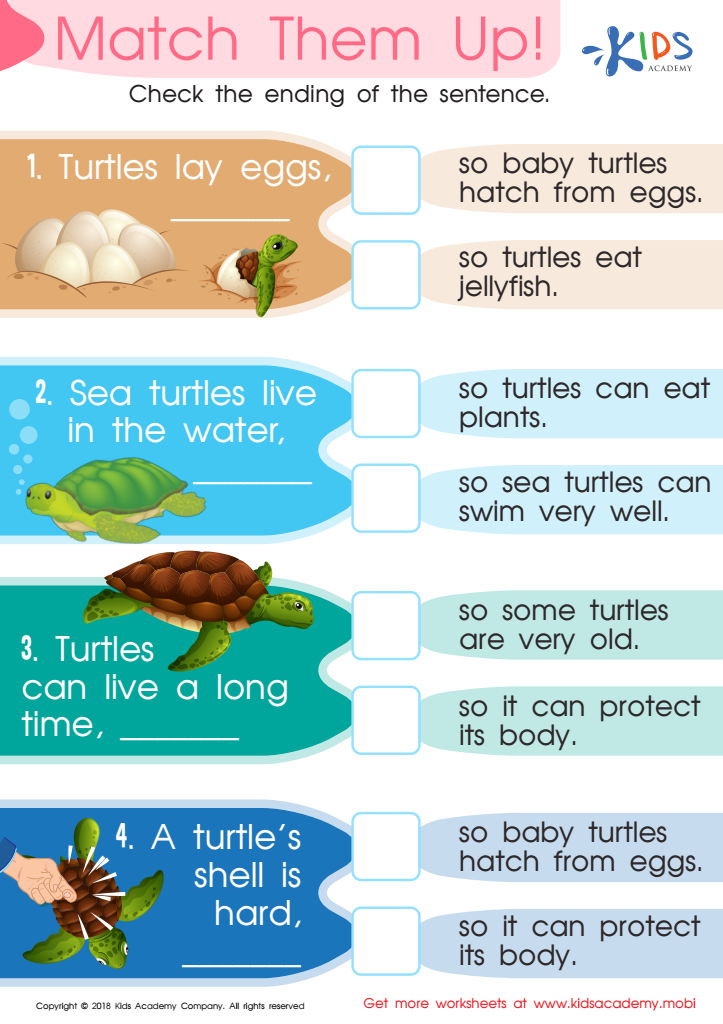
Match Them Up Worksheet








Parents and teachers should care about animals for children ages 3-7 because introducing young learners to the world of animals enriches their understanding of nature and nurtures empathy. At this age, children are naturally curious, and learning about animals can spark their interest in biology, conservation, and the environment. By sharing stories of different animals and their habitats, adults help children grasp the importance of biodiversity and how each creature plays a role in our ecosystem.
Furthermore, interacting or observing animals promotes emotional and social development. Children learn compassion and responsibility by caring for pets or discussing the importance of treating animals kindly. This foundational awareness fosters a sense of stewardship, encouraging future generations to protect wildlife and their habitats.
Additionally, animals serve as relatable subjects that can help simplify complex concepts. Through games, art, and storytelling, educators can incorporate animal themes to teach vital skills like communication, problem-solving, and critical thinking.
Ultimately, caring about animals within educational settings not only brings joy and engagement but also lays the groundwork for fostering responsible, informed citizens who appreciate and respect the natural world around them.








