Cognitive Development Geometry Worksheets for Ages 3-8
21 filtered results
-
From - To
Explore our expertly designed Cognitive Development Geometry Worksheets for ages 3-8! These engaging worksheets help young learners develop essential geometric skills, enhance spatial awareness, and promote critical thinking. Tailored for different age groups, the activities range from simple shape recognition to more complex patterns and spatial reasoning challenges. Each worksheet combines fun visuals with educational tasks, ensuring a playful yet effective learning experience. Perfect for both classroom and at-home use, our cognitive development geometry worksheets foster early math proficiency and cognitive growth, setting a solid foundation for future learning. Spark curiosity and boost confidence with Kids Academy today!
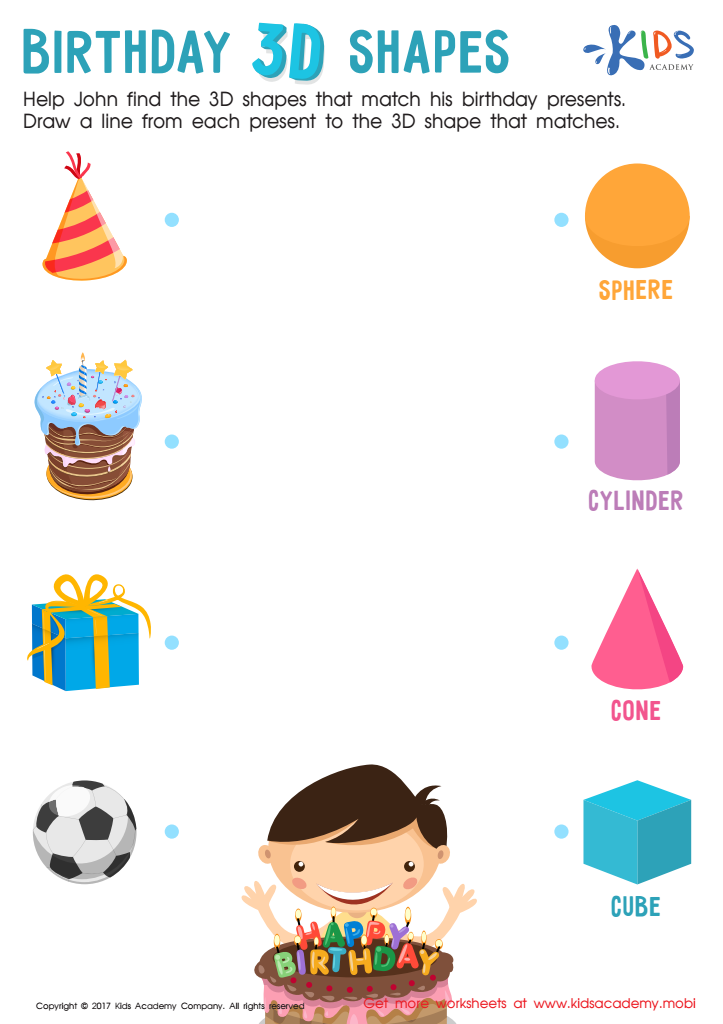
Birthday 3D Shapes Worksheet
 Assign to My Students











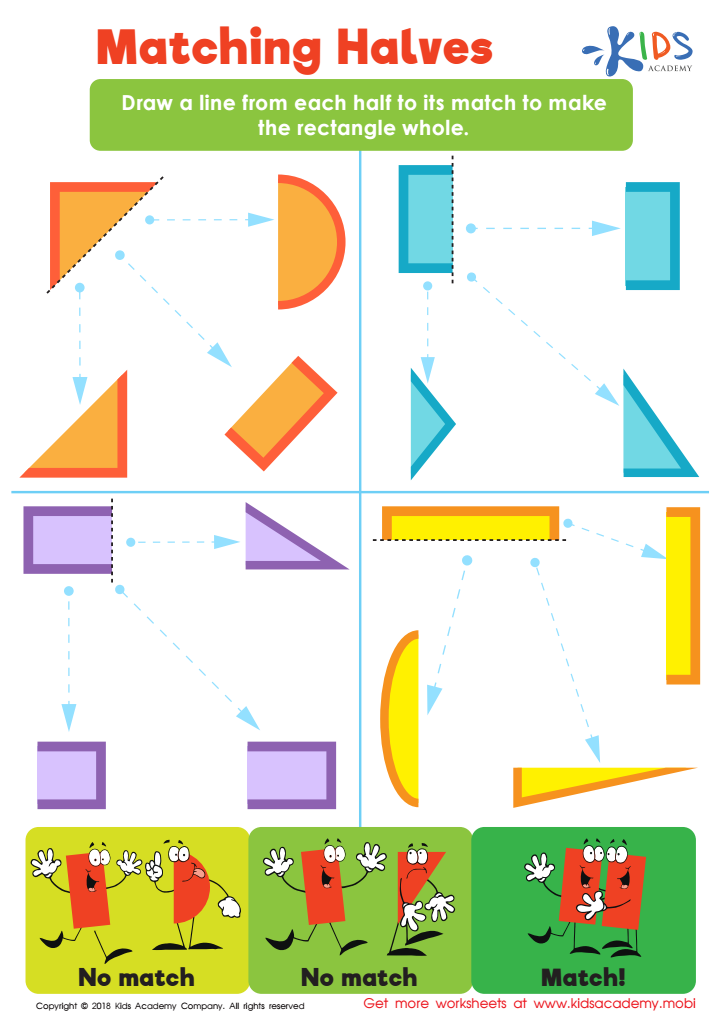
Matching Halves Worksheet
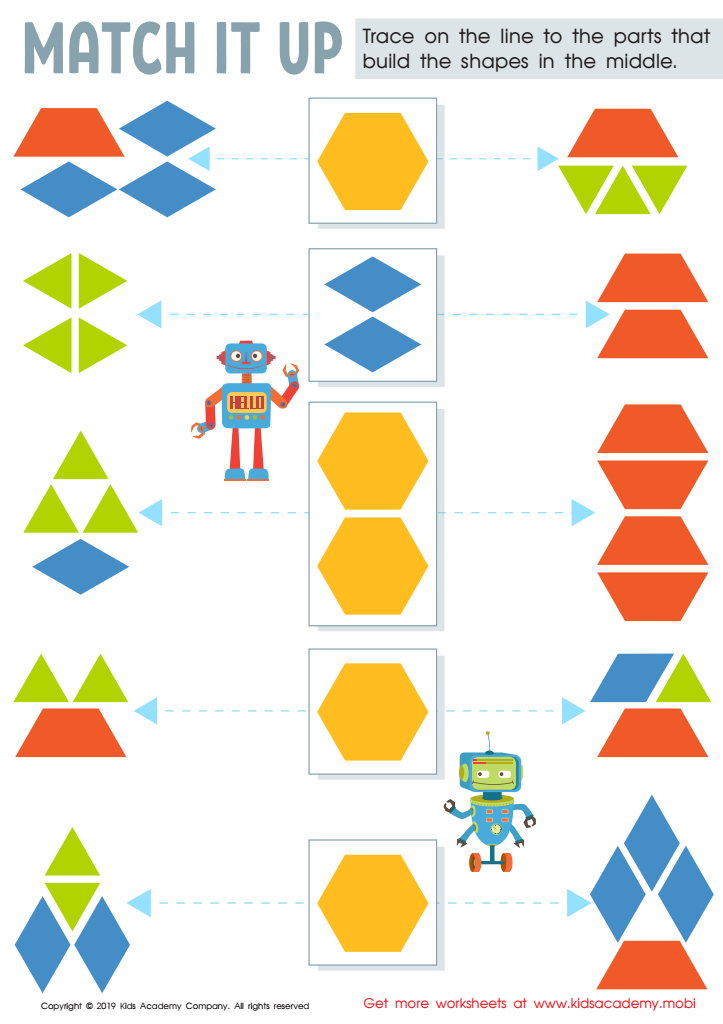
Match It up Worksheet
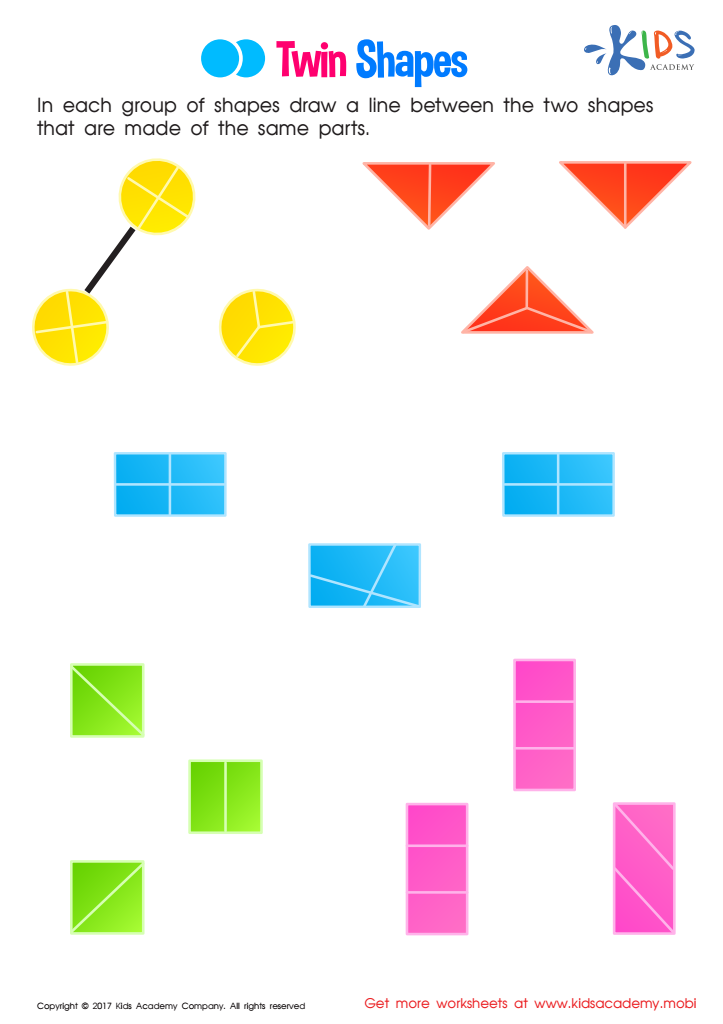
Twin Shapes Worksheet
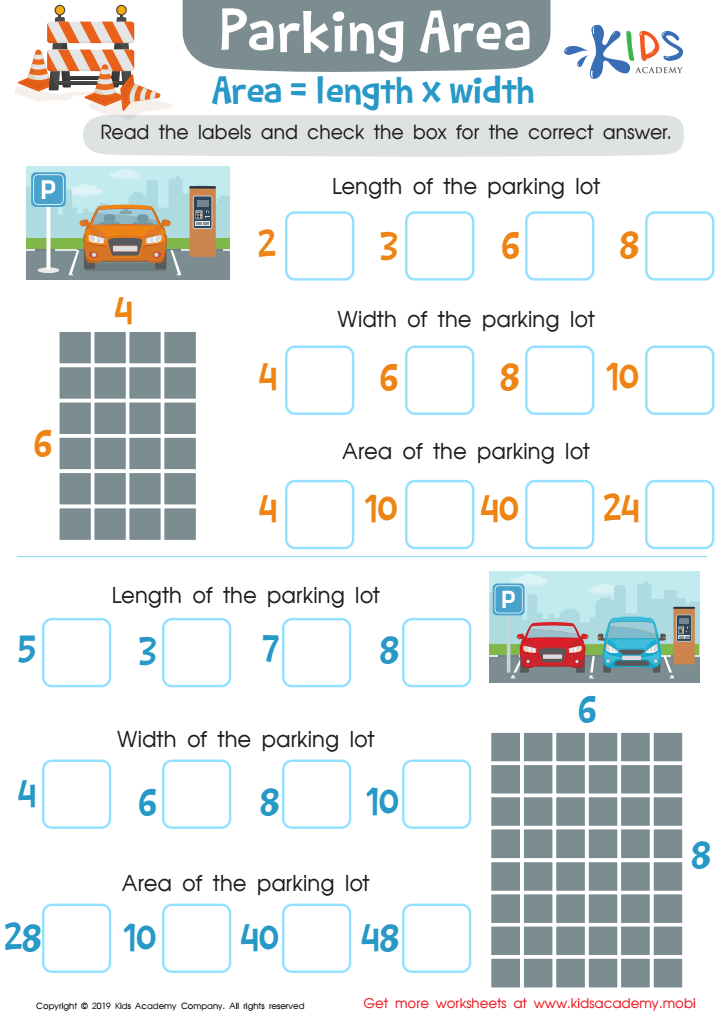
Parking Area Worksheet
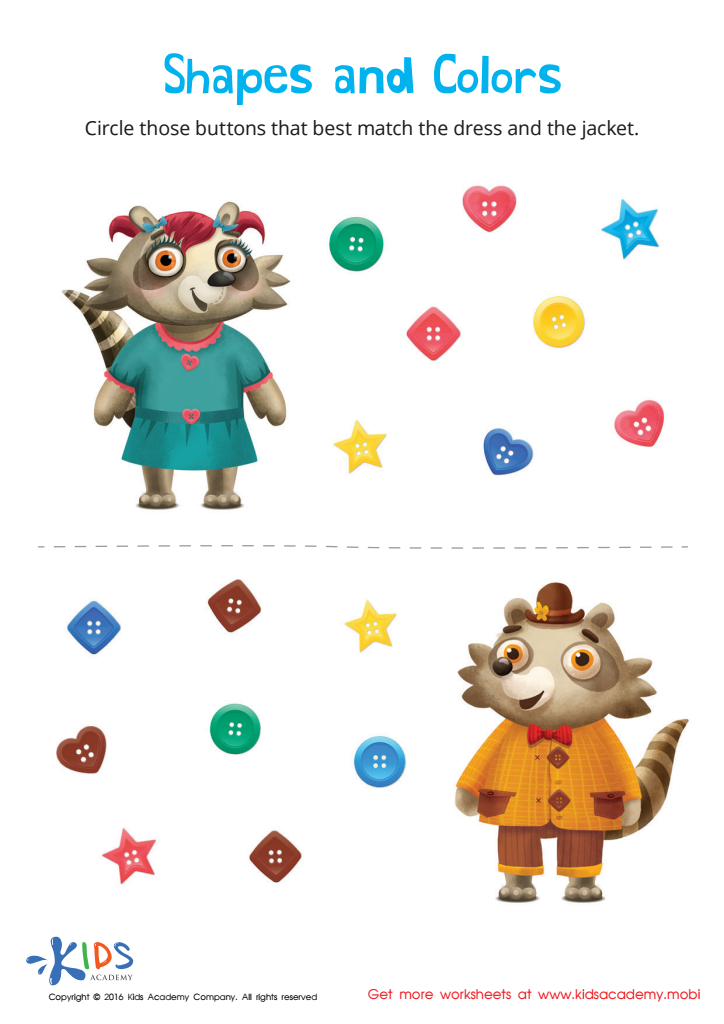
Matching: Shapes and Colors Worksheet
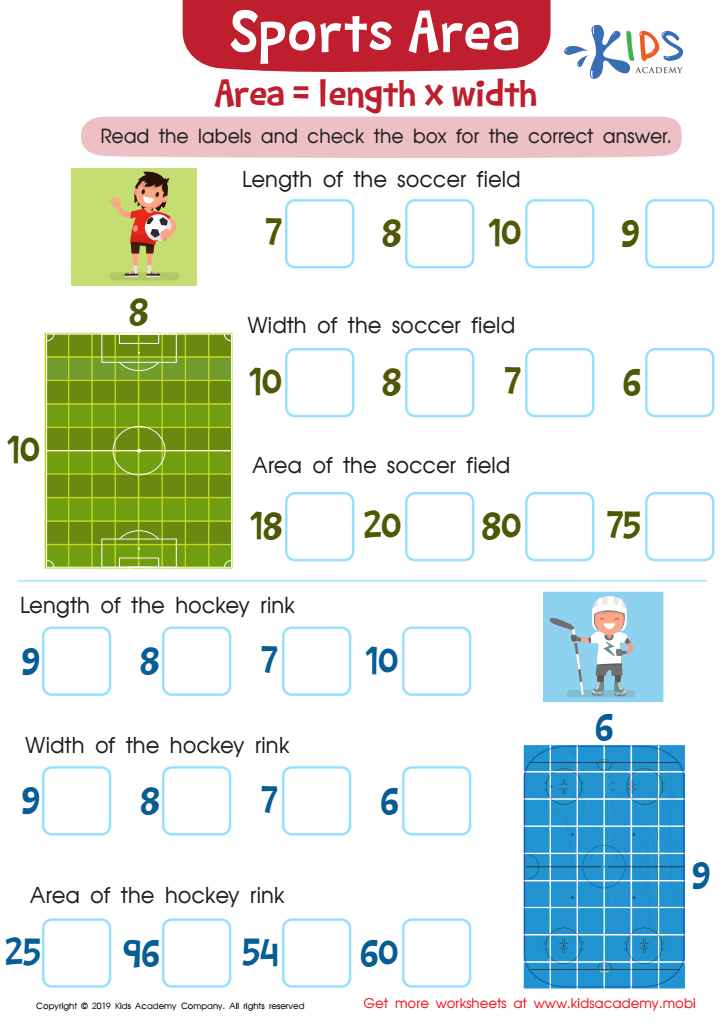
Sports Area Worksheet
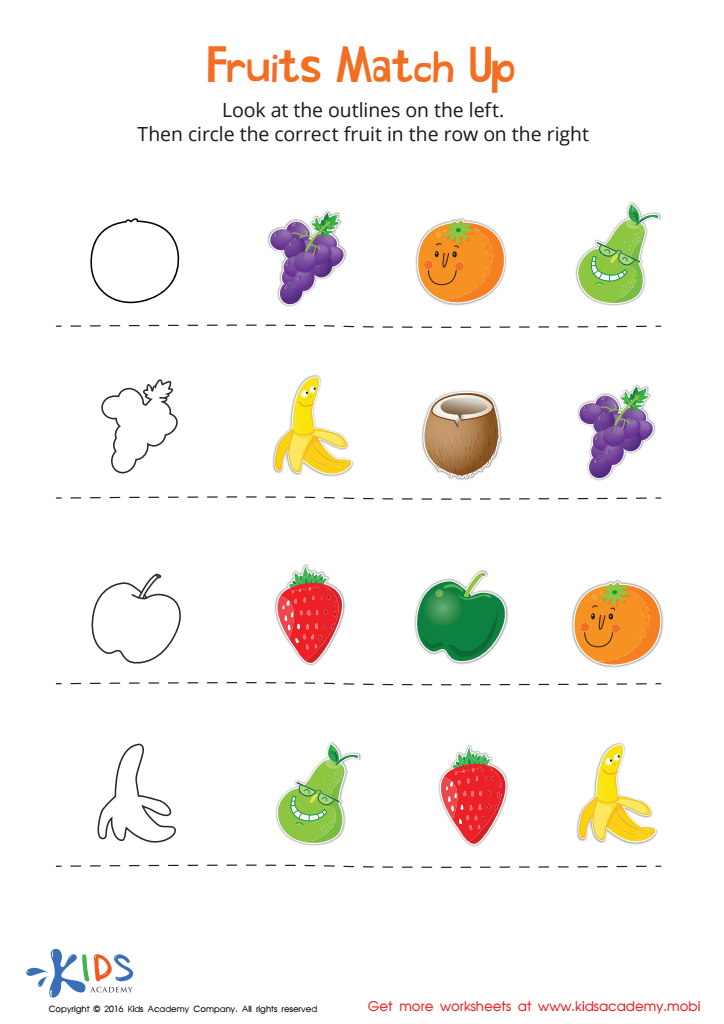
Fruits Match Up Worksheet
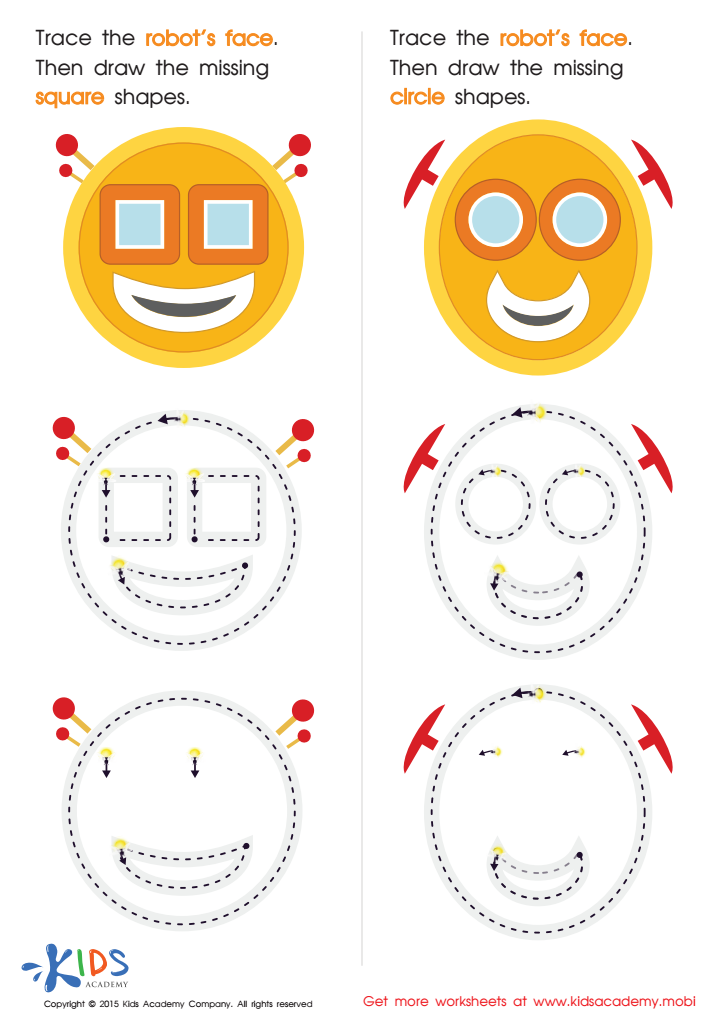
Practicing to Draw Circles And Squares Printable
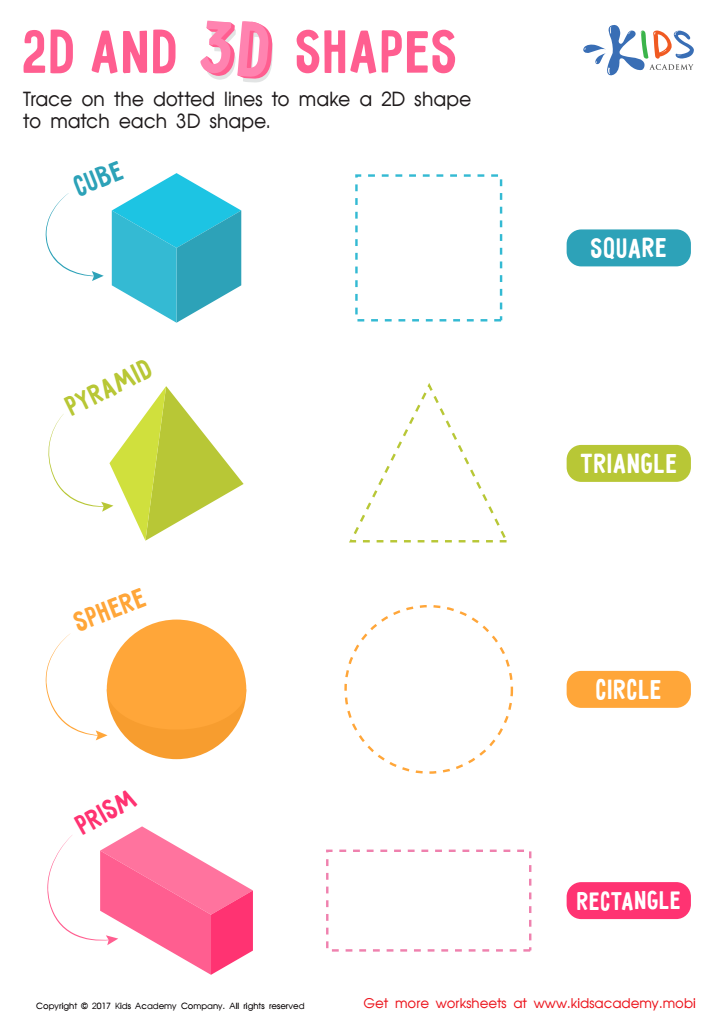
2D and 3D Shapes Worksheet
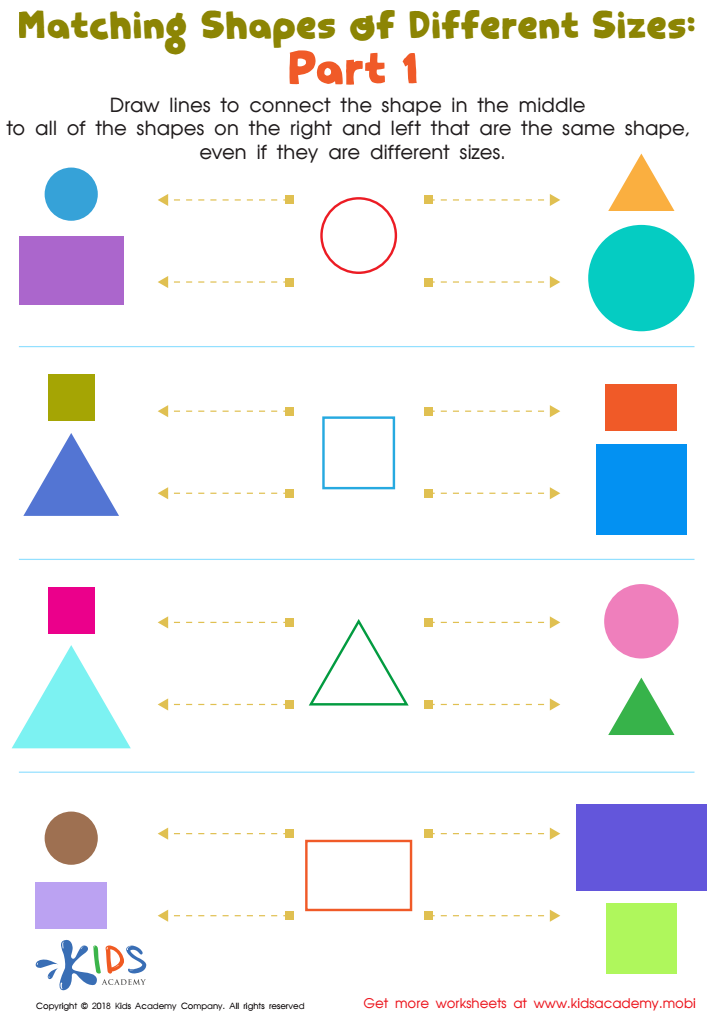
Geometry: part 1 Worksheet
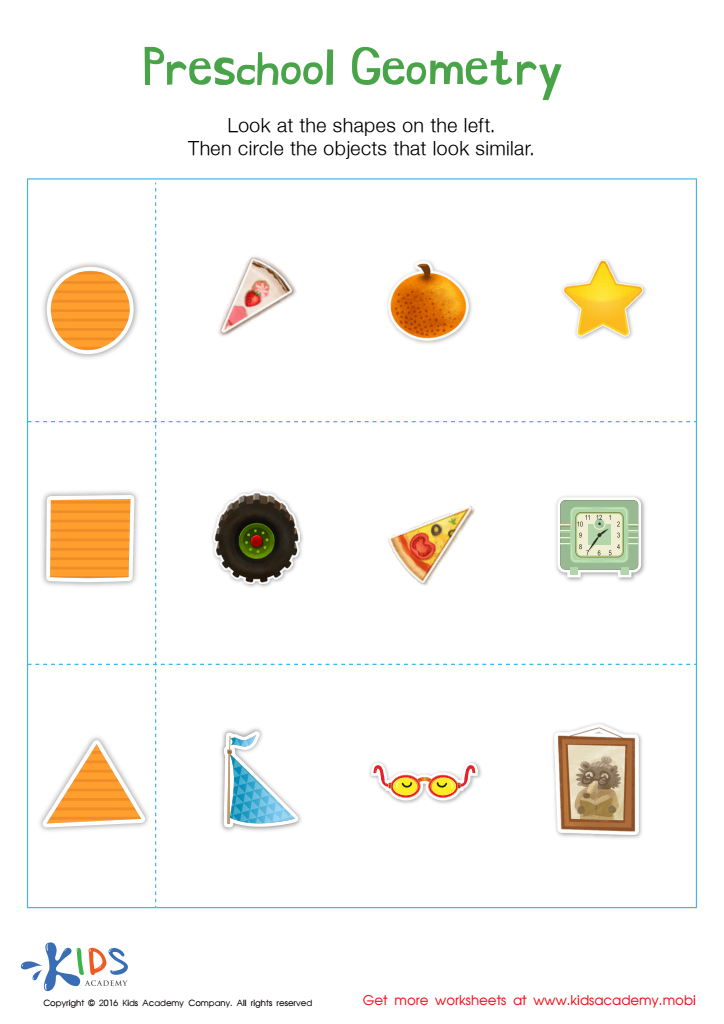
Preschool Geometry Match Up Worksheet
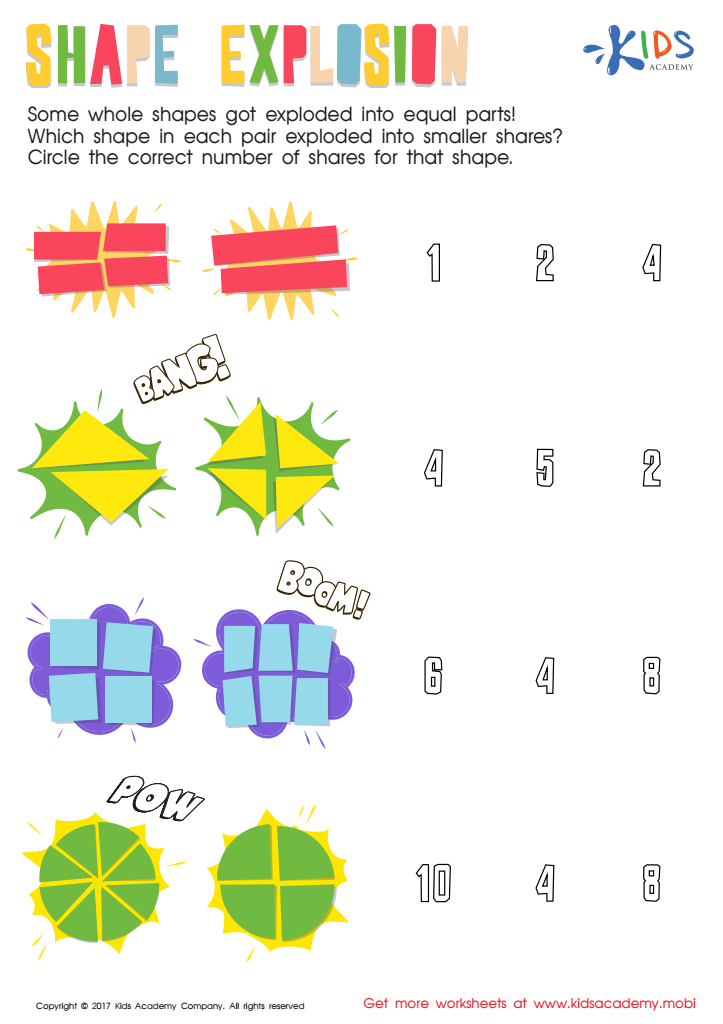
Shape Explosion Worksheet
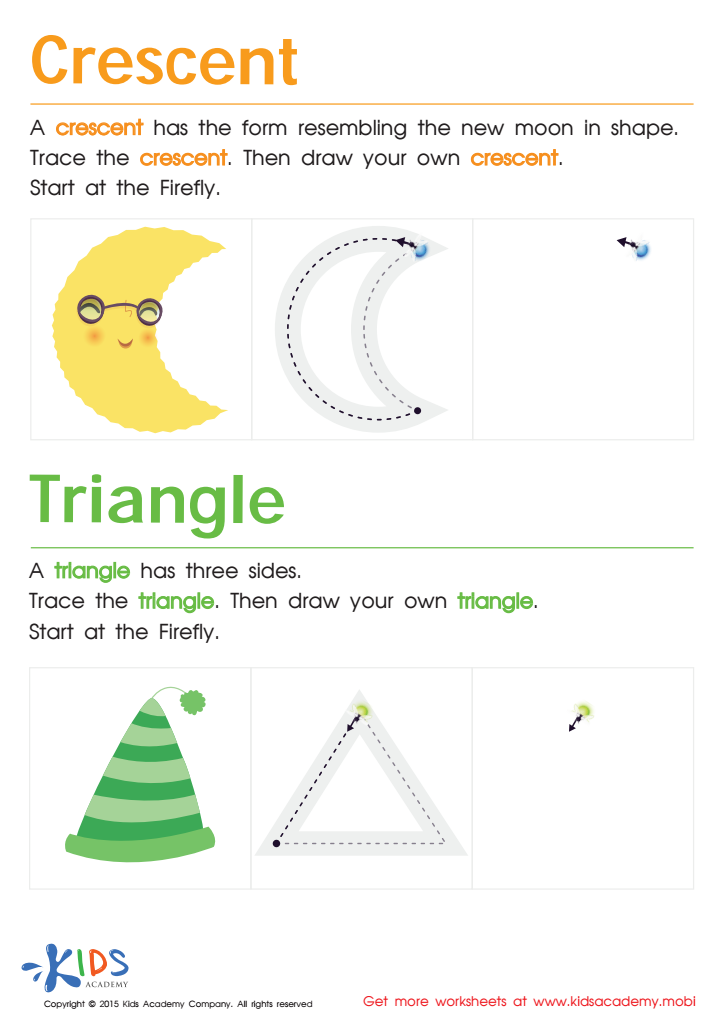
Learning to Draw Crescents And Triangles Worksheet
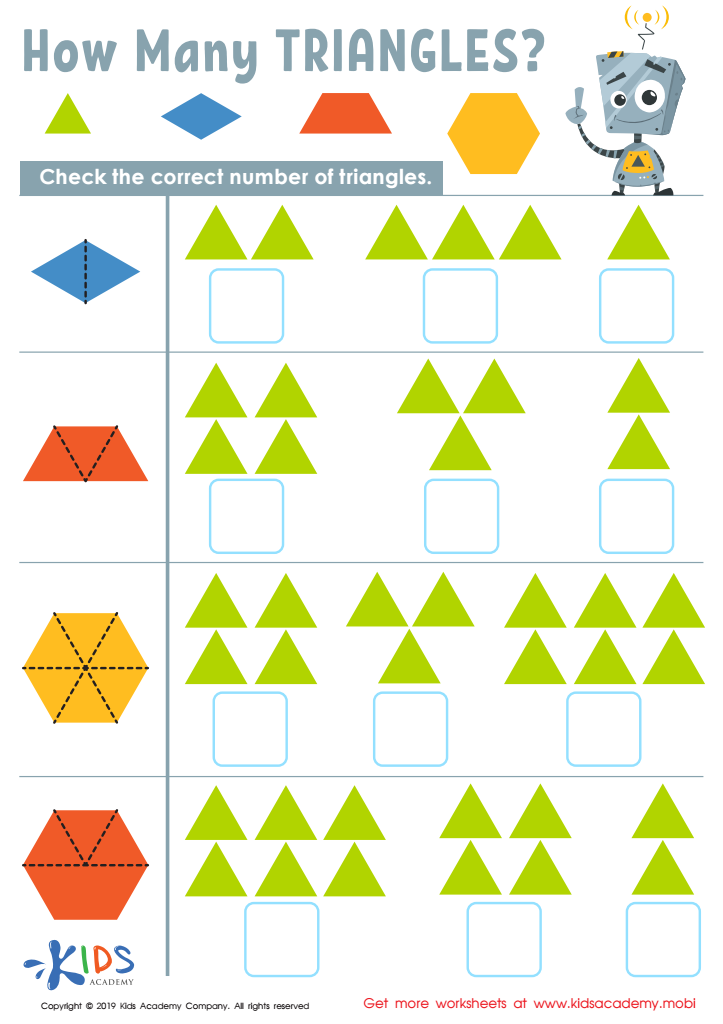
How Many Triangles Worksheet
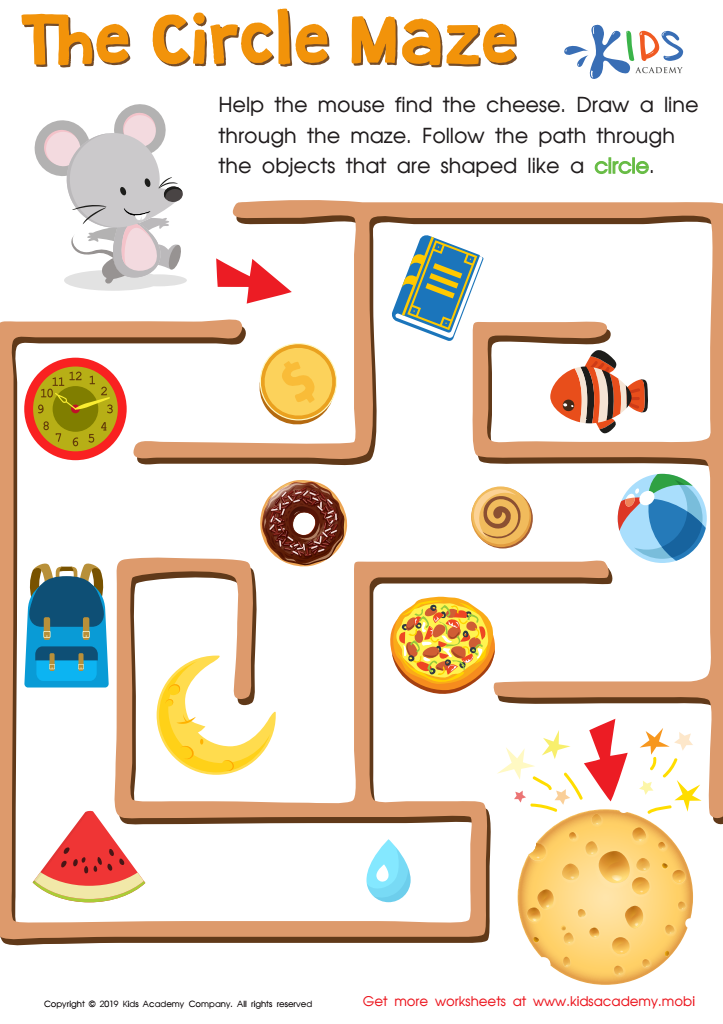
The Circle Maze Worksheet
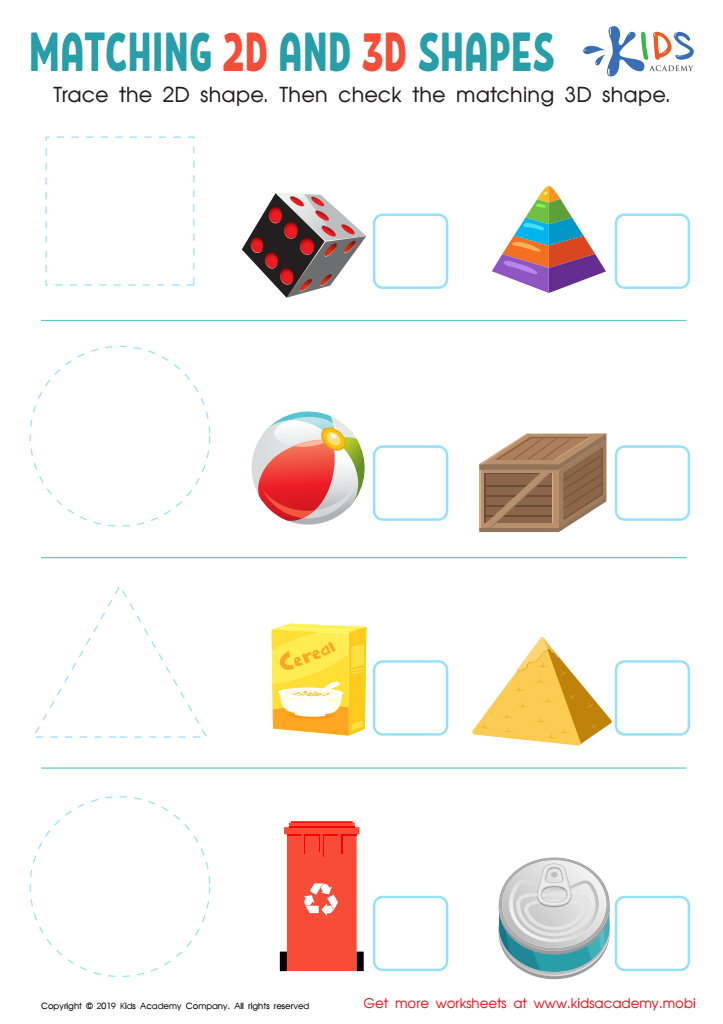
Matching 2D and 3D Shapes Worksheet
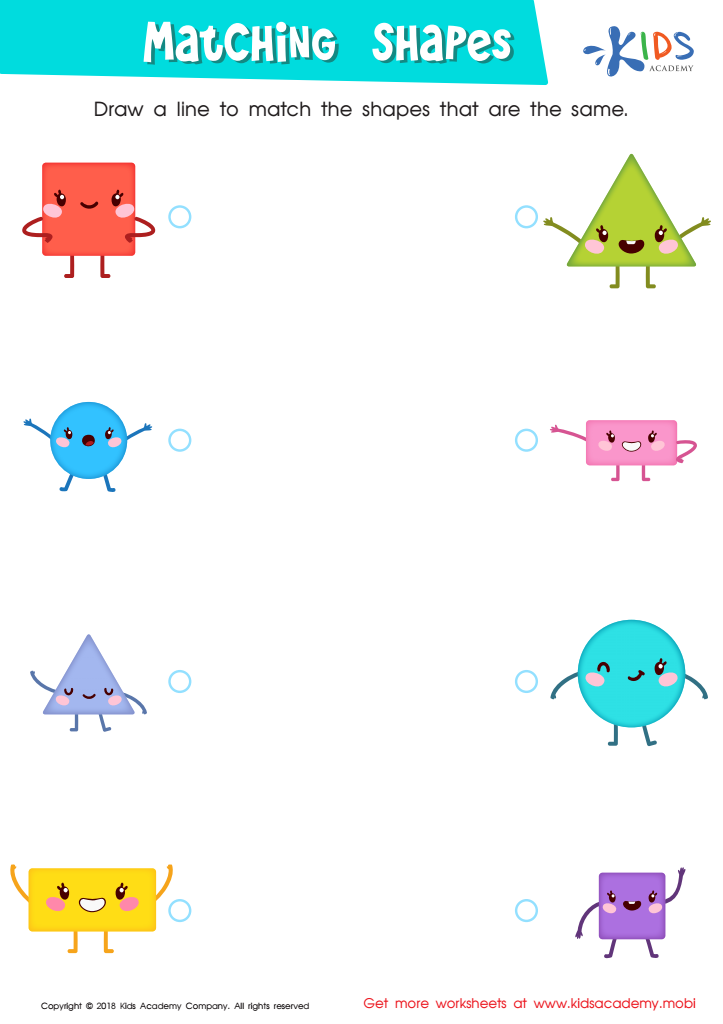
Matching Shapes Worksheet
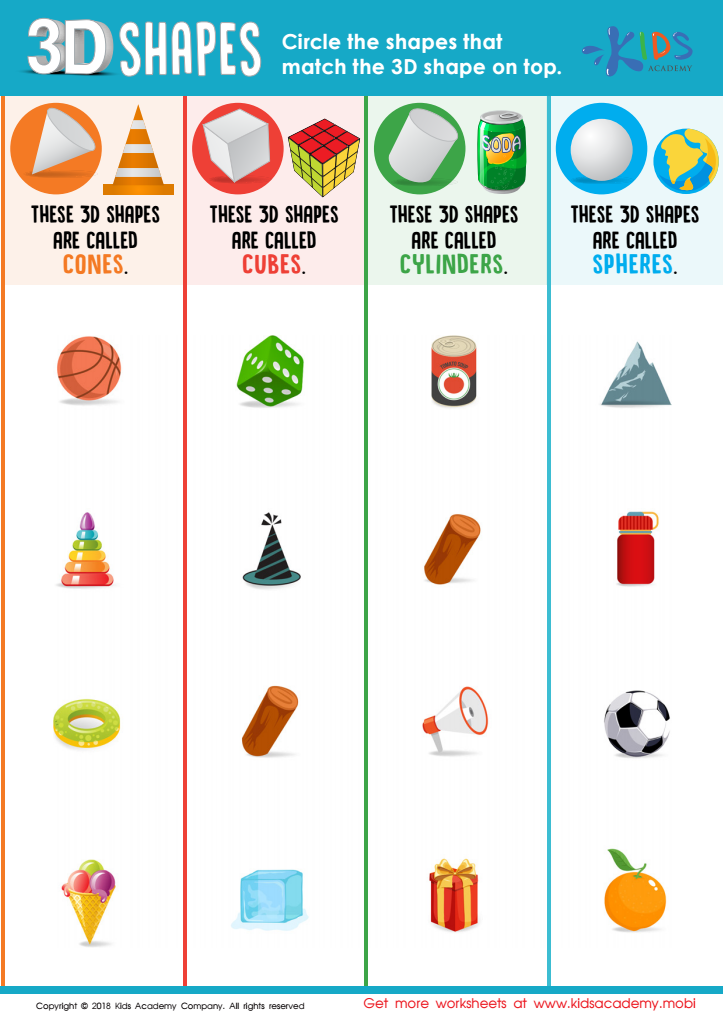
3D Shapes Worksheet
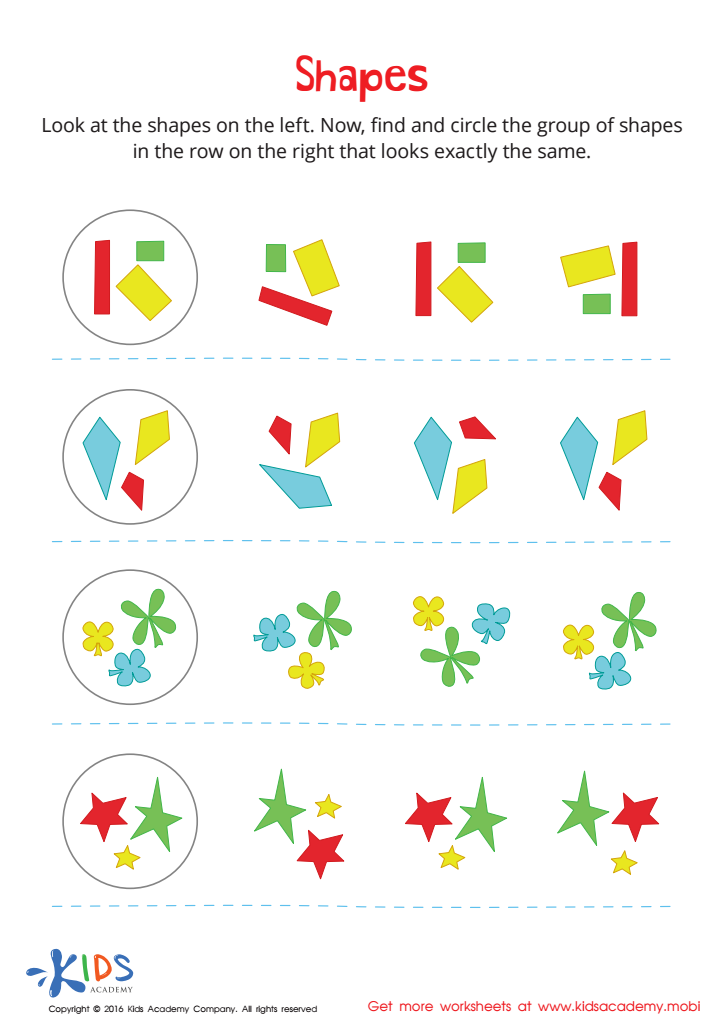
Shapes Worksheet
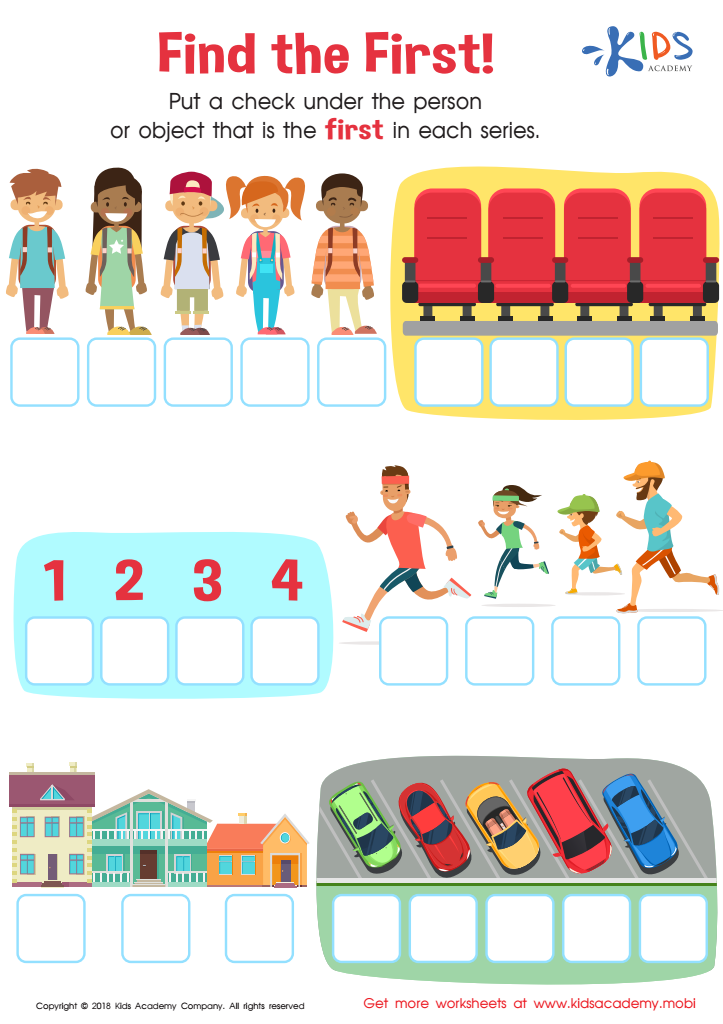
Find the First! Worksheet








Cognitive Development Geometry for children ages 3-8 is crucial for several reasons, and parents or teachers play a vital role in nurturing this aspect of early learning. At this formative age, children are developing foundational cognitive skills that influence their future academic success and problem-solving abilities. Geometry helps them understand spatial relationships, shapes, and patterns, which are critical areas of cognitive development.
Understanding geometry hones children's visual-spatial skills. These skills aid in everyday tasks such as navigating environments and understanding spatial orientations. Geometry also enhances their analytical and reasoning abilities. When children explore different shapes and their properties, they learn to compare, classify, and make inferences—key skills for both math and science.
Additionally, early exposure to geometry aligns with developing necessary language skills. Discussing and describing geometric shapes and spatial relationships improves their vocabulary and communication abilities.
Furthermore, engaging with geometry through hands-on activities and play fosters creativity and critical thinking. Constructing shapes and solving puzzles, for example, require children to think outside the box and offers a sense of accomplishment.
By focusing on cognitive development through geometry, parents and teachers lay a strong foundation for a child's future educational journey. It sets the stage for success in STEM (Science, Technology, Engineering, Mathematics) fields and everyday problem-solving challenges, making it an essential aspect of early childhood education.








