Phonological awareness Alphabet Worksheets for Ages 4-5
8 filtered results
-
From - To
Enhance your child's phonological awareness with our engaging Alphabet Worksheets designed for ages 4-5! These worksheets introduce foundational reading skills through fun activities that focus on sound recognition, letter association, and word manipulation. With bright illustrations and interactive exercises, your little ones will enjoy learning while developing essential literacy skills. Our resources aim to boost confidence and build a solid groundwork for future reading success. Perfect for preschool and kindergarten classrooms or at-home learning, these phonological awareness worksheets provide a fun learning experience that captures young learners' attention. Start your child's reading journey today with our thoughtfully crafted materials!
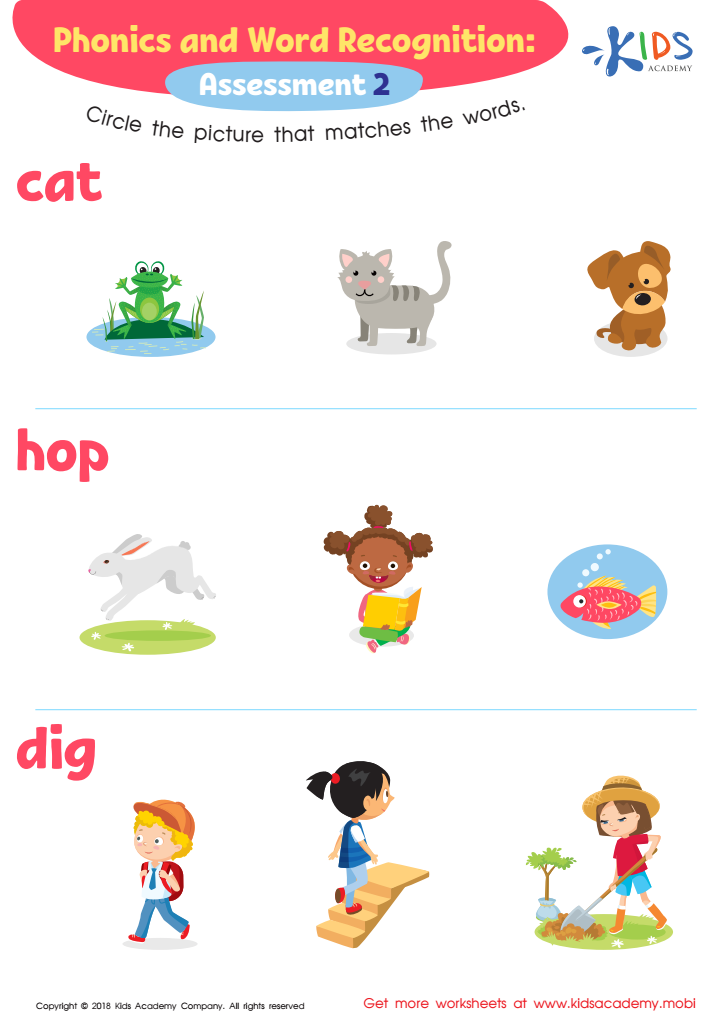
Phonological Awareness: Assessment 2 ELA Worksheet
 Assign to My Students
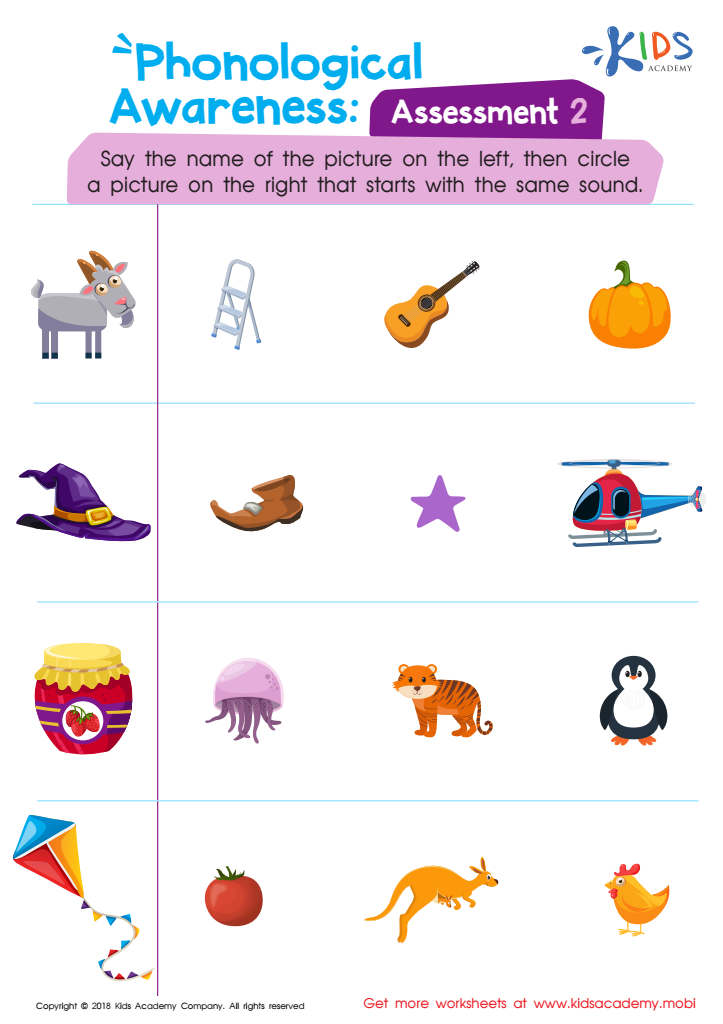
Phonological Awareness: Assessment 2 Worksheet
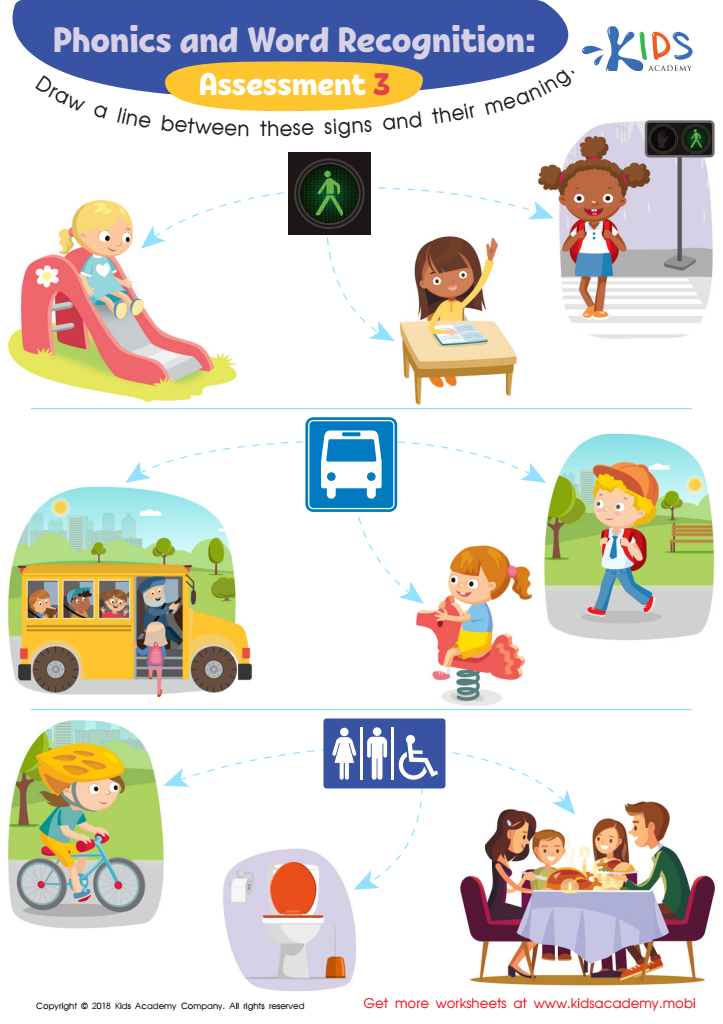
Phonological Awareness: Assessment 3 ELA Worksheet
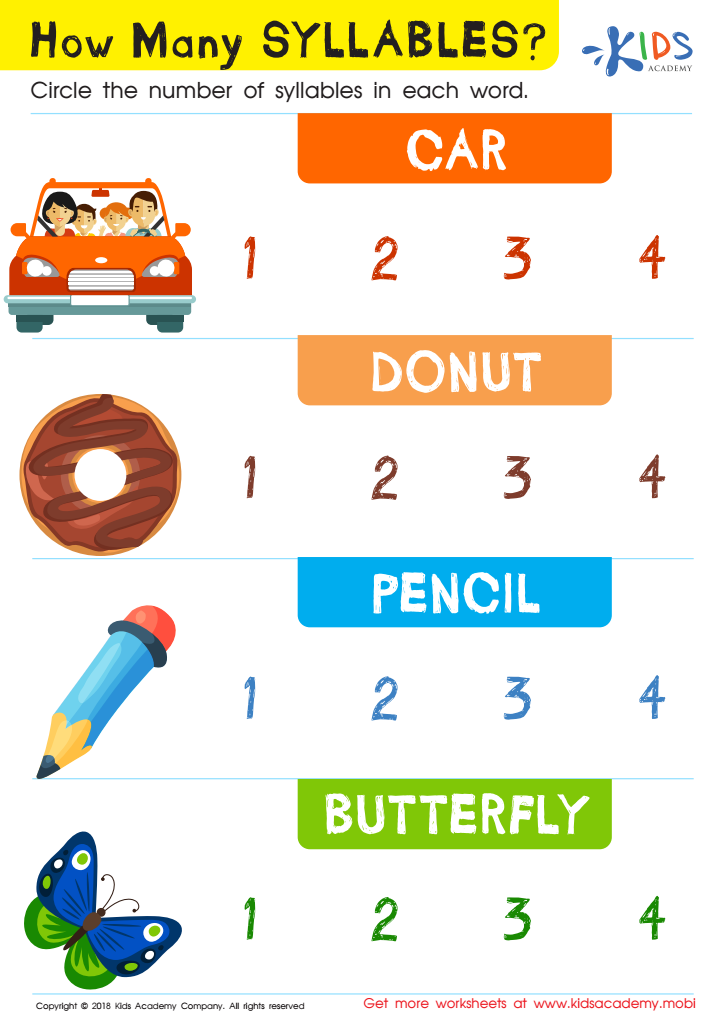
How Many Syllables? Worksheet
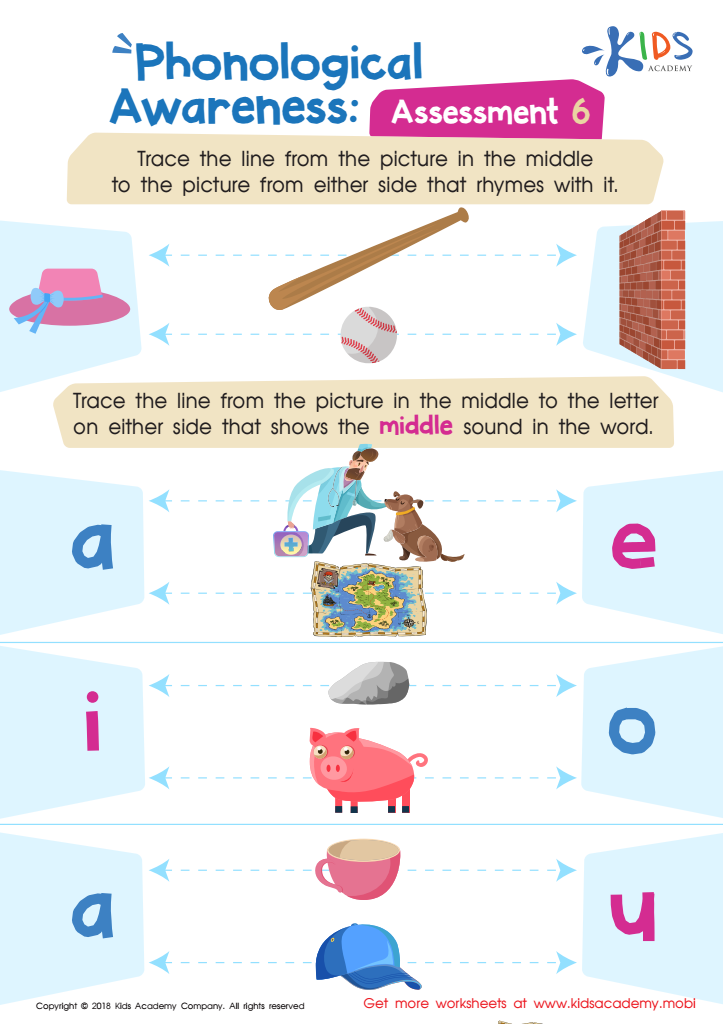
Phonological Awareness: Assessment 6 Worksheet
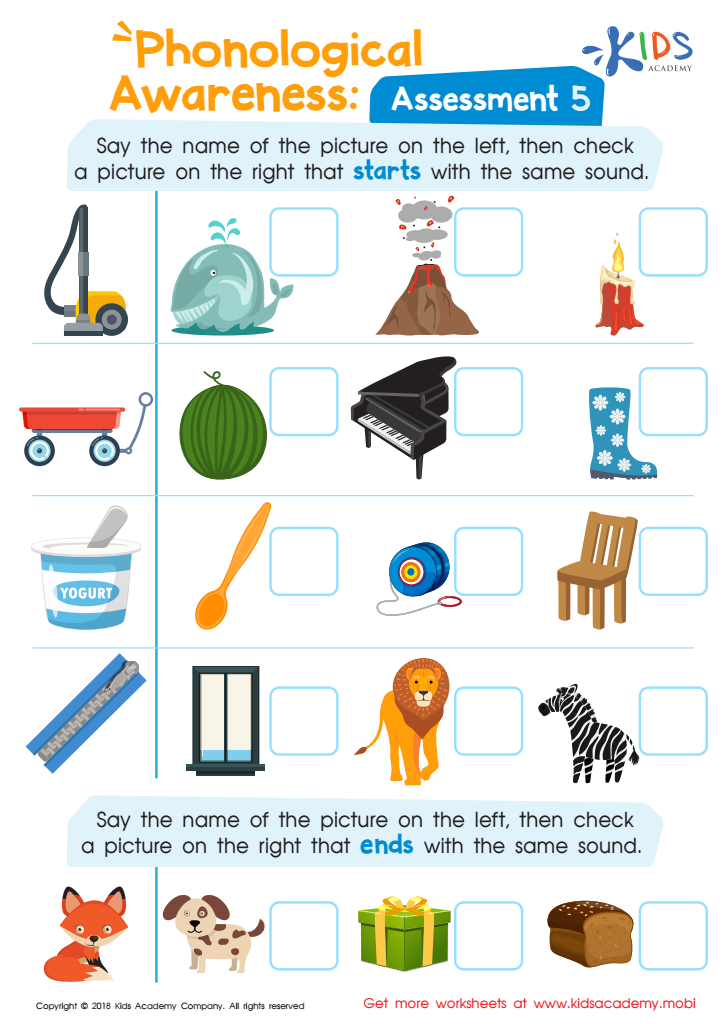
Phonological Awareness: Assessment 5 Worksheet
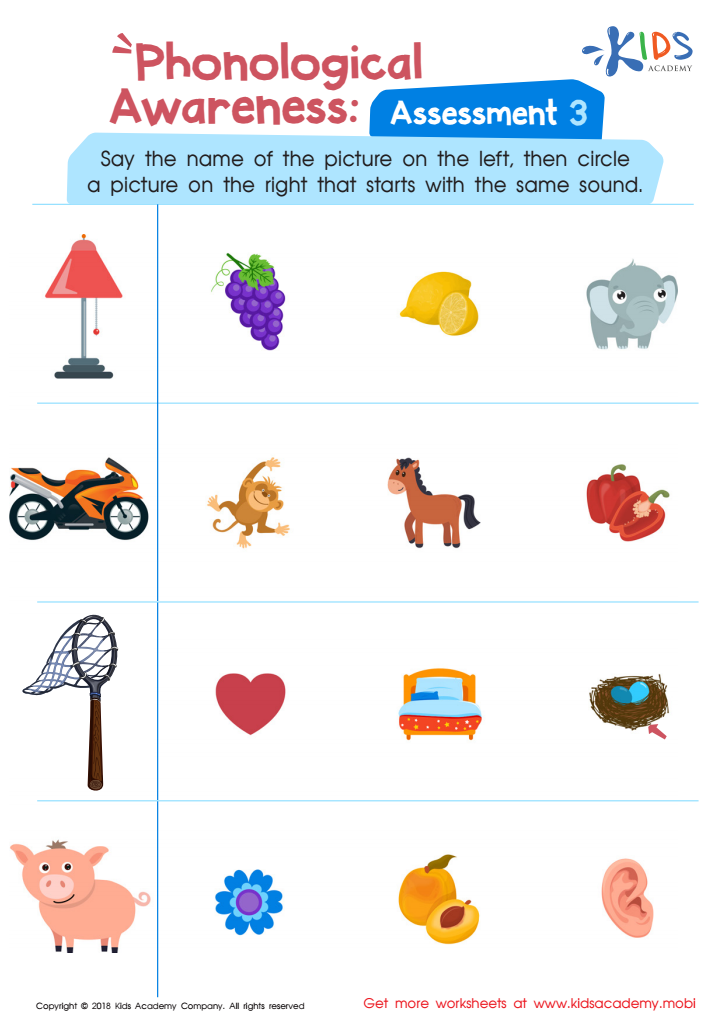
Phonological Awareness: Assessment 3 Worksheet
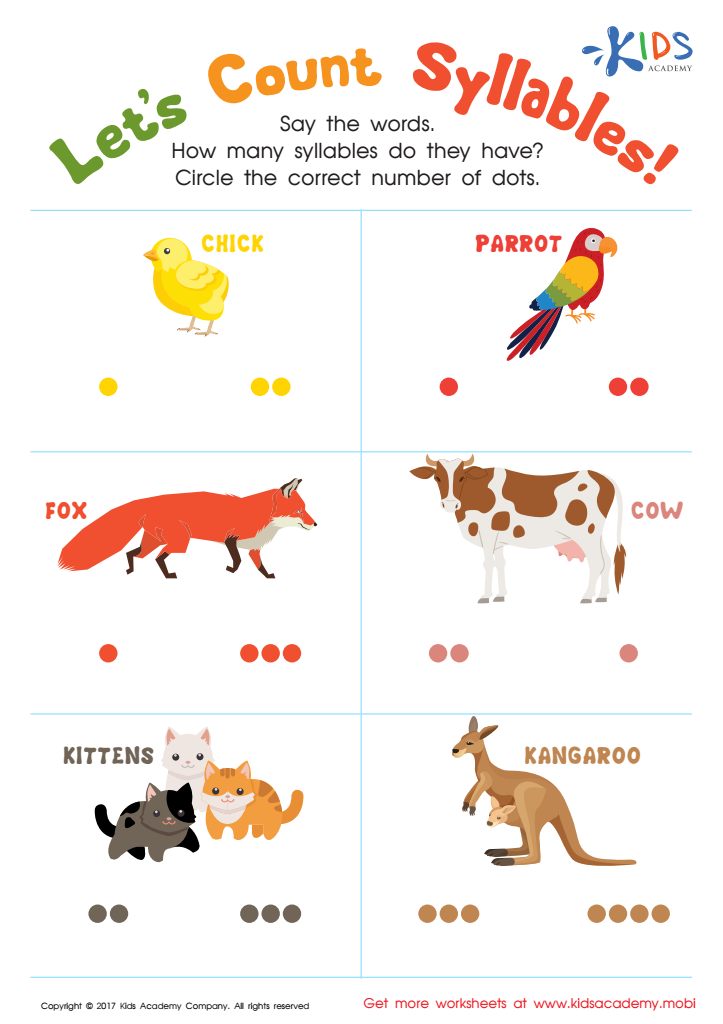
Lets Count Syllables Worksheet







Phonological awareness is a crucial foundational skill for children ages 4-5 as they embark on their journey to literacy. This skill involves recognizing and manipulating the sounds within spoken language, which is vital for reading and writing development. Parents and teachers should prioritize phonological awareness because it directly influences children's ability to decode words, a prerequisite for successful reading.
At this age, children can engage in playful activities that promote phonological awareness, such as rhyming games, clap out syllables, or identifying sounds in their names. These enjoyable exercises not only develop auditory discrimination but also foster a love for language and literature.
Research shows that early phonological awareness is a strong predictor of future reading success. When children can hear and manipulate sounds, they develop the ability to associate sounds with letters, leading to a smoother transition into literacy skills. Additionally, building a solid linguistic foundation at this age can boost children's confidence, helping them to engage with reading and writing tasks more enthusiastically.
In summary, prioritizing phonological awareness for young children lays the groundwork for enduring literacy skills, enhances cognitive development, and ignites a lifelong love of reading. Consequently, parents and teachers play a vital role in facilitating this essential part of early education.







