Shape Recognition Geometry Worksheets for Ages 4-5 - Page 2
34 filtered results
-
From - To
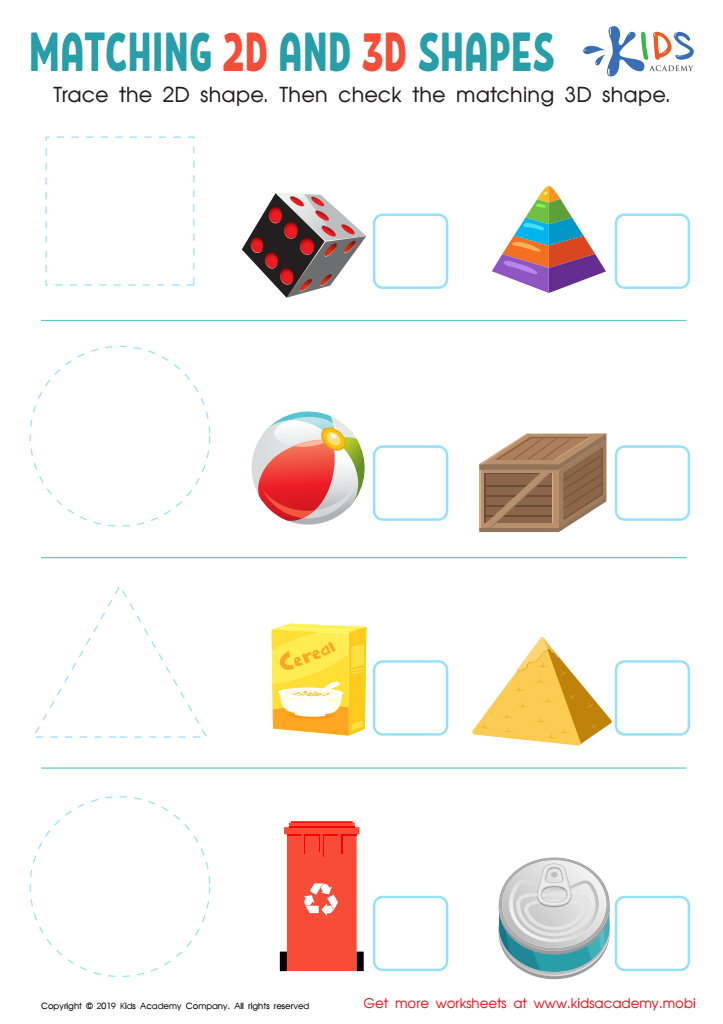
Matching 2D and 3D Shapes Worksheet
 Assign to My Students











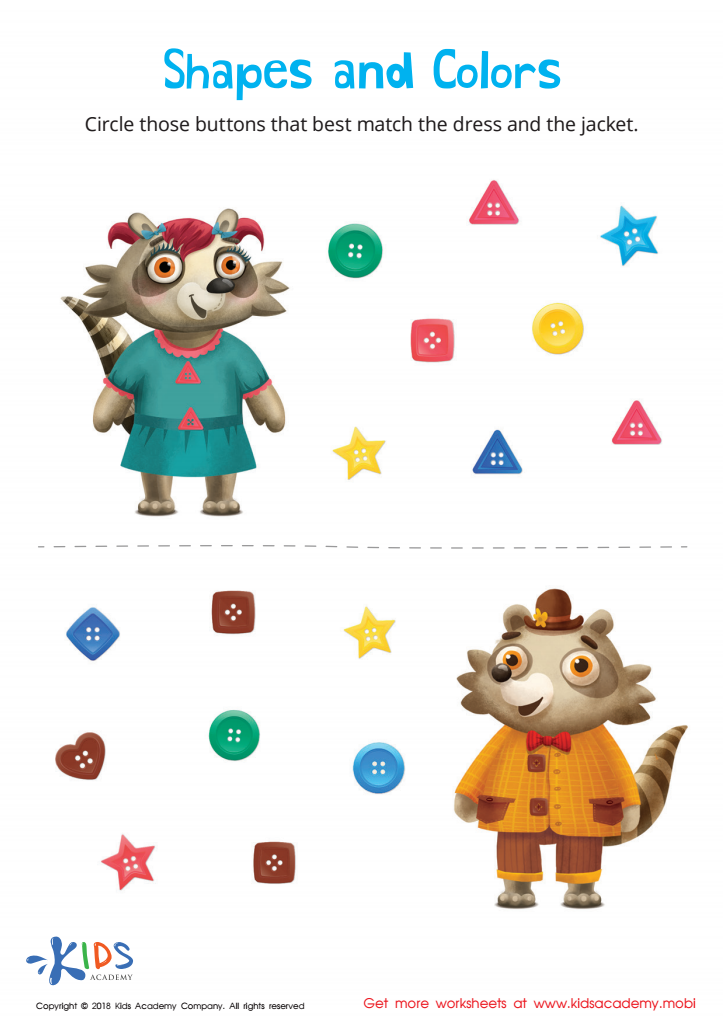
Shapes and Colors Worksheet
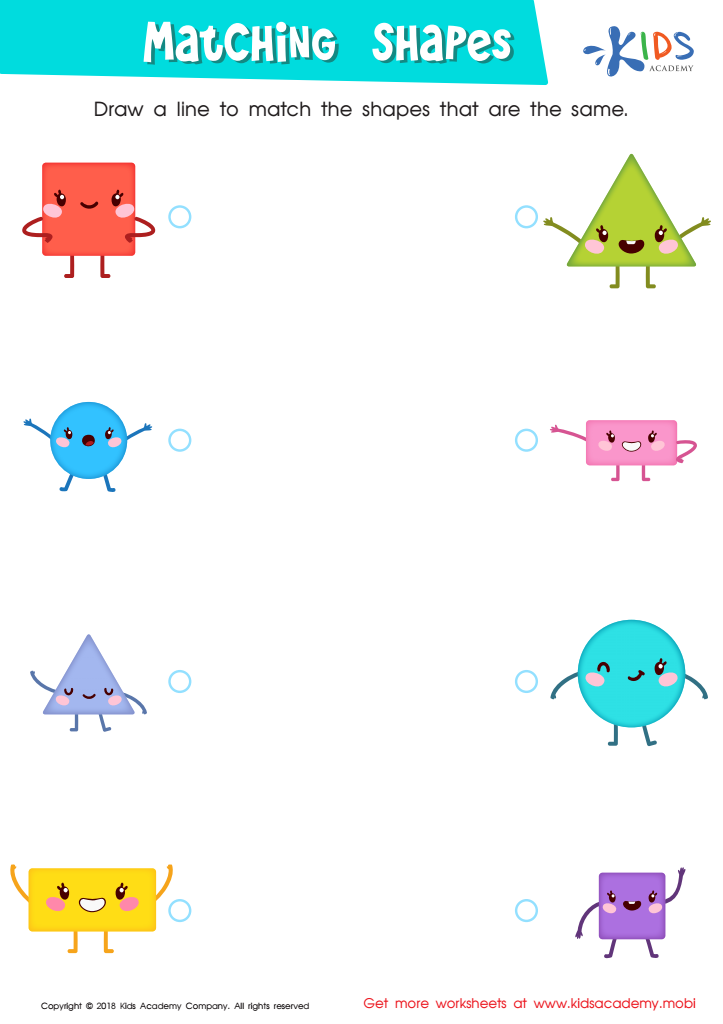
Matching Shapes Worksheet
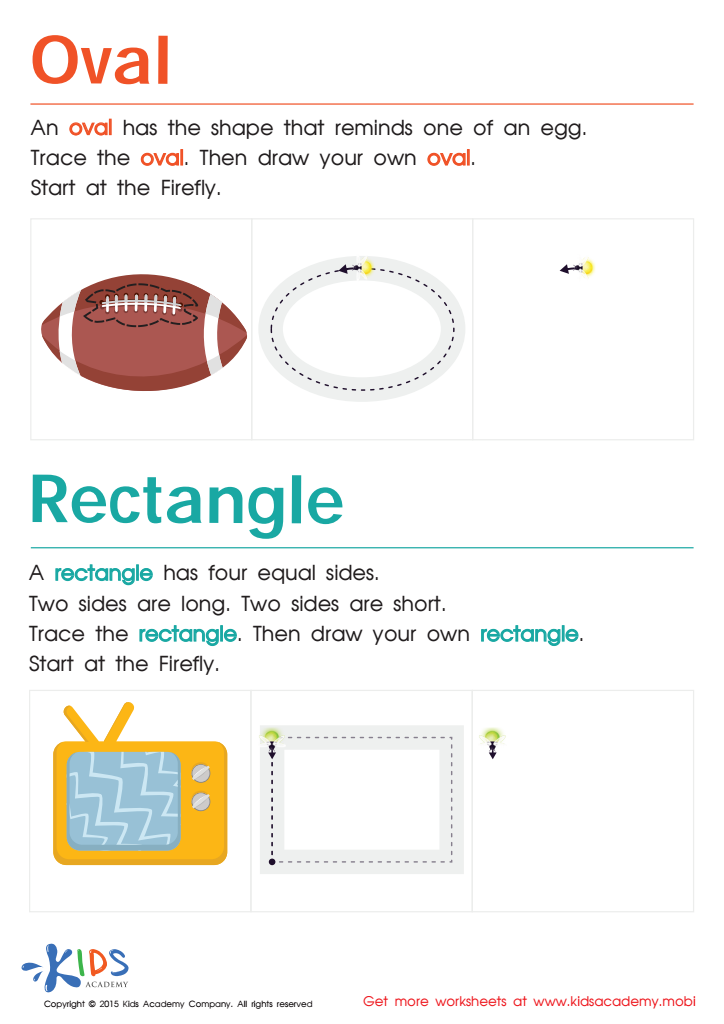
Easy Drawing of Ovals And Rectangles Worksheet
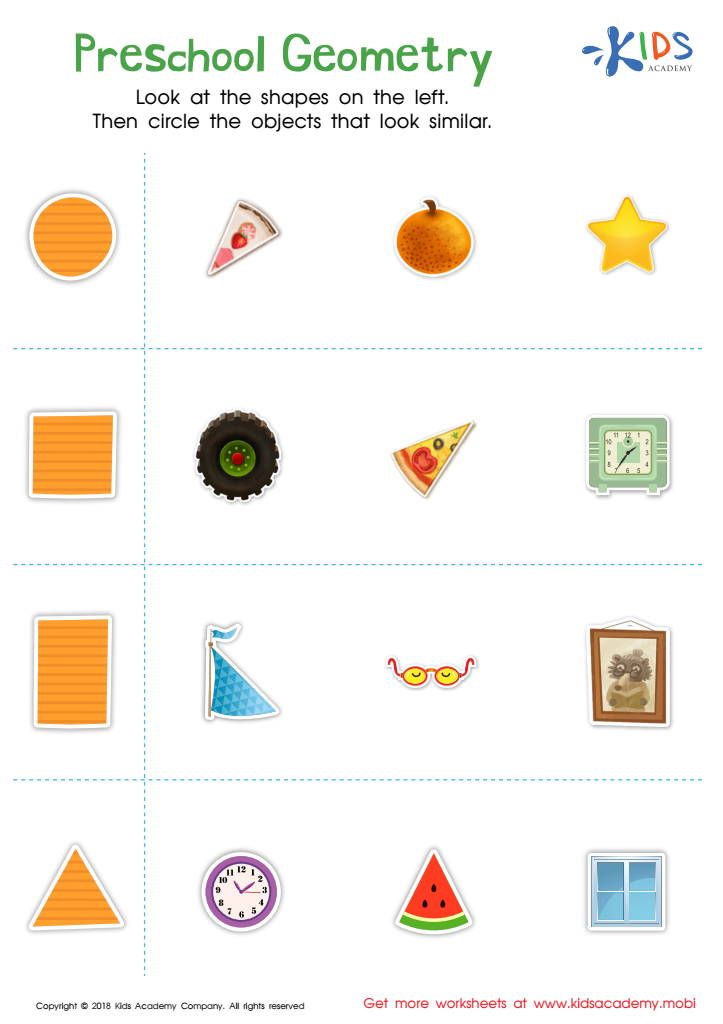
Preschool Geometry Worksheet
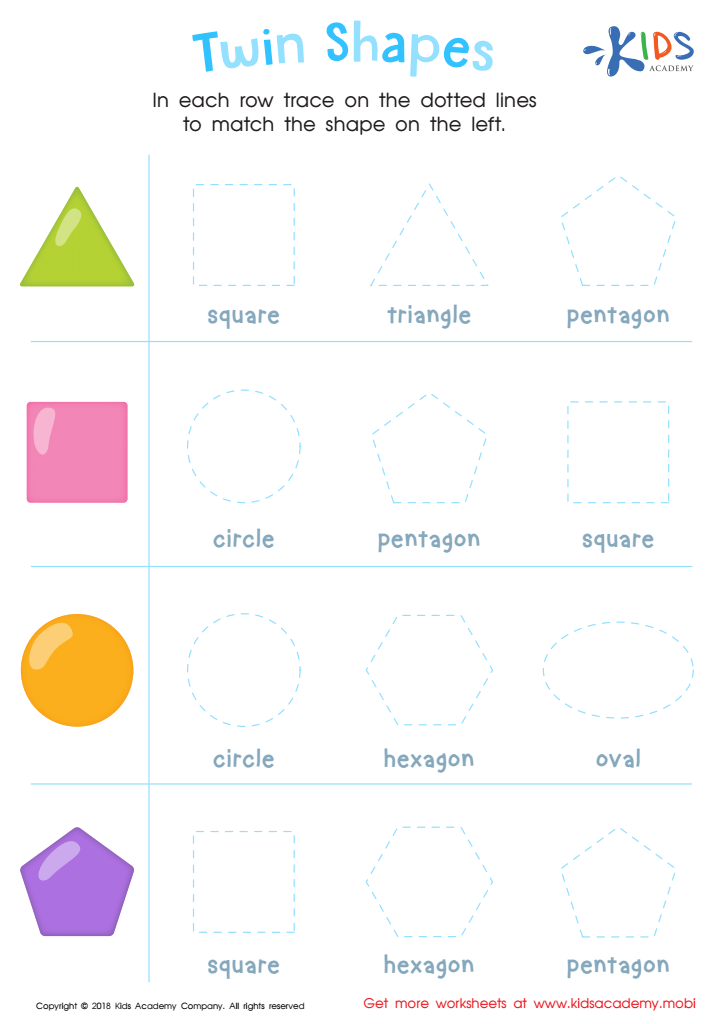
Twin Shapes Dot-to-Dot Worksheet
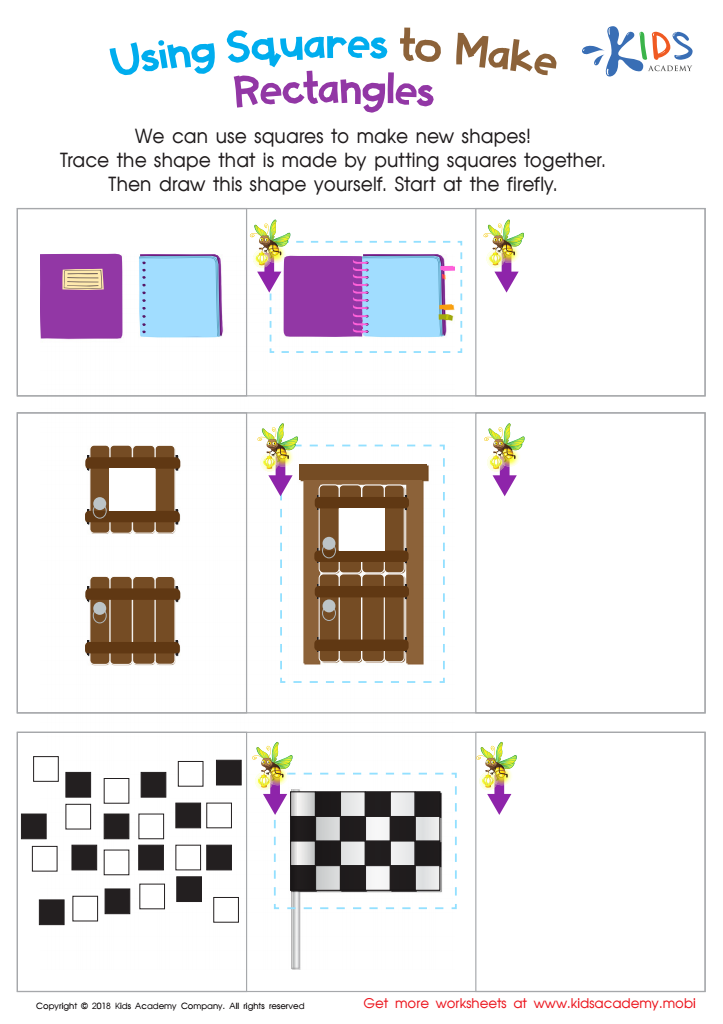
Using Squares to Make Rectangles Worksheet
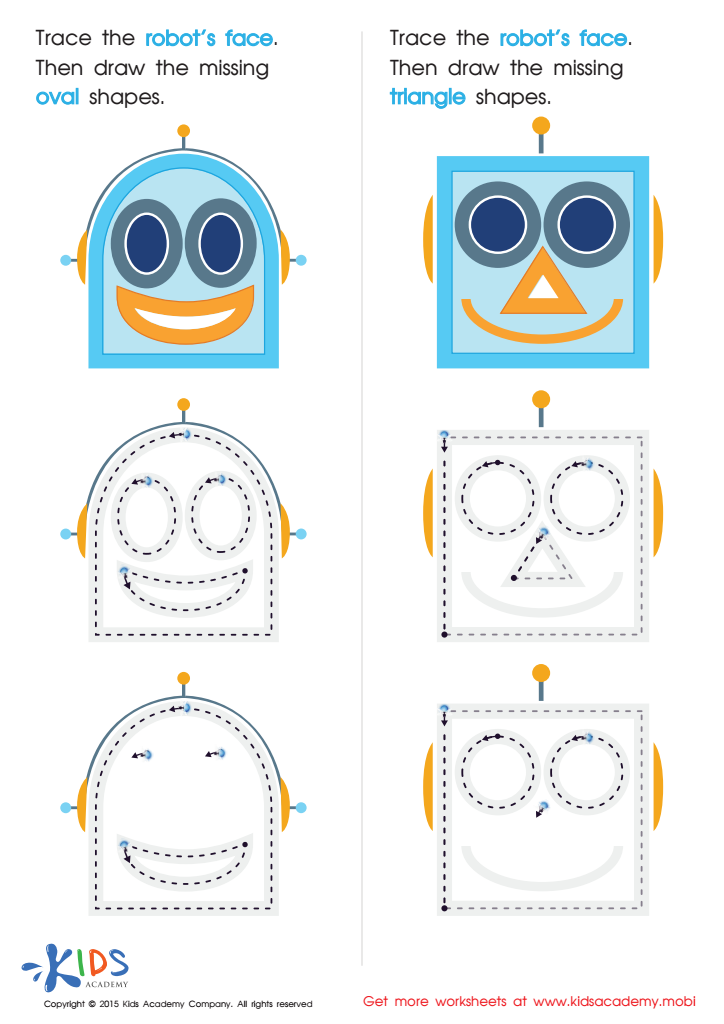
Drawing Ovals And Triangles with Fun Printable
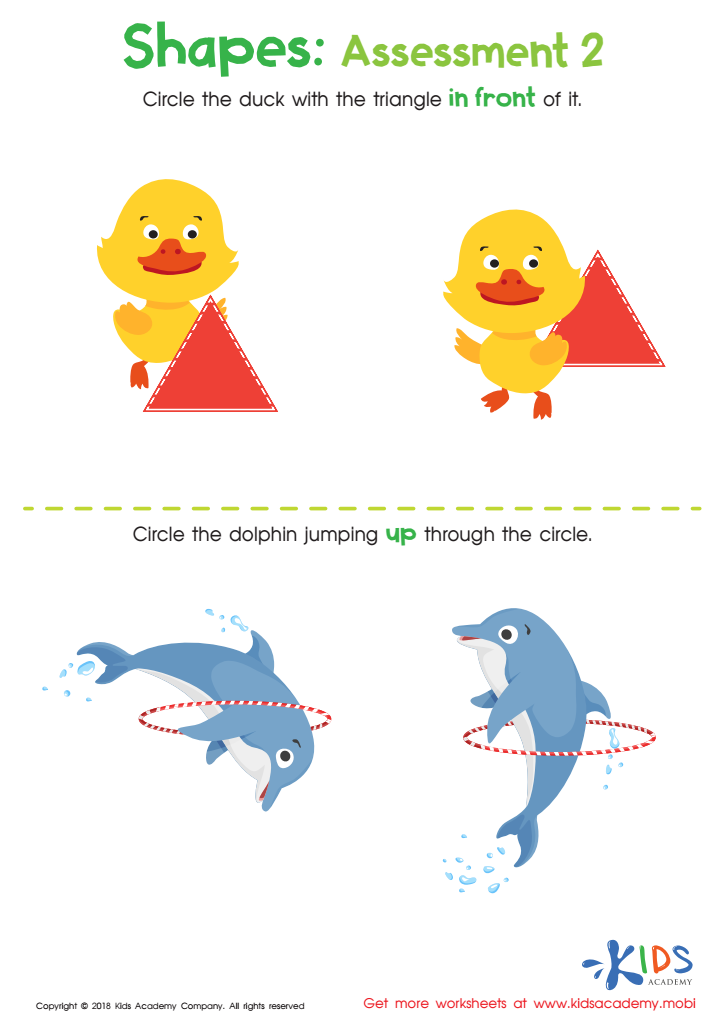
Geometry – Assessment 2 Worksheet
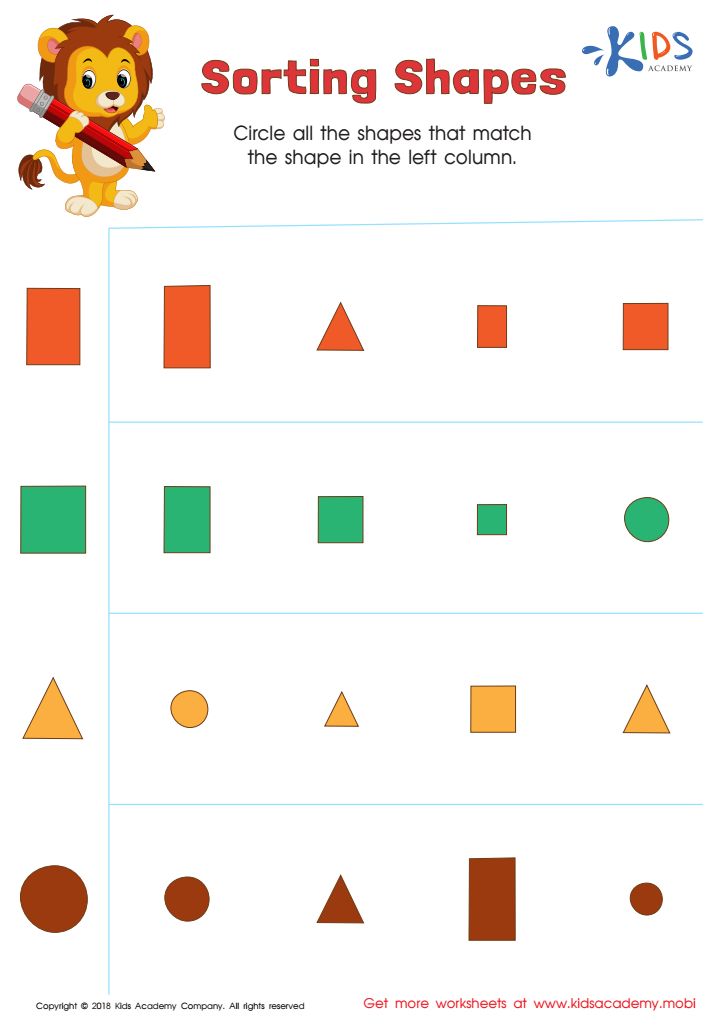
Sorting Shapes - Part 2 Worksheet








Shape recognition is a fundamental building block in early childhood education, particularly for children aged 4-5. Parents and teachers should care about this aspect of geometry because it is crucial for cognitive development and lays the groundwork for future mathematical understanding. Recognizing and distinguishing between shapes helps children develop critical thinking and problem-solving skills as they learn to categorize and relate objects in their environment.
Moreover, shape recognition promotes spatial awareness, which is essential in daily life and future academic areas, including math, science, and art. As children identify shapes, they also enhance their vocabulary, learning the names and properties of shapes like circles, squares, and triangles. This linguistic development furthers their communication skills and helps them engage in more complex conversations about the world around them.
Additionally, activities focused on shape recognition can boost fine motor skills through hands-on engagement, such as drawing or building with blocks. These activities can be easily integrated into play, making learning enjoyable and natural. By prioritizing shape recognition, parents and teachers support holistic development—cognitive, linguistic, physical, and social—ultimately setting the stage for a strong foundation in both mathematics and overall learning.








