Space Worksheets for Ages 4-7 - Page 2
33 filtered results
-
From - To
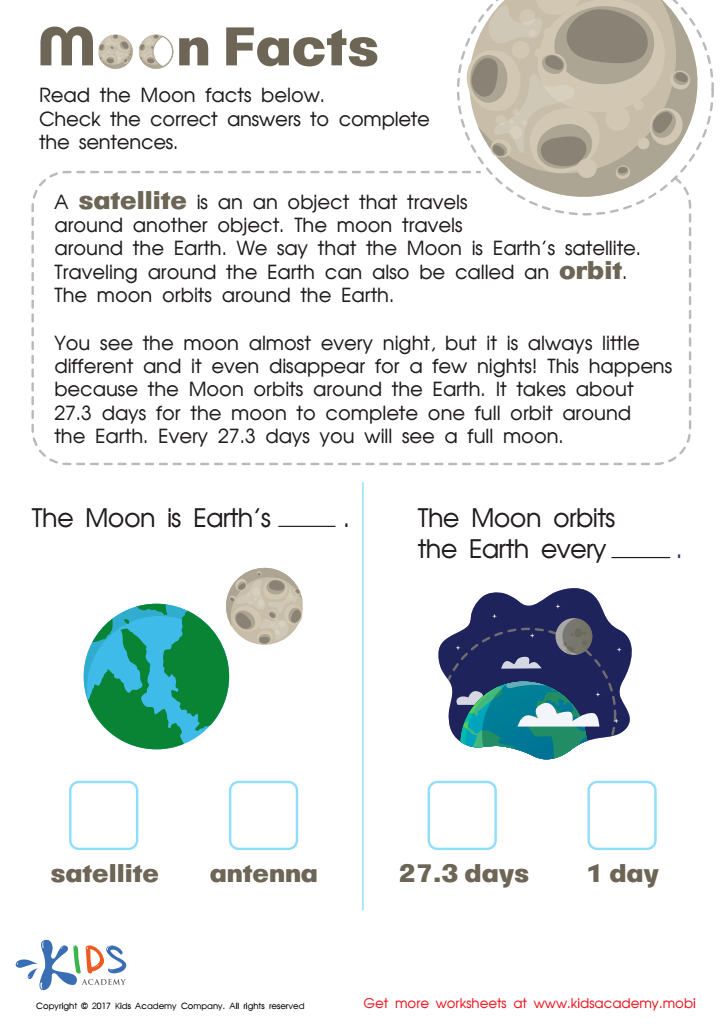
Moon Facts Worksheet
 Assign to My Students
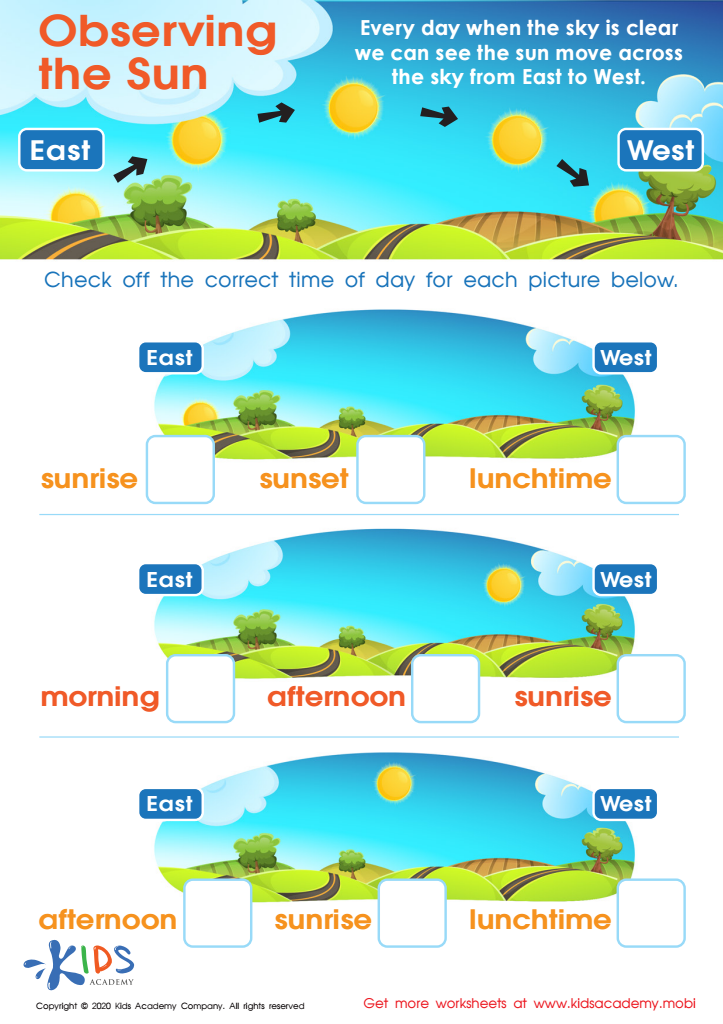
Observing the Sun Worksheet
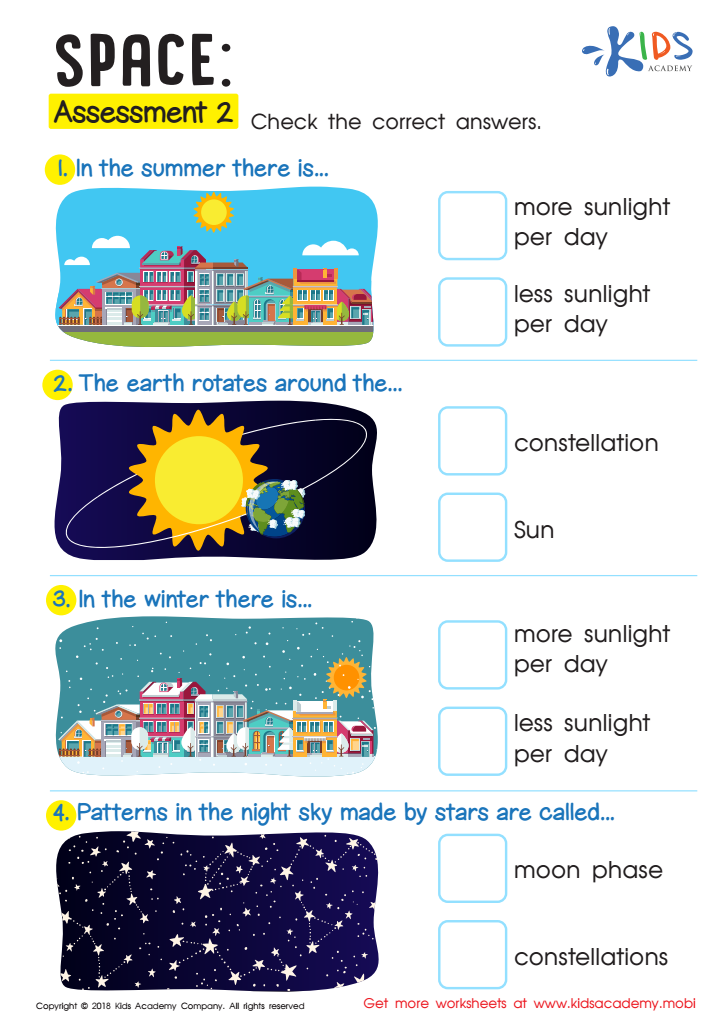
Space: Assessment 2 Worksheet
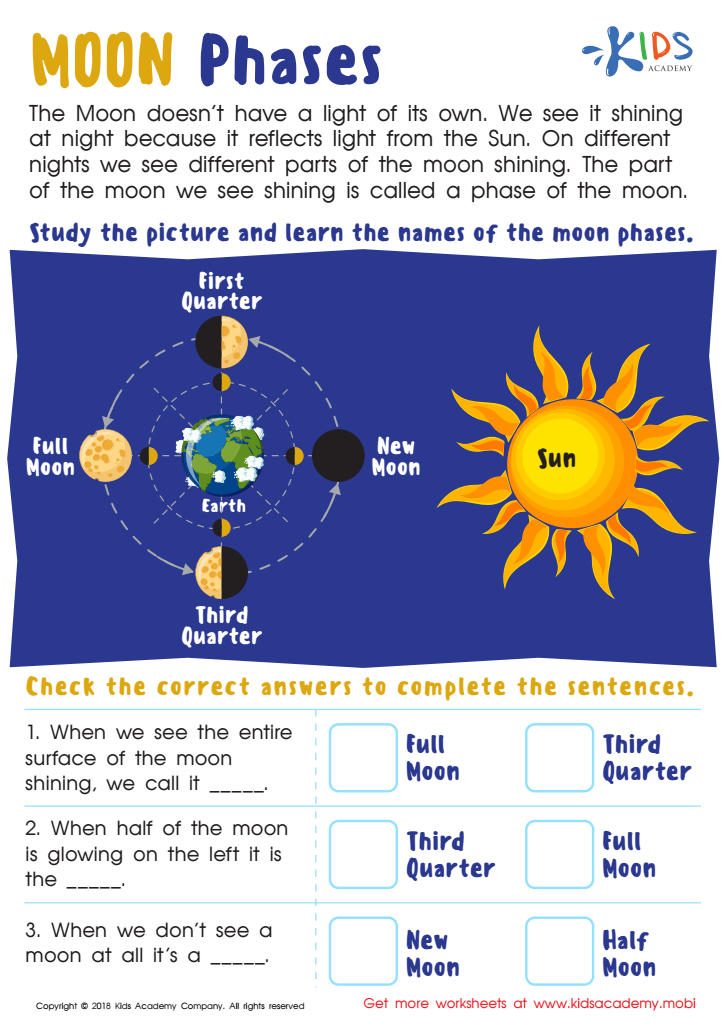
Moon Phases Worksheet
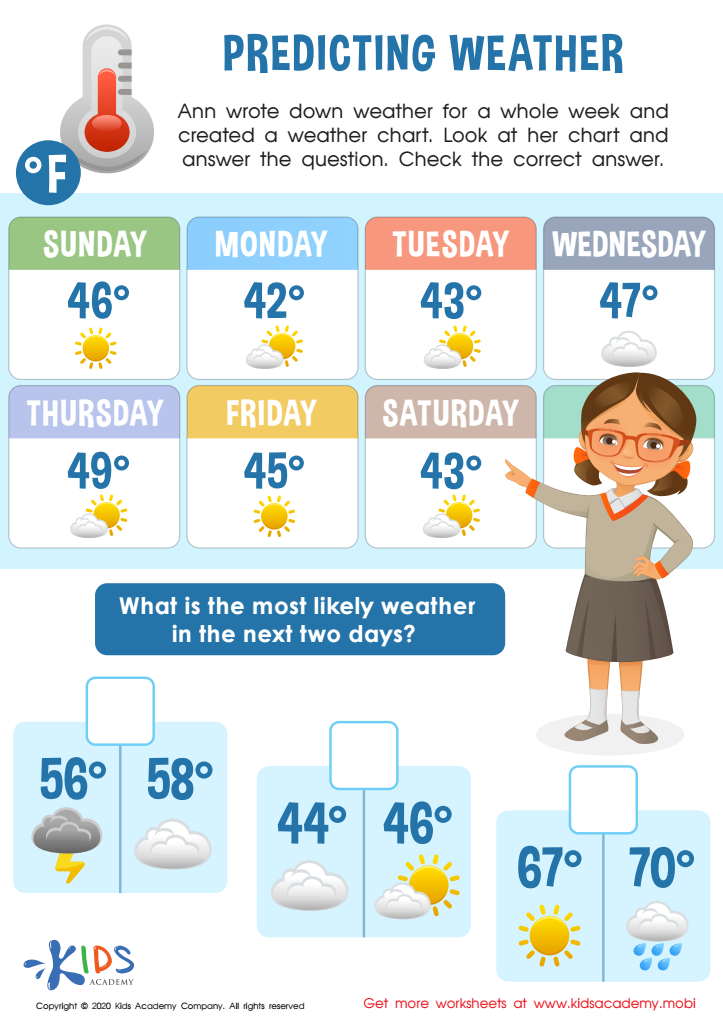
Predicting Weather Worksheet
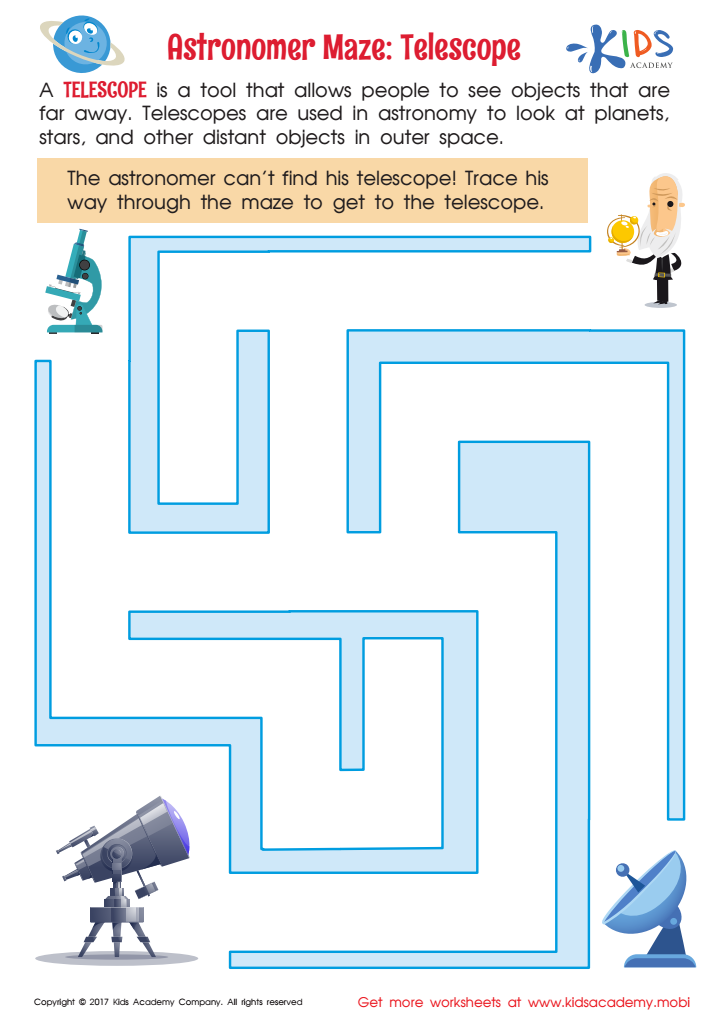
Astronomer Maze: Telescope Worksheet
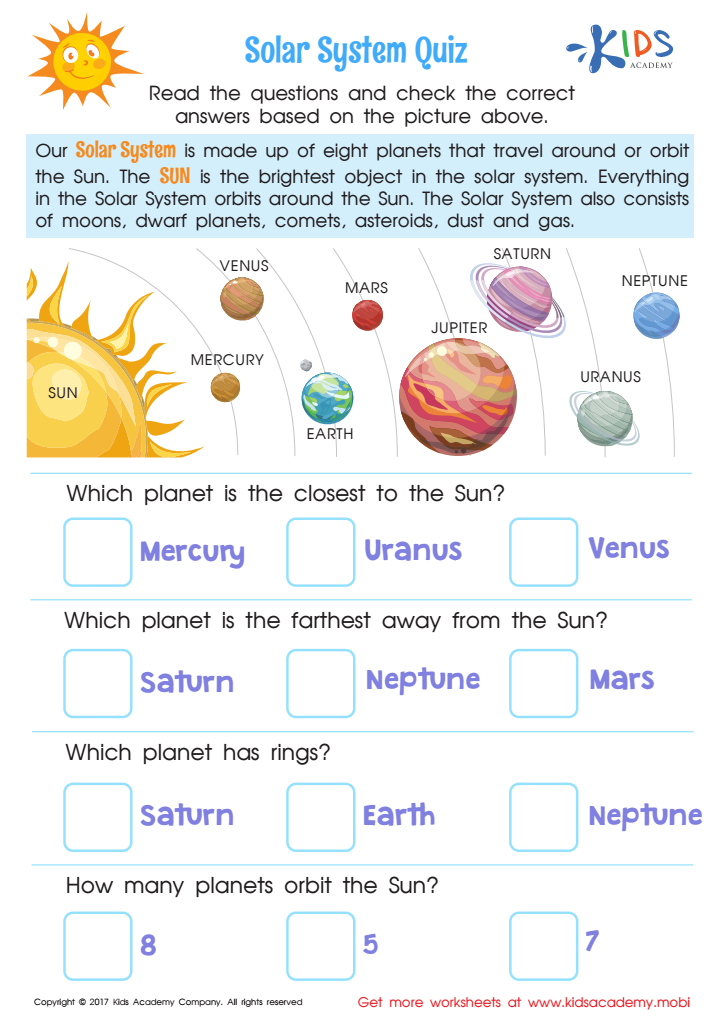
Solar System Quiz Printable
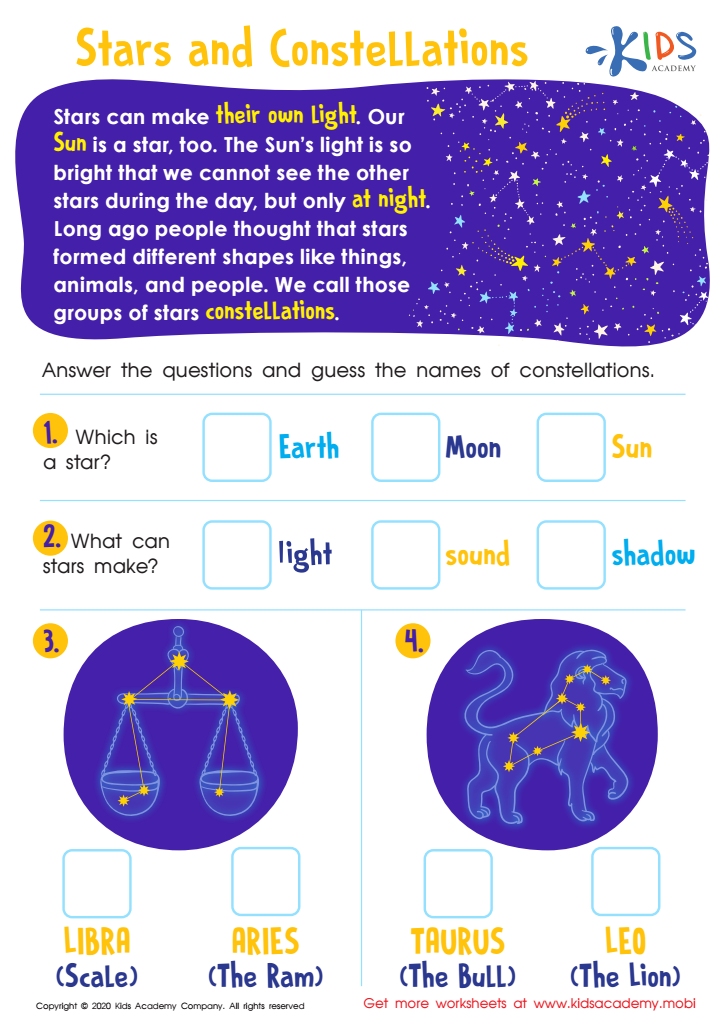
Stars and Constellations Worksheet
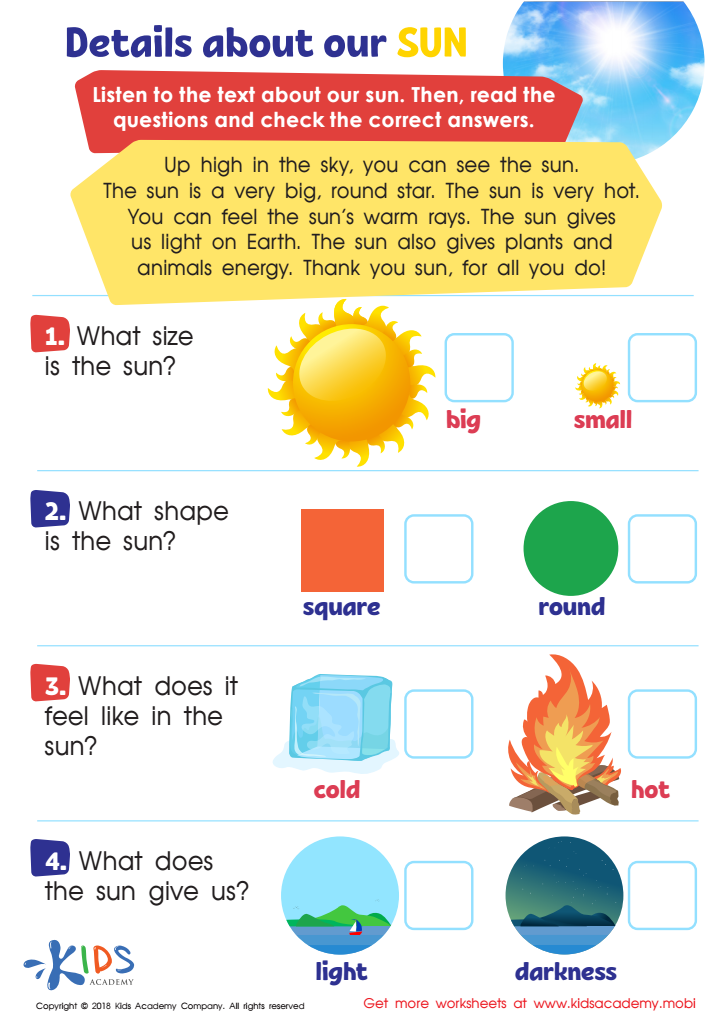
Details About Our Sun Worksheet







Understanding space is foundational for young children aged 4-7 as it fosters curiosity, critical thinking, and a fascination with science from an early age. Introducing space concepts ignites imaginations, encouraging children to ask questions and explore the world around them. At this age, their minds are like sponges, and they can grasp fundamental ideas about planets, moon phases, stars, and the solar system.
Learning about space aids in developing key cognitive skills. It enhances reasoning abilities and spatial awareness as children visualize planets orbiting and understand distances and scales. Engaging with space topics also supports early literacy and numeracy, as kids encounter new vocabulary and numbers associated with distances and sizes.
Additionally, space education can be deeply inspiring. It encourages a sense of wonder and possibility, motivating children to dream big and consider future professions in science, technology, engineering, and mathematics (STEM). Parents and teachers play crucial roles in nurturing this curiosity by providing age-appropriate materials and engaging activities, such as star-gazing, planet-themed crafts, or simple science experiments.
By caring about space education, parents and teachers are not just teaching science; they are opening doors to lifelong learning, innovation, and an enduring passion for discovering the unknown.







