
Following instructions Geometry Worksheets for Ages 4-8
8 filtered results
Difficulty Level
Grade
Age
-
From - To
Subject
Activity
Standards
Discover our "Following Instructions Geometry Worksheets" designed for kids ages 4-8! These engaging worksheets blend fun with learning, helping young learners master essential geometry concepts while enhancing their ability to follow instructions. Through colorful, hands-on activities involving shapes, patterns, and spatial reasoning, children will develop critical thinking and problem-solving skills. Perfect for both classroom and at-home learning, these printable worksheets cater to different skill levels, ensuring a tailored learning experience. Empower your child's mathematical journey with carefully crafted exercises that make learning enjoyable and effective. Visit Kids Academy to explore our comprehensive collection today!
Favorites
With answer key
Interactive
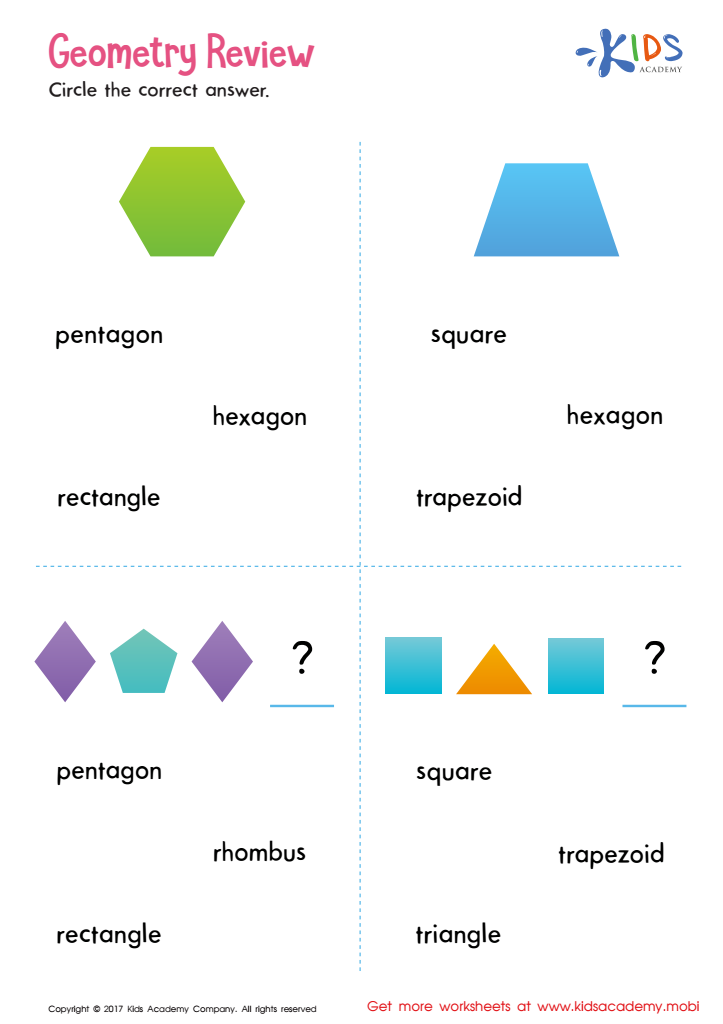
Geometry Review Printable
Repetition is key to success; give your child the practice they need with this geometry worksheet.
Geometry Review Printable
Worksheet











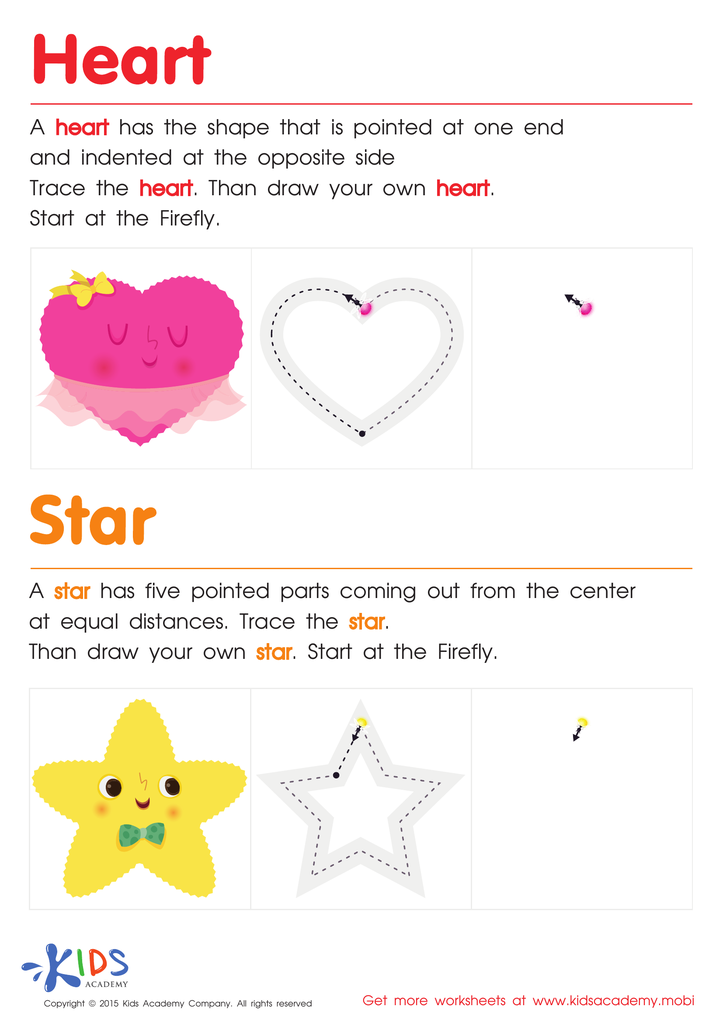
Let's Learn to Draw Hearts And Stars Printable
Trace and draw hearts and stars, learn their names and use them in your drawings. Start with the firefly and be creative!
Let's Learn to Draw Hearts And Stars Printable
Worksheet
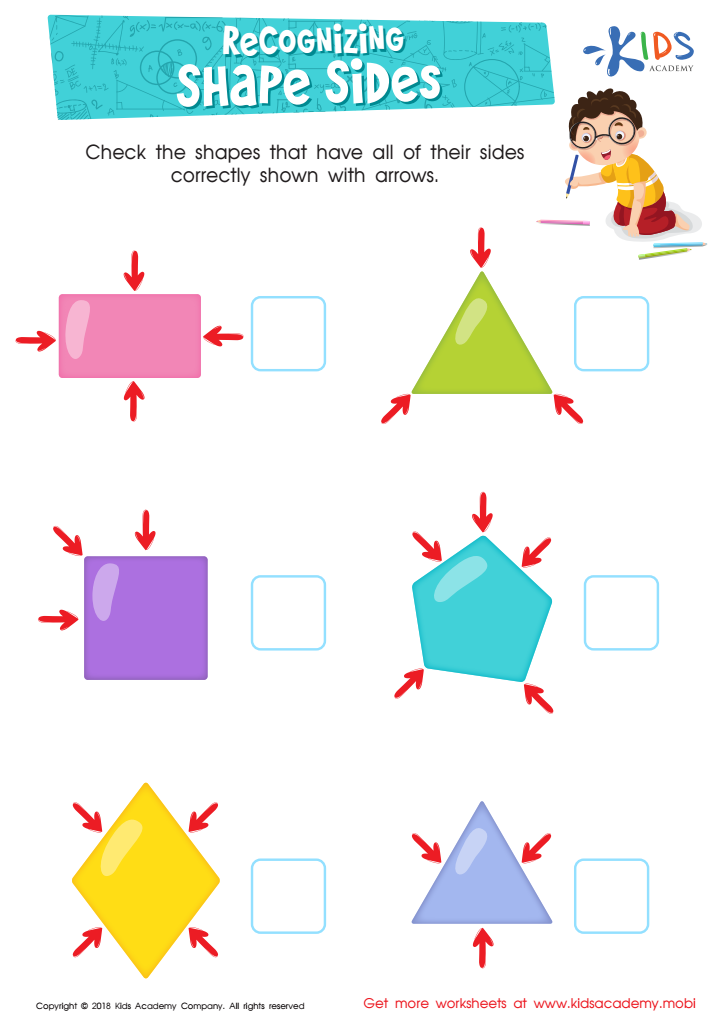
Recognizing Shape Sides Worksheet
This exercise will help your child recognize shape sides. Go over the difference between sides and angles first, then have them check the shapes with arrows to show the sides. They'll quickly get the hang of it and find it much easier after completing the colorful worksheet.
Recognizing Shape Sides Worksheet
Worksheet
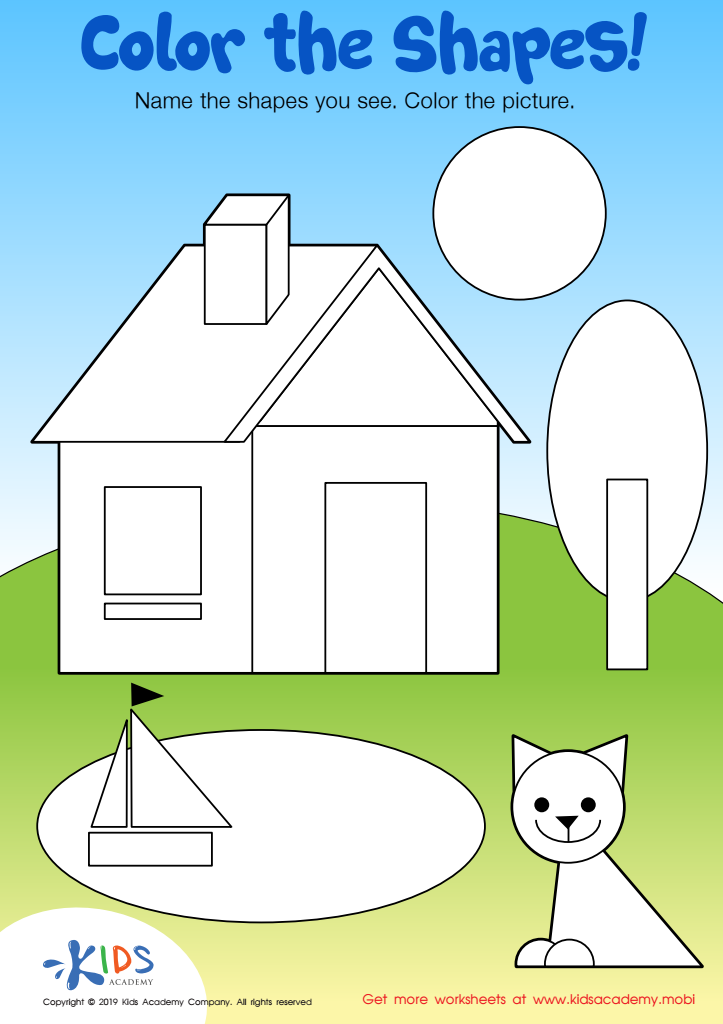
Color the Shapes Worksheet
Help your student master shape identification with this fun worksheet. Ask them to name the shapes in the picture, then color it! Ask questions like "How many squares do you see?" and "How many triangles?" to extend the learning. Identify squares, circles, triangles and rectangles with this enjoyable coloring page.
Download (PDF)
 Assign to My Students
Assign to My Students
Color the Shapes Worksheet
Worksheet
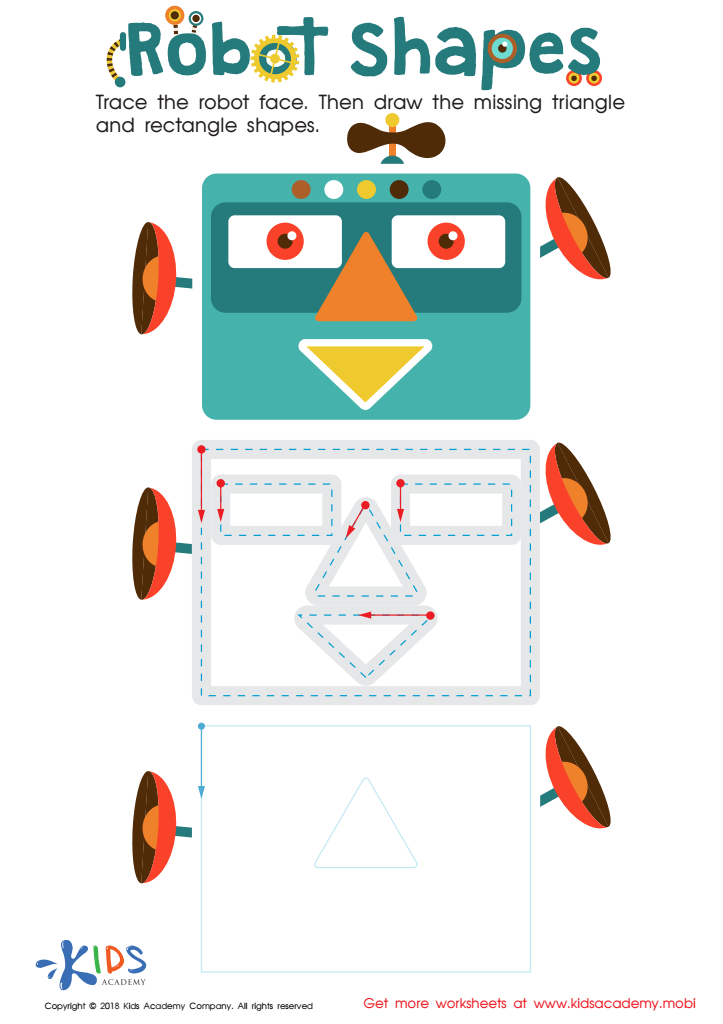
Robot Shapes Worksheet
Help your preschooler get started with math skills while having fun with this shape tracing worksheet featuring a cute robot! Ask them to study the first image, trace the dotted lines to draw the shapes in the second, and color the third. With this activity, they'll learn shapes while enjoying the funny robot pictures!
Robot Shapes Worksheet
Worksheet
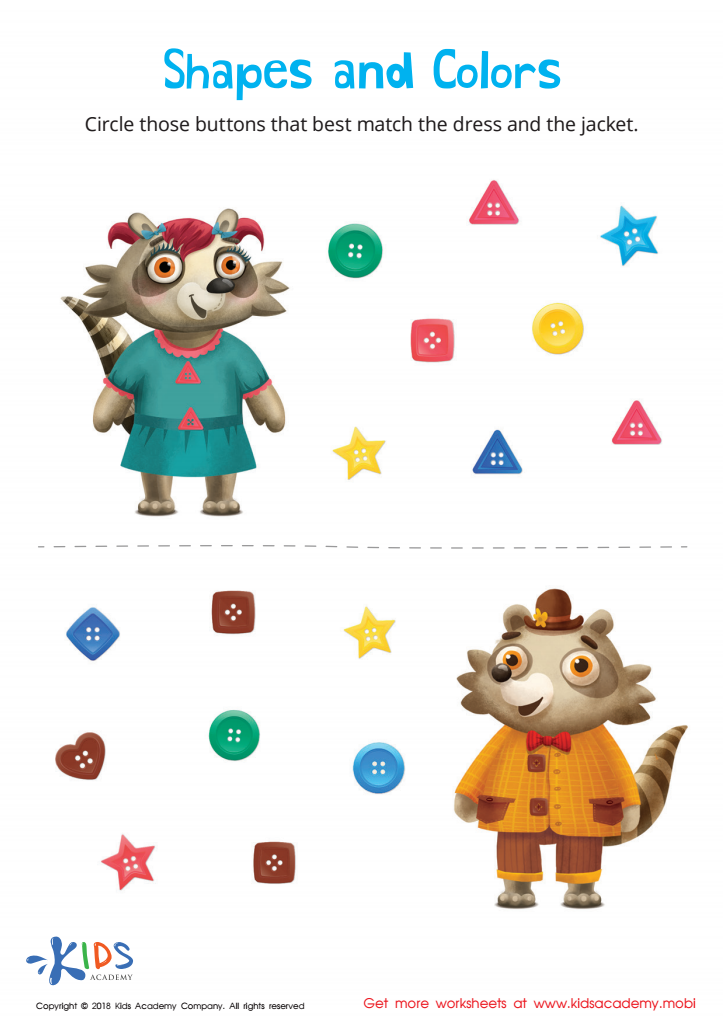
Shapes and Colors Worksheet
This worksheet is a fun way to teach toddlers shapes and colors! It has them match buttons on adorable racoon characters. Encourage your child to note the shape and color of the buttons then sort through and circle the matches. This helps build important attention to detail skills!
Shapes and Colors Worksheet
Worksheet
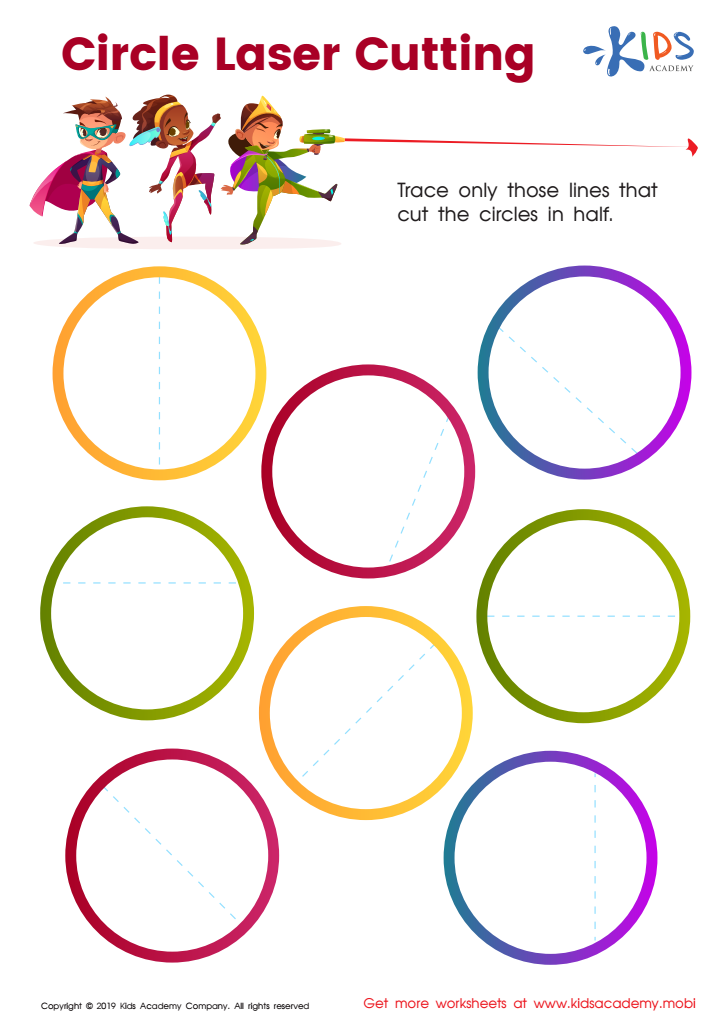
Circle Laser Cutting Worksheet
Encourage your kids to learn geometry! Remind them that when shapes are cut into two equal parts, they are called halves. Have them look at the circles in the worksheet, and trace the lines that cut the circles in half. Geometry is an essential part of education, and although it may not be exciting, it's a valuable skill to have.
Circle Laser Cutting Worksheet
Worksheet
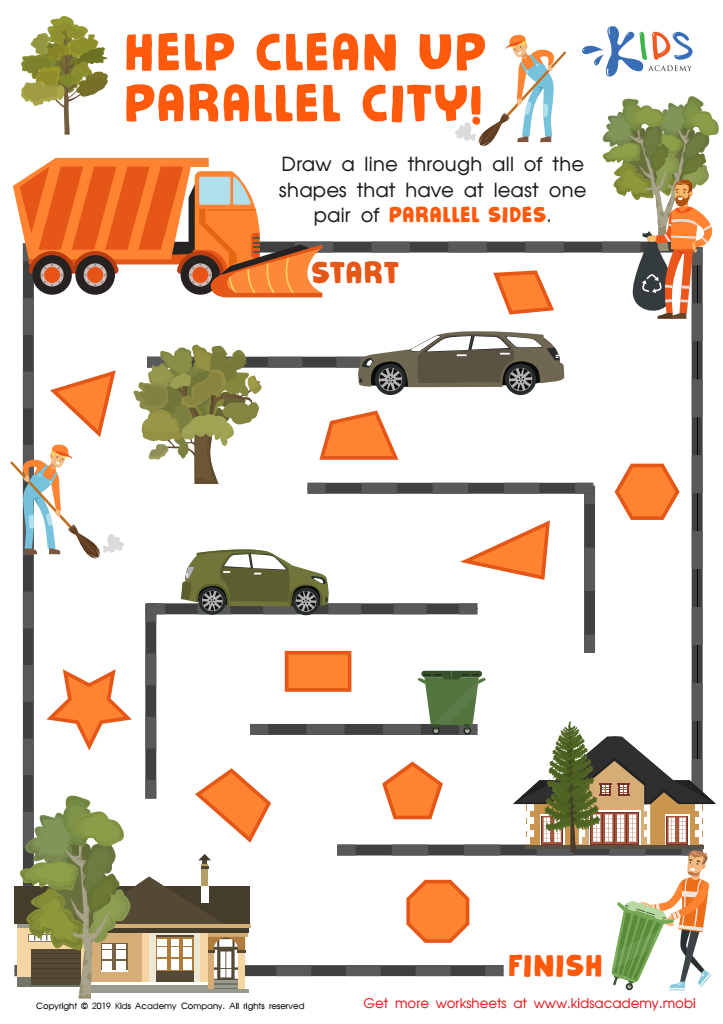
Help Clean Up Parallel City Worksheet
Explain to your kids what parallel sides are and have them identify the shapes with parallel sides in the picture. Then let them draw a line through all the shapes with at least one pair of parallel sides. This colorful worksheet will help them understand and practice this concept.
Help Clean Up Parallel City Worksheet
Worksheet
Join Kids Academy for Free
Who is primarily going to use this learning content?








Following instructions in geometry for children aged 4-8 is critical for several reasons. Firstly, it enhances cognitive development by teaching children to process information systematically. Young learners develop spatial awareness by recognizing shapes, sizes, and patterns, which form the foundational skills for advanced mathematical concepts. Moreover, understanding and following instructions enhances a child’s ability to concentrate and boosts their memory skills.
Secondly, it nurtures problem-solving skills. Kids learn to approach tasks methodically, fostering analytical thinking. For instance, building a shape based on specific instructions demands precise following, testing their abilities to understand and replicate geometrical figures.
Socially, following instructions in a geometry class can encourage collaborative learning. Students often work in pairs or groups to solve problems, promoting teamwork and communication skills. They learn to share ideas and follow guidelines collectively, fostering a sense of community and empathy.
Additionally, adhering to instructions is a life skill. It instills discipline, responsibility, and the capability to accomplish tasks accurately, essential traits in both academic and personal spheres. Hence, integrating instruction-following in early geometry education lays a robust foundation for lifelong learning and practical life skills, benefiting overall developmental growth. The combination of intellectual, social, and practical skill-building emphasizes its importance in the formative stages of education.








