
Fractions Worksheets for Ages 4-9
19 filtered results
Difficulty Level
Grade
Age
-
From - To
Subject
Activity
Standards
Our Fractions Worksheets for Ages 4-9 help young learners build a strong foundation in understanding and working with fractions. Featuring engaging and kid-friendly activities, these worksheets cover key concepts like identifying fractions, comparing fractions, and much more. They are expertly designed to suit various learning styles and enhance visualization skills, ensuring a thorough grasp of the subject matter. Ideal for both parents and teachers, these printable resources make learning fractions fun and effective, all while supporting the curriculum standards. Give your child the tools they need to excel in math and develop a love for learning with our fraction worksheets.
Favorites
With answer key
Interactive
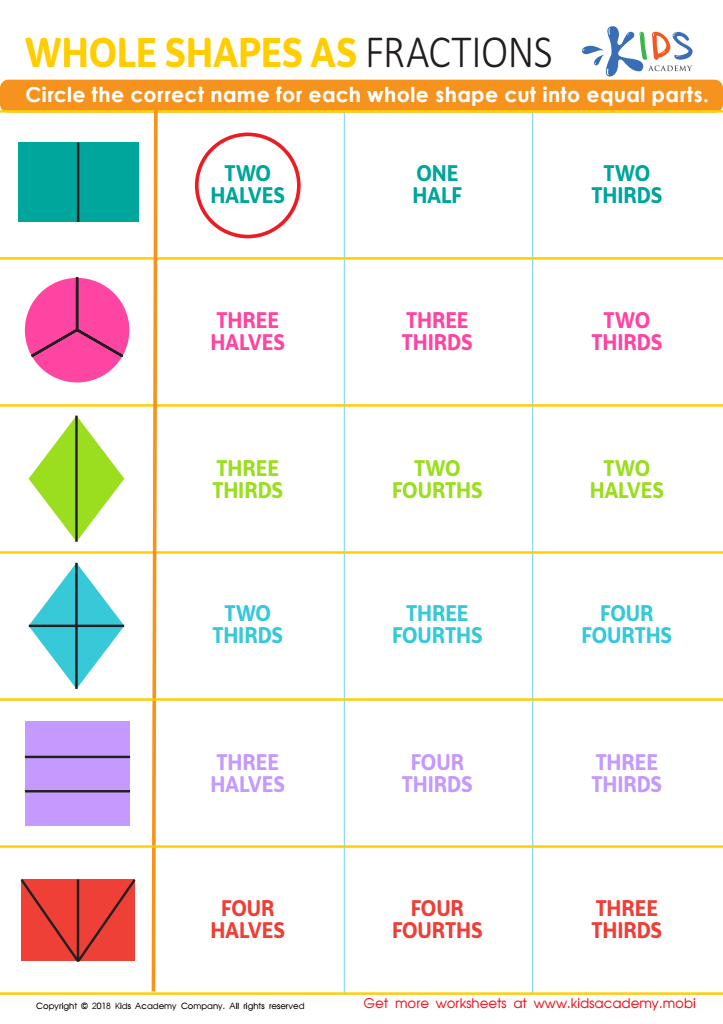
Whole Shapes as Fractions Worksheet
Introduce your child to fractions! After they can draw whole shapes, have them represent them as fractions using a simple worksheet. This will help improve their understanding of naming whole shapes cut into equal parts.
 Assign to My Students
Whole Shapes as Fractions Worksheet
Worksheet
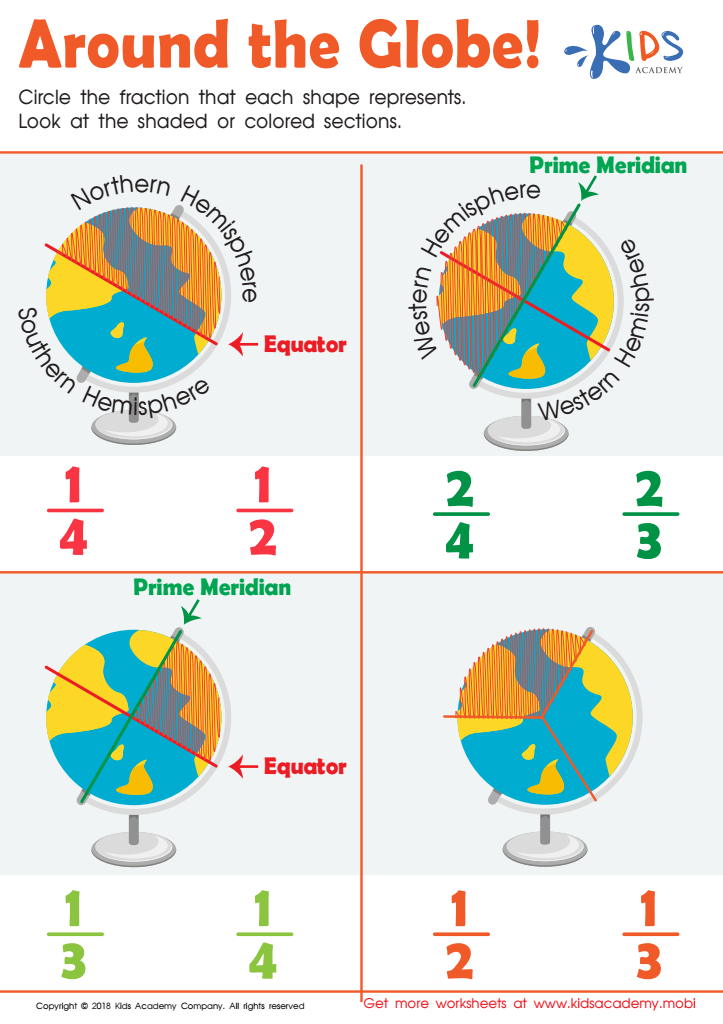
Around the Globe Worksheet
This worksheet introduces your students to the globe. Explain that it's a 3D representation of our planet, and highlight the Northern, Southern, Eastern and Western Hemispheres, plus the Equator and Prime Meridian. Then, have them circle the fractions associated with the shapes shown. Point out the shaded or colored sections for guidance.
Around the Globe Worksheet
Worksheet
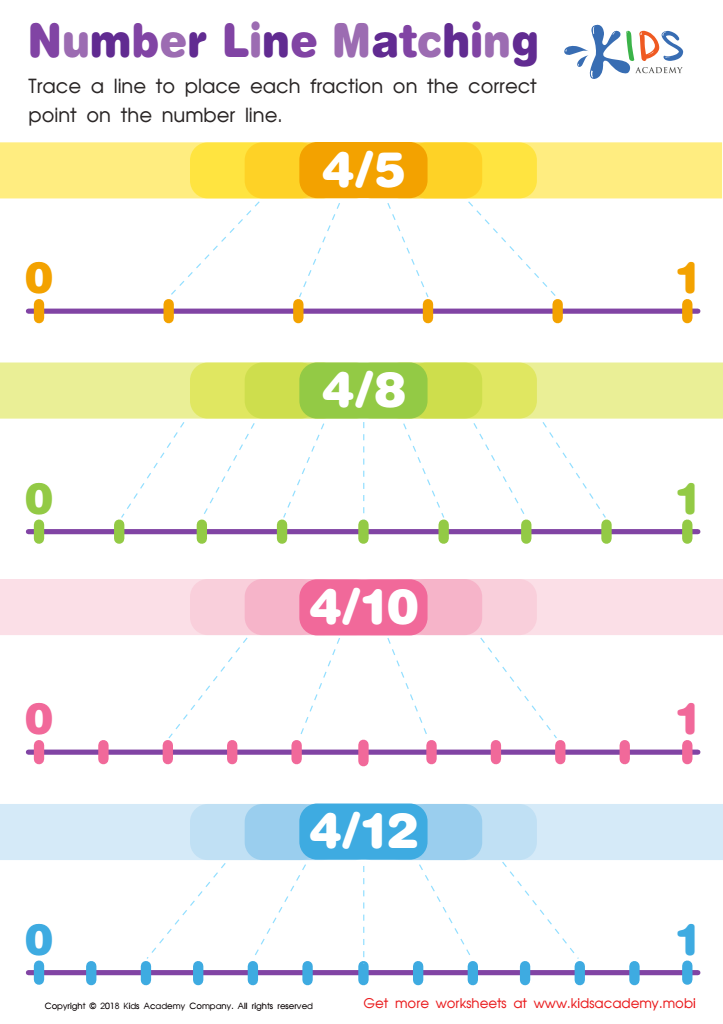
Number Line Matching Worksheet
Math can be fun! Have your child count points on the number line, then identify and trace fractions above it. It's a great way for them to learn and have some fun!
Number Line Matching Worksheet
Worksheet
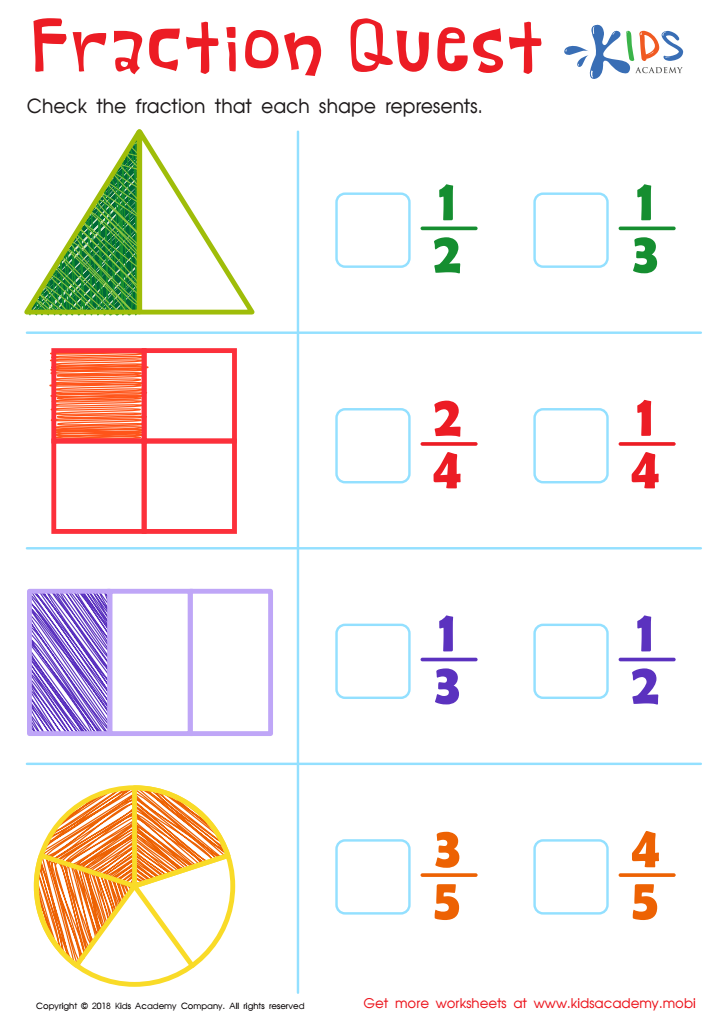
Fraction Quest Worksheet
This colorful and educative worksheet can help kids conquer their fractions struggles. Ask them to identify the four shapes, then the fractions they represent. They can then check the correct answers from the options given.
Fraction Quest Worksheet
Worksheet
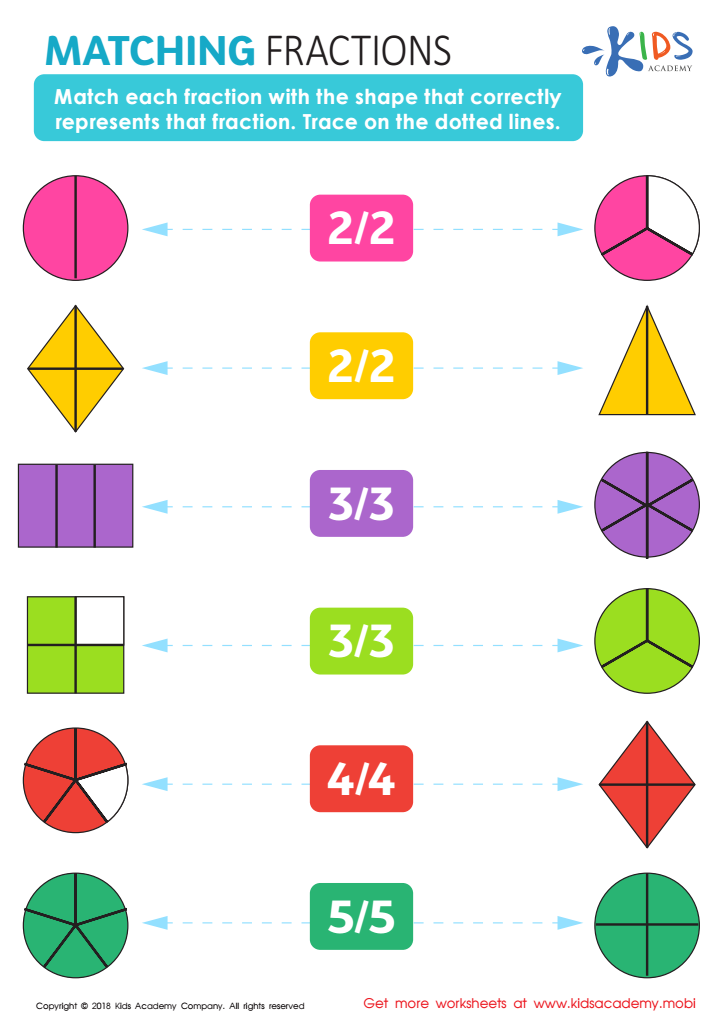
Matching Fractions Worksheet
This worksheet uses colorful images to engage students. On the left are six shapes, mirrored on the right, with fractions in the middle. Students must match up the fraction with the right shape. It's a fun way to sharpen fractions skills!
Matching Fractions Worksheet
Worksheet
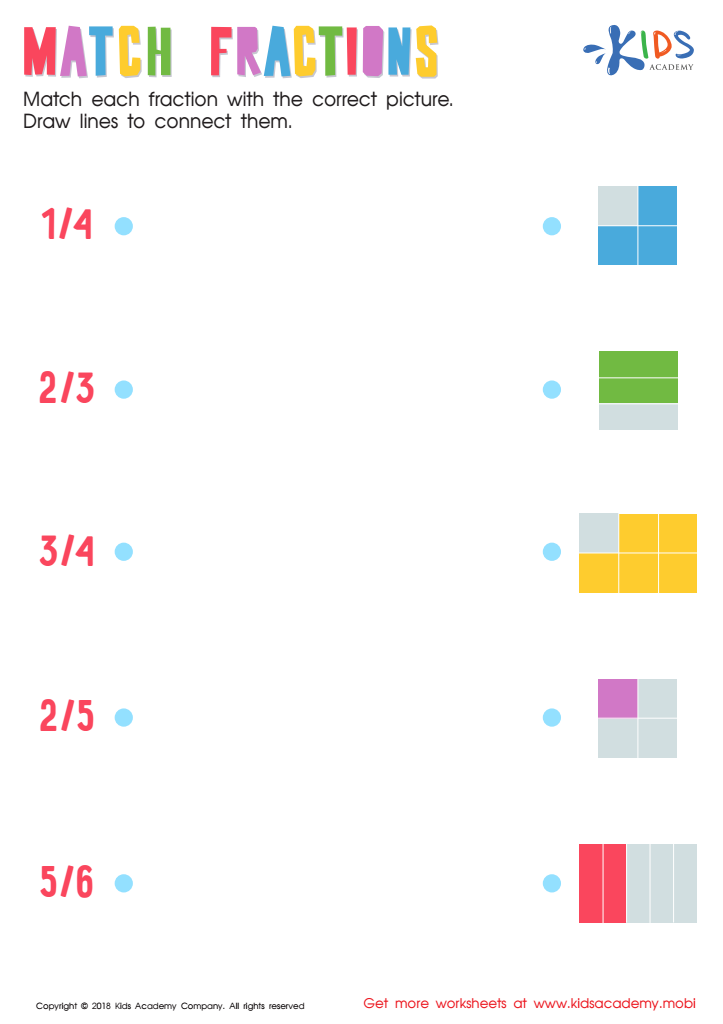
Match Fractions Worksheet
Have your child match fractions to images with this worksheet. There are five fractions on the left and five pictures on the right. Ask them to draw lines to connect each fraction to the right image. It's a great way to learn while having fun!
Match Fractions Worksheet
Worksheet
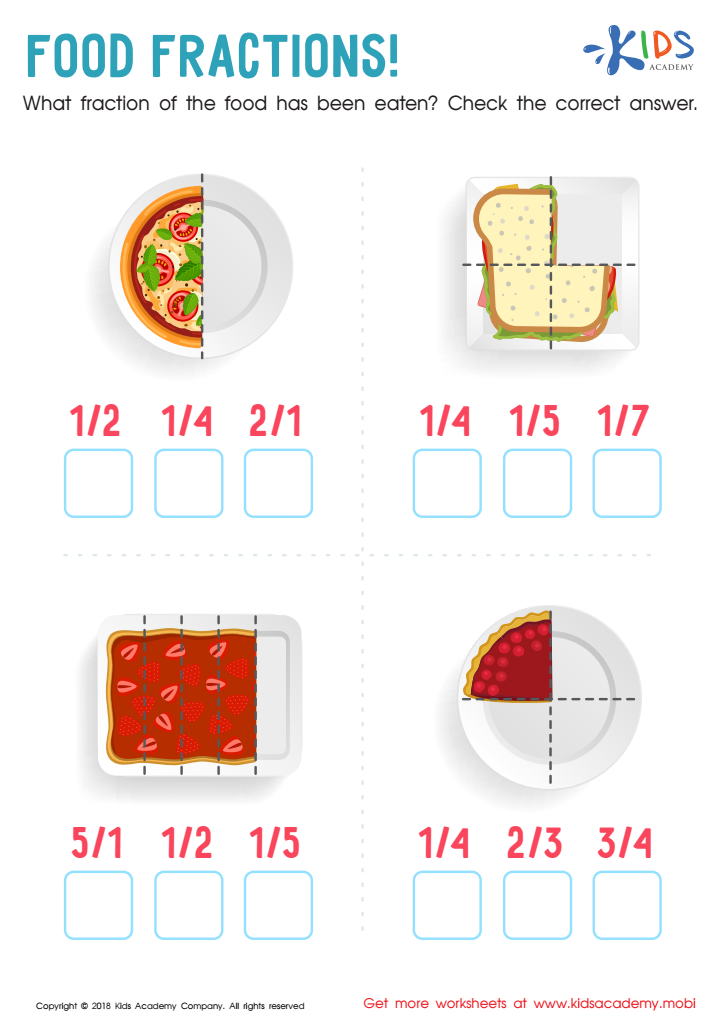
Food Fractions Worksheet
Test your child's understanding of fractions with this Food Fractions worksheet. Ask them to identify what fraction of the food in the four pictures has been eaten and select the correct answer from the options provided. See how well they understand your lessons!
Food Fractions Worksheet
Worksheet
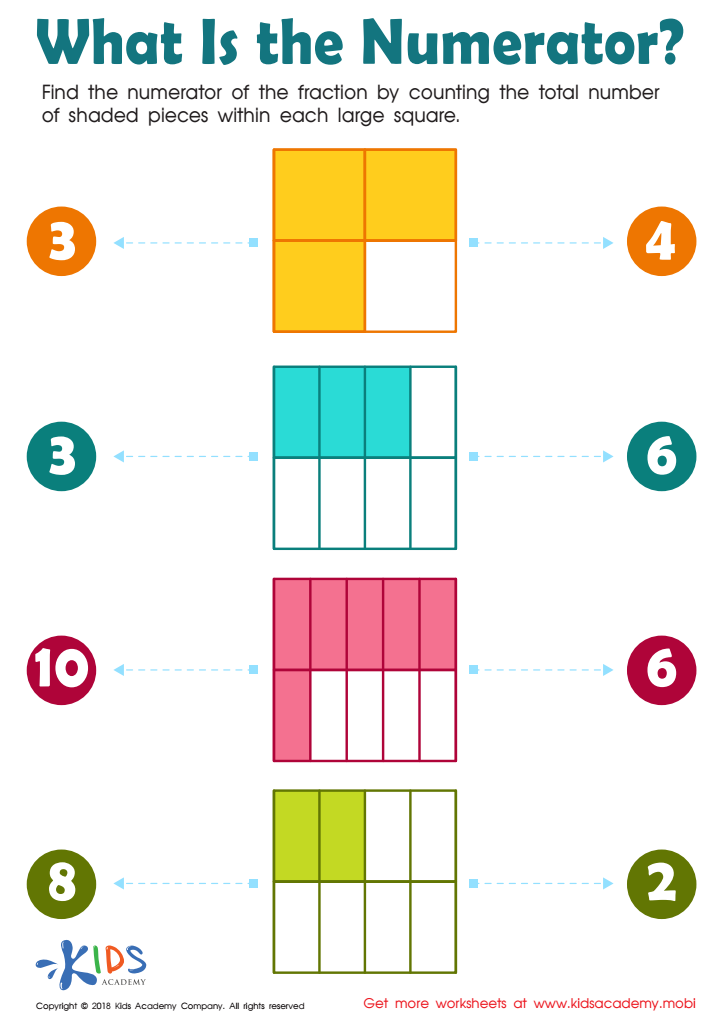
What Is the Numerator? Worksheet
Help your kids learn fractions with this simple worksheet. Explain that the numerator is the number atop another number, then have them count the shaded pieces in each large square to find the numerator of the fraction. This activity is perfect for young kindergartners starting out with fractions.
What Is the Numerator? Worksheet
Worksheet
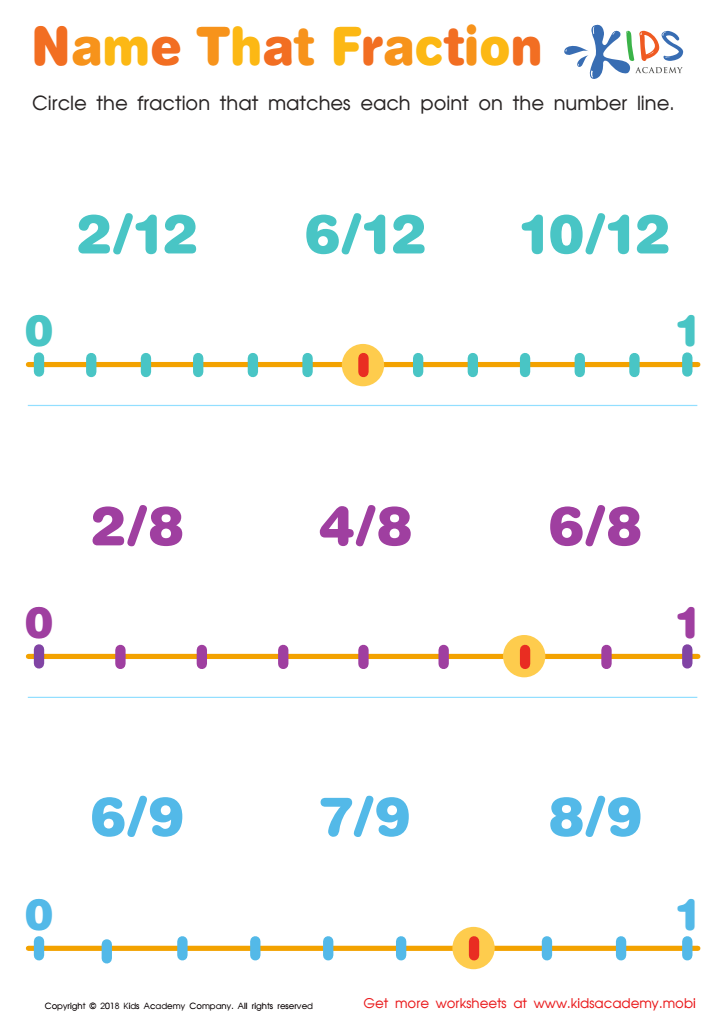
Name That Fraction Worksheet
Kids must learn to identify and name fractions to solve equations. Included in this worksheet are three equations that need solving. Have your child match each point on the number line with the correct fraction and circle it. This exercise helps build their fraction skills.
Name That Fraction Worksheet
Worksheet
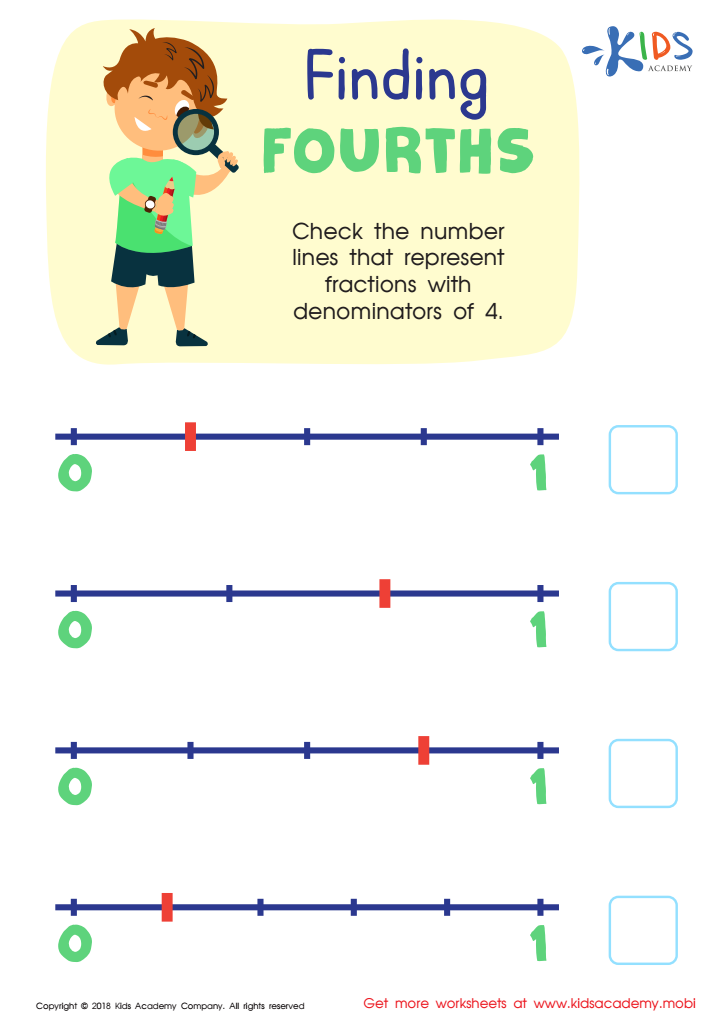
Finding Fourths Worksheet
Help your kids sharpen math skills with extra homework, stimulating exercises, and fun worksheets. This printout features four equations with fractions and number lines. Your child's task is to check the number lines with denominators of 4. Enough to get them thinking and learning.
Finding Fourths Worksheet
Worksheet
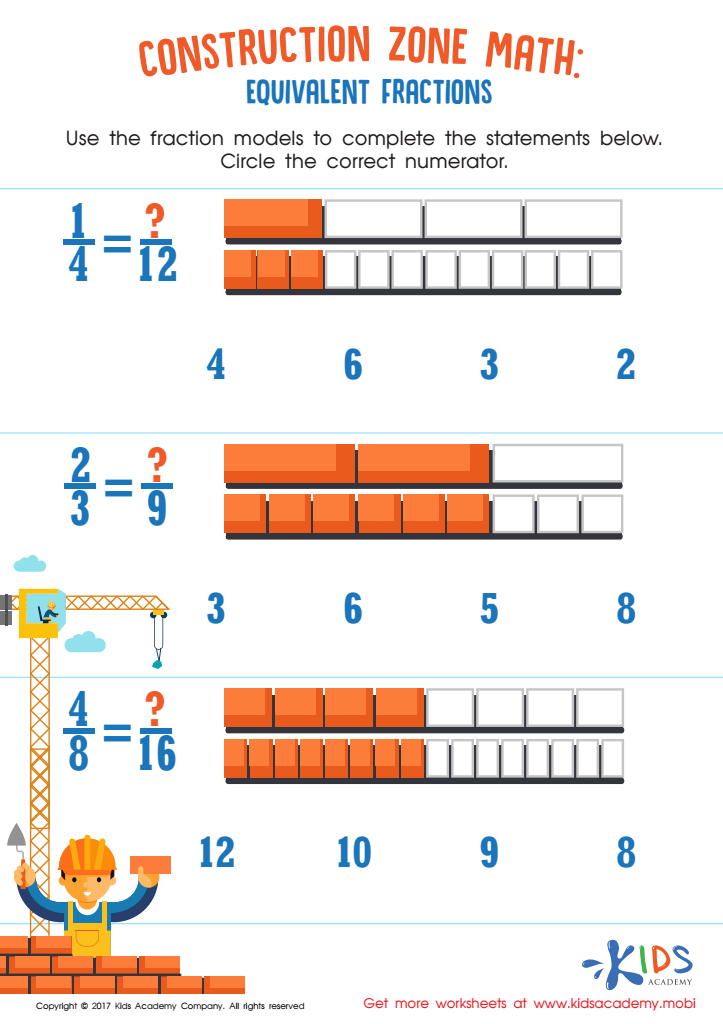
Equivalent Fractions Worksheet
Kids can easily learn fractions with pictures! This worksheet uses colorful bricks in a construction zone to help 3rd graders understand and compare fractions to find the numerator. Visuals make it simpler for kids to grasp fractions.
Equivalent Fractions Worksheet
Worksheet
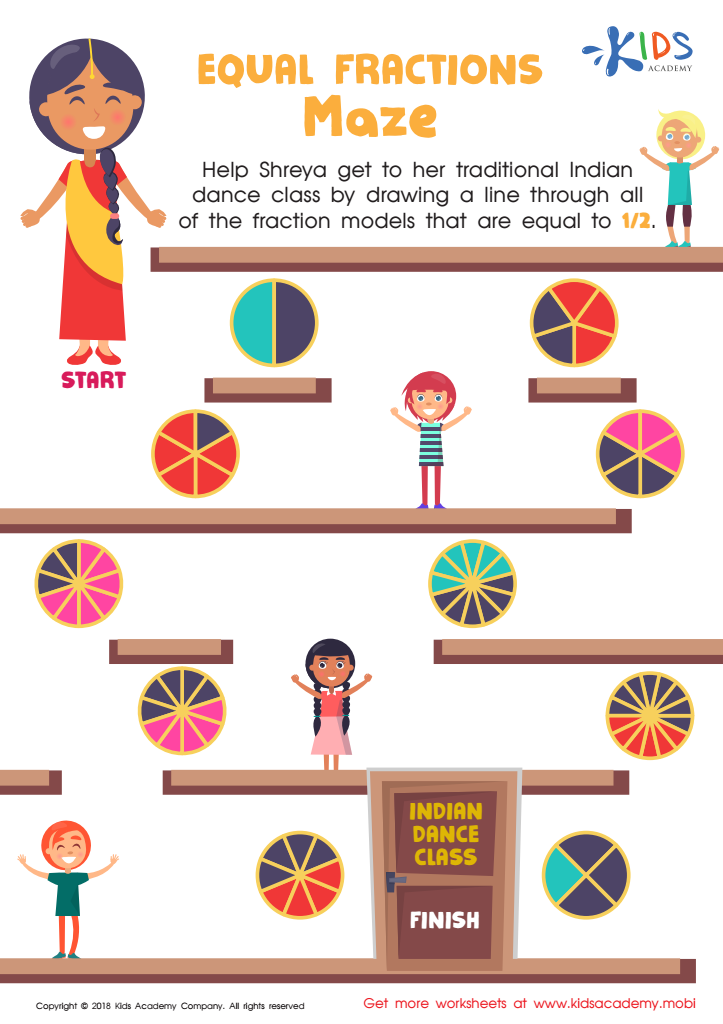
Equal Fractions Maze Worksheet
Help Shreya get to dance class! Draw a line through all fraction models that are equal to ½, starting at the entrance marked 'start'. Guide your kids through the maze paths and help Shreya -- she's an Indian girl who practices her cultures and traditions -- reach the door to her class.
Equal Fractions Maze Worksheet
Worksheet
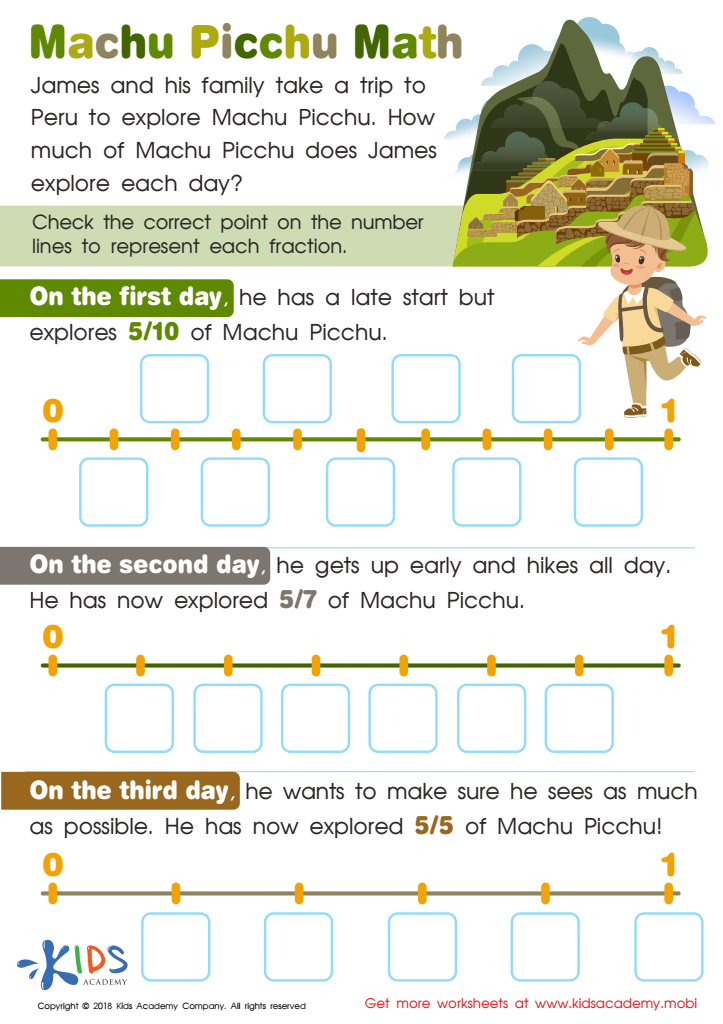
Machu Picchu Math Worksheet
James and his family took a trip to Peru to explore Machu Picchu. You can ask your kids if they remember certain countries or landmarks from their past trips. This worksheet will help them figure out how much of Machu Picchu James explores each day. Read the questions and help them check the correct fraction on the number line.
Machu Picchu Math Worksheet
Worksheet
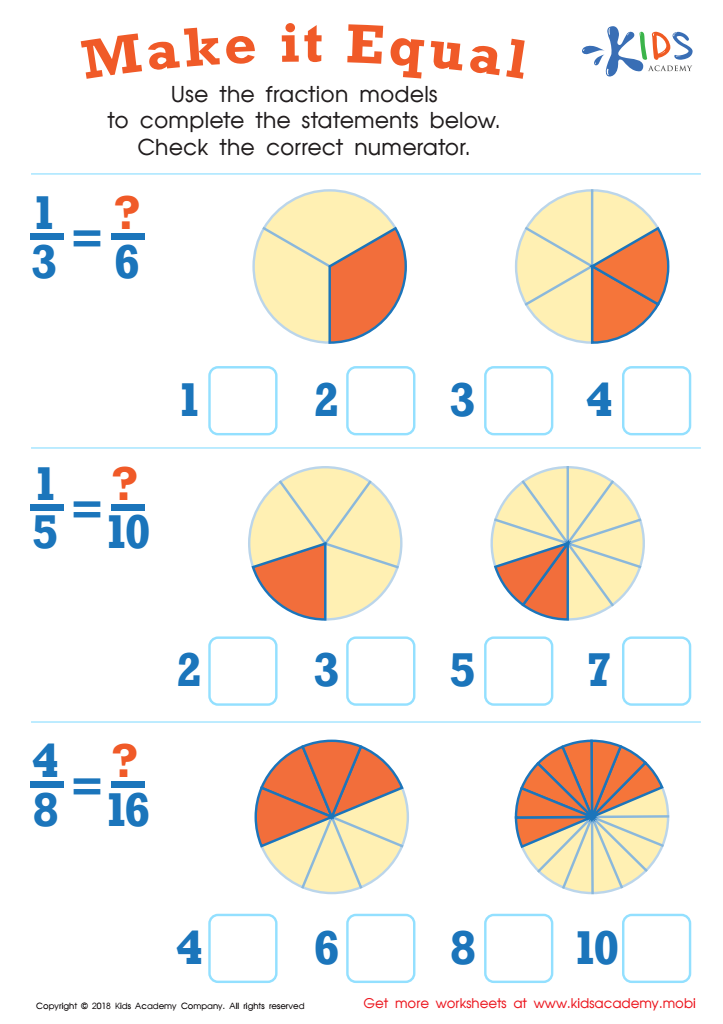
Make It Equal Worksheet
Ask your kids to complete the equations in the worksheet and find the correct numerator. Explain that numerators are the numbers at the top of a fraction and guide them as they count the shaded parts of the shapes. There are three equations to figure out.
Make It Equal Worksheet
Worksheet
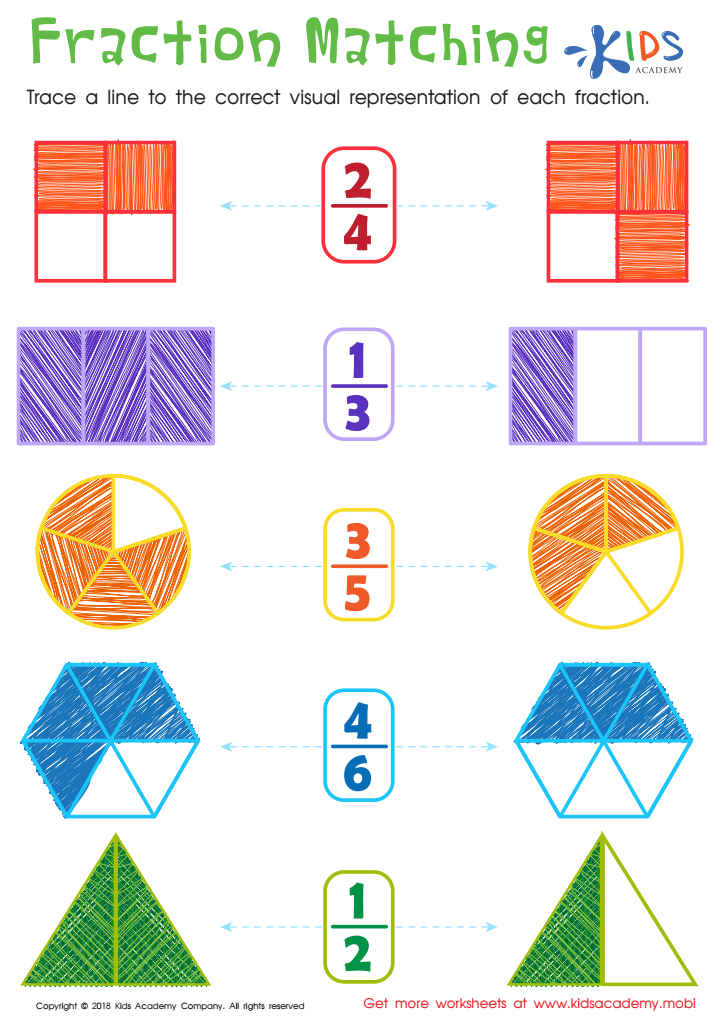
Fraction Matching Worksheet
Teach your kindergartners fractions with this colorful worksheet. Make sure they understand numerators and denominators, then have them trace a line to the correct visual representation of each equation. There are five fractions for them to work on. With the foundation of fractions, mathematics will be much easier for them.
Fraction Matching Worksheet
Worksheet
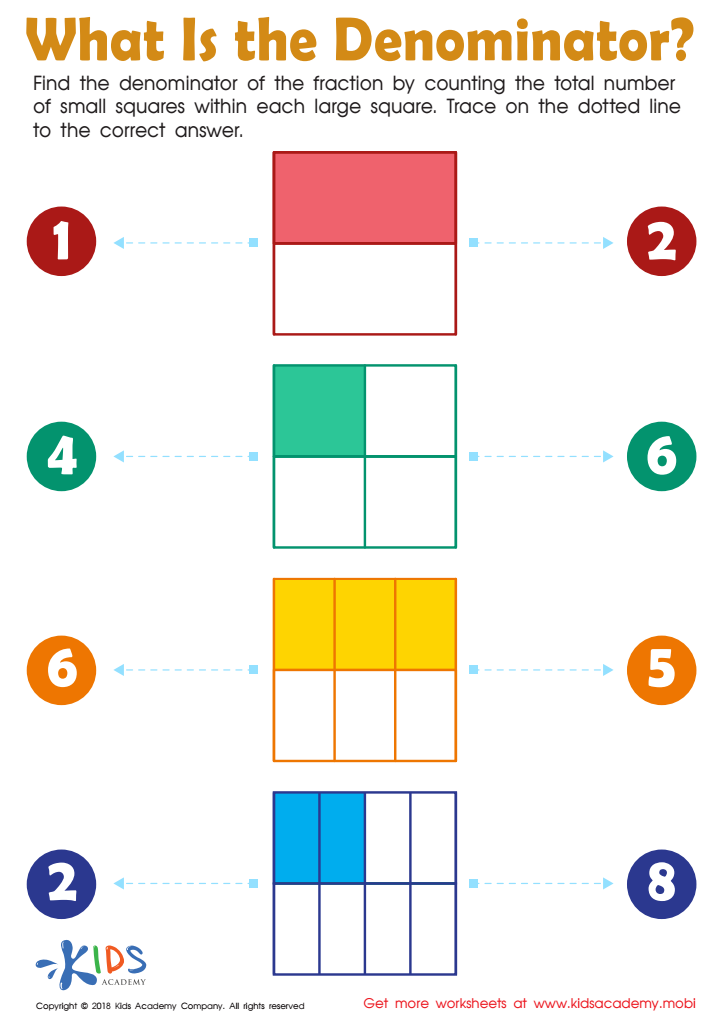
What Is the Denominator? Worksheet
If your kindergartener is struggling with fractions, don't worry. Use this worksheet to help them understand better. Ask them to count the total small squares in each large square to find the denominator, then trace on the dotted line to answer. This printable tracing sheet will help them learn fractions easier.
What Is the Denominator? Worksheet
Worksheet
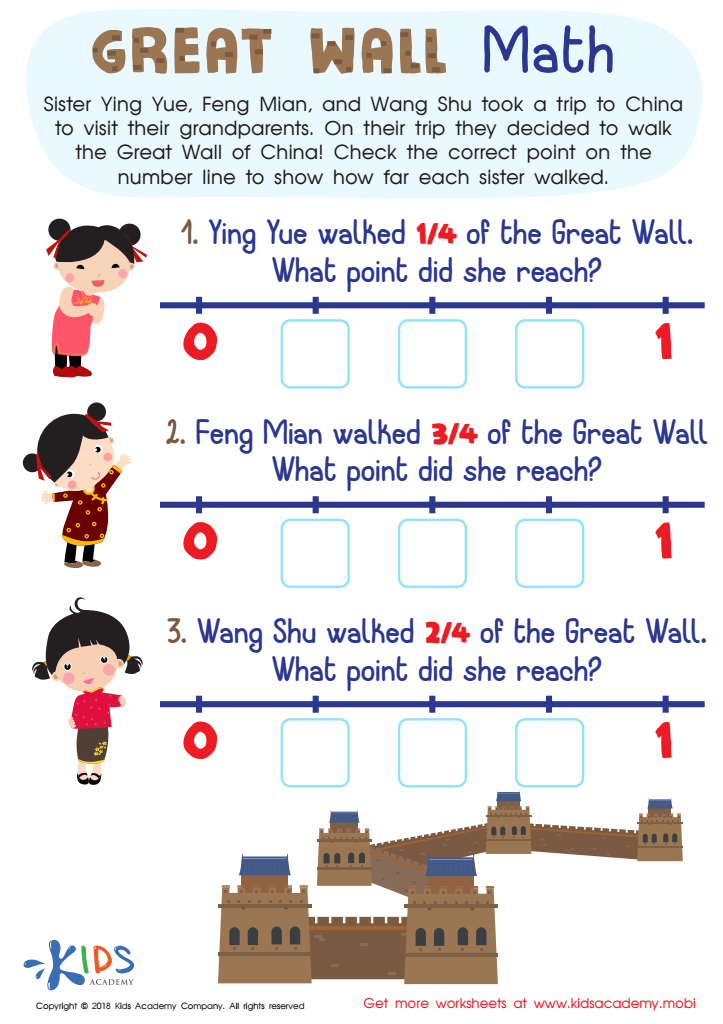
Great Wall Math Worksheet
Let your kids learn about fraction and history with this printout about the Great Wall of China. Three sisters take a trip to China to visit their grandparents and decide to walk the Great Wall. Ask them to study the pictures and pick the correct point on the number line to show how far each sister went. How about you: has your child ever been to China?
Great Wall Math Worksheet
Worksheet
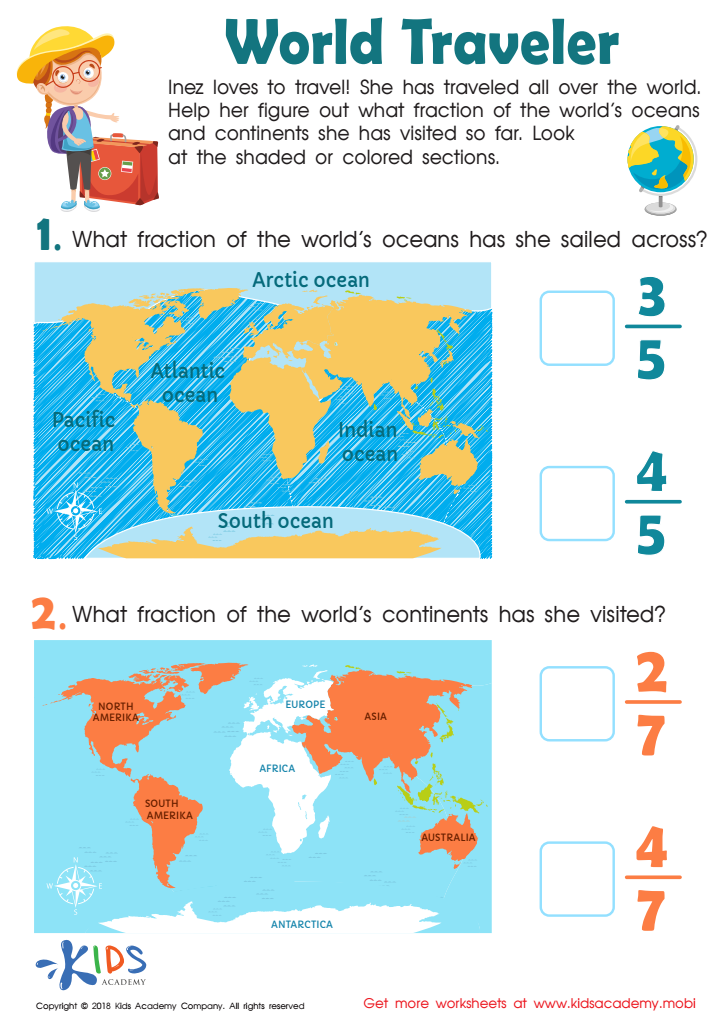
World Traveler Worksheet
Kids love exploring the world? Inez sure does! She's seen oceans and continents around the globe. Your kids can help her figure out what fraction of the world she has visited. Have them name all the countries they've been to, then look at the marked sections on the printout to find out!
World Traveler Worksheet
Worksheet
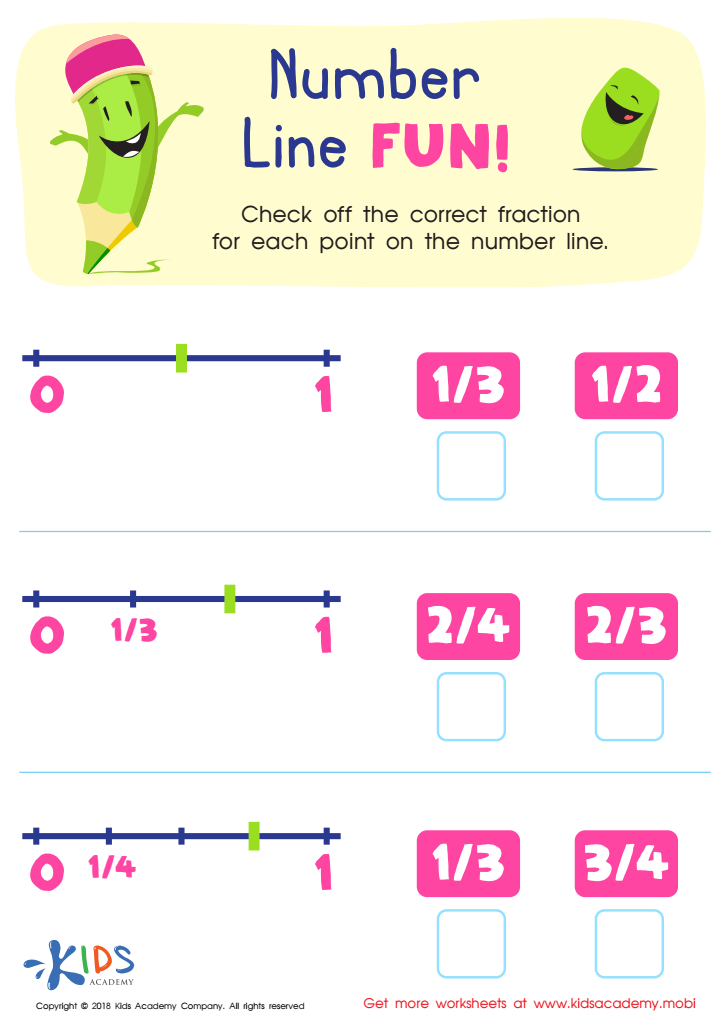
Number Line Fun Worksheet
Give your child a hand in math with this worksheet. It contains three number lines with points to which they should assign correct fractions. Support your child with this exercise and they'll get better at mathematics.
Number Line Fun Worksheet
Worksheet
Join Kids Academy for Free
Who is primarily going to use this learning content?






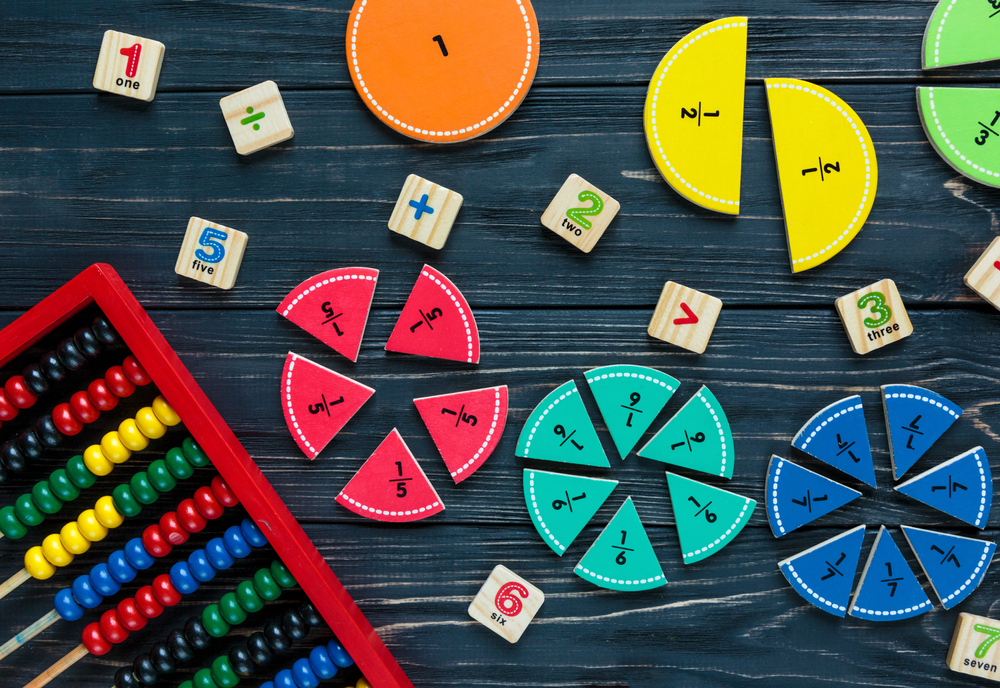

Introducing fractions to children ages 4-9 is crucial for several reasons. First and foremost, young minds are highly impressionable and adaptable, making early childhood an ideal time to introduce fundamental mathematical concepts. Understanding fractions lays the groundwork for advanced math topics, such as algebra and geometry, in the latter school years.
Moreover, grasping fractions enhances problem-solving skills and logical thinking. For instance, recognizing that a half is smaller than a whole fosters a deeper understanding of division and ratios. This early comprehension aids in everyday activities, such as cooking and sharing, where fractions are frequently applied.
In addition, it’s no secret that confidence in math can significantly affect a child’s academic performance as a whole. By introducing fractions early, parents and teachers can help lessen math anxiety and build a stronger mathematical foundation. Engaging, fraction-related activities like slicing fruits or playing fraction-based games make learning enjoyable and relatable, ensuring children are not intimidated by the concept.
Finally, fractions are omnipresent in the real world, from time management to sports statistics. Helping young children understand fractions ensures they are better informed and capable of becoming well-rounded, logical thinkers, prepared to tackle a world that is inevitably quantitative. The PRIME (Positive Relationships in Mathematics Education) effect begins with these foundational steps.








