Middle Vowel Worksheets for Ages 5-7
4 filtered results
-
From - To
Welcome to our Middle Vowel Worksheets for Ages 5-7! Designed for early learners, these engaging activities help children master the concept of middle vowels in words. Our printable worksheets include a variety of fun exercises such as fill-in-the-blanks, word sorting, and picture matching, all targeting essential phonics skills. By helping kids identify and use middle vowels effectively, parents and educators can boost reading and writing confidence. Whether at home or in the classroom, these resources provide valuable practice that makes learning dynamic and enjoyable. Dive into our collection and watch your child's language skills flourish!
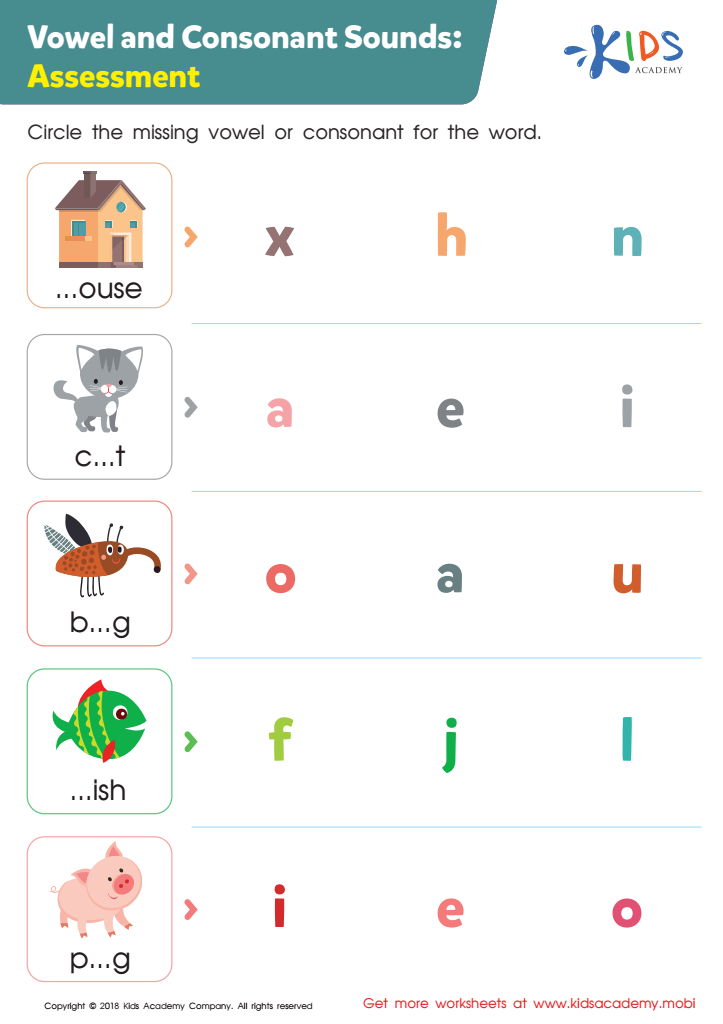
Vowel and Consonant Sounds: Assessment Worksheet
 Assign to My Students
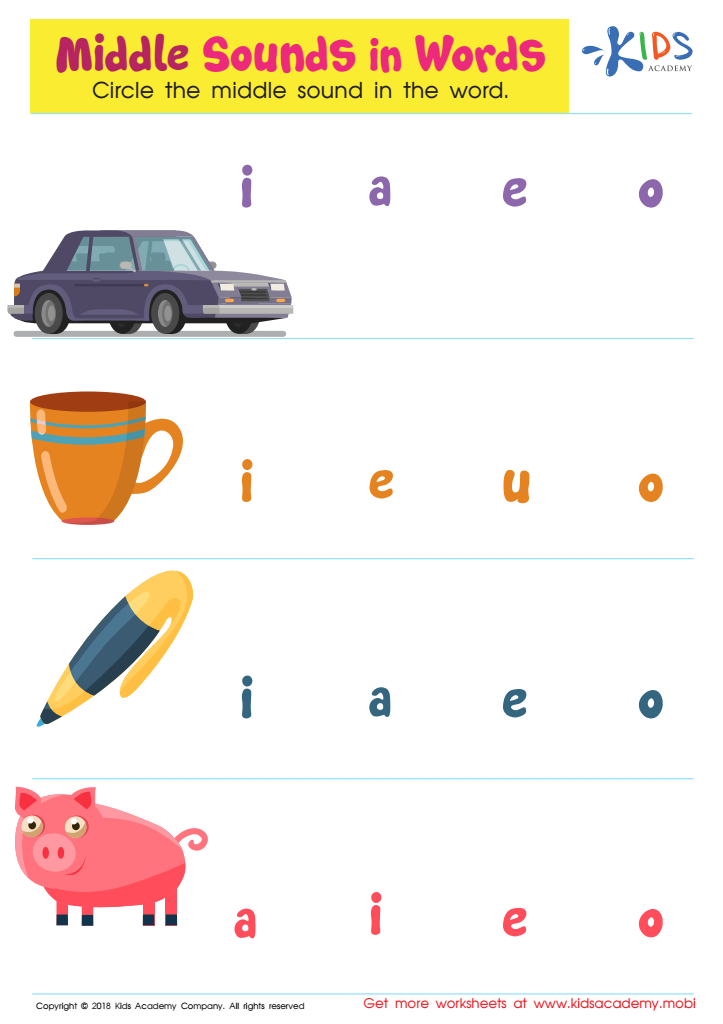
Middle Sounds in Words Worksheet
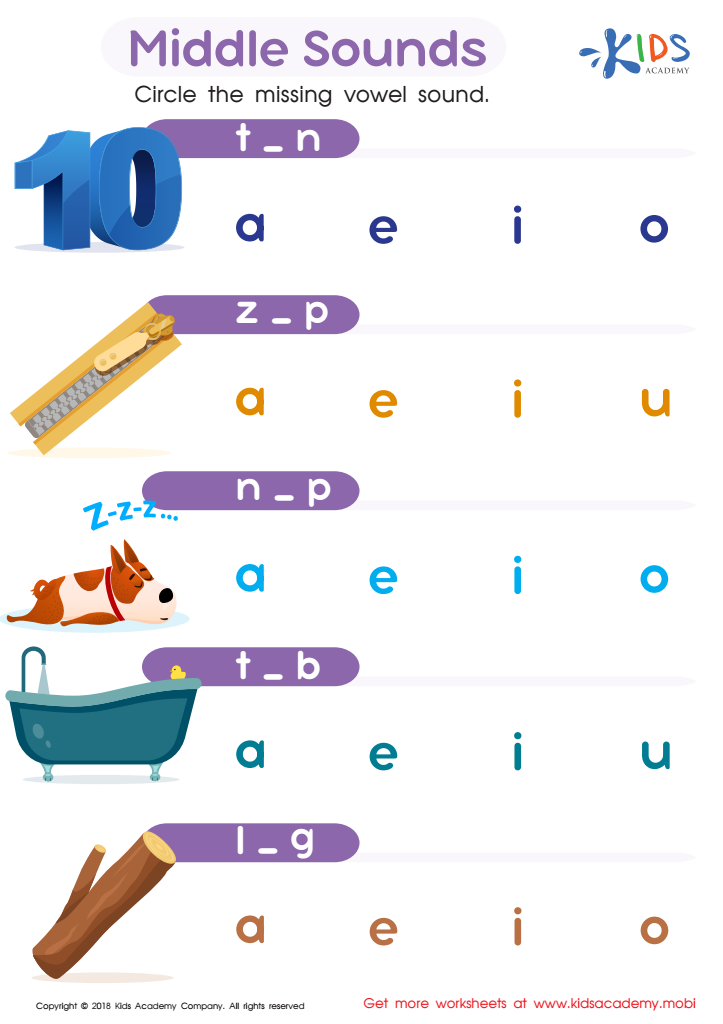
Middle Sounds Worksheet
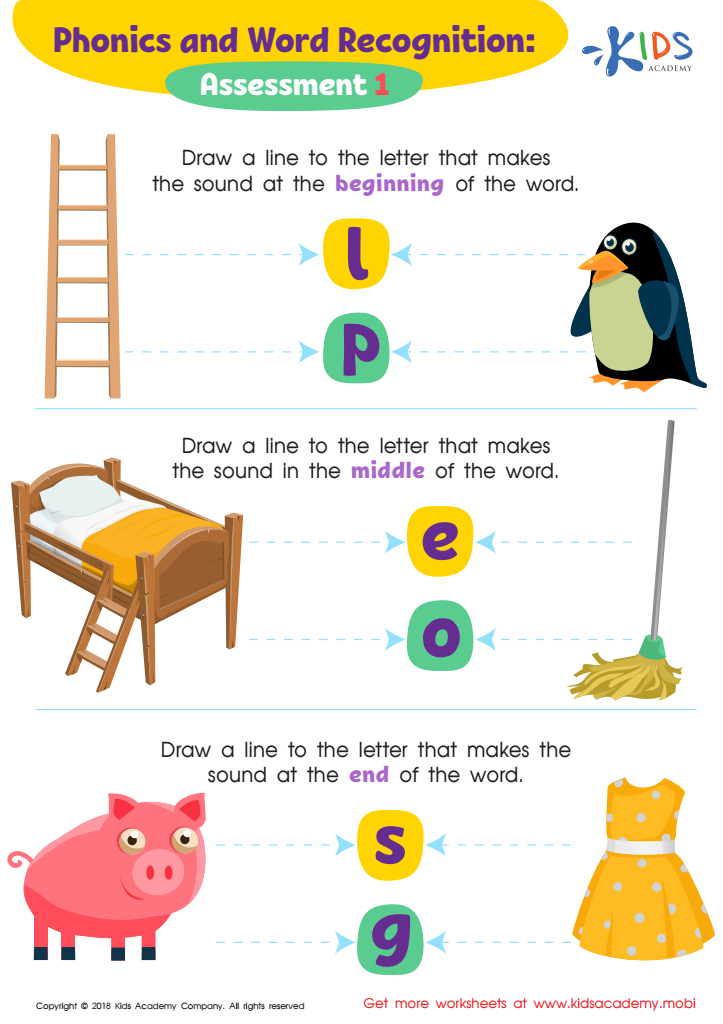
Phonics and Word Recognition: Assessment 1 ELA Worksheet



Parents and teachers should prioritize teaching middle vowels to children aged 5-7 because understanding this aspect of phonics is crucial for young learners' reading and writing development. Middle vowels, such as 'a' in "cat," 'e' in "pen," and 'i' in "hit," play a significant role in helping children decode words accurately. As children grasp the concept of middle vowels, they strengthen their phonemic awareness, which is the ability to hear, identify, and manipulate sounds in words.
This comprehension not only aids in early reading skills but also enhances spelling development. By recognizing how middle vowels function within words, children can group similar words together, fostering effective learning and retention. Moreover, middle vowel awareness allows learners to tackle new vocabulary confidently, making the reading process more enjoyable and less intimidating.
Additionally, being proficient with middle vowels encourages children to express themselves through writing, building foundational literacy skills. Parents and teachers can support this learning through interactive games, reading familiar books, and engaging in phonics exercises. By caring about middle vowel instruction, adults set children on a path toward lifelong literacy and an enthusiastic approach to language.