Upper & Lowercase Letters Worksheets for Ages 5-7 - Page 3
50 filtered results
-
From - To
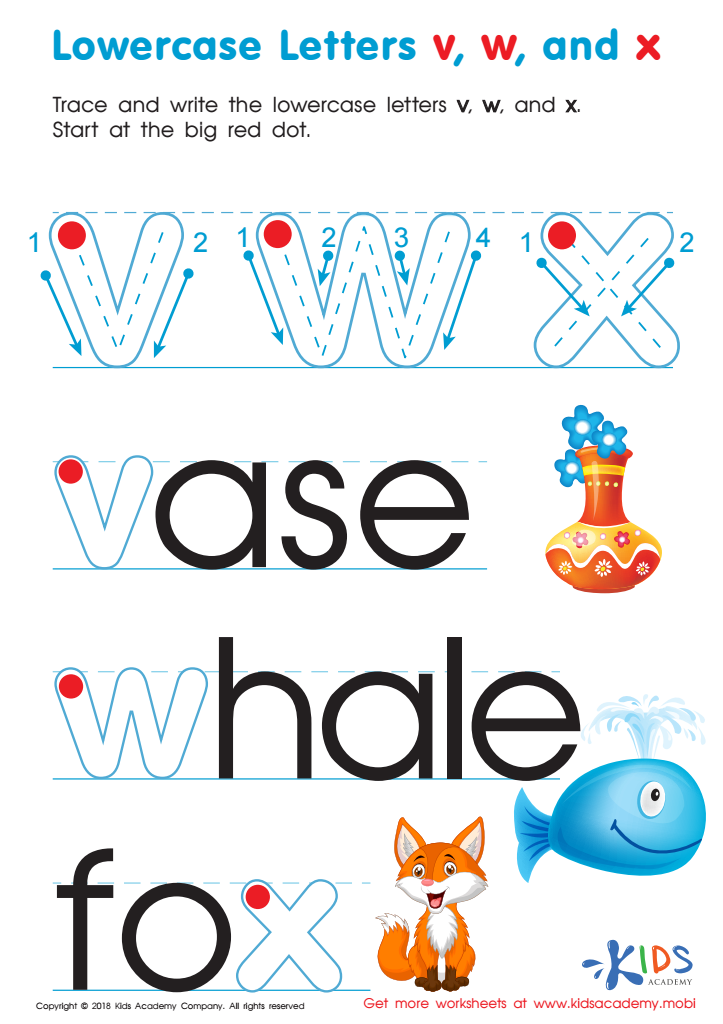
Lowercase Letters v w x Worksheet
 Assign to My Students

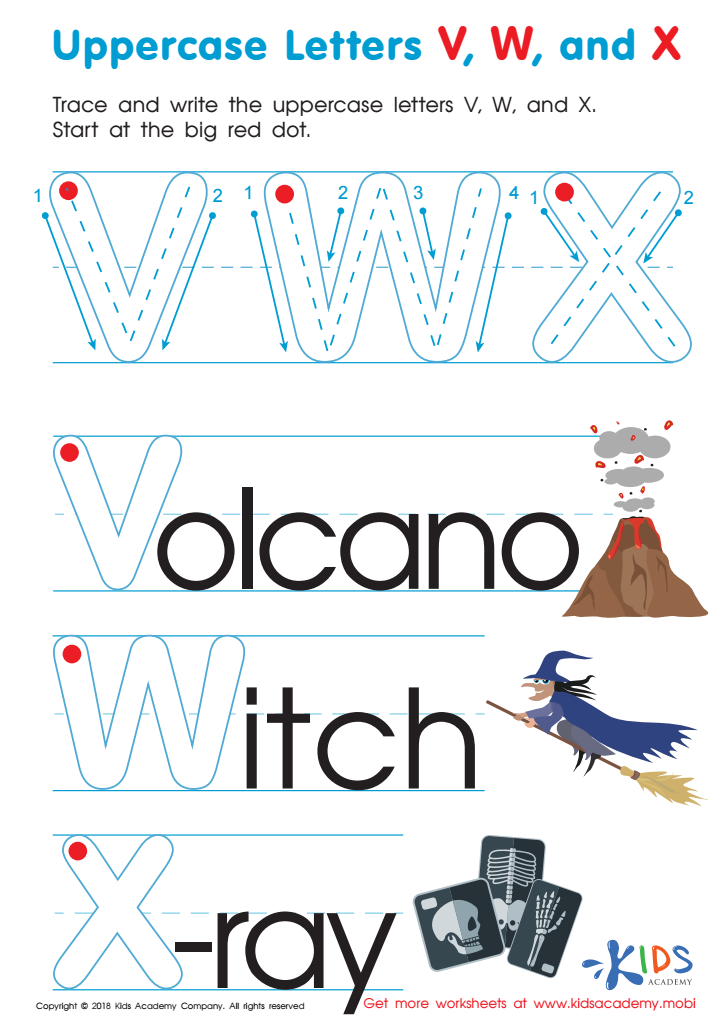
Uppercase Letters V, W, and X Worksheet






Understanding uppercase and lowercase letters is essential for children ages 5-7 as they form the foundation of literacy skills. At this age, children are transitioning from pre-reading to reading and writing, and recognizing the difference between these letter cases aids in developing their reading fluency. Uppercase letters signal the beginning of sentences or proper nouns, while lowercase letters make up the majority of written language.
For teachers and parents, emphasizing both forms supports early readers in identifying and structuring sentences. This understanding enhances their ability to construct coherent thoughts and communicate effectively. Furthermore, recognizing letter case prepares children for the complexities of writing, ensuring they can properly format written work.
Additionally, familiarity with uppercase and lowercase letters contributes to phonemic awareness, crucial for spelling and vocabulary development. Engaging activities that incorporate both letter cases can make learning fun, sparking children’s curiosity and encouraging independent exploration of language.
Ultimately, a strong grasp of uppercase and lowercase letters equips children with skills that are critical to their academic growth, promoting confidence in their abilities as readers and writers, and preparing them for future learning challenges.







