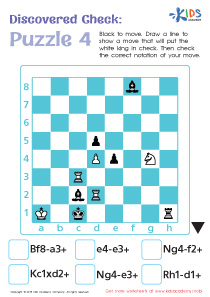
Unlock your child’s potential with our “Strategic Thinking Development Chess Worksheets for Ages 5-7.” Designed for young learners, these engaging worksheets introduce key chess concepts while fostering critical thinking and problem-solving skills. Each worksheet promotes cognitive development through fun exercises tailored to early childhood learning. As children navigate the game of chess, they’ll learn to anticipate moves and devise strategies, enhancing their focus and patience. Perfect for home or classroom use, our resource encourages creativity and logical reasoning. Help your little ones build a strong foundation in strategic thinking while enjoying the timeless game of chess!

Check out this FREE Trial Lesson on Chess for age 5-7!

Queen

Favorites
With answer key
Interactive
  • 5-7
  • Strategic thinking development
  • Chess
Chess Pieces Quest Worksheet

Chess Pieces Quest Worksheet

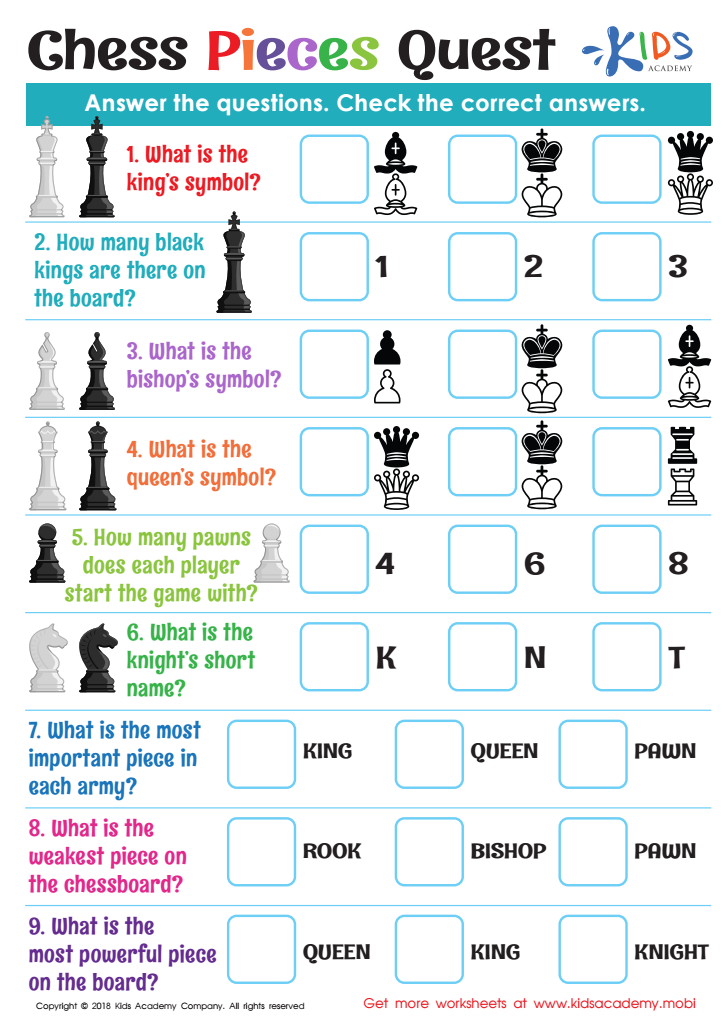
Help your child prepare for the chess quest by refreshing their knowledge of the symbols and characteristics of each chess piece. Then, have them try the 9 questions on this worksheet. These questions will assess their understanding of the symbols and how many pieces each player starts with.
Chess Pieces Quest Worksheet
Worksheet
Notation of Moves Writing it Down Worksheet

Notation of Moves Writing it Down Worksheet

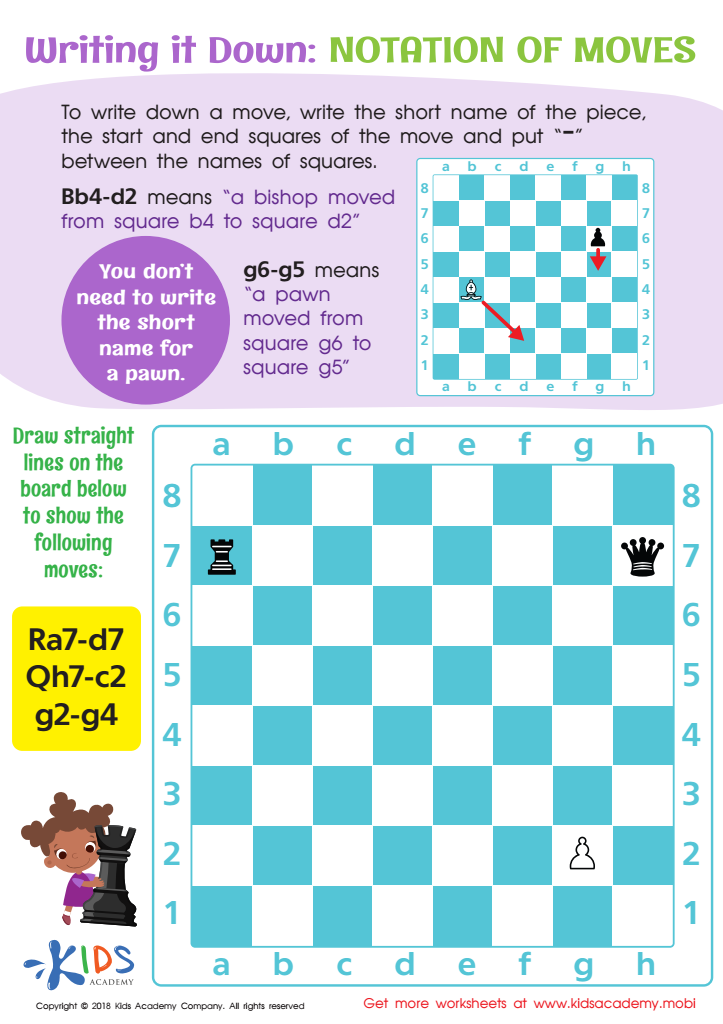
Notating chess moves can be tricky for kids to learn. This worksheet will help them better understand it. To notate a move, write the piece's short name, start and end squares, and separate them with a "-". For instance, Bd4-d2 means a bishop moved from b4 to d2. No need to write pawns' short names.
Notation of Moves Writing it Down Worksheet
Worksheet
How Rooks Capture Worksheet

How Rooks Capture Worksheet

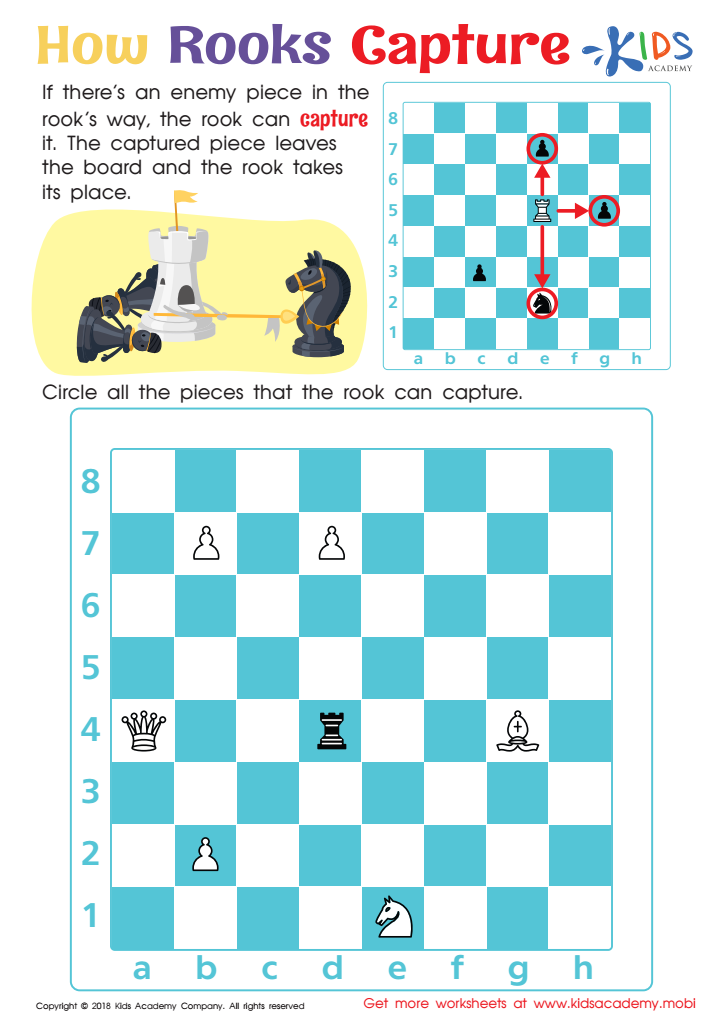
Chess is a game that requires skill, concentration and planning. Players must move their chess pieces strategically to capture pieces from their opponent. Do your kids know how to use the rook to capture pieces? Go through the worksheet with them and circle the pieces the rook can capture.
How Rooks Capture Worksheet
Worksheet
How Queen Captures Worksheet

How Queen Captures Worksheet

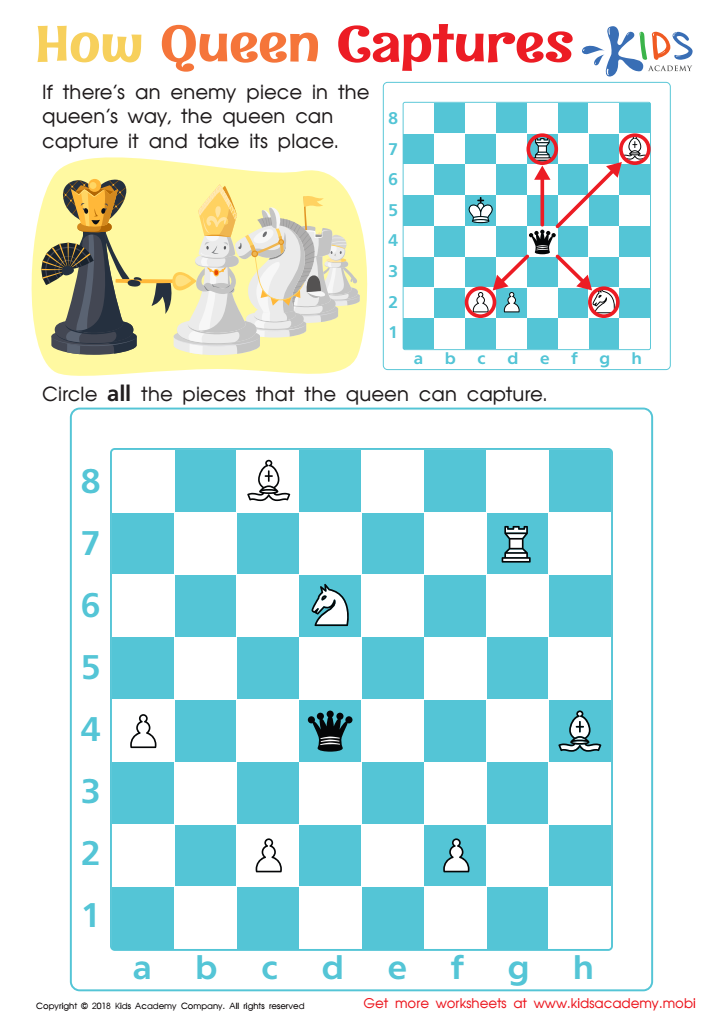
Chess is a great game for sharpening math skills, strategic thinking, and knowledge of how each piece moves. If your child is interested, introduce them with this worksheet. It demonstrates how the queen can capture opposing pieces, such as another queen, and take their place.
How Queen Captures Worksheet
Worksheet
Short Notation of Moves Worksheet

Short Notation of Moves Worksheet

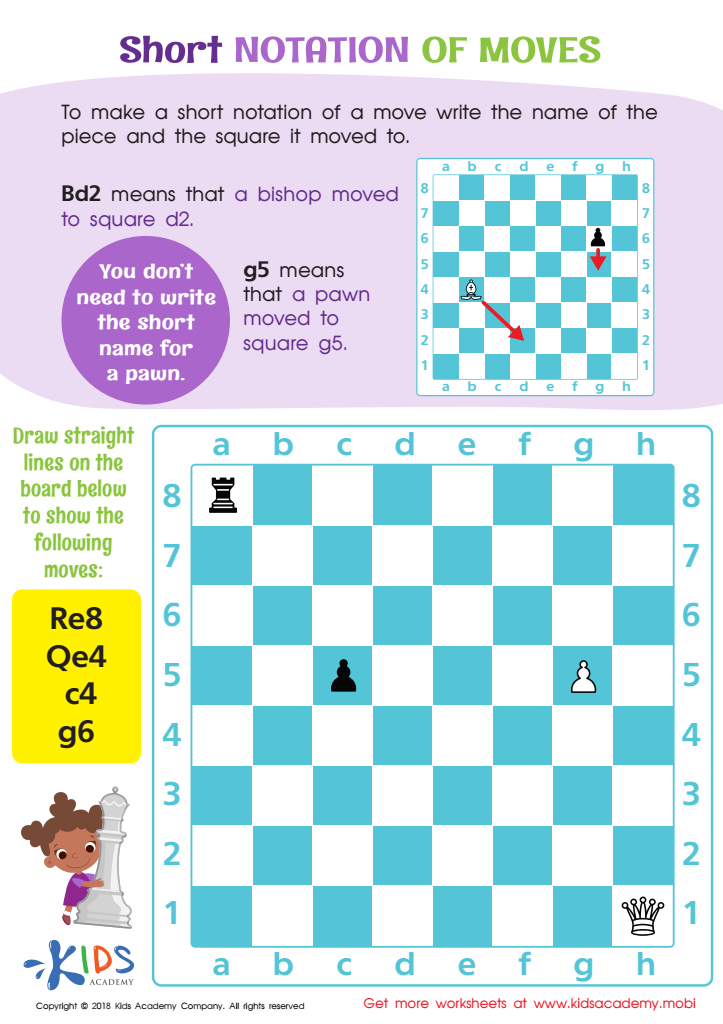
To master chess, you need more than just knowing the pieces and their moves - you need to be able to make notations of your moves. To make a short notation, write the piece name and square it moved to; for example, Bd2 for bishop on d2. Pawns don't need the piece name, just the square; e.g. g5. Show your kids how to draw lines to the board for the moves given.
Short Notation of Moves Worksheet
Worksheet
One Move Checkmates: Puzzle 2 Worksheet

One Move Checkmates: Puzzle 2 Worksheet

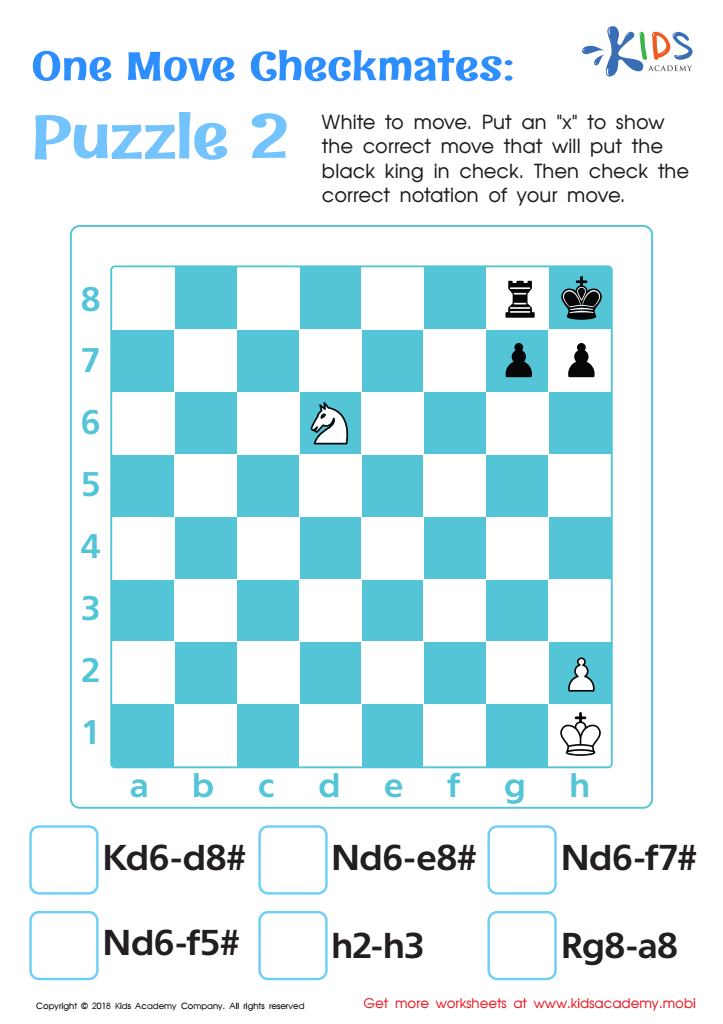
Fine-tuning logic and critical thinking skills can be tricky but this free PDF offers a fun way for little logisticians to practice visual-spatial relationships and strategizing to checkmate the black king. It also boosts directional and reading skills which makes it a great brain-building puzzle.
One Move Checkmates: Puzzle 2 Worksheet
Worksheet
Chess Manners Worksheet

Chess Manners Worksheet

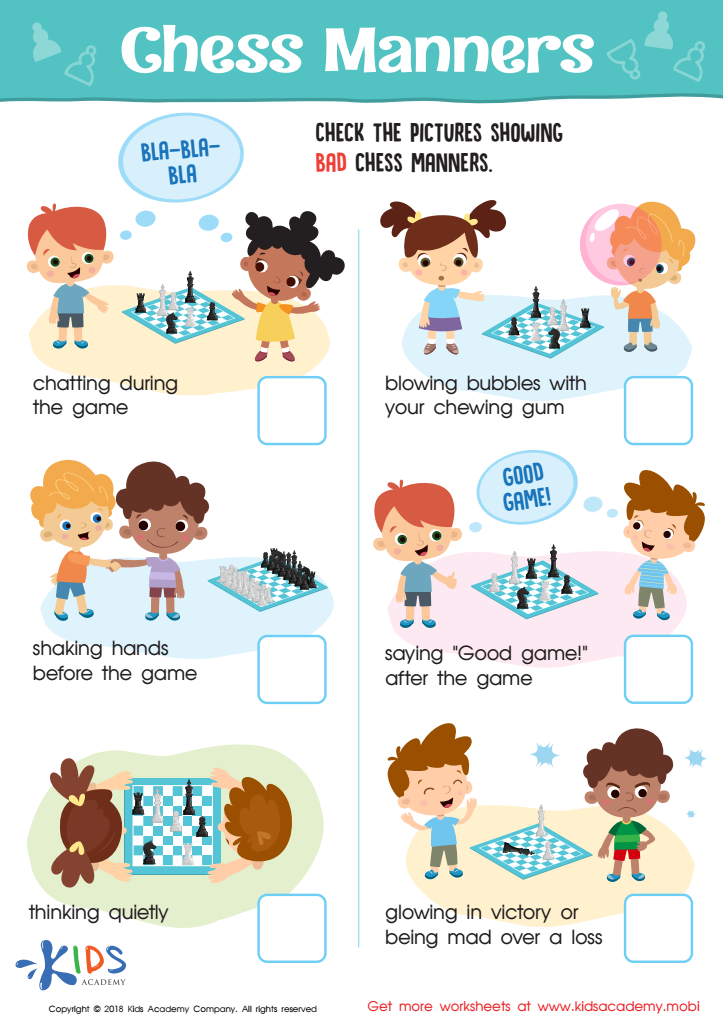
Teach your child chess manners in addition to table and social ones. Chess has clear rules and etiquette which must be followed for a proper game. Review this worksheet with your kid and discuss the pictures that show inappropriate behaviours. This will help them understand how to play the game correctly and with good manners.
Chess Manners Worksheet
Worksheet
Moves Notation Bingo Worksheet

Moves Notation Bingo Worksheet

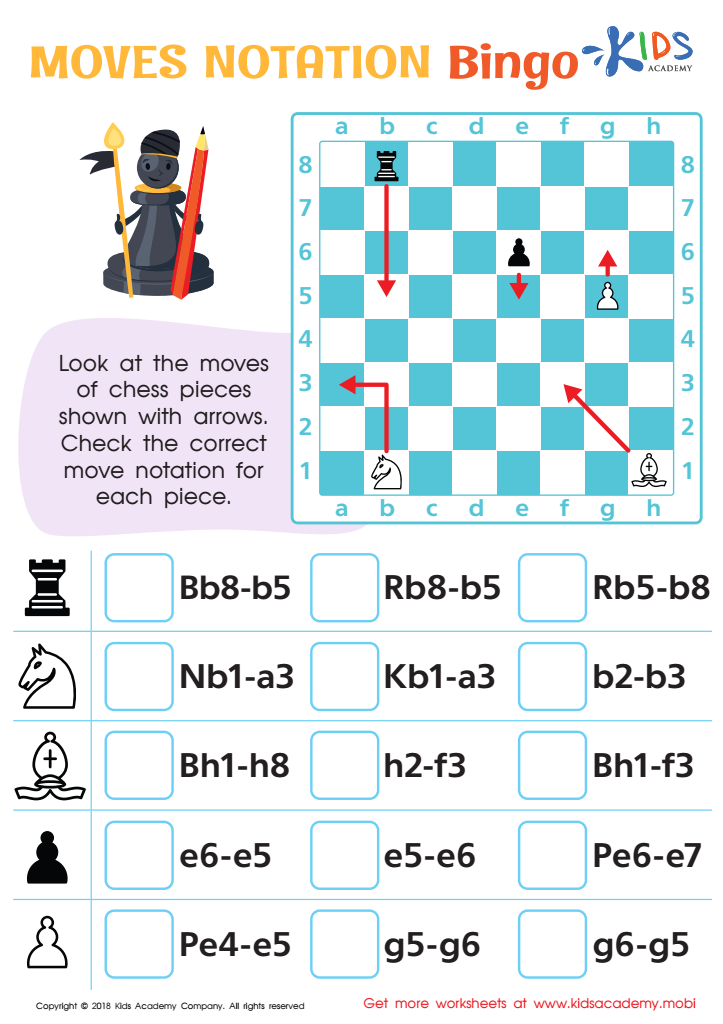
Test your child's chess notation skills with this simple worksheet. Download the PDF which shows a chess board and arrows pointing to pieces. Ask your child to identify the moves and note them down correctly. The notations needed are for bishop, pawn, rook and knight. Up to 80 words.
Moves Notation Bingo Worksheet
Worksheet
Castling No - no's: Part 2 Worksheet

Castling No - no's: Part 2 Worksheet

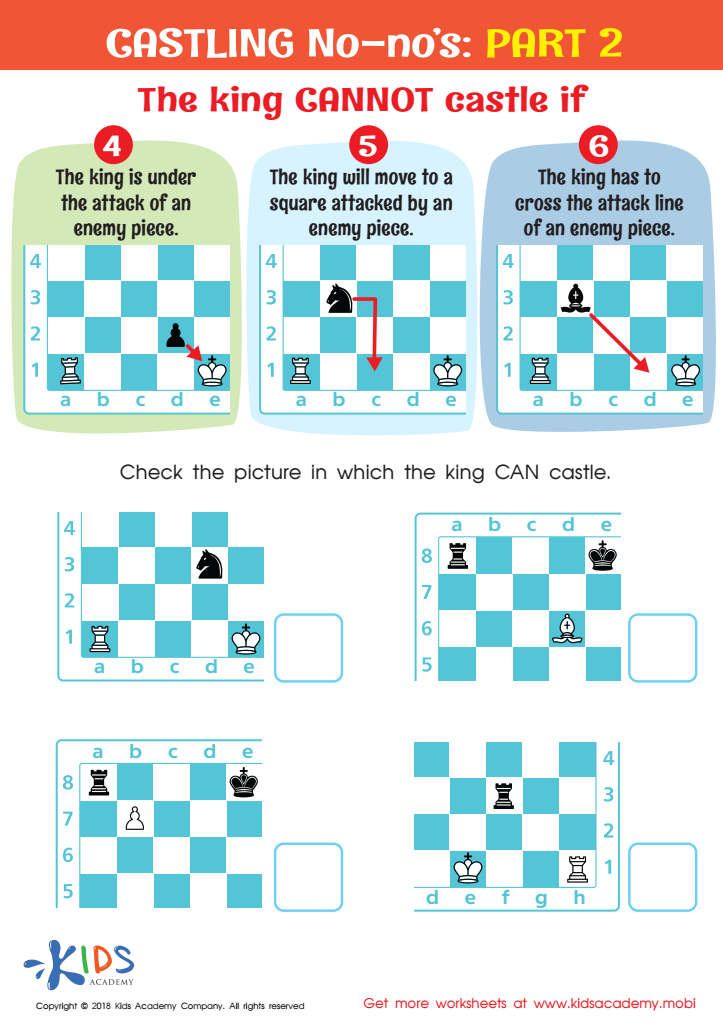
Teach your child the rules of castling: no castling if the king is under attack or will move onto an attacked square, or cross an attack line. To prepare for a game of chess, help your child complete the exercise of identifying when the king can castle – check the pictures.
Castling No - no's: Part 2 Worksheet
Worksheet
How Bishops Move Worksheet

How Bishops Move Worksheet

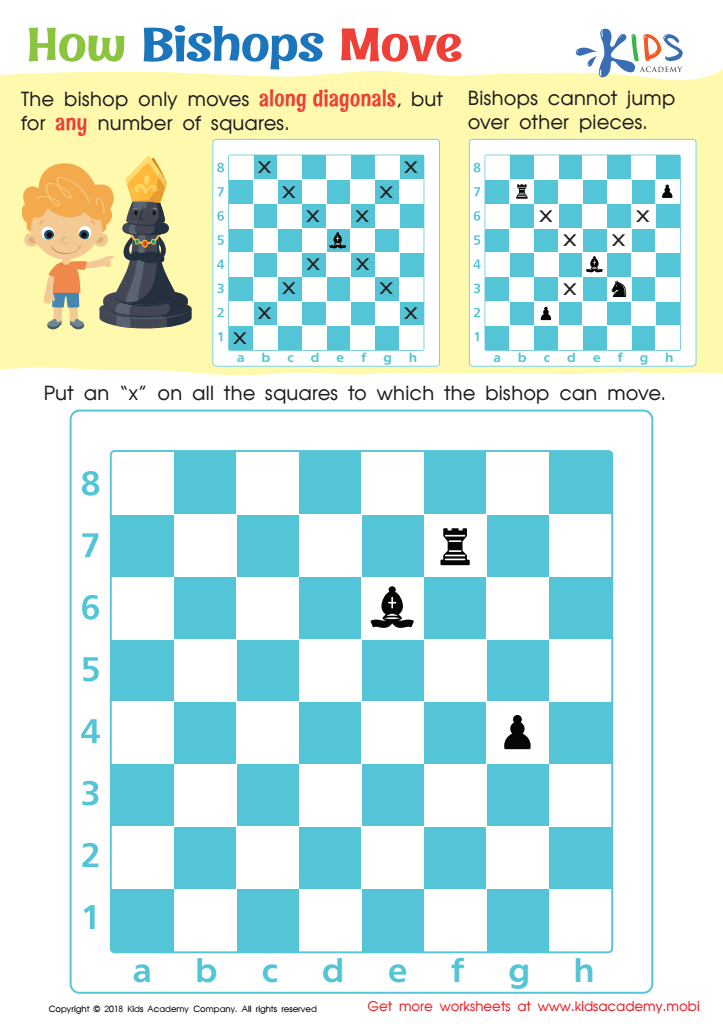
There is no such thing as too much sharpening of skills. Encourage your child to learn more about chess technicalities with this simple worksheet. It shows them how a bishop moves: along diagonals any number of squares, but it can't jump over other pieces.
How Bishops Move Worksheet
Worksheet


Strategic thinking development through chess for children ages 5-7 holds significant importance for both parents and teachers. At this formative stage, children are eager to learn and absorb new concepts. Chess encourages the development of critical cognitive skills such as problem-solving, foresight, and decision-making. By understanding and analyzing the game's intricacies, children learn how to anticipate consequences, weigh options, and plan their actions thoughtfully.

Moreover, engaging in chess nurtures patience and emotional resilience as children learn to cope with wins and losses, fostering a growth mindset that translates into various aspects of their lives, including schooling and relationships. The game also enhances concentration and memory by requiring players to remember previous moves, strategies, and outcomes, which can positively affect their academic performance.

Socially, chess provides an excellent platform for collaboration and communication among peers. It promotes sportsmanship and respect since players must abide by the game's rules and acknowledge each other's skills. By emphasizing these aspects, parents and teachers can provide children with valuable tools for successful navigation of their environments both in and out of the classroom, ultimately paving the way for lifelong learning and adaptation skills.