Filters

385 filtered results

Clear all filters
Favorites
With answer key
Interactive

385 filtered results

Difficulty Level

Grade


Subject

    Check out this FREE Trial Lesson on Adding Up to 5 for age 5-7!

    My Family

    Favorites
    With answer key
    Interactive
    • 5-7
    • Adding Up to 5
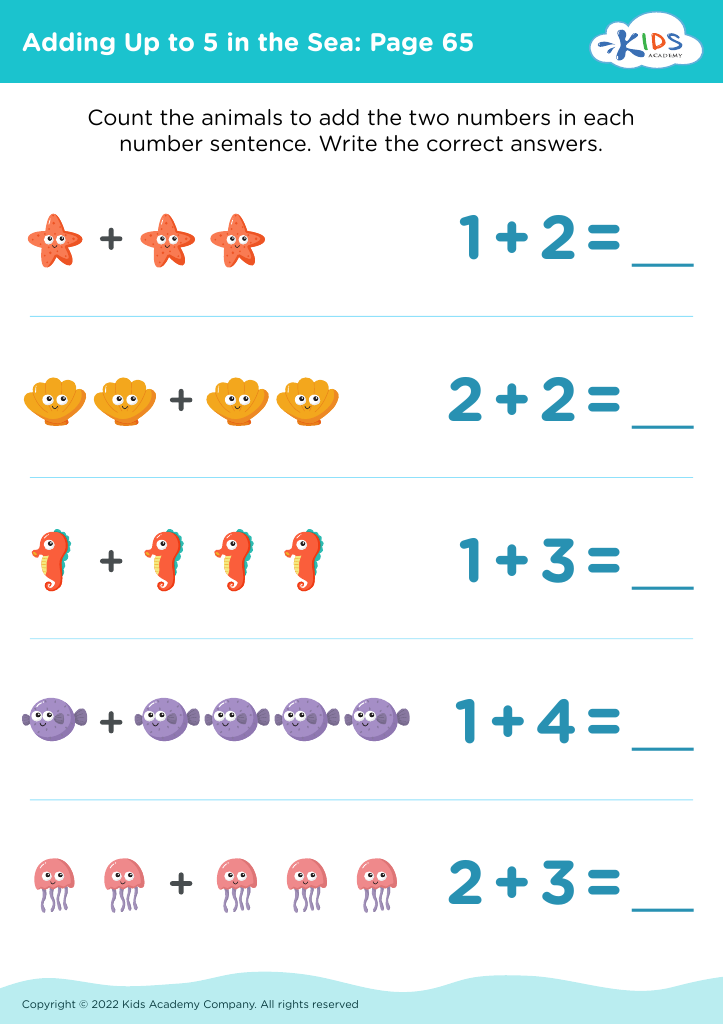
    Adding Up to 5 in the Sea: Page 65
    Adding Up to 5 in the Sea: Page 65
    Adding Up to 5 in the Sea: Page 65
    Worksheet
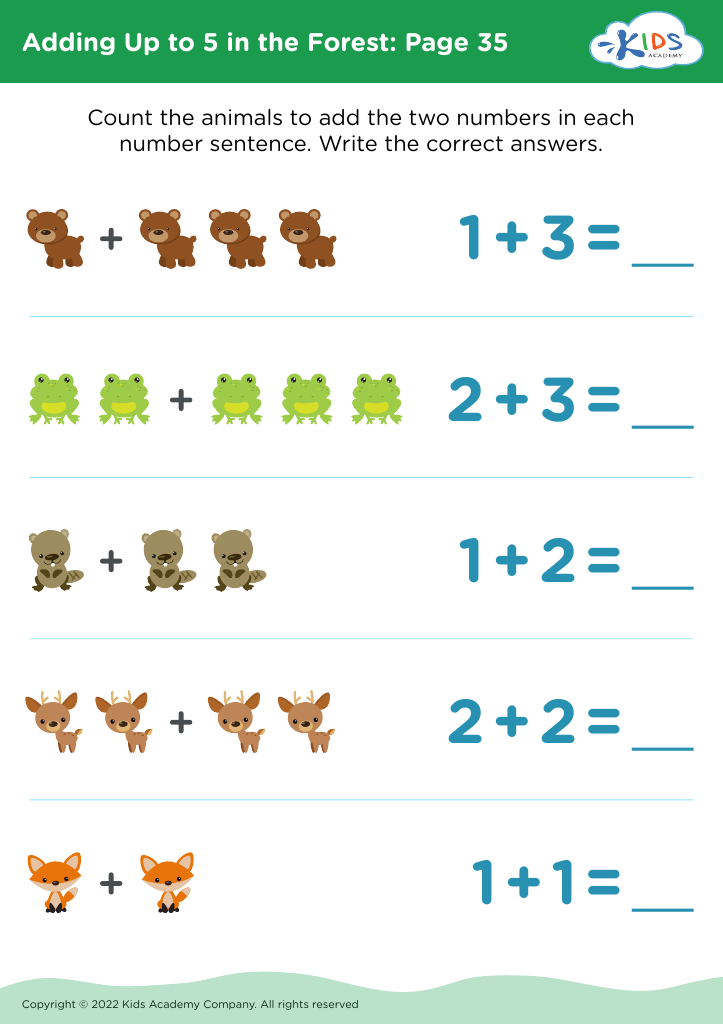
    Adding Up to 5 in the Forest: Page 35
    Adding Up to 5 in the Forest: Page 35
    Adding Up to 5 in the Forest: Page 35
    Worksheet
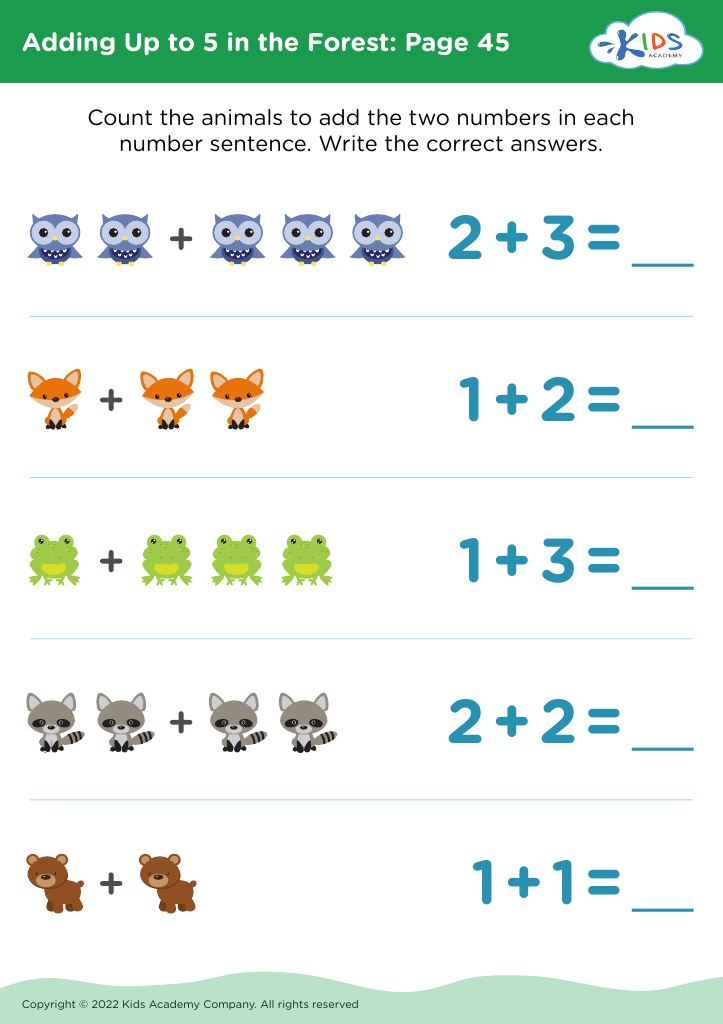
    Adding Up to 5 in the Forest: Page 45
    Adding Up to 5 in the Forest: Page 45
    Adding Up to 5 in the Forest: Page 45
    Worksheet
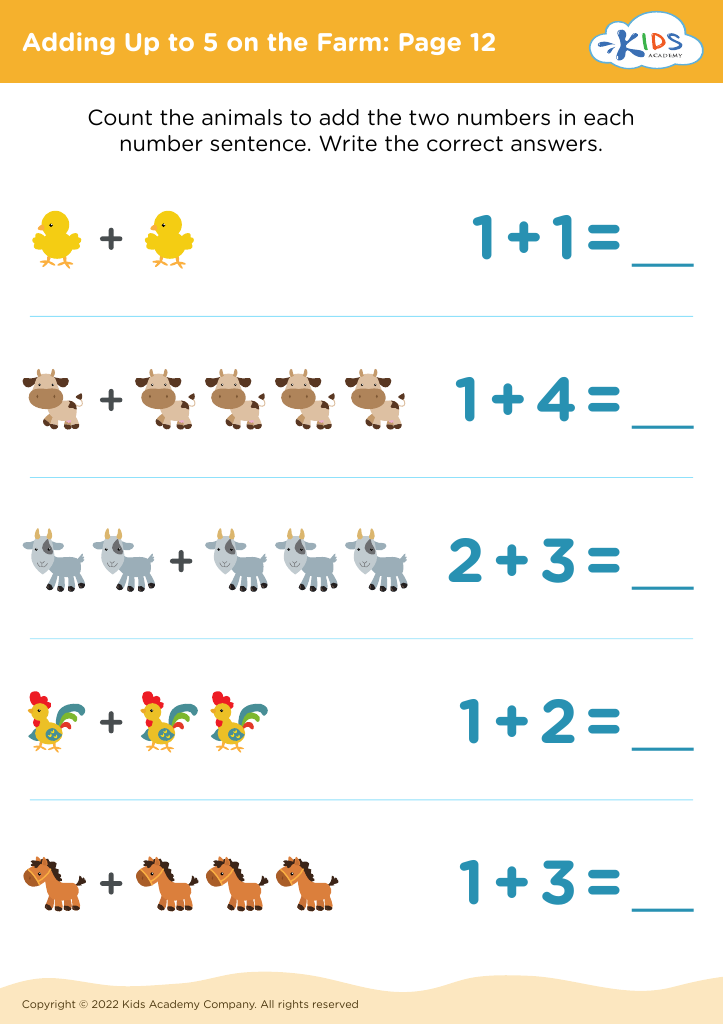
    Adding Up to 5 on the Farm: Page 12
    Adding Up to 5 on the Farm: Page 12
    Adding Up to 5 on the Farm: Page 12
    Worksheet
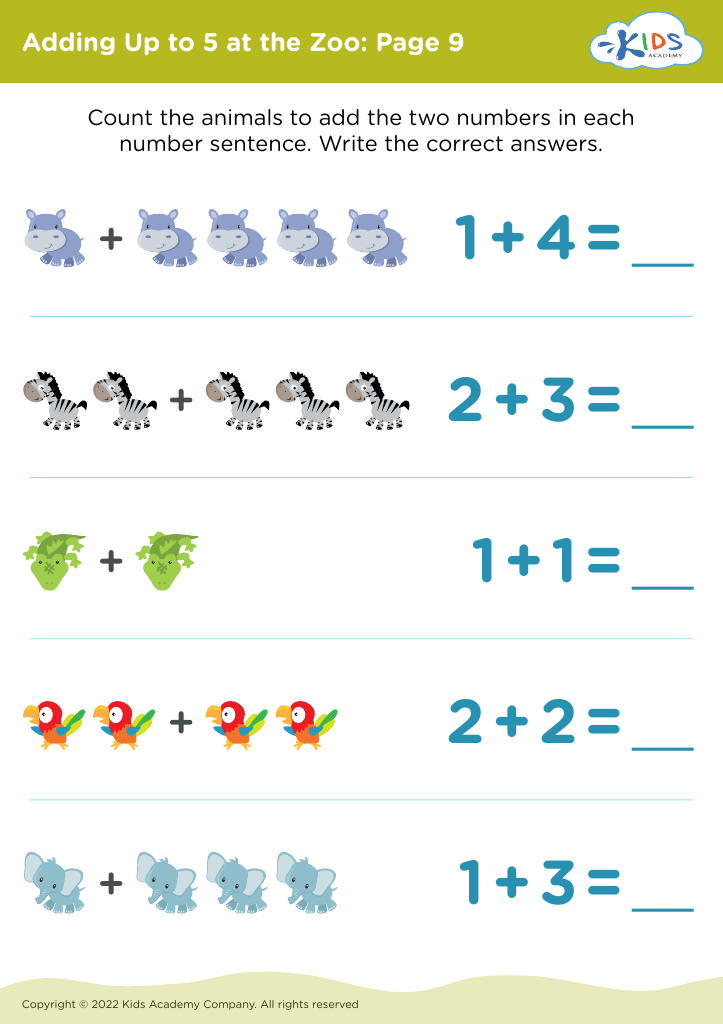
    Adding Up to 5 at the Zoo: Page 9
    Adding Up to 5 at the Zoo: Page 9

    Adding Up to 5 at the Zoo: Page 9

    Adding Up to 5 at the Zoo: Page 9
    Worksheet
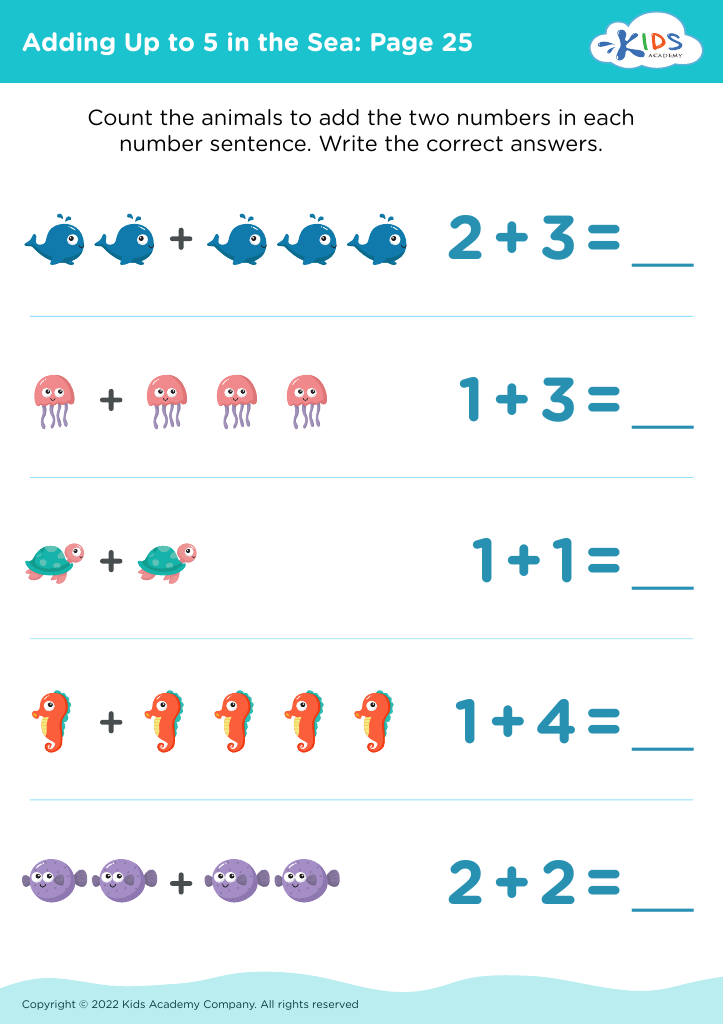
    Adding Up to 5 in the Sea: Page 25
    Adding Up to 5 in the Sea: Page 25
    Adding Up to 5 in the Sea: Page 25
    Worksheet
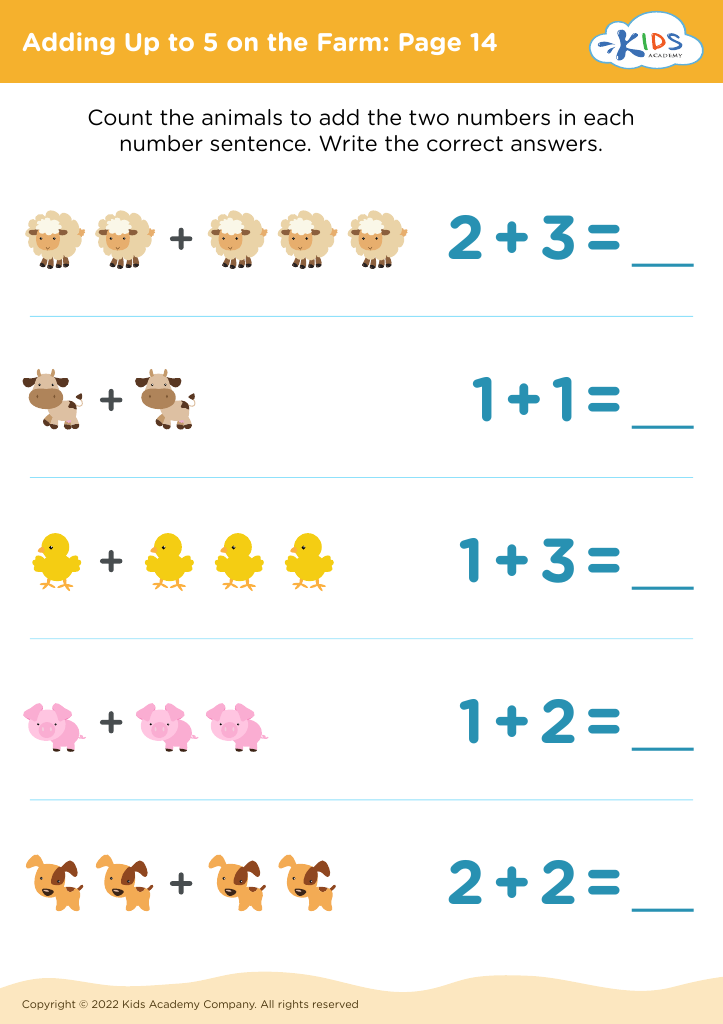
    Adding Up to 5 on the Farm: Page 14
    Adding Up to 5 on the Farm: Page 14
    Adding Up to 5 on the Farm: Page 14
    Worksheet
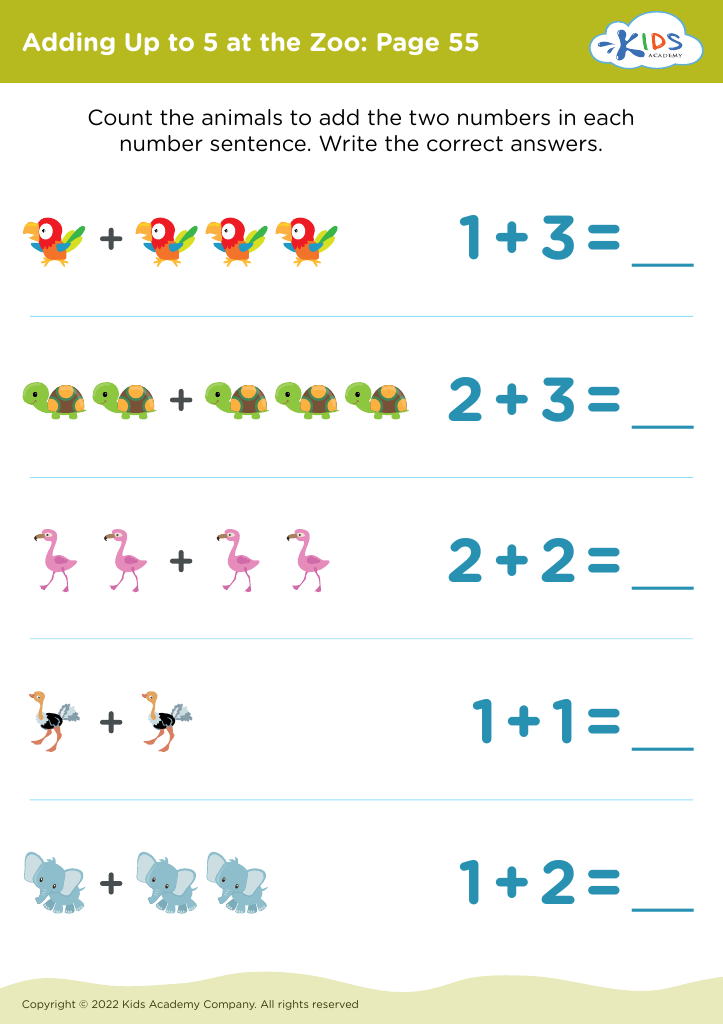
    Adding Up to 5 at the Zoo: Page 55
    Adding Up to 5 at the Zoo: Page 55
    Adding Up to 5 at the Zoo: Page 55
    Worksheet
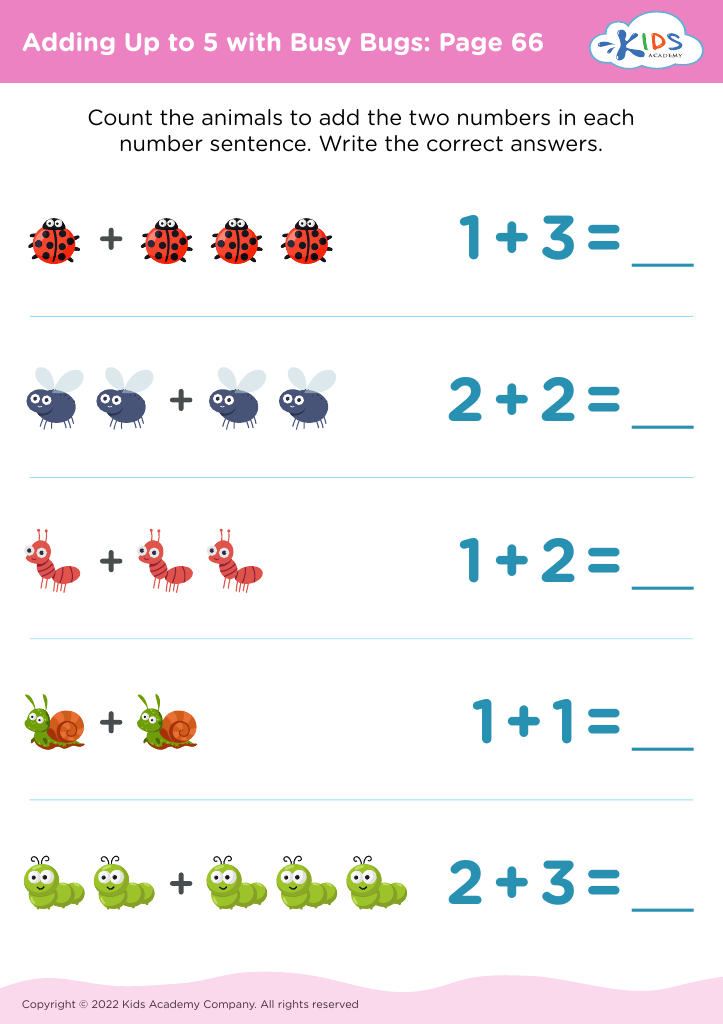
    Adding Up to 5 with Busy Bugs: Page 66
    Adding Up to 5 with Busy Bugs: Page 66
    Adding Up to 5 with Busy Bugs: Page 66
    Worksheet
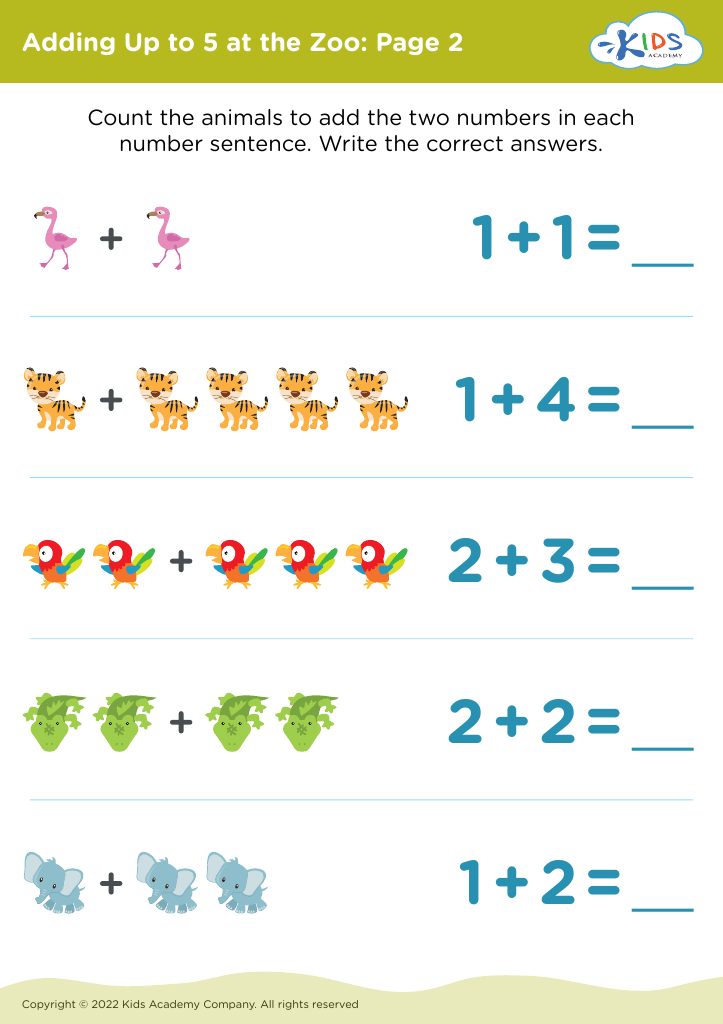
    Adding Up to 5 at the Zoo: Page 2
    Adding Up to 5 at the Zoo: Page 2

    Adding Up to 5 at the Zoo: Page 2

    Adding Up to 5 at the Zoo: Page 2
    Worksheet
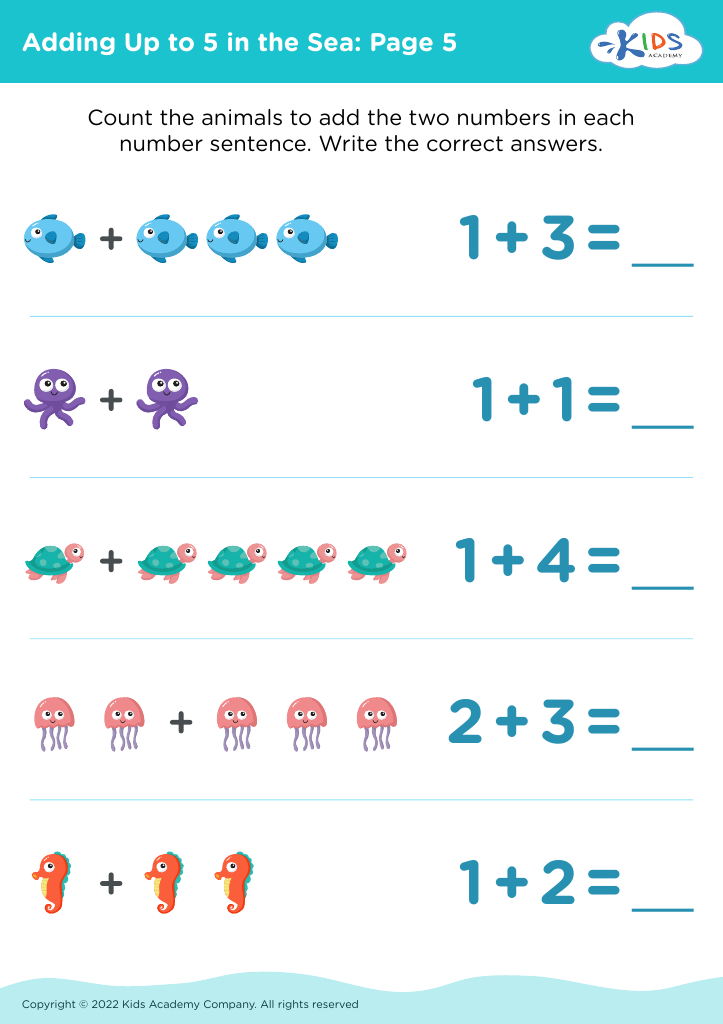
    Adding Up to 5 in the Sea: Page 5
    Adding Up to 5 in the Sea: Page 5

    Adding Up to 5 in the Sea: Page 5

    Adding Up to 5 in the Sea: Page 5
    Worksheet
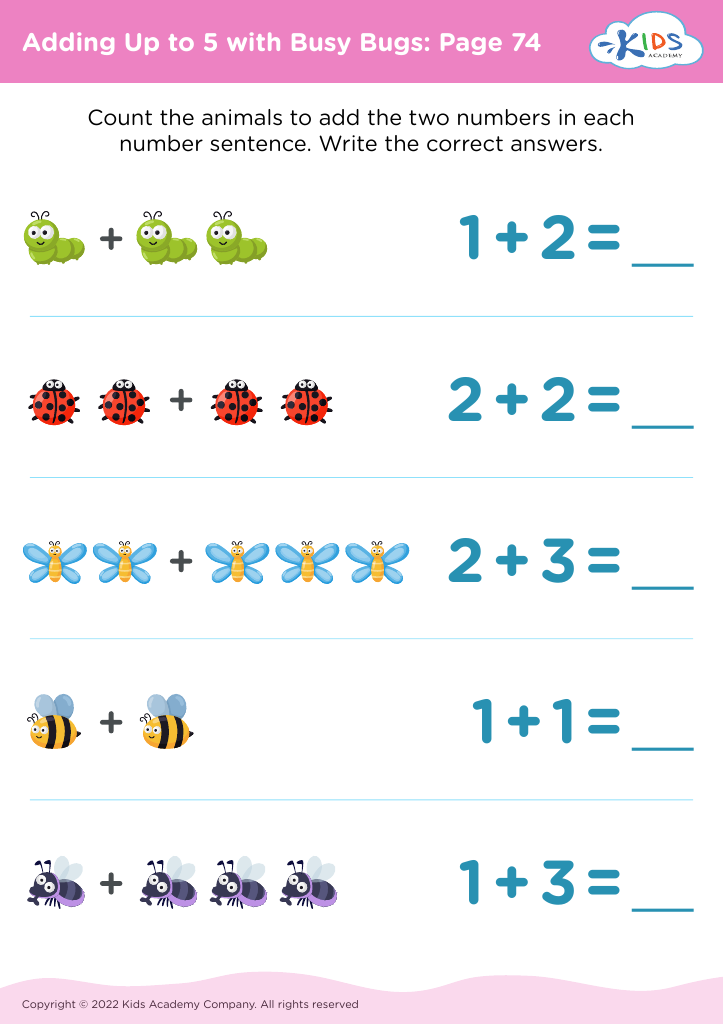
    Adding Up to 5 with Busy Bugs: Page 74
    Adding Up to 5 with Busy Bugs: Page 74
    Adding Up to 5 with Busy Bugs: Page 74
    Worksheet
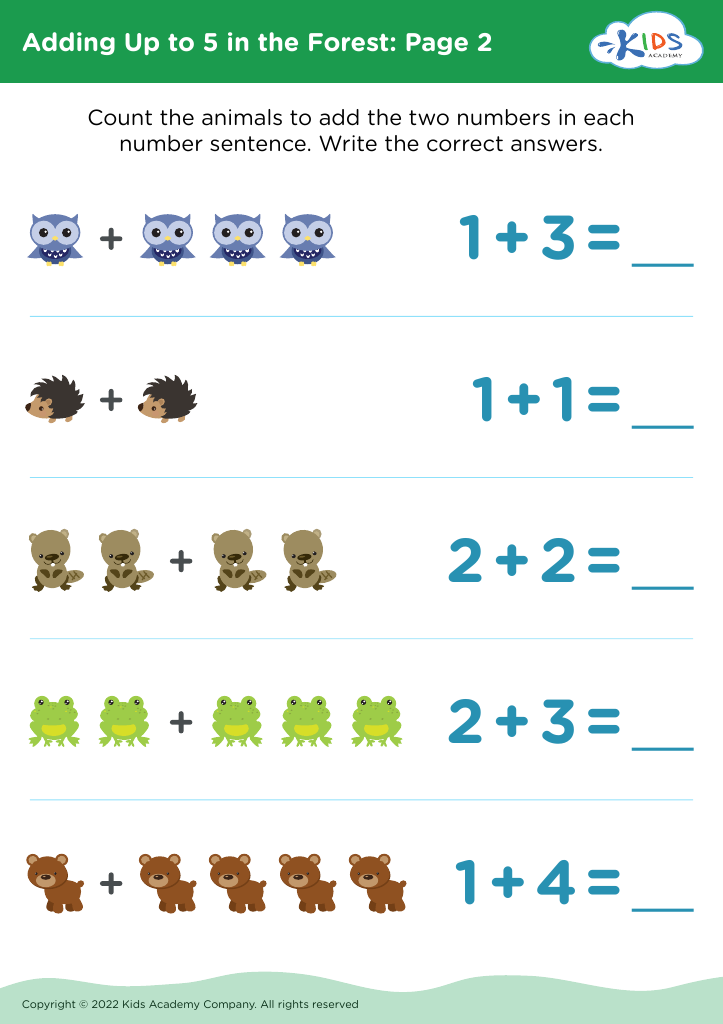
    Adding Up to 5 in the Forest: Page 2
    Adding Up to 5 in the Forest: Page 2
    Adding Up to 5 in the Forest: Page 2
    Worksheet
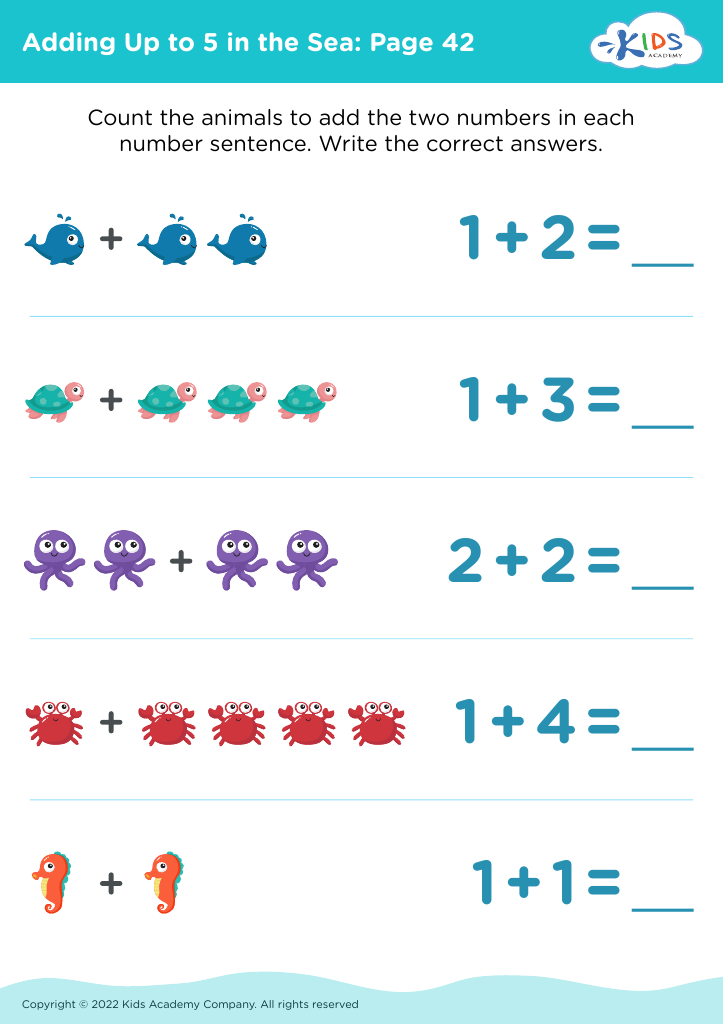
    Adding Up to 5 in the Sea: Page 42
    Adding Up to 5 in the Sea: Page 42
    Adding Up to 5 in the Sea: Page 42
    Worksheet
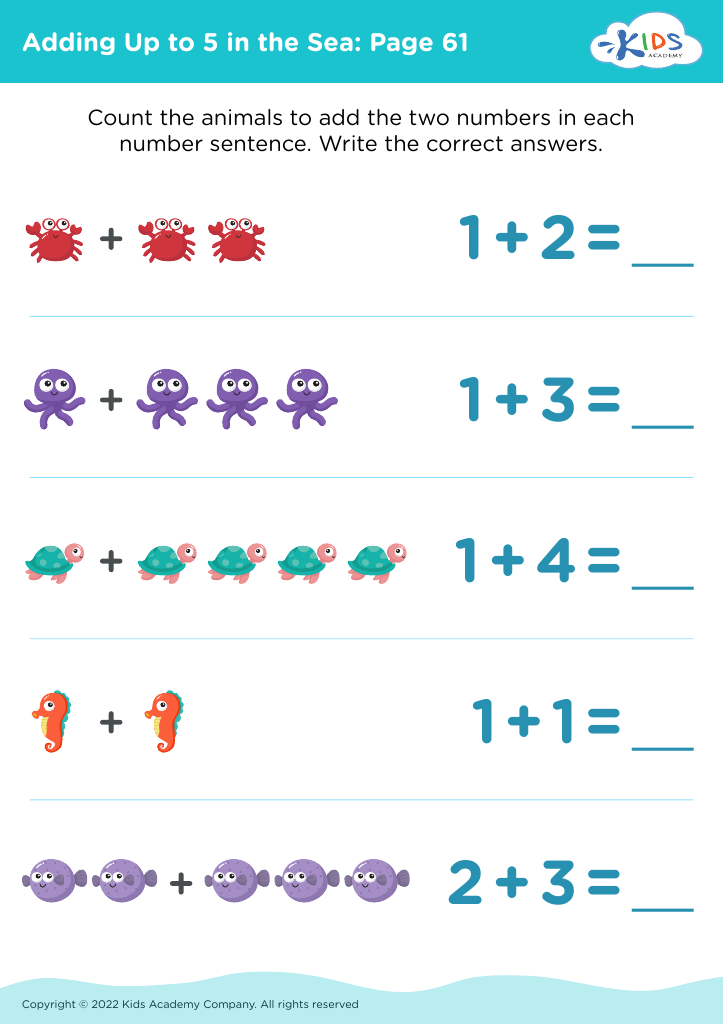
    Adding Up to 5 in the Sea: Page 61
    Adding Up to 5 in the Sea: Page 61
    Adding Up to 5 in the Sea: Page 61
    Worksheet
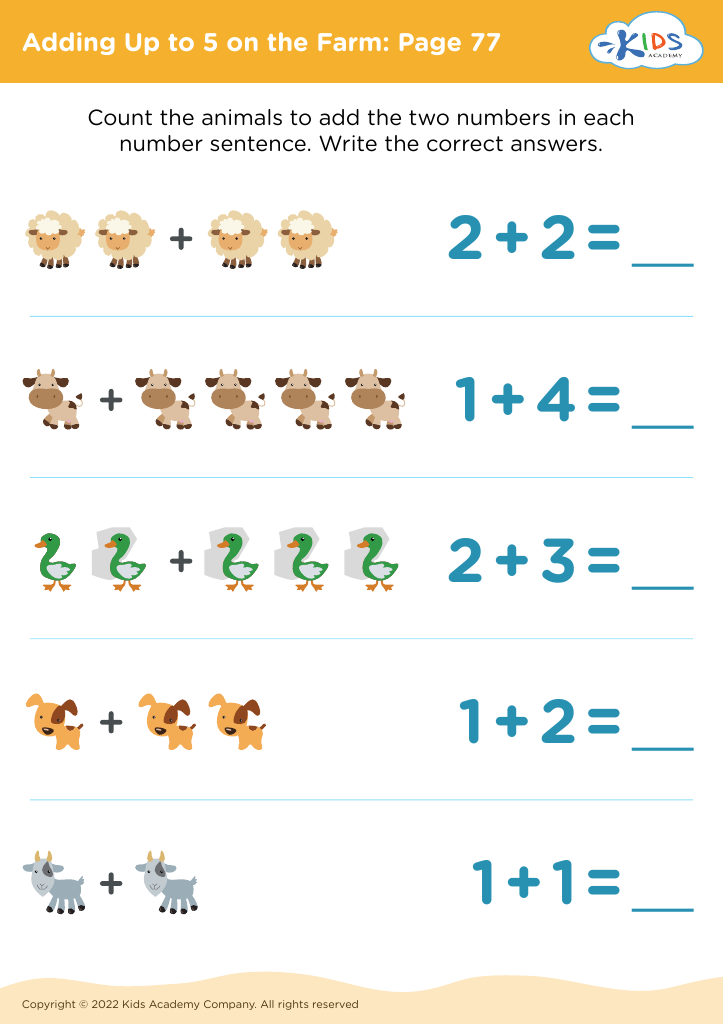
    Adding Up to 5 on the Farm: Page 77
    Adding Up to 5 on the Farm: Page 77
    Adding Up to 5 on the Farm: Page 77
    Worksheet
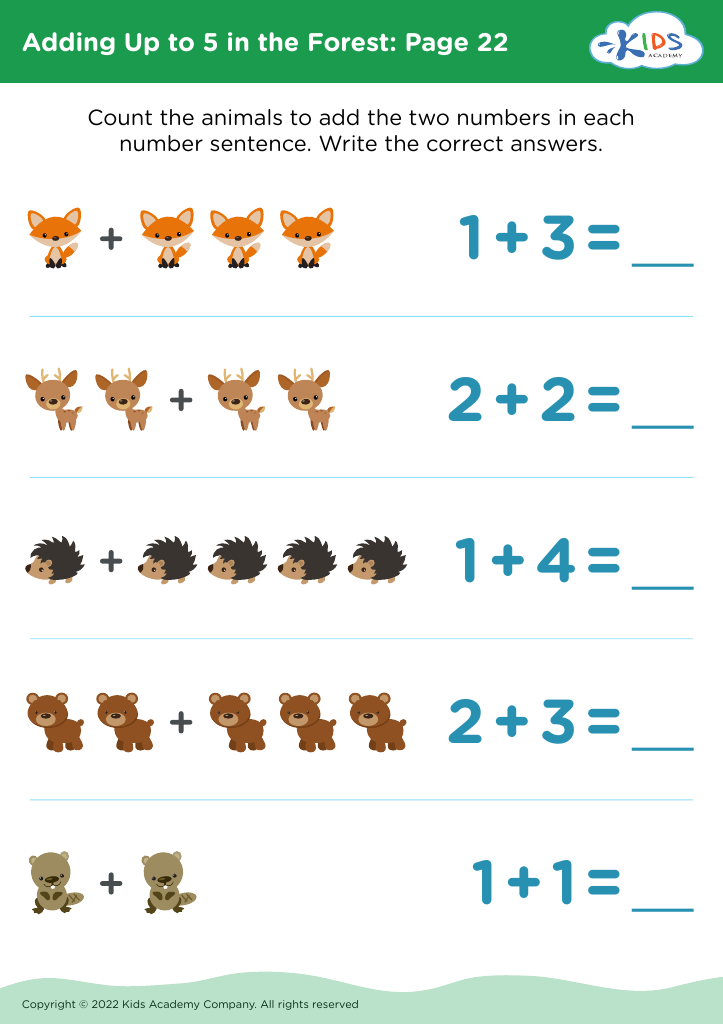
    Adding Up to 5 in the Forest: Page 22
    Adding Up to 5 in the Forest: Page 22
    Adding Up to 5 in the Forest: Page 22
    Worksheet
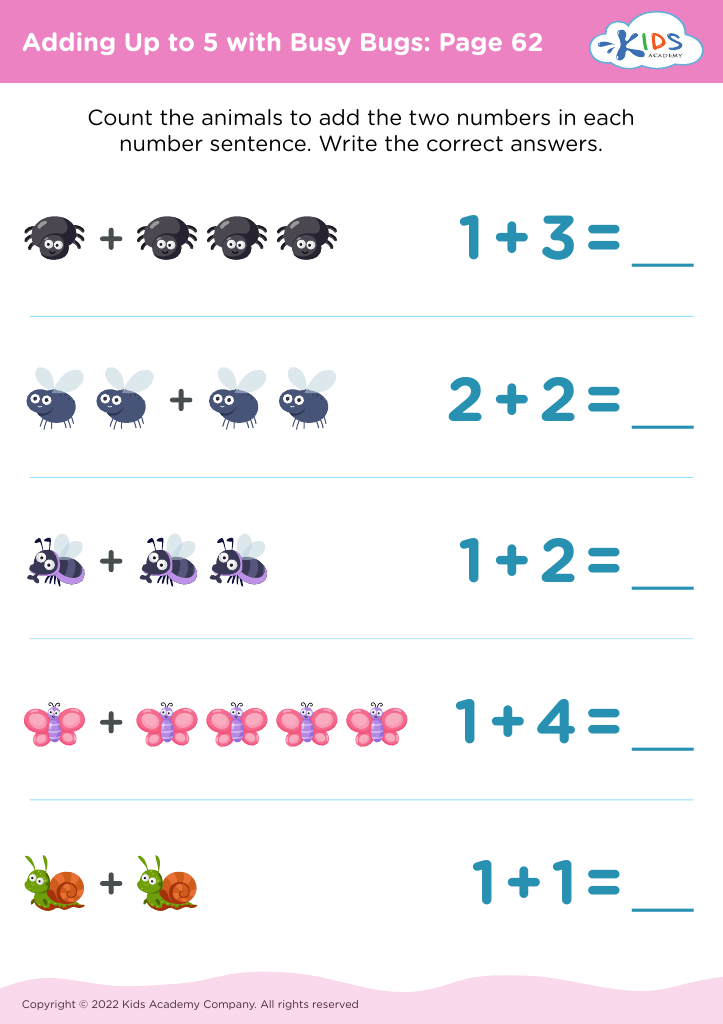
    Adding Up to 5 with Busy Bugs: Page 62
    Adding Up to 5 with Busy Bugs: Page 62
    Adding Up to 5 with Busy Bugs: Page 62
    Worksheet
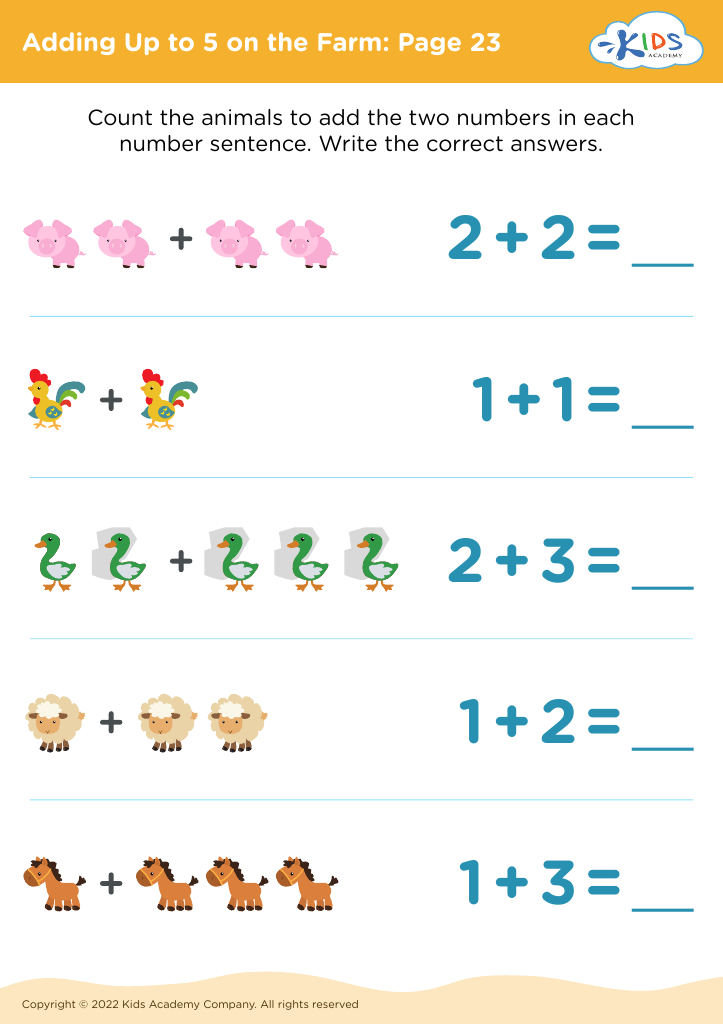
    Adding Up to 5 on the Farm: Page 23
    Adding Up to 5 on the Farm: Page 23
    Adding Up to 5 on the Farm: Page 23
    Worksheet
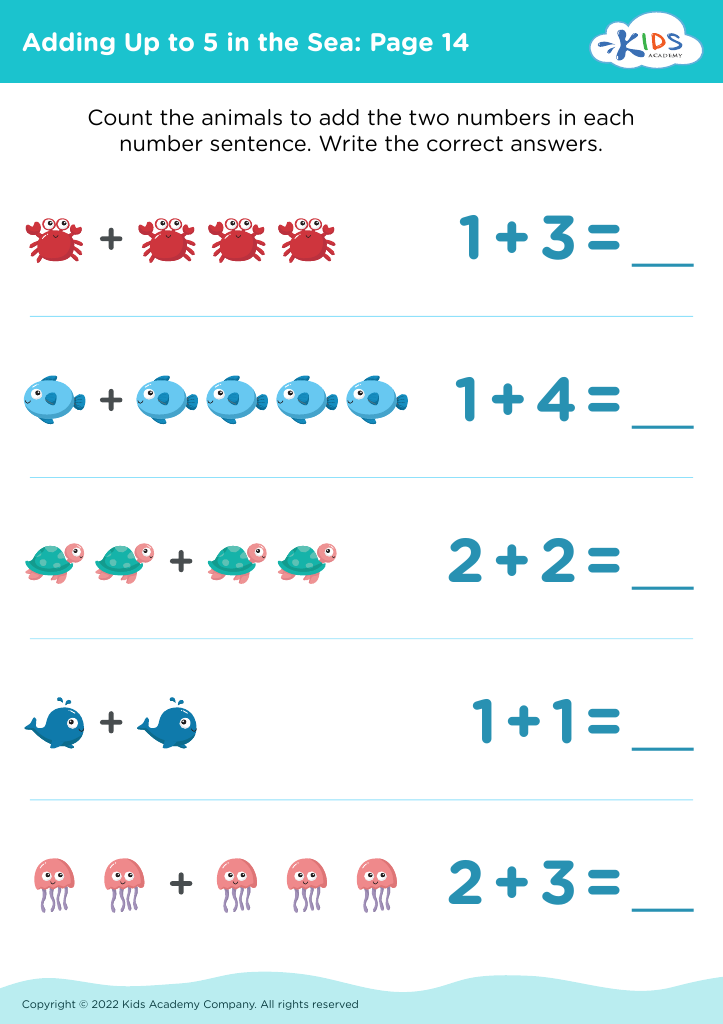
    Adding Up to 5 in the Sea: Page 14
    Adding Up to 5 in the Sea: Page 14
    Adding Up to 5 in the Sea: Page 14
    Worksheet
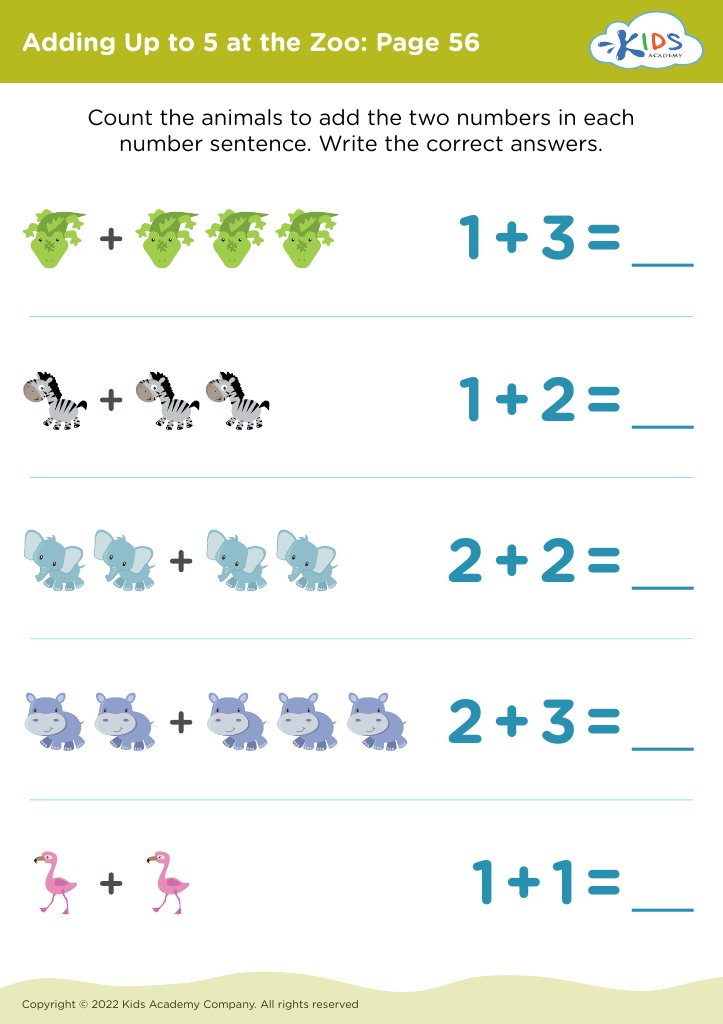
    Adding Up to 5 at the Zoo: Page 56
    Adding Up to 5 at the Zoo: Page 56
    Adding Up to 5 at the Zoo: Page 56
    Worksheet
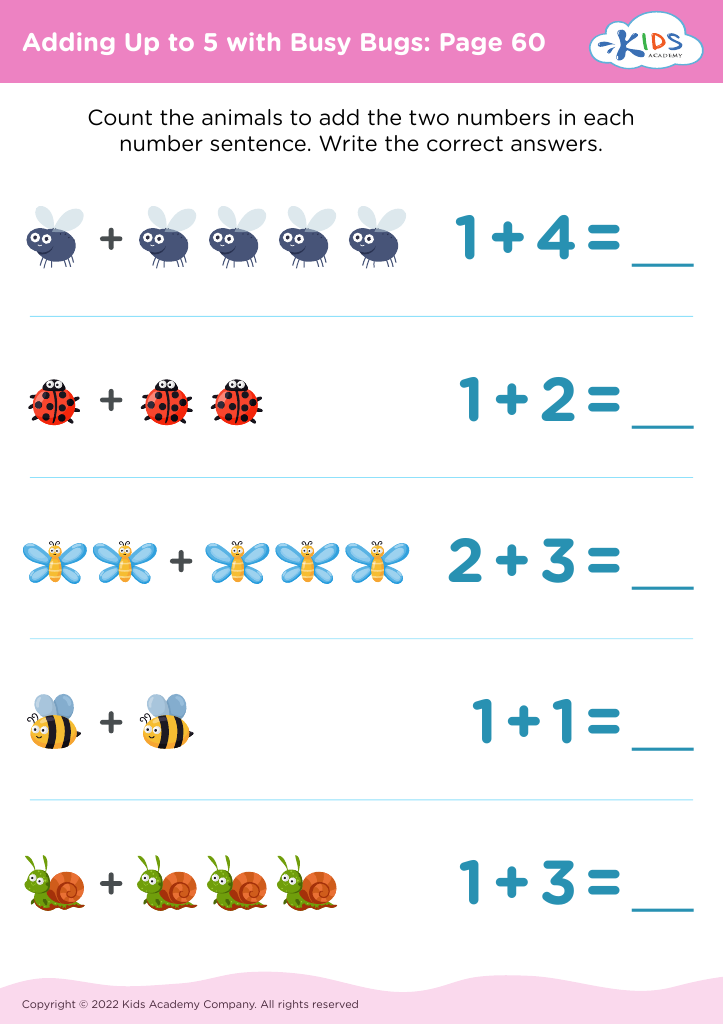
    Adding Up to 5 with Busy Bugs: Page 60
    Adding Up to 5 with Busy Bugs: Page 60
    Adding Up to 5 with Busy Bugs: Page 60
    Worksheet
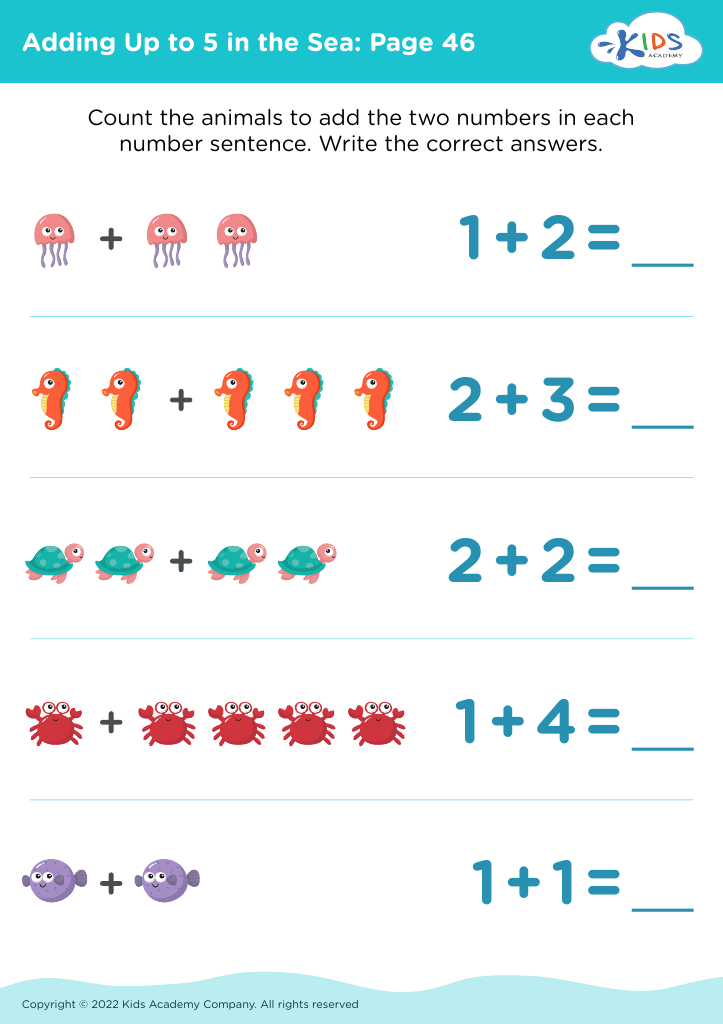
    Adding Up to 5 in the Sea: Page 46
    Adding Up to 5 in the Sea: Page 46
    Adding Up to 5 in the Sea: Page 46
    Worksheet
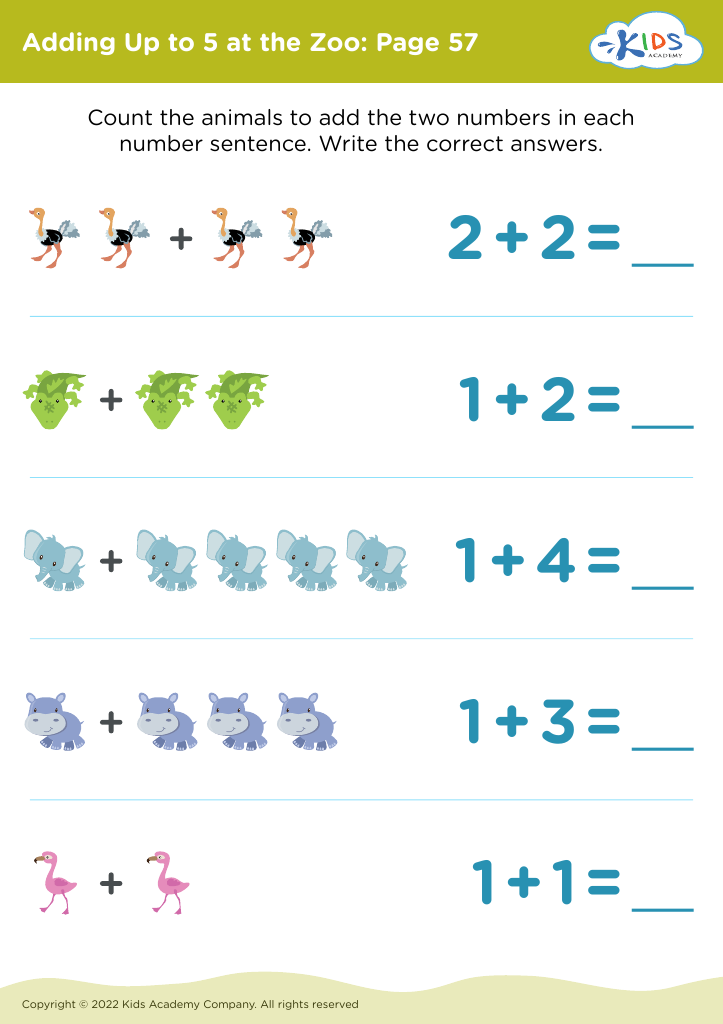
    Adding Up to 5 at the Zoo: Page 57
    Adding Up to 5 at the Zoo: Page 57
    Adding Up to 5 at the Zoo: Page 57
    Worksheet


    Adding Up to 5 is a foundational concept in early mathematics education that holds significant importance for children aged 5-7. At this stage, children are beginning to develop critical number sense, and mastering basic addition skills sets the groundwork for their future mathematical understanding. When students grasp the concept of adding numbers up to 5, they can confidently tackle more complex math problems later on, leading to improved overall mathematical proficiency.

    Parents and teachers should be concerned about this notion for several reasons. First, it fosters cognitive development by promoting problem-solving and analytical thinking skills. Engaging with simple addition helps children to think logically and abstractly. Secondly, achieving fluency in adding up to 5 enhances children's confidence in their mathematical abilities. This self-assurance is key to nurturing a positive attitude toward learning, as children who feel competent are more likely to participate and excel.

    Finally, it allows for richer everyday interactions: whether through games, cooking, or shopping, integrating math into daily life will make learning contextual and relevant. By focusing on adding up to 5, parents and teachers equip children with essential tools that not only serve in academics but also in real-world situations as they grow.