Adding up to 50 Misc Worksheets for Ages 5-7 - Page 3
73 filtered results
-
From - To
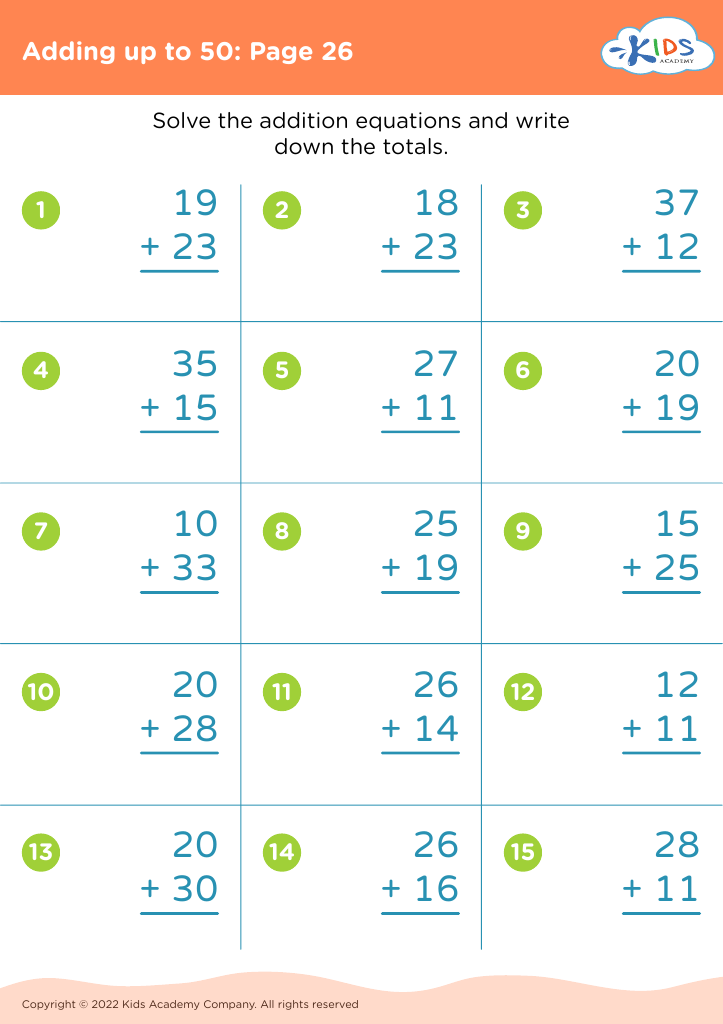
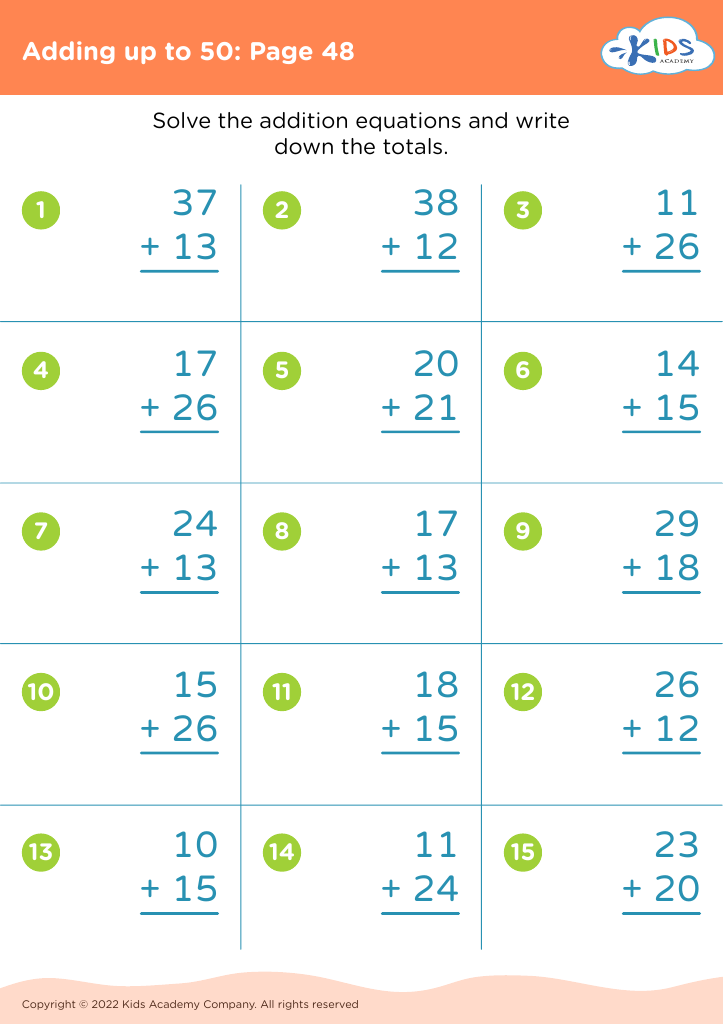
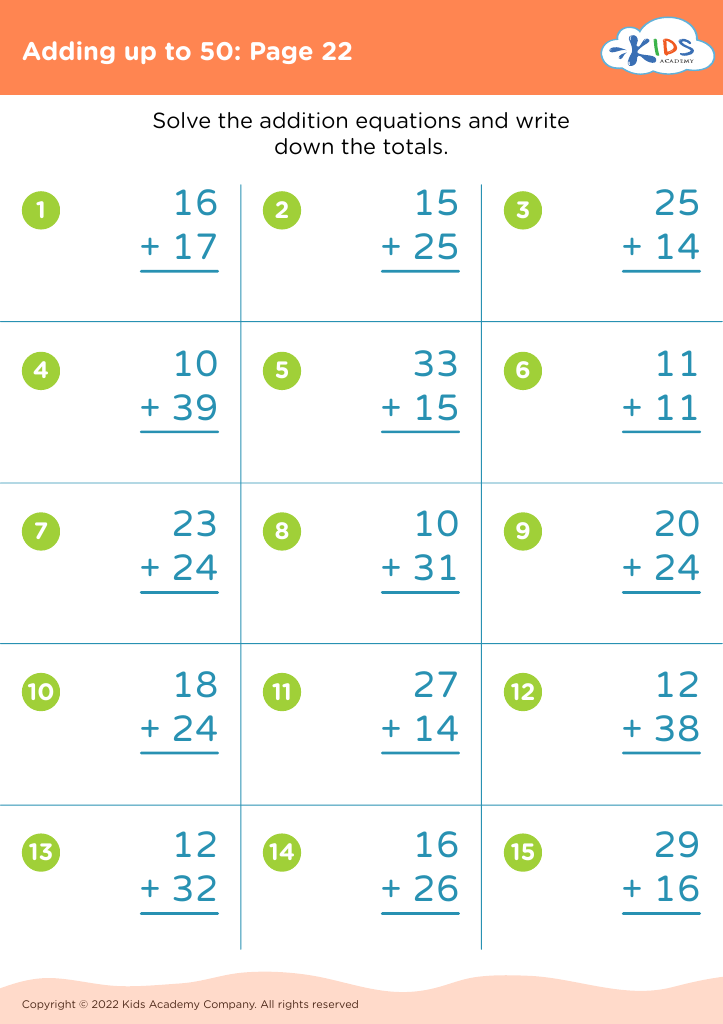
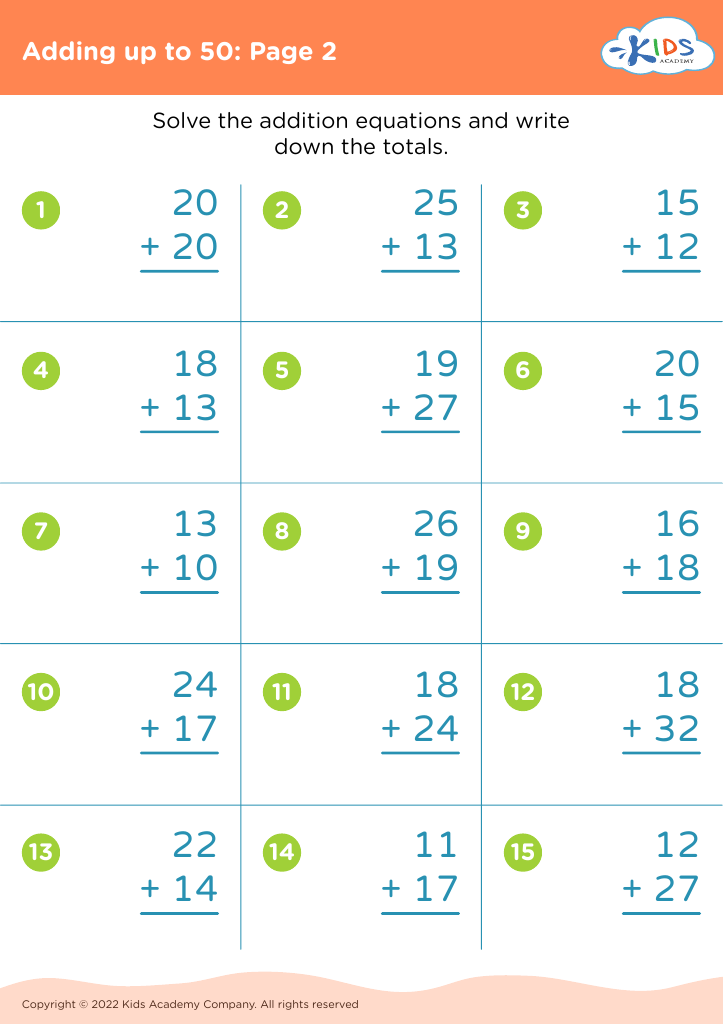
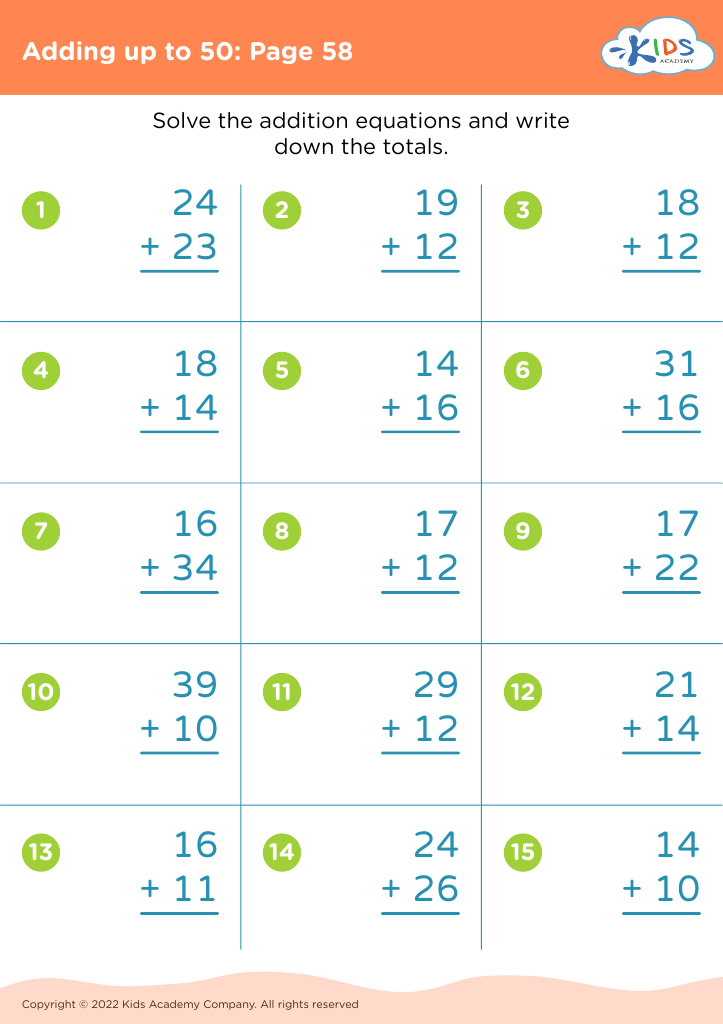
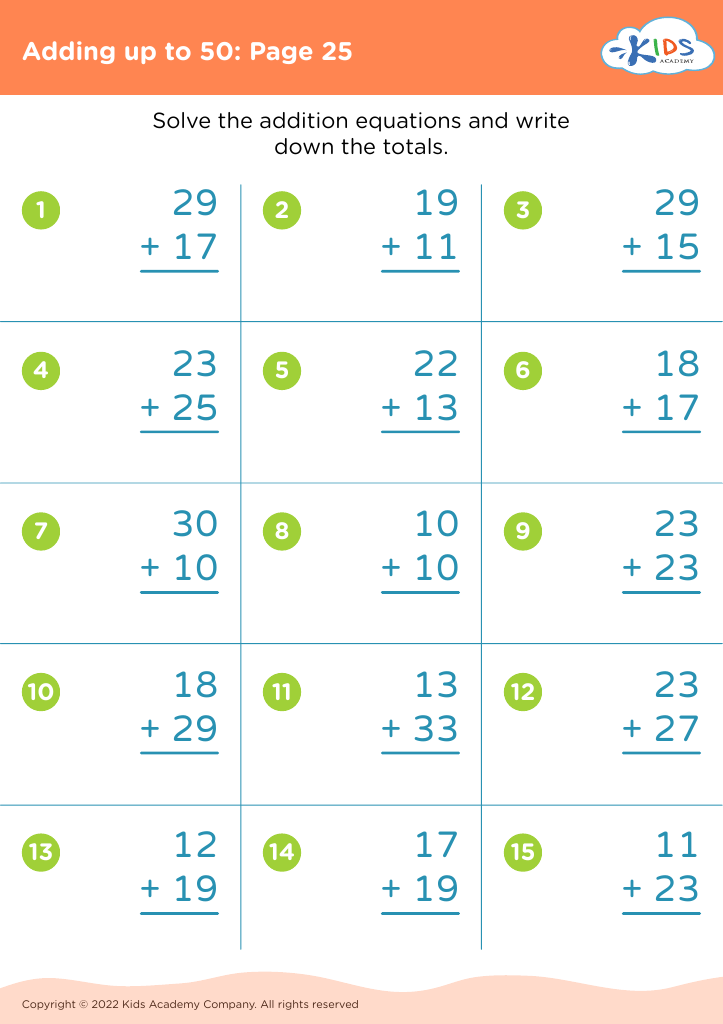
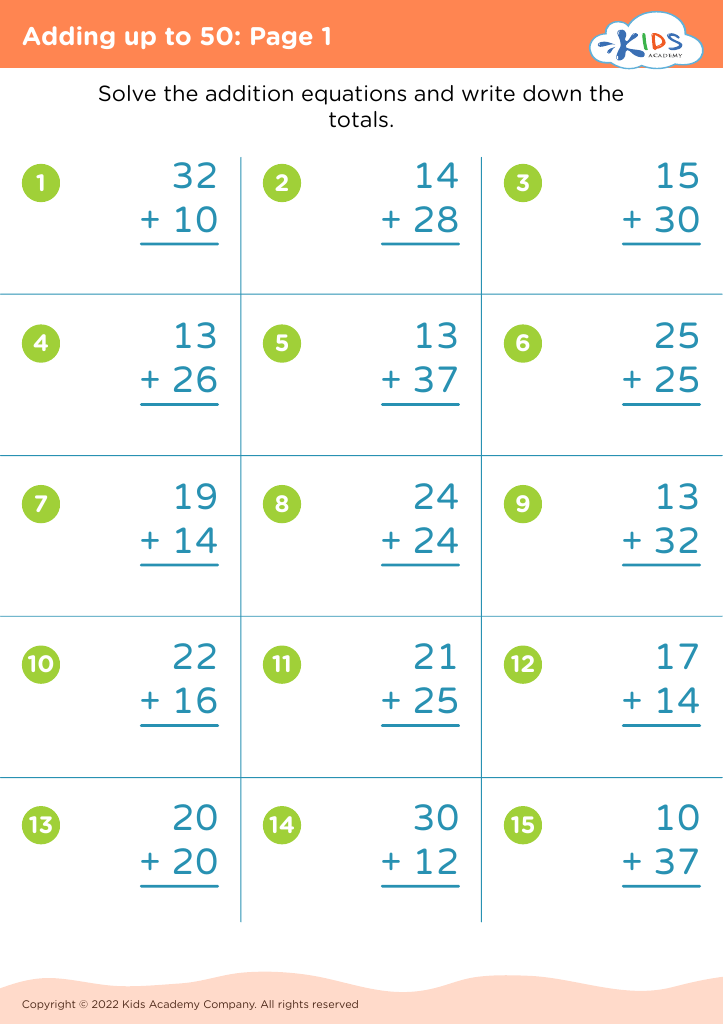
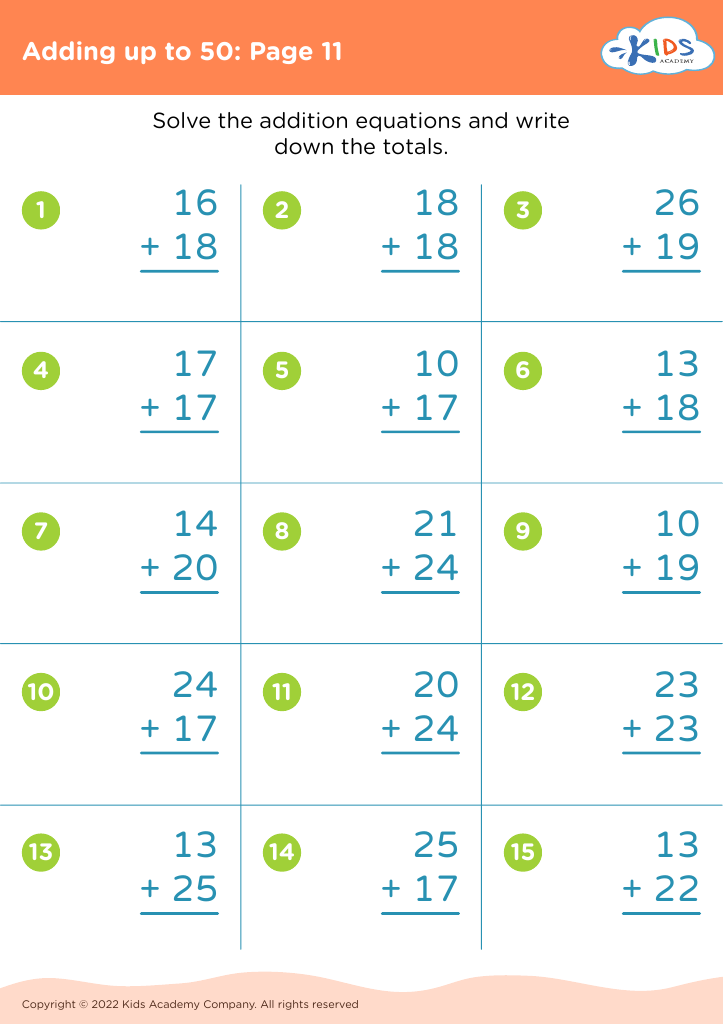
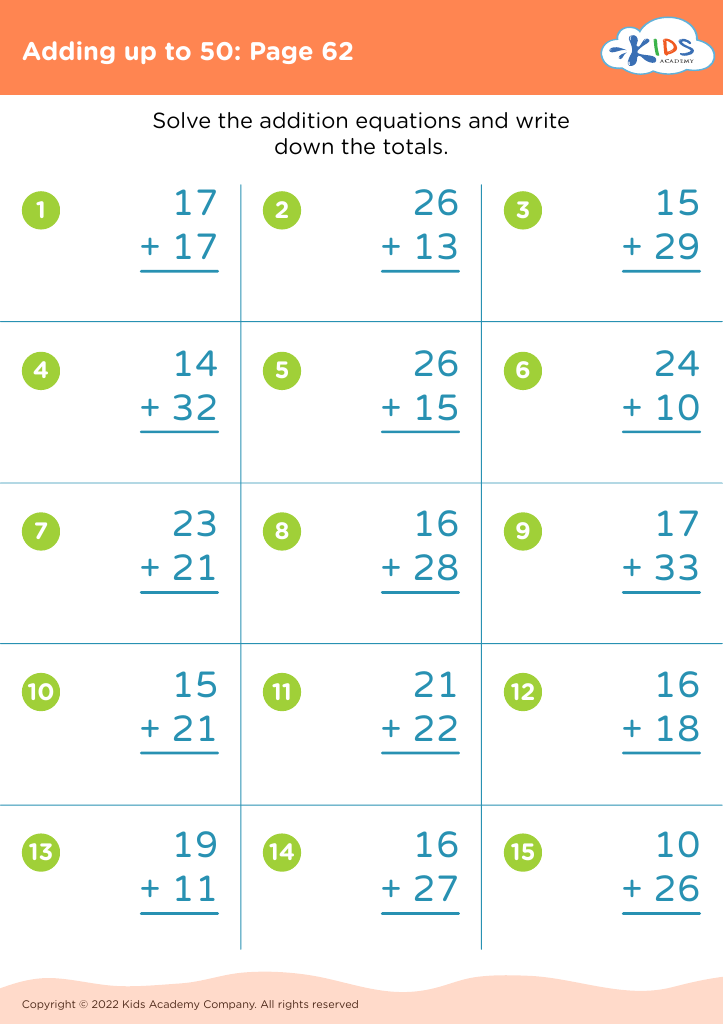
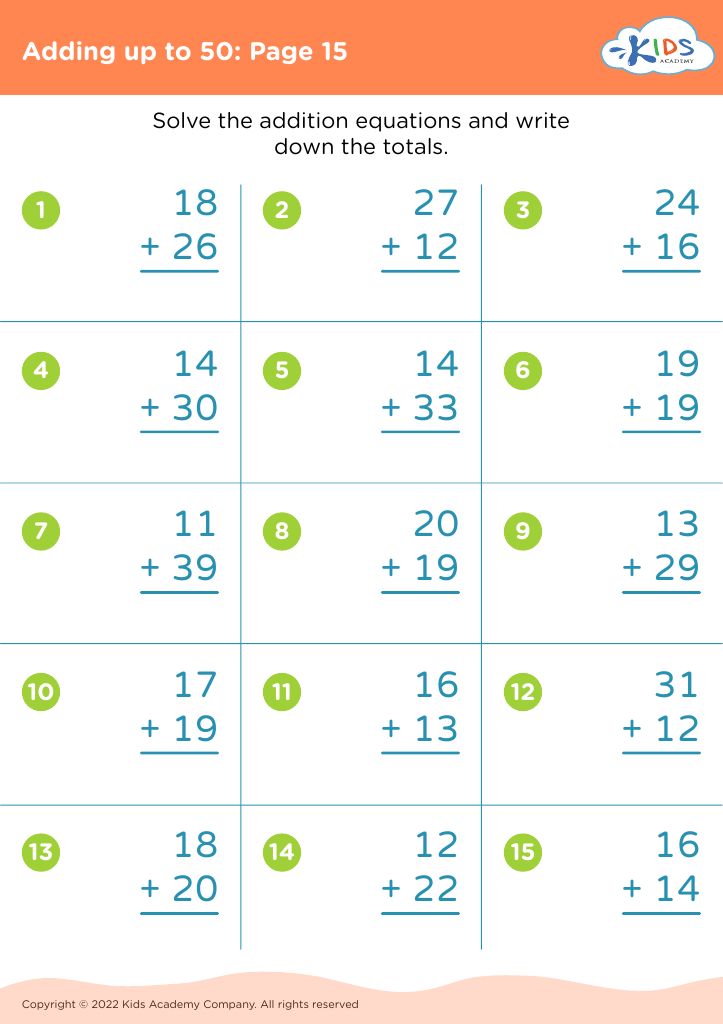
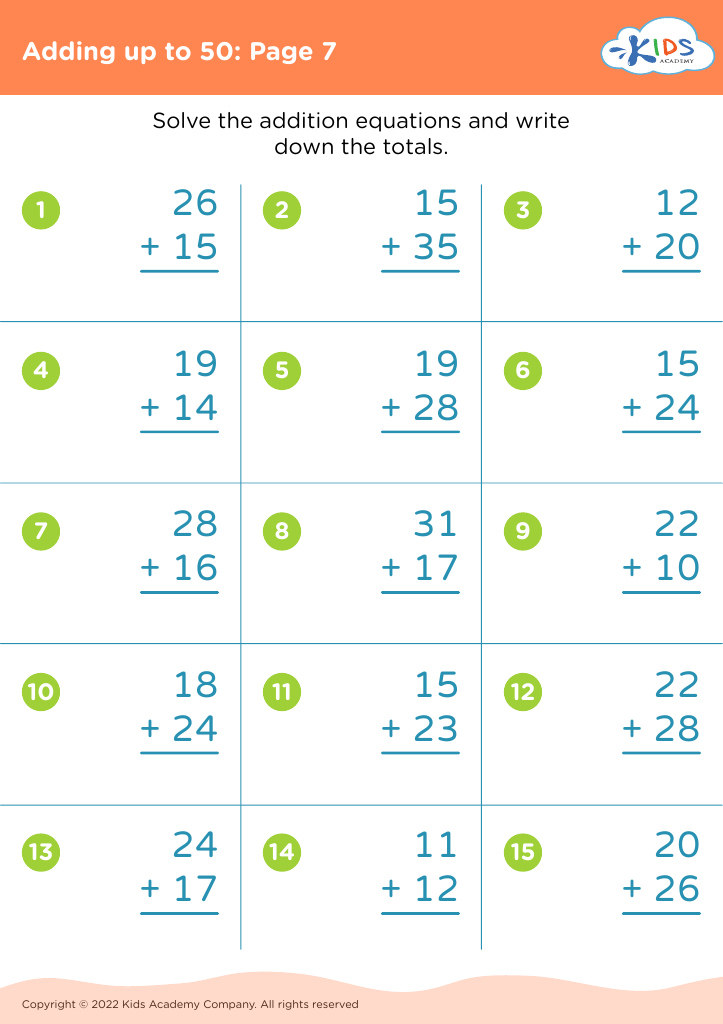
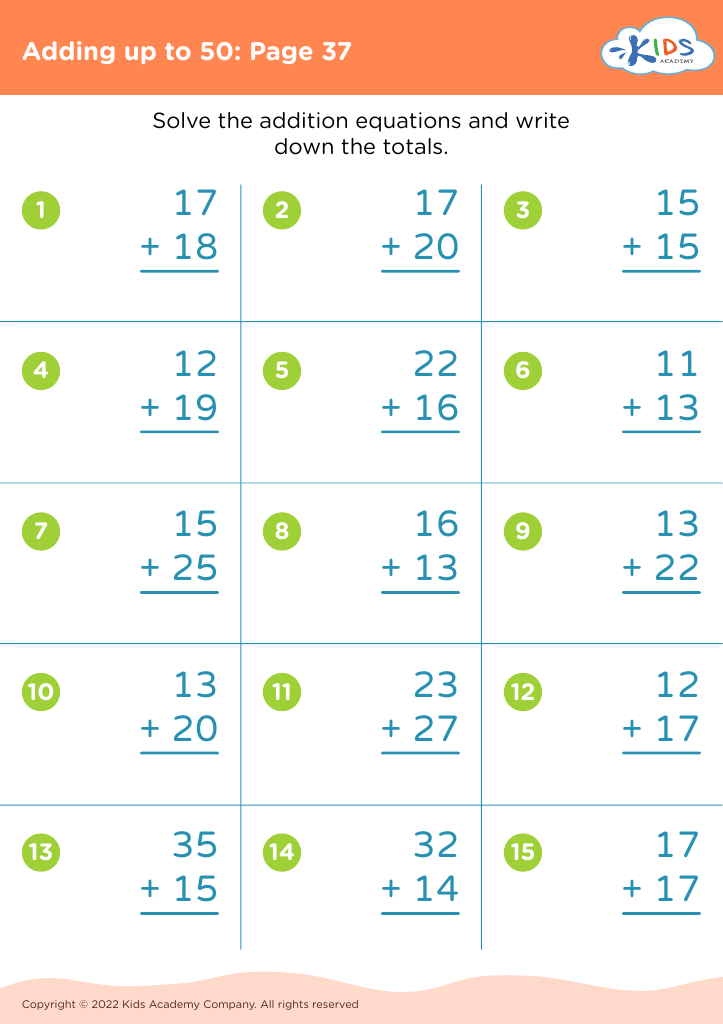
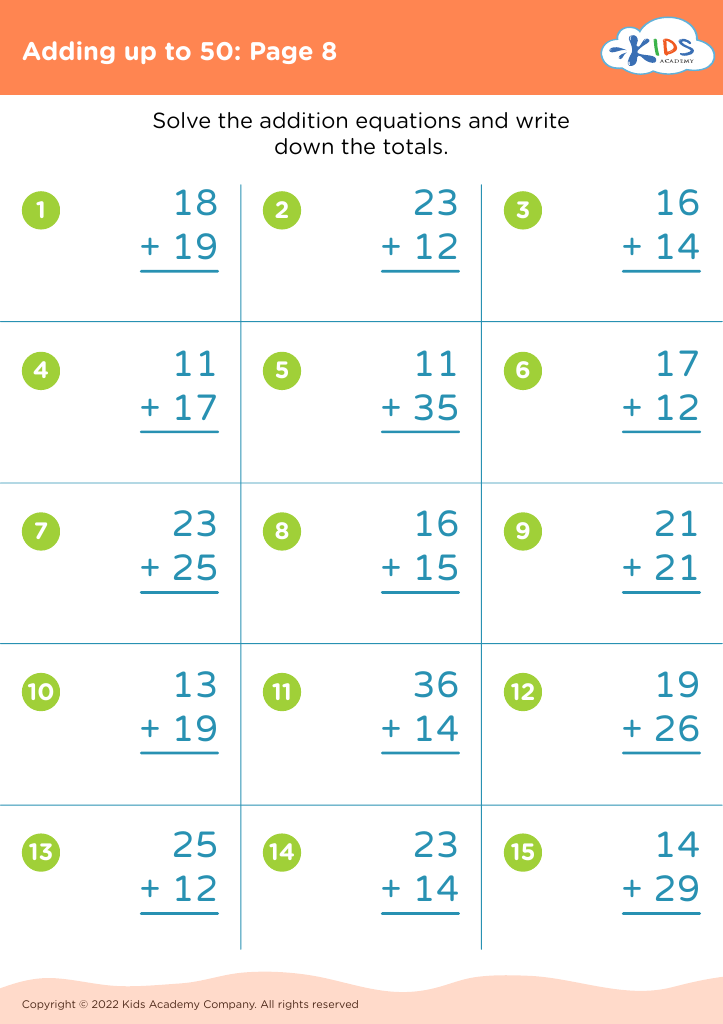
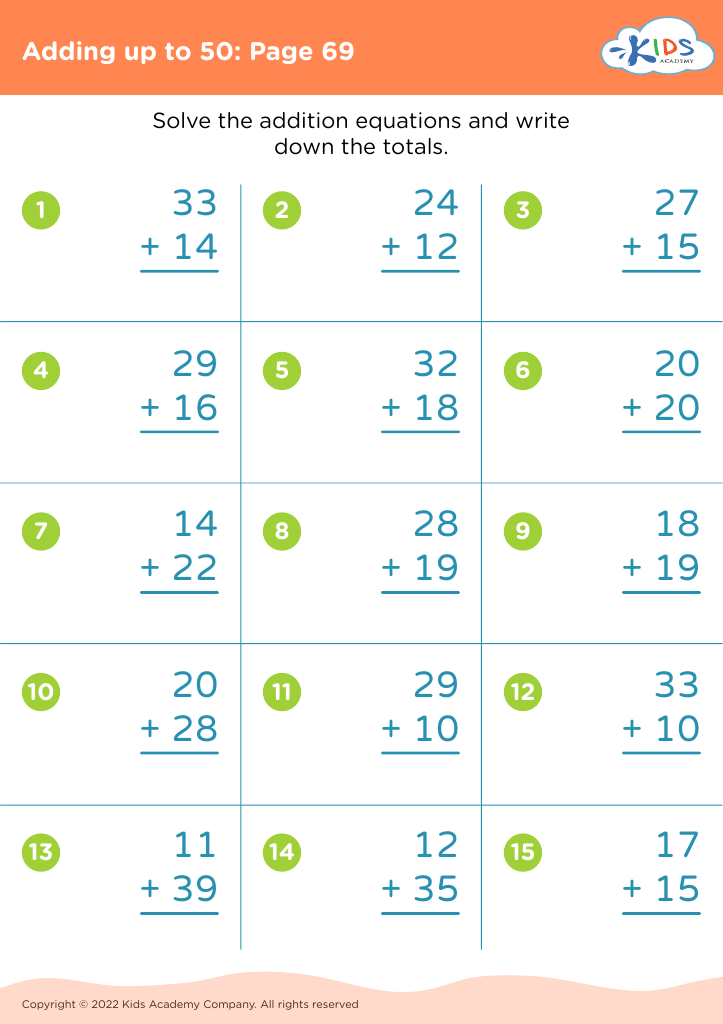
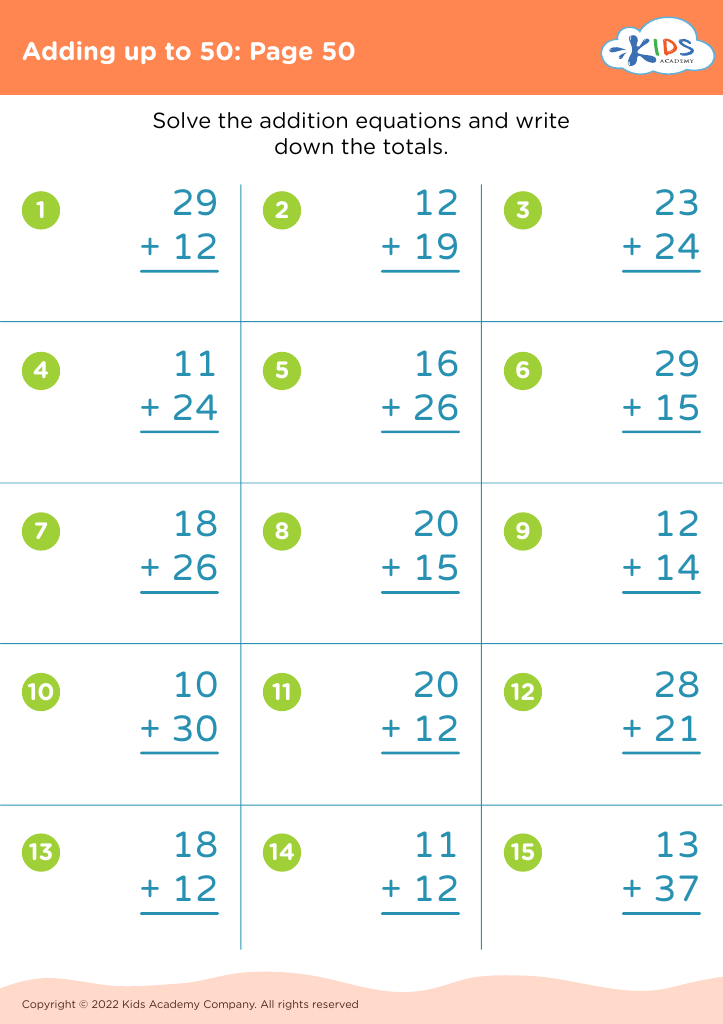
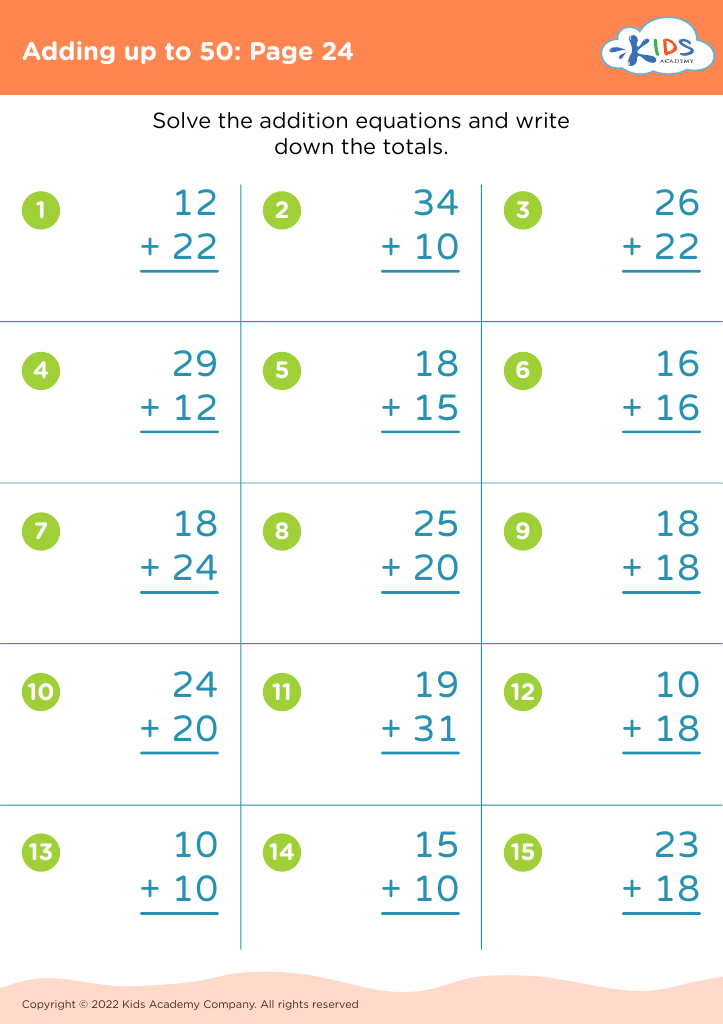
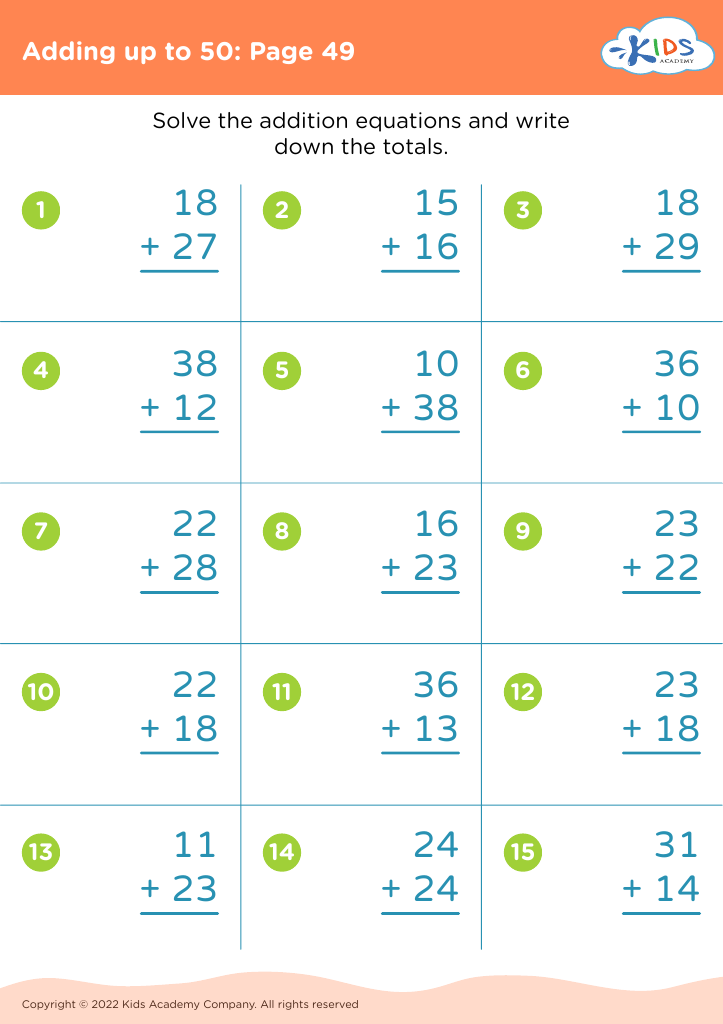
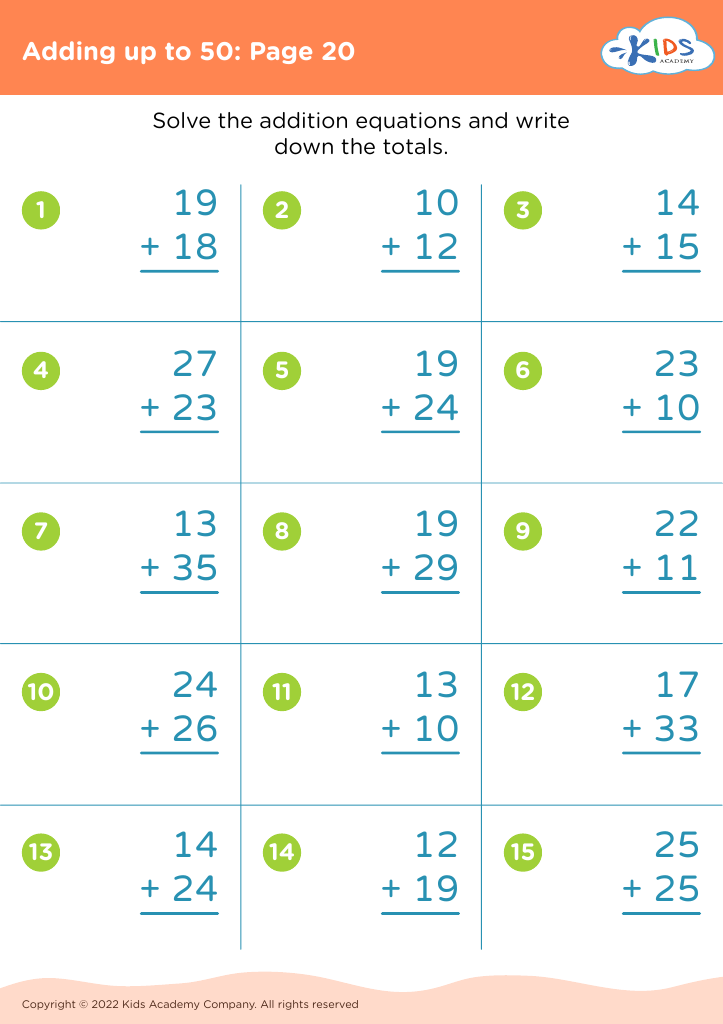
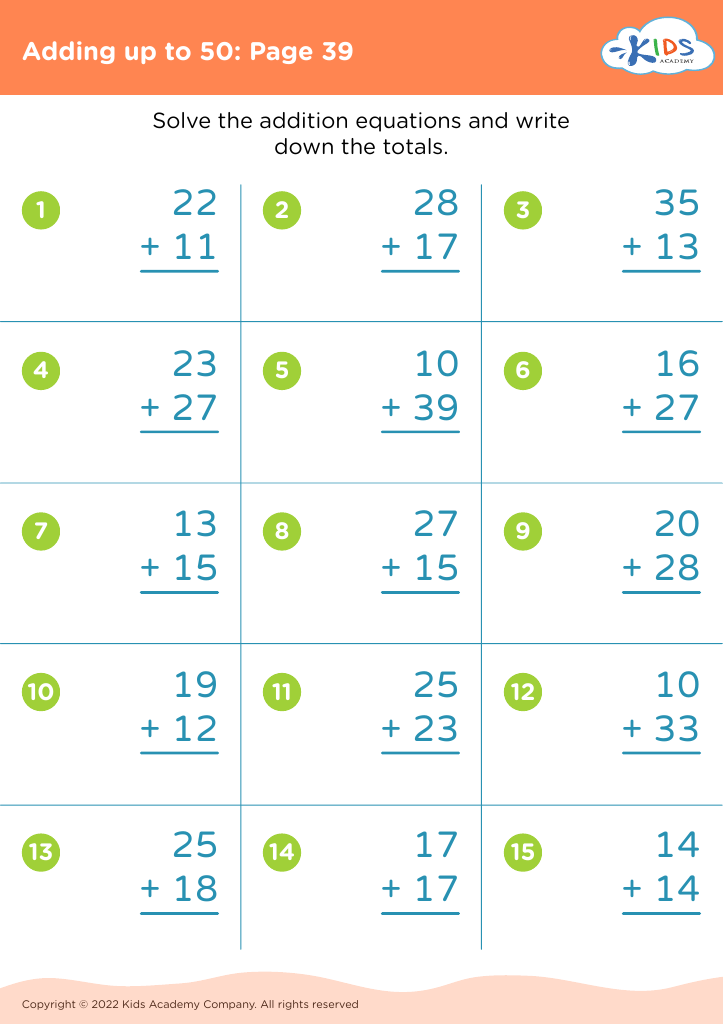
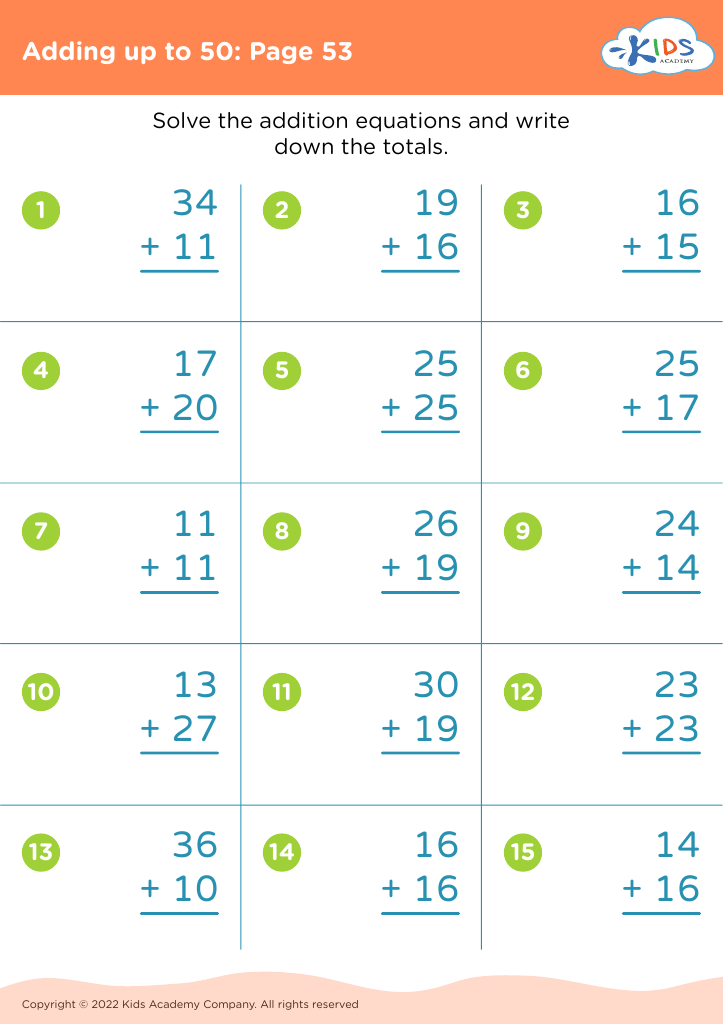
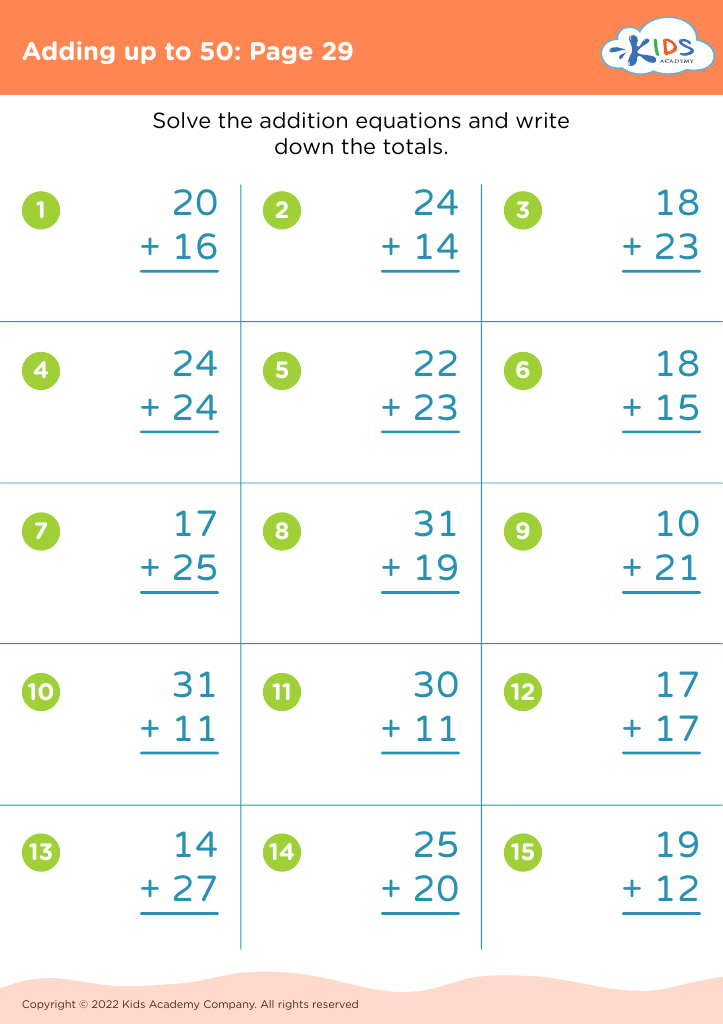
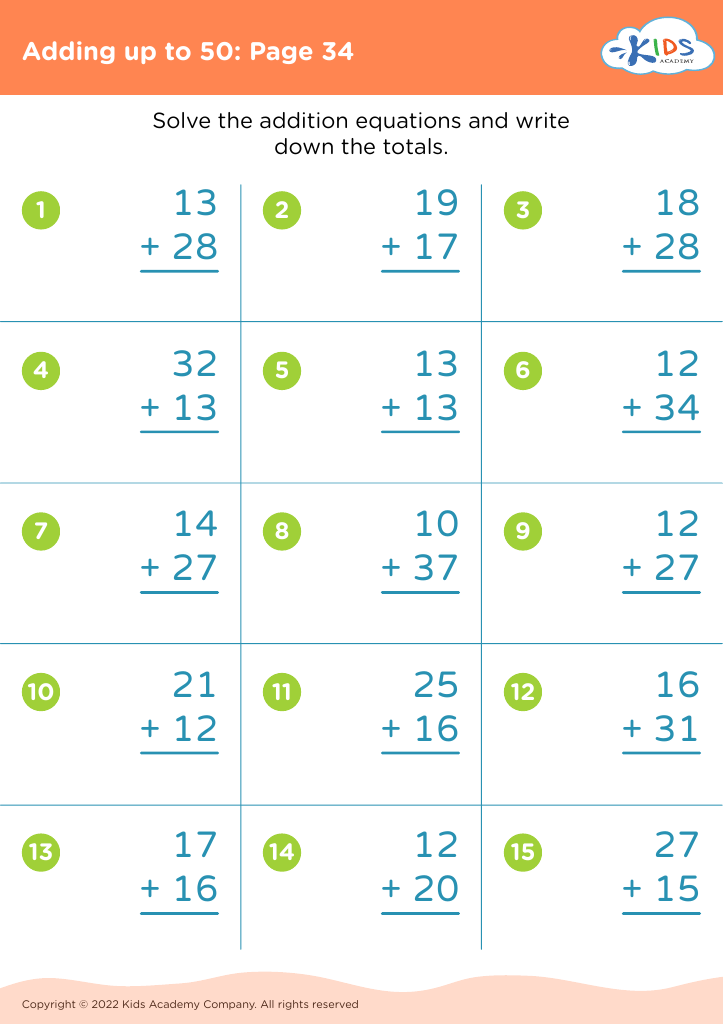
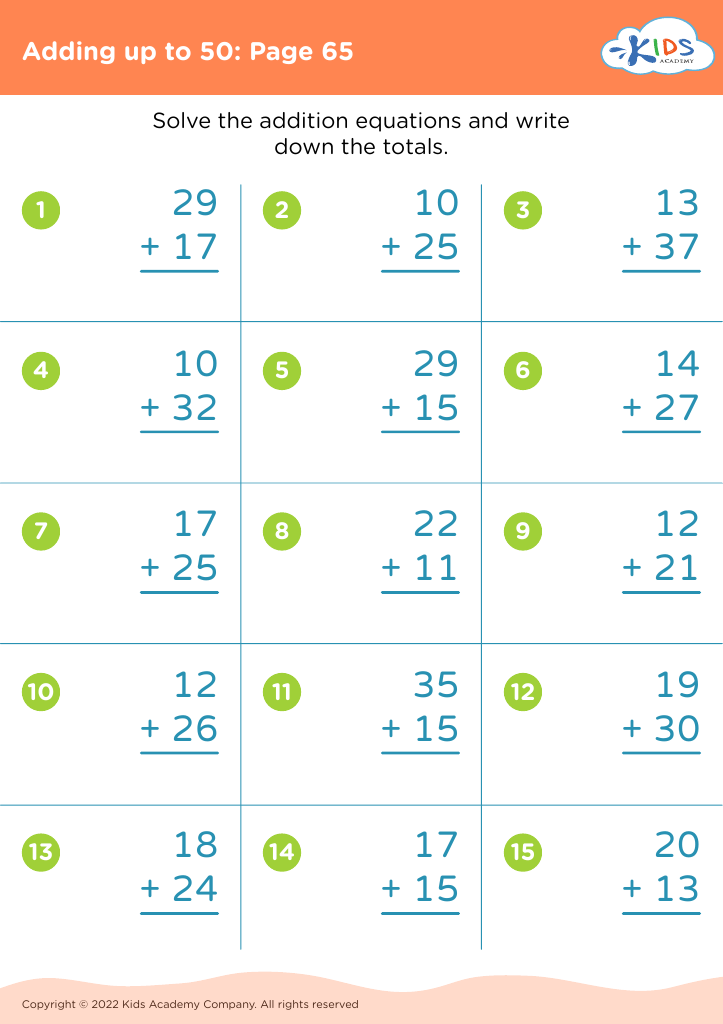
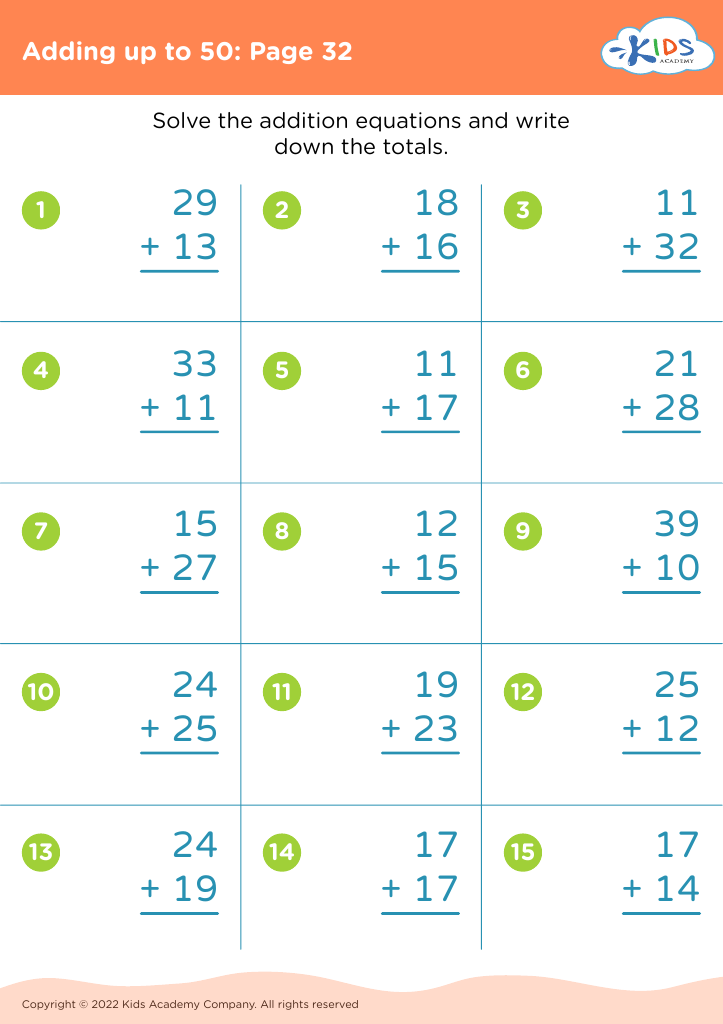


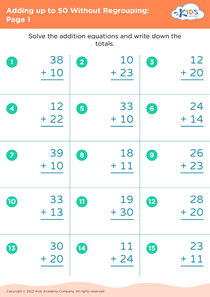
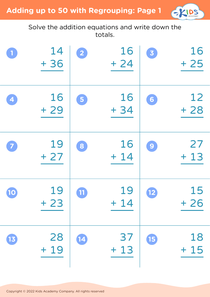
Adding up to 50 is a foundational skill for young children, usually targeted at ages 5-7, and it holds significant educational importance for several reasons. First and foremost, mastering this skill promotes robust numerical understanding, setting a critical groundwork for more advanced mathematical concepts like multiplication and division. Good command of basic addition boosts children's confidence and fosters a positive attitude towards math, making them more eager to tackle future challenges.
From the perspective of cognitive development, engaging in addition exercises enhances children's problem-solving capabilities and mental arithmetic, encouraging logical thinking and improved memory. Tackling sums up to 50 allows children to practice counting, number recognition, and quantitative comparison, which are crucial elements of early math literacy.
Moreover, ensuring that children can proficiently add numbers up to 50 equips them with practical arithmetic skills useful in real-life situations, such as handling money, telling time, and measuring ingredients in simple recipes. This applied understanding emphasizes the relevance of math in everyday tasks, making learning more relatable and fun.
Overall, parents and teachers should pay close attention to developing these skills as they are essential building blocks for academic success in mathematics and beyond, providing children with the tools they need to flourish in both their immediate and future educational journeys.