Filters

1235 filtered results

Clear all filters
Favorites
With answer key
Interactive

1235 filtered results

Difficulty Level

Grade


Subject

    Check out this FREE Trial Lesson on Addition for age 5-7!

    Sorting Objects into 3 Categories

    Favorites
    With answer key
    Interactive
    • 5-7
    • Addition
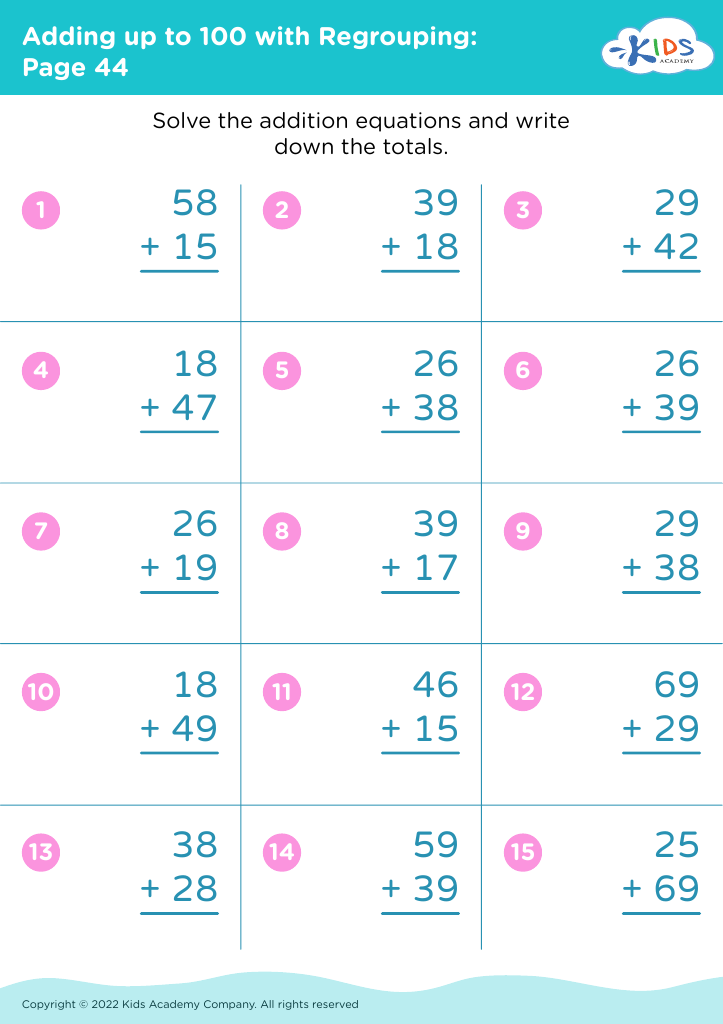
    Adding up to 100 with Regrouping: Page 44
    Adding up to 100 with Regrouping: Page 44
    Adding up to 100 with Regrouping: Page 44
    Worksheet
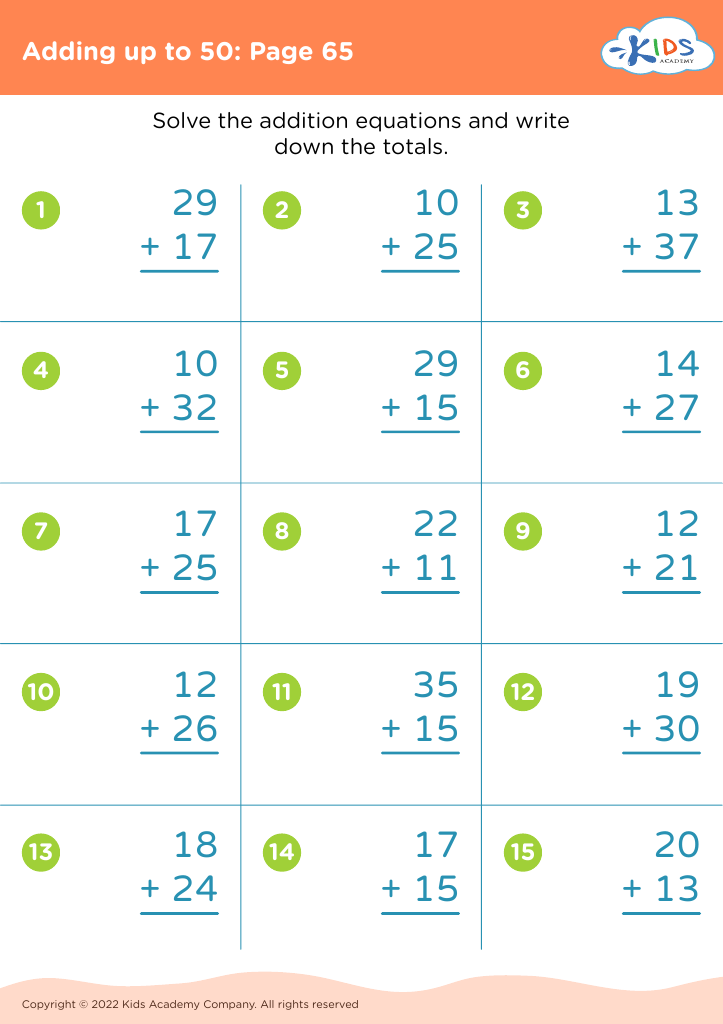
    Adding up to 50: Page 65
    Adding up to 50: Page 65

    Adding up to 50: Page 65

    Adding up to 50: Page 65
    Worksheet
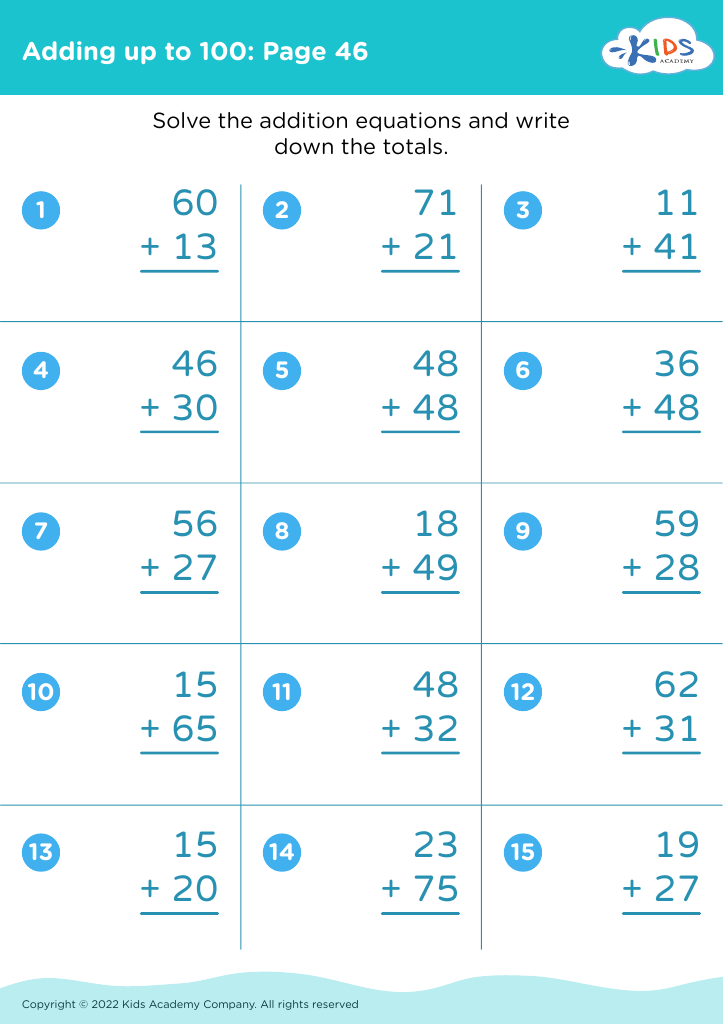
    Adding up to 100: Page 46
    Adding up to 100: Page 46

    Adding up to 100: Page 46

    Adding up to 100: Page 46
    Worksheet
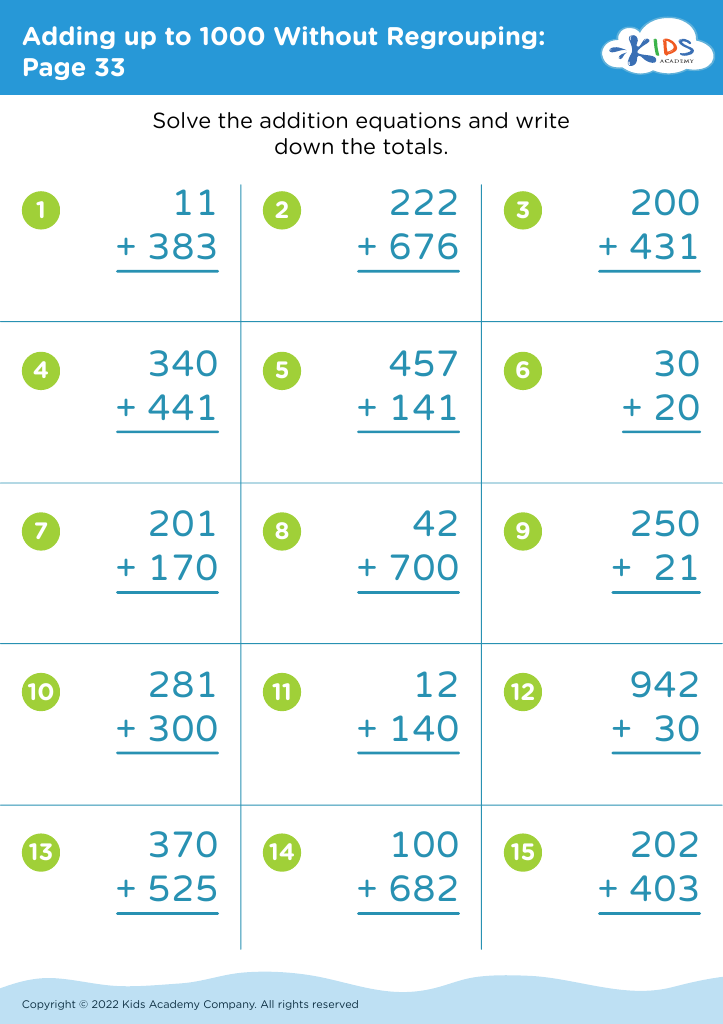
    Adding up to 1000 Without Regrouping: Page 33
    Adding up to 1000 Without Regrouping: Page 33
    Adding up to 1000 Without Regrouping: Page 33
    Worksheet
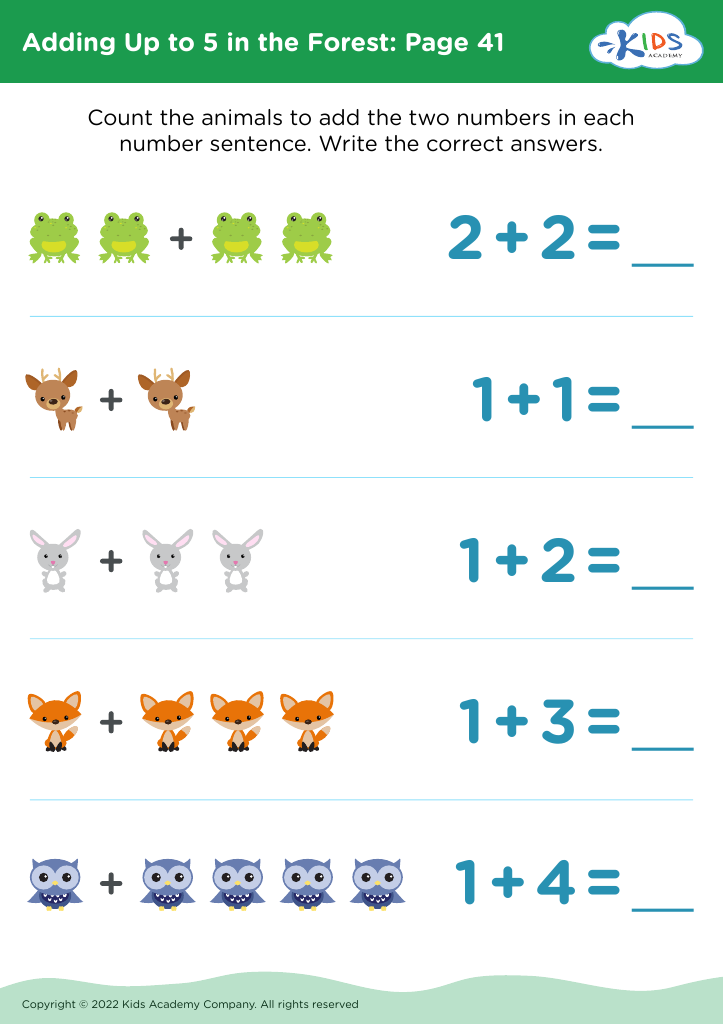
    Adding Up to 5 in the Forest: Page 41
    Adding Up to 5 in the Forest: Page 41
    Adding Up to 5 in the Forest: Page 41
    Worksheet
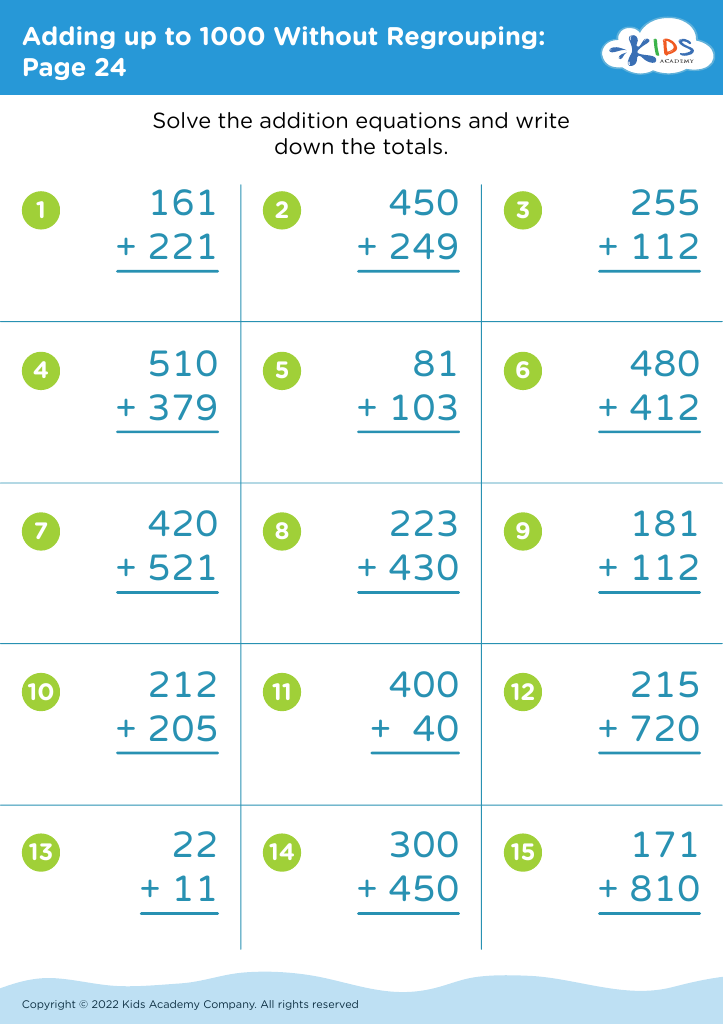
    Adding up to 1000 Without Regrouping: Page 24
    Adding up to 1000 Without Regrouping: Page 24
    Adding up to 1000 Without Regrouping: Page 24
    Worksheet
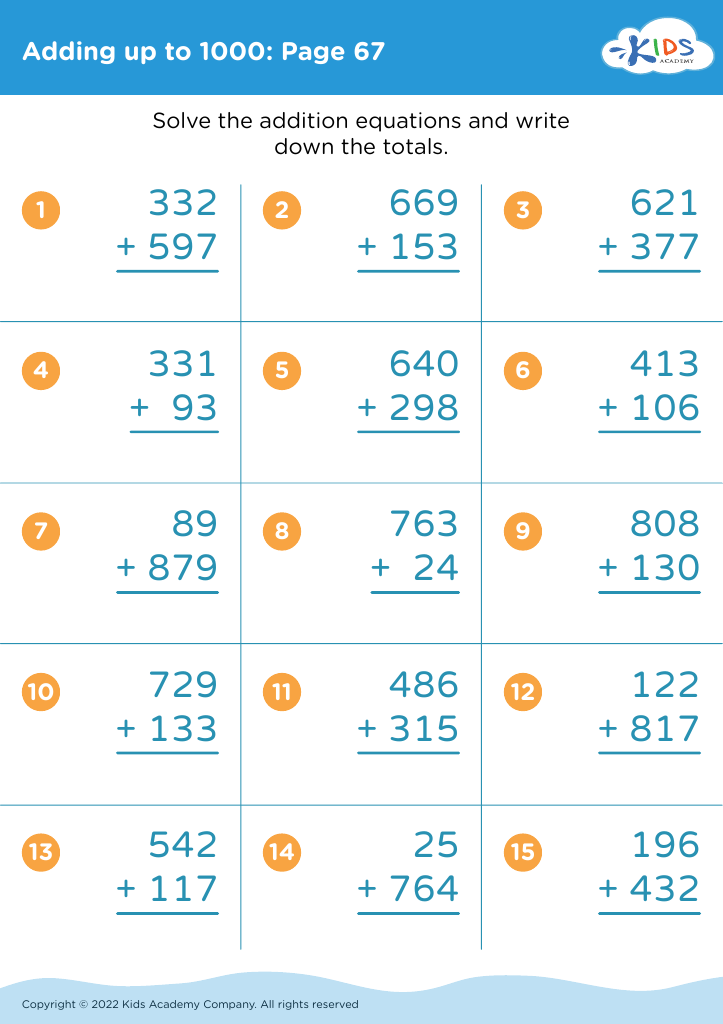
    Adding up to 1000: Page 67
    Adding up to 1000: Page 67

    Adding up to 1000: Page 67

    Adding up to 1000: Page 67
    Worksheet
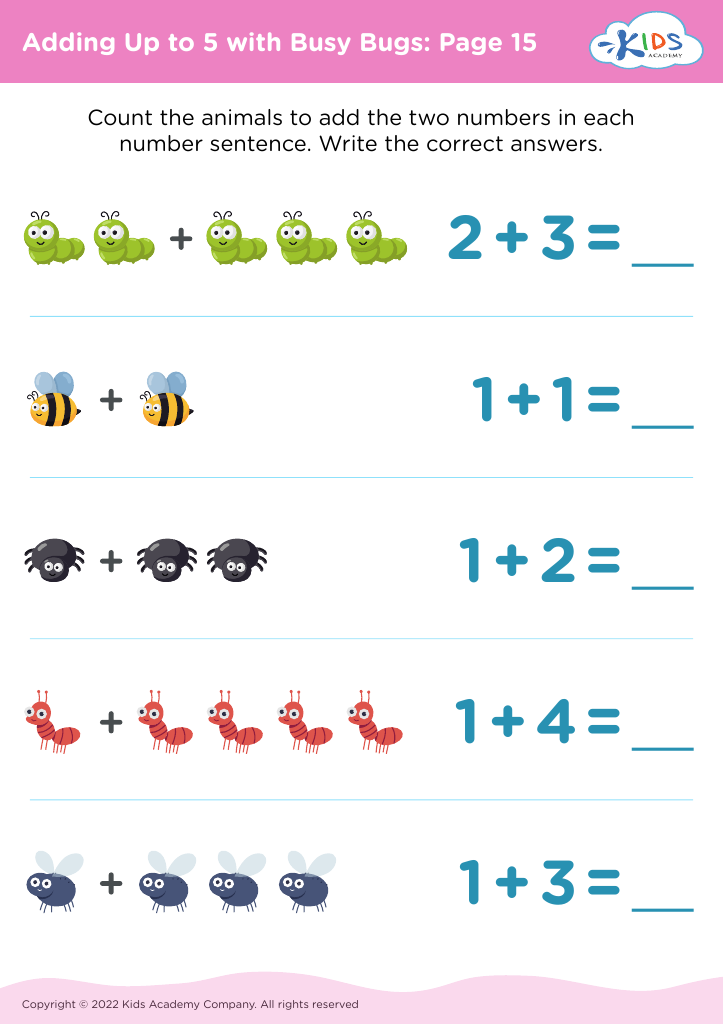
    Adding Up to 5 with Busy Bugs: Page 15
    Adding Up to 5 with Busy Bugs: Page 15
    Adding Up to 5 with Busy Bugs: Page 15
    Worksheet
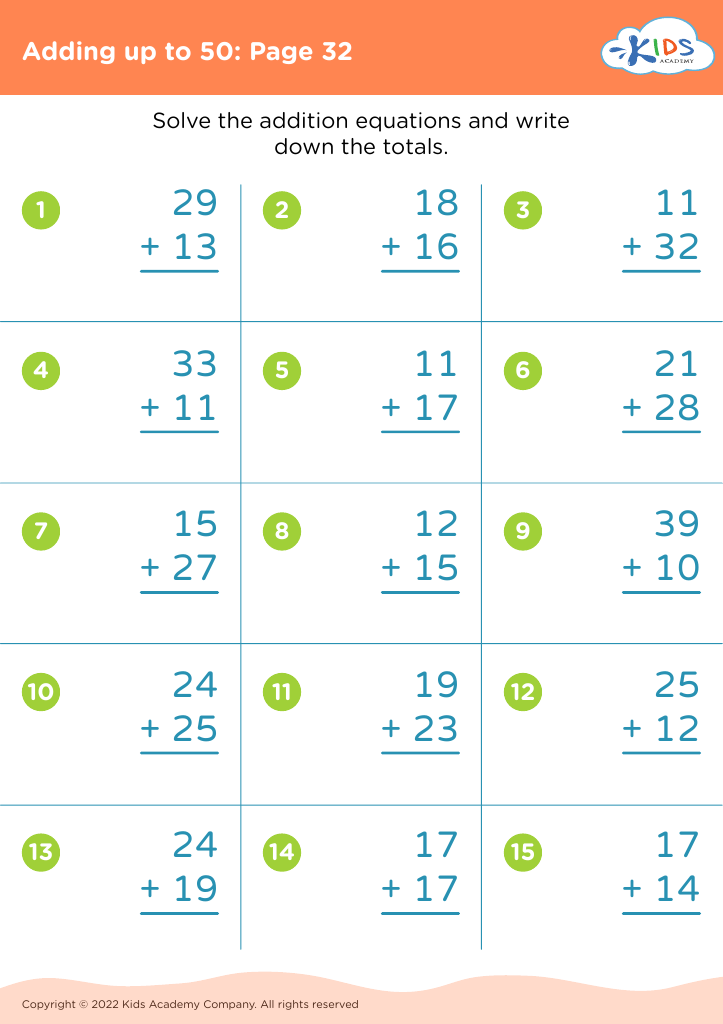
    Adding up to 50: Page 32
    Adding up to 50: Page 32

    Adding up to 50: Page 32

    Adding up to 50: Page 32
    Worksheet
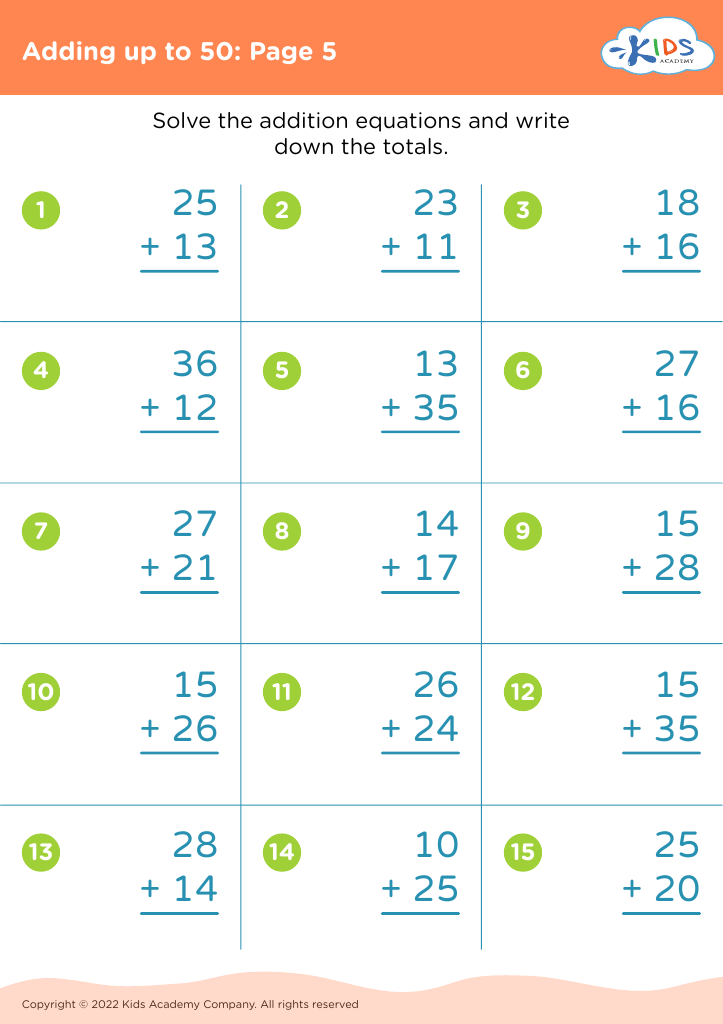
    Adding up to 50: Page 5
    Adding up to 50: Page 5

    Adding up to 50: Page 5

    Adding up to 50: Page 5
    Worksheet
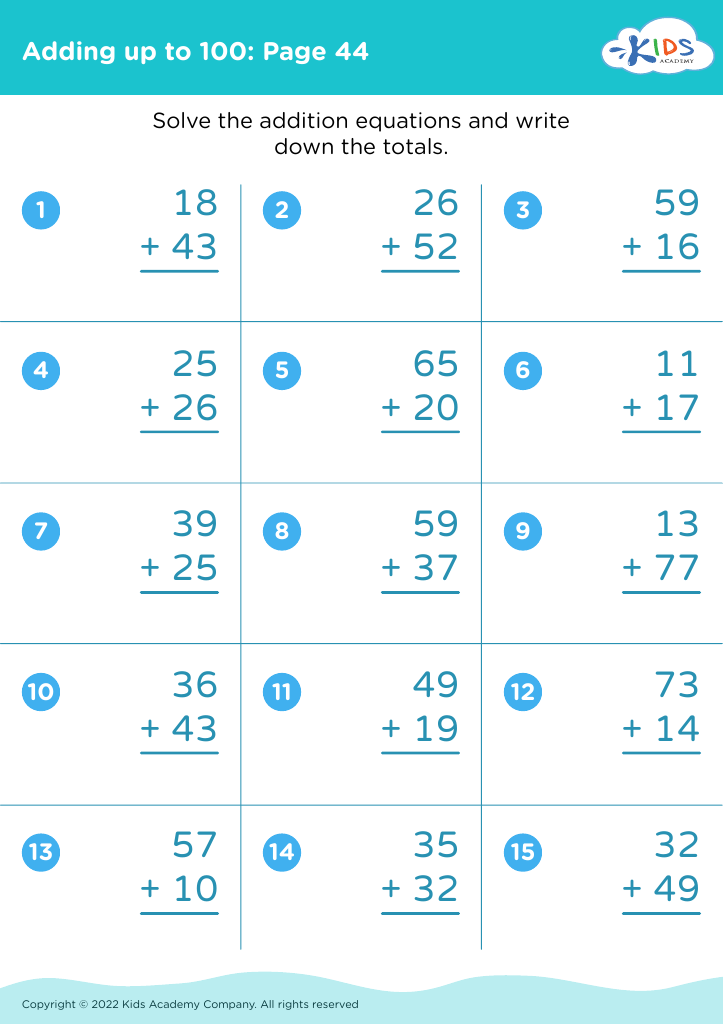
    Adding up to 100: Page 44
    Adding up to 100: Page 44

    Adding up to 100: Page 44

    Adding up to 100: Page 44
    Worksheet


    ... 51 52

    Addition for ages 5-7 is a fundamental skill that lays the groundwork for a child's long-term academic success and confidence in mathematics. At this age, children are not only building their numerical abilities but also learning critical thinking and problem-solving skills. Mastering addition helps children develop number sense, which is vital for understanding larger mathematical concepts.

    Parents and teachers play a crucial role in supporting this learning process. Children who develop a solid understanding of addition are better prepared for more complex operations like subtraction, multiplication, and division later on. Moreover, early proficiency in addition can enhance a child's logical reasoning and decision-making skills, which are valuable both inside and outside of the classroom.

    Additionally, engaging children in fun and interactive addition activities can foster a positive attitude towards math, reducing anxiety that often accompanies the subject as they progress in their education. By encouraging hands-on practice with addition through games, stories, and real-life applications, parents and teachers can create a rich learning environment that not only makes math enjoyable but also reinforces essential life skills. Ultimately, fostering a strong grasp of addition helps set children on a path for future academic achievement and lifelong learning.