Number Recognition Numbers Worksheets for Ages 5-7 - Page 10
218 filtered results
-
From - To
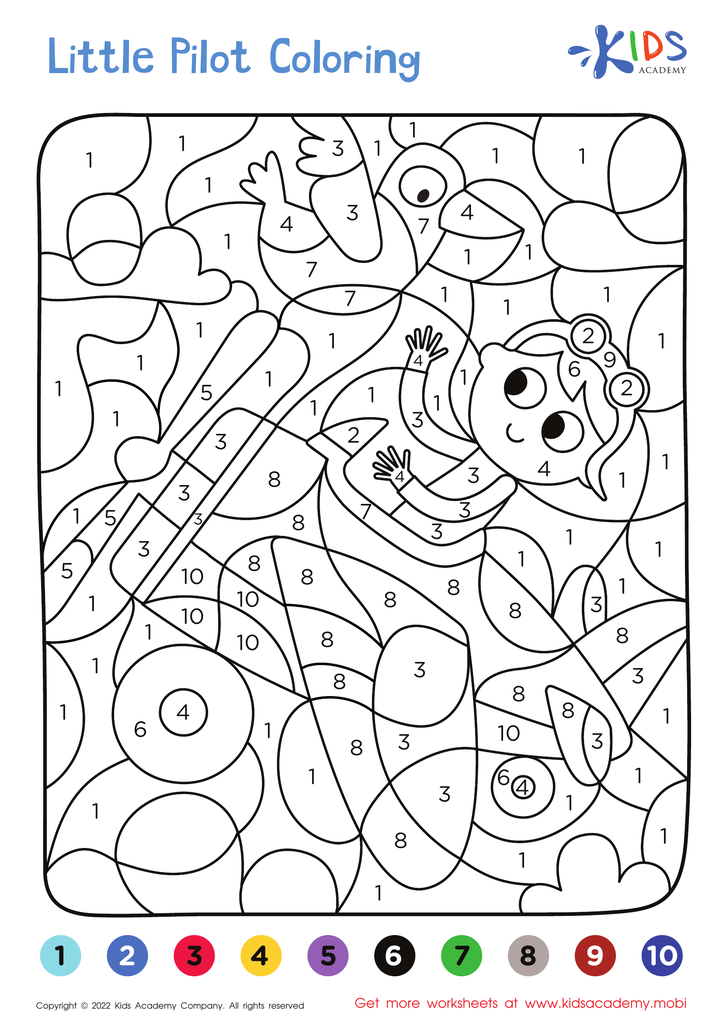
Little Pilot – Coloring by Numbers
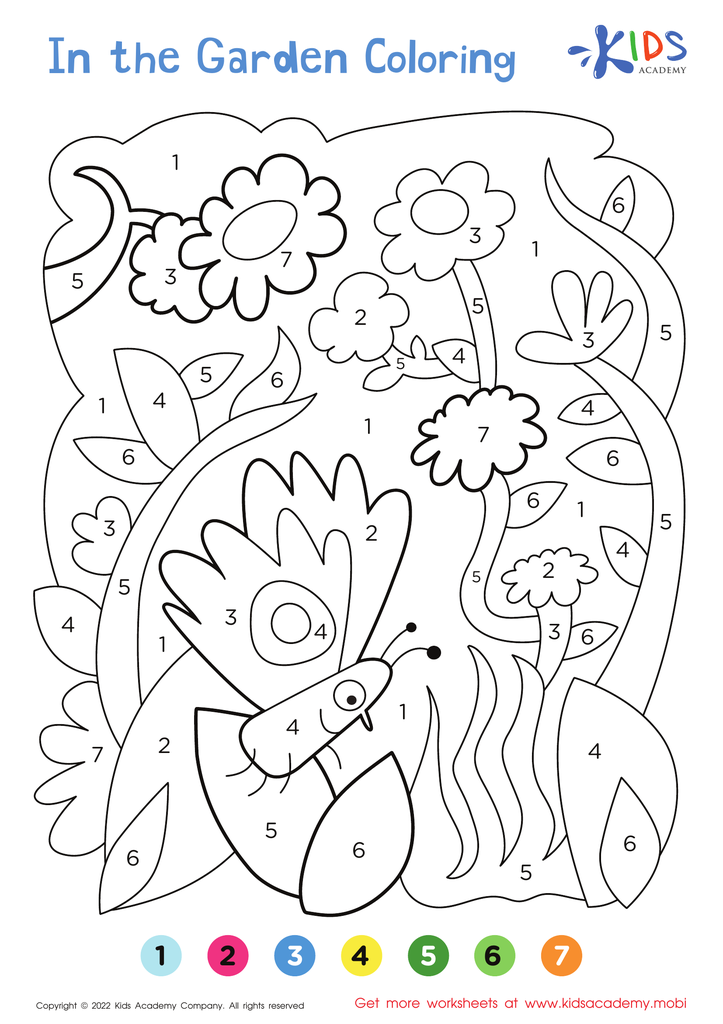
In the Garden – Coloring by Numbers








Number recognition is a crucial skill for children ages 5-7 as it forms the foundation for their entire mathematical journey. At this critical developmental stage, children start understanding more abstract concepts, and recognizing numbers is the first step in this process. When parents and teachers emphasize number recognition, they are helping children develop essential cognitive skills that will support future learning.
For starter, recognizing numbers enables children to count objects, which is a fundamental building block of math. Counting helps them grasp the concept of quantity, an essential precursor to arithmetic operations like addition and subtraction. In addition, understanding numbers aids in developing problem-solving skills and logical thinking. For example, once children can identify numbers, they can start understanding patterns, comparing quantities, and recognizing sequences, all of which are vital aspects of mathematical reasoning.
Furthermore, early proficiency in number recognition can boost a child’s confidence and enthusiasm for learning math, fostering a positive attitude towards the subject. Failing to develop these skills at a young age can lead to difficulties in more complex math tasks later on, potentially causing frustration and a negative perception of math.
Therefore, by supporting children in mastering number recognition, parents and teachers lay a robust groundwork for academic success and a lifelong appreciation for mathematics.








