Problem-Solving Skills Weather Worksheets for Ages 5-7
3 filtered results
Difficulty Level
Grade
Age
-
From - To
Subject
Activity
Standards
Introduce your little learners to the fascinating world of weather with our engaging Problem-Solving Skills Weather Worksheets for ages 5-7! Designed to spark curiosity and enhance critical thinking, these worksheets incorporate fun activities that help children analyze weather patterns and make predictions. Through age-appropriate exercises, kids will develop essential problem-solving abilities while exploring concepts such as temperature, precipitation, and seasonal changes. Whether in the classroom or at home, these worksheets offer the perfect opportunity for young minds to practice logical reasoning and improve decision-making skills. Get ready for an educational adventure that combines learning with enjoyment!
Favorites
With answer key
Interactive
 Assign to My Students
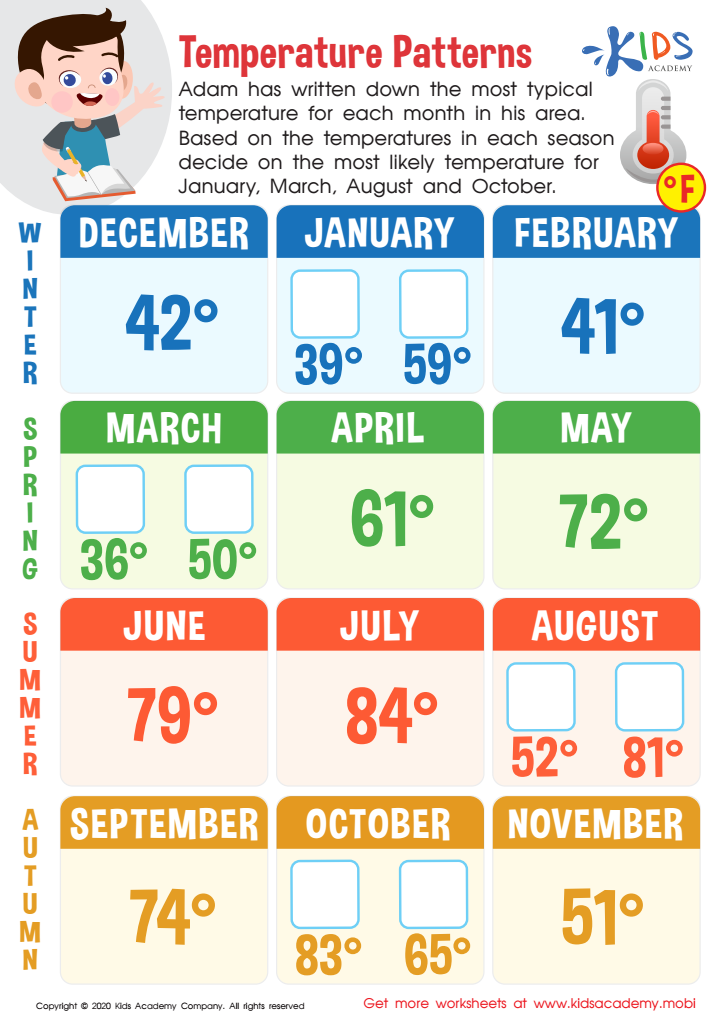
Temperature Patterns Worksheet
Adam has recorded temperatures in his area. Help your child use the data to predict temperatures for one month in each season. Check the box next to the correct temperature for each row in this worksheet. In America, temperatures vary by climate and season - colder in winter, hotter in summer.
Temperature Patterns Worksheet
Worksheet
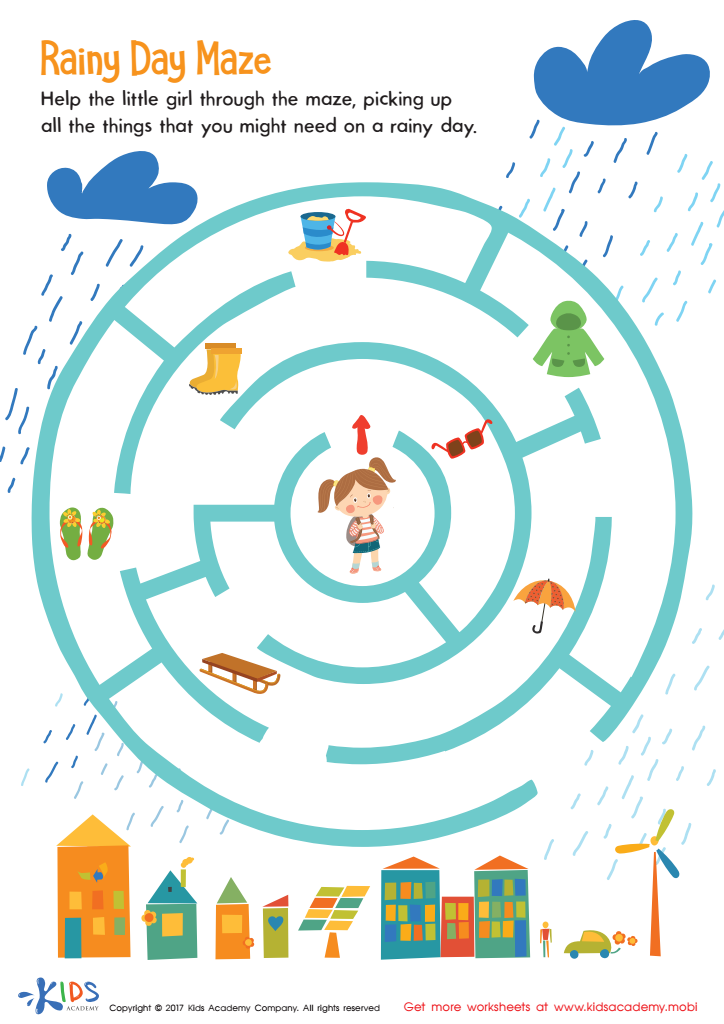
Rainy Day Maze Worksheet
Help your child use critical and problem solving skills to choose the right items! With this fun rainy day worksheet, they'll have a blast helping the character in the maze while learning about weather. Let’s get started!
Rainy Day Maze Worksheet
Worksheet
Join Kids Academy for Free
Who is primarily going to use this learning content?








Problem-solving skills are essential for children aged 5 to 7, as they are developing critical thinking abilities that will serve them throughout their lives. During these formative years, children encounter various challenges that require them to think creatively and analytically. By fostering problem-solving skills, parents and teachers empower children to approach difficulties with confidence and resilience.
For instance, when children engage in problem-solving activities related to everyday situations—like resolving conflicts with peers or figuring out how to complete a task—they learn to evaluate different outcomes and make informed decisions. This process enhances their cognitive development and encourages independence. Moreover, strong problem-solving skills can positively impact academic achievement; children who can tackle problems effectively often excel in subjects like math and science.
Additionally, promoting problem-solving in a collaborative environment helps children develop social skills such as communication, teamwork, and empathy. These interactions enable them to understand different perspectives and arrive at shared solutions. Ultimately, by nurturing problem-solving skills, parents and teachers are equipping children with essential tools that foster emotional intelligence, adaptability, and lifelong learning, preparing them for future challenges inside and outside the classroom.