Filters

1258 filtered results

Clear all filters
Favorites
With answer key
Interactive

1258 filtered results

Difficulty Level

Grade


Subject

    Check out this FREE Trial Lesson on Addition for age 5-8!

    Mental Math -Subtract and Add by 10 - Part 2

    Favorites
    With answer key
    Interactive
    • 5-8
    • Addition
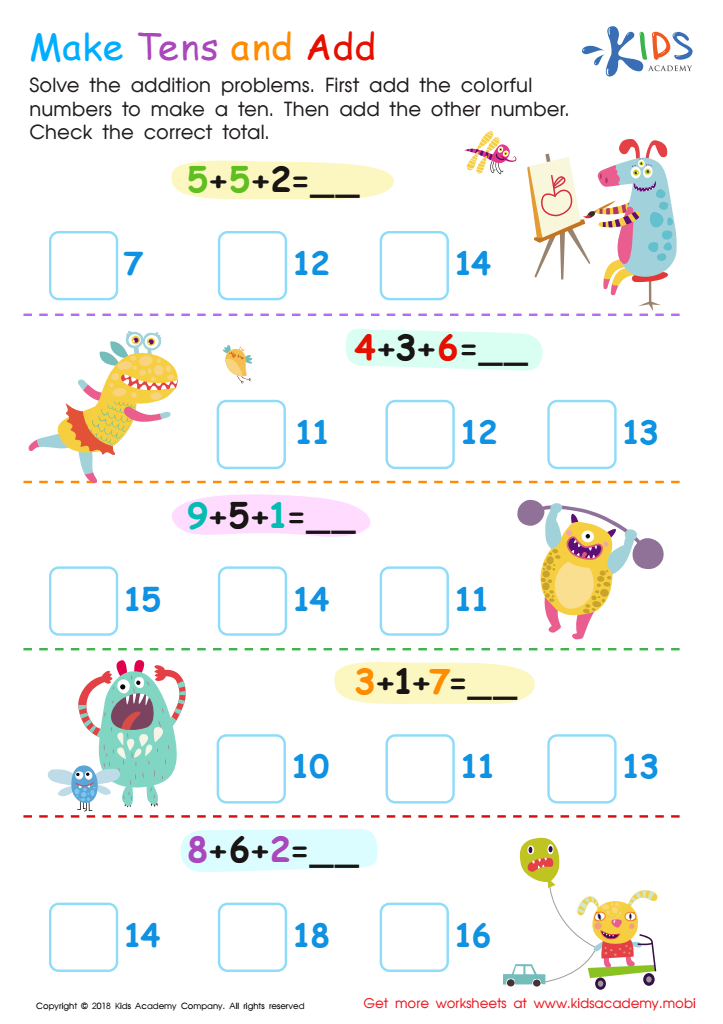
    Make Tens and Add Worksheet
    Make Tens and Add Worksheet

    Make Tens and Add Worksheet

    Making a "ten" is a powerful strategy to use when computing, but we may not realize it. This PDF worksheet will help kids understand how easy it is to add three numbers with this strategy. Plus, they'll have fun with the monsters and strengthen fine motor skills as they check the right answer boxes.
    Make Tens and Add Worksheet
    Worksheet
    Adding up to 100: Page 28
    Adding up to 100: Page 28

    Adding up to 100: Page 28

    Adding up to 100: Page 28
    Worksheet
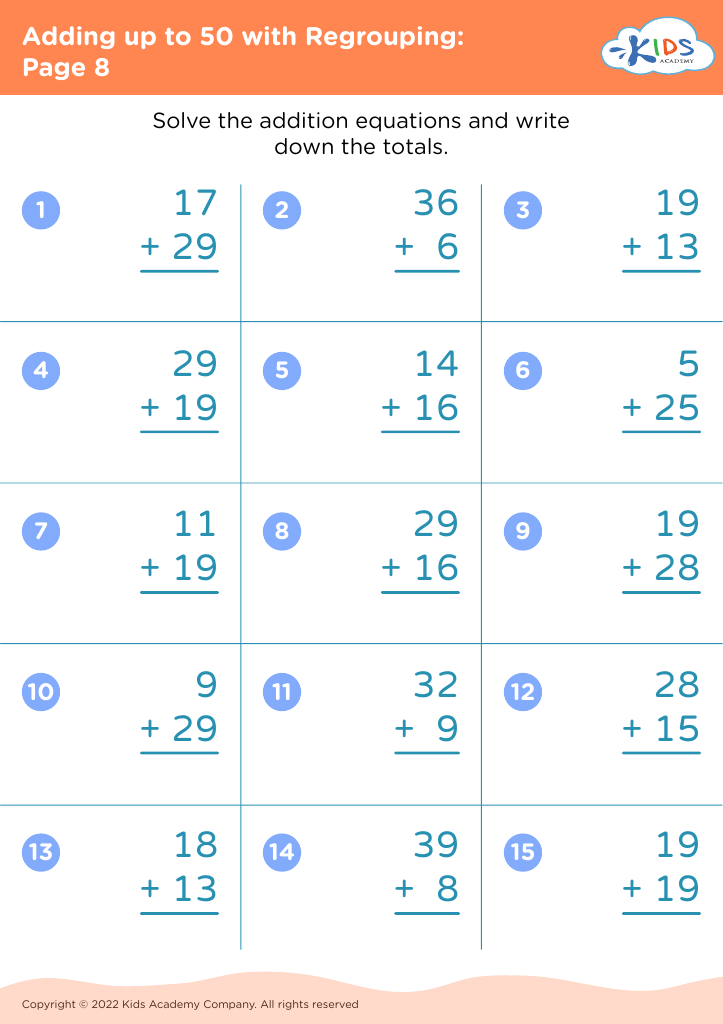
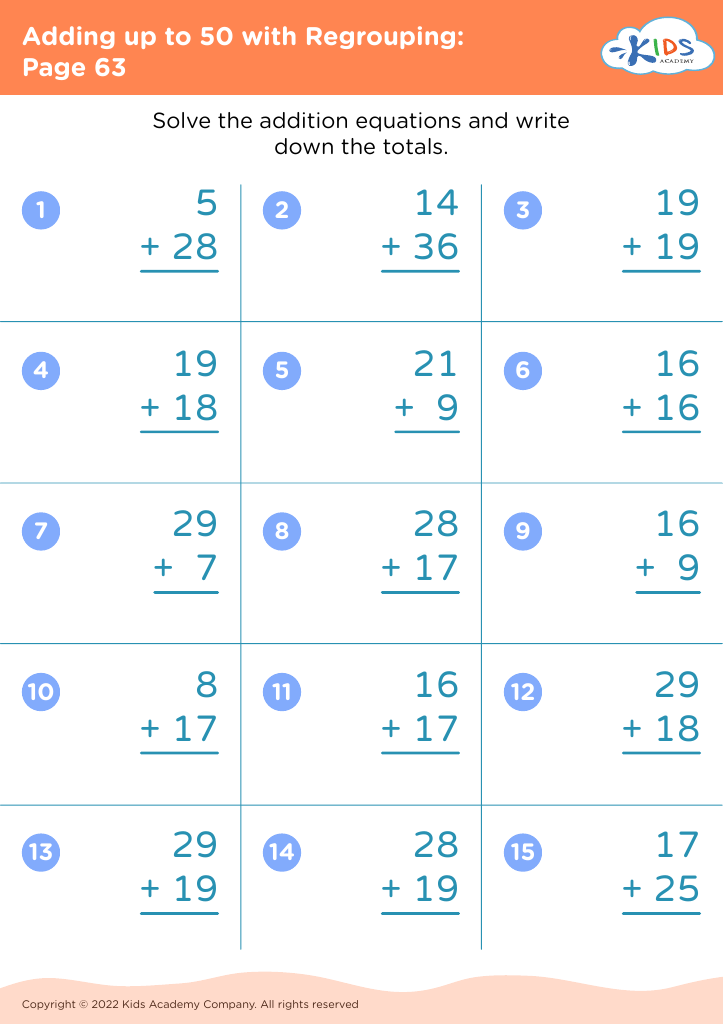
    Adding up to 50 with Regrouping: Page 63
    Adding up to 50 with Regrouping: Page 63
    Adding up to 50 with Regrouping: Page 63
    Worksheet
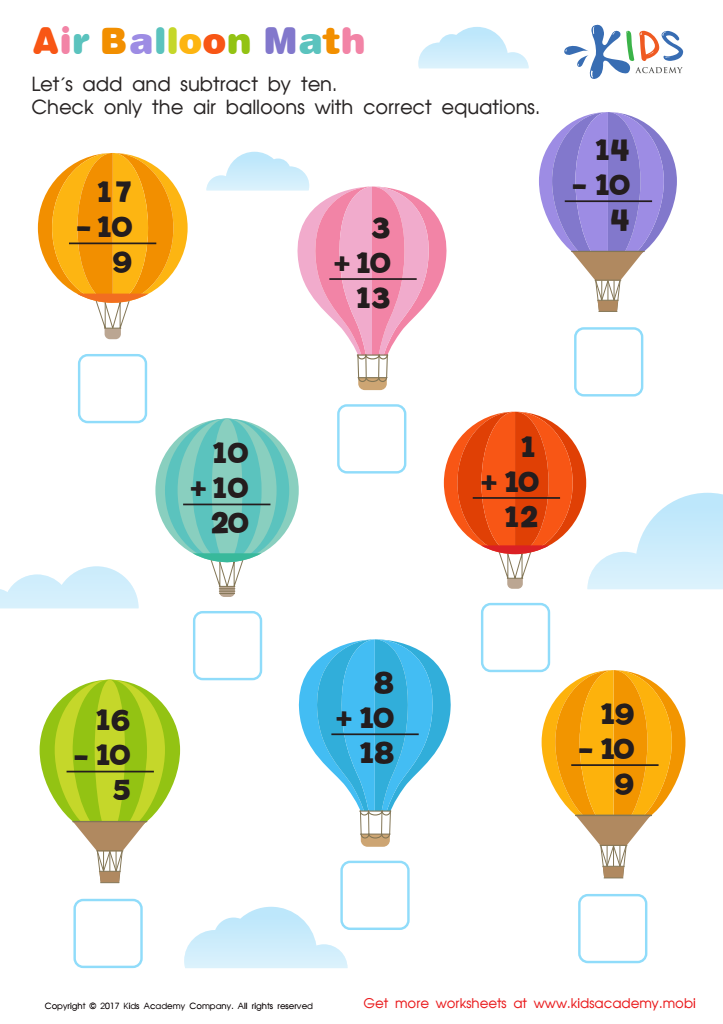
    Air Balloon Math Worksheet
    Air Balloon Math Worksheet

    Air Balloon Math Worksheet

    Revised: Review your child's addition and subtraction skills with this fun worksheet. Featuring hot air balloons filled with math equations, help your child add or subtract by ten before ticking the boxes with the right answers. Working through the equations one-by-one is a great way to make math practice enjoyable!
    Air Balloon Math Worksheet
    Worksheet
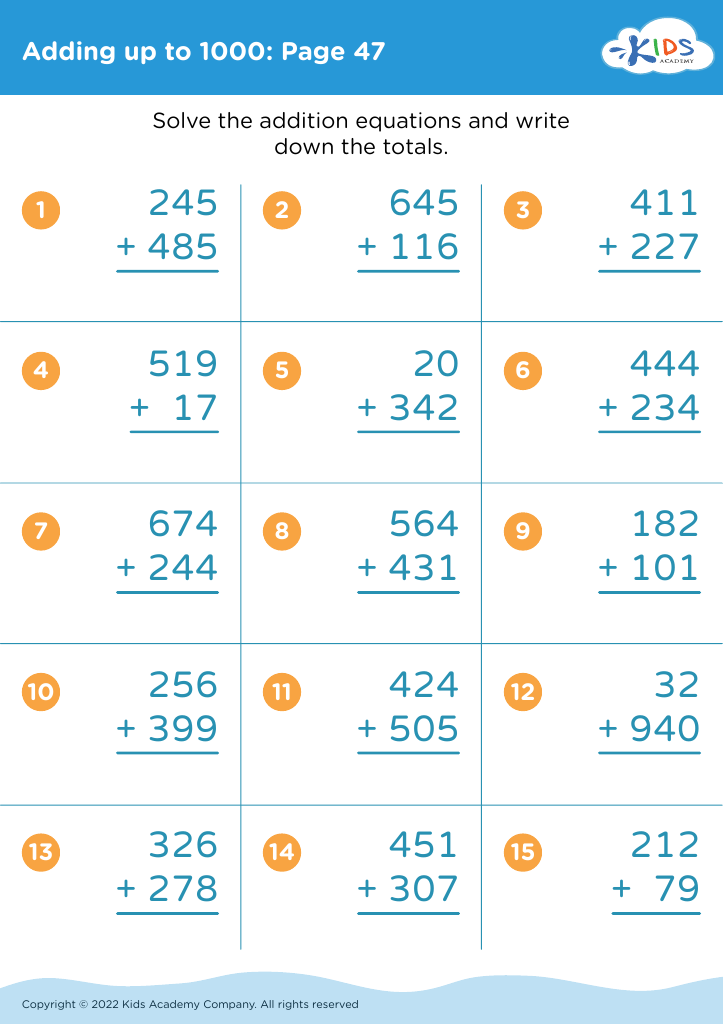
    Adding up to 1000: Page 47
    Adding up to 1000: Page 47

    Adding up to 1000: Page 47

    Adding up to 1000: Page 47
    Worksheet
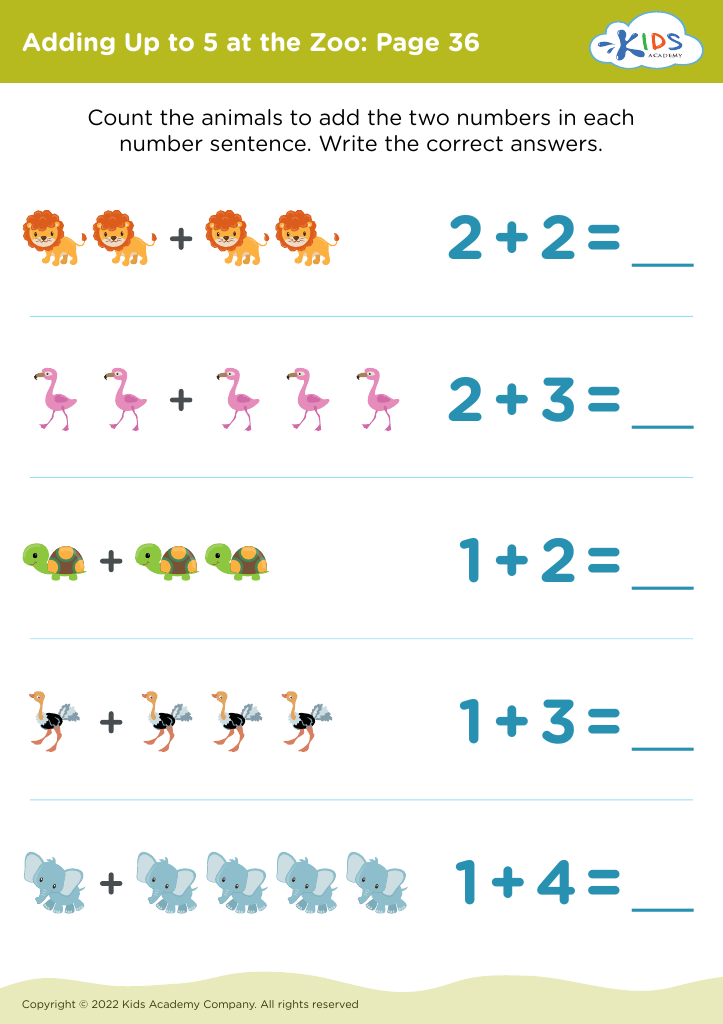
    Adding Up to 5 at the Zoo: Page 36
    Adding Up to 5 at the Zoo: Page 36
    Adding Up to 5 at the Zoo: Page 36
    Worksheet
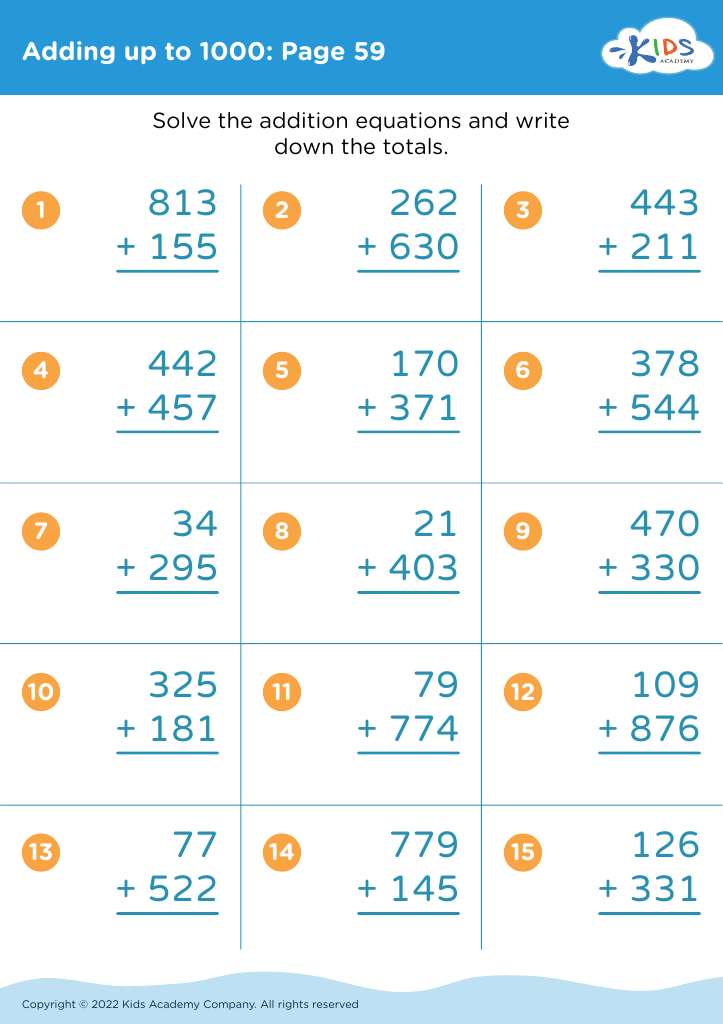
    Adding up to 1000: Page 59
    Adding up to 1000: Page 59

    Adding up to 1000: Page 59

    Adding up to 1000: Page 59
    Worksheet
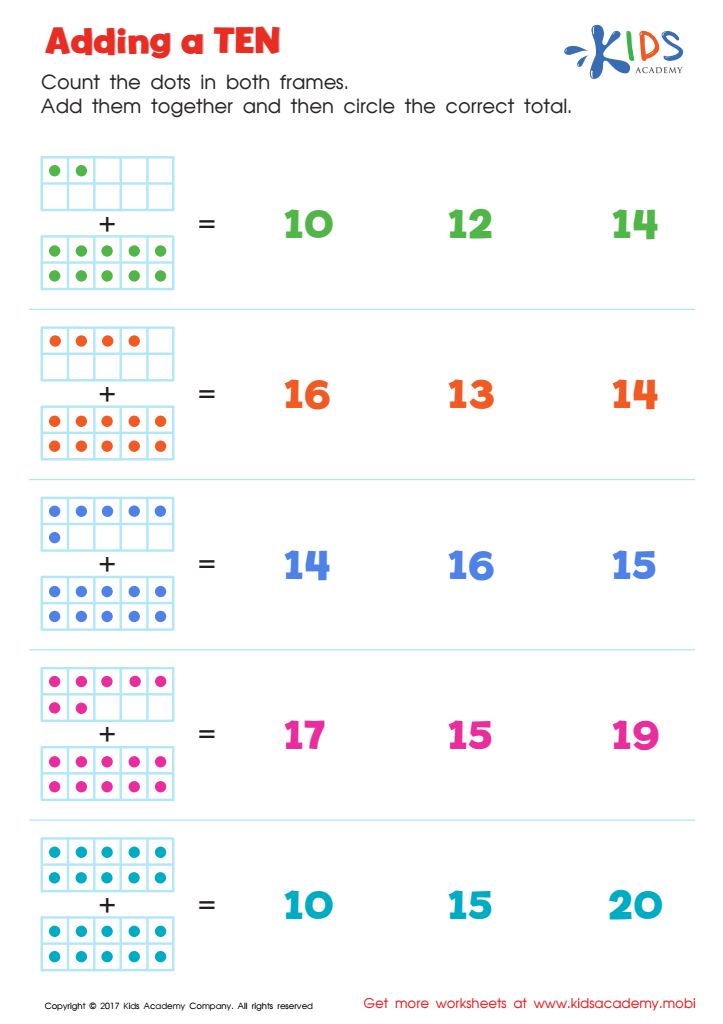
    Adding a Ten Worksheet
    Adding a Ten Worksheet
    Adding a Ten Worksheet
    Kids Academy offers a colorful addition worksheet with counters in frames to help students learn to add by tens. This skill is essential for students to develop critical math skills and create a foundation for future math concepts. Visual aids aid in mastering this early skill, so get started learning today!
    Adding a Ten Worksheet
    Worksheet
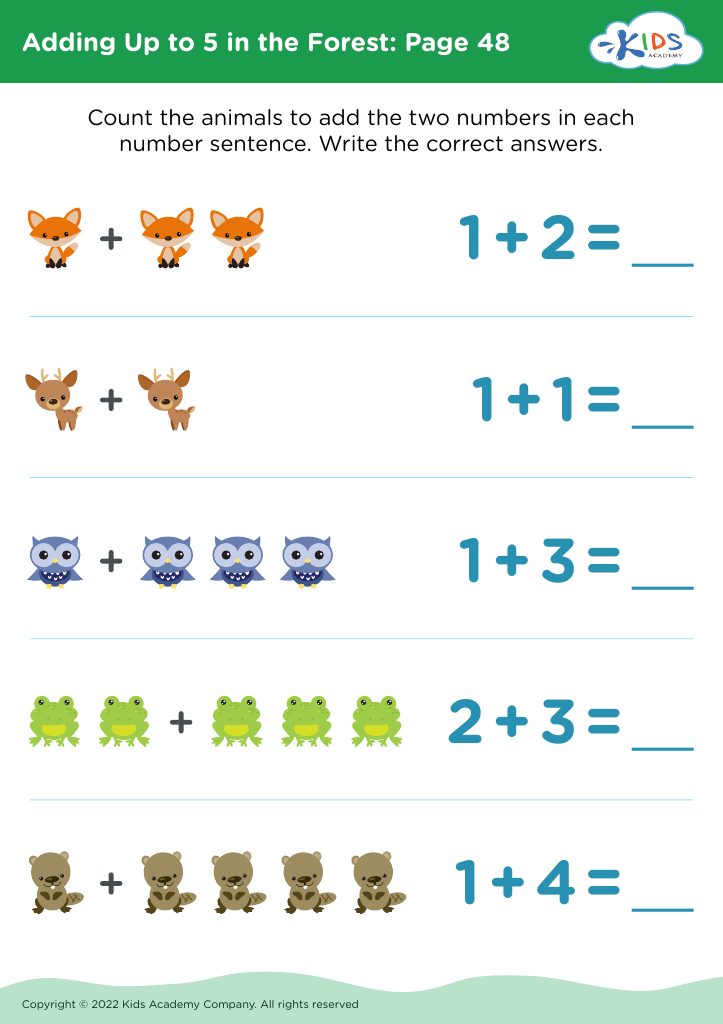
    Adding Up to 5 in the Forest: Page 48
    Adding Up to 5 in the Forest: Page 48
    Adding Up to 5 in the Forest: Page 48
    Worksheet
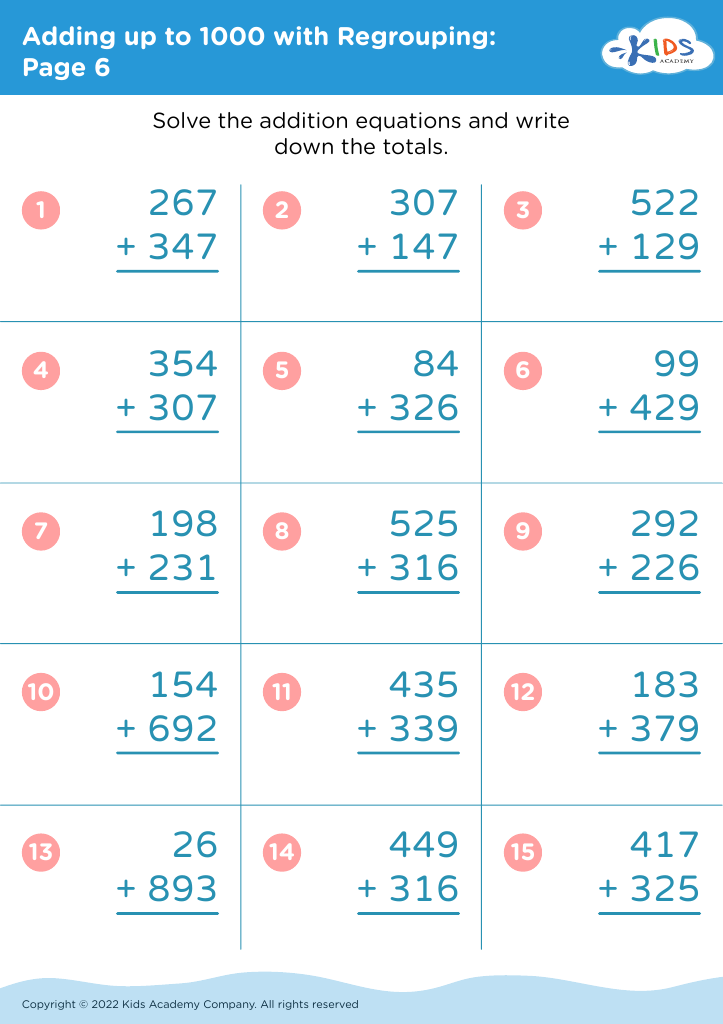
    Adding up to 1000 with Regrouping: Page 6
    Adding up to 1000 with Regrouping: Page 6
    Adding up to 1000 with Regrouping: Page 6
    Worksheet
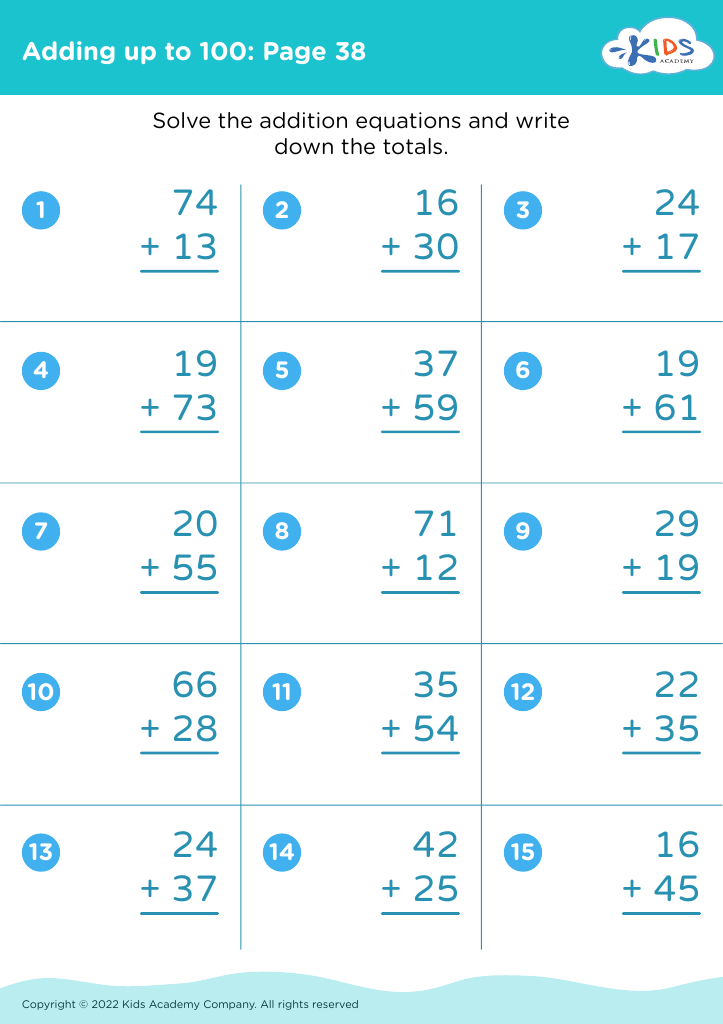
    Adding up to 100: Page 38
    Adding up to 100: Page 38

    Adding up to 100: Page 38

    Adding up to 100: Page 38
    Worksheet
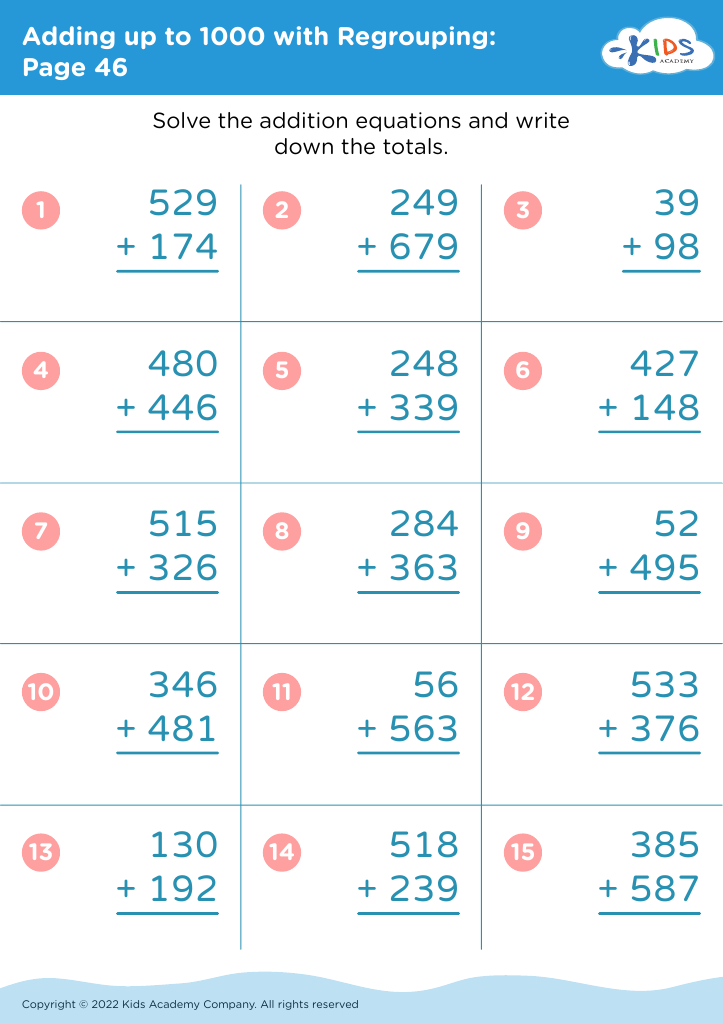
    Adding up to 1000 with Regrouping: Page 46
    Adding up to 1000 with Regrouping: Page 46
    Adding up to 1000 with Regrouping: Page 46
    Worksheet
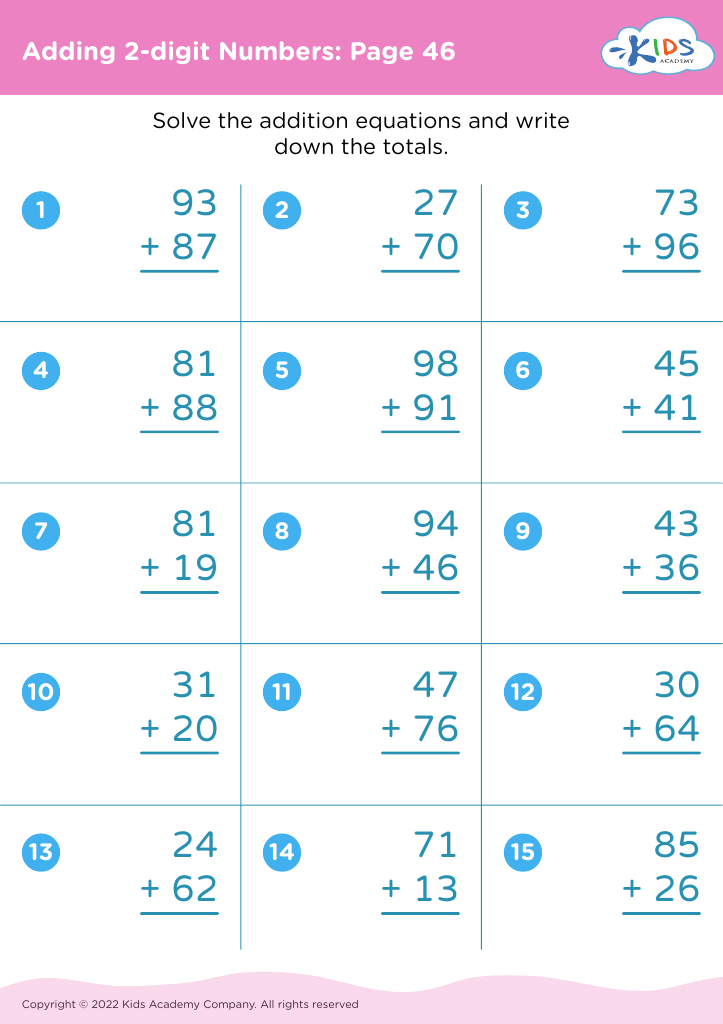
    Adding 2-digit Numbers: Page 46
    Adding 2-digit Numbers: Page 46

    Adding 2-digit Numbers: Page 46

    Adding 2-digit Numbers: Page 46
    Worksheet
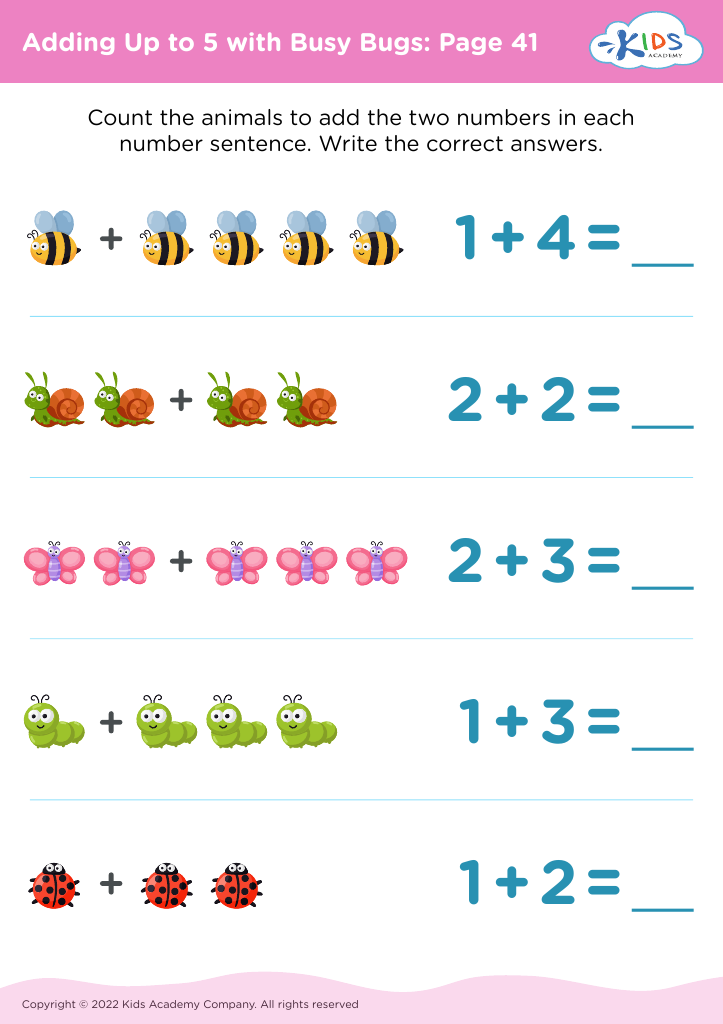
    Adding Up to 5 with Busy Bugs: Page 41
    Adding Up to 5 with Busy Bugs: Page 41
    Adding Up to 5 with Busy Bugs: Page 41
    Worksheet
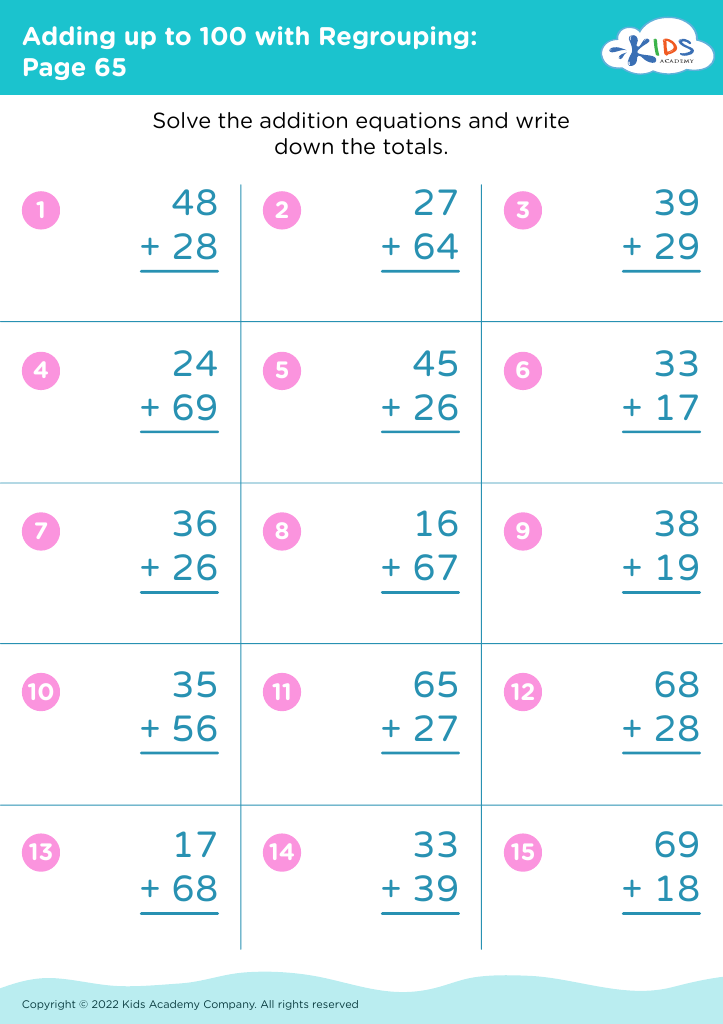
    Adding up to 100 with Regrouping: Page 65
    Adding up to 100 with Regrouping: Page 65
    Adding up to 100 with Regrouping: Page 65
    Worksheet
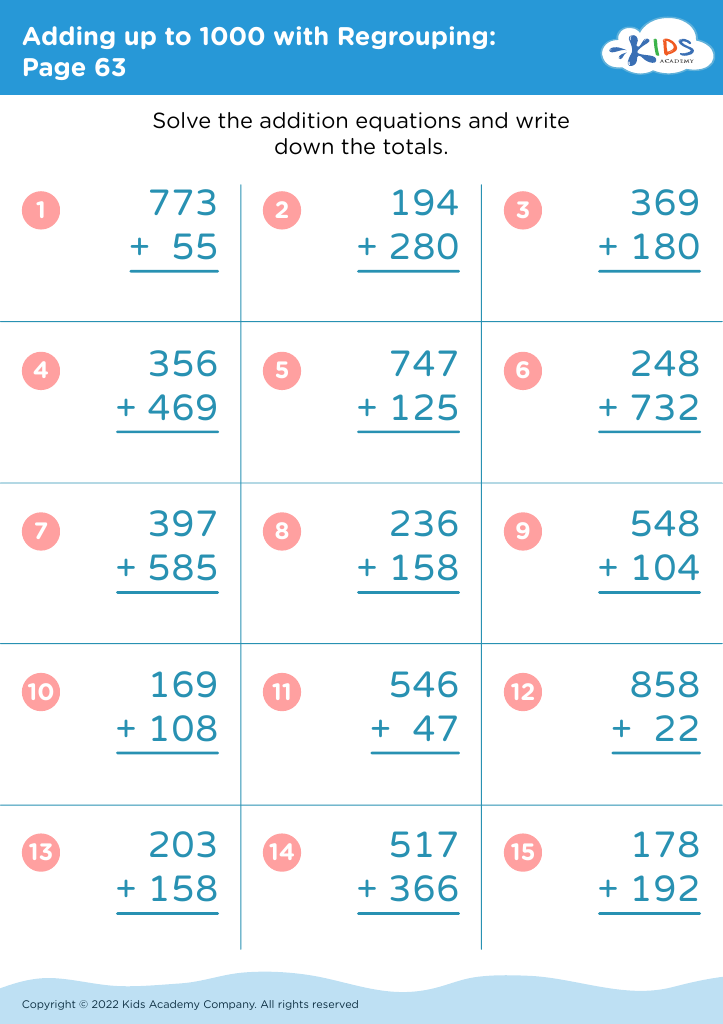
    Adding up to 1000 with Regrouping: Page 63
    Adding up to 1000 with Regrouping: Page 63
    Adding up to 1000 with Regrouping: Page 63
    Worksheet
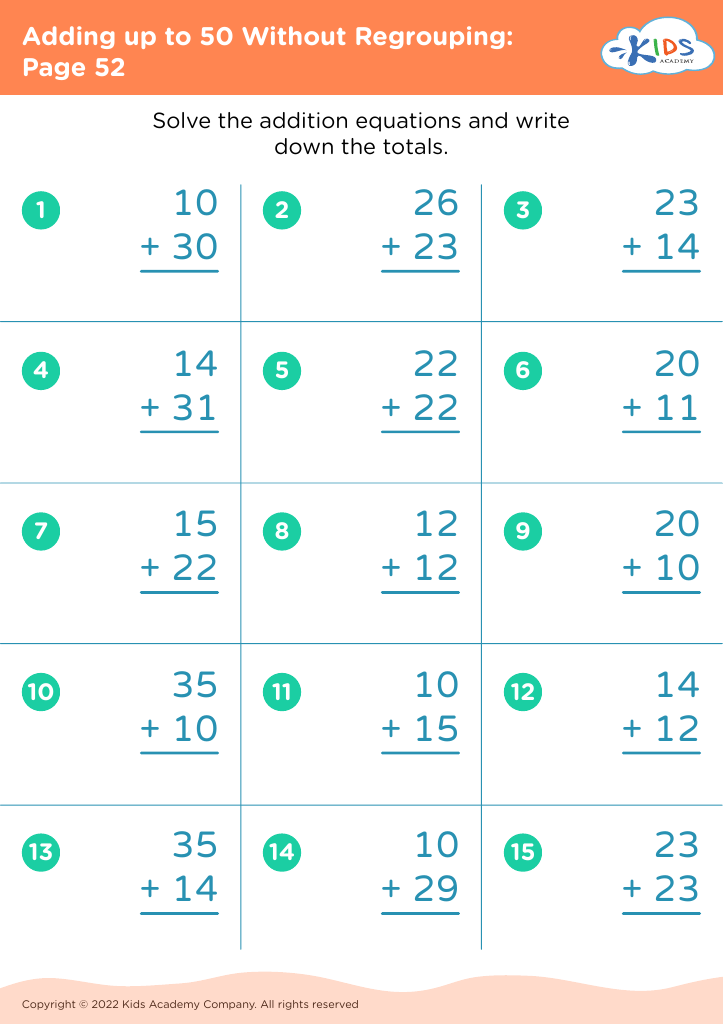
    Adding up to 50 Without Regrouping: Page 52
    Adding up to 50 Without Regrouping: Page 52
    Adding up to 50 Without Regrouping: Page 52
    Worksheet
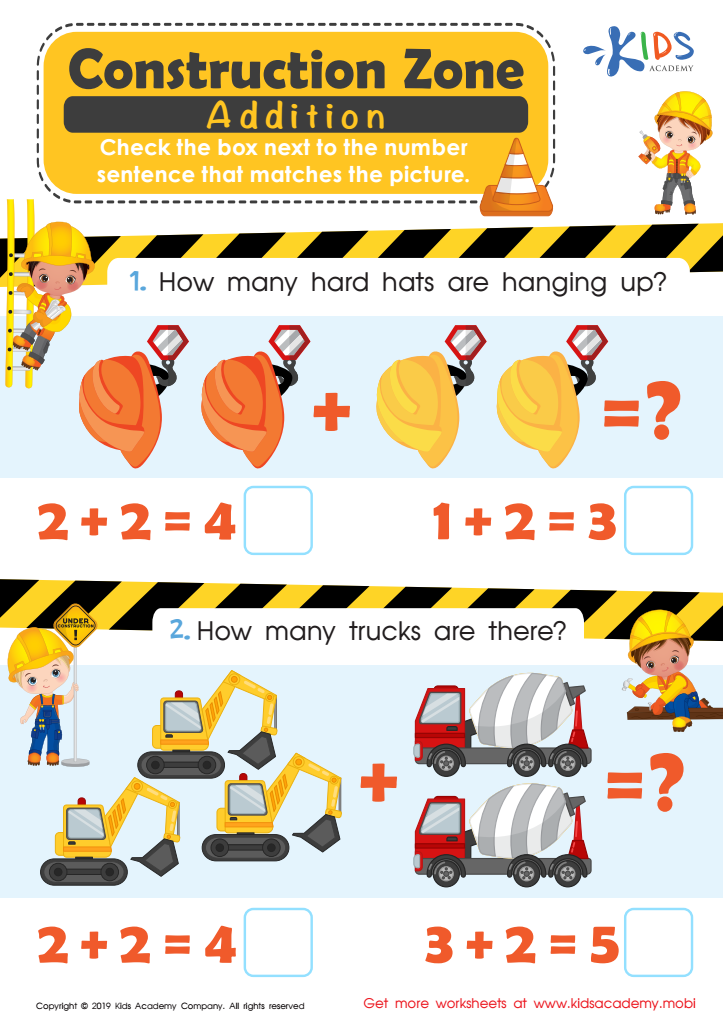
    Construction Zone Addition Worksheet
    Construction Zone Addition Worksheet

    Construction Zone Addition Worksheet

    Construction sites are bustling with professionals called construction workers. They use equipment while working, so they must wear protective gear. With kids, look at the pictures and name each object. Then help them check the box next to the number sentence that matches the picture. (80 words)
    Construction Zone Addition Worksheet

    Worksheet
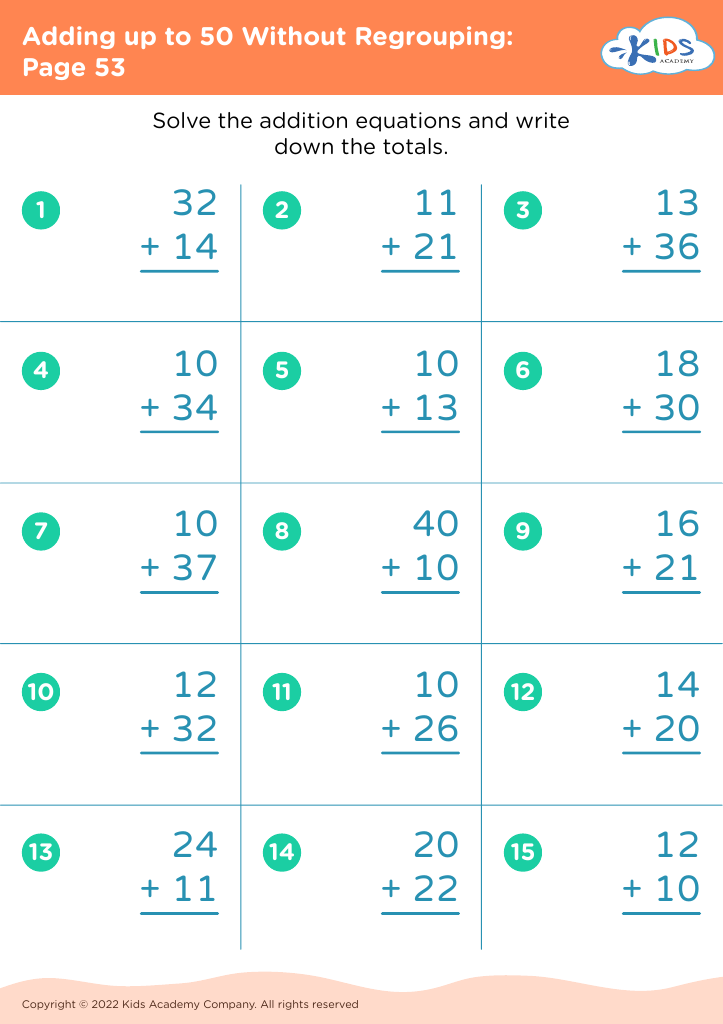
    Adding up to 50 Without Regrouping: Page 53
    Adding up to 50 Without Regrouping: Page 53
    Adding up to 50 Without Regrouping: Page 53
    Worksheet
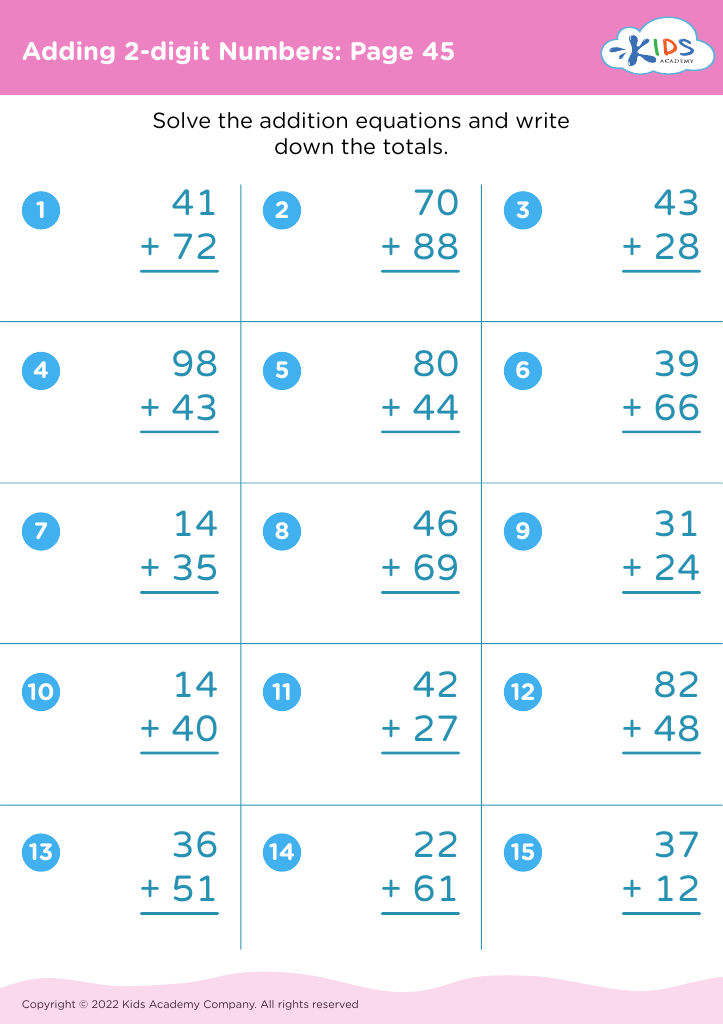
    Adding 2-digit Numbers: Page 45
    Adding 2-digit Numbers: Page 45

    Adding 2-digit Numbers: Page 45

    Adding 2-digit Numbers: Page 45
    Worksheet
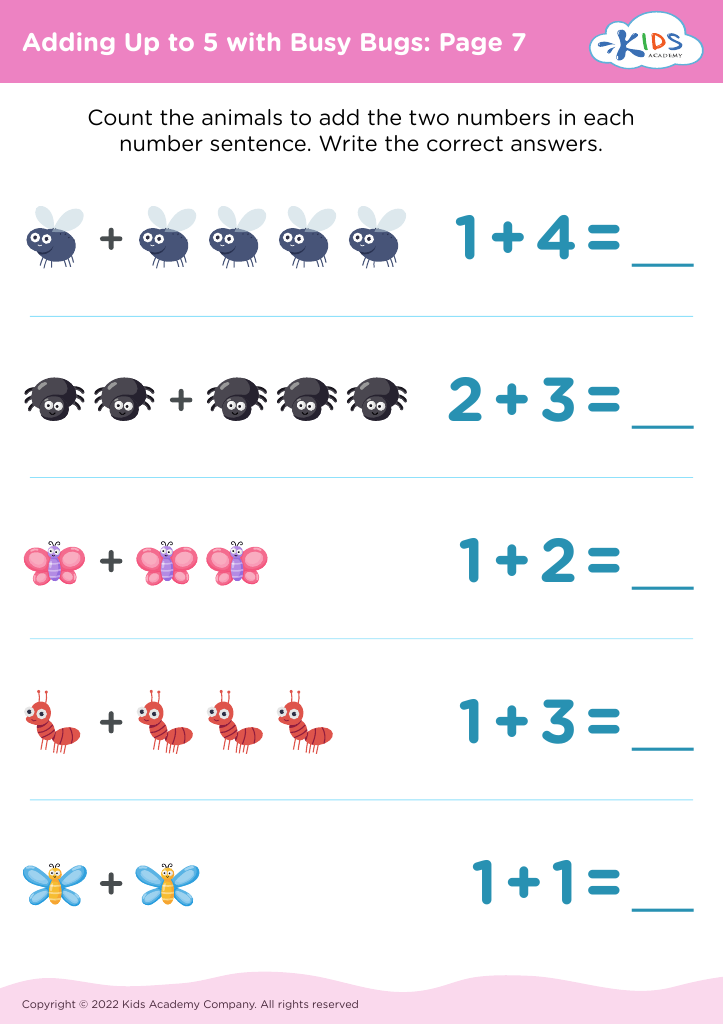
    Adding Up to 5 with Busy Bugs: Page 7
    Adding Up to 5 with Busy Bugs: Page 7
    Adding Up to 5 with Busy Bugs: Page 7
    Worksheet
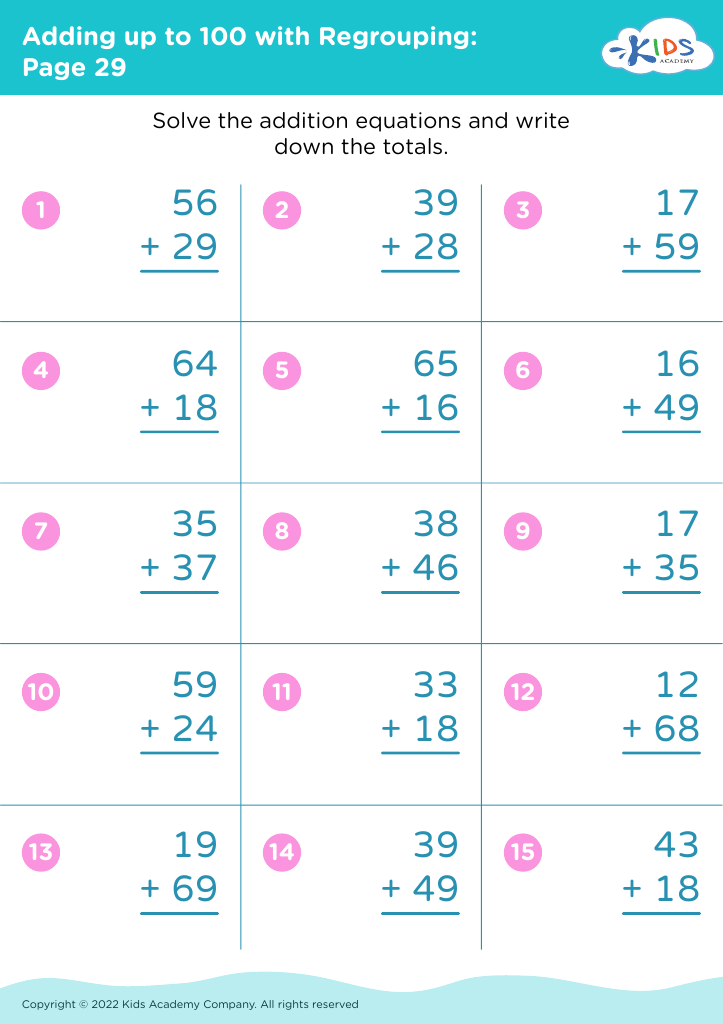
    Adding up to 100 with Regrouping: Page 29
    Adding up to 100 with Regrouping: Page 29
    Adding up to 100 with Regrouping: Page 29
    Worksheet
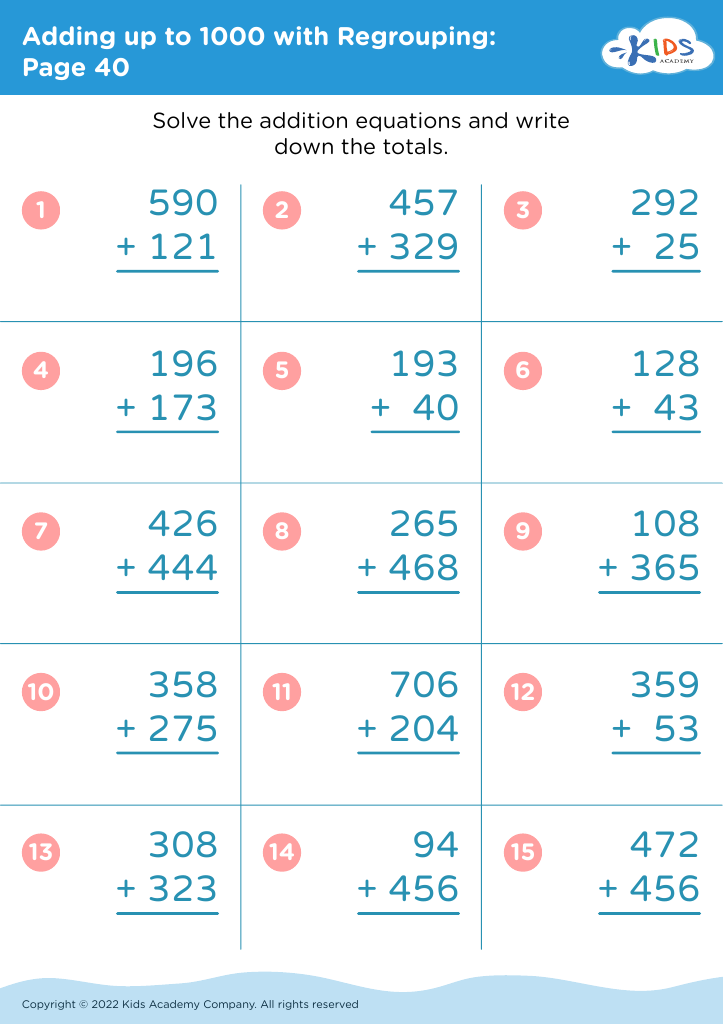
    Adding up to 1000 with Regrouping: Page 40
    Adding up to 1000 with Regrouping: Page 40
    Adding up to 1000 with Regrouping: Page 40
    Worksheet
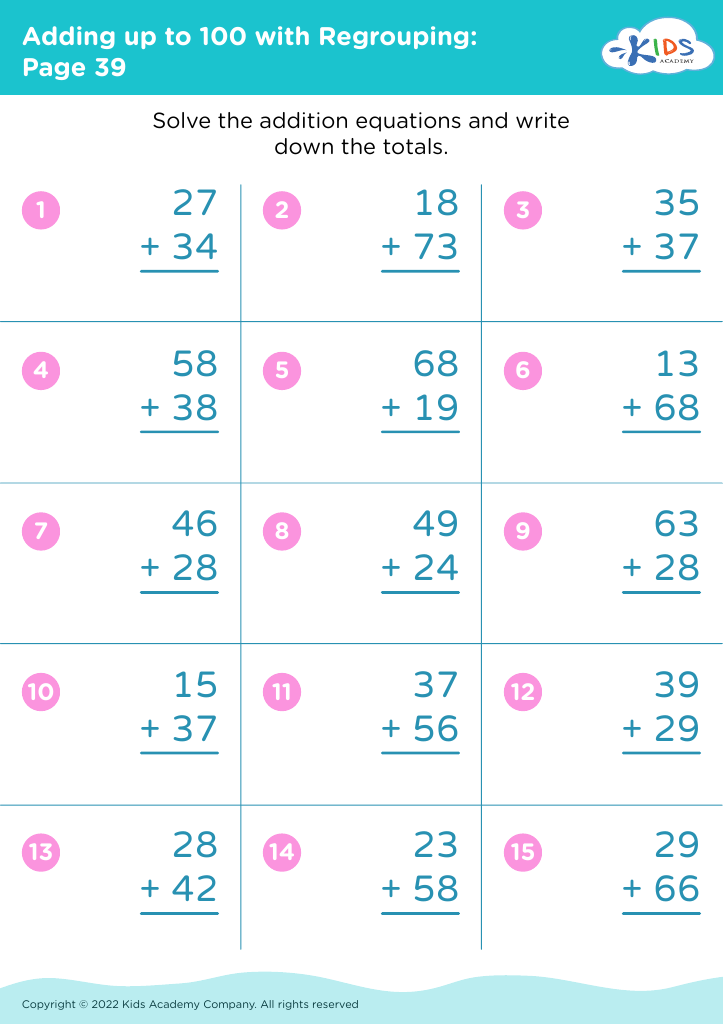
    Adding up to 100 with Regrouping: Page 39
    Adding up to 100 with Regrouping: Page 39
    Adding up to 100 with Regrouping: Page 39
    Worksheet


    Parents and teachers should care about teaching addition to children ages 5-8 because it's a foundational math skill that fosters cognitive development and sets the stage for more advanced arithmetic and problem-solving abilities. Learning addition helps young children understand numbers and their relationships, which are critical for navigating not only school-based math but also practical situations like sharing toys or dividing snacks.

    Early exposure to addition builds confidence and enthusiasm for math, which can prevent math anxiety and contribute to a lifelong positive attitude toward problem-solving. When children develop a strong grasp of basic addition, they are better equipped to tackle more complex mathematical concepts such as subtraction, multiplication, and division later on.

    Additionally, addition promotes logical thinking and enhances memory and attention to detail due to the step-by-step processes involved. It integrates well with other developmental skills like counting and pattern recognition. By ensuring that children ages 5-8 have robust addition skills, parents and teachers are investing in their overall educational foundation, critical thinking, and everyday practical life skills, thus better preparing them for future academic challenges and real-world scenarios.