Understanding tens Numbers Worksheets for Ages 5-8
4 filtered results
-
From - To
Explore our "Understanding Tens Numbers Worksheets" designed for children aged 5-8. These engaging resources help young learners grasp the concept of tens, enabling them to confidently work with numbers. Through a variety of interactive activities, students will identify, count, and compare tens, fostering foundational math skills. Our worksheets make learning fun, featuring colorful visuals and child-friendly instructions that grab kids' attention. Whether used in the classroom or at home, these worksheets offer a comprehensive approach to mastering tens, building a solid numerical understanding that will support their future math endeavors. Start your child’s journey to number proficiency today!
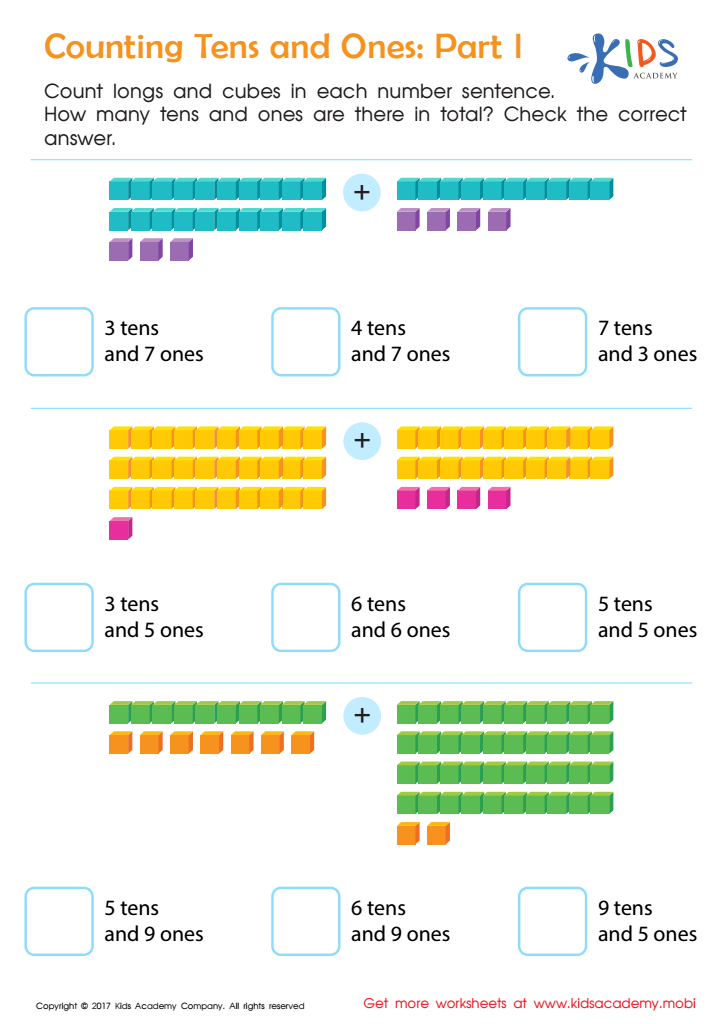
Counting Tens and Ones: Part 1 Worksheet
 Assign to My Students
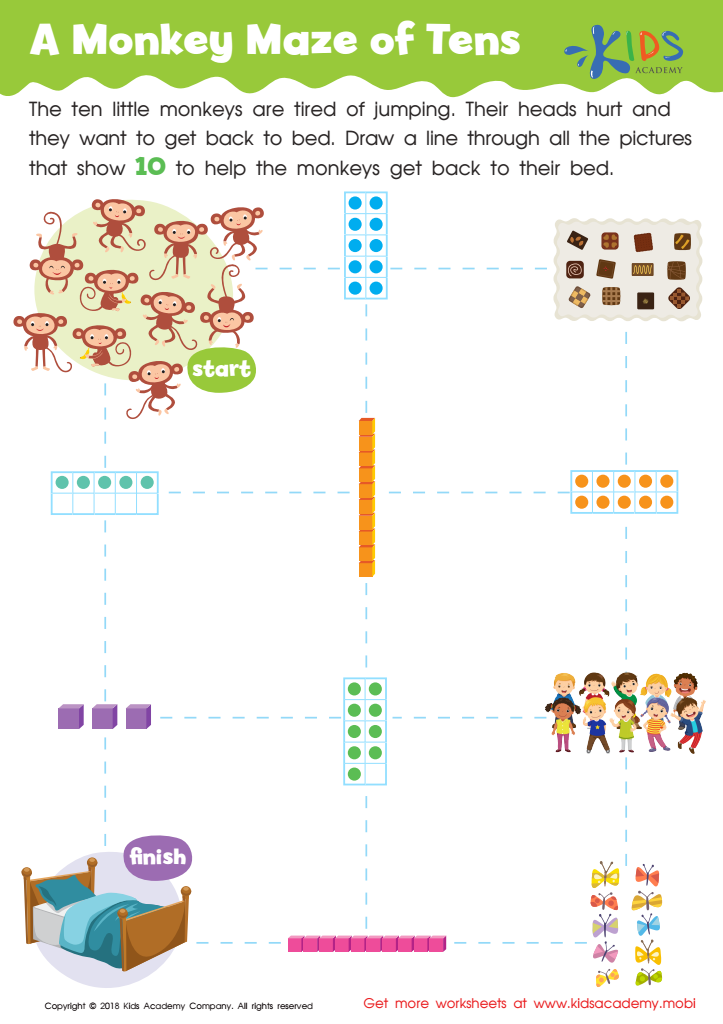
A Monkey Maze of Tens Worksheet
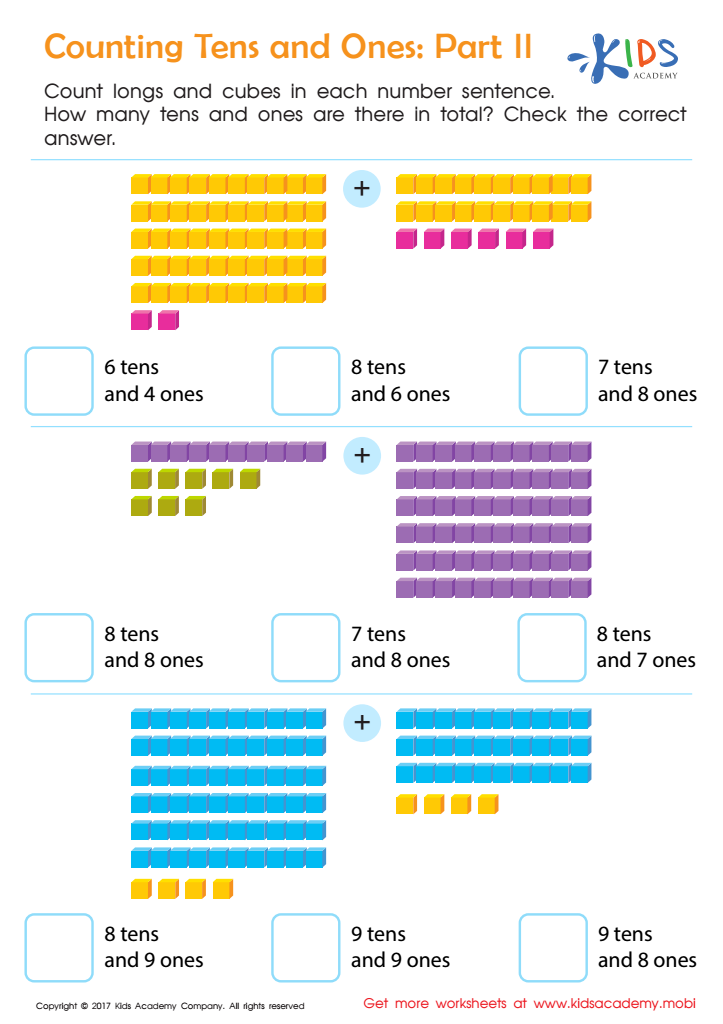
Counting Tens and Ones: Part 2 Worksheet
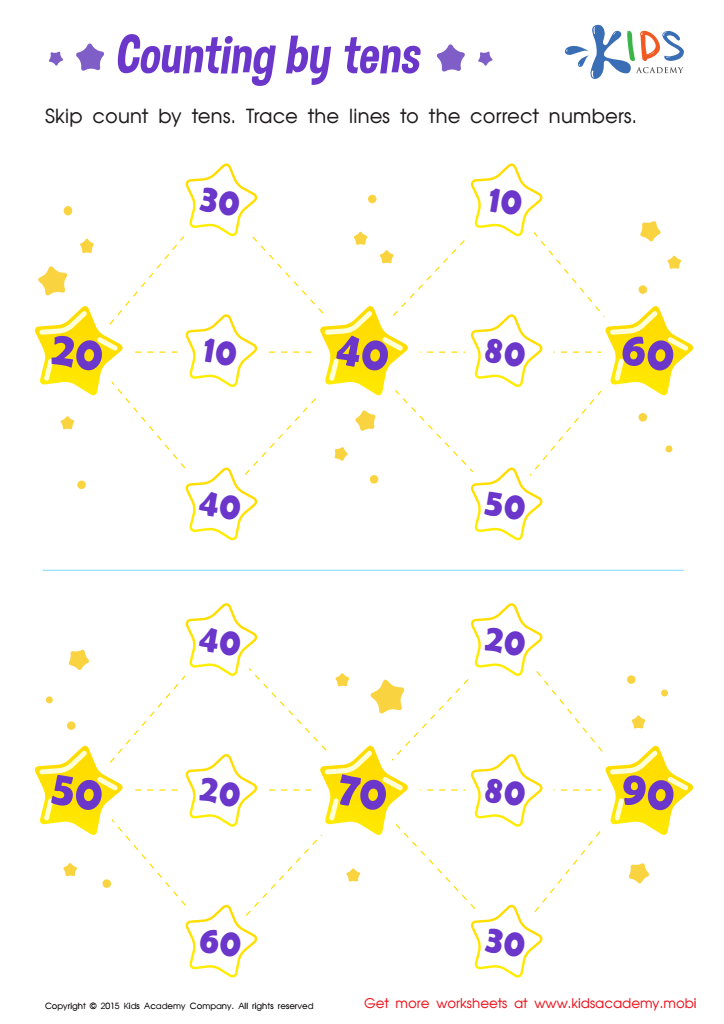
Learn Dozens: Counting by Tens Printable








Understanding tens numbers is crucial for children aged 5-8 as it lays a strong foundation for future math learning. At this developmental stage, children are beginning to grasp essential concepts related to number sense and place value. Recognizing the significance of tens numbers, such as 10, 20, 30, and so forth, helps them understand the base-ten system, which is vital in all areas of mathematics.
When parents and teachers emphasize tens numbers, they equip children with crucial skills for more advanced operations, such as addition and subtraction. This understanding encourages mental math skills, as children learn to decompose and compose numbers easily, fostering confidence in their problem-solving abilities. Additionally, it helps in developing an intuitive sense of quantity and estimation.
By engaging children with activities that involve tens numbers—like counting objects in groups of ten or recognizing patterns in 10s—educators and parents can enhance children’s engagement and make learning fun. Ultimately, a strong grasp of tens numbers not only prepares children for future mathematical challenges but also builds a positive attitude towards math, encouraging lifelong learning and resilience in subject mastery. Thus, prioritizing this understanding is an investment in a child's overall academic success.








