Filters

104 filtered results

Clear all filters
Favorites
With answer key
Interactive

104 filtered results

Difficulty Level

Grade


Subject

    Check out this FREE Trial Lesson on Multiplication for age 5-8!

    X

    Favorites
    With answer key
    Interactive
    • 5-8
    • Multiplication
    9 Times Table: Level 1
    9 Times Table: Level 1

    x9 Multiplication Chart

    x9 Multiplication Chart
    Worksheet
    8 Times Table: Level 1
    8 Times Table: Level 1

    x8 Multiplication Chart

    x8 Multiplication Chart
    Worksheet
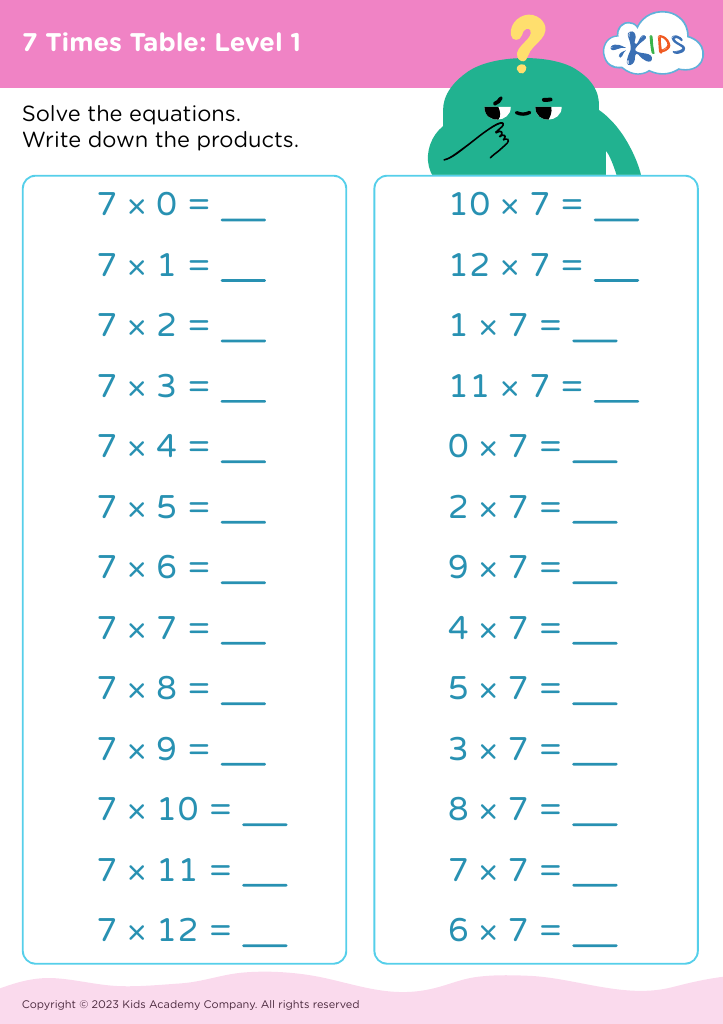
    7 Times Table: Level 1
    7 Times Table: Level 1

    x7 Multiplication Chart

    x7 Multiplication Chart
    Worksheet
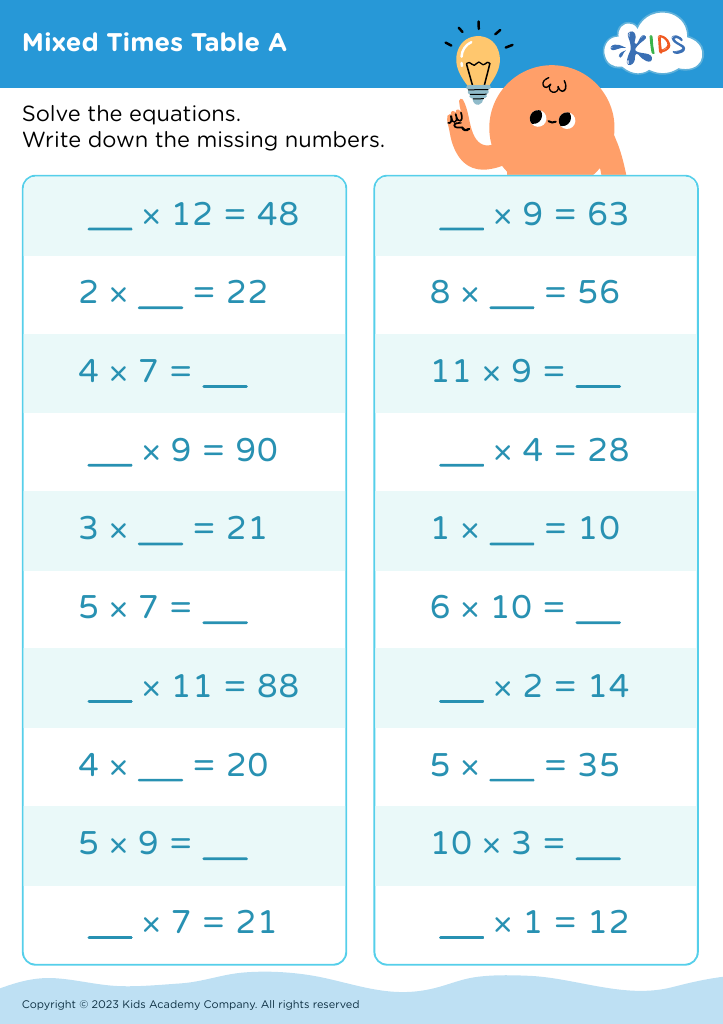
    Mixed Times Table A
    Mixed Times Table A

    Mixed Times Table A

    Mixed Times Table A
    Worksheet
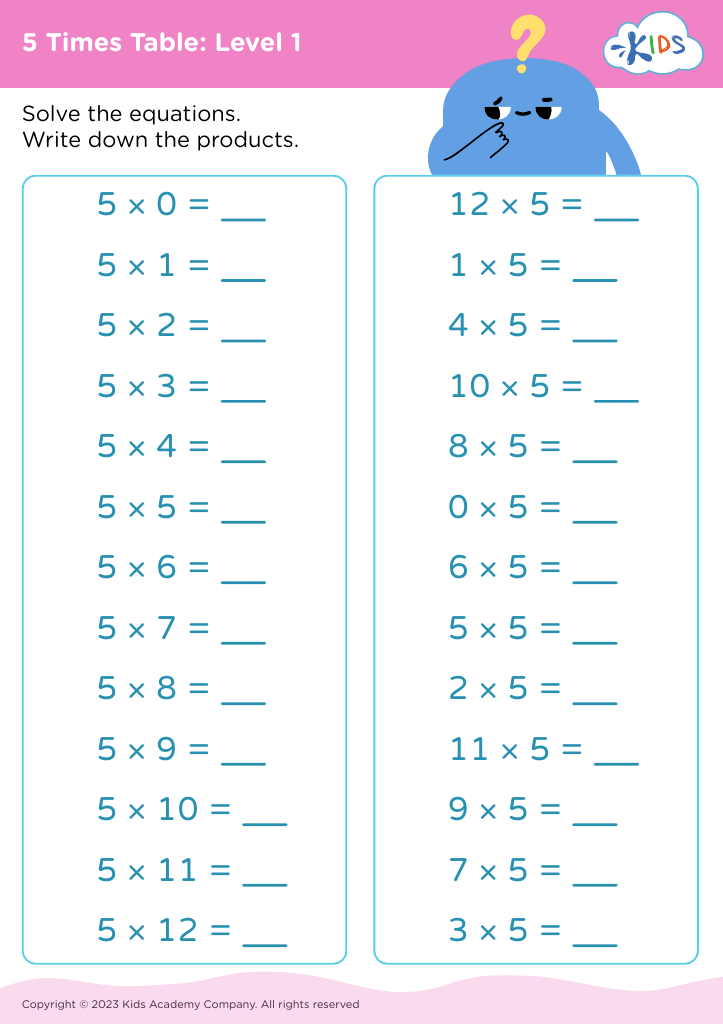
    5 Times Table: Level 1
    5 Times Table: Level 1

    x5 Multiplication Chart

    x5 Multiplication Chart
    Worksheet
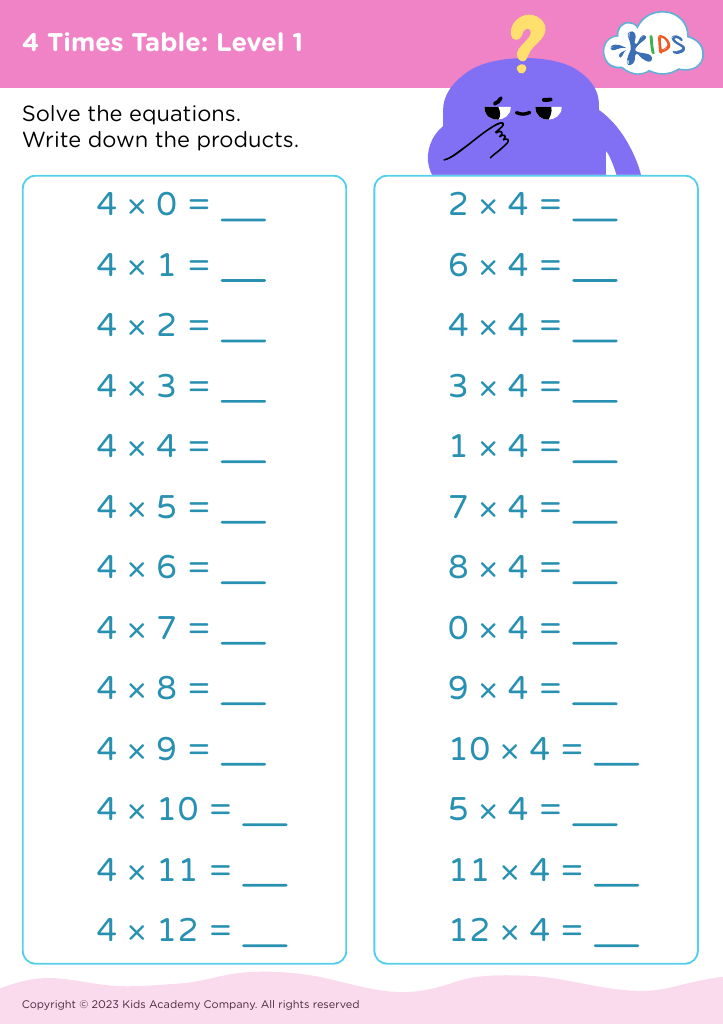
    4 Times Table: Level 1
    4 Times Table: Level 1

    x4 Multiplication Chart

    x4 Multiplication Chart
    Worksheet
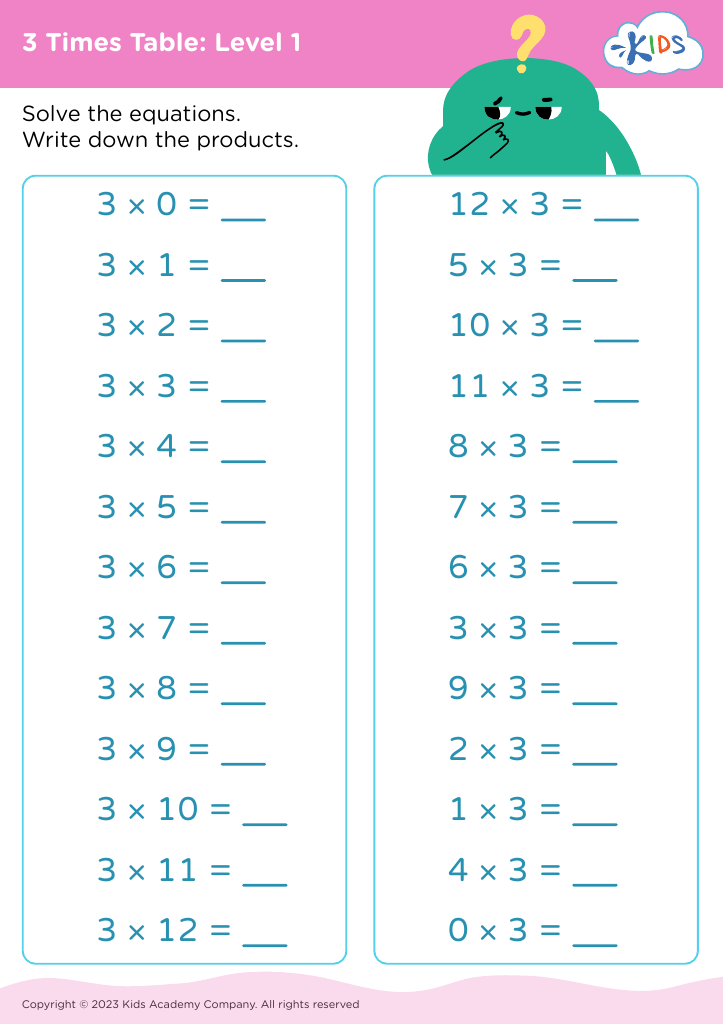
    3 Times Table: Level 1
    3 Times Table: Level 1

    x3 Multiplication Chart

    x3 Multiplication Chart
    Worksheet
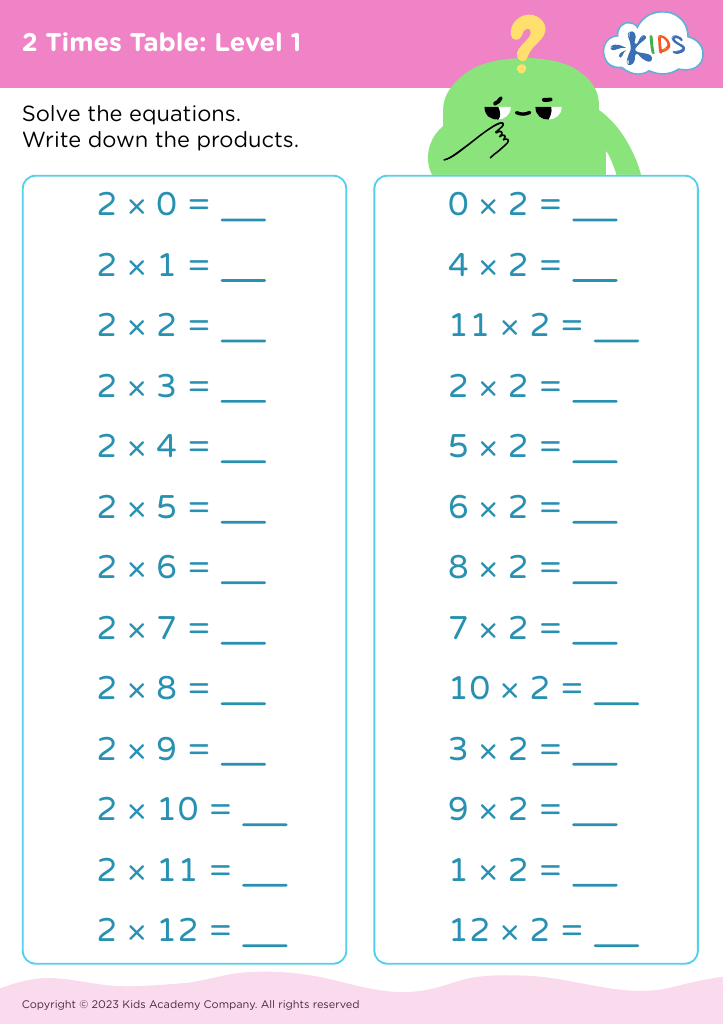
    2 Times Table: Level 1
    2 Times Table: Level 1

    x2 Multiplication Chart

    x2 Multiplication Chart
    Worksheet
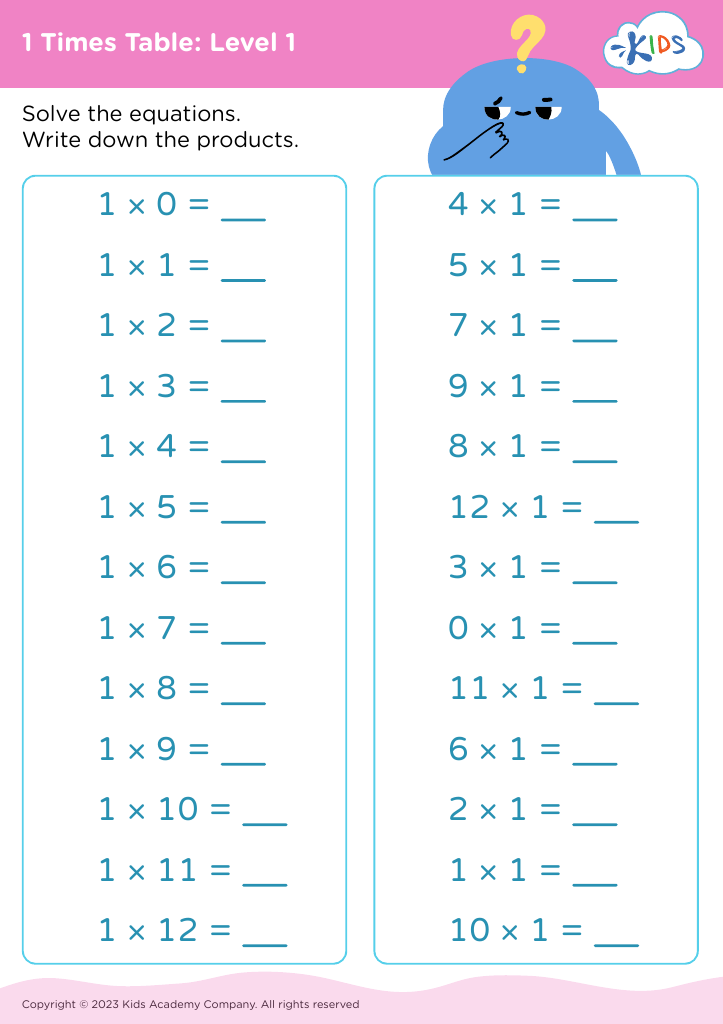
    1 Times Table: Level 1
    1 Times Table: Level 1

    Multiplication Chart Worksheet

    Multiplication Chart Worksheet
    Worksheet
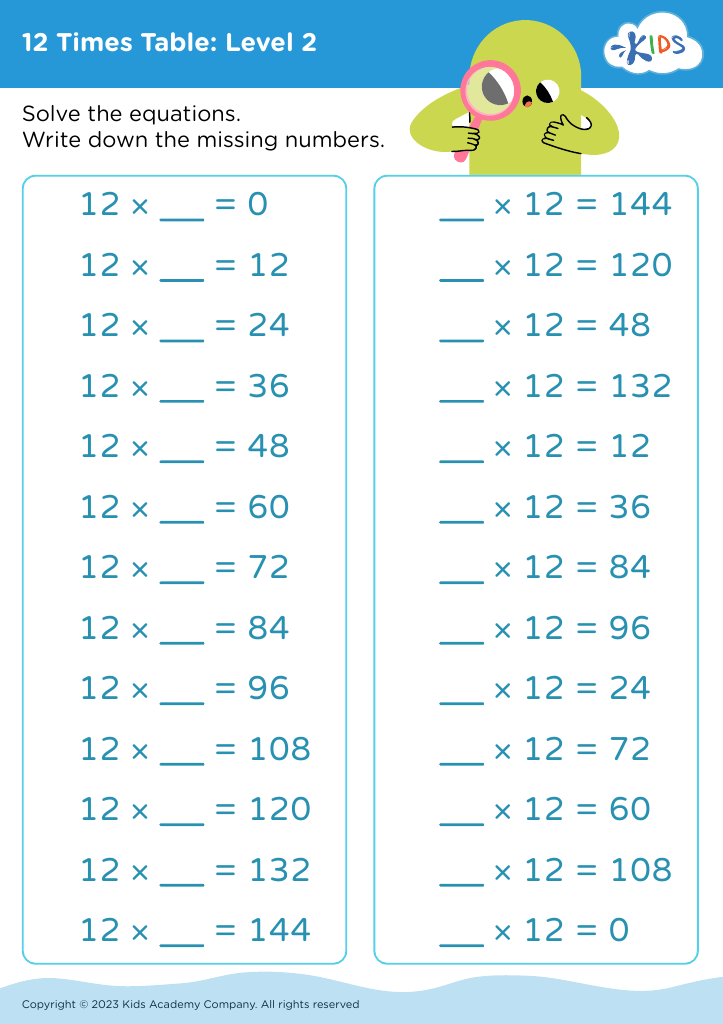
    12 Times Table: Level 2
    12 Times Table: Level 2

    12 Times Table: Level 2

    12 Times Table: Level 2
    Worksheet
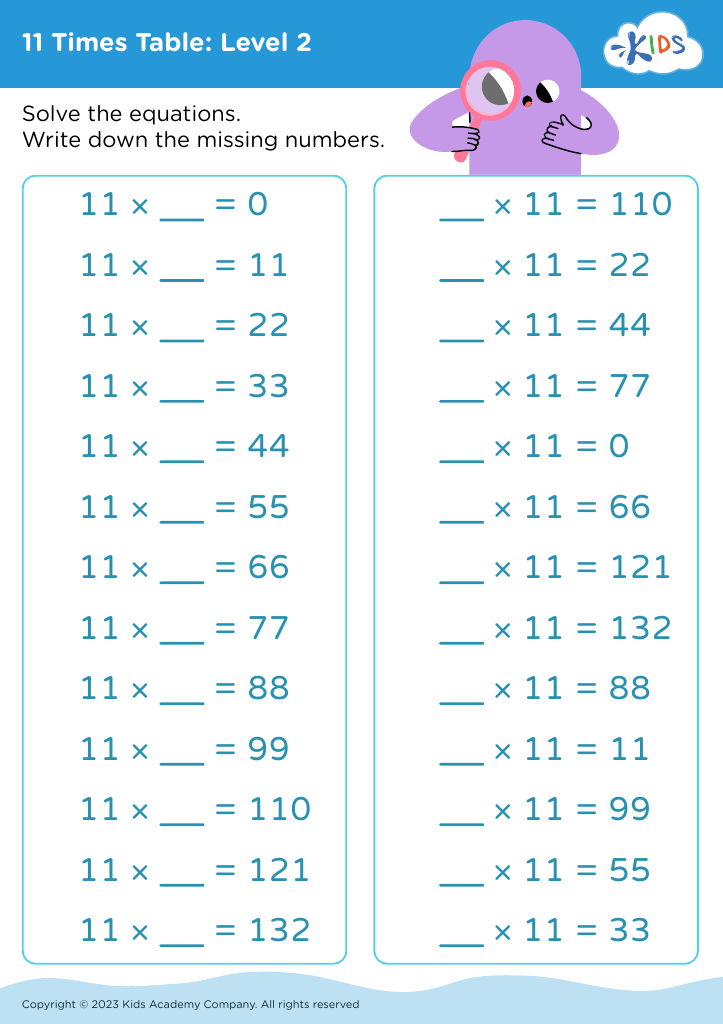
    11 Times Table: Level 2
    11 Times Table: Level 2

    11 Times Table: Level 2

    11 Times Table: Level 2
    Worksheet
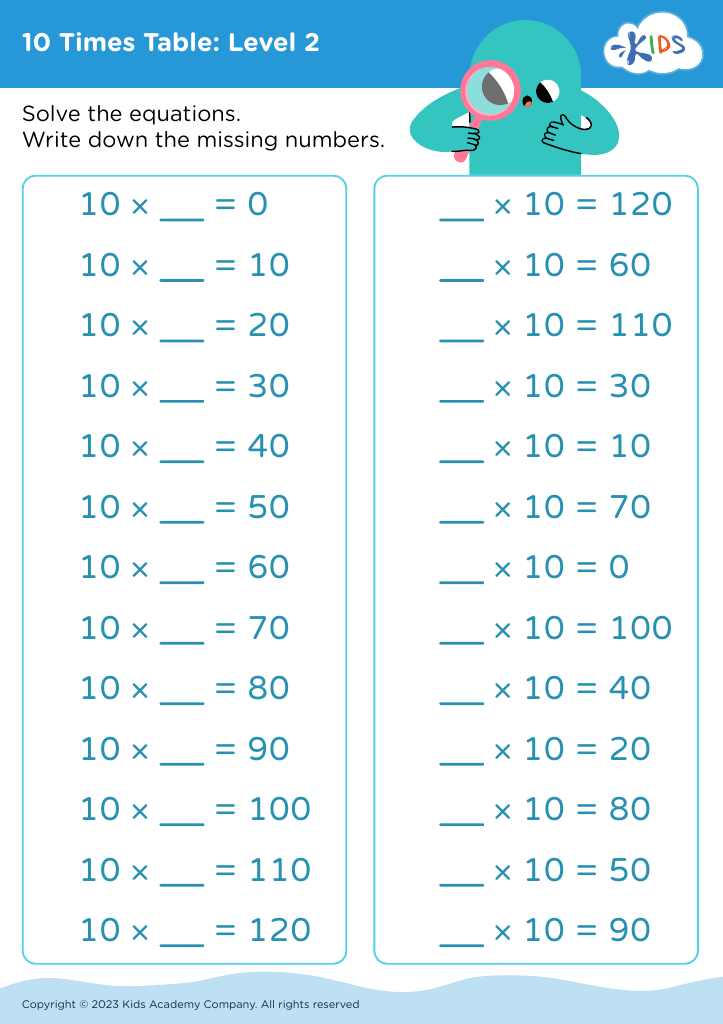
    10 Times Table: Level 2
    10 Times Table: Level 2

    10 Times Table: Level 2

    10 Times Table: Level 2
    Worksheet
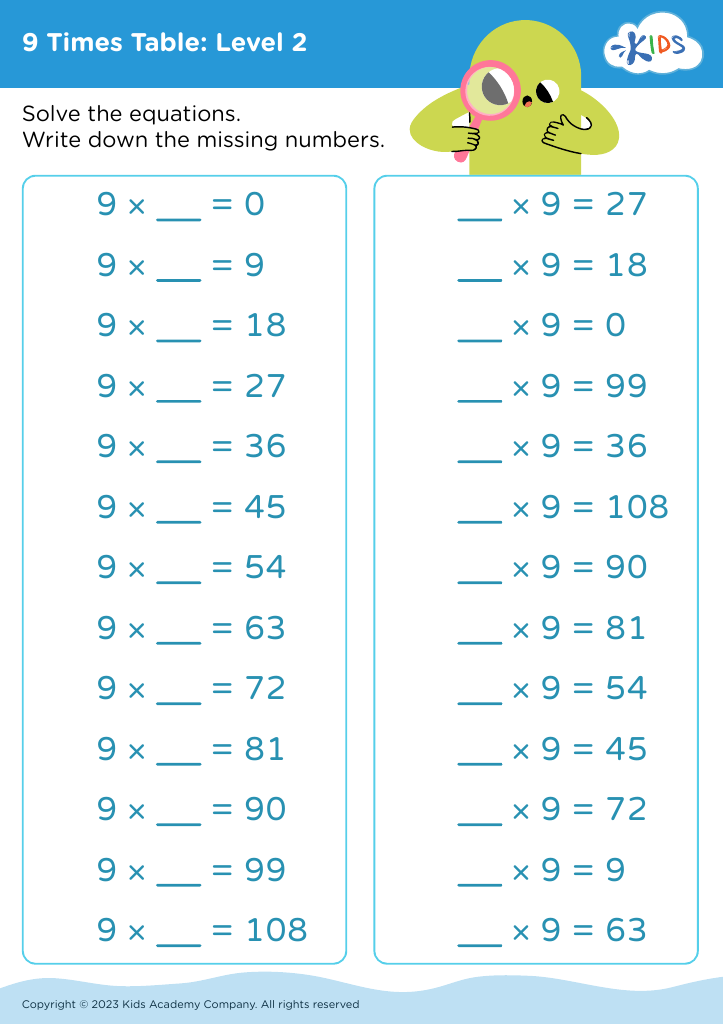
    9 Times Table: Level 2
    9 Times Table: Level 2

    9 Times Table: Level 2

    9 Times Table: Level 2
    Worksheet
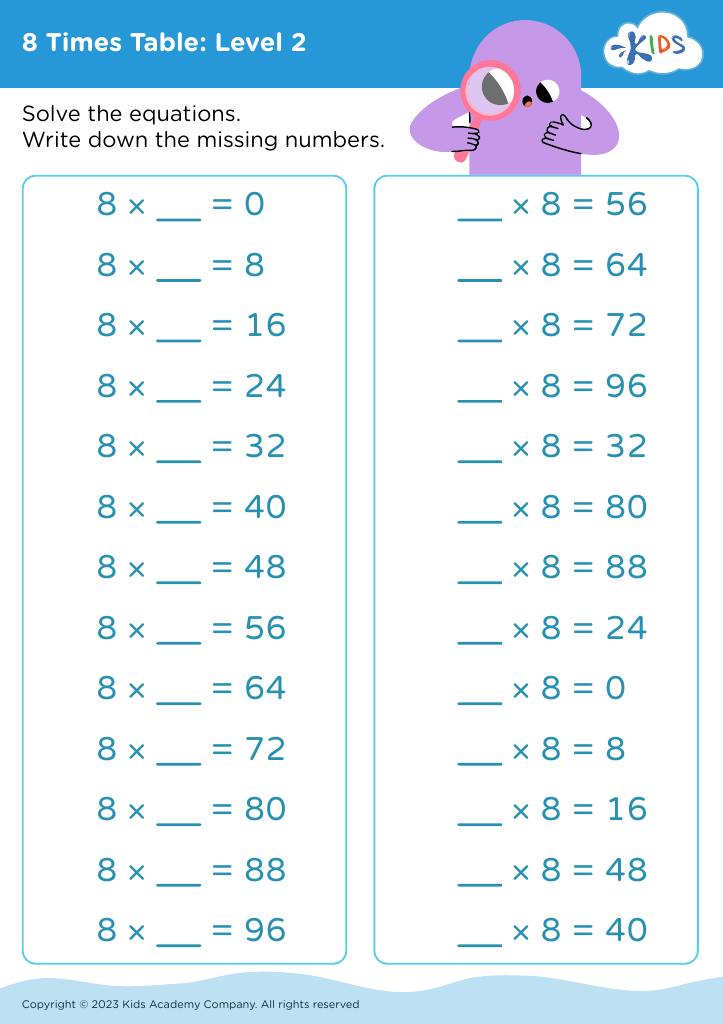
    8 Times Table: Level 2
    8 Times Table: Level 2

    8 Times Table: Level 2

    8 Times Table: Level 2
    Worksheet
    12 Times Table: Level 1
    12 Times Table: Level 1

    x12 Multiplication Chart

    x12 Multiplication Chart
    Worksheet
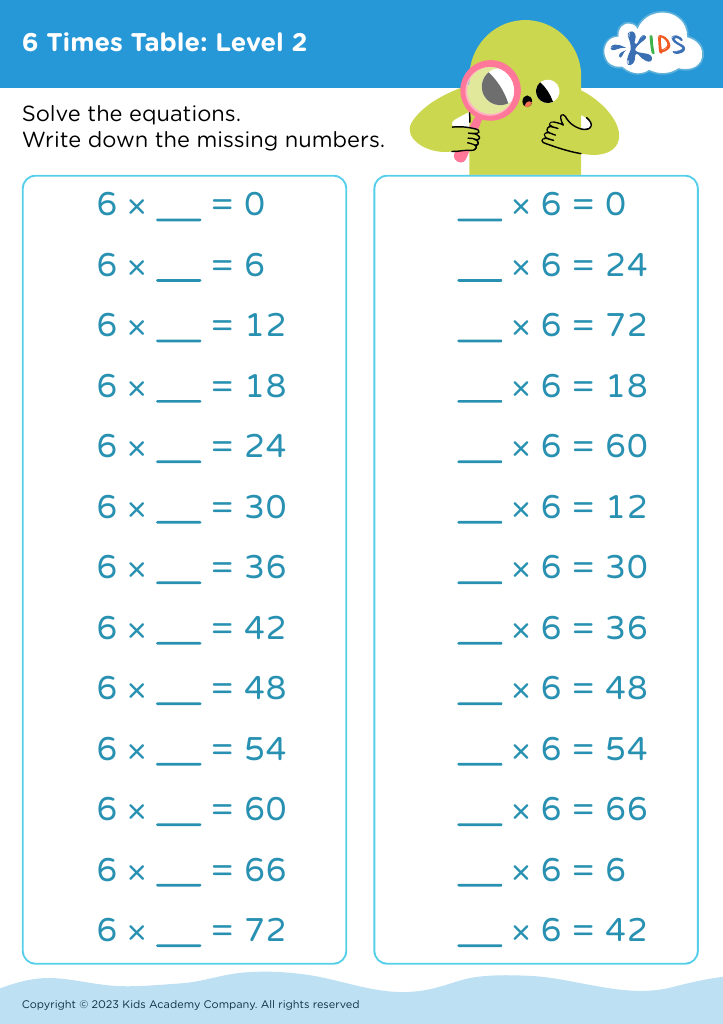
    6 Times Table: Level 2
    6 Times Table: Level 2

    6 Times Table: Level 2

    6 Times Table: Level 2
    Worksheet
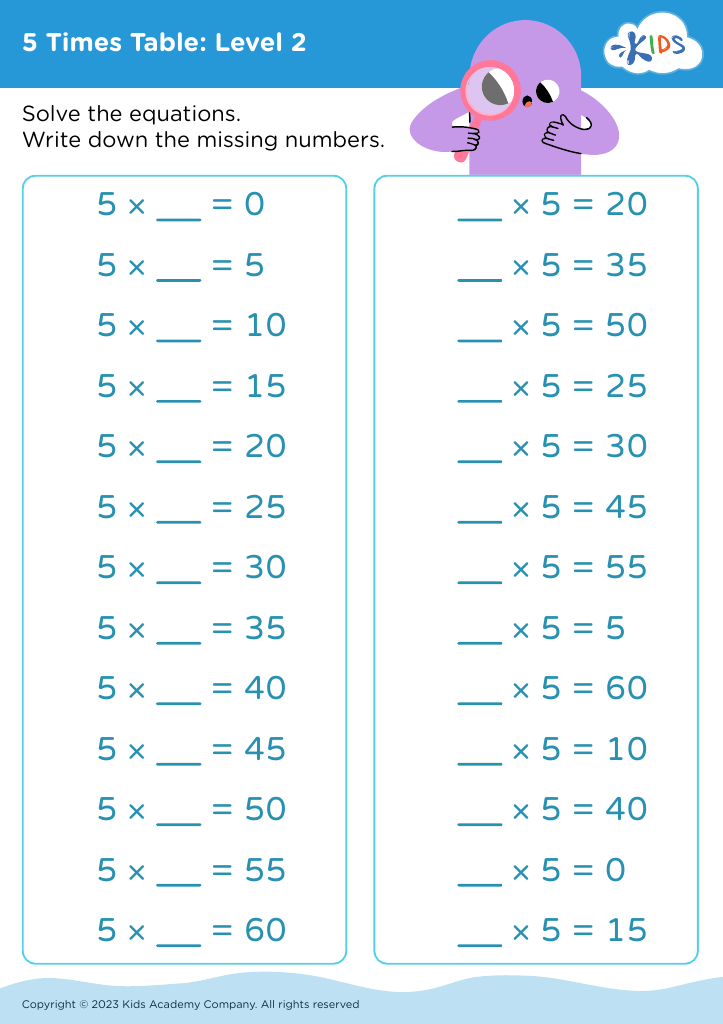
    5 Times Table: Level 2
    5 Times Table: Level 2

    5 Times Table: Level 2

    5 Times Table: Level 2
    Worksheet
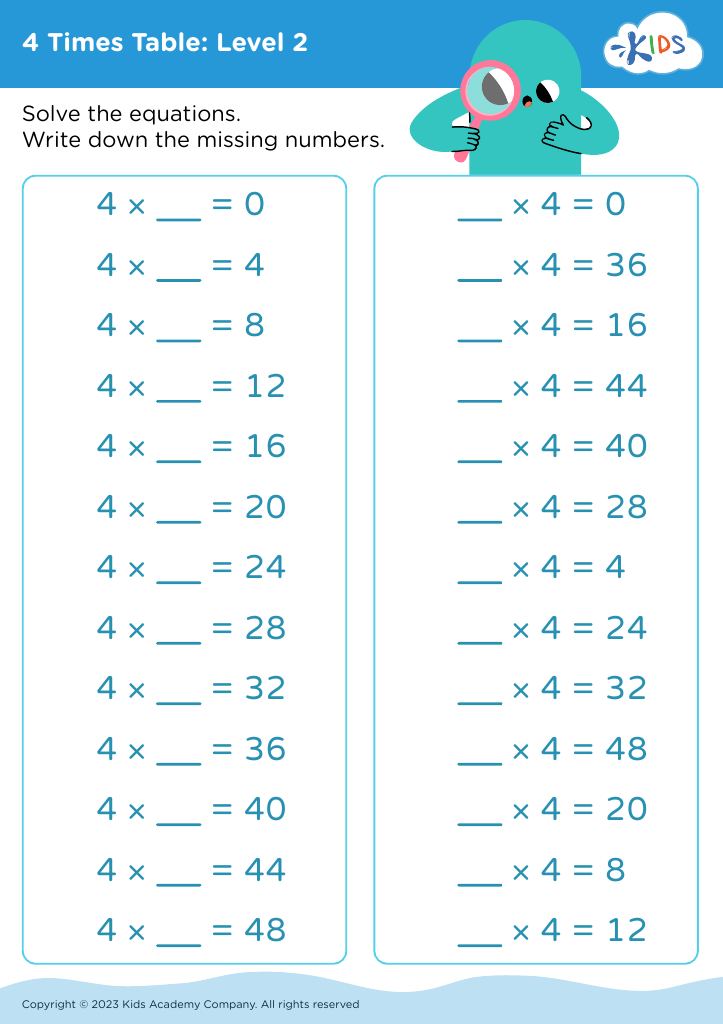
    4 Times Table: Level 2
    4 Times Table: Level 2

    4 Times Table: Level 2

    4 Times Table: Level 2
    Worksheet
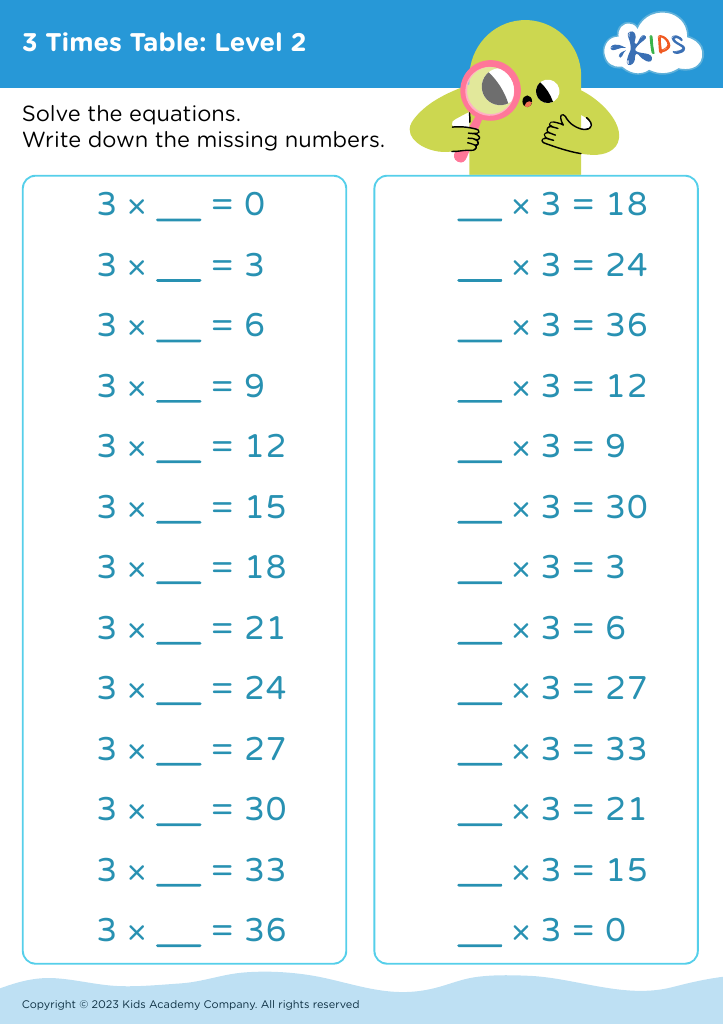
    3 Times Table: Level 2
    3 Times Table: Level 2

    3 Times Table: Level 2

    3 Times Table: Level 2
    Worksheet
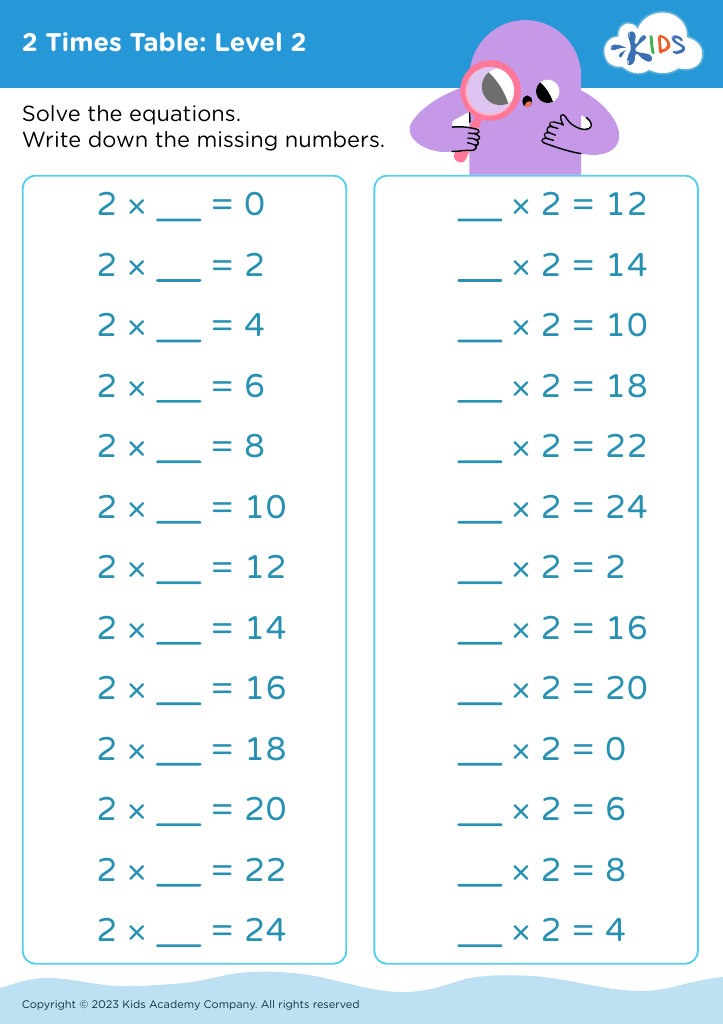
    2 Times Table: Level 2
    2 Times Table: Level 2

    2 Times Table: Level 2

    2 Times Table: Level 2
    Worksheet
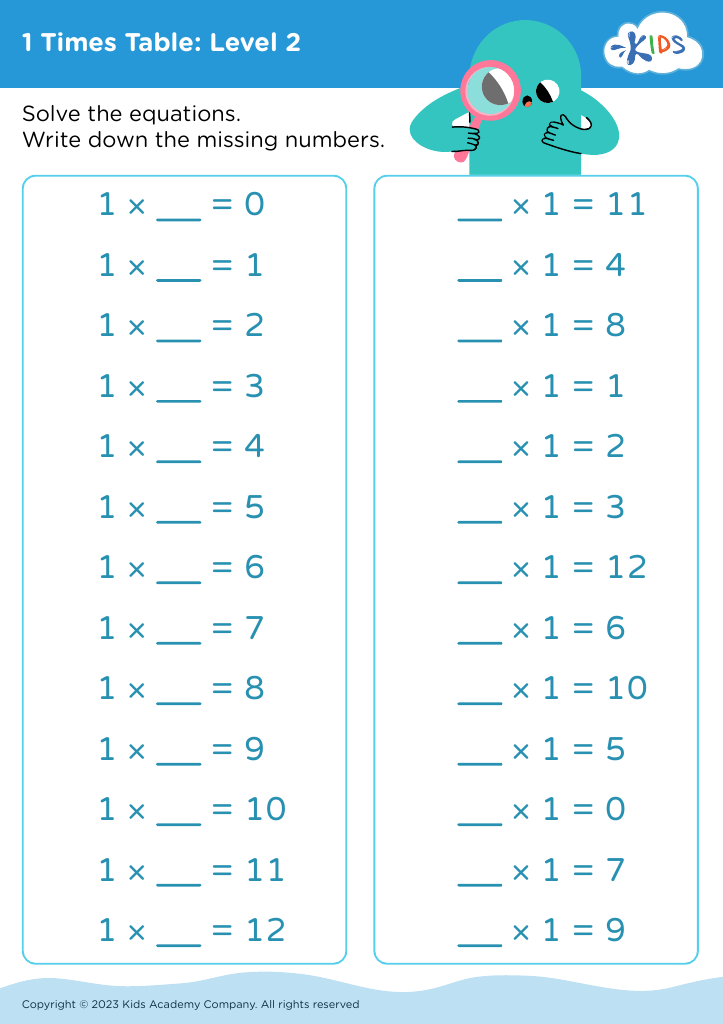
    1 Times Table: Level 2
    1 Times Table: Level 2

    1 Times Table: Level 2

    1 Times Table: Level 2
    Worksheet
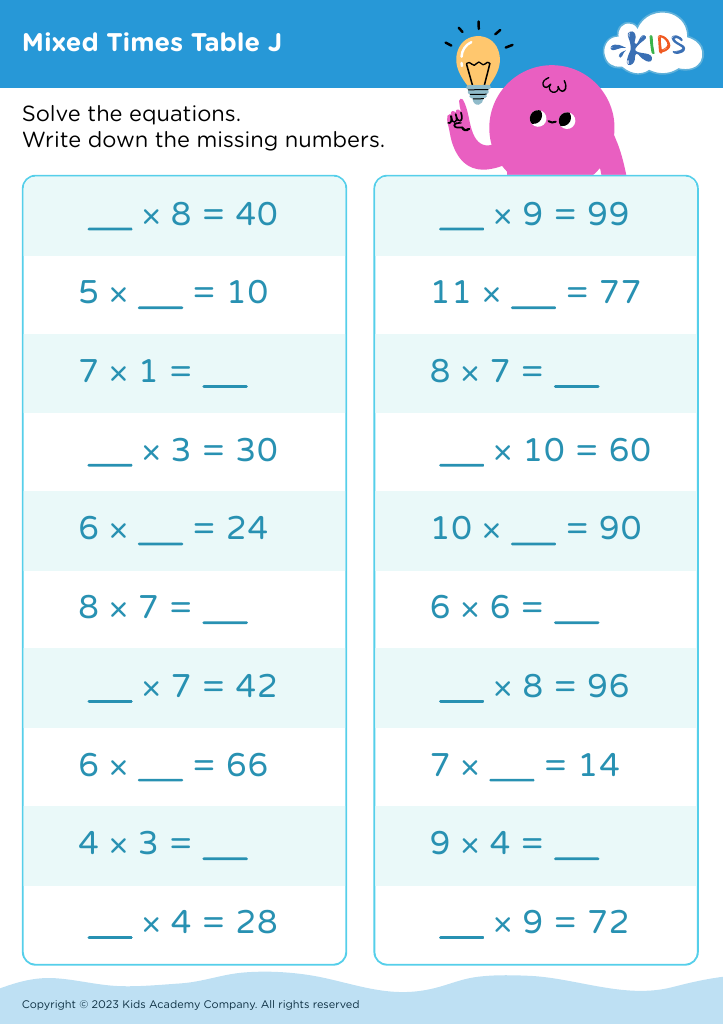
    Mixed Times Table J
    Mixed Times Table J

    Mixed Times Table J

    Mixed Times Table J
    Worksheet
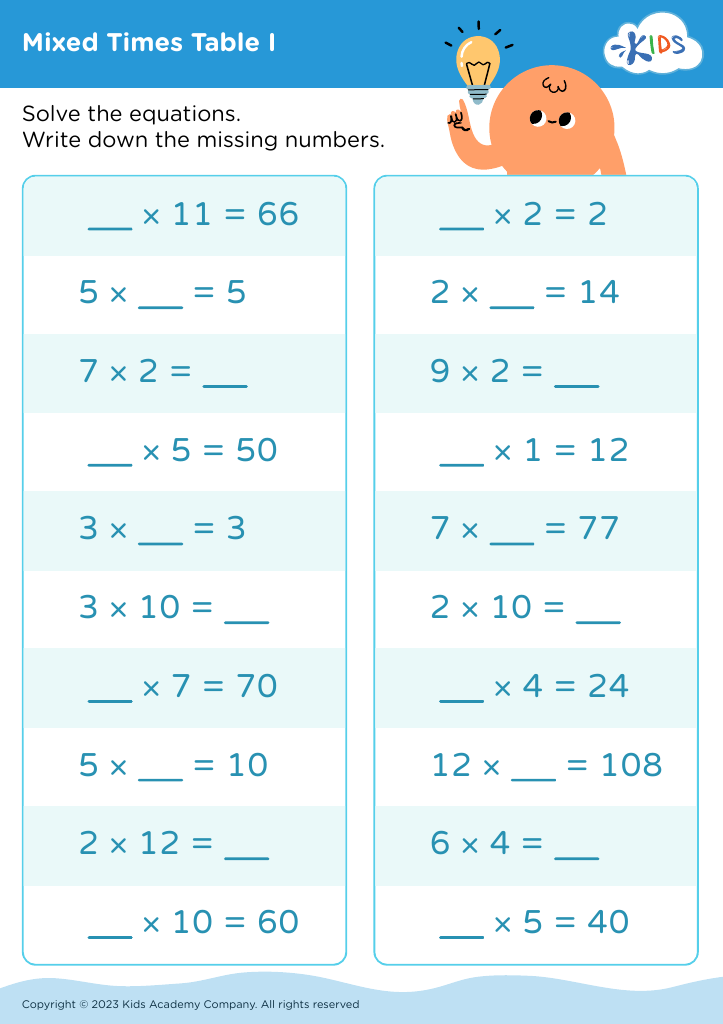
    Mixed Times Table I
    Mixed Times Table I

    Mixed Times Table I

    Mixed Times Table I
    Worksheet
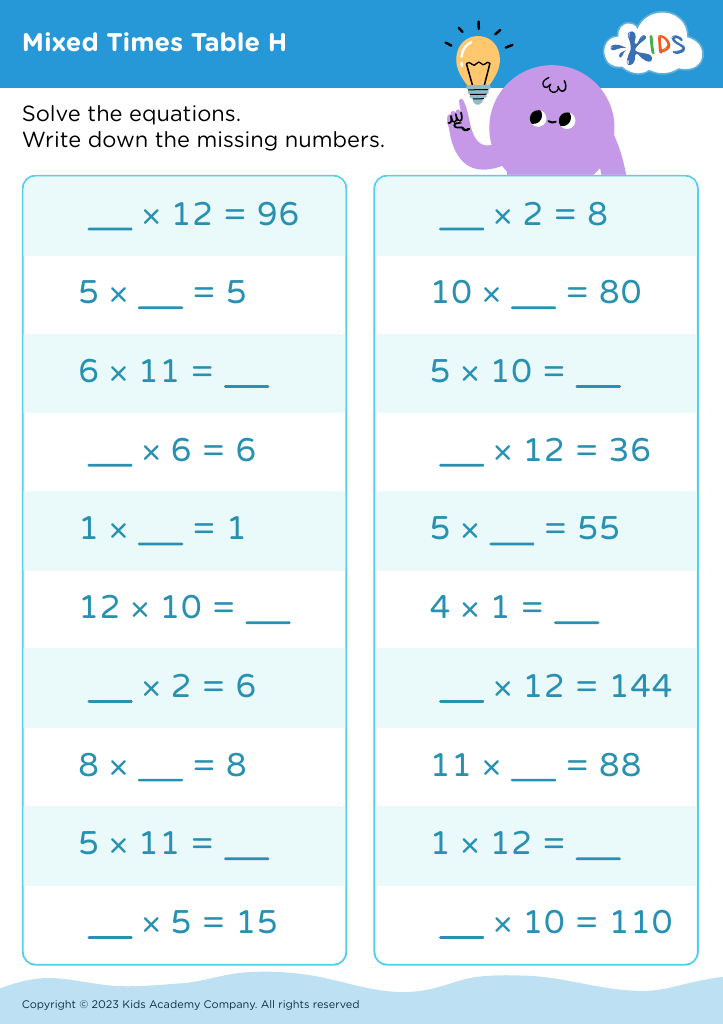
    Mixed Times Table H
    Mixed Times Table H

    Mixed Times Table H

    Mixed Times Table H
    Worksheet


    Parents and teachers should care about multiplication for ages 5-8 because this foundational skill is crucial for a child’s mathematical development. Mastering multiplication sets the stage for more advanced mathematical concepts, as it is intertwined with addition, division, and even fractions. At this age, children are developing their critical thinking and problem-solving abilities, and understanding multiplication fosters these skills.

    Additionally, multiplication is often used in everyday life—whether it's determining the total cost during shopping, calculating time, or understanding measurements in cooking. When parents and teachers emphasize multiplication, they promote confidence and independent thinking in children.

    Furthermore, early exposure to multiplication concepts can alleviate math anxiety and foster a positive attitude towards math. By employing engaging and hands-on strategies, educators and parents can make learning multiplication fun, using games, songs, and visual aids.

    Incorporating multiplication into daily activities encourages retention and understanding. For example, counting objects in groups or sharing snacks equally can illustrate the concept. A strong grasp of multiplication primes children for future academic success and opens doors to various fields and professions, thereby fundamentally shaping their life skills and academic paths.