Analytical skills Science Worksheets for Ages 5-8
6 filtered results
-
From - To
Enhance your child's analytical abilities with our Science Worksheets designed for ages 5-8. Kids Academy offers engaging, age-appropriate printables that encourage young learners to think critically and explore scientific concepts. Each worksheet is meticulously created to develop key analytical skills, such as observation, comparison, and problem-solving. Fun and educational activities make it easier for children to understand complex ideas while keeping them engaged. Perfect for both classroom and at-home learning, our worksheets are a great way to boost your child’s confidence and academic growth in science. Unlock your child’s potential with our expertly crafted resources.
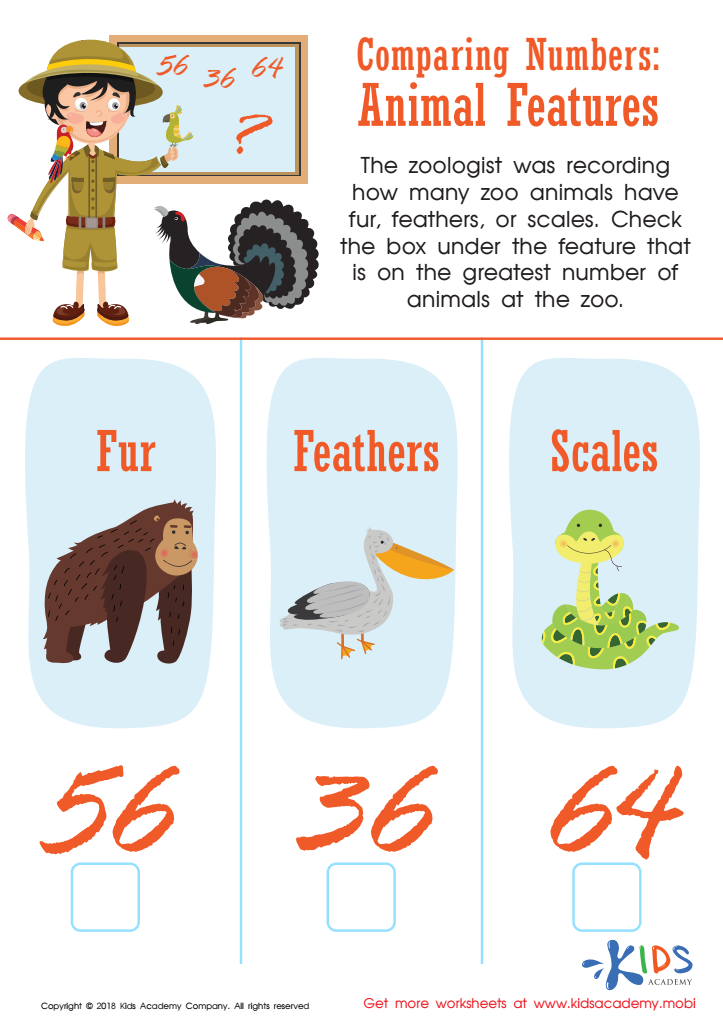
Animal Features Worksheet
 Assign to My Students
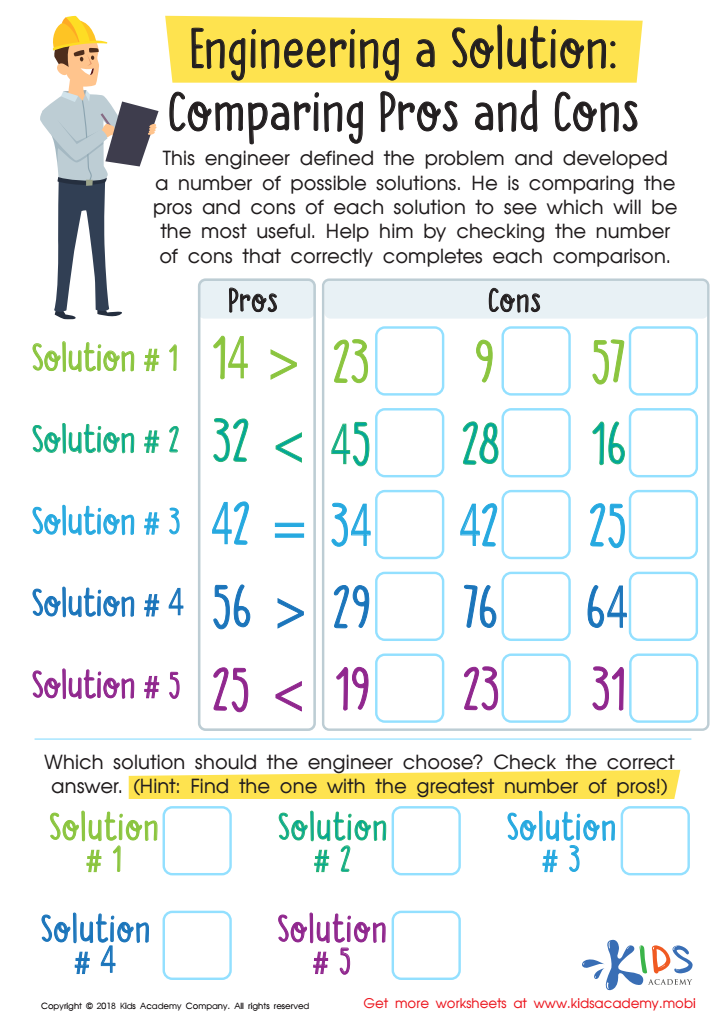
Engineering a Solution: Comparing Pros and Cons Worksheet
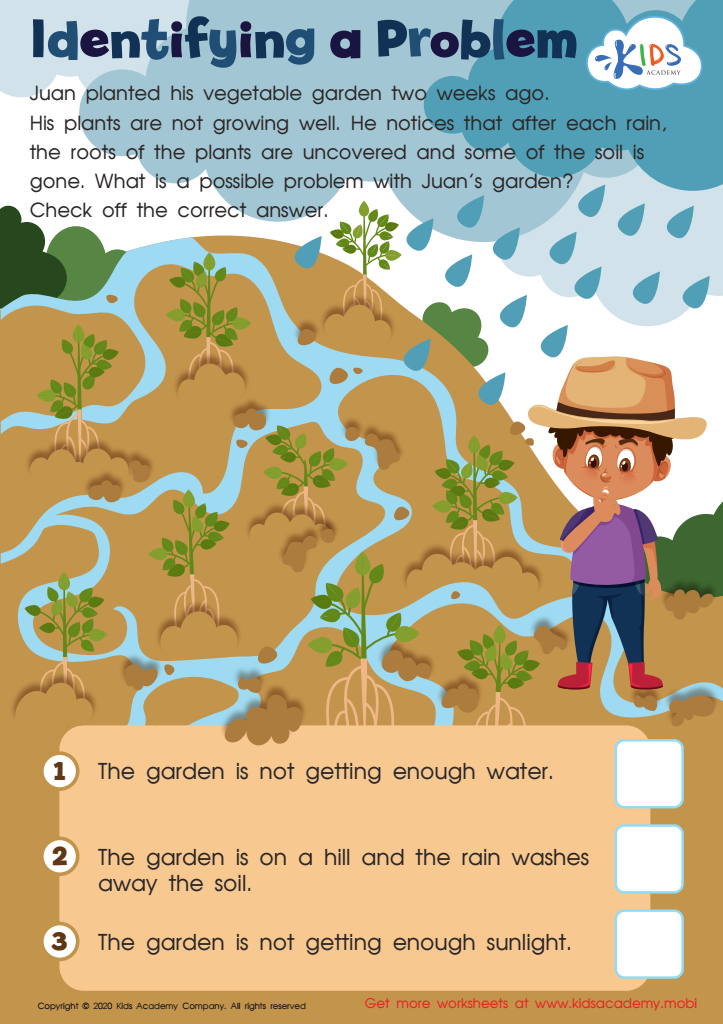
Identifying a Problem Worksheet
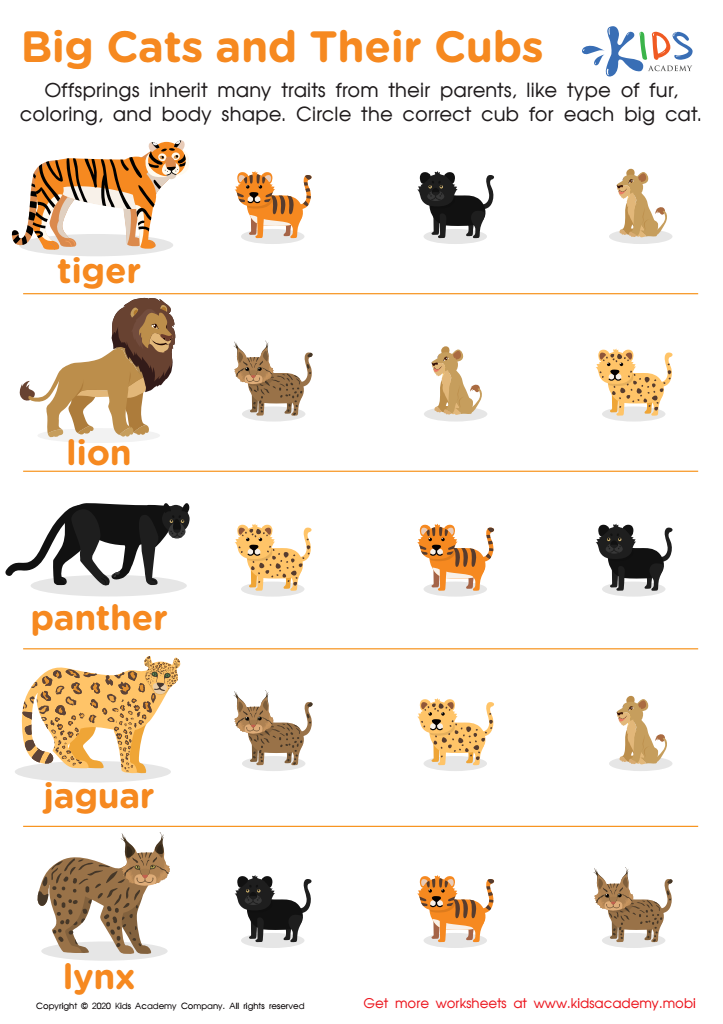
Big Cats and Their Cubs Worksheet
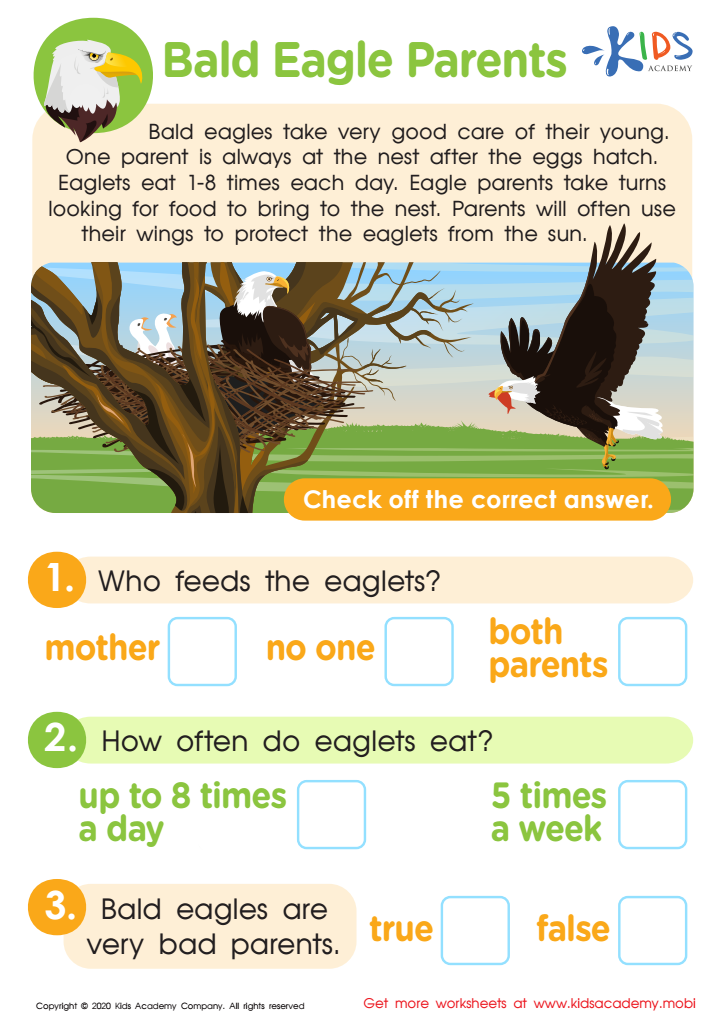
Bald Eagle Parents Worksheet
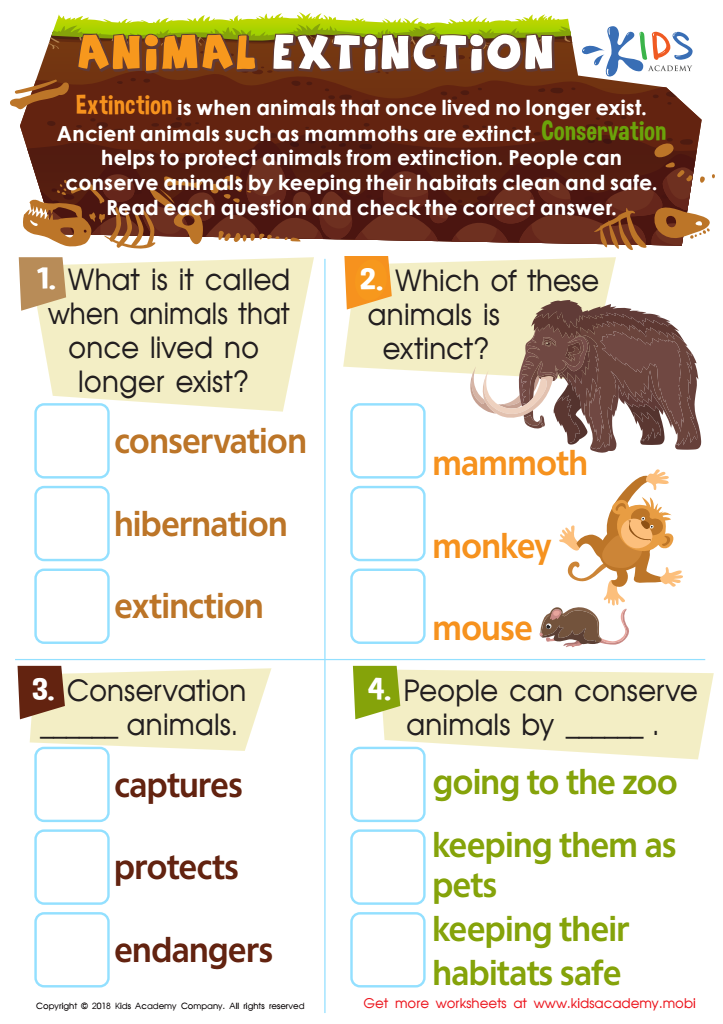
Animal Extinction Worksheet







Parents and teachers should care about fostering analytical skills in science for children aged 5-8 because these foundational years are crucial for cognitive development. At this age, children's brains are like sponges, absorbing information and forming neural connections with remarkable ease. Introducing analytical skills through science encourages curiosity, enhances problem-solving abilities, and promotes critical thinking.
Science education in these early years doesn’t just teach facts; it nurtures children's innate sense of wonder about the world around them. For instance, conducting simple experiments or asking questions like "What will happen if we add more water?" can cultivate observational skills and logical reasoning. These activities require children to hypothesize, test, and draw conclusions, thereby strengthening their analytical thinking.
Moreover, developing analytical skills early on lays the groundwork for future academic success and lifelong learning. Children who hone these skills tend to perform better in subjects like math and reading because they can better process information and apply reasoning to diverse situations. Importantly, these skills are not limited to academics; they translate into real-world problem-solving and decision-making capabilities.
In essence, fostering analytical skills in science helps children become better thinkers, learners, and innovators. This early investment sets the stage for their overall development and future success in a rapidly evolving world.







