
Understanding natural resources Science Worksheets for Ages 6-8
4 filtered results
Difficulty Level
Grade
Age
-
From - To
Subject
Activity
Standards
Explore the essential knowledge of natural resources with our specially designed science worksheets for ages 6-8. These printable activities from Kids Academy introduce young learners to the importance of natural resources through engaging exercises that promote critical thinking and curiosity. Children will discover the differences between renewable and non-renewable resources, learn how natural resources are used in daily life, and understand the significance of conservation. With colorful illustrations and interactive tasks, these worksheets are perfect for enhancing classroom learning or extra practice at home. Help your child develop a strong foundation in environmental science, fostering awareness and responsibility towards nature.
Favorites
With answer key
Interactive
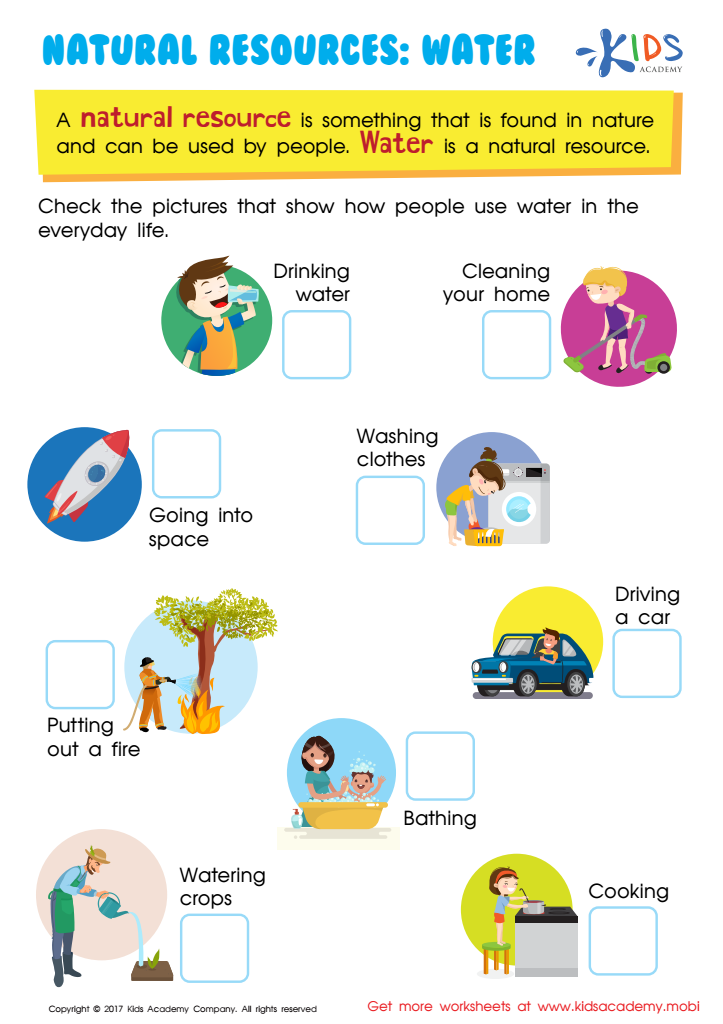
Natural Resources: Water Worksheet
With our natural resources water worksheet, your child will explore the significance of this precious resource.
Unlock your child’s understanding of water’s importance with our natural resources water worksheet. They’ll learn the many ways we use water in our day-to-day lives, and grasp the necessity of this vital natural resource.
 Assign to My Students
Natural Resources: Water Worksheet
Worksheet
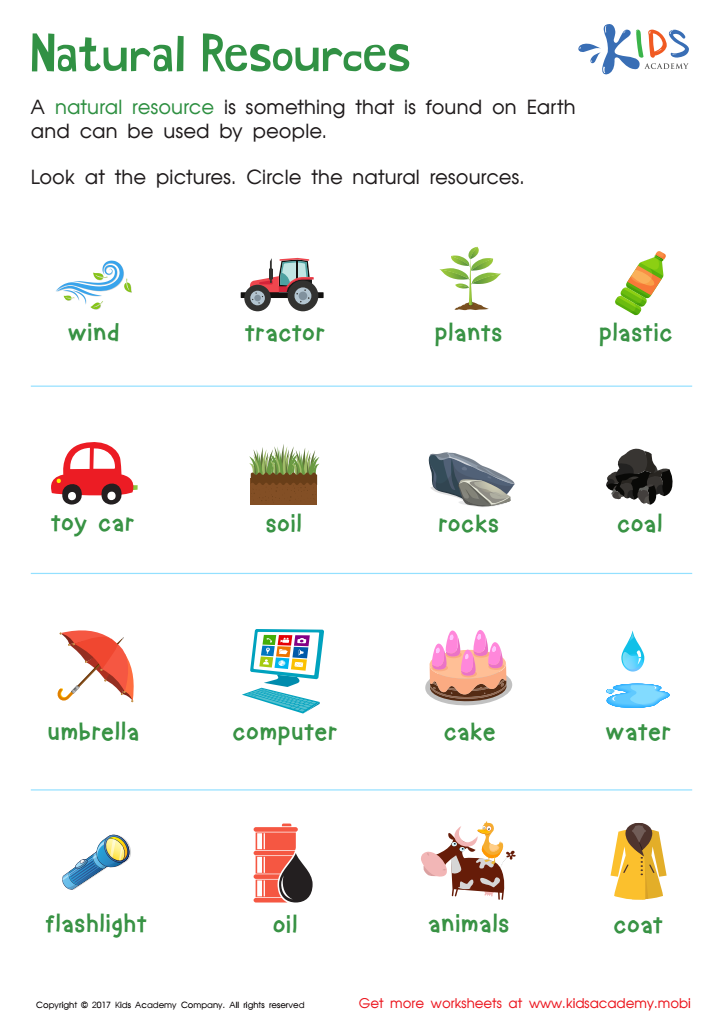
Natural Resources Worksheet
Use this engaging worksheet to explore nature’s resources and their importance. Teach your child about the importance of natural resources and how to conserve them with this fun worksheet!
Help your child explore and understand Earth's natural gifts! Use this challenging worksheet to identify natural resources and learn about their importance. Encourage your child to be mindful and conserve these precious resources. Enjoy teaching your child about nature's gifts with this fun worksheet!
Natural Resources Worksheet
Worksheet
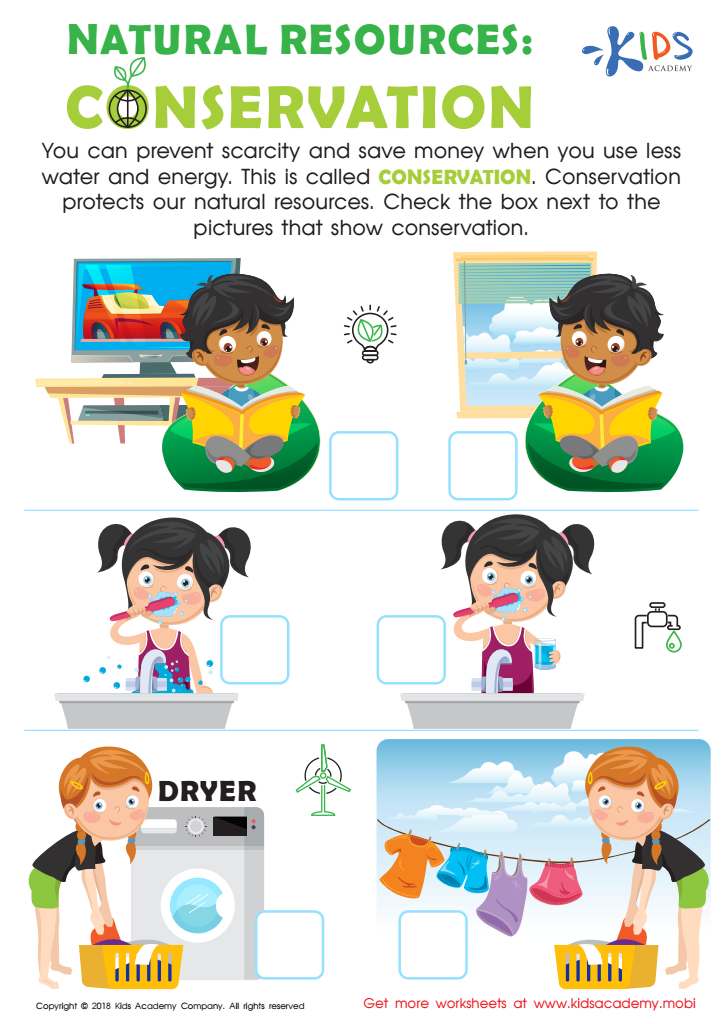
Natural Resources: Conservation Worksheet
Water scarcity is a challenge. When people don't have enough water, they can't do certain things. We can prevent this with conservation: using less energy and water. This helps protect our natural resources and saves money. Talk to your child about conservation and have them check the box next to the pictures that show it.
Natural Resources: Conservation Worksheet
Worksheet
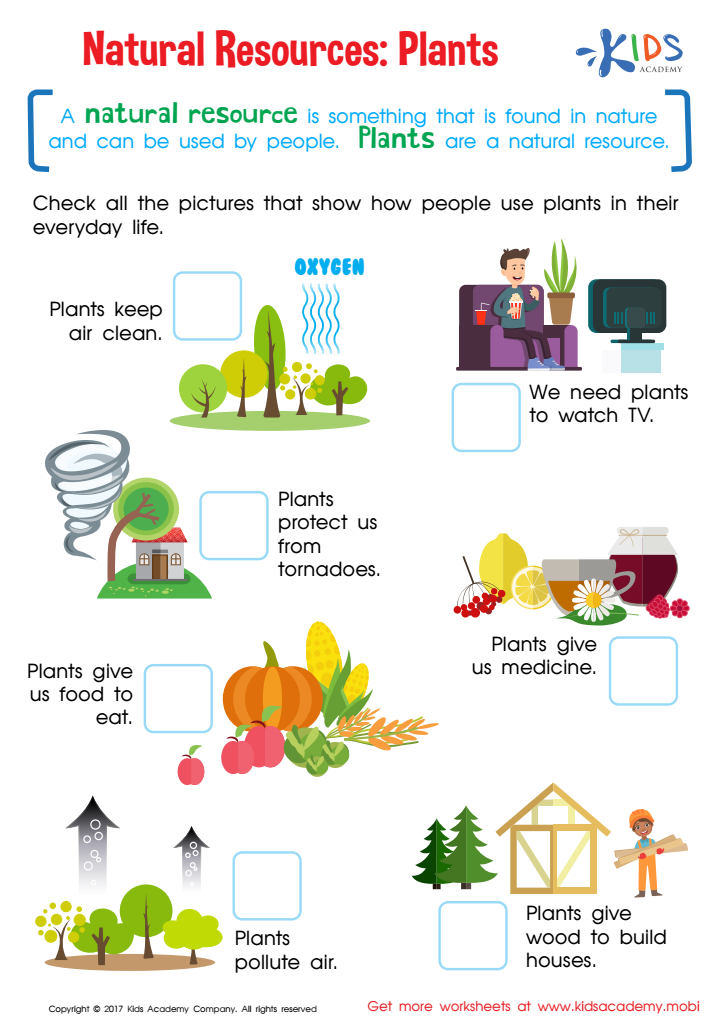
Natural Resources: Plants Worksheet
Plants provide essential natural resources: oxygen and protection from hazards. This worksheet helps 2nd graders appreciate plants more. It's the perfect way to review natural resources.
Natural Resources: Plants Worksheet
Worksheet
Join Kids Academy for Free
Who is primarily going to use this learning content?





Understanding natural resources is vital for children aged 6-8 because it lays the foundation for environmental stewardship and responsible citizenship. At this age, kids are naturally curious about the world around them. Teaching them about natural resources like water, air, soil, and plants can instill an appreciation for nature and an understanding of how these resources are essential for life.
By learning about renewable and non-renewable resources, children can start to comprehend the importance of conservation. For instance, understanding that trees provide oxygen and help combat climate change can inspire them to adopt eco-friendly habits, like recycling and turning off lights when not in use. Early education on these topics can foster a lifelong respect for the environment.
Moreover, introducing these concepts at a young age helps to develop critical thinking and problem-solving skills. Through simple experiments and hands-on activities, children can observe the effects of pollution, the benefits of recycling, and the processes involved in clean energy. This practical knowledge not only aligns with early science curricula but also integrates values like responsibility and community awareness.
In summary, educating young children about natural resources equips them with knowledge and motivates positive behaviors that contribute to a sustainable future. Both parents and teachers play a crucial role in nurturing this understanding, leading to empowered young individuals ready to make a difference.







