History Worksheets for Ages 6-8 - Page 4
90 filtered results
-
From - To
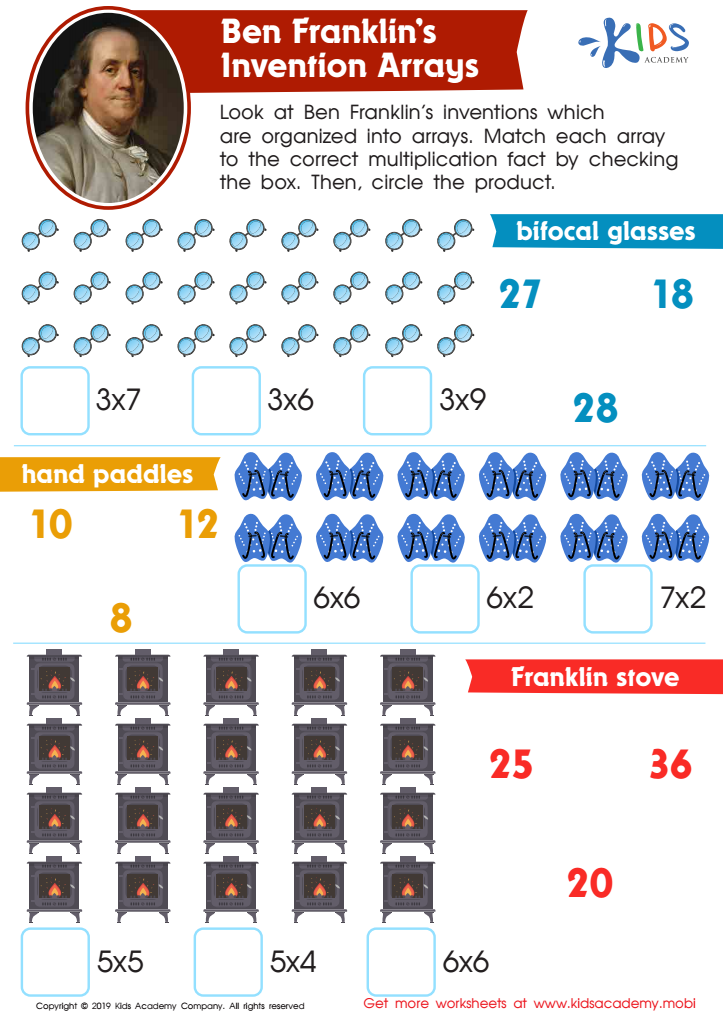
Ben Franklin’s Invention Arrays Worksheet
 Assign to My Students
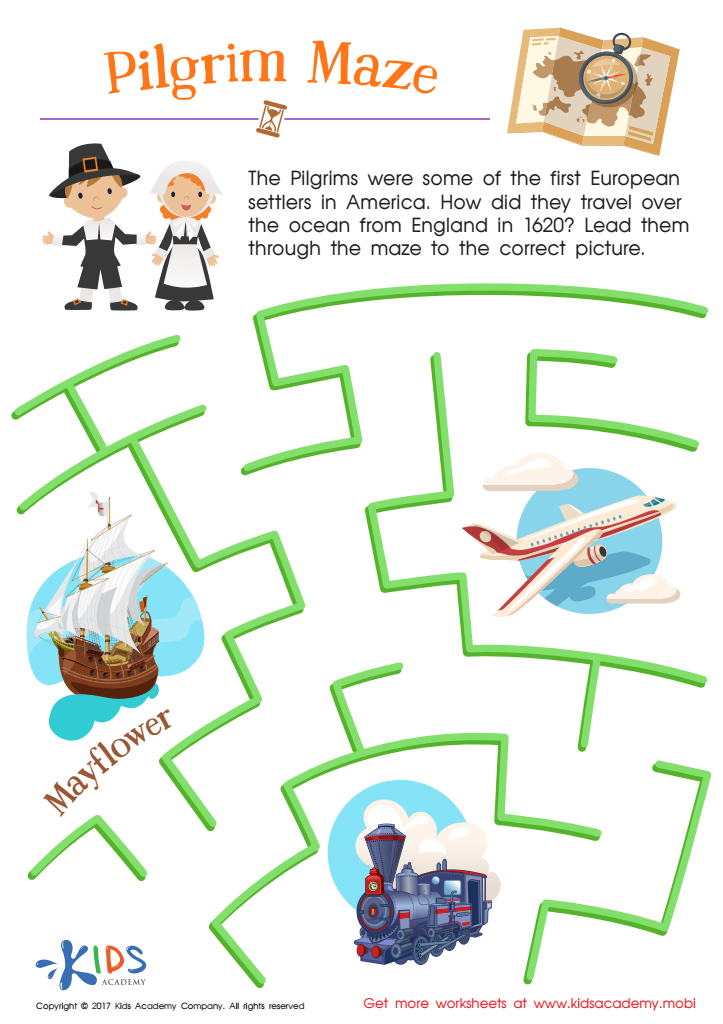
Pilgrim Maze Worksheet
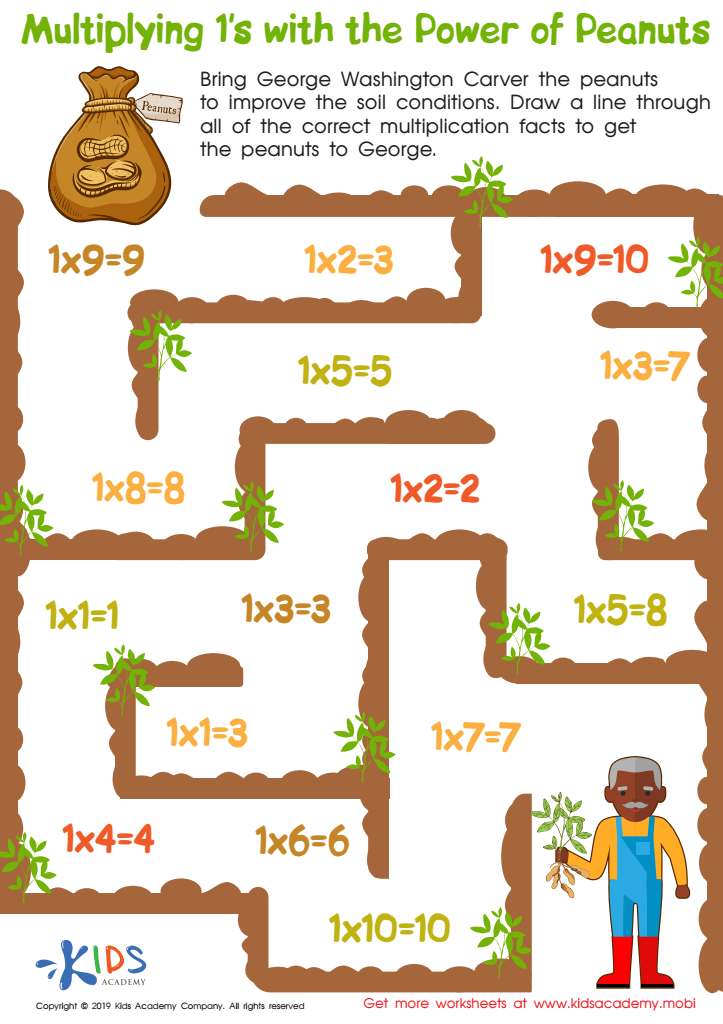
Multiplying 1’s With the Power of Peanuts Worksheet
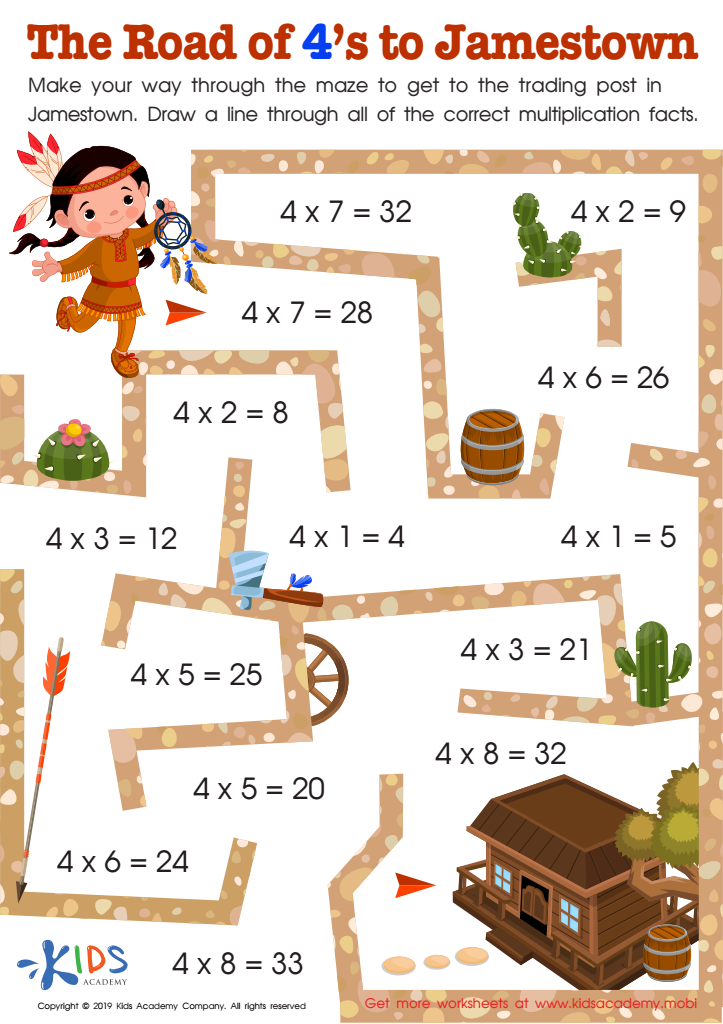
The Road of 4’s to Jamestown Worksheet
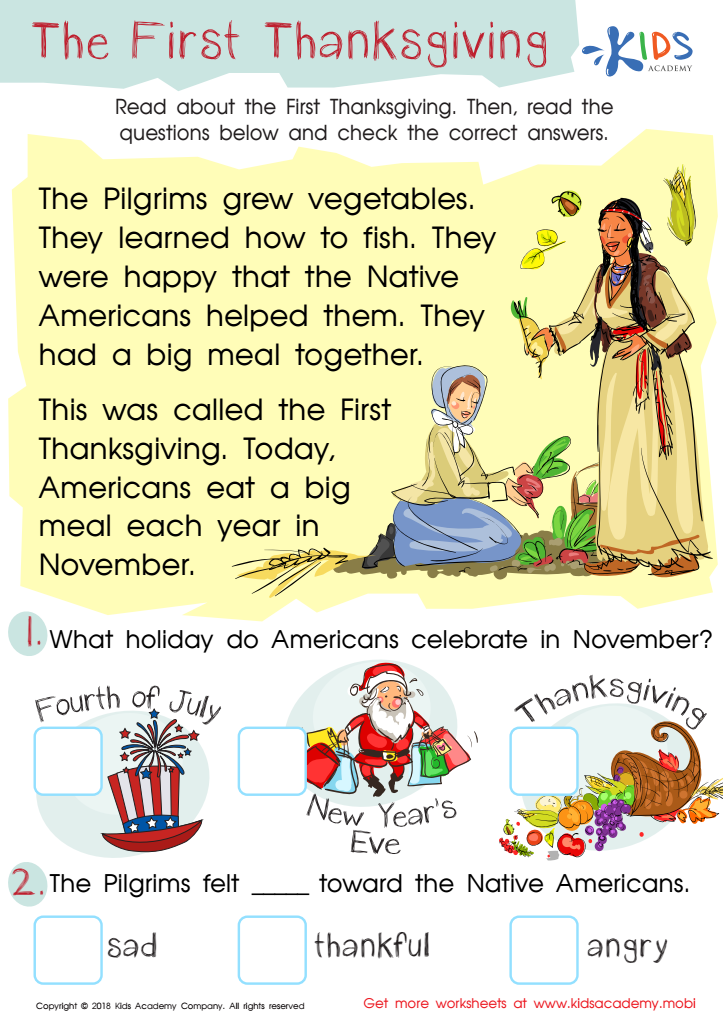
Assessment: First Thanksgiving Worksheet
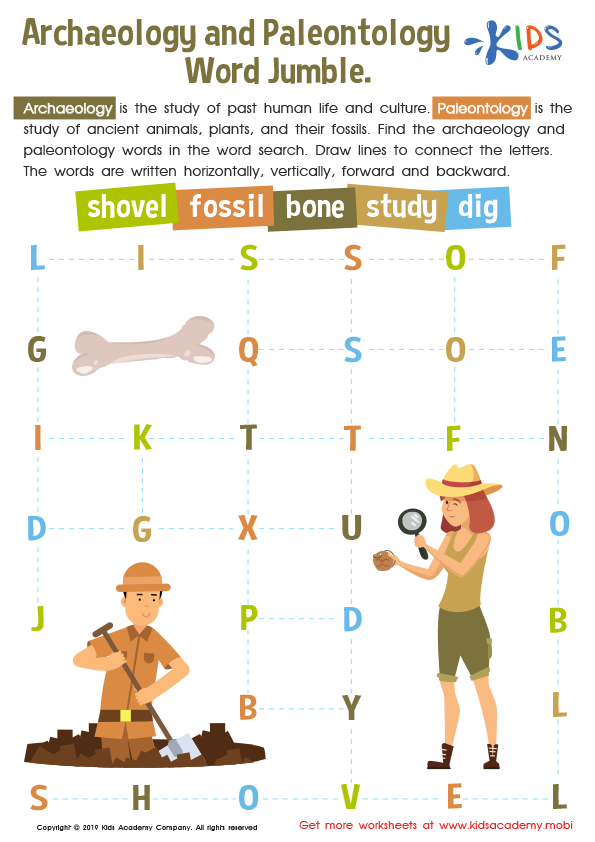
Archaeology and Paleontology Word Jumble Worksheet
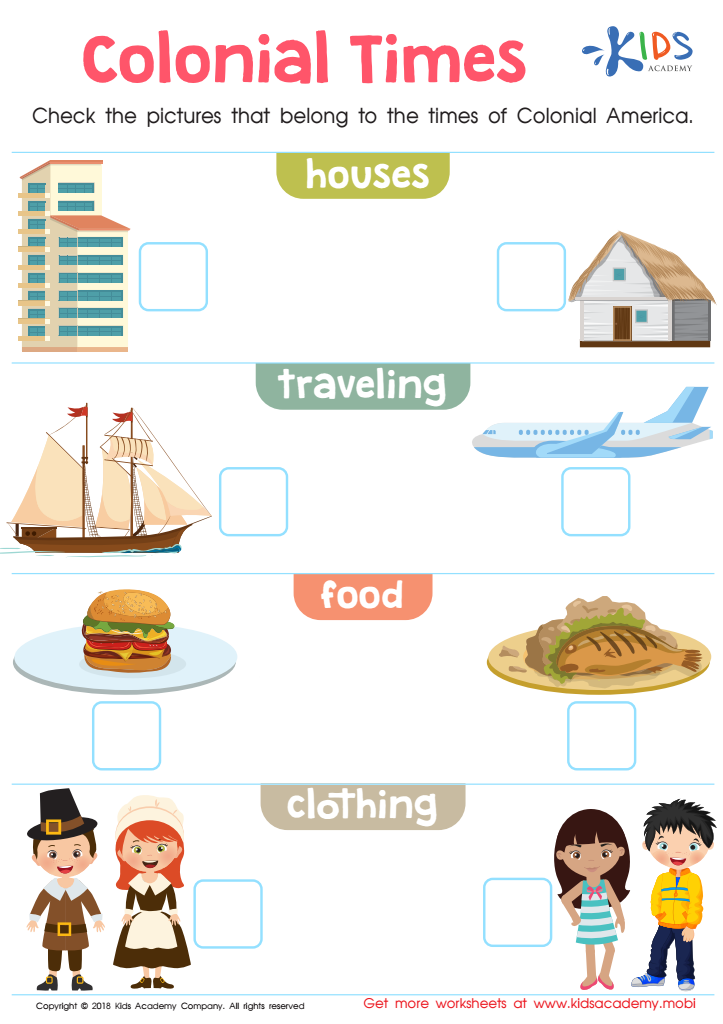
Colonial Times Worksheet
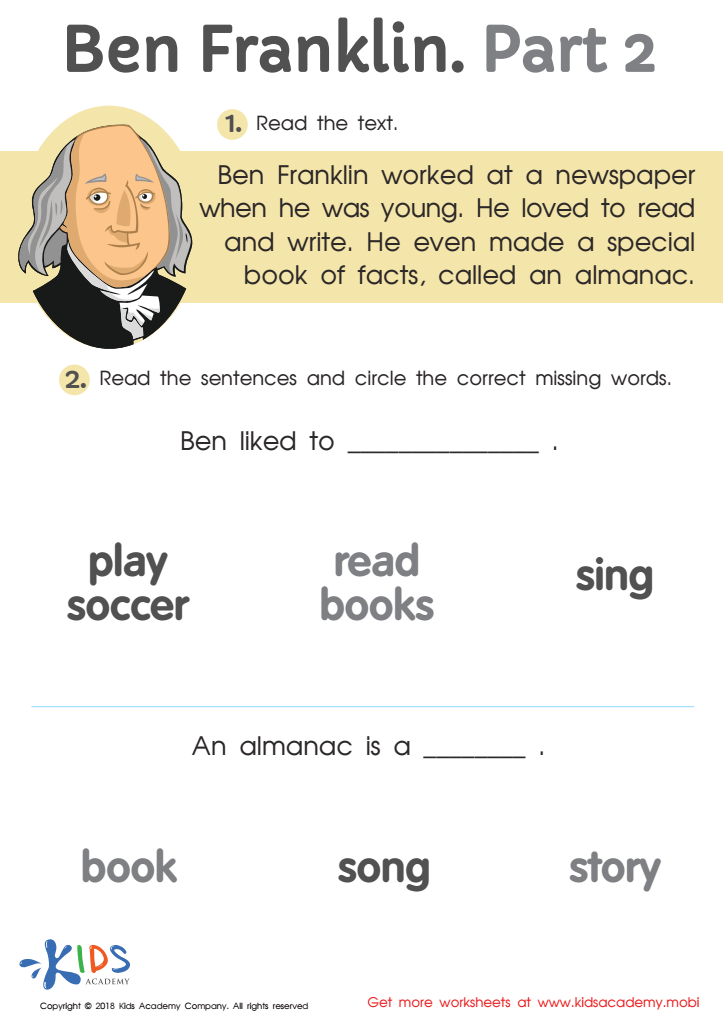
Ben Franklin Part 2 Worksheet
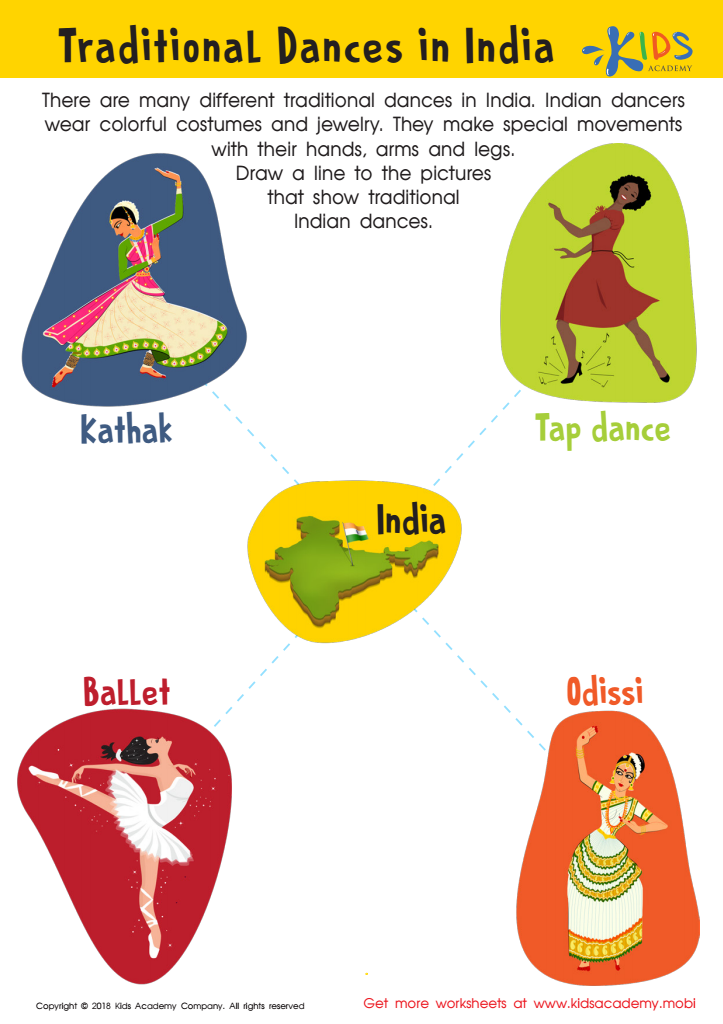
Traditional Dances in India Worksheet
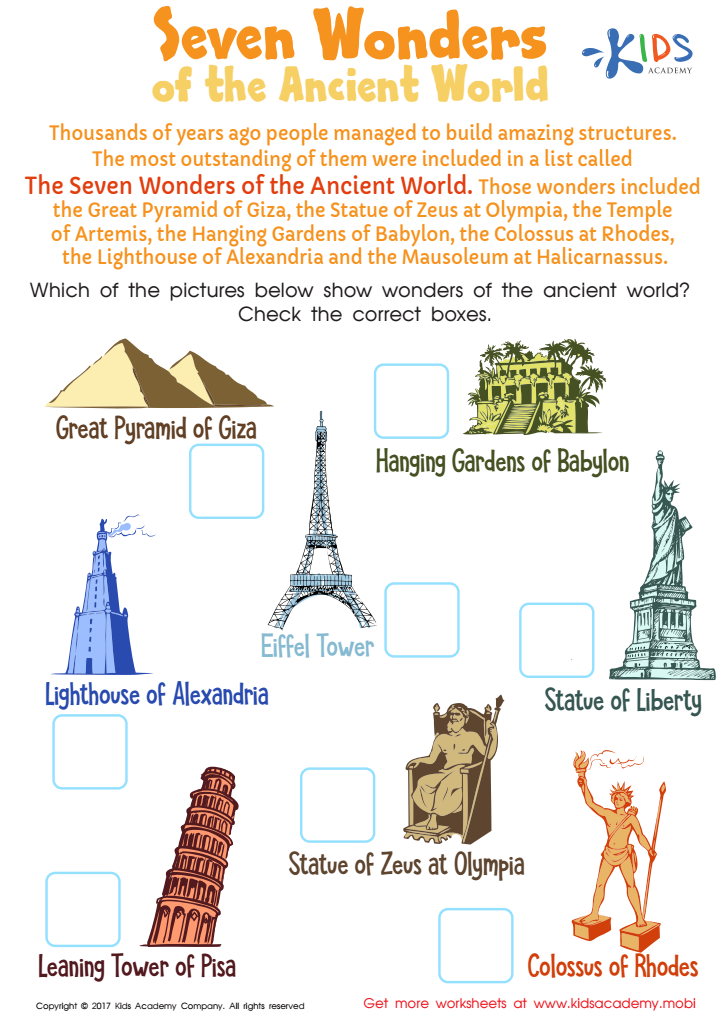
Seven Wonders of the Ancient World Worksheet
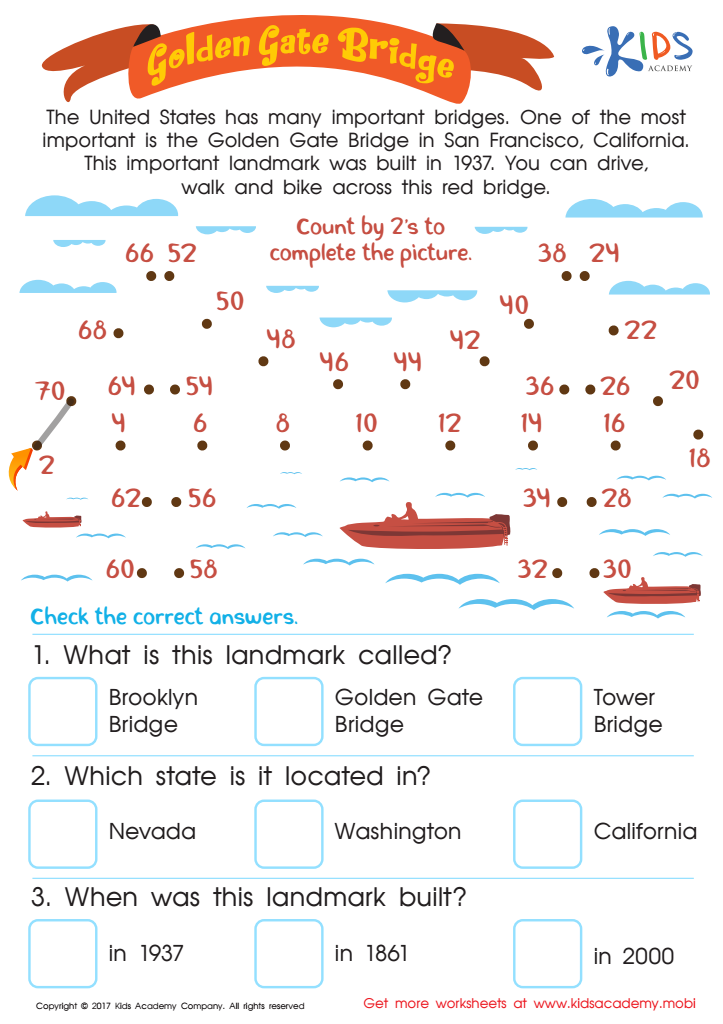
Golden Gate Bridge Worksheet
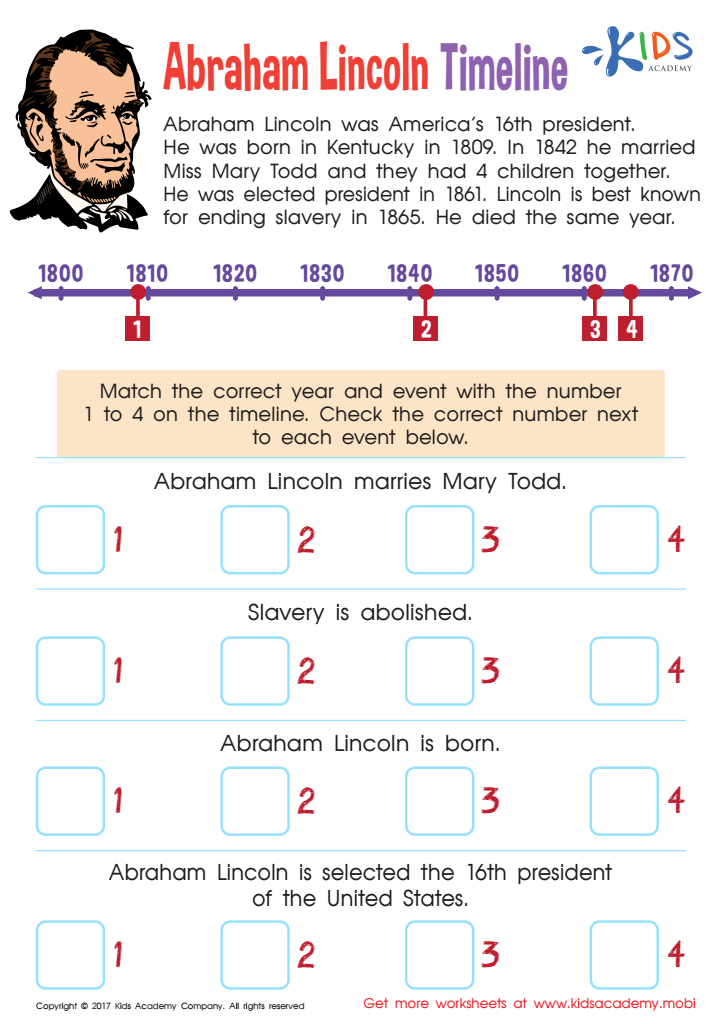
Abraham Lincoln Timeline Worksheet
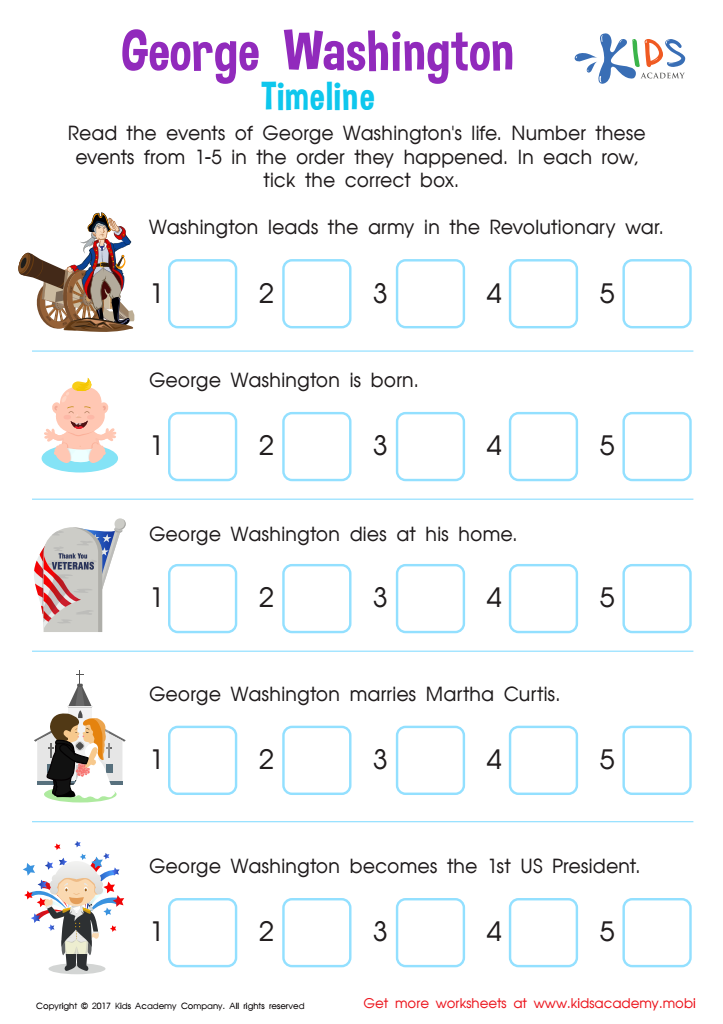
George Washington Timeline Worksheet
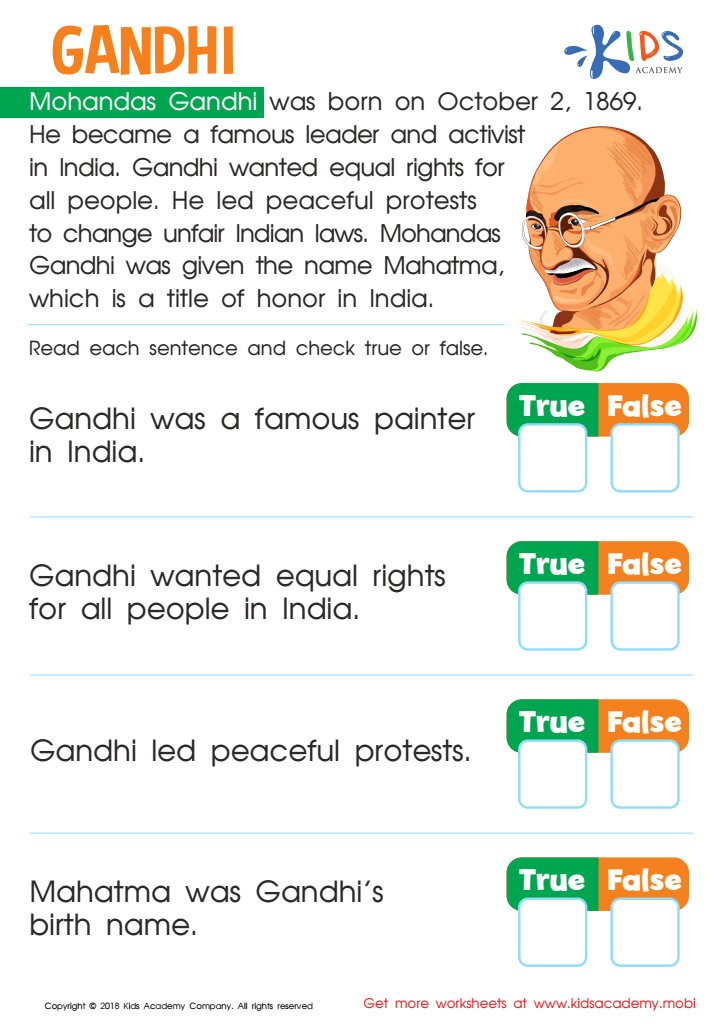
Gandhi Worksheet
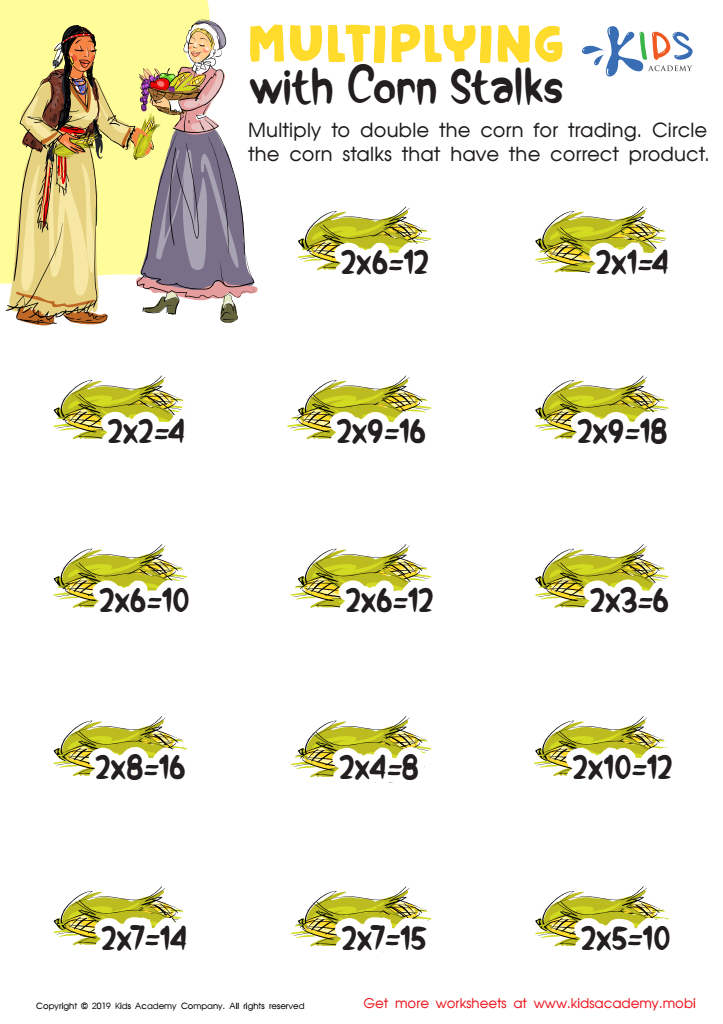
Multiplying With Corn Stalks Worksheet
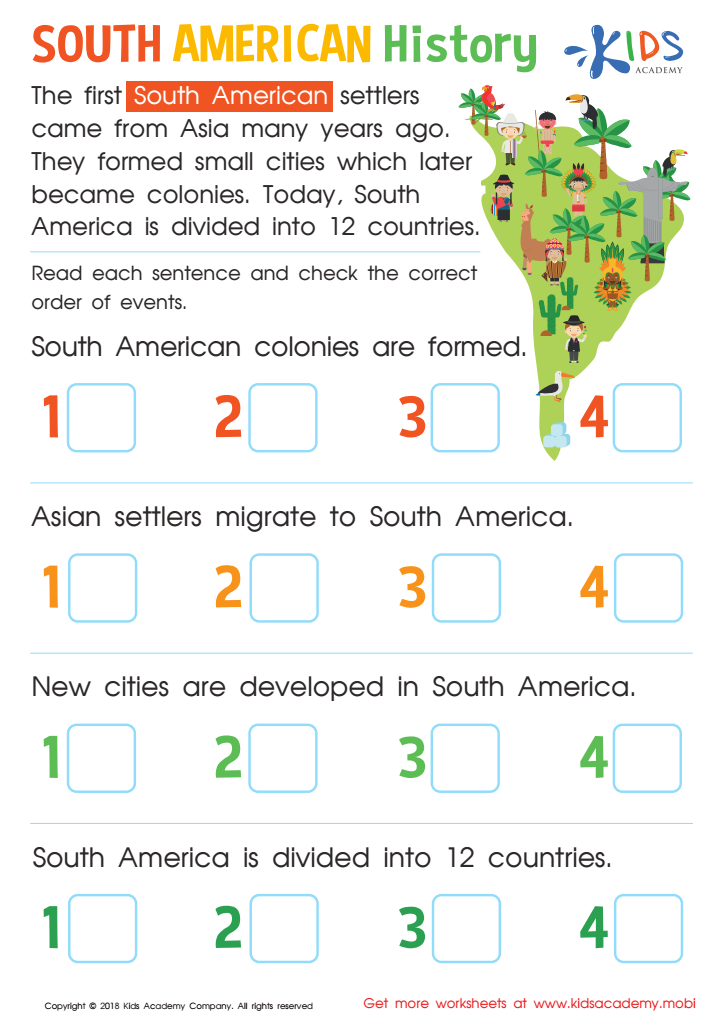
South American History Worksheet
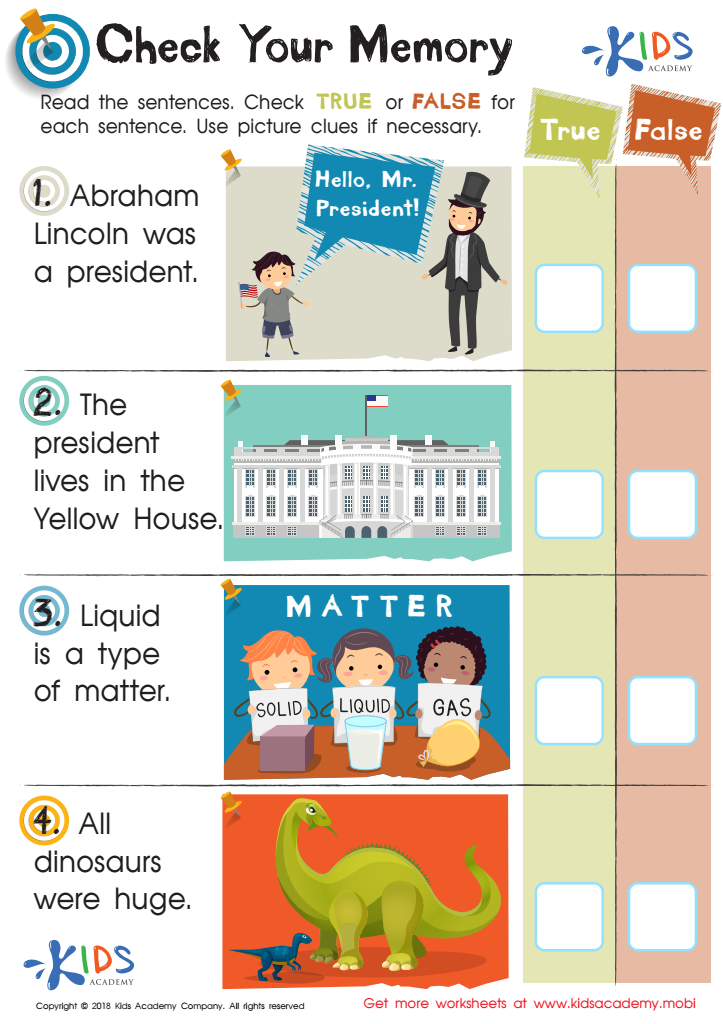
Check Memory Worksheet
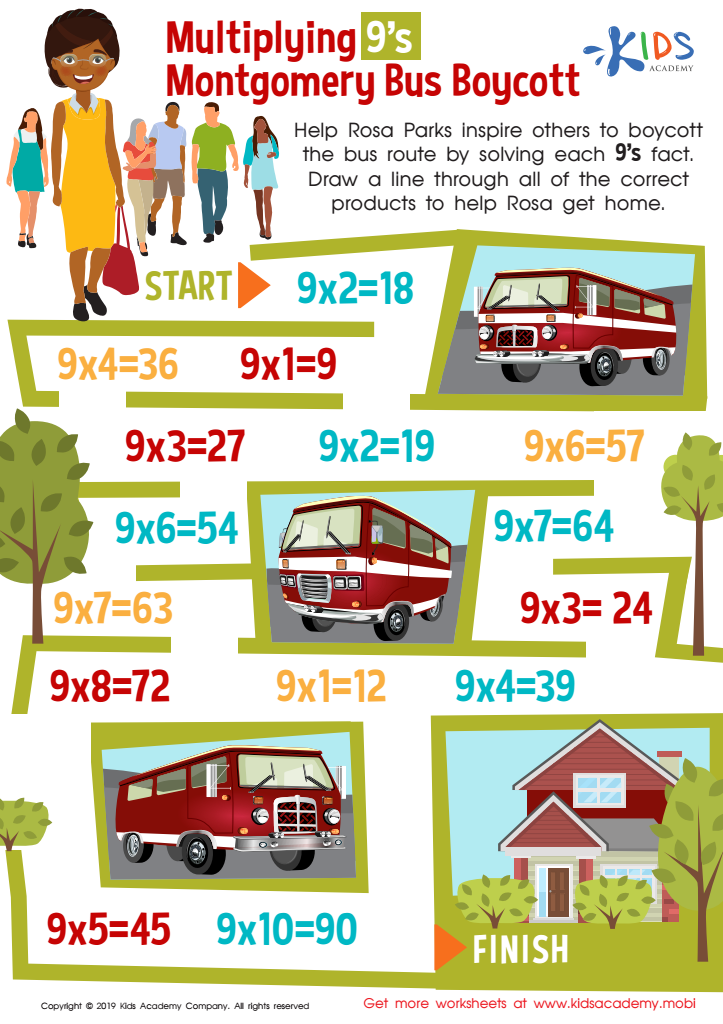
Multiplying 9’s Montgomery Bus Boycott Worksheet







.jpg)
Teaching history to children aged 6-8 is pivotal for various reasons. First, history helps them understand the world around them by showing them how past events have shaped today's society. By learning about different cultures, significant leaders, and important milestones, children can develop a broader perspective and appreciation for diversity.
Second, history lessons foster critical thinking skills. When exploring why certain events happened and their outcomes, children begin to think analytically, asking questions and seeking evidence. These skills are fundamental for their future academic and real-world problem-solving abilities.
Additionally, history can instill a sense of identity and belonging. Stories from the past can make children feel connected to their family heritage and cultural background, strengthening their sense of self-worth and community.
History also nurtures good citizenship. By understanding the triumphs and mistakes of the past, children learn valuable life lessons and the importance of making informed decisions. They become more conscious of their roles and responsibilities in society.
Finally, history lessons can be engaging and fun! Through storytelling, interactive activities, and field trips, history comes alive and enriches young minds, keeping their curiosity and imagination active.
So, instilling an appreciation for history at an early age sets the foundation for well-rounded, empathetic, and knowledgeable individuals.








