Silent Vowels Worksheets for Ages 6-9
5 filtered results
-
From - To
Discover our engaging Silent Vowels Worksheets designed for children ages 6-9! These printable resources are perfect for helping young learners identify and understand silent vowels in words. With a variety of activities, children can practice reading, writing, and phonics skills in a fun and interactive manner. Our worksheets incorporate colorful visuals and friendly characters, making learning enjoyable. These materials not only enhance vocabulary but also boost confidence as children master the concept of silent vowels. Explore our collection and support your child's literacy journey today! Ideal for parents and teachers seeking effective tools for skill development. Printable and ready to use!
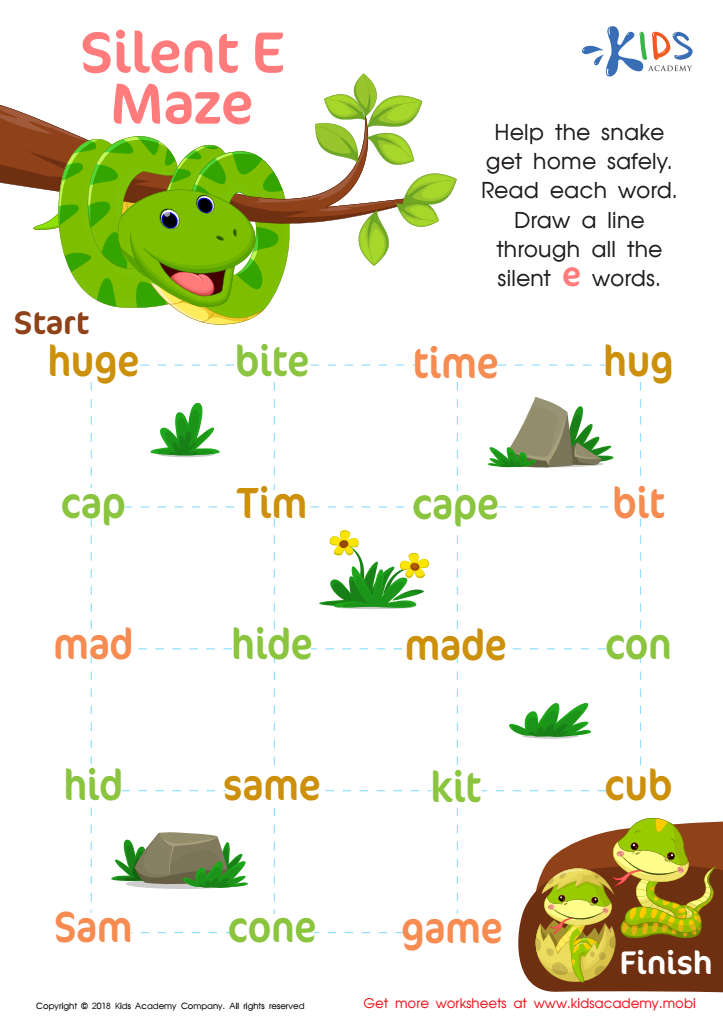
Silent E Maze Worksheet
 Assign to My Students
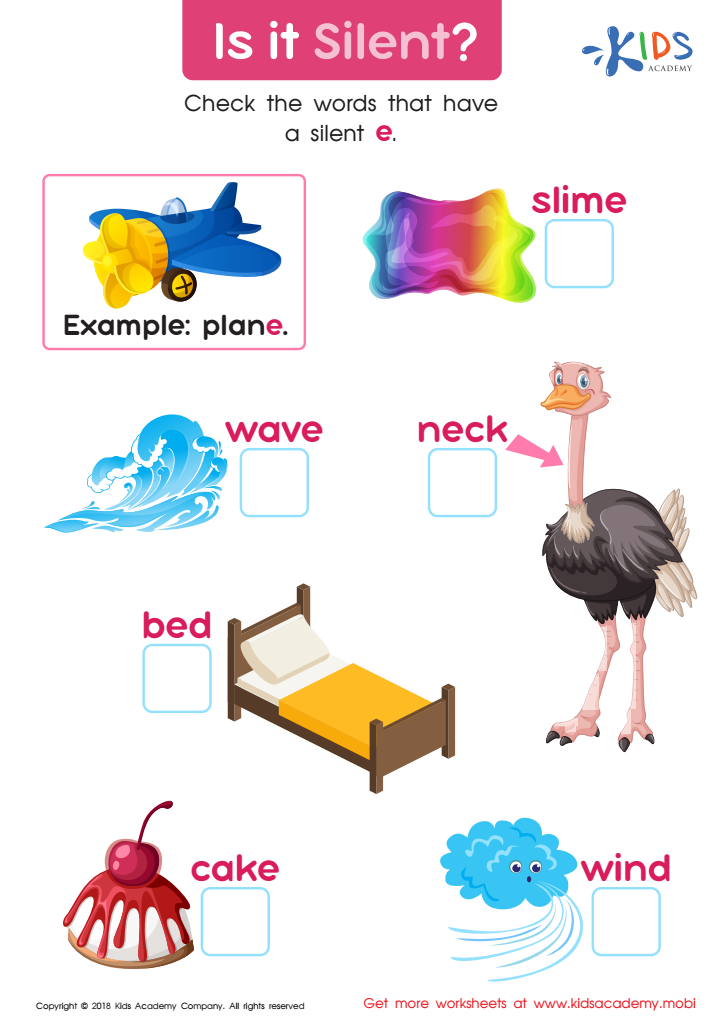
Is It Silent? Worksheet
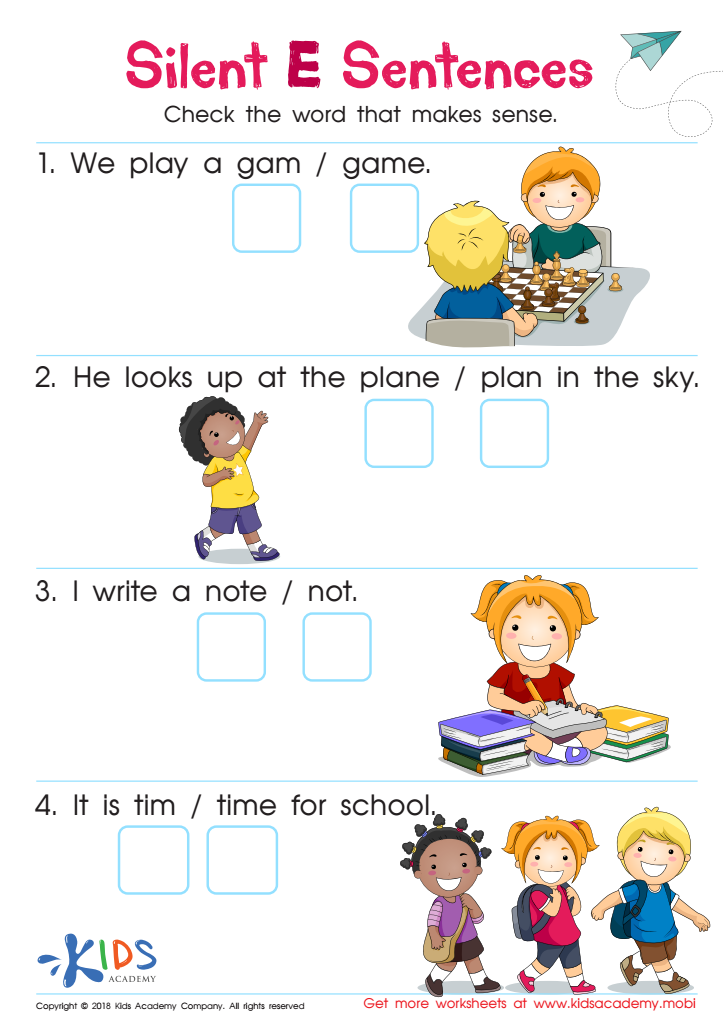
Silent E Sentences Worksheet
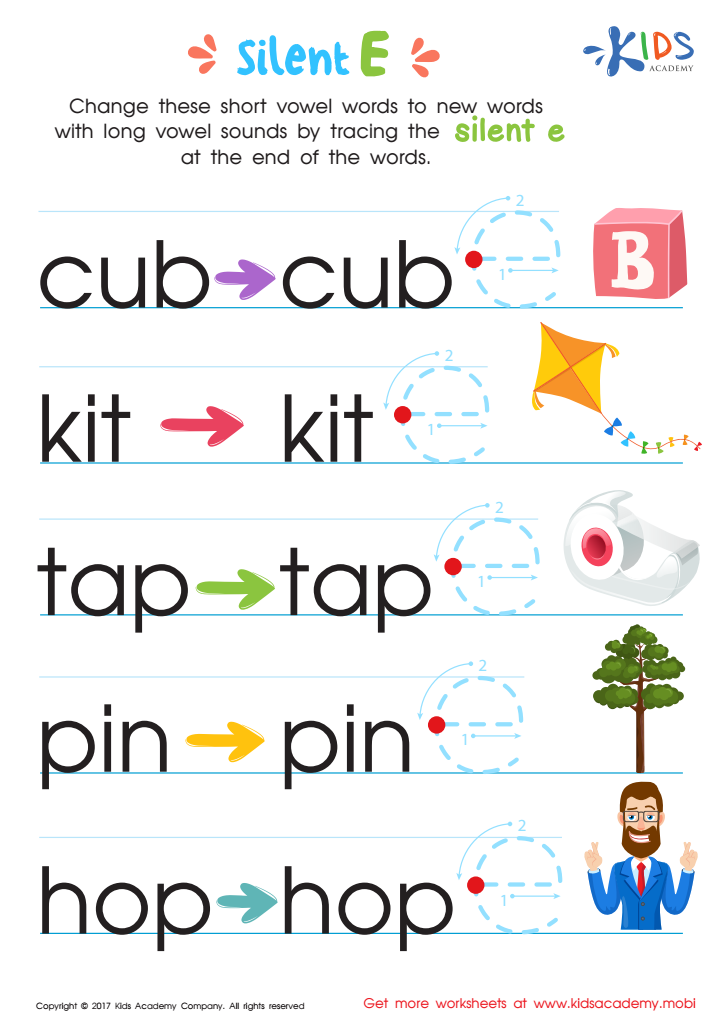
Silent E Words Worksheet
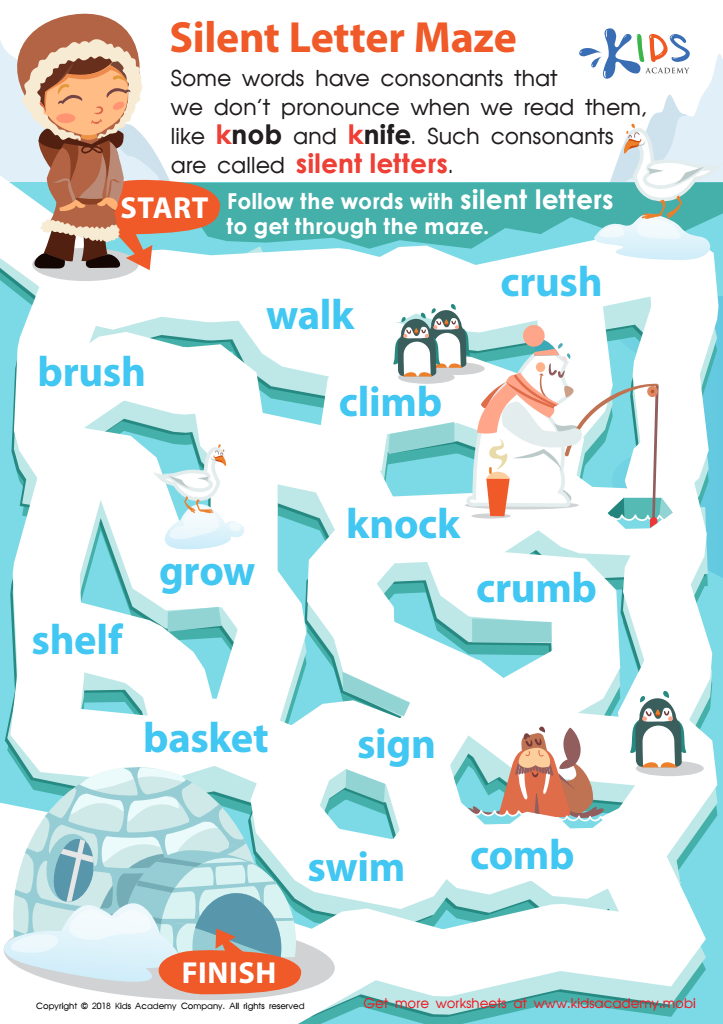
Silent Letter Maze Worksheet


Silent vowels are integral to early literacy and phonics, and understanding them is vital for children aged 6-9. As students begin to read complex words, awareness of silent vowels enhances their ability to decode and pronounce words accurately. For example, in words like "hate" or "pale", the silent "e" influences the preceding vowel's pronunciation, creating the difference between "hat" and "hate".
Furthermore, mastering silent vowels assists with spelling. When children understand that certain letters are often silent in words, they can apply this knowledge to correctly spell them, boosting their writing skills. Consistent practice and recognition of silent vowels bolster a child’s reading fluency, enabling them to focus on overall comprehension rather than stumbling over unfamiliar words.
Teachers and parents can support this learning by incorporating fun activities like word games, silent vowel puzzles, and reading exercises that emphasize these concepts. Engaging in discussions about words and their spellings also fosters a child's language development. Overall, an early grasp of silent vowels not only promotes reading and writing proficiency but also establishes a solid linguistic foundation that will benefit children in their academic journey.