Upper & Lowercase Letters Worksheets for Ages 6-9 - Page 3
49 filtered results
-
From - To
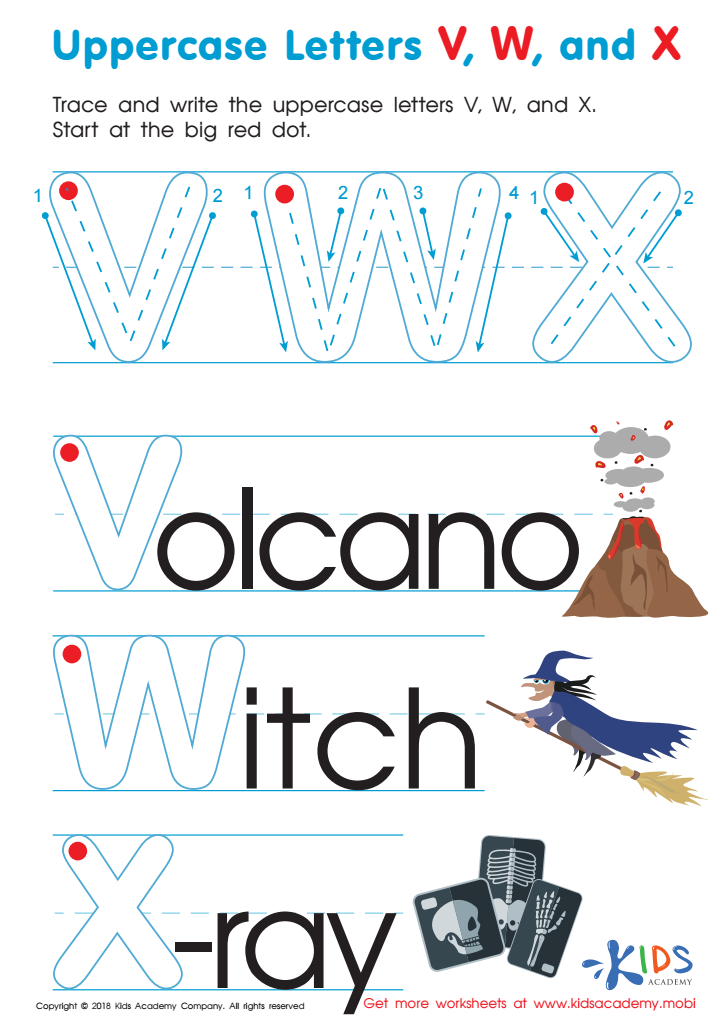
Uppercase Letters V, W, and X Worksheet
 Assign to My Students







Understanding uppercase and lowercase letters is fundamental for children aged 6 to 9 as they develop their literacy skills. Mastery of these letter forms is not just a matter of writing; it influences reading comprehension and communication effectiveness. Uppercase letters often signify beginnings of sentences, proper nouns, or titles, thus allowing children to grasp context and meaning in the text.
For parents and teachers, focusing on this aspect of literacy can greatly enhance a child's ability to construct sentences and convey ideas coherently. When children learn to differentiate between uppercase and lowercase letters, they become more confident writers, leading to improved self-expression and communication skills. Learning these forms also lays the groundwork for future language development, as children encounter different styles of writing in books and other materials.
Additionally, recognizing letters in both forms contributes to phonics skills, improving decoding abilities essential for reading fluency. Watching a child engage with texts that celebrate the correct use of these letters fosters a love for reading and writing. Ultimately, emphasizing uppercase and lowercase letters cultivates essential literacy foundations, making it a key focus for both parents and educators in the critical learning phase of ages 6-9.







