Time Worksheets for Ages 6-9 - Page 2
25 filtered results
-
From - To
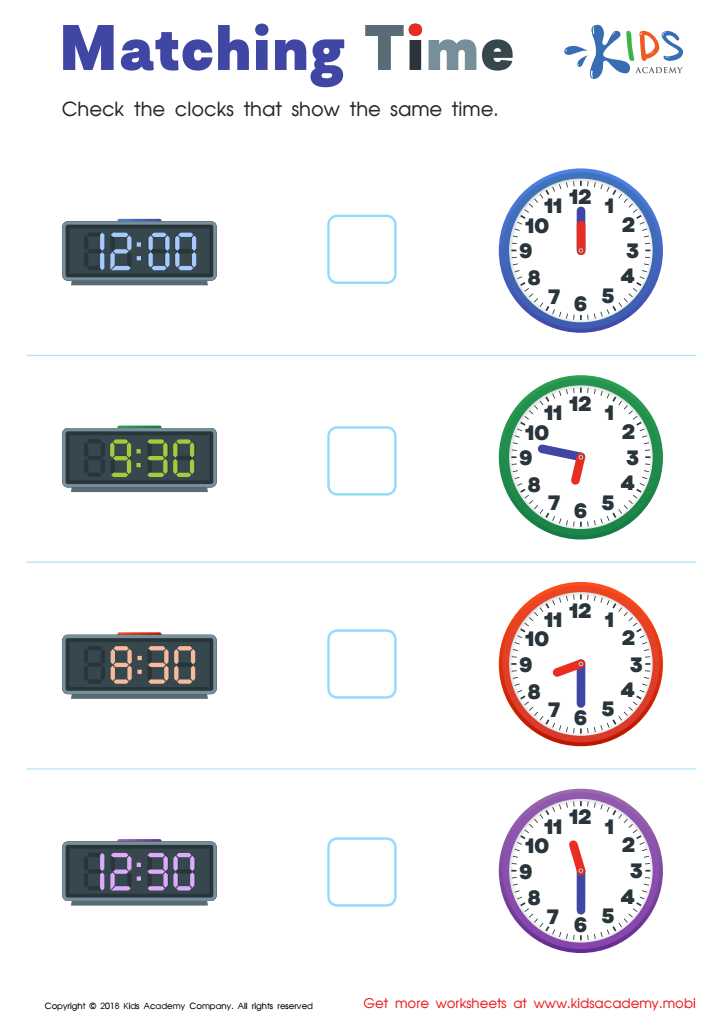
Matching Time Worksheet
 Assign to My Students








Understanding the concept of time is crucial for children aged 6-9 as it lays the foundation for essential life skills and cognitive development. At this stage, kids transition from perceiving time ambiguously to understanding it more concretely. Learning how to tell time fosters independence; children start to grasp daily routines, manage responsibilities, and plan activities. This skill is vital for enhancing time management abilities—they learn when to start and end tasks, which boosts productivity and reduces procrastination.
Academic achievement also hinges on grasping time concepts. Students work with schedules and deadlines, and timing in subjects like arithmetic and reading comprehension. Furthermore, knowing how to tell time helps children experience a sense of accomplishment and builds confidence.
From a social perspective, understanding time fosters punctuality and reliability, earning them trust and respect in relationships. Playdates, school, and family routines run more smoothly when children can adhere to specified times.
Emotional well-being is another aspect; the predictability of schedules and routines often provides a sense of security. This predictability helps minimize stress and anxiety, promoting a happier, more focused child.
Overall, parents and teachers should prioritize teaching time, as it equips children with skills essential for personal growth, academic success, social interactions, and emotional health.








