Filters

144 filtered results

Clear all filters
Favorites
With answer key
Interactive

144 filtered results

Difficulty Level

Grade


Subject

    Check out this FREE Trial Lesson on Reading Fiction for age 6-9!

    Identify Characters, Settings, and Major Events in a Story

    Favorites
    With answer key
    Interactive
    • 6-9
    • Reading Fiction
    Authors and Illustrators Race Worksheet
    Authors and Illustrators Race Worksheet

    Authors and Illustrators Race Worksheet

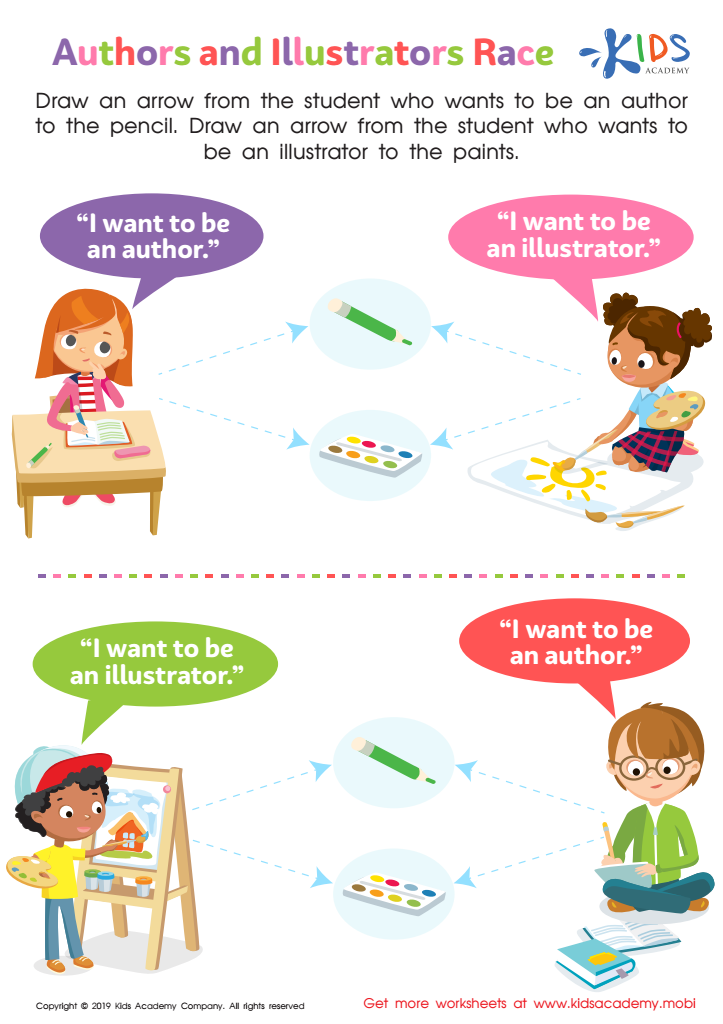
    Help your child learn about the author and illustrator of a book with this free and colorful worksheet. They'll trace lines to pick the tools used by each and understand the difference between them. It's a great way to introduce fundamental concepts of reading.
    Authors and Illustrators Race Worksheet
    Worksheet
    Which Is It? Worksheet
    Which Is It? Worksheet

    Which Is It? Worksheet

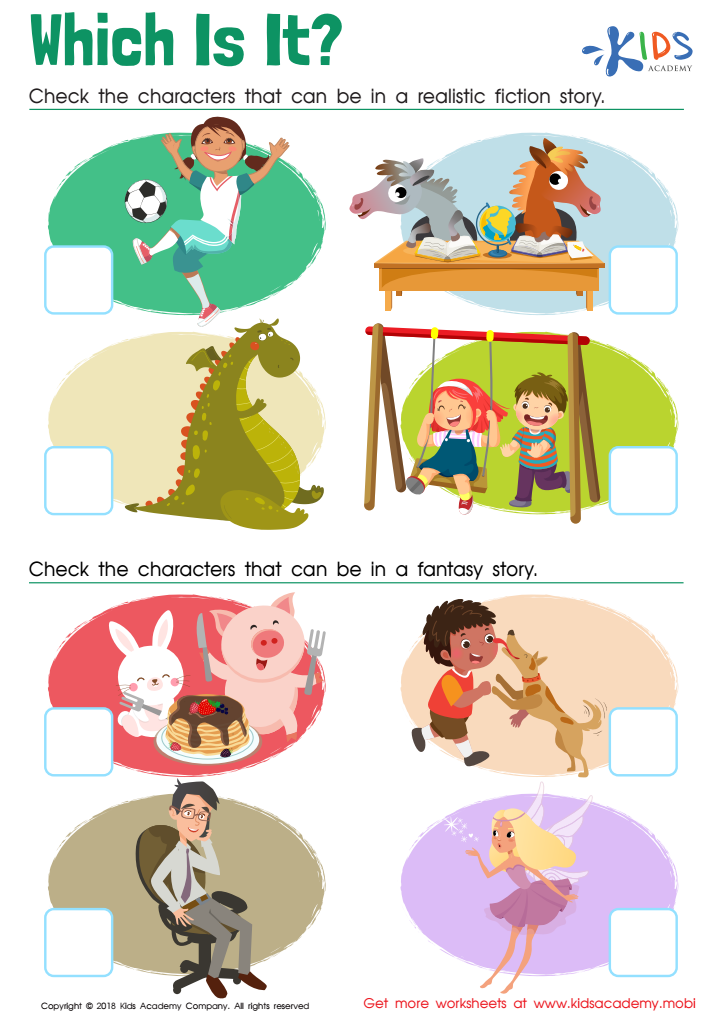
    This colorful worksheet helps young readers identify elements of fact and fiction using fun picture clues. They can check off characters who exist in realistic fiction stories, which makes learning the difference between the two genres fun and engaging.
    Which Is It? Worksheet
    Worksheet
    Antonyms: Prometheus Worksheet
    Antonyms: Prometheus Worksheet

    Antonyms: Prometheus Worksheet

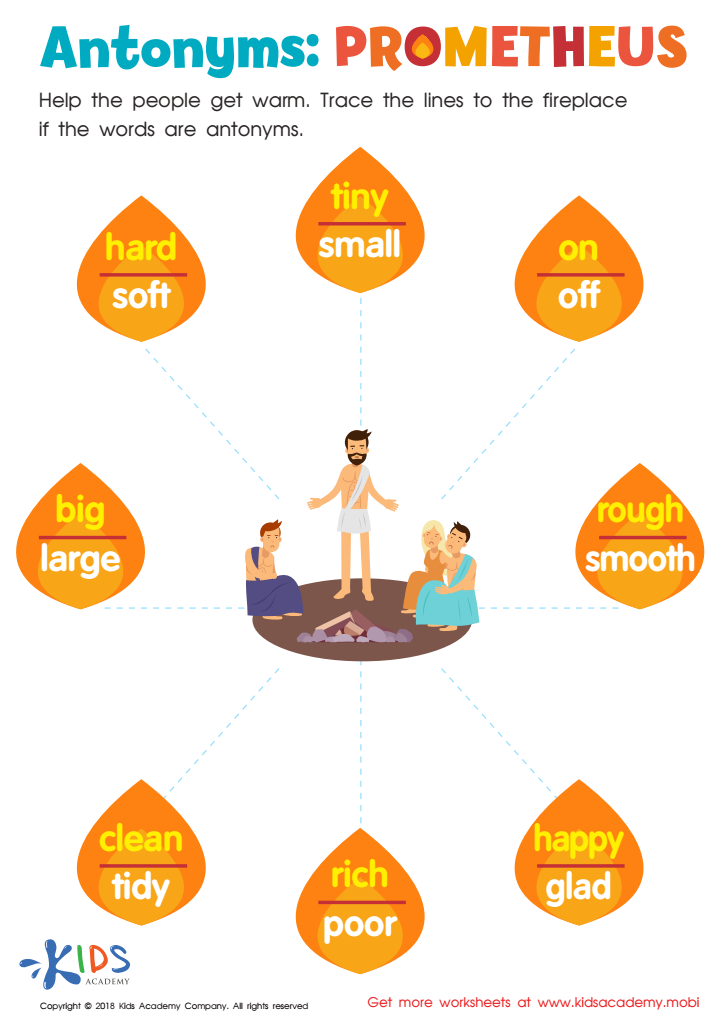
    Antonyms are words with opposite meanings to another. For example, the antonyms of 'good' are 'bad', 'poor' and 'wicked'. Ask your child to give you antonyms for 'Prometheus', which relates to fire. Invite your kids to trace the lines to the fireplace if the words are antonyms, helping the people in the tracing sheet get warm.
    Antonyms: Prometheus Worksheet
    Worksheet
    Three Little Pigs Questions Worksheet
    Three Little Pigs Questions Worksheet

    Three Little Pigs Questions Worksheet

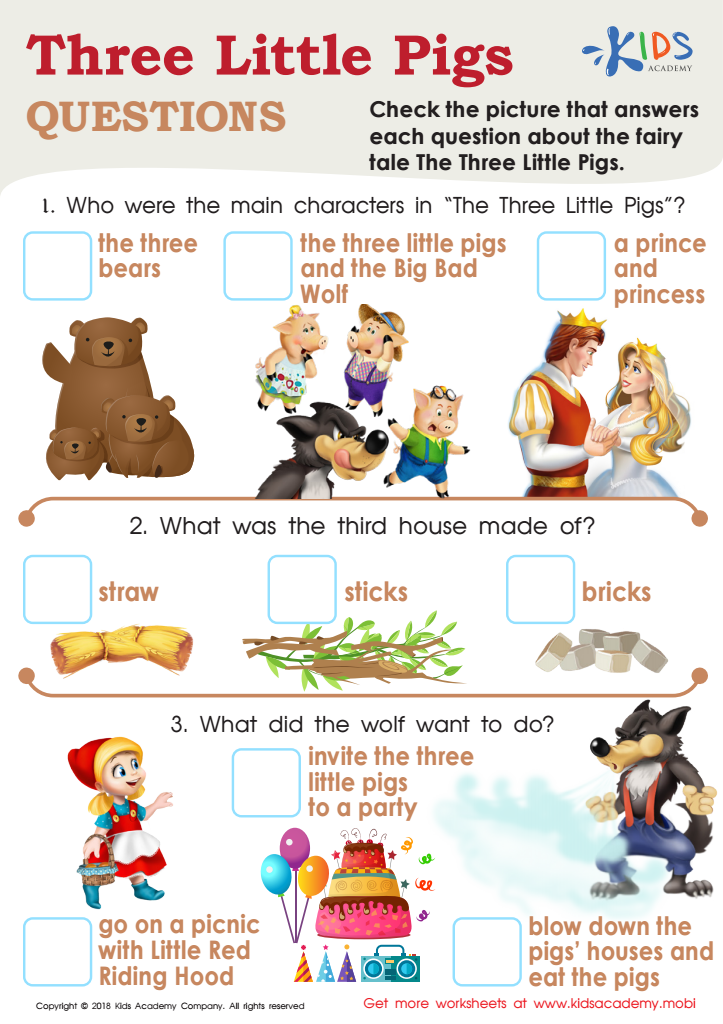
    Does your kid love bedtime stories? Test their classic fairytale knowledge with this worksheet! If they mention The Three Little Pigs, they're in luck - this pdf has them answering questions based off the classic fairytale. They'll check the picture that answers each question about the story. Is their fairytale knowledge up to scratch?
    Three Little Pigs Questions Worksheet
    Worksheet
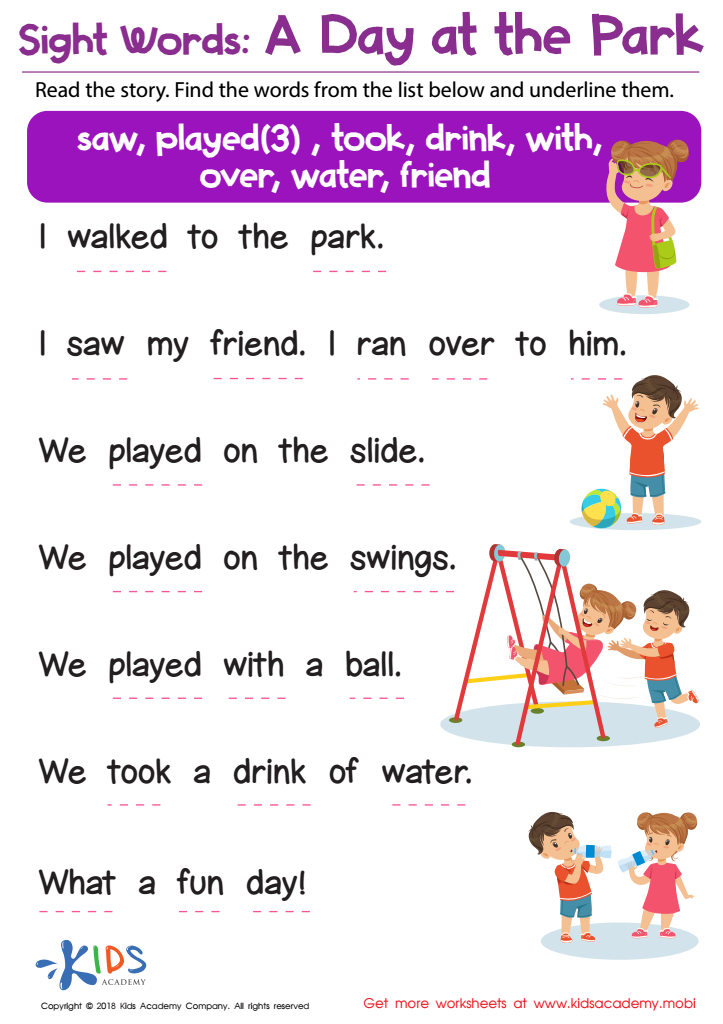
    Sight Words: A Day at the Park Worksheet
    Sight Words: A Day at the Park Worksheet

    Sight Words: A Day at the Park Worksheet

    This worksheet offers kids practice reading sight words in a story. With picture clues and repetitive wording, they'll work with words that can't be sounded out to reinforce their learning. This is an important step in the reading process that helps kids become more confident readers.
    Sight Words: A Day at the Park Worksheet
    Worksheet
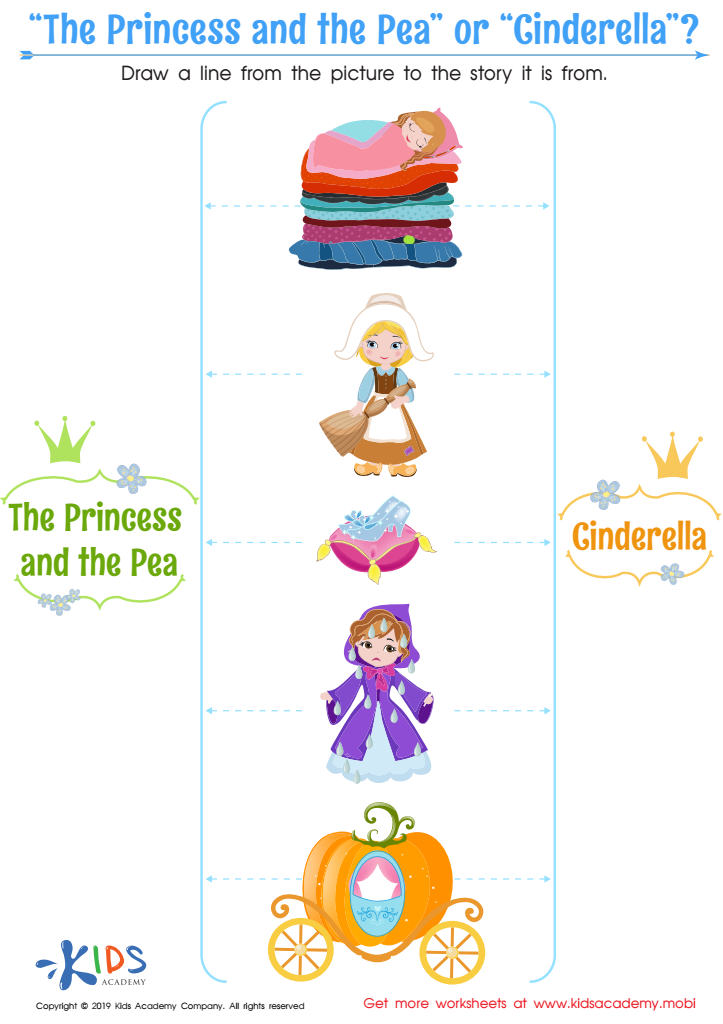
    “The Princess and the Pea” or “Cinderella” Worksheet
    “The Princess and the Pea” or “Cinderella” Worksheet

    “The Princess and the Pea” or “Cinderella” Worksheet

    Help your child identify the characters and objects from both the Princess and the Pea and Cinderella. Ask them to draw a line from the pictures to the story it's from on the tracing sheet. Encourage them to tell you the similarities between the two stories. Enjoy the tale with your daughter and watch her be fascinated by these two classic children's stories.
    “The Princess and the Pea” or “Cinderella” Worksheet
    Worksheet
    Кhyme in poetry worksheet
    Кhyme in poetry worksheet

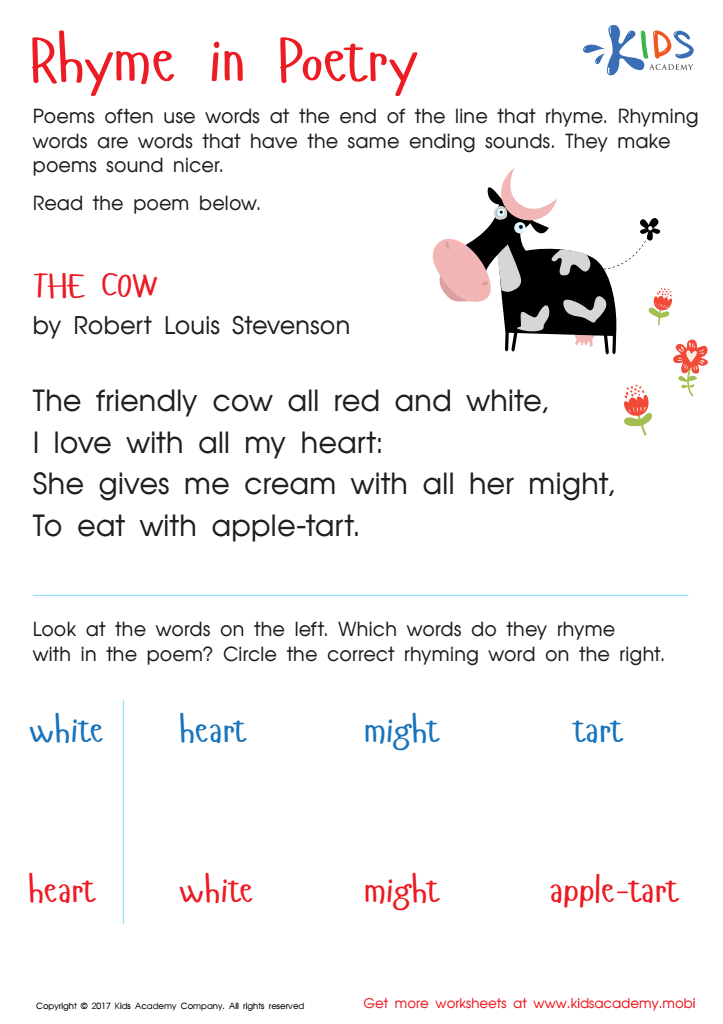
    Rhyme In Poetry Worksheet

    Introduce your child to poetic devices and help build their ear for poetry with Robert Louis Stevenson's adorable poem about a cow! Through this rhyming worksheet, your child will gain an appreciation for poetry and language.
    Rhyme In Poetry Worksheet
    Worksheet
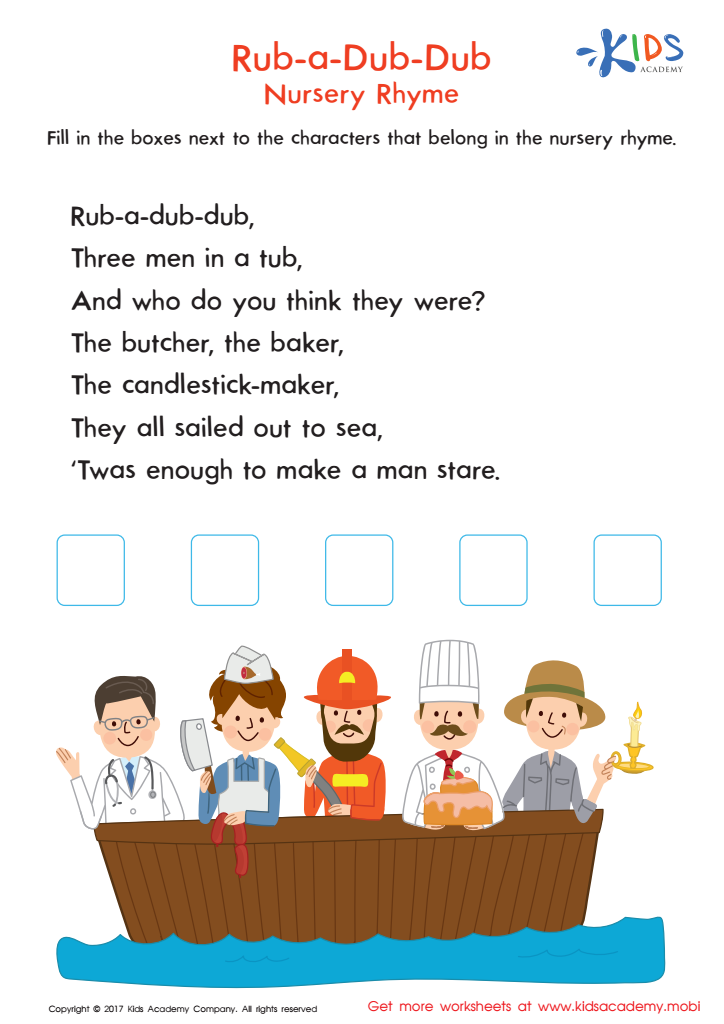
    Printable nursery rhyme: Rub a Dub Dub
    Printable nursery rhyme: Rub a Dub Dub

    Rub a Dub Dub Printable

    Delight your child and foster early reading skills with this printable nursery rhyme, Rub a Dub Dub! Let your little reader select the three men in the tub and practice important reading comprehension skills.
    Rub a Dub Dub Printable
    Worksheet
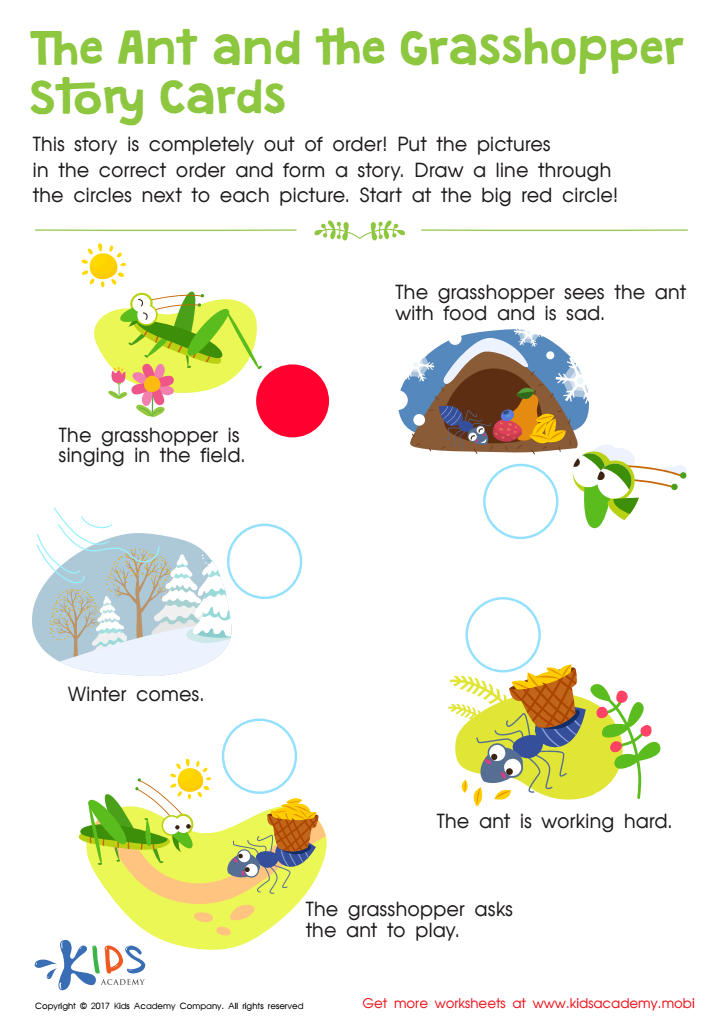
    The Ant and the Grasshopper worksheet PDF
    The Ant and the Grasshopper worksheet PDF

    The Ant and The Grasshopper Worksheet
    This worksheet uses the beloved childhood fable "The Ant and the Grasshopper" to teach your child about plot and order of events. Your child must read the events and put them in the right order. Once completed, review the story with your child to ensure its accuracy.
    The Ant and The Grasshopper Worksheet
    Worksheet
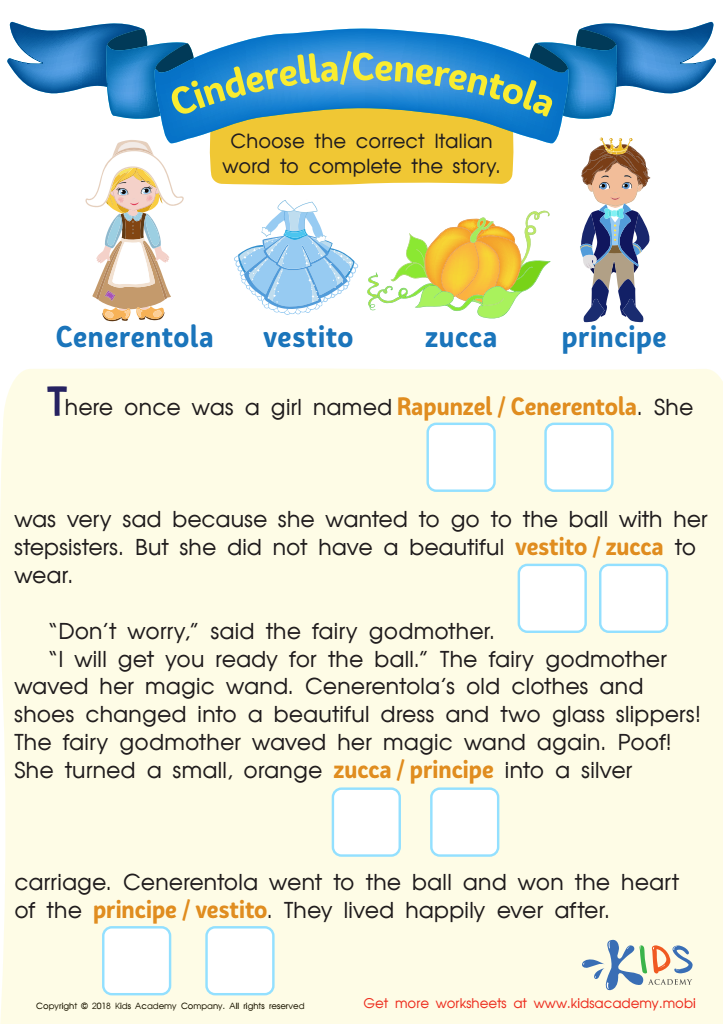
    Cinderella / Cenerentola Worksheet
    Cinderella / Cenerentola Worksheet

    Cinderella / Cenerentola Worksheet

    Children will love this fairytale about a princess trying to get to the royal ball. With colorful images and context clues, they'll learn Italian words without even realizing it. They'll fill in the correct boxes and help Cenerentola get to her happily-ever after. This free worksheet will delight and teach at once!
    Cinderella / Cenerentola Worksheet
    Worksheet
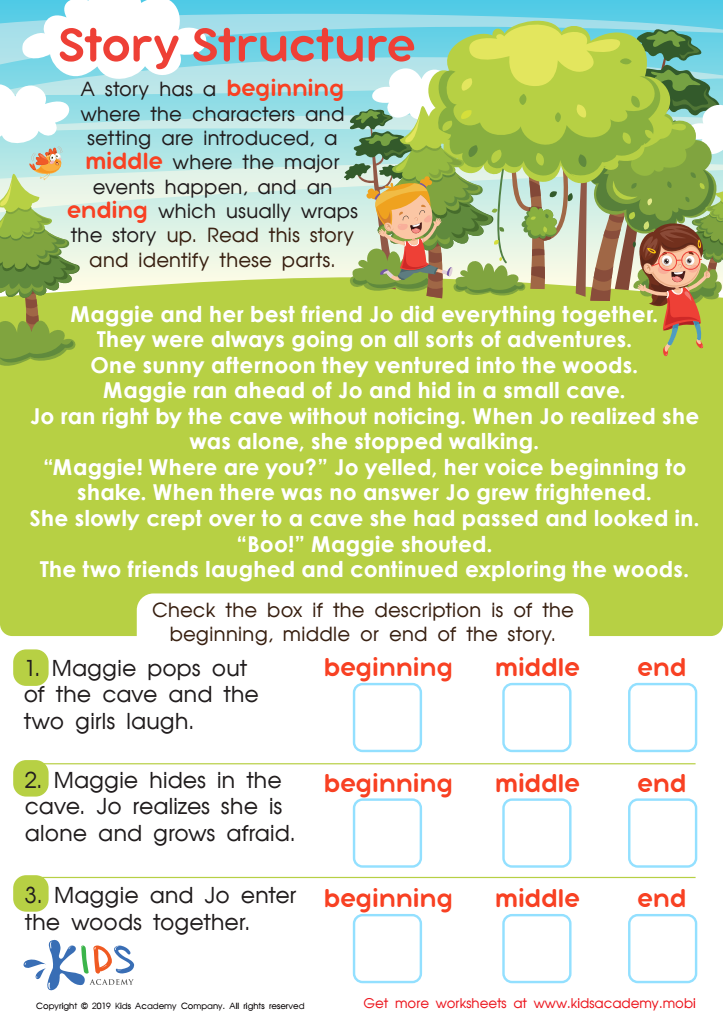
    Story Structure Worksheet
    Story Structure Worksheet

    Story Structure Worksheet

    Help your students read and identify the parts of the story in this worksheet: the beginning (characters and setting), middle (major events), and ending (events are resolved). Show them how to structure a story for clarity.
    Story Structure Worksheet
    Worksheet
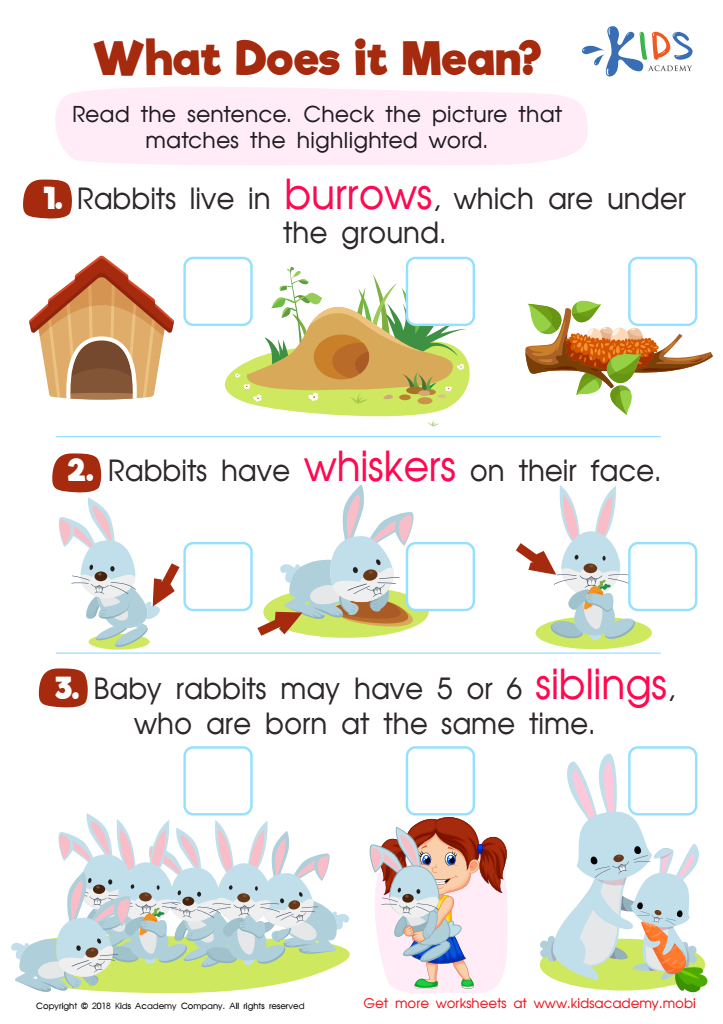
    What Does It Mean? Worksheet
    What Does It Mean? Worksheet

    What Does It Mean? Worksheet

    Teach your child to use context clues with this engaging Kids Academy worksheet. Read the sentences and find the pink-highlighted word. Use the other words in the sentence to figure out the meaning, then check the box next to the picture that represents it.
    What Does It Mean? Worksheet
    Worksheet
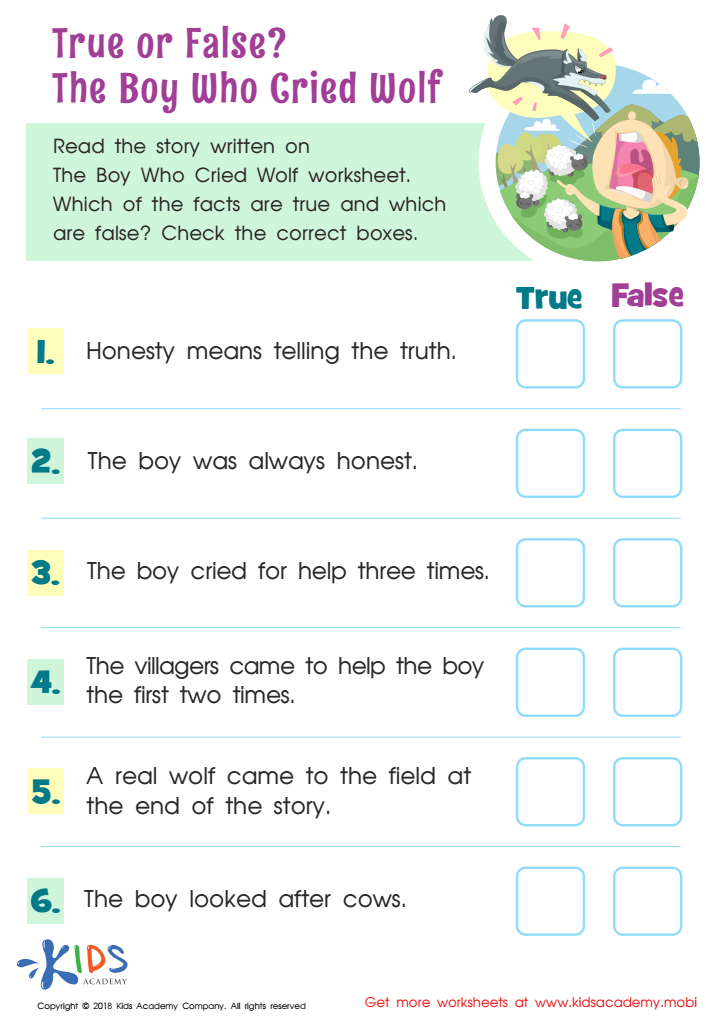
    True or False? The Boy Who Cried Wolf Worksheet
    True or False? The Boy Who Cried Wolf Worksheet

    True or False? The Boy Who Cried Wolf Worksheet

    Test students' understanding of The Boy Who Cried Wolf with this free downloadable worksheet. It contains true/false questions to assess comprehension of key events. Easy to complete, it checks students can recall facts from the story. Try it and see!
    True or False? The Boy Who Cried Wolf Worksheet
    Worksheet
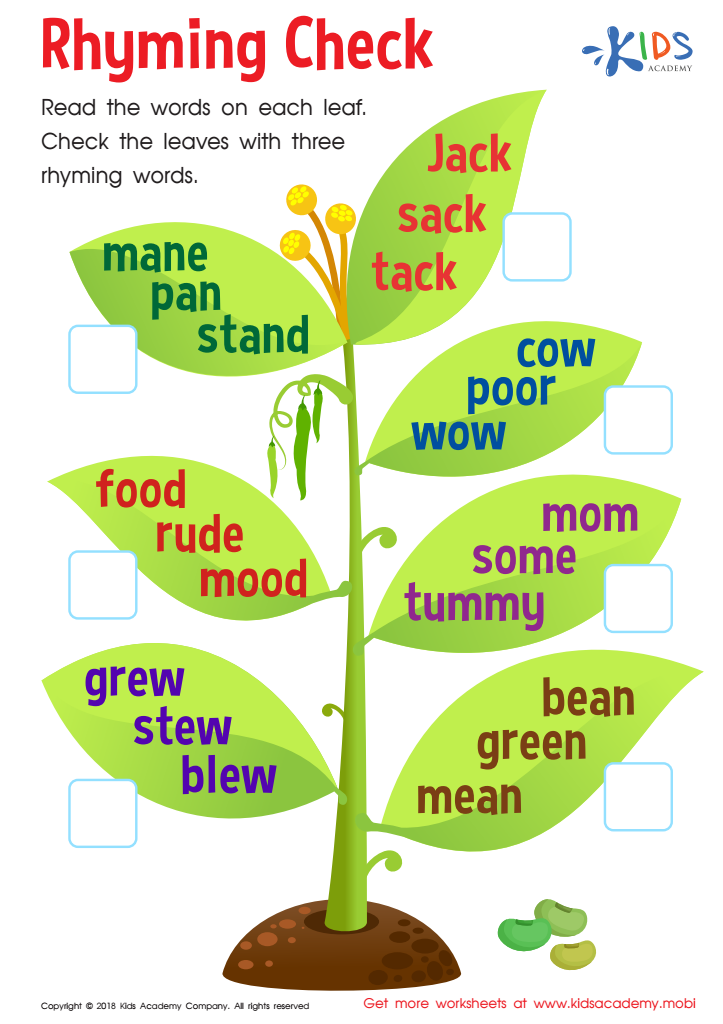
    Rhyming Check Worksheet
    Rhyming Check Worksheet

    Rhyming Check Worksheet

    Help your child read the words on each leaf of a worksheet. Make sure they know that spellings can be misleading and tricky. When finished, ask them to identify the leaves with three rhyming words. This exercise helps their pronunciation skills and encourages critical thinking.
    Rhyming Check Worksheet
    Worksheet
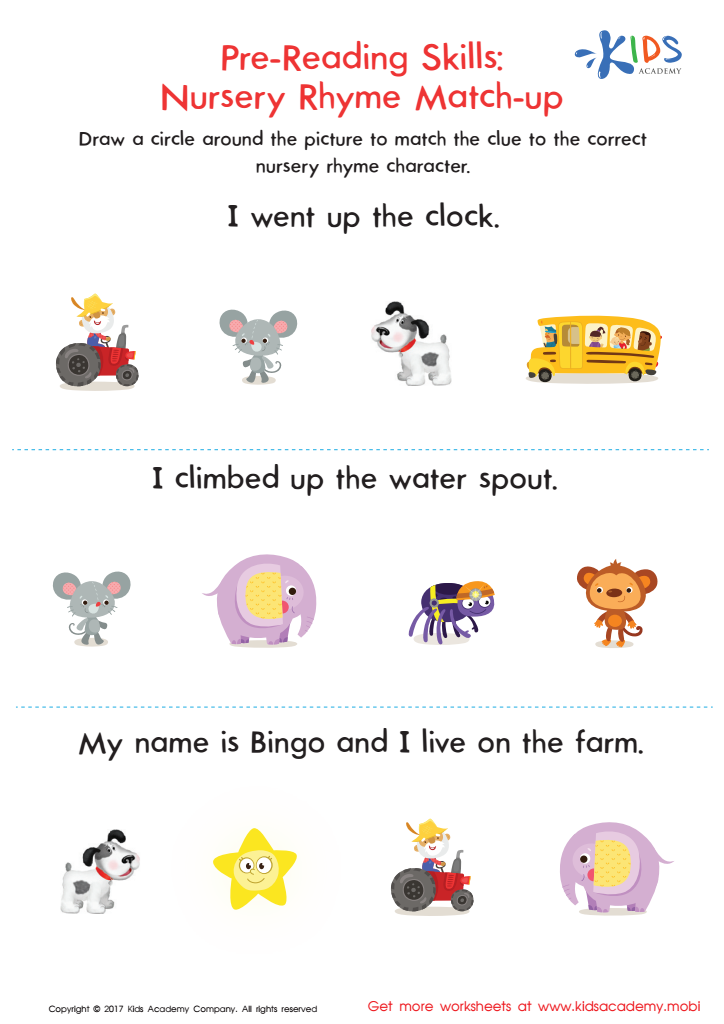
    Nursery rhyme match-up worksheet
    Nursery rhyme match-up worksheet

    Nursery Rhyme Match–Up Worksheet
    This worksheet helps kids build pre-reading skills using stories they know and love! By connecting with prior knowledge, kids can develop ideas about characters and set the stage for reading strategies.
    Nursery Rhyme Match–Up Worksheet
    Worksheet
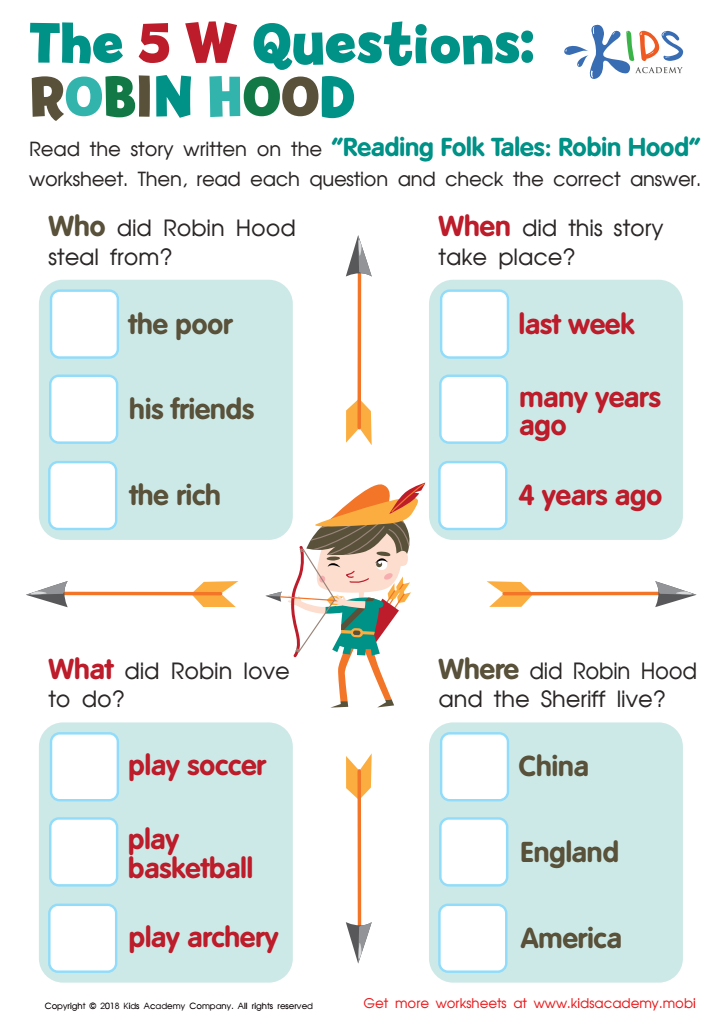
    The 5 W Questions: Robin Hood Worksheet
    The 5 W Questions: Robin Hood Worksheet

    The 5 W Questions: Robin Hood Worksheet

    Before embarking on this Robin Hood adventure, ensure your child reads and comprehends the 'Reading Folk Tales: Robin Hood' worksheet. Have them consider the story's lessons, and observe the details. Read the questions and help your kids select the correct answers.
    The 5 W Questions: Robin Hood Worksheet
    Worksheet
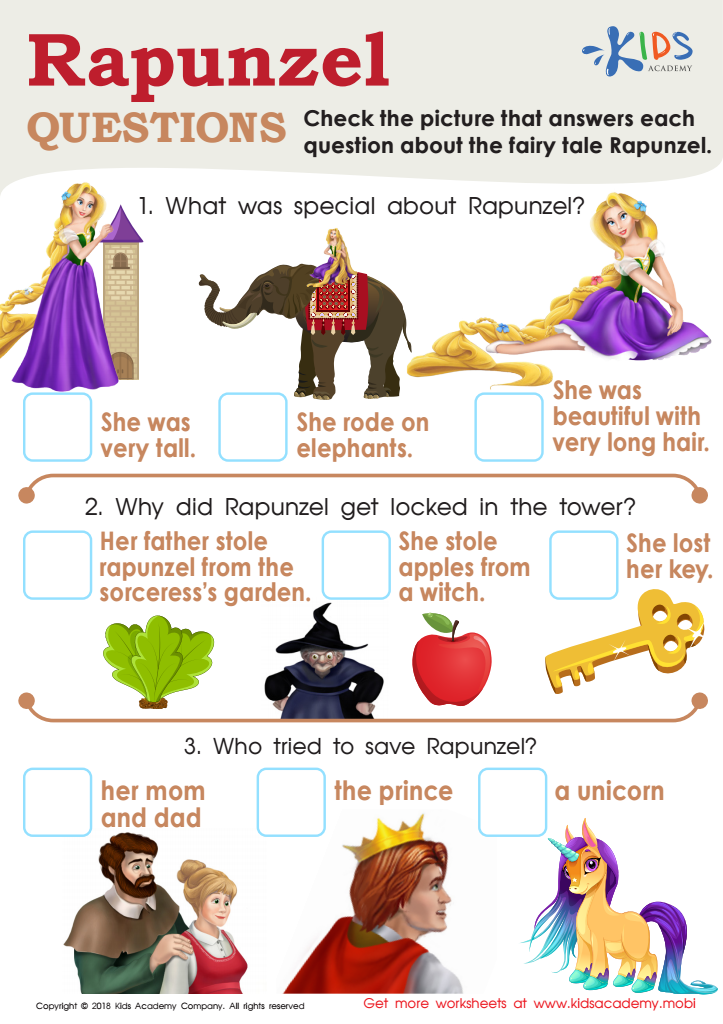
    Rapunzel Questions Worksheet
    Rapunzel Questions Worksheet

    Rapunzel Questions Worksheet

    Read the fairy tale 'Rapunzel' to your kids. For those who really enjoyed it, read it twice and ask questions to test their understanding. Then, get them to check the pictures related to the questions to test their comprehension of the story.
    Rapunzel Questions Worksheet
    Worksheet
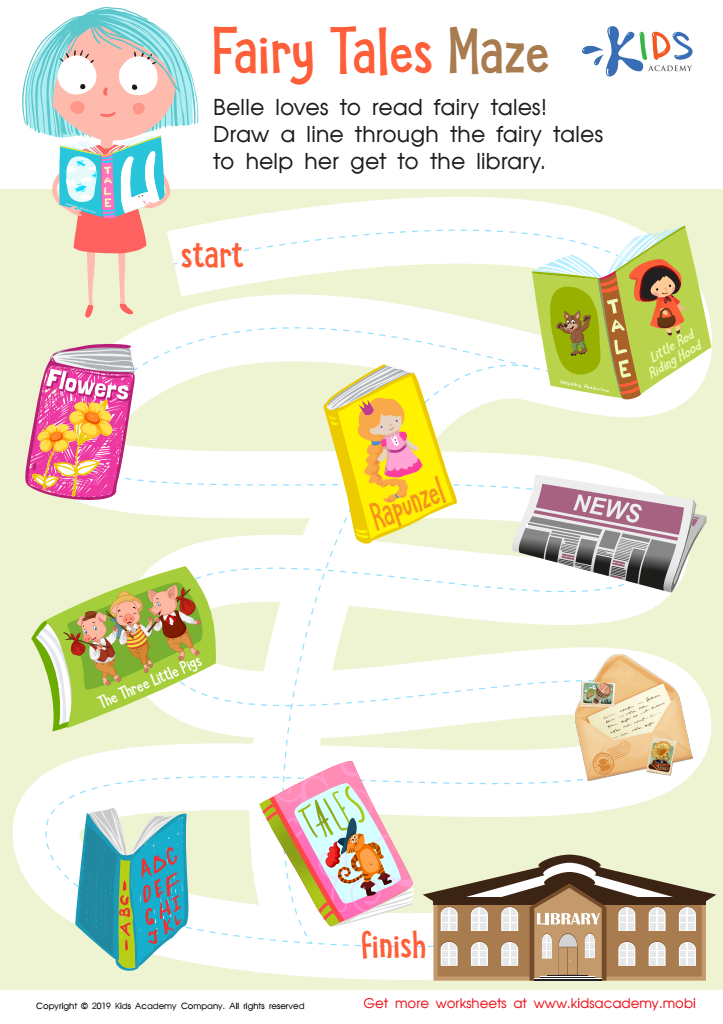
    Fairy Tales Maze Worksheet
    Fairy Tales Maze Worksheet

    Fairy Tales Maze Worksheet

    Kids love mazes and fairy tales, so this free worksheet is a great way to help teach young readers about familiar topics. They'll join Bella and use the traceable lines to travel through different reading genres, and find their way to the library for a nice reward!
    Fairy Tales Maze Worksheet
    Worksheet
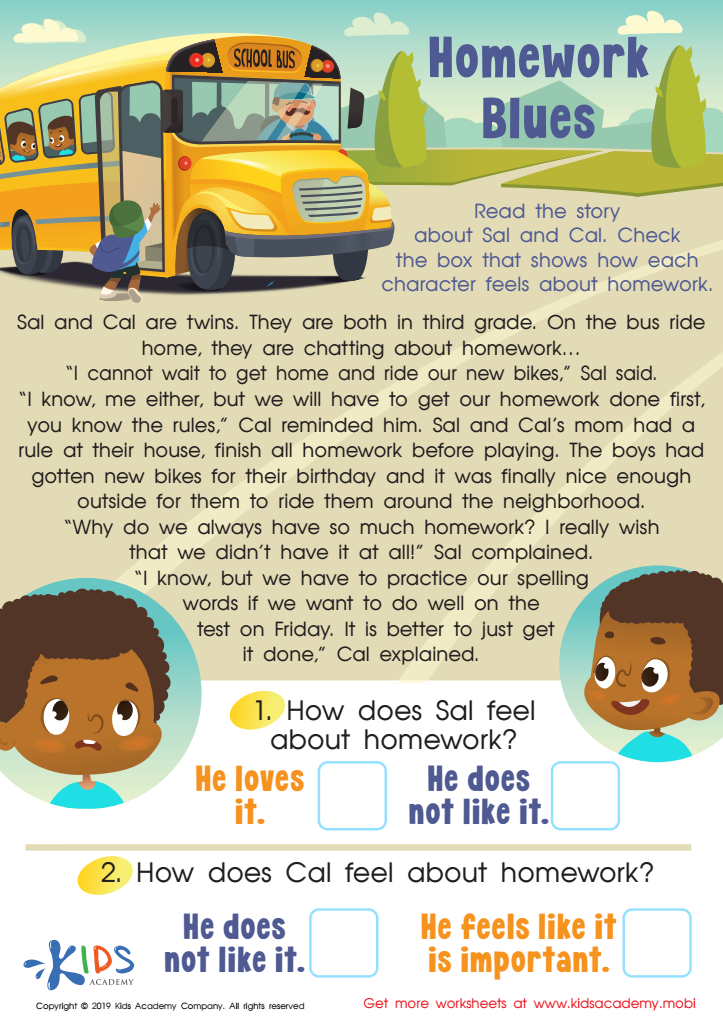
    Homework Blues Worksheet
    Homework Blues Worksheet

    Homework Blues Worksheet

    Cal and Sal don't love doing homework, just like your kids. Use this worksheet to help your children understand why homework is important. Read the passage together and then answer the questions at the bottom of the page. It's a fun way to learn together!
    Homework Blues Worksheet
    Worksheet
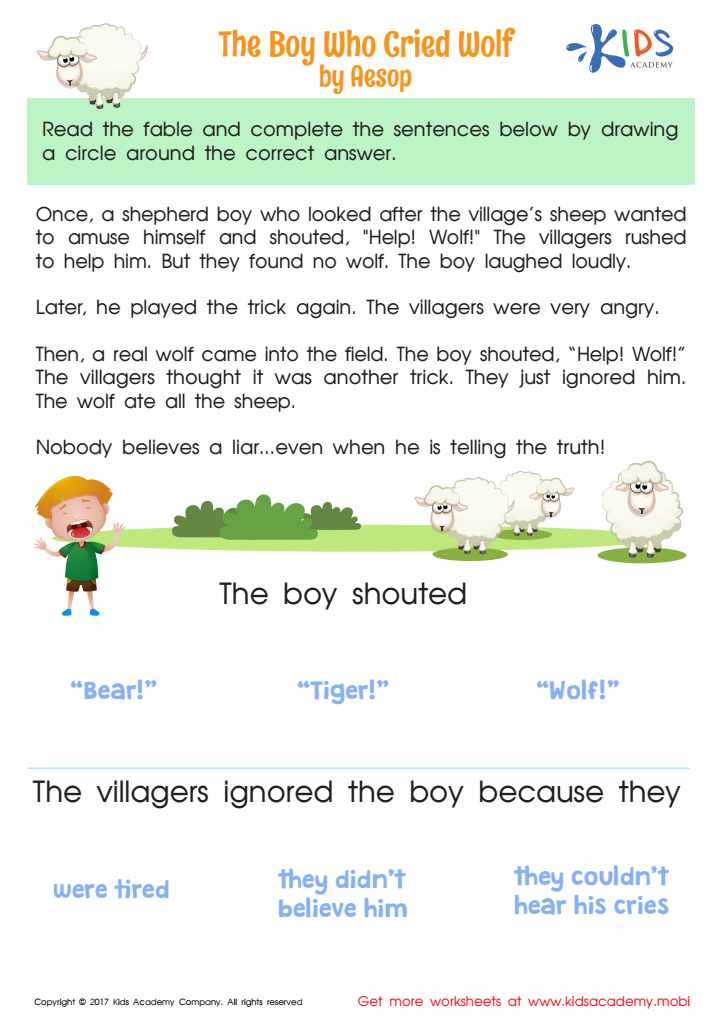
    Worksheet: The Boy Who Cried Wolf
    Worksheet: The Boy Who Cried Wolf

    The Boy Who Cried Wolf Worksheet

    Test your child's reading comprehension with The Boy Who Cried Wolf worksheet. Read the fable, then answer the questions. Use the text to help your child check their answers are correct. Boost reading skills in a fun, interactive way!
    The Boy Who Cried Wolf Worksheet
    Worksheet
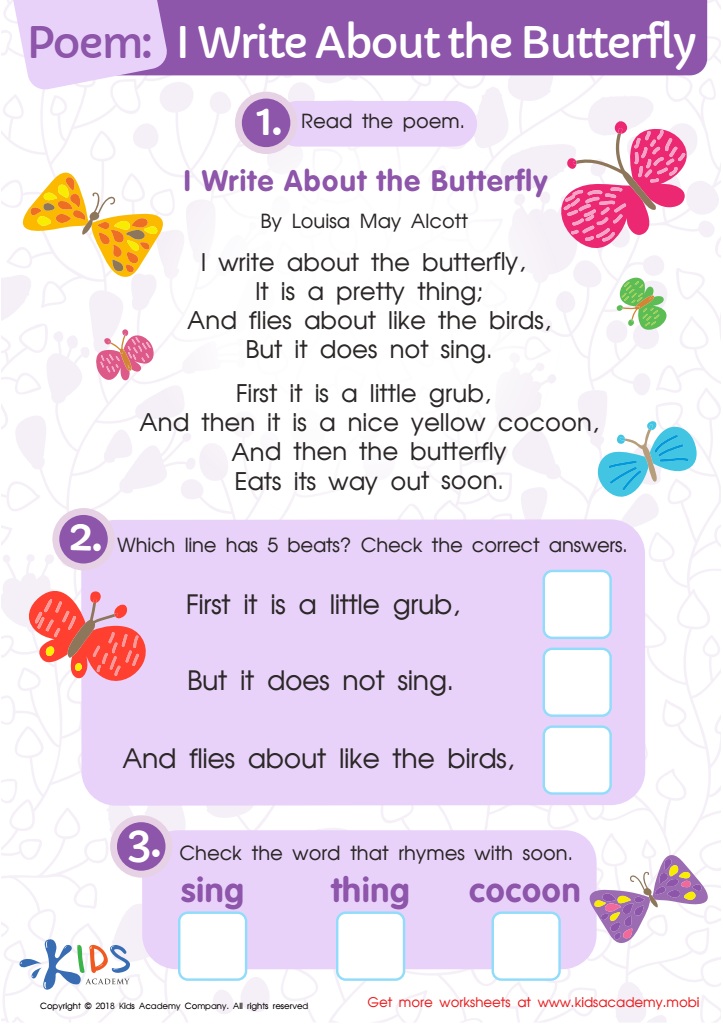
    Poem: I Write About The Butterfly Worksheet
    Poem: I Write About The Butterfly Worksheet

    Poem: I Write About The Butterfly Worksheet

    Do your kids like poetry? Encourage them to explore and connect with their poetic side! Read the butterfly poem from this worksheet aloud, then help them answer the questions. It's a great way to grow their appreciation of poetry and of the natural world.
    Poem: I Write About The Butterfly Worksheet
    Worksheet
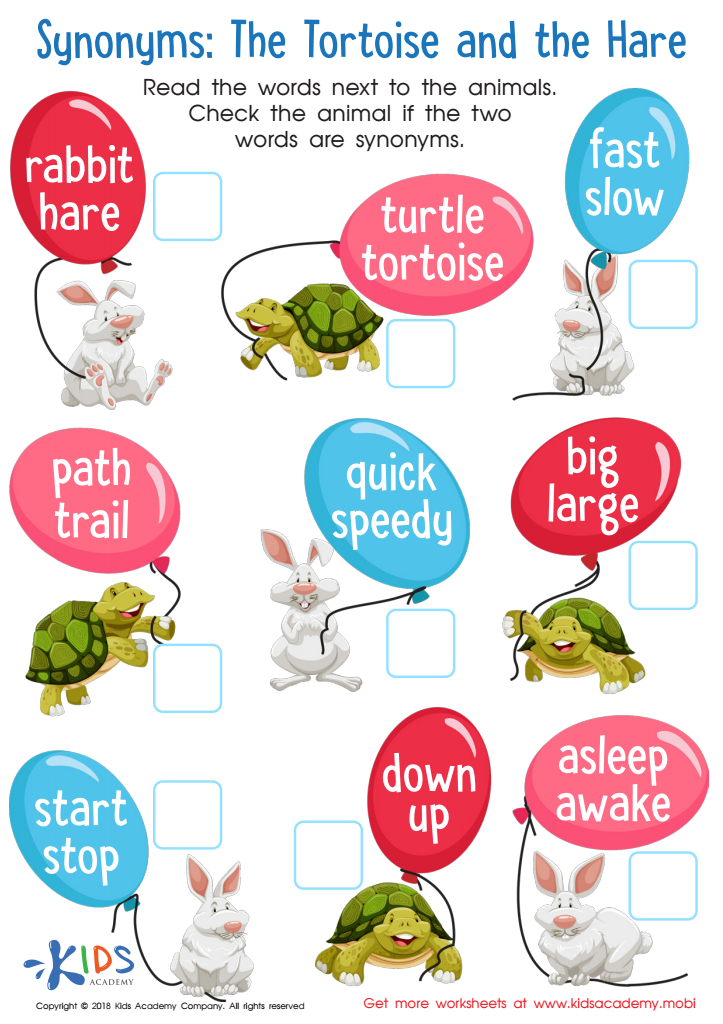
    Synonyms: The Tortoise and Hare Worksheet
    Synonyms: The Tortoise and Hare Worksheet

    Synonyms: The Tortoise and Hare Worksheet

    Help your kids identify words with similar meanings with this worksheet featuring a colourful picture of the Tortoise and the Hare. Show them how to check the boxes of animals with words that have similar meaning, then let them find more on their own. They'll love the challenge and you'll appreciate the educational value.
    Synonyms: The Tortoise and Hare Worksheet
    Worksheet
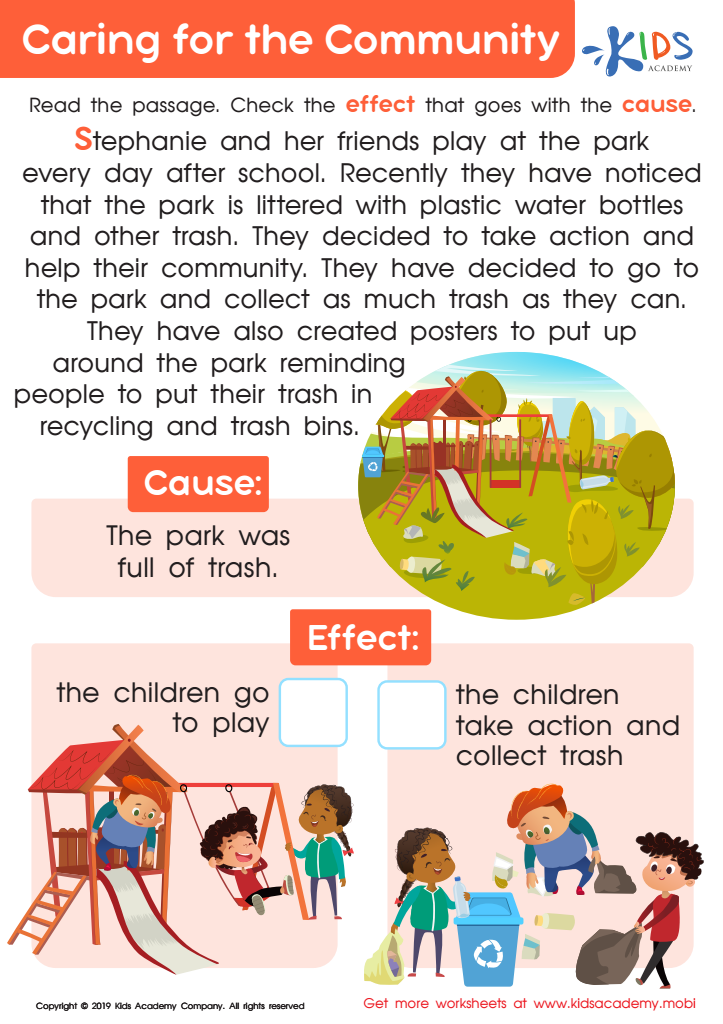
    Caring for the Community Worksheet
    Caring for the Community Worksheet

    Caring for the Community Worksheet

    Before beginning, get your kids in the right mind-set by having them name ways to care for their community. Read the passage with them, pointing at pictures, then ask them to match the ‘cause’ with the ‘effect’ on the worksheet. This will help them learn more about how to care for their community.
    Caring for the Community Worksheet
    Worksheet
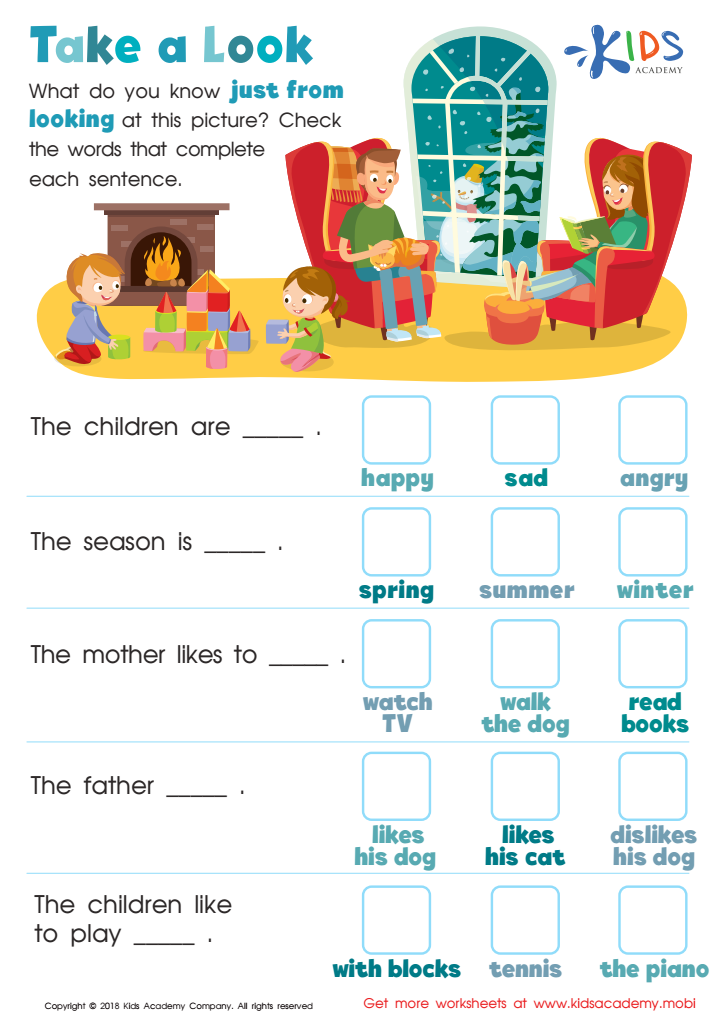
    Take a Look - Part 1 Worksheet

    Take a Look - Part 1 Worksheet

    Take a Look - Part 1 Worksheet

    Young learners gain understanding when using picture clues when reading. Looking at illustrations can help students learn the meaning of key vocabulary when reading fiction or informational text. Ask your students to look at the worksheet and observe what they can learn from the picture. It's a great comprehension strategy for early readers.
    Take a Look - Part 1 Worksheet
    Worksheet


    Reading fiction for ages 6-9 is crucial in developing a child's emotional, social, and cognitive skills. At this age, children are particularly impressionable, and engaging with fictional stories helps them understand different perspectives and feelings. This early exposure to characters' experiences fosters empathy, allowing children to relate to others and navigate social situations more effectively.

    Moreover, reading fiction enhances literacy skills, laying a strong foundation for future academic success. As children encounter varied vocabulary, narrative structures, and writing styles, they improve their comprehension and critical thinking abilities. Fiction also stimulates imagination and creativity, encouraging children to express themselves and potentially inspiring them to pursue their own storytelling.

    Importantly, these shared reading experiences can strengthen the bond between parents, teachers, and children. Engaging with a story together opens the door to meaningful conversations and deeper connections, reinforcing the child’s love for reading.

    By prioritizing fiction reading, parents and teachers cultivate a safe, stimulating environment that nurtures essential life skills. Ultimately, advocating for fiction in a child's reading routine leads to well-rounded individuals who are not only literate but also empathetic and imaginative thinkers.