Problem-Solving Skills Chess Worksheets for 6-Year-Olds
22 filtered results
-
From - To
Boost your child's cognitive development with our engaging "Problem-Solving Skills Chess Worksheets for 6-Year-Olds." Specifically crafted for younger learners, these activities introduce fundamental chess concepts while enhancing critical thinking and strategic planning. Each worksheet is designed to simplify complex ideas, making them accessible and fun for early grade students. Kids will not only learn how to play chess but also develop valuable problem-solving abilities, patience, and focus. Ideal for parents and educators, our chess worksheets offer a unique blend of education and entertainment, laying a strong foundation for future academic and life success. Explore today!
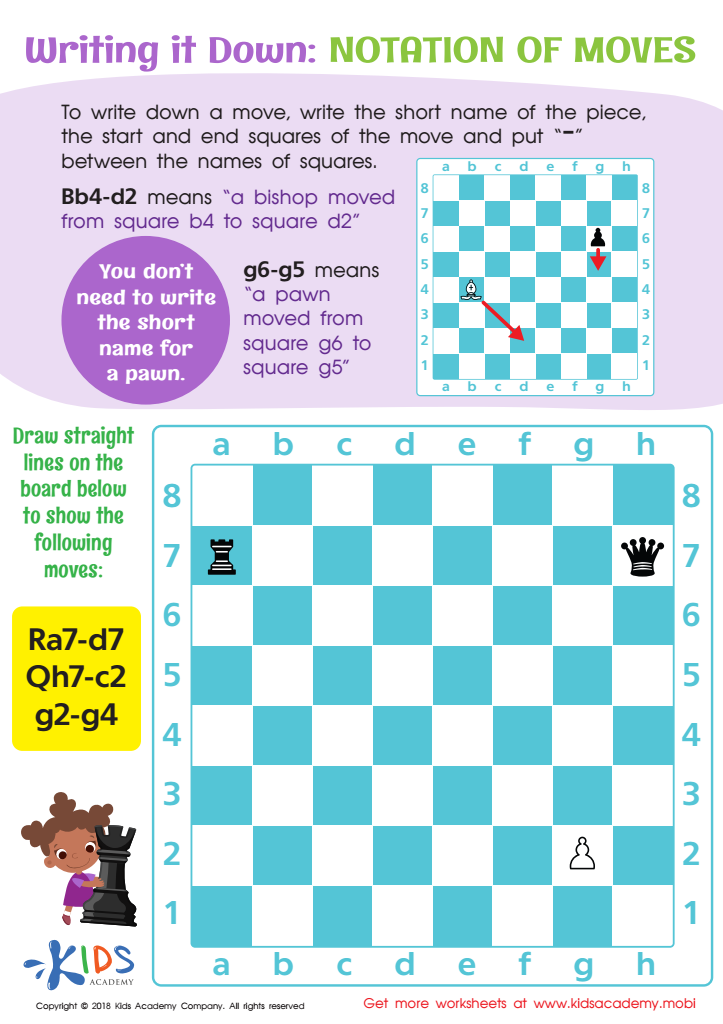
Notation of Moves Writing it Down Worksheet
 Assign to My Students
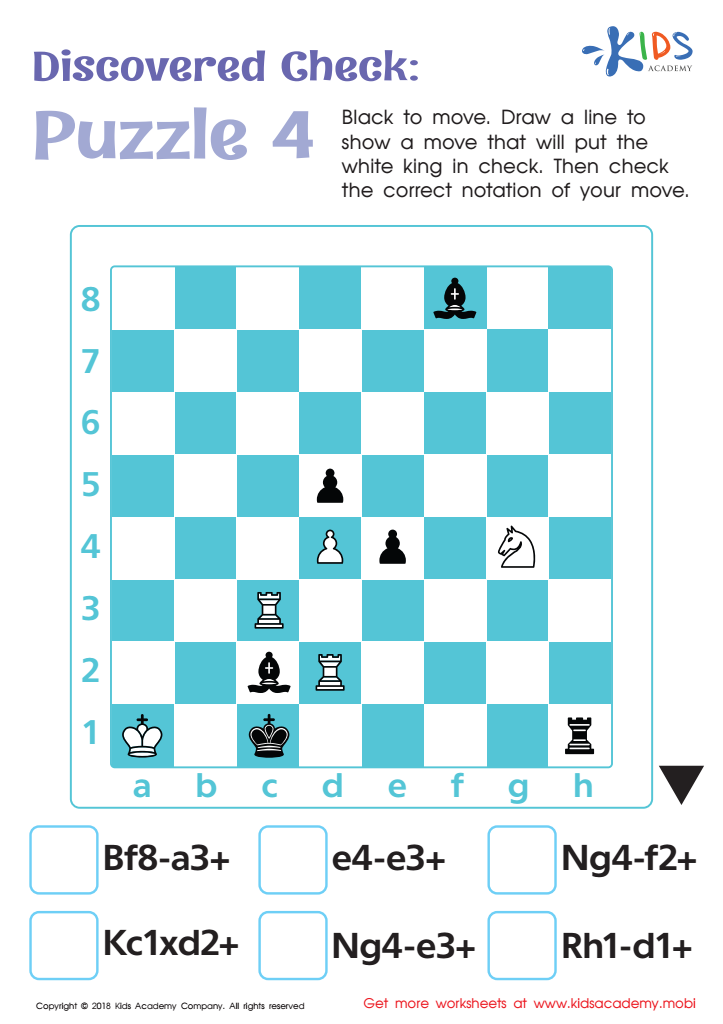
Discovered Check: Puzzle 4 Worksheet
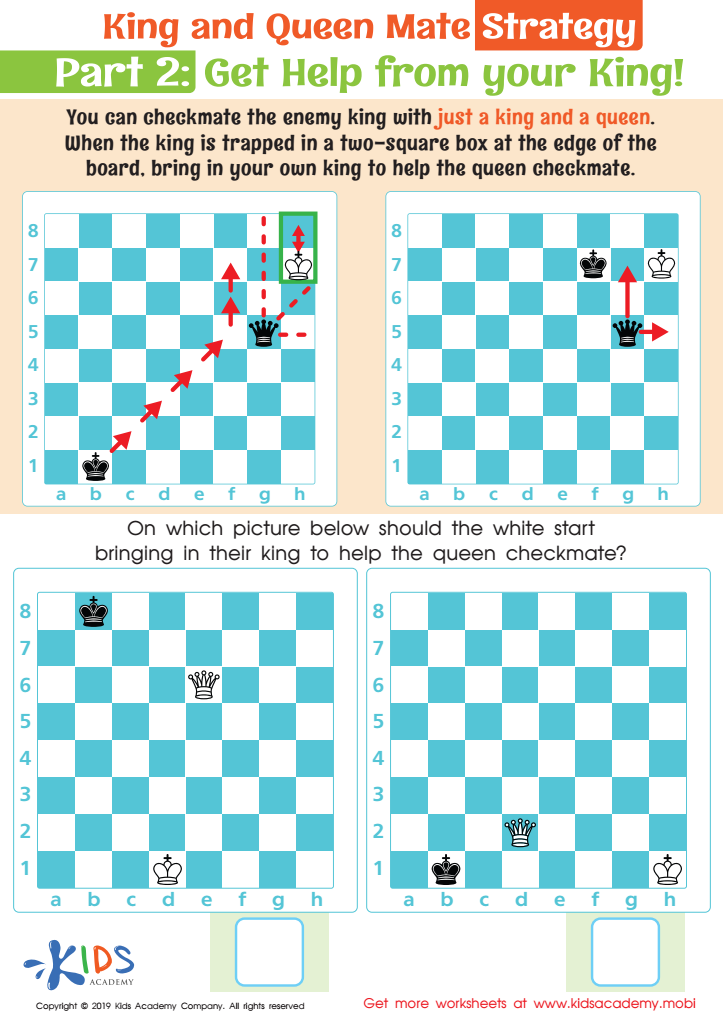
King and Queen Mate Strategy: Part 2 Worksheet
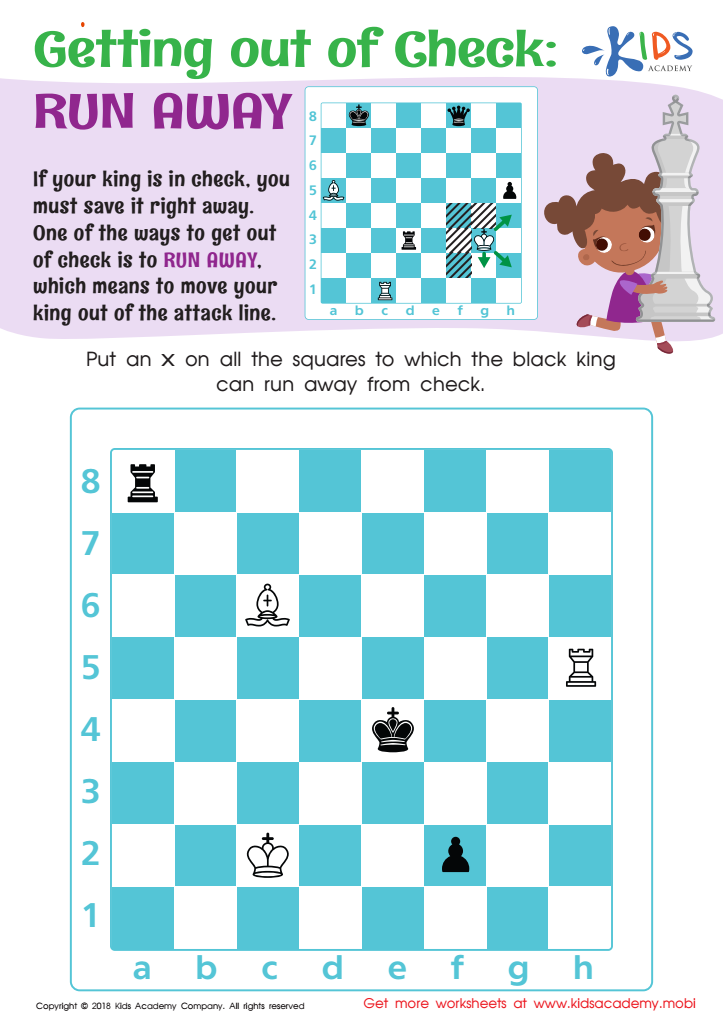
Getting out of Check: Run Away Worksheet
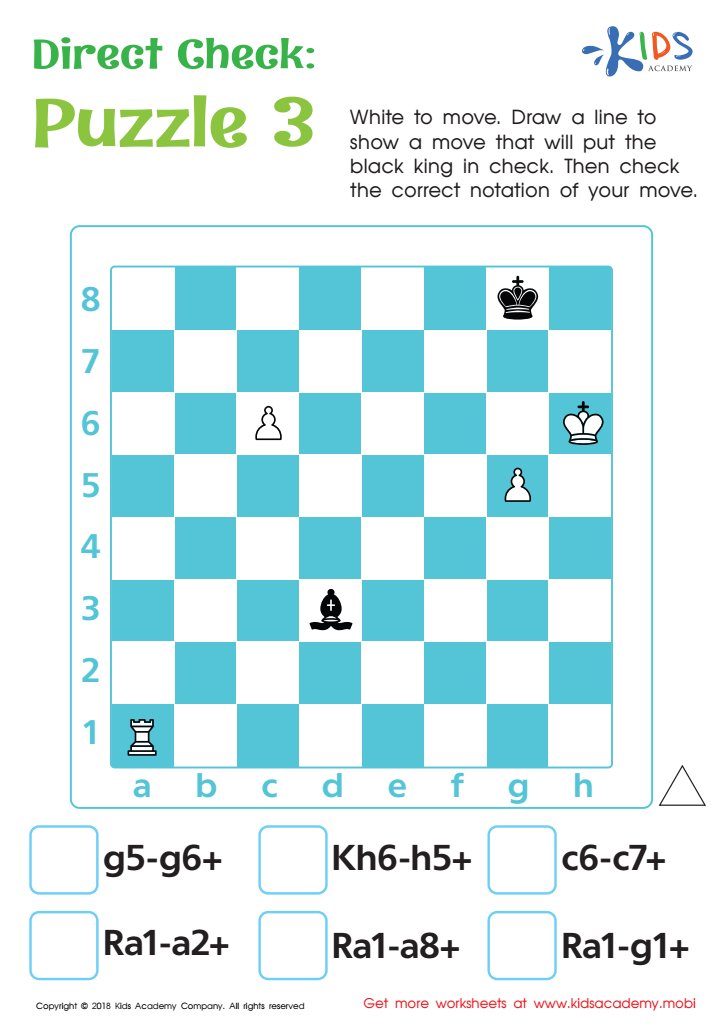
Direct Check: Puzzle 3 Worksheet
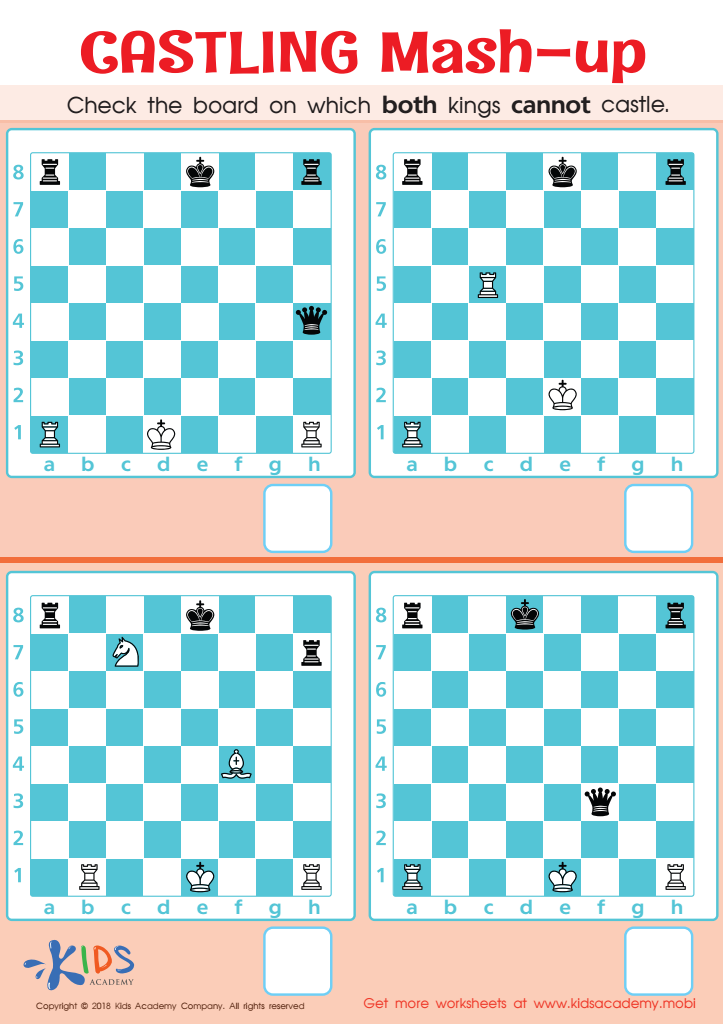
Castling Mash–up Worksheet
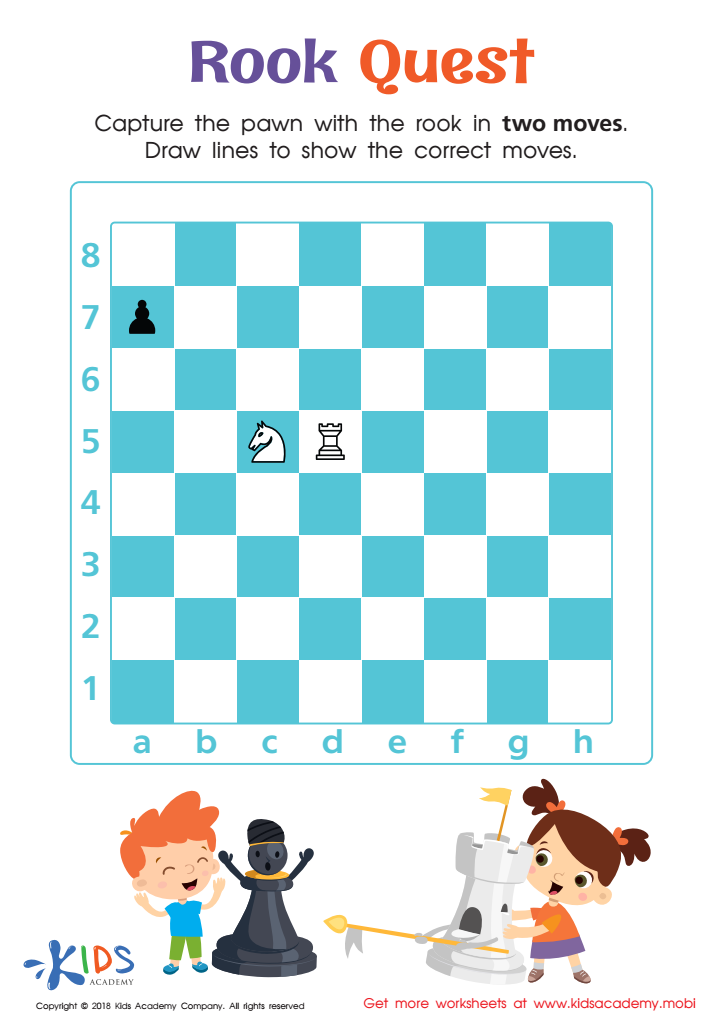
Rook Quest Worksheet
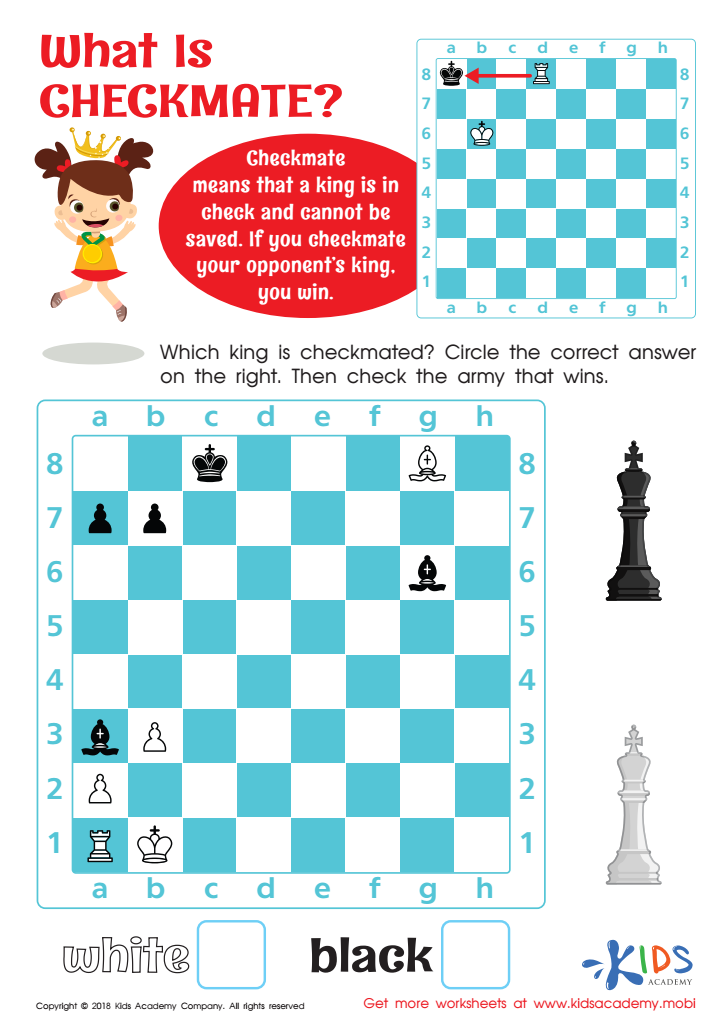
What is Checkmate? Worksheet
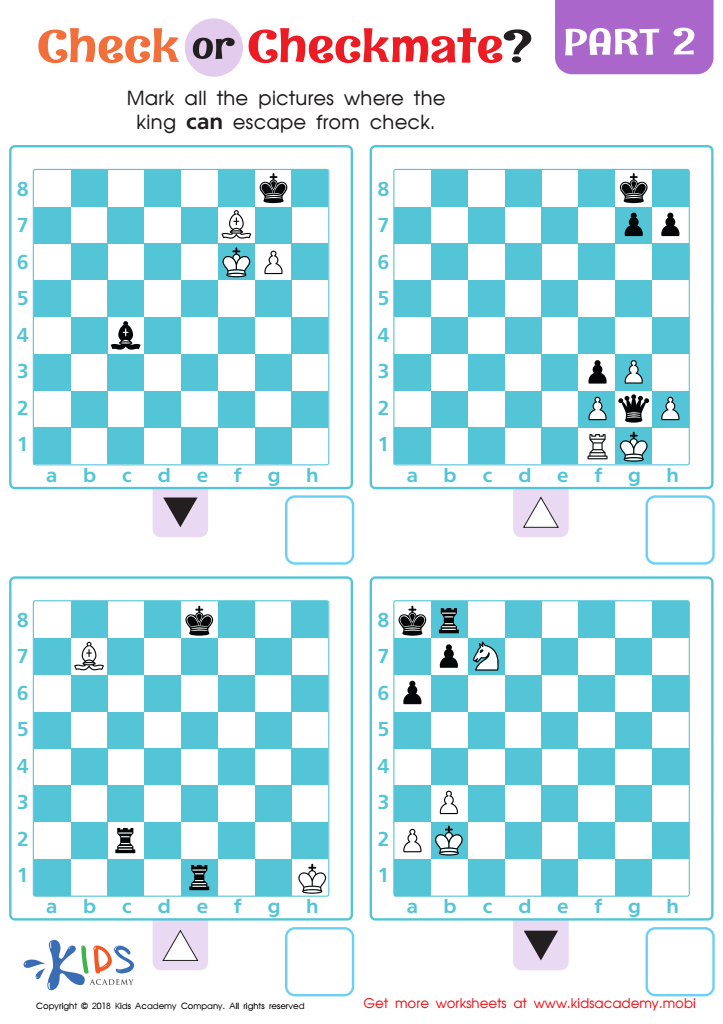
Check or Checkmate: Part 2 Worksheet
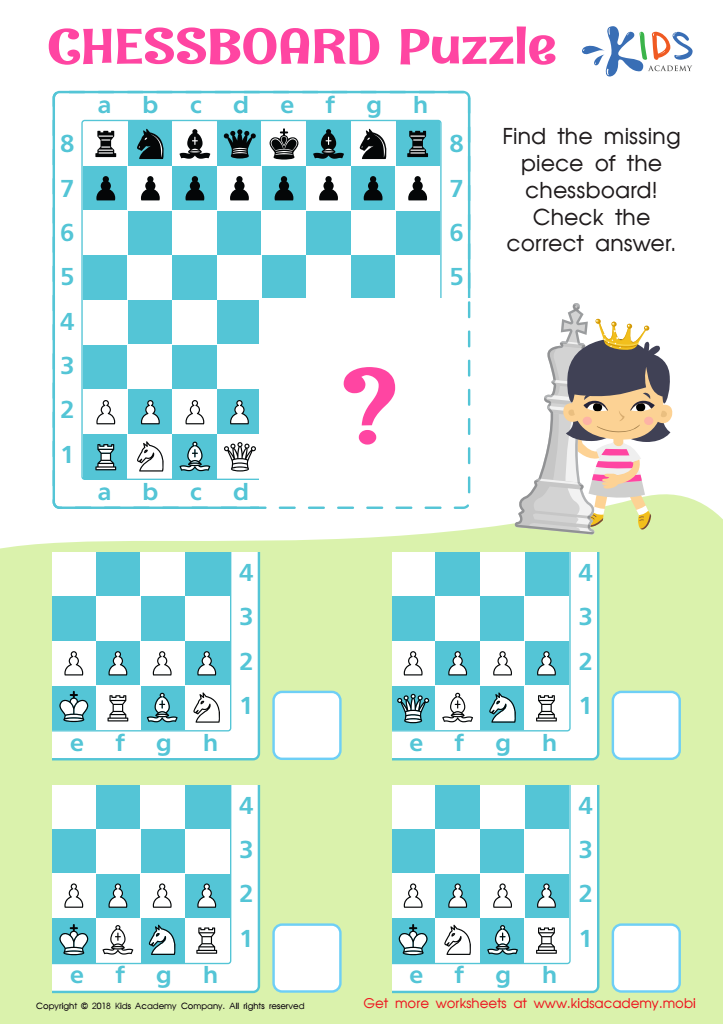
Chessboard Puzzle Worksheet
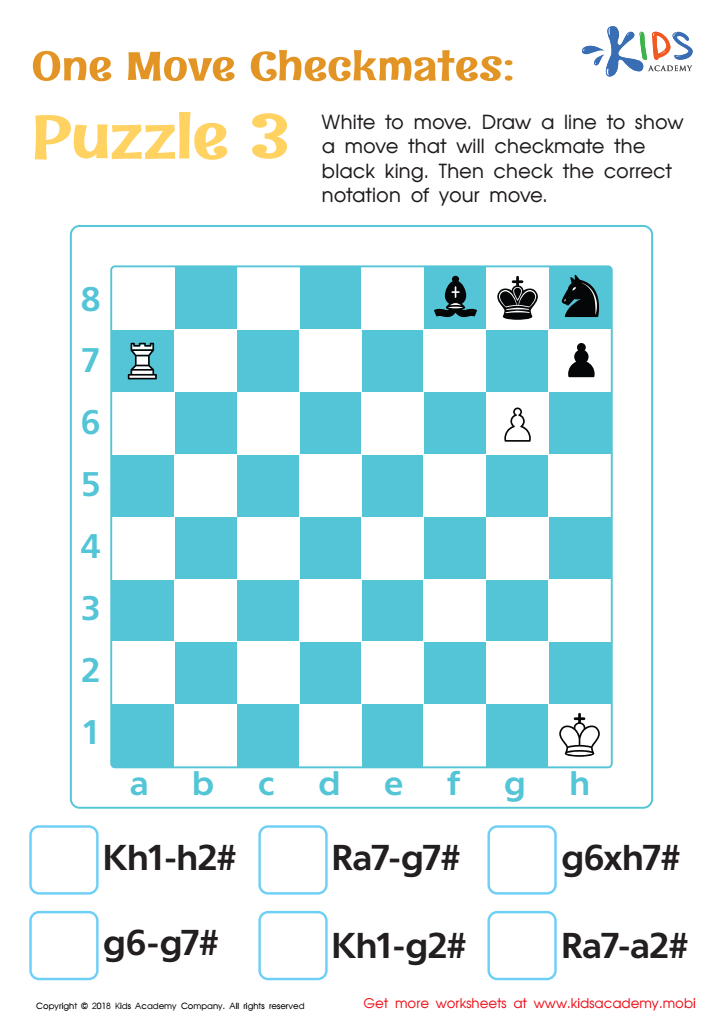
One Move Checkmates: Puzzle 3 Worksheet

Discovered Check: Puzzle 2 Worksheet
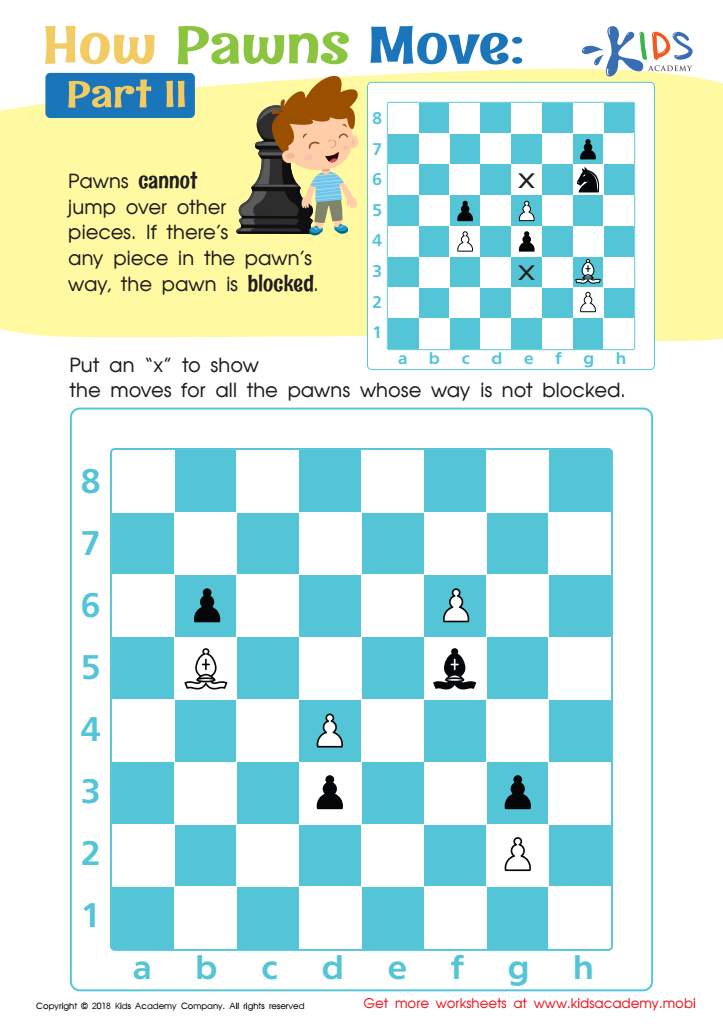
How Pawns Move: Part II Worksheet
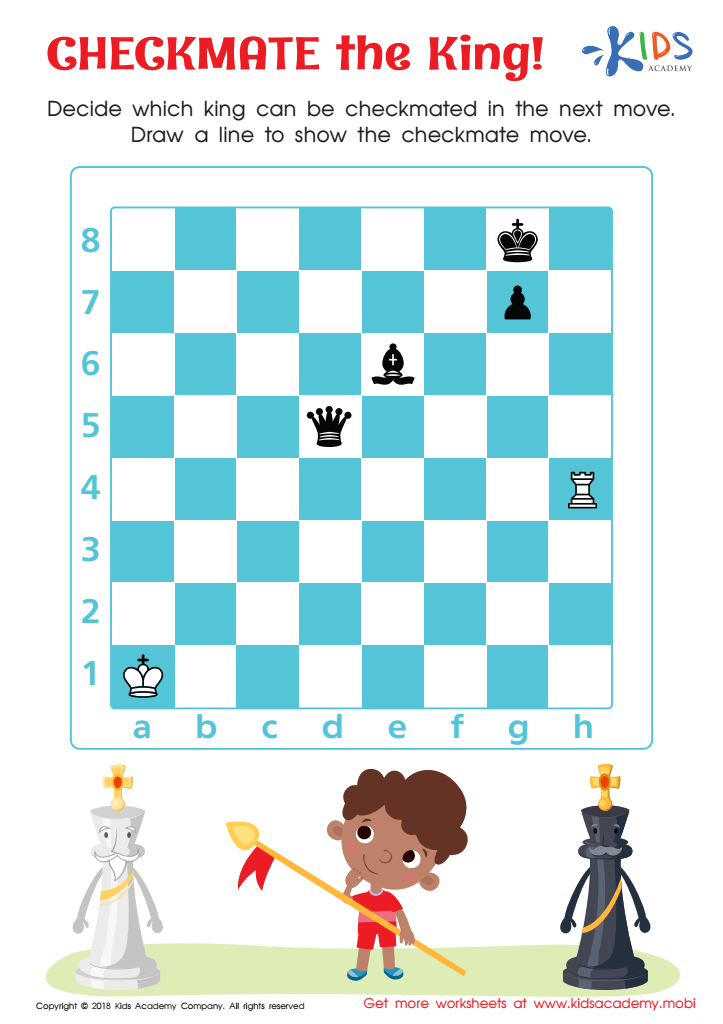
Checkmate the King Worksheet
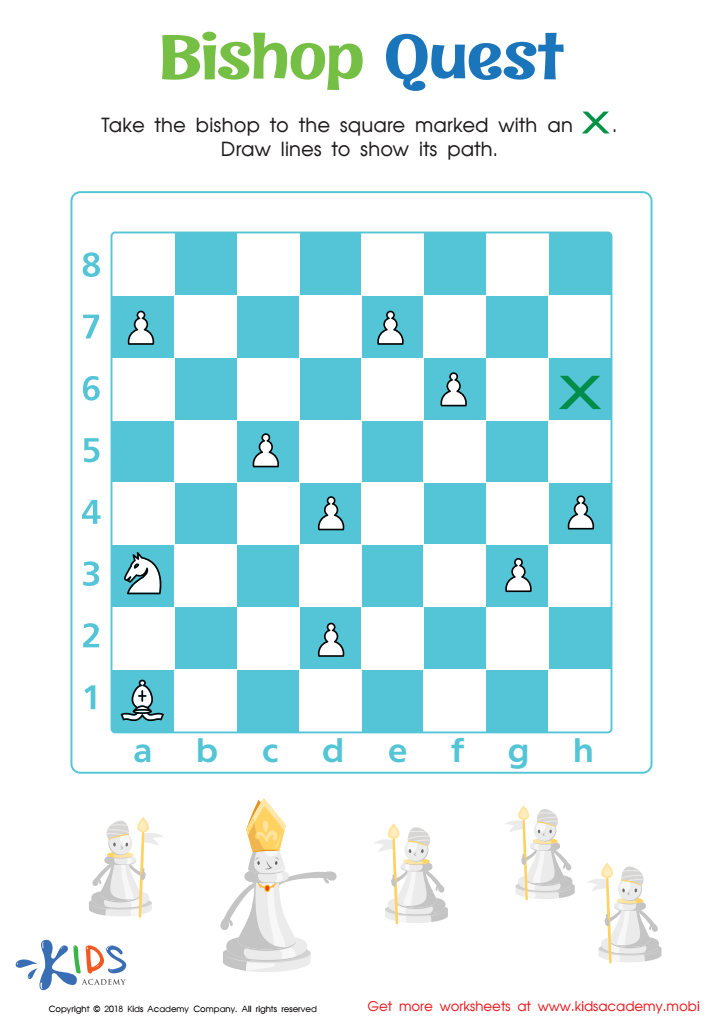
Bishop Quest Worksheet
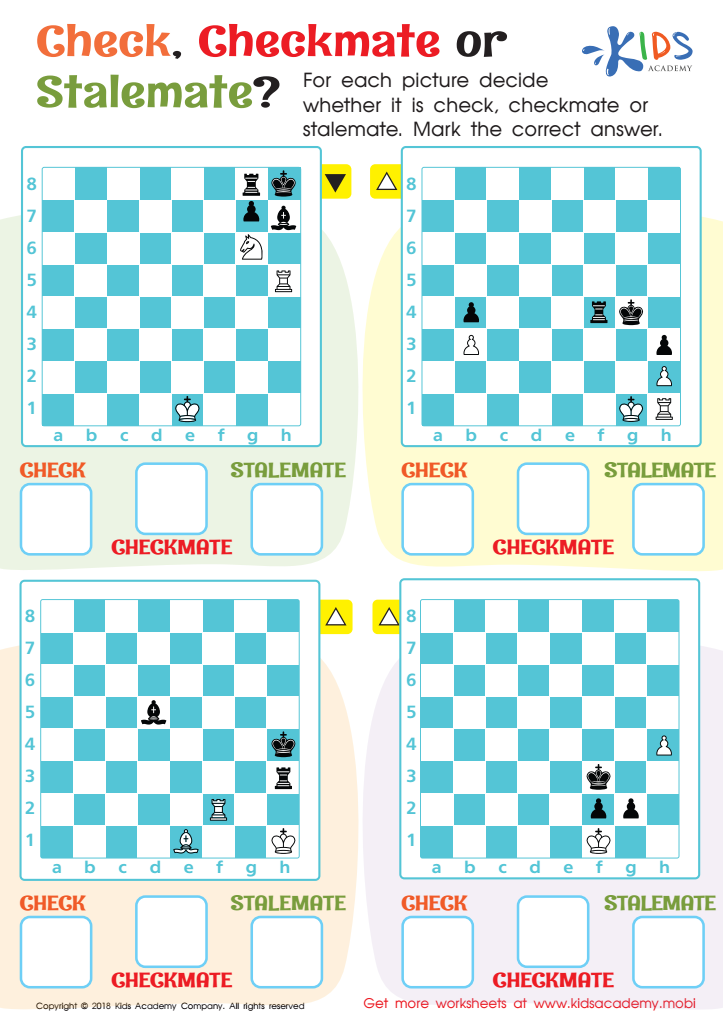
Check. Checkmate or Stalemate? Worksheet
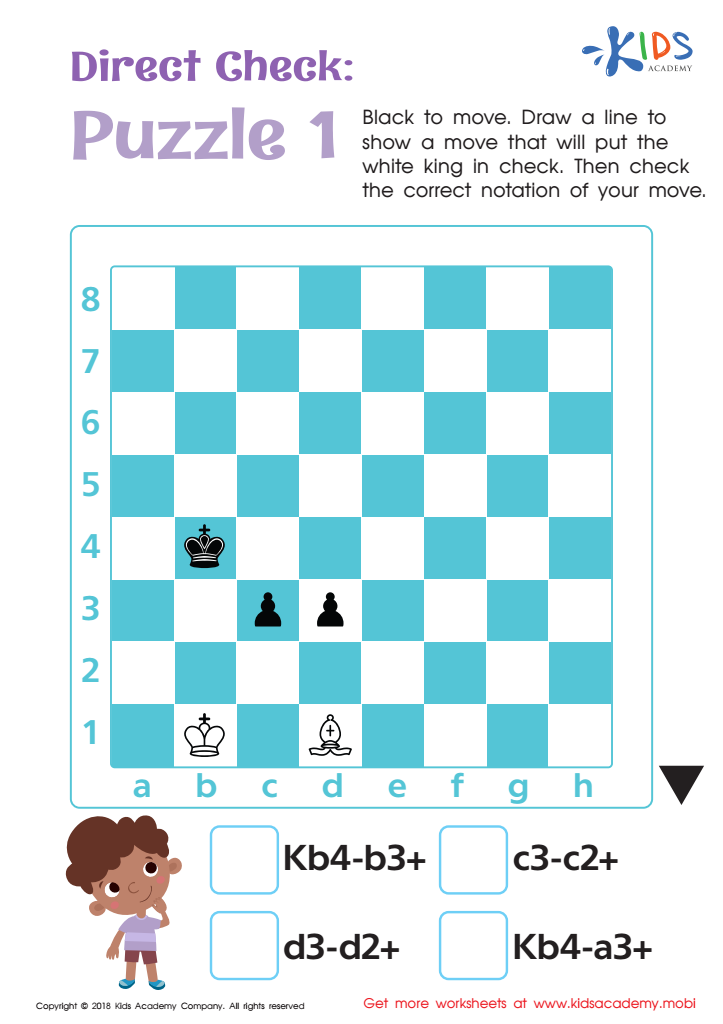
Direct Check: Puzzle 1 Worksheet
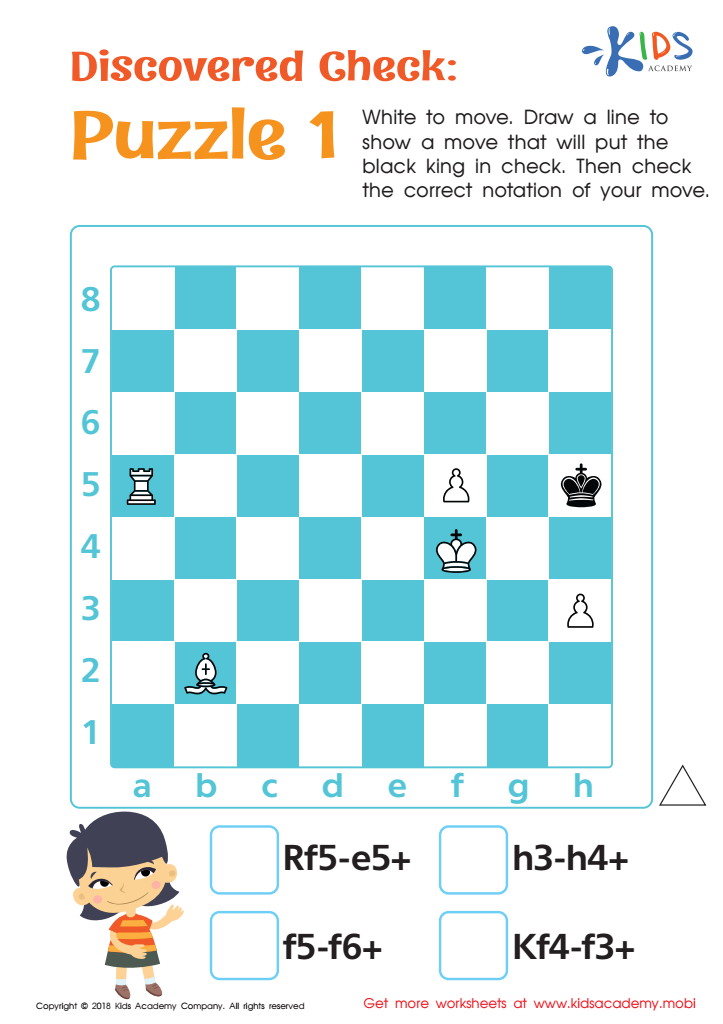
Discovered Check: Puzzle 1 Worksheet
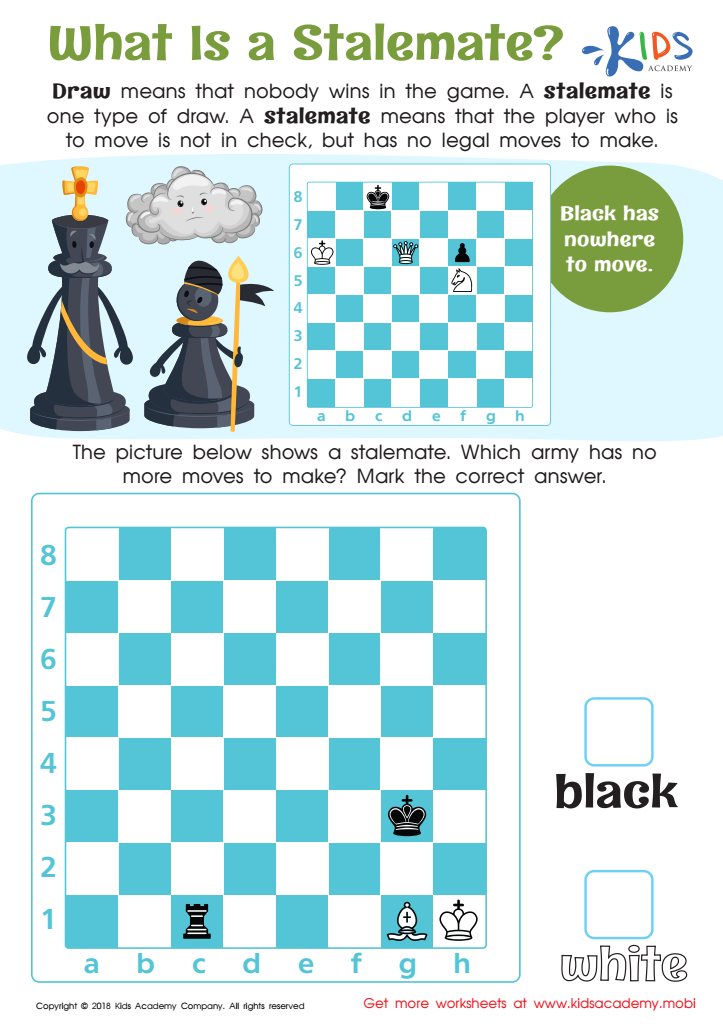
What Is a Stalemate? Worksheet
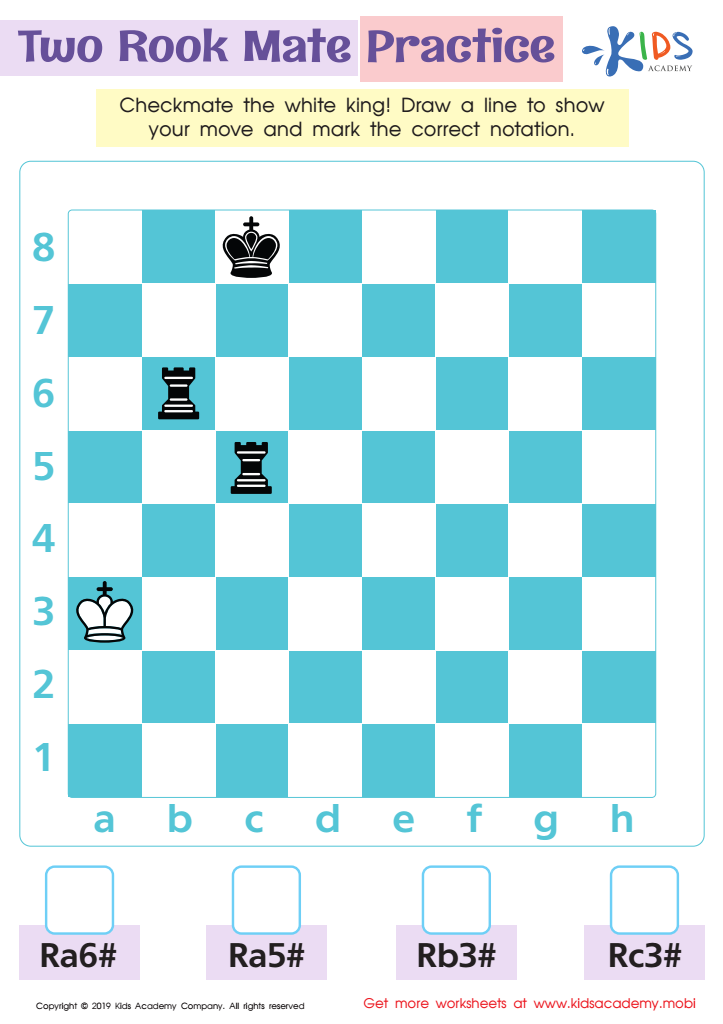
Two Rook Mate Practice Worksheet
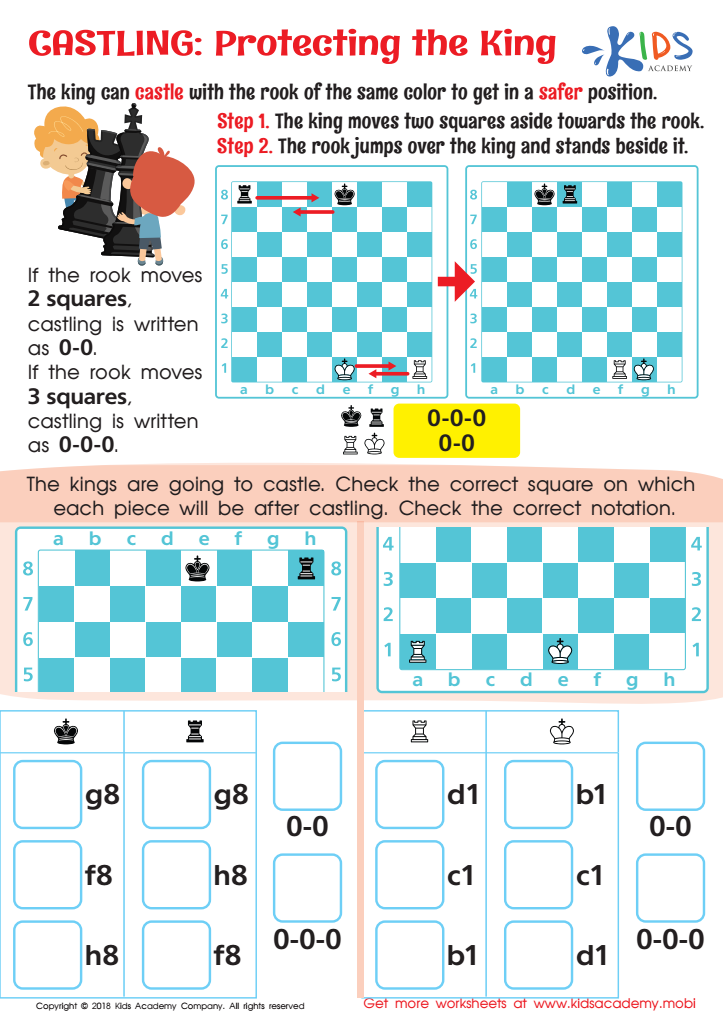
Castling: Protecting the King Worksheet
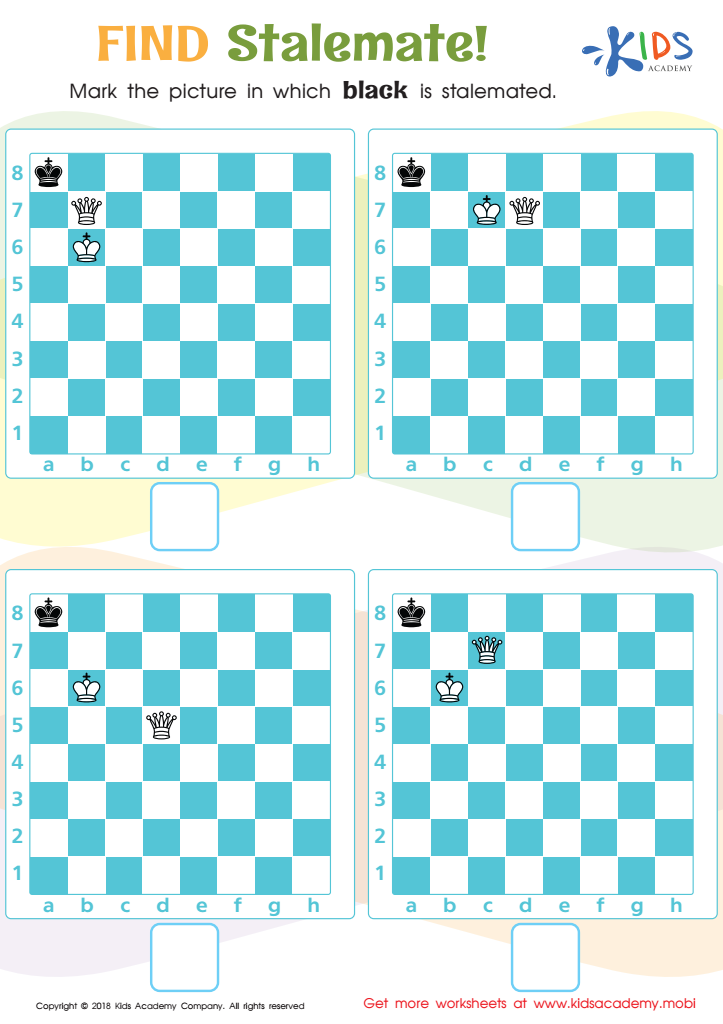
Find Stalemate! Worksheet







Fostering problem-solving skills in 6-year-olds through chess is particularly beneficial for their cognitive and emotional development. Chess is not just a game; it is an educational tool that enhances critical thinking, attention, and strategic planning. When children play chess, they learn to evaluate different situations, anticipate consequences, and make thoughtful decisions. These skills are directly transferable to academic subjects such as mathematics and science, where logical reasoning and pattern recognition are crucial.
Moreover, engaging in chess can significantly bolster a child's concentration and patience. These attributes are essential for academic success and personal growth. When a young child is faced with a challenging chess situation, they learn the value of persistence and the need to stay focused, even when the solution is not immediately apparent.
Emotionally, chess teaches children to handle success and failure graciously. It's a game that requires respect for the opponent and encourages good sportsmanship. These social skills are vital as they help children navigate interpersonal relationships both in and out of school.
In addition, playing chess can be a fun and rewarding way for parents and teachers to bond with children. This shared activity promotes positive interaction and communication, creating a supportive learning environment. Therefore, integrating chess into early childhood education can be a strategic move to nurture well-rounded, resilient, and thoughtful young individuals.