Math Worksheets for Ages 7-9 - Page 70
1664 filtered results
-
From - To
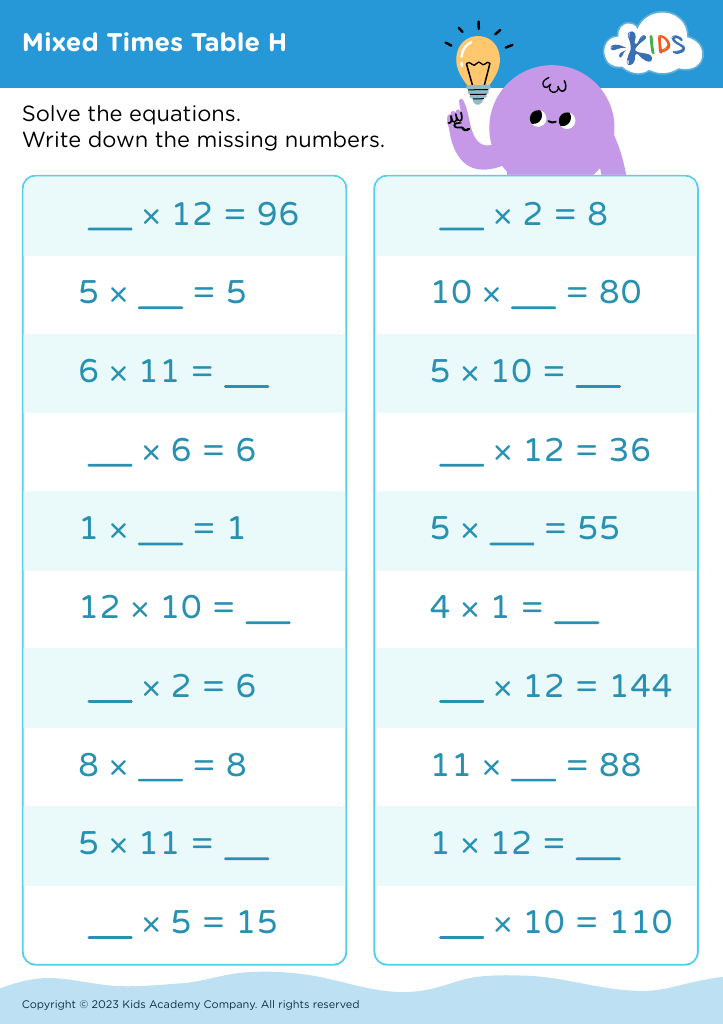
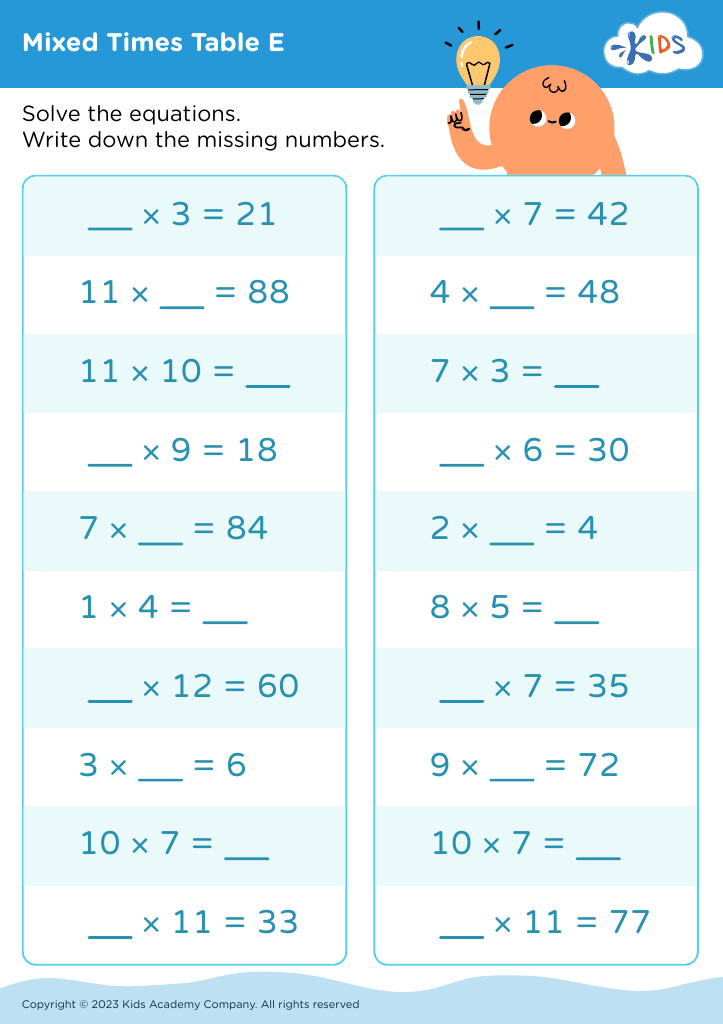
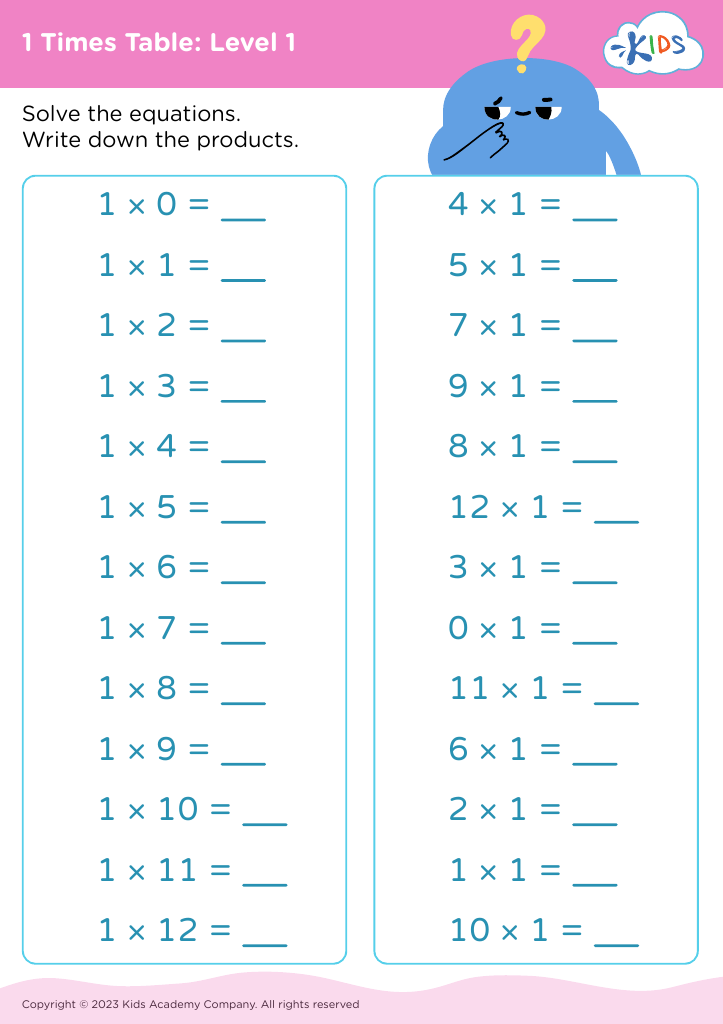
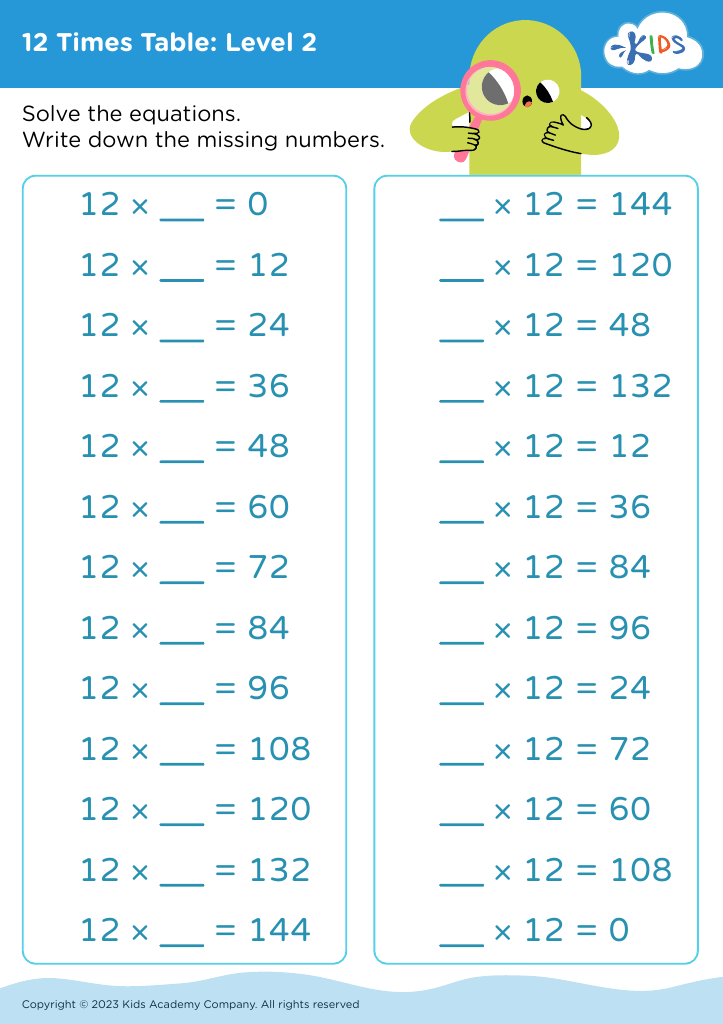
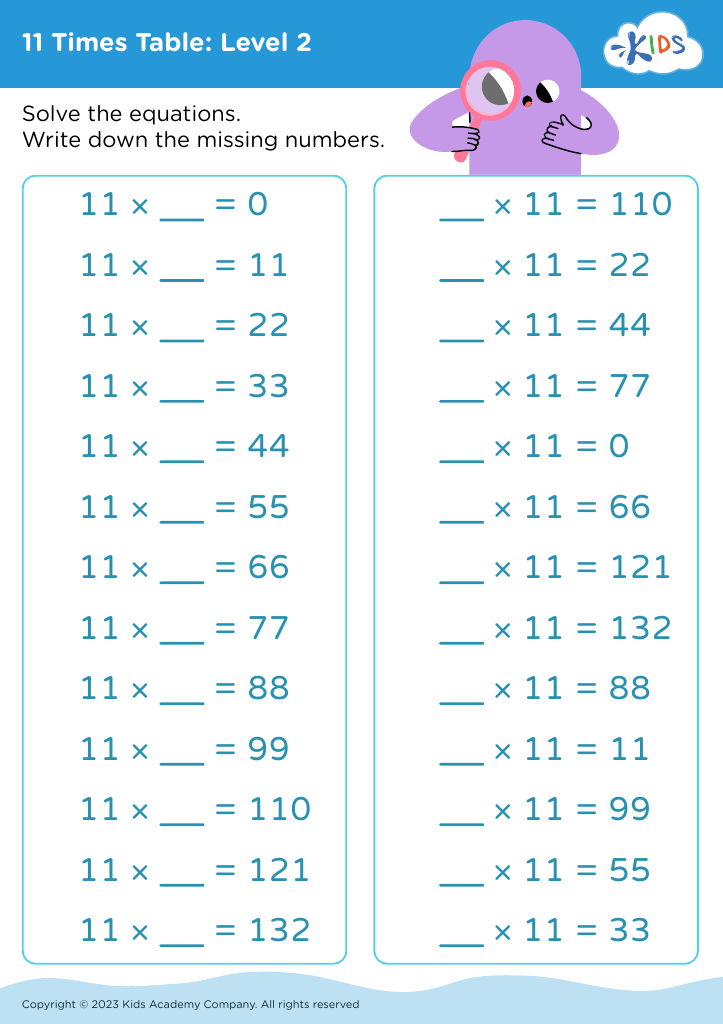
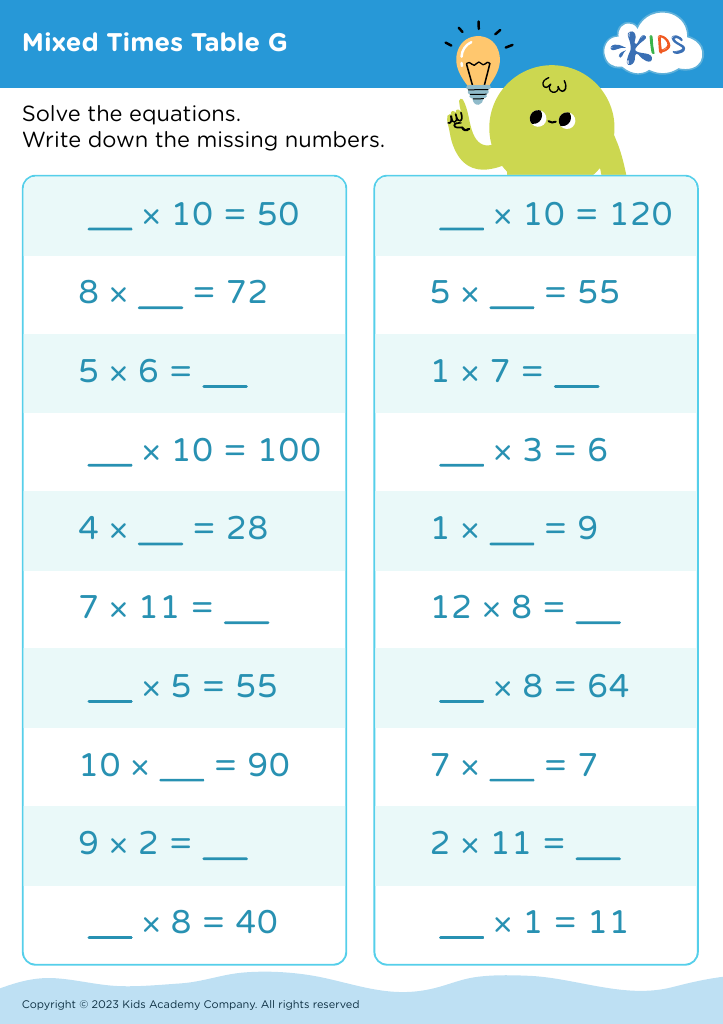
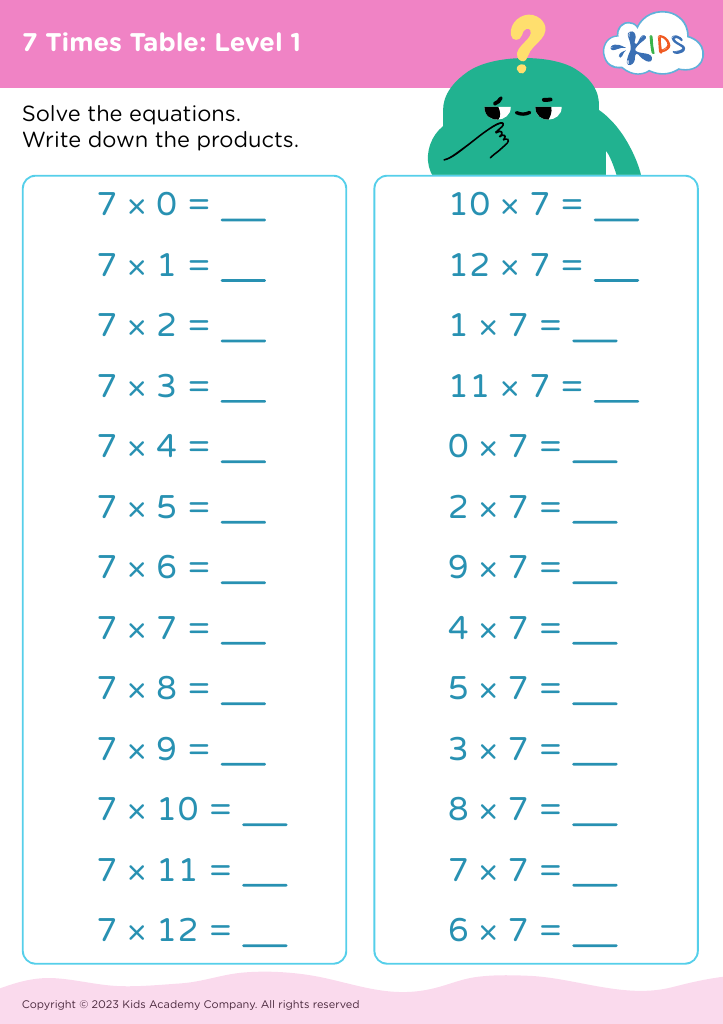
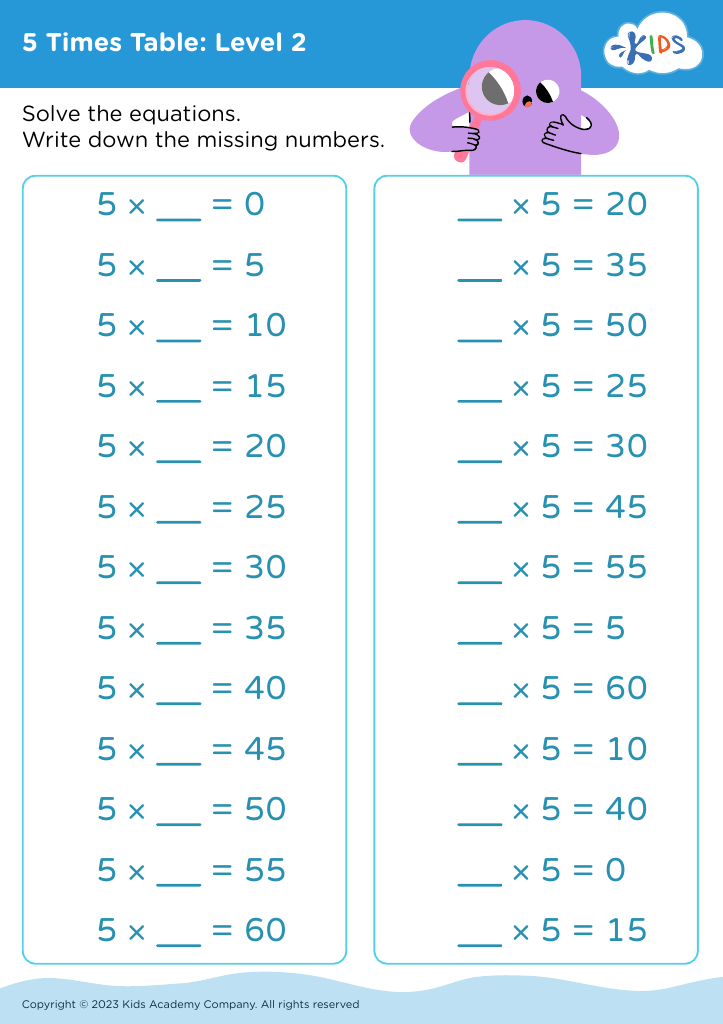








Parents and teachers should prioritize math for ages 7-9 because this is a crucial development stage for foundational mathematical skills. During these years, children transition from simple concepts to more complex ones, such as addition, subtraction, multiplication, and division. Mastery of these basics builds confidence and sets the stage for future learning in mathematics and related fields.
Moreover, math enhances critical thinking and problem-solving skills. Engaging with mathematical concepts encourages children to think logically, make connections, and approach challenges systematically. These skills are not only vital in academic settings but are also essential in everyday life, influencing decision-making and reasoning.
Additionally, fostering an early interest in math can result in more positive attitudes towards the subject in later years, reducing math anxiety and building perseverance. This can lead to improved academic performance overall, as maths is a fundamental subject that supports learning in science, technology, and engineering fields—the very pillars of future job markets.
By providing encouragement, resources, and engaging learning experiences, parents and teachers can play a significant role in nurturing a child's mathematical journey, ultimately empowering them for lifelong success. Investing in math education during these formative years yields benefits that extend far beyond the classroom.








