
Science vocabulary enhancement Science Worksheets for Ages 7-9
3 filtered results
Difficulty Level
Grade
Age
-
From - To
Subject
Activity
Standards
Unlock your child's potential with our Science Vocabulary Enhancement Worksheets designed for ages 7-9! Introduce young learners to essential scientific terms through engaging, easy-to-understand activities. Each worksheet aims to build a strong foundation in science by expanding their vocabulary and fostering a love for learning. Perfect for both classroom use and at-home practice, these resources help children grasp complex concepts effortlessly. Boost your child's confidence and curiosity as they explore the wonders of science with our expertly crafted worksheets. Dive into the world of science today and watch your learner's knowledge soar!
Favorites
With answer key
Interactive
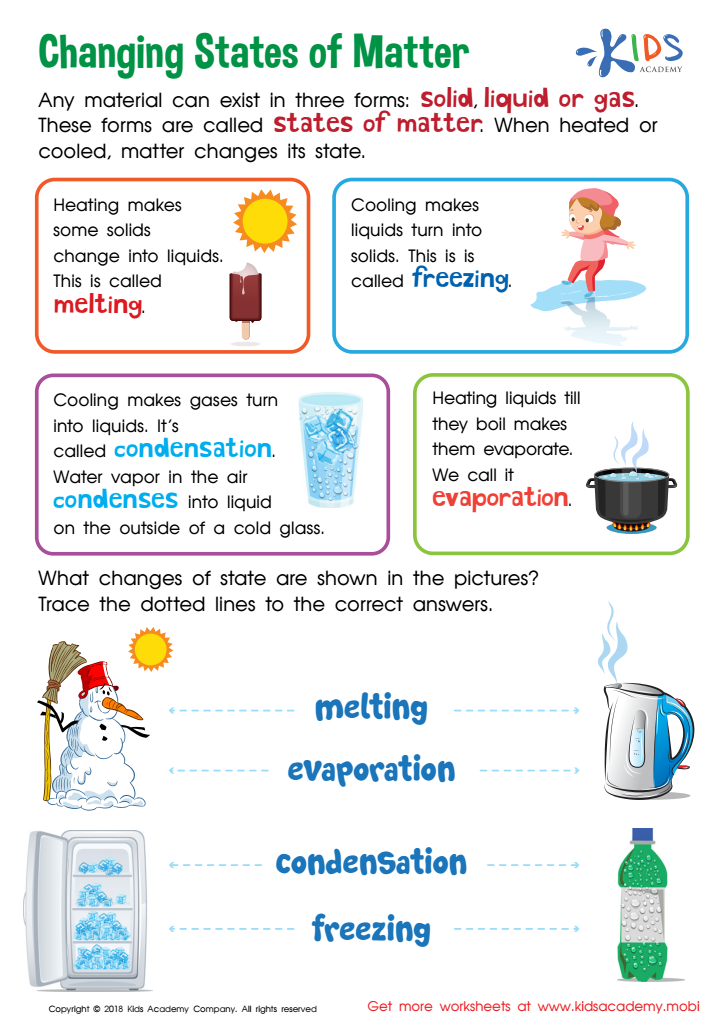
States of Matter Worksheet
Physics is endlessly fun! Teach kids about how matter changes with this states of matter worksheet for grade 3. Kids can explore the transformation of ice to water and then to gas. It's a blast!
 Assign to My Students
States of Matter Worksheet
Worksheet
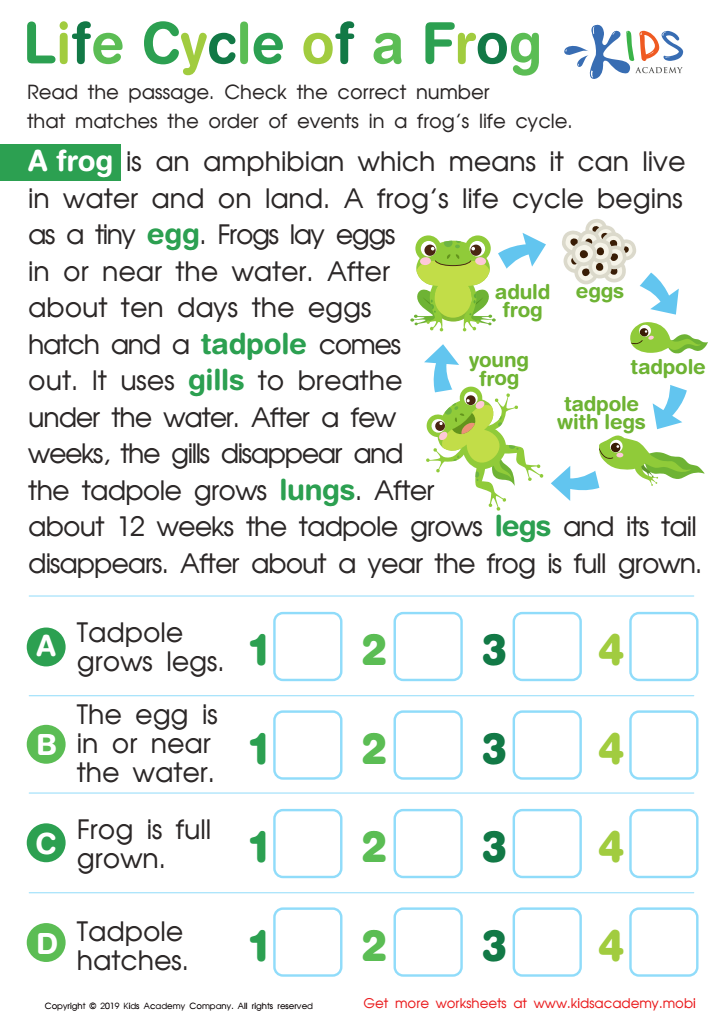
Life Cycle of a Frog Worksheet
Teach your kids to read and open their eyes to new knowledge. Frogs have fascinating life cycles. Show them the worksheet with pictures and guide them as they read the passage about it. Encourage them to check the number that matches the frog's life cycle order.
Life Cycle of a Frog Worksheet
Worksheet
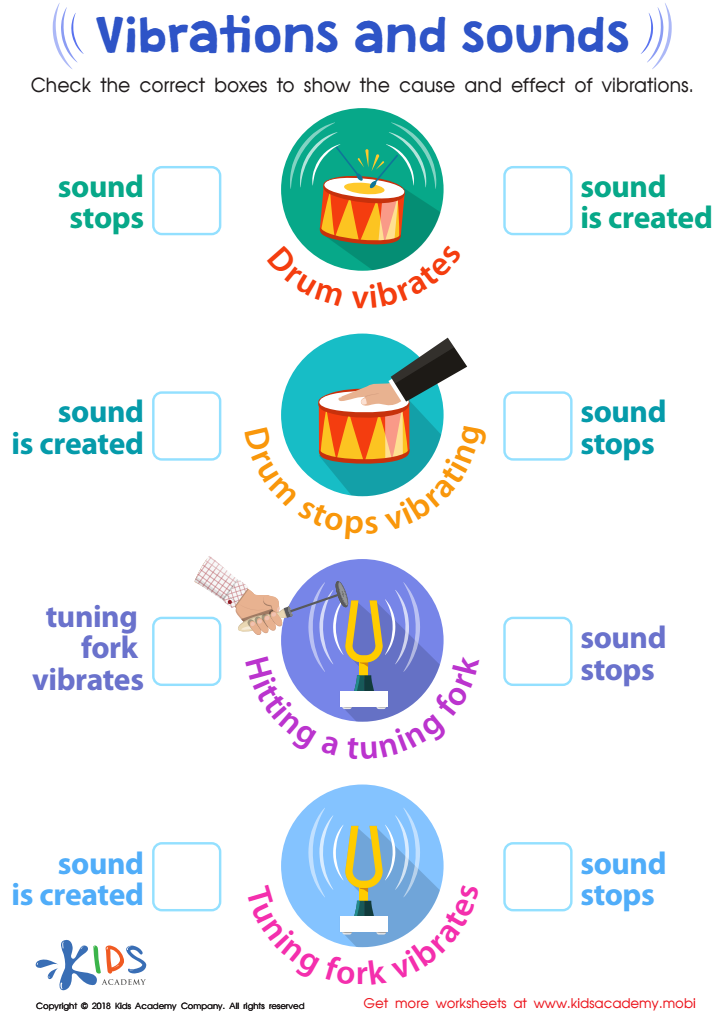
Vibrations and Sounds Worksheet
Many objects, creatures, and things make sounds. People talk, animals bark, hiss or meow, and things make sounds too. Ask your students to name others that produce sounds and why they do, such as when a drum is hit with a stick. Get them to learn about vibrations and cause/effect in this fun worksheet and check the answers.
Vibrations and Sounds Worksheet
Worksheet
Learning Skills
Join Kids Academy for Free
Who is primarily going to use this learning content?








Enhancing science vocabulary in children aged 7-9 is crucial for several reasons that support their overall development and academic success. Firstly, a solid grasp of science vocabulary lays the foundation for understanding more complex concepts later. When children are familiar with terms like "evaporation," "habitat," or "photosynthesis," they are more likely to successfully grasp related scientific phenomena.
Secondly, knowing the correct vocabulary empowers children to articulate their observations and questions effectively. This promotes confidence in expressing ideas and leads to more meaningful interactions in both classroom settings and everyday experiences. A well-developed science vocabulary also fosters critical thinking, as kids begin to make connections between different concepts, fostering deeper comprehension and curiosity.
Additionally, early exposure to science terms piques children's interest in the subject, potentially sparking a lifelong love for learning. Such enthusiasm can translate into better performance in science subjects and perhaps ignite career interests in STEM fields later on.
Lastly, as science is all around us – from the weather, we experience to the food we eat – having a robust vocabulary enables children to make informed decisions in their daily lives. Parents and teachers, therefore, play a vital role in nurturing a child’s science vocabulary, equipping them with the tools for academic achievement and informed citizenship.







