Writing Worksheets for Ages 8-9 - Page 8
169 filtered results
-
From - To
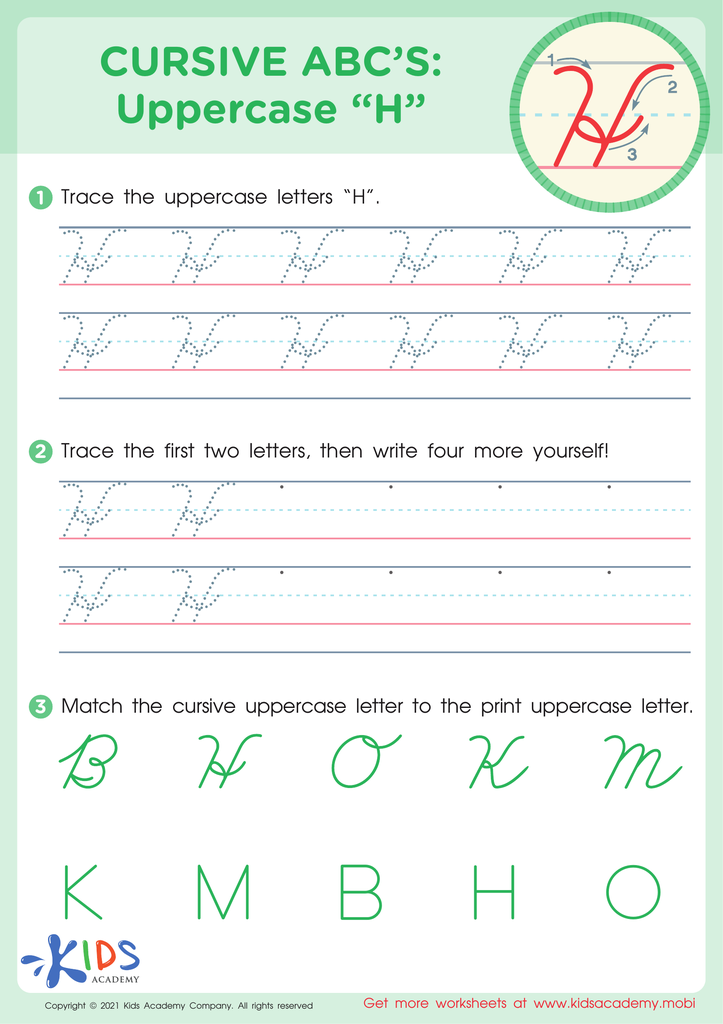
Cursive ABCs: Uppercase H




.jpg)



Writing worksheets tailored for Ages 8-9 are invaluable tools in nurturing the foundational writing skills of children. At this pivotal age, children are transitioning from basic sentence structures to more complex thoughts and ideas. Worksheets on writing specifically designed for Ages 8-9 bridge this gap seamlessly, providing a structured yet flexible approach to learning.
Such worksheets offer a plethora of benefits. Firstly, they enhance vocabulary acquisition, introducing children to new words and phrases in a context that makes sense to them. This age-appropriate material ensures that learners are neither overwhelmed nor bored, striking the perfect balance for effective learning. Furthermore, writing worksheets for Ages 8-9 foster creativity. Through engaging prompts and story starters, children are encouraged to think outside the box, weaving their own tales and expressing their ideas uniquely.
Moreover, these worksheets emphasize the importance of grammar and punctuation, laying a solid foundation for effective communication. As children complete these exercises, they become more adept at structuring sentences correctly, understanding the role of punctuation in clarity, and appreciating the nuances of language.
In conclusion, writing worksheets designed for Ages 8-9 are essential in cultivating a love for writing, enhancing communication skills, and building confidence in young learners. They not only support academic growth but also empower children to express themselves clearly and creatively.








