Basic Math Skills Geometry Worksheets for 8-Year-Olds
8 filtered results
-
From - To
Unlock your child's potential with our Basic Math Skills Geometry Worksheets for 8-Year-Olds! These expertly designed worksheets offer engaging activities that simplify essential geometry concepts for young learners. From identifying shapes and patterns to understanding spatial relationships, our resources help build a solid foundation in geometry, boosting confidence and academic success. Perfect for both classroom and home use, these worksheets support cognitive development and critical thinking skills. Let your child explore the exciting world of geometry with creative, age-appropriate tasks that make learning both fun and productive. Start the educational journey today!
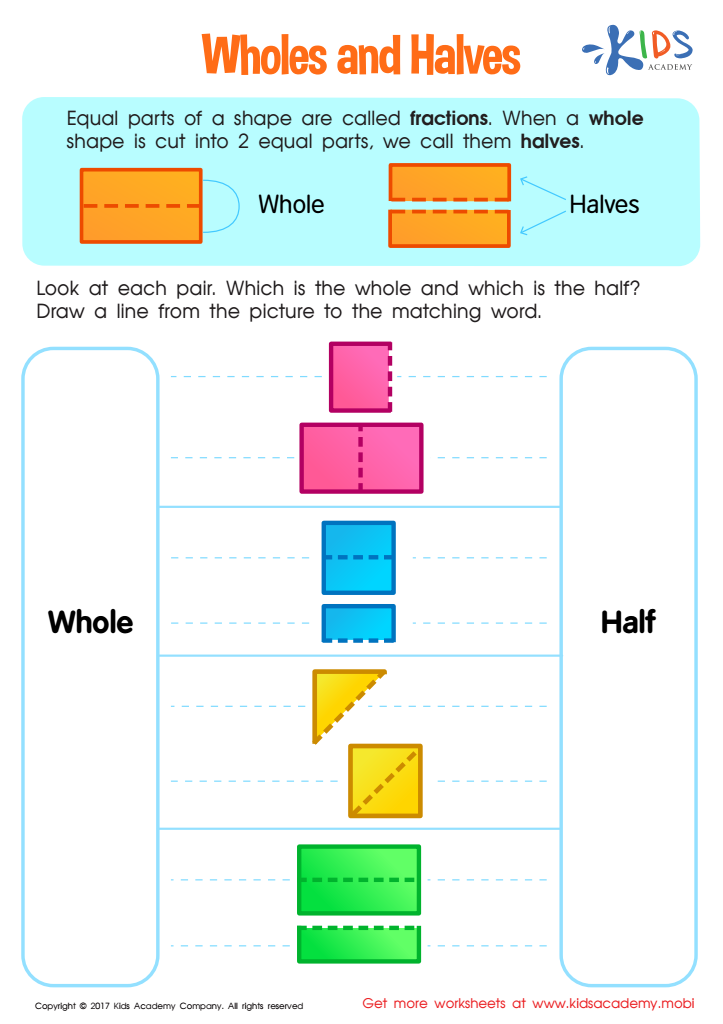
Wholes and Halves Worksheet
 Assign to My Students











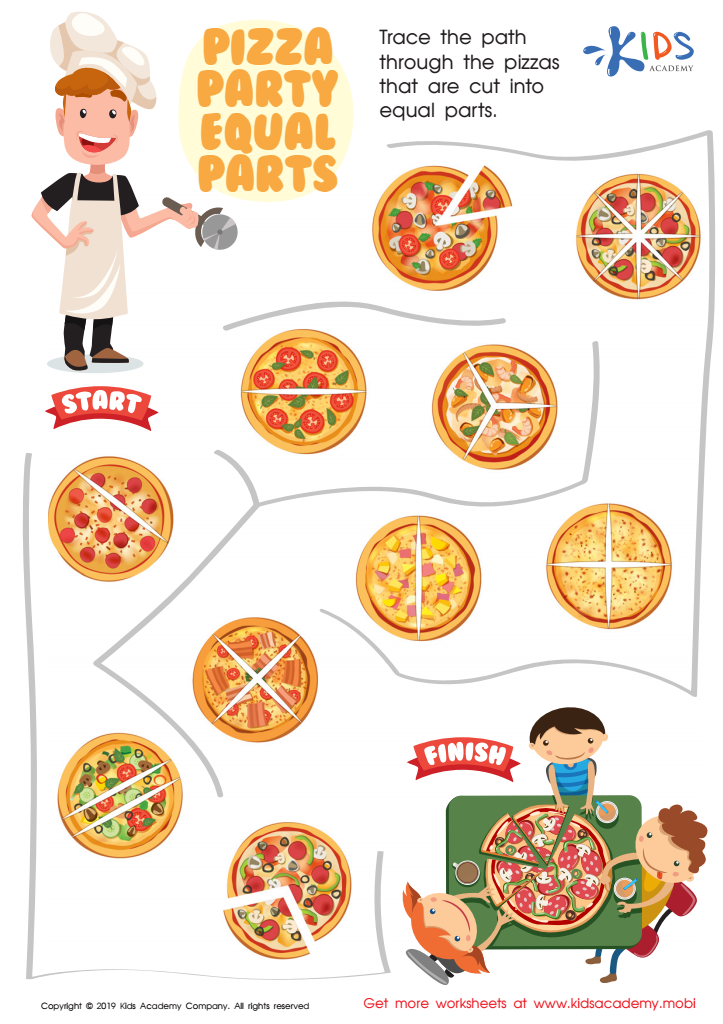
Pizza Party Equal Parts Worksheet
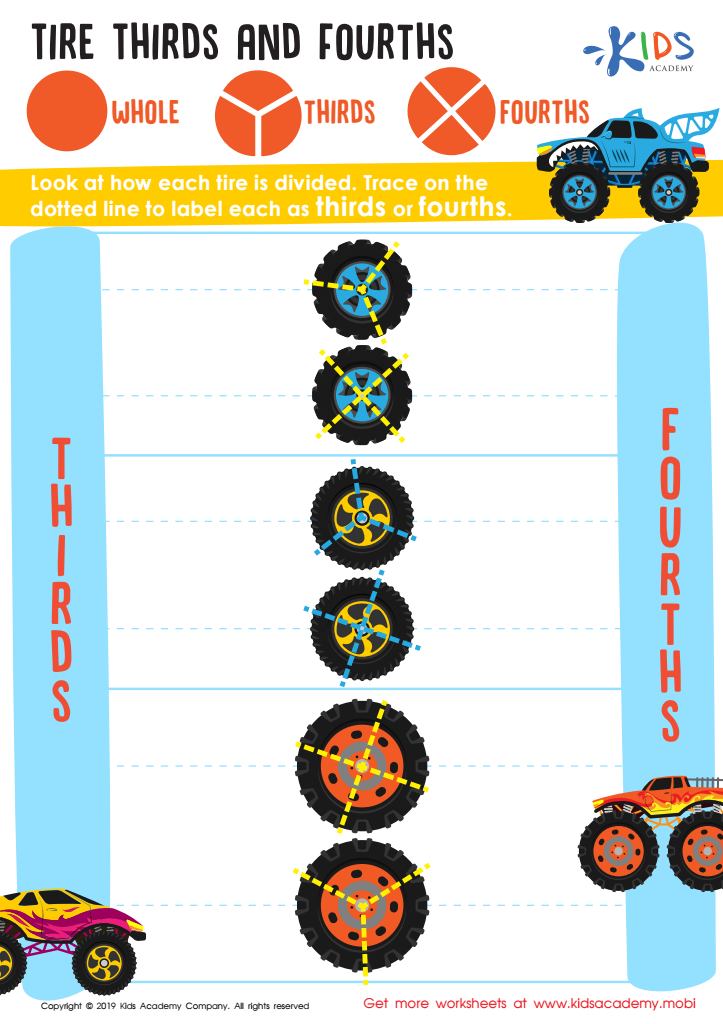
Tire Thirds and Fourths Worksheet
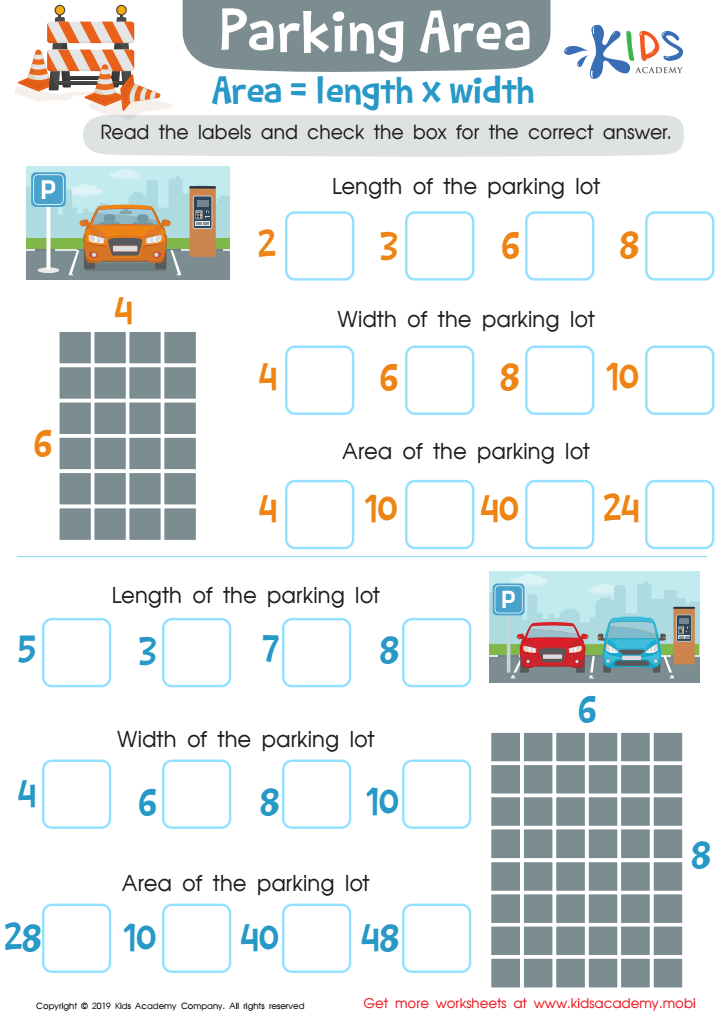
Parking Area Worksheet
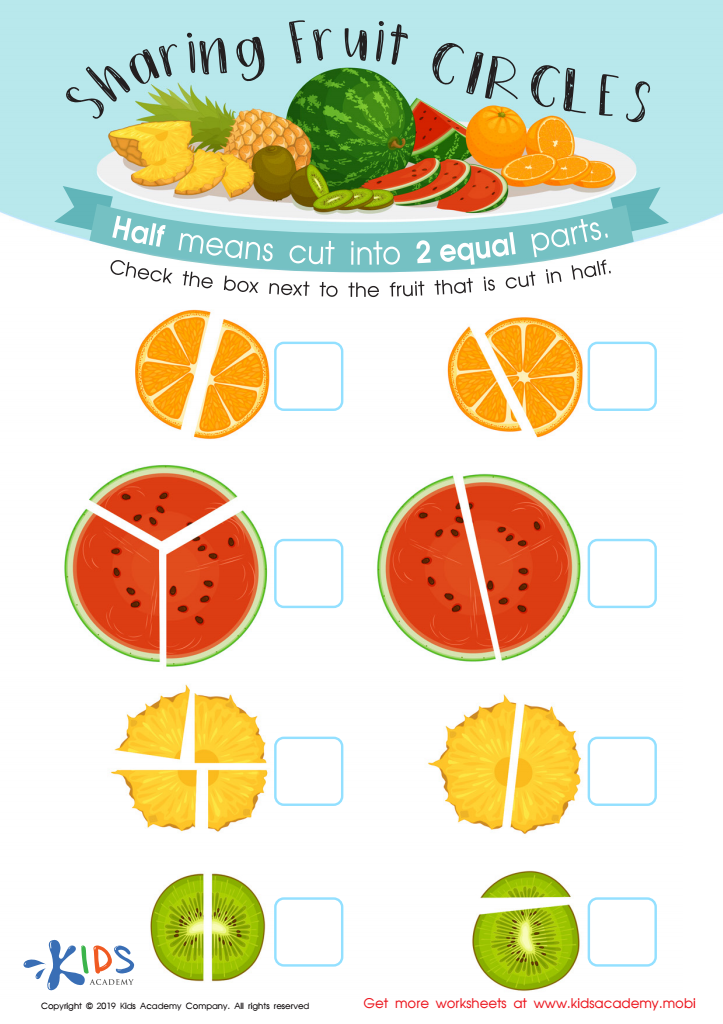
Sharing Fruit Circles Worksheet
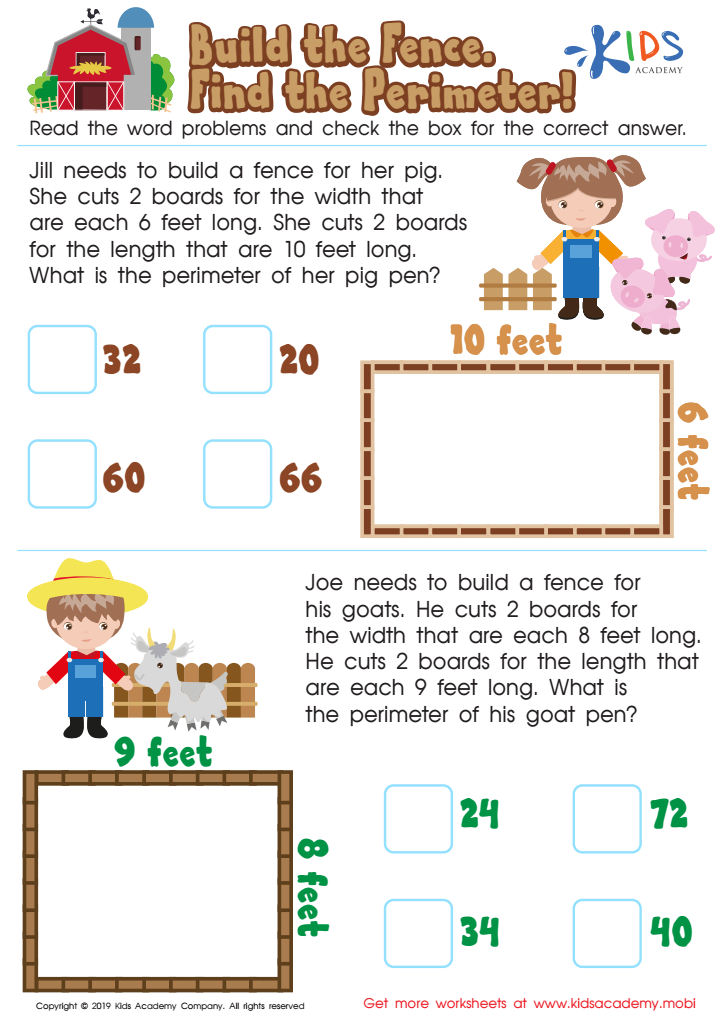
Build the Fence, Find the Perimeter Worksheet
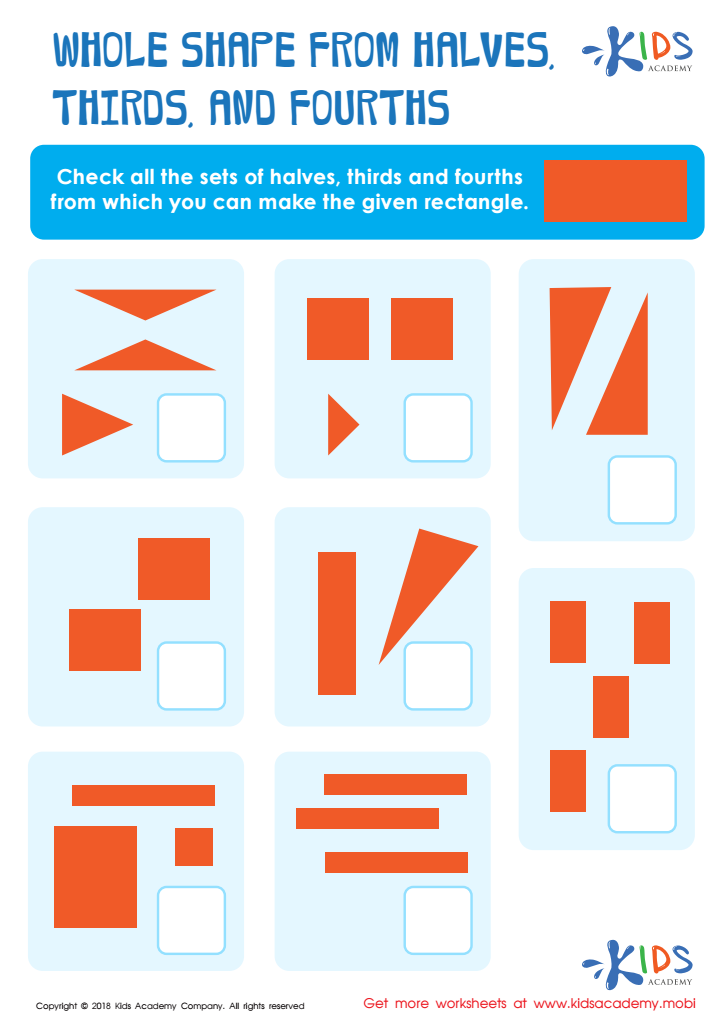
Whole Shape from Halves, Thirds and Fourths Worksheet
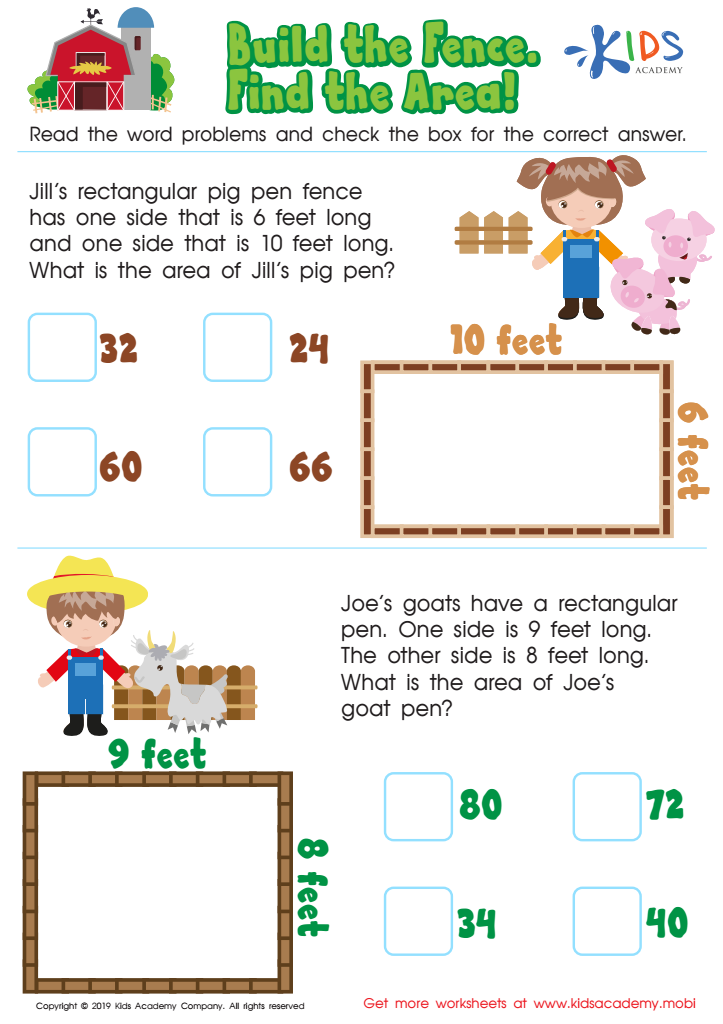
Build the Fence, Find the Area Worksheet








Parents and teachers should care deeply about basic math skills, including geometry, for 8-year-olds because these skills form the foundation for more advanced mathematical concepts and problem-solving abilities. At this age, children are developing critical cognitive skills, and understanding basic geometry helps to build spatial awareness, logical reasoning, and visualization capabilities.
Learning geometry at a young age isn't just about knowing shapes and sizes; it teaches children how to observe, categorize, and think systematically. For instance, recognizing that a square has four equal sides and angles leads children to apply this understanding to more complex problems later on. Geometry also enhances real-world skills; children learn to navigate spaces, understand maps, and grasp everyday concepts like symmetry and balance.
Furthermore, early exposure to geometry can boost confidence and interest in math. Providing children with hands-on activities like building blocks, drawing shapes, or playing puzzles helps solidify these concepts in a fun, engaging manner. This can mitigate math anxiety and foster a positive attitude toward the subject, which is crucial as children move on to complex topics in higher grades.
In summary, by supporting the development of basic geometry skills in 8-year-olds, parents and teachers can ensure that children have the tools they need for future academic success and practical everyday problem-solving.








