Filters

6 filtered results

Clear all filters
Favorites
With answer key
Interactive

6 filtered results

Difficulty Level

Grade


Discover engaging Normal Reading Fiction Worksheets for children ages 4-7, designed to enhance young readers' skills and comprehension. Our activities encourage creativity and critical thinking while immersing kids in exciting fictional stories. With easy-to-follow instructions and answers provided, these worksheets promote independent learning, making reading fun and interactive. Each worksheet aligns perfectly with age-appropriate reading levels, ensuring a smooth learning experience. Ideal for teachers and parents alike, these resources foster a love for reading in early learners. Explore our printable worksheets and help your child develop essential literacy skills while enjoying captivating tales. Turn reading into an adventure today!

Check out this FREE Reading Fiction Trial Lesson for age 4-7!

Relationship Between Illustrations and the Story

Favorites
With answer key
Interactive
  • Reading Fiction
  • 4-7
  • With answer key
  • Normal
Finding the Details and Connections: Assessment 2 Worksheet

Finding the Details and Connections: Assessment 2 Worksheet

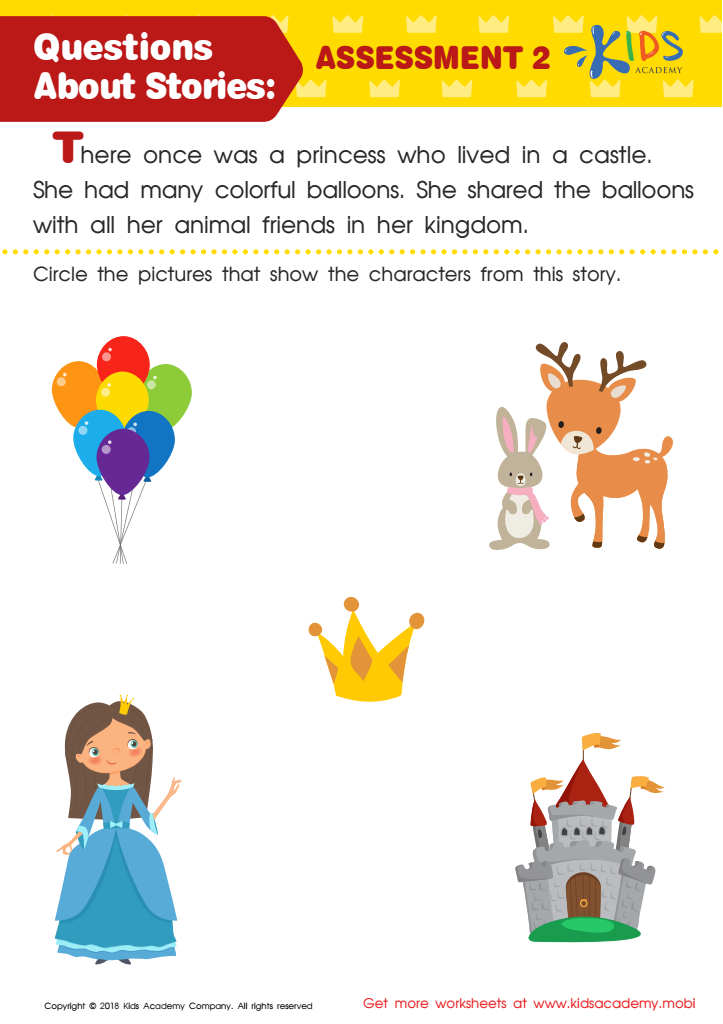
Does your child love animals? If you have pets, they'll relate to the text in this worksheet. Read it aloud to them and help them answer the simple questions by circling yes or no. The story is about a dog and cat living on a farm. Let your child read it aloud to you if they can.
Finding the Details and Connections: Assessment 2 Worksheet
Worksheet
Questions About Stories: Assessment 2 Worksheet

Questions About Stories: Assessment 2 Worksheet

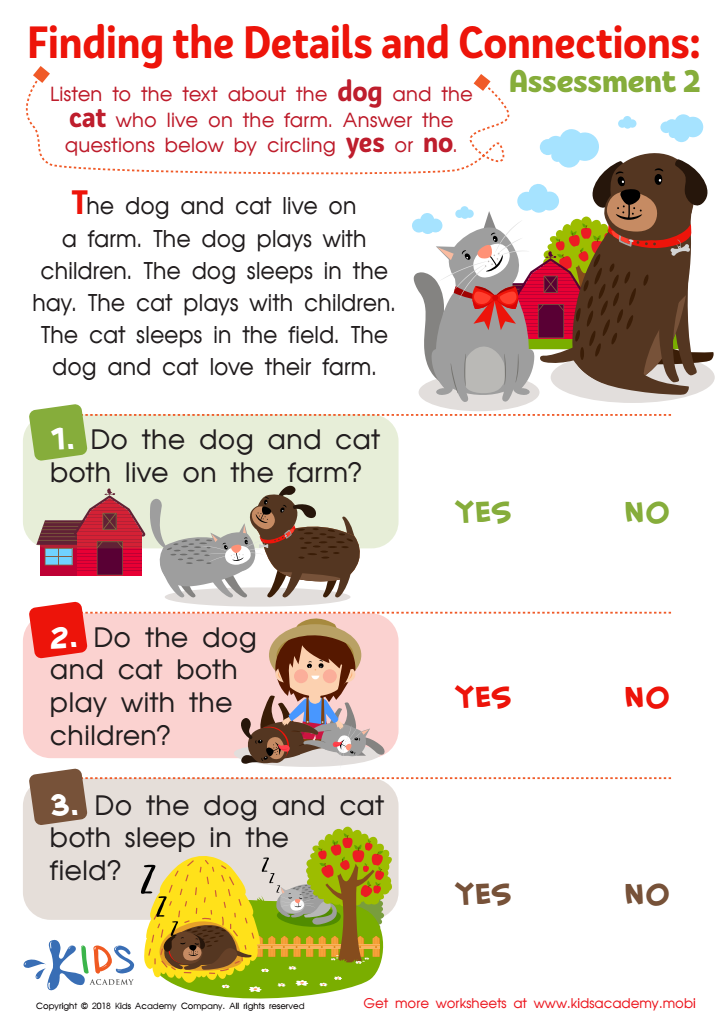
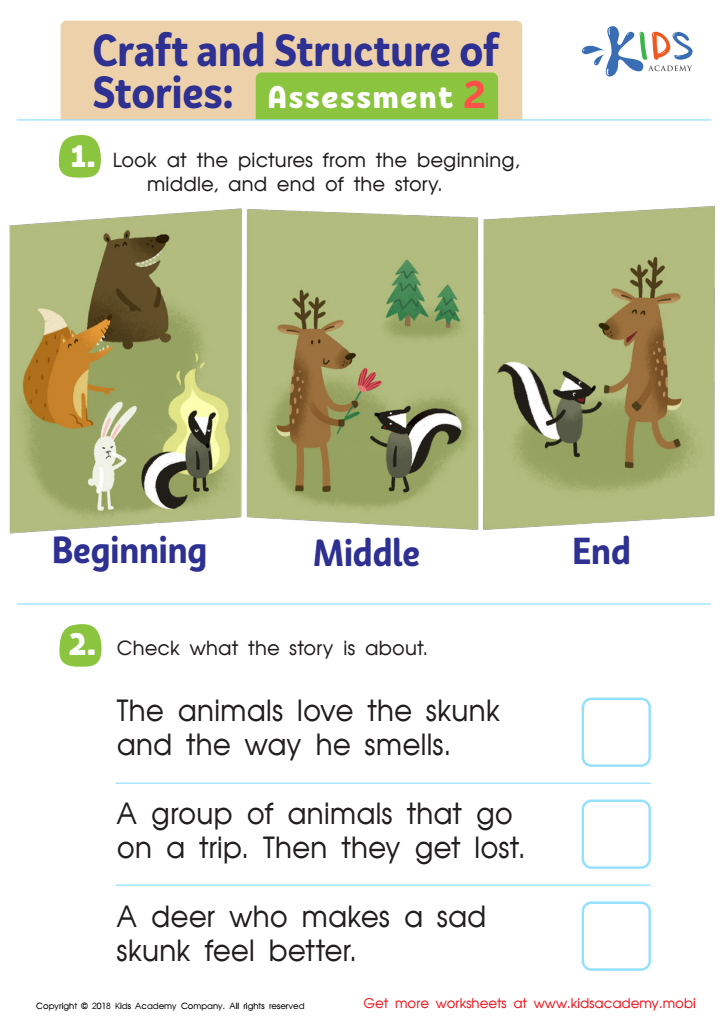
Talk to your child about what a princess is and what activities they associate with that word. Then, read the story to them and help them identify characters in the pictures. Look out for details and ask them questions to ensure they understand.
Questions About Stories: Assessment 2 Worksheet
Worksheet
Craft and Structure of Stories: Assessment 2 Worksheet

Craft and Structure of Stories: Assessment 2 Worksheet

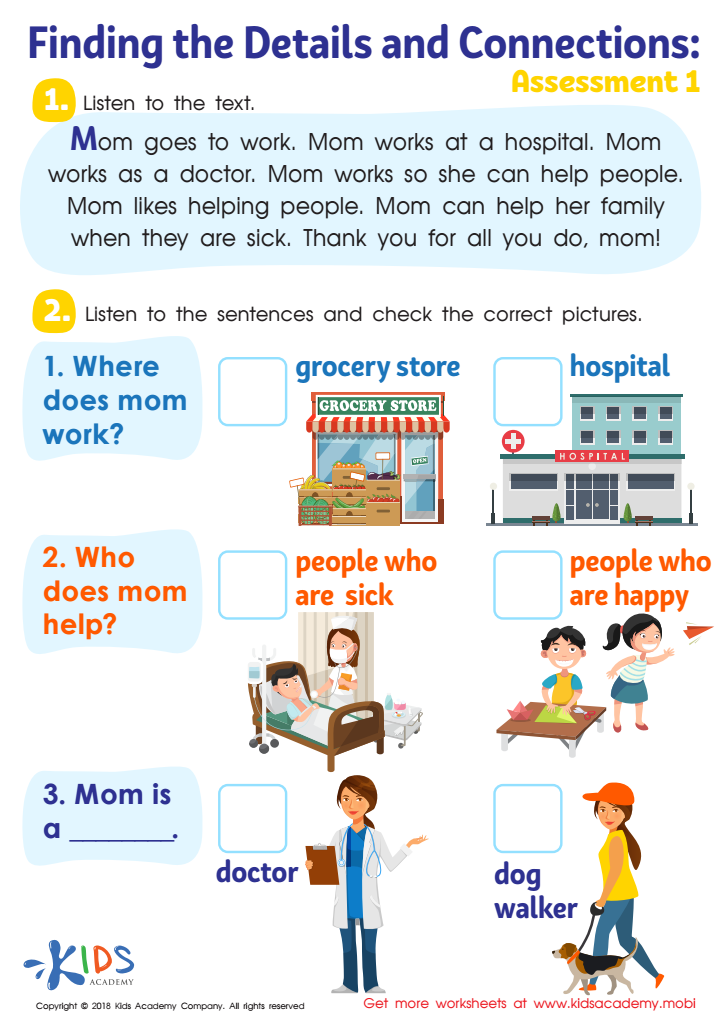
Help your child assess their story sequencing and reading comprehension skills using this cute worksheet! It encourages them to look at the three pictures on the page, each representing a scene from the beginning, middle and end. Ask them what the story is about, then let them check the box next to the correct answer. This is a great way to ensure they understand the main events of a story.
Craft and Structure of Stories: Assessment 2 Worksheet
Worksheet
Finding the Details and Connections: Assessment 1 Worksheet

Finding the Details and Connections: Assessment 1 Worksheet

Ask your students what their parents do for a job. Do they know what profession their mom is in and where she works? Professionals have places they go to do their job. In this task, Mom goes to a hospital and is a doctor. Read the text and help them check the right pictures.
Finding the Details and Connections: Assessment 1 Worksheet
Worksheet
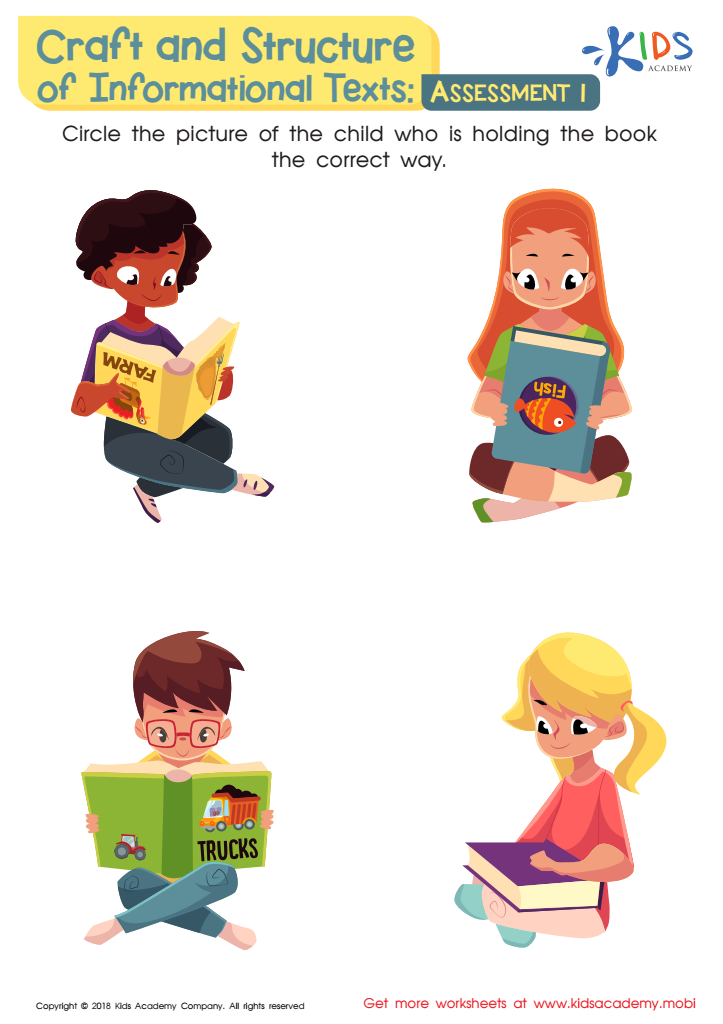
Craft and Structure of Informational Texts: Assessment 1 Worksheet

Craft and Structure of Informational Texts: Assessment 1 Worksheet

Young children need to know how to hold books correctly when they start reading. This assessment worksheet helps them show they know what to do. They'll look at the pictures and circle the child who is holding the book correctly. It's a great way to tell they are well on their way to becoming lifetime readers!
Craft and Structure of Informational Texts: Assessment 1 Worksheet
Worksheet
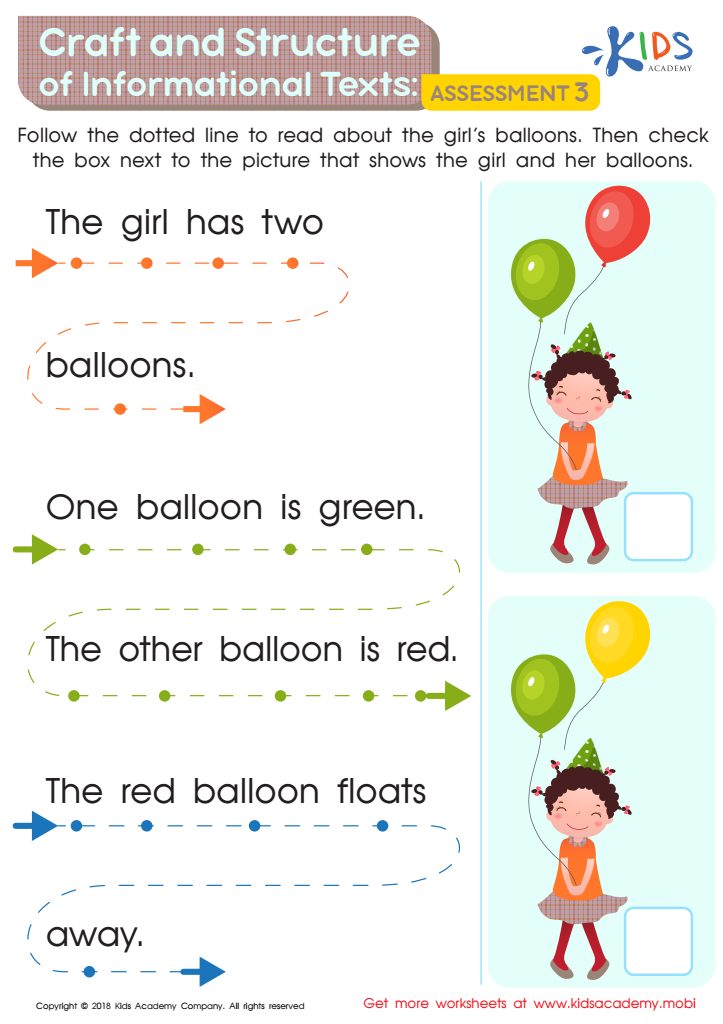
Craft and Structure of Informational Texts: Assessment 3 Worksheet


Craft and Structure of Informational Texts: Assessment 3 Worksheet
Test your beginning reader's understanding of left-to-right directionality and use of details from informational texts with this fun worksheet. Follow the traceable paths to find the right picture for each sentence. This will help your child gain confidence and be successful as a reader.
Craft and Structure of Informational Texts: Assessment 3 Worksheet
Worksheet


Parents and teachers should prioritize Normal Reading Fiction Activities with Answers for children aged 4-7 for several important reasons. Firstly, these activities promote early literacy skills vital for cognitive development. Engaging with fiction helps children develop language skills, comprehension, and vocabulary, essential for reading fluency as they grow.

Secondly, these activities ignite creativity and imagination, allowing young readers to explore different worlds, characters, and experiences through stories. This imaginative engagement fosters a love for reading, which can translate into a lifelong habit that enhances academic achievements.

Additionally, fiction activities often include interactive components like discussion questions and comprehension checks, helping educators and parents assess understanding and encourage critical thinking.

Moreover, shared reading experiences create bonding opportunities between parents, teachers, and students, supporting social-emotional development. Lastly, giving young learners access to a range of stories can also promote empathy and cultural awareness, as they encounter diverse perspectives and situations.

In summary, engaging children in Normal Reading Fiction Activities not only supports foundational literacy but also nurtures creativity, emotional intelligence, and critical thinking—skills that are foundational for their future academic and social success.