History Worksheets for Ages 3-6 - Page 2
26 filtered results
-
From - To
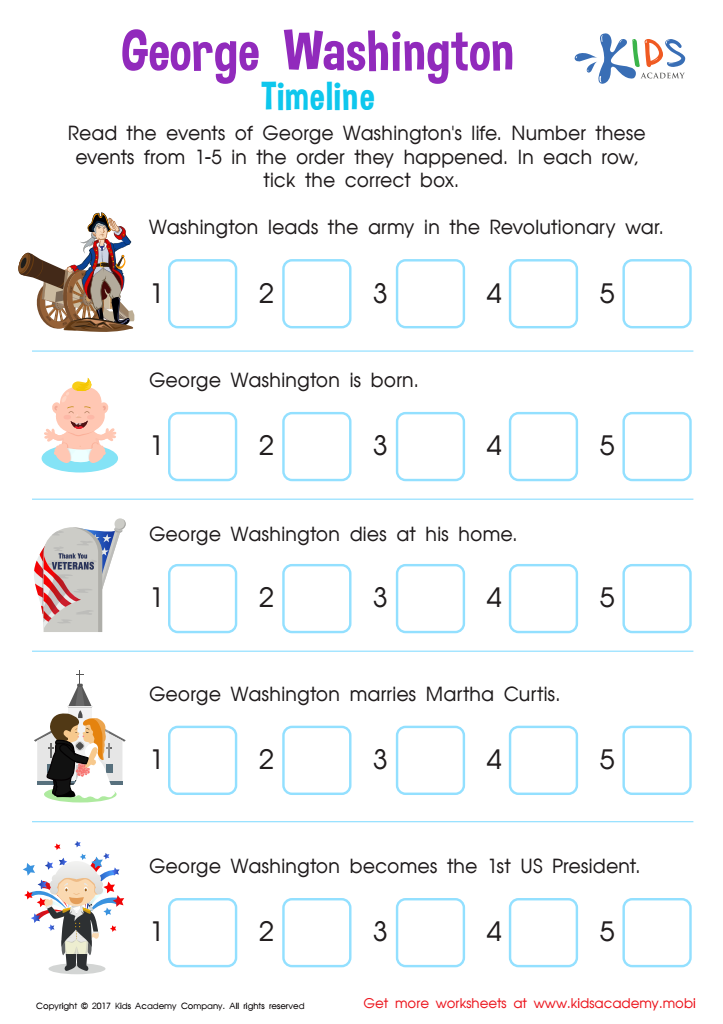
George Washington Timeline Worksheet
 Assign to My Students
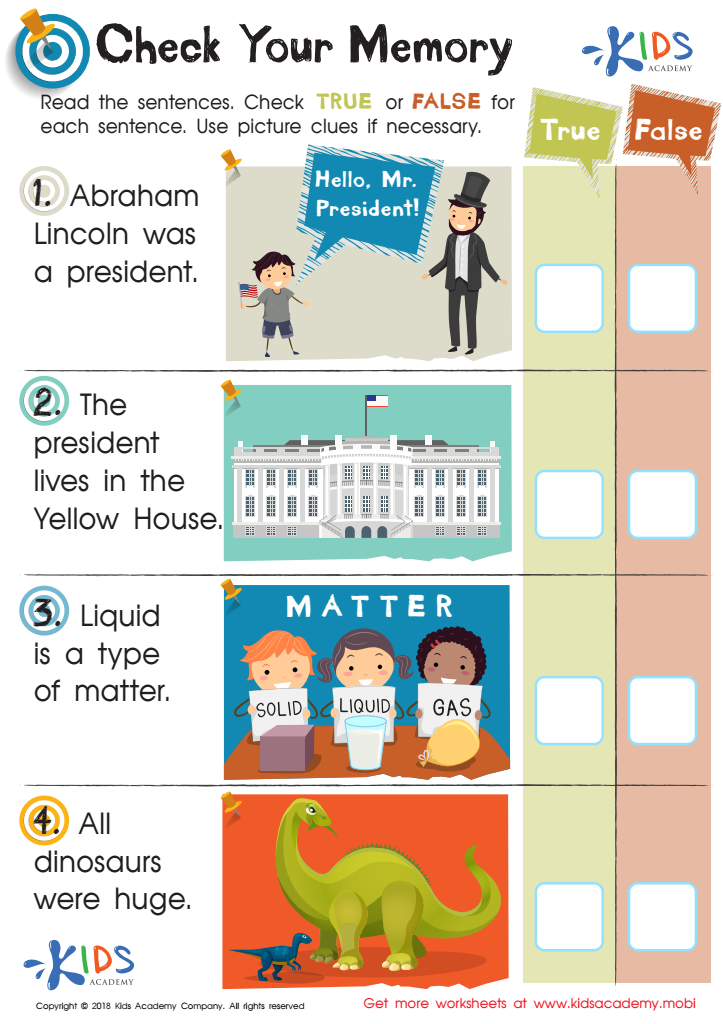
Check Memory Worksheet








Teaching history to children aged 3-6 is crucial for their cognitive and emotional development. At this age, children are naturally curious about the world around them, and history provides a rich tapestry of stories that can ignite their imaginations. Introducing them to historical figures, events, and cultures can inspire a sense of wonder and curiosity, motivating them to ask questions and seek answers.
Understanding history also fosters a sense of identity and belonging. Children begin to form an understanding of who they are in relation to the larger world. By learning about diverse cultures and historical events, they develop empathy and appreciation for others, which is essential in our increasingly interconnected society.
Moreover, early exposure to history builds foundational skills such as critical thinking, problem-solving, and communication. When children learn to recognize patterns and concepts from the past, they can better understand their own experiences and the world around them.
Incorporating history into early education prepares children to be informed citizens. As they grow, they will appreciate the complexity of societal issues and the importance of historical context in shaping our future. Ultimately, instilling a love for history in early childhood lays the groundwork for lifelong learning and informed participation in society.








