Time Worksheets for Ages 3-7 - Page 2
25 filtered results
-
From - To
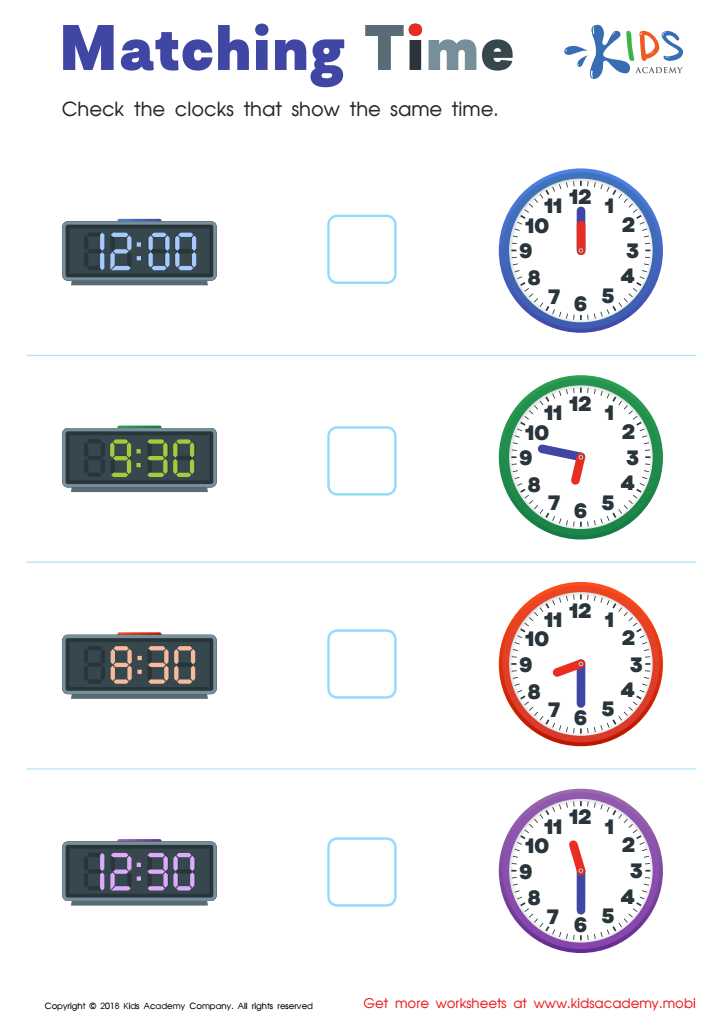
Matching Time Worksheet
 Assign to My Students





.jpg)


Time management plays a crucial role in the development of children between the ages of three and seven. At this formative stage, establishing a sense of routine helps them understand the concept of structure and discipline, which is fundamental to their overall development. When parents and teachers pay attention to time, it creates a consistent and predictable environment. This helps children feel secure, as they know what to expect throughout the day.
Effective time management also improves cognitive skills. Activities like following a daily schedule, participating in time-bound tasks, and transitioning smoothly between activities foster better attention spans and organizational skills in young children. Learning to manage time early on sets children up for academic success by helping them meet deadlines and balance various tasks effectively.
Moreover, being mindful of time introduces children to the idea of prioritizing different activities. This early comprehension aids in building decision-making skills, as children learn to allocate appropriate time for play, study, meals, and rest.
Lastly, it cultivates good habits that can be carried into adulthood, such as punctuality and the importance of using time wisely. When parents and teachers focus on time, they lay a strong foundation for children’s future personal and professional lives, ultimately setting them up for greater success and well-being.








