
Community Worksheets for Ages 3-7 - Page 6
121 filtered results
Difficulty Level
Grade
Age
-
From - To
Subject
Activity
Standards
Favorites
With answer key
Interactive
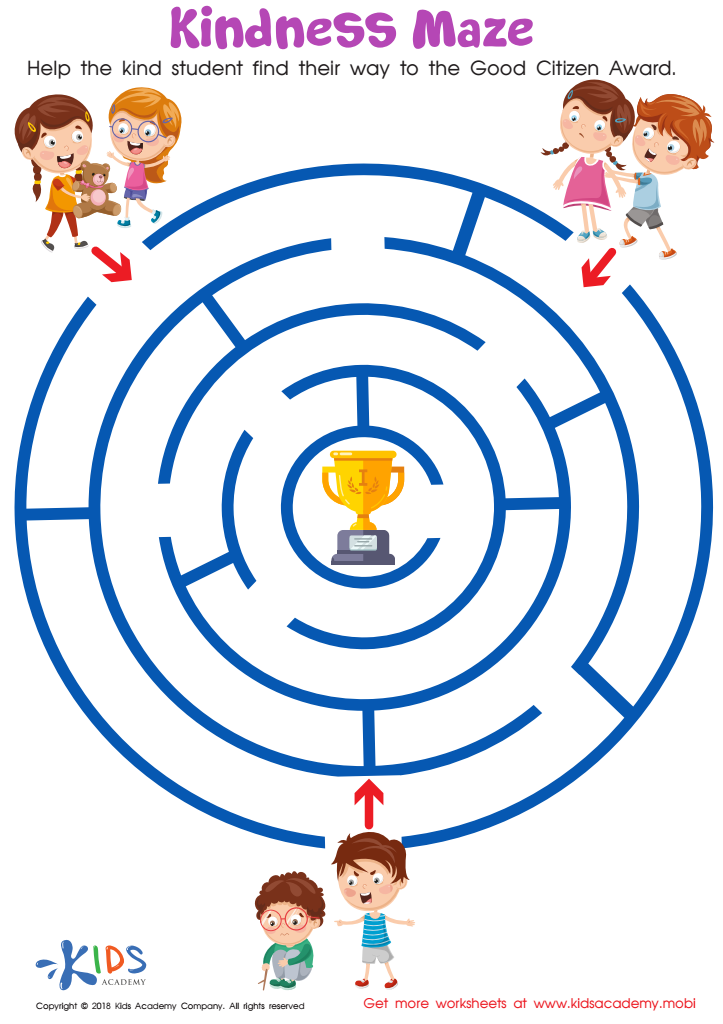
Kindness Maze Worksheet
Rewards come in many forms for kind deeds. When your children do good, you can choose to reward them with a gift or compliment. The students in this worksheet have been awarded the Good Citizen Award for kindness. Let your kids help the students find their way to the award - at the center of the maze. Guide them through to get their prize.
 Assign to My Students
Kindness Maze Worksheet
Worksheet
Join Kids Academy for Free
Who is primarily going to use this learning content?








Parents and teachers should care about community for children aged 3-7 because it plays a crucial role in their social, emotional, and cognitive development. During these formative years, children are like sponges, absorbing values, behaviors, and social norms from their surroundings. A strong community fosters a sense of belonging, helping children feel safe and supported as they explore their world.
In a nurturing community, children learn vital interpersonal skills such as sharing, cooperation, and respect for diversity. This social interaction aids in developing their emotional intelligence, which is essential for building relationships and navigating peer dynamics. Furthermore, communal involvement exposes children to different perspectives and cultural backgrounds, enriching their understanding of the world.
Collaboration between parents, teachers, and local institutions can create a robust support system. When parents engage with the community, they model positive citizenship for their children. Educational programs, playgroups, and local events can enhance learning experiences while allowing children to form connections with peers.
Ultimately, investing in community not only benefits the individual child but also strengthens the collective well-being, laying the foundation for resilient future generations. In essence, a supportive community acts as a vital ecosystem for healthy growth and development during these early years.








