Comparison Worksheets for Ages 5-7
19 filtered results
-
From - To
Welcome to our "Comparison Worksheets for Ages 5-7"! These engaging worksheets are designed to help young learners develop essential comparison skills through fun and interactive activities. By exploring concepts such as greater than, less than, and equal to, children will enhance their mathematical understanding and critical thinking abilities. Our colorful and age-appropriate worksheets inspire curiosity and boost confidence in early math learners. With various exercises at different levels of difficulty, these printables are perfect for home practice or classroom use. Invite your child to join the adventure of numbers and comparisons today, ensuring a solid foundation in math for their future education!
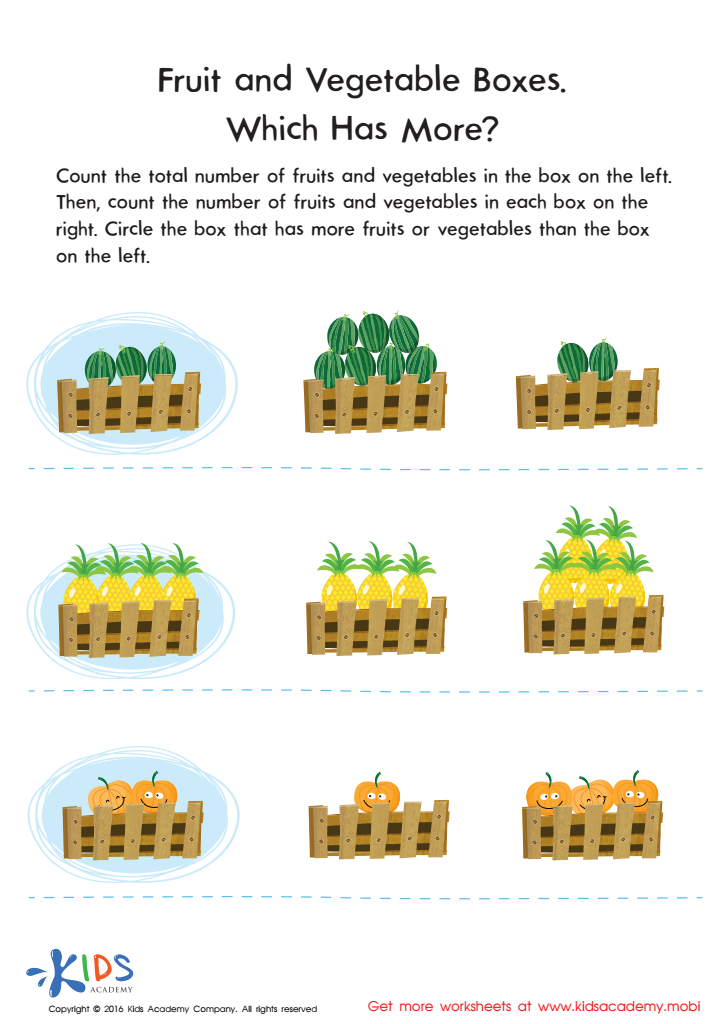
Which Has More? Size Worksheet
 Assign to My Students
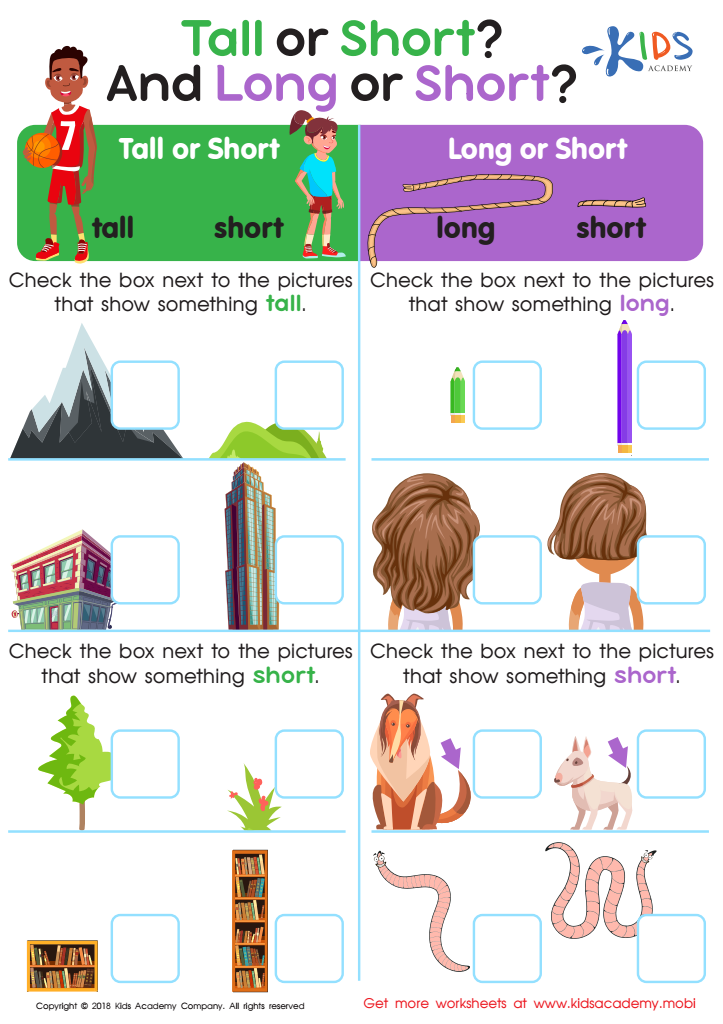
Tall or Short and Long or Short? Worksheet
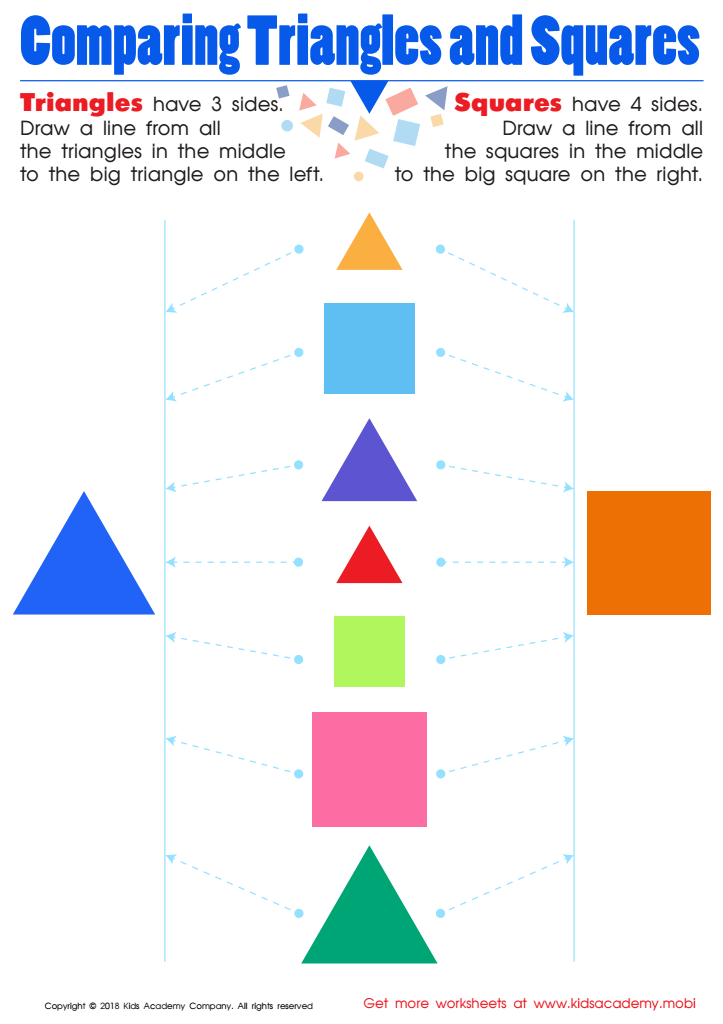
Comparing Triangles Squares Worksheet
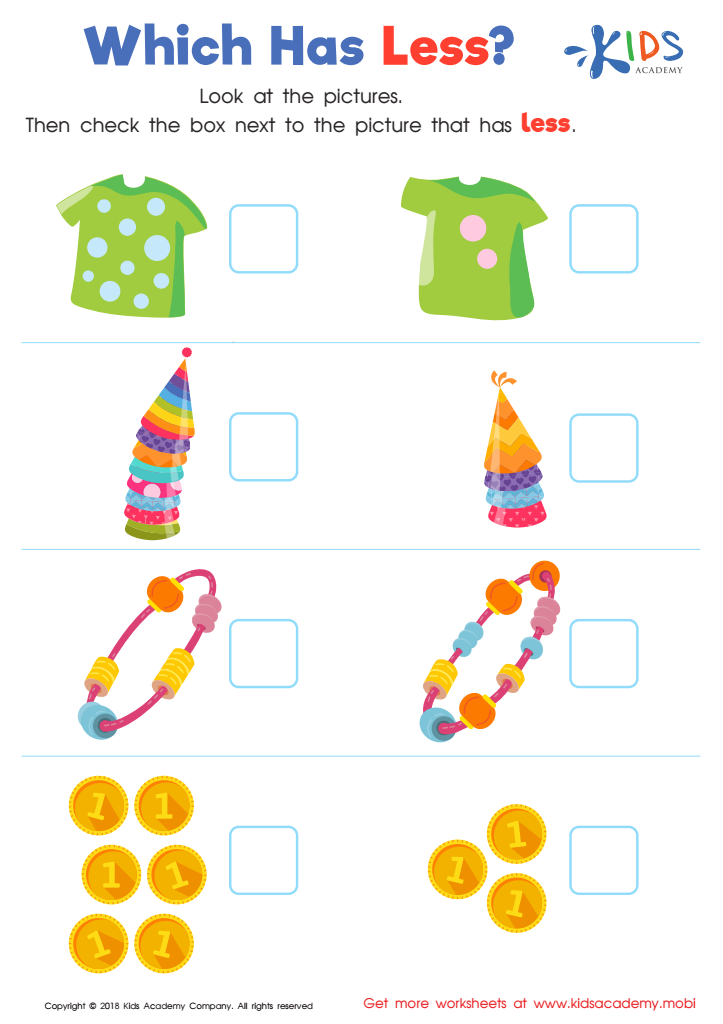
Which Has Less? Worksheet
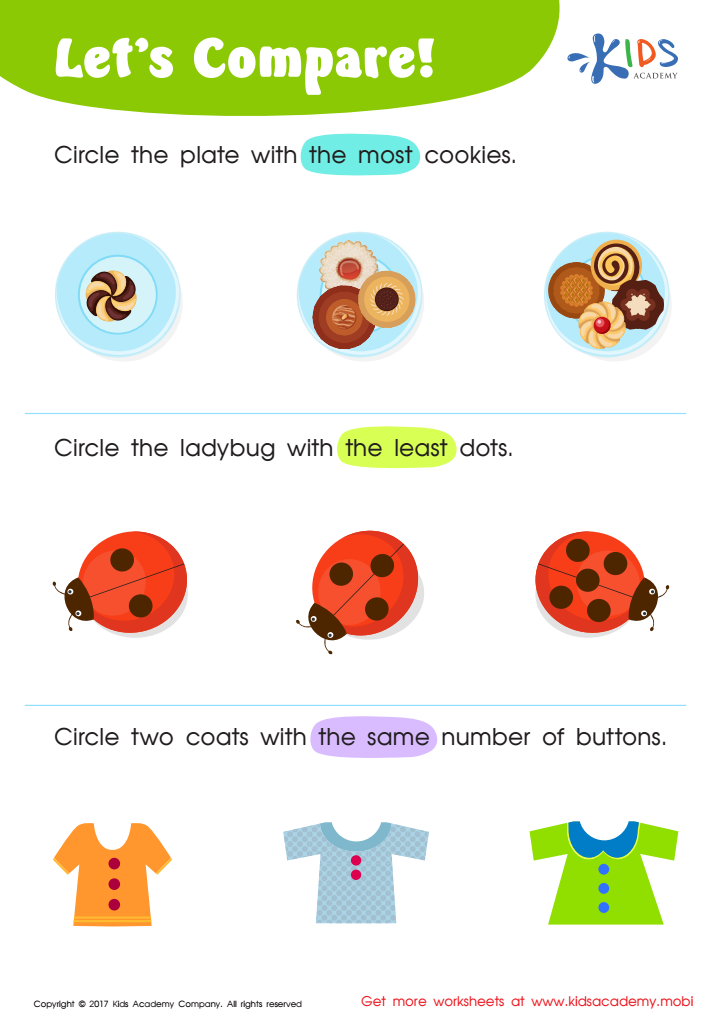
Matching: Classifying Toys by Size Worksheet
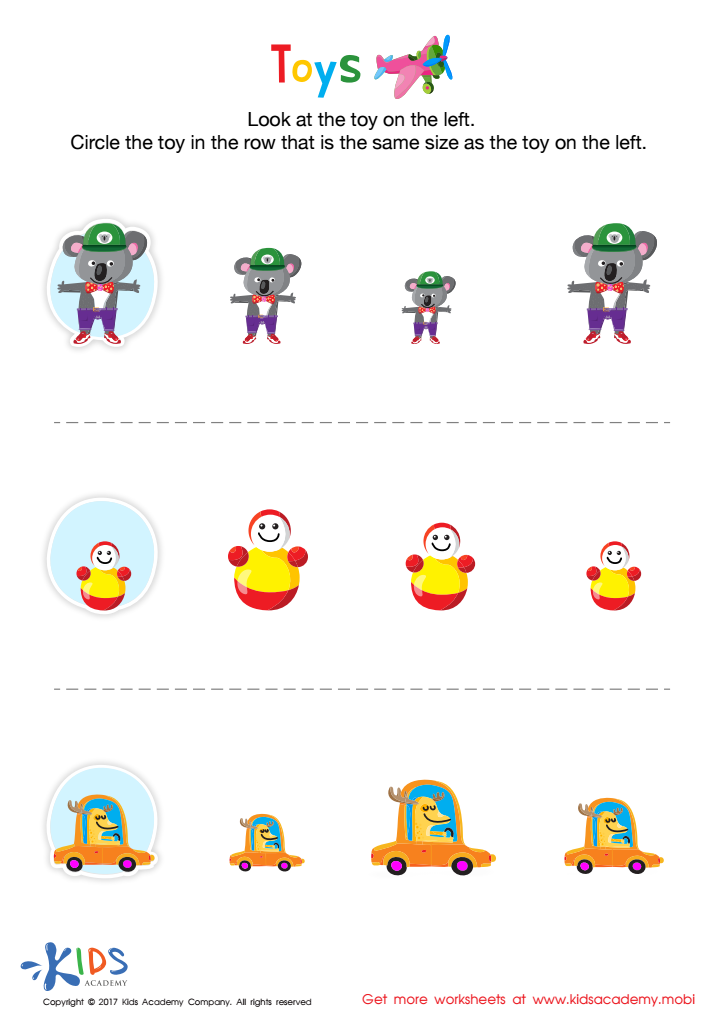
Matching: Classifying Toys by Size Worksheet
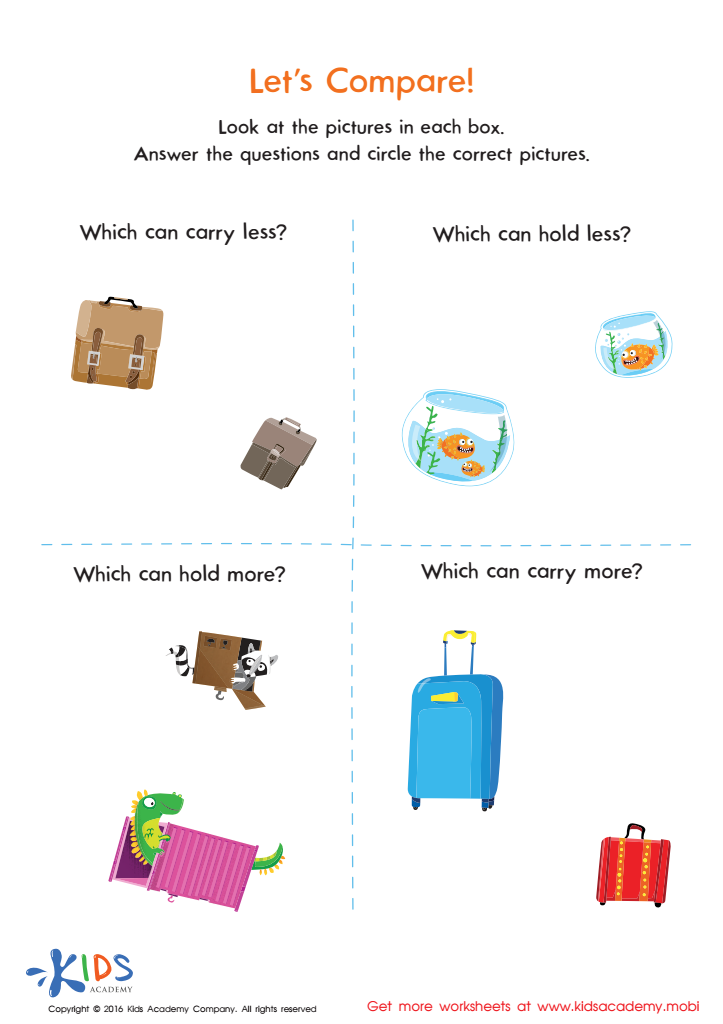
Let's Compare Worksheet: Big or Small
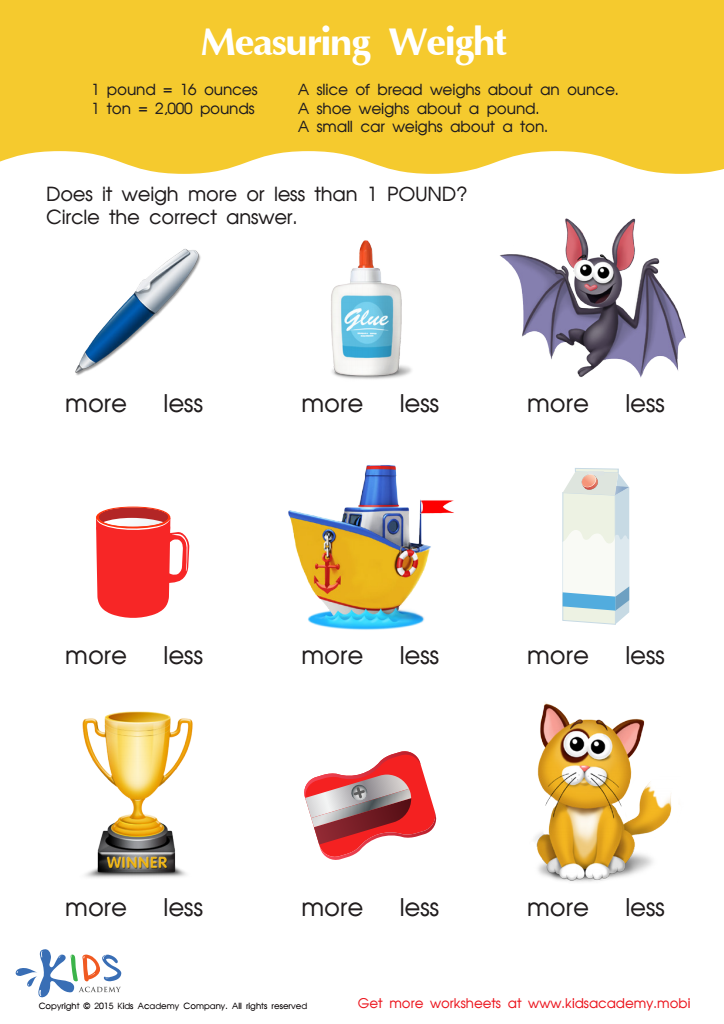
Measuring weight in pounds Worksheet
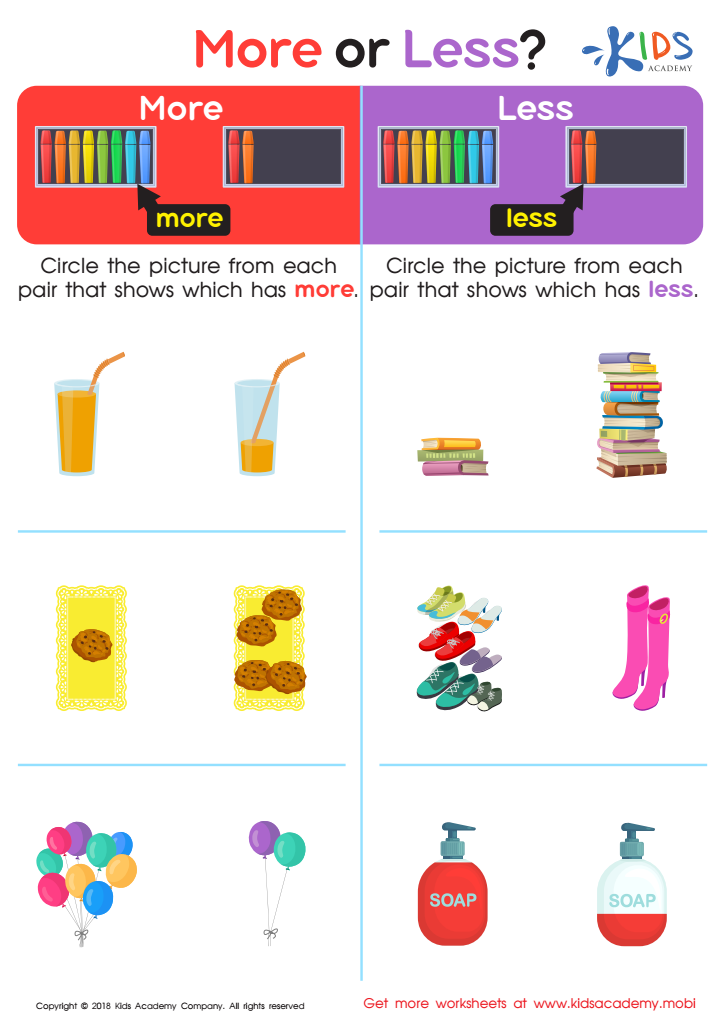
More or Less? Worksheet
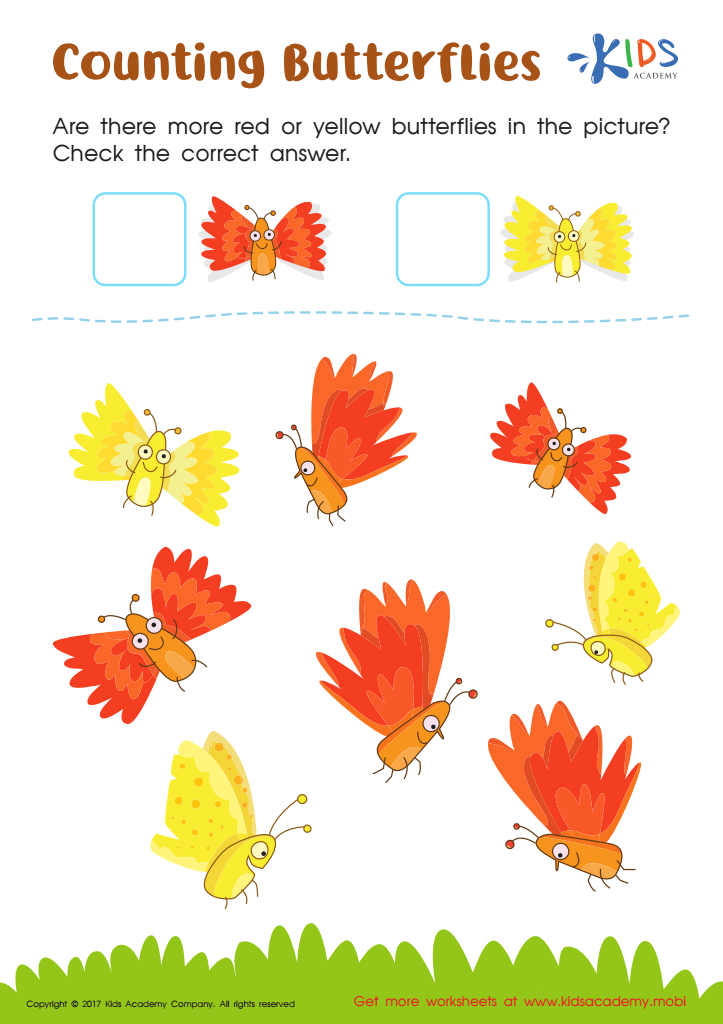
Counting Butterflies Worksheet
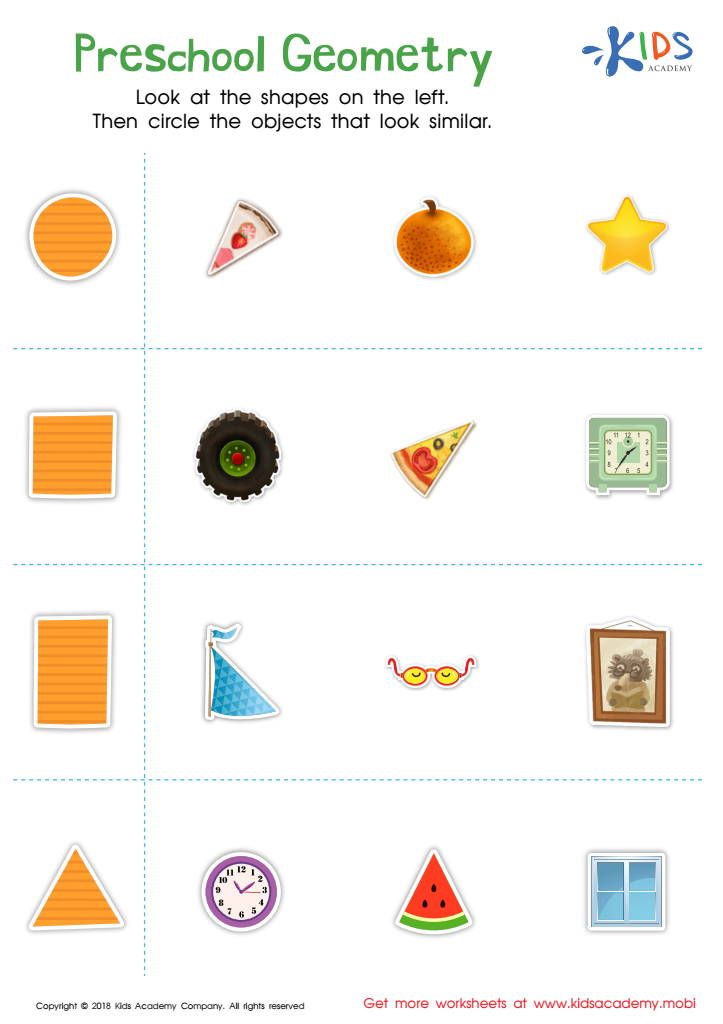
Preschool Geometry Worksheet
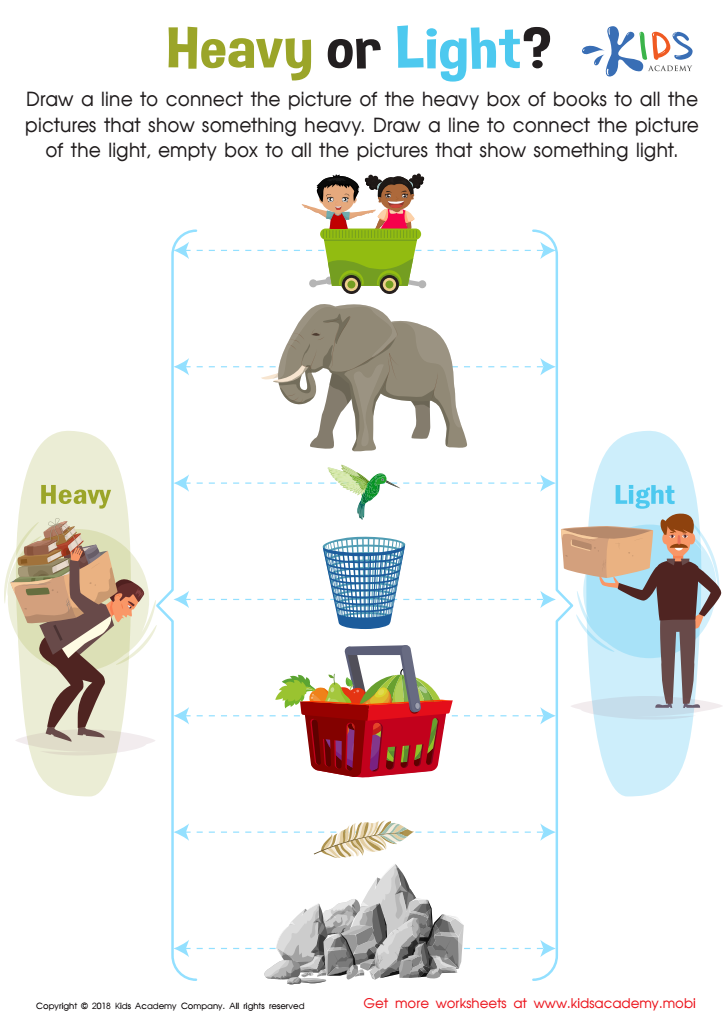
Heavy or Light? Worksheet
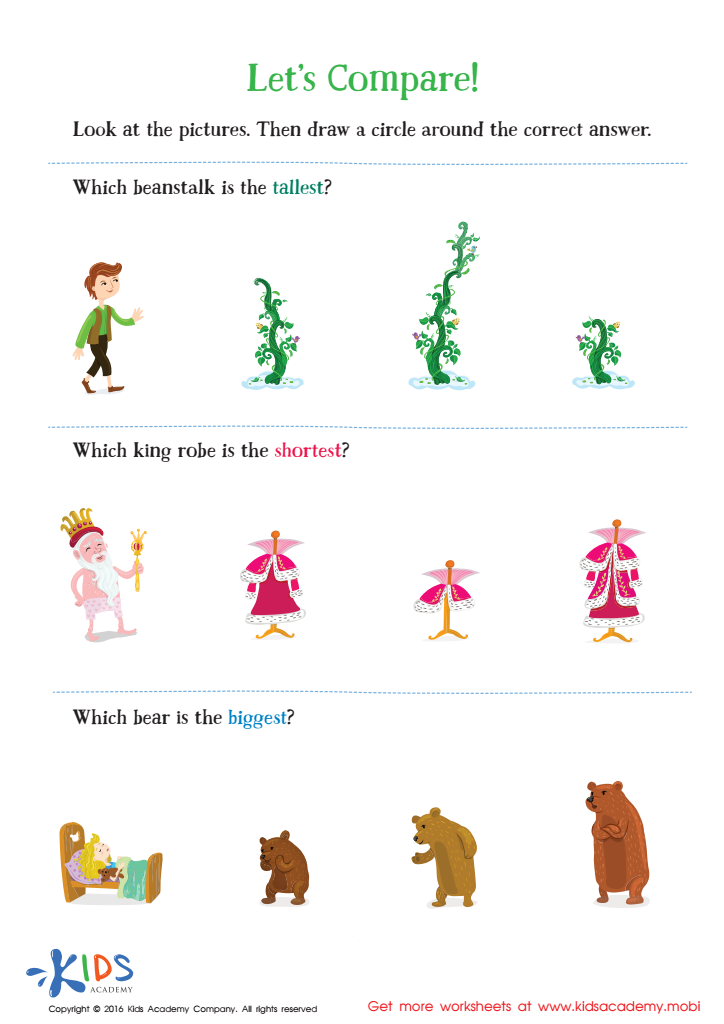
Fairy Tale Worksheet: Let's Compare
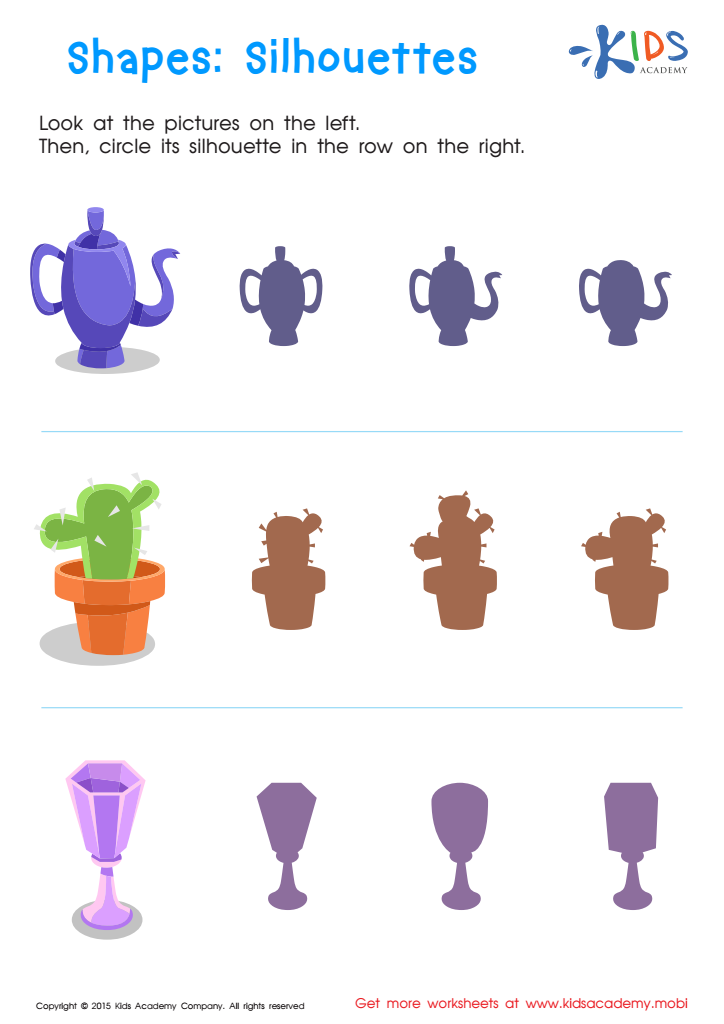
Silhouettes – Shapes Worksheet
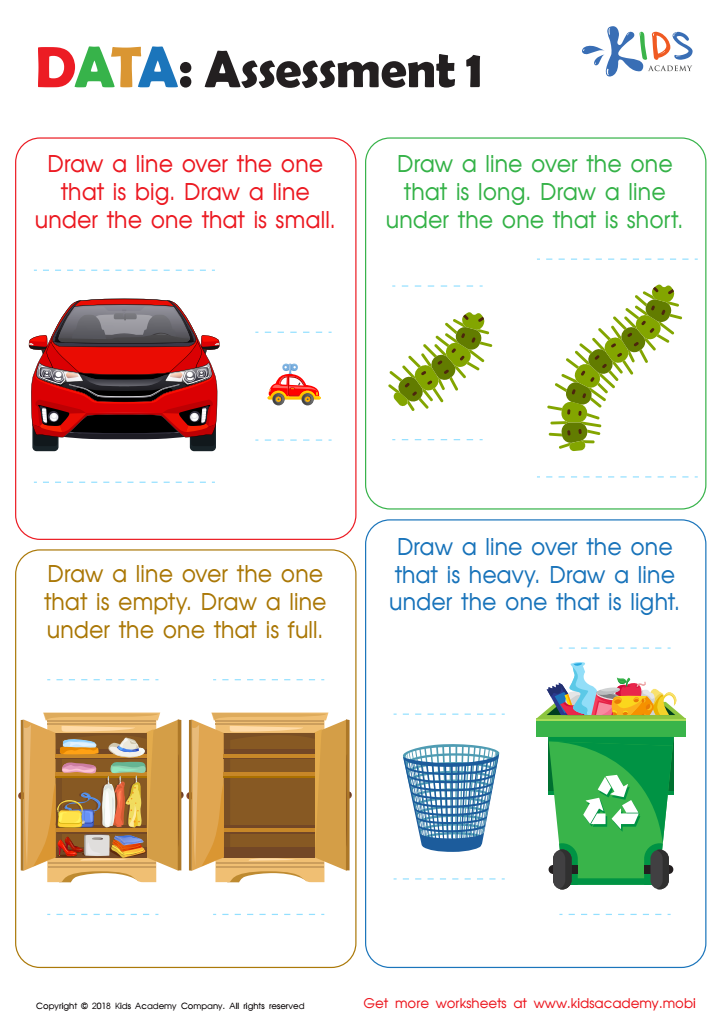
Data: Assessment 1 Worksheet
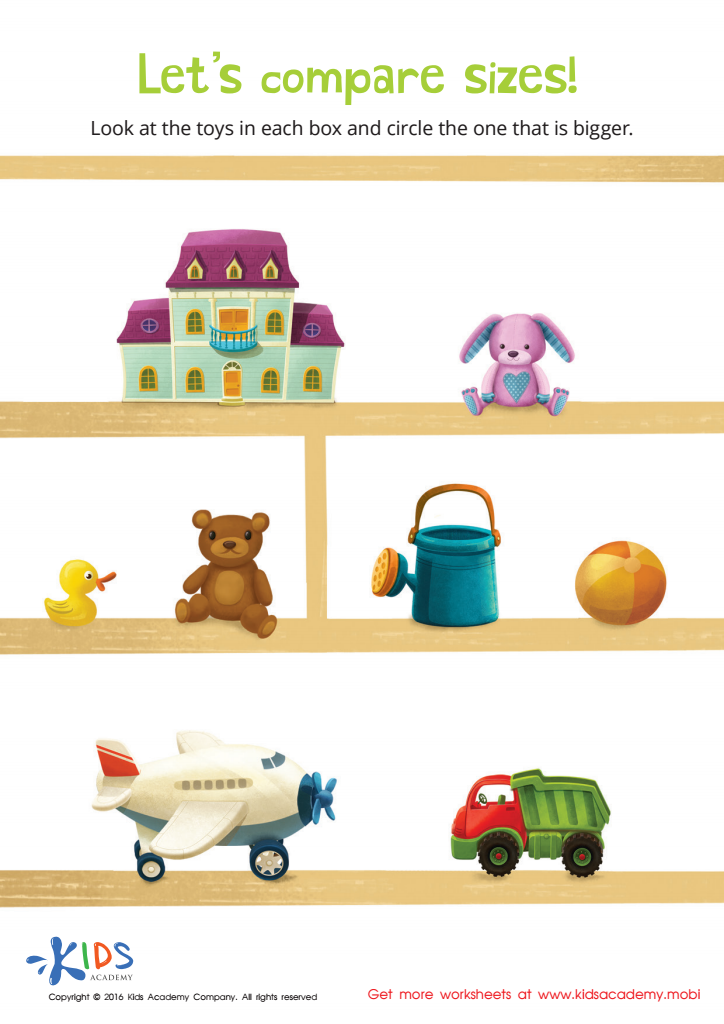
Classifying by Size Sorting Worksheet
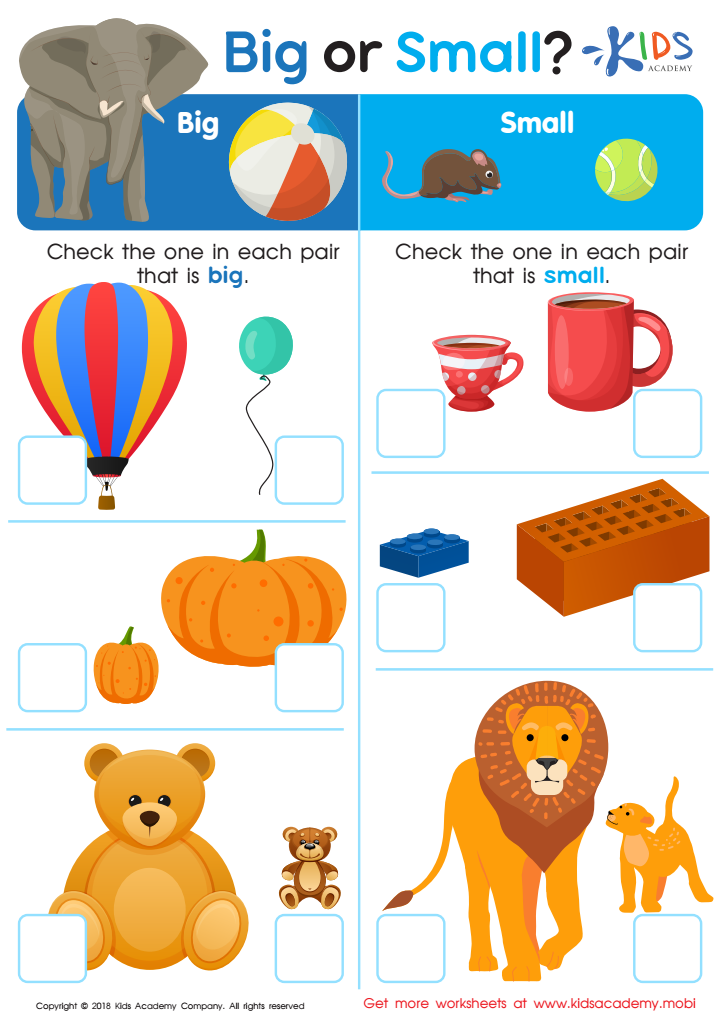
Big or Small? Worksheet
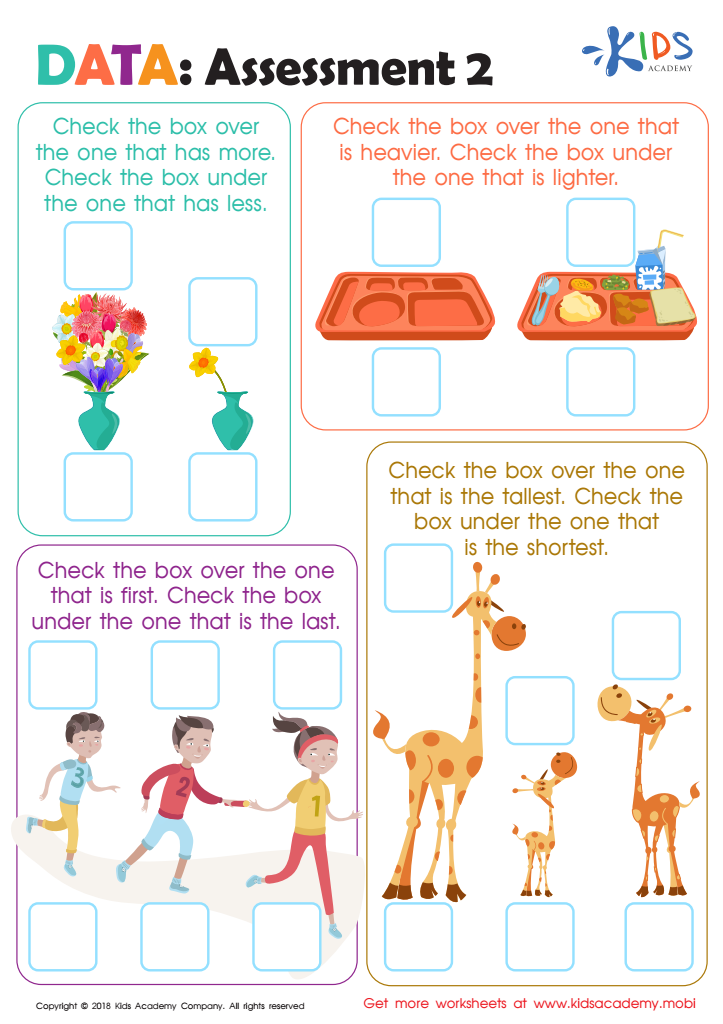
Data: Assessment 2 Worksheet
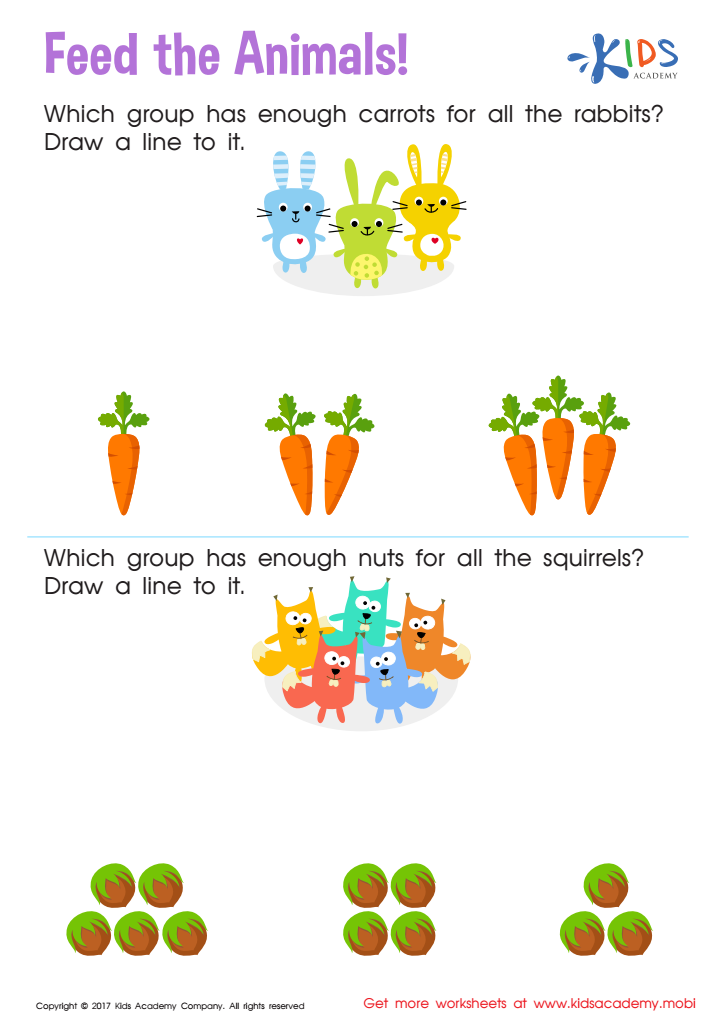
Count and Match: Feed the Animals Worksheet


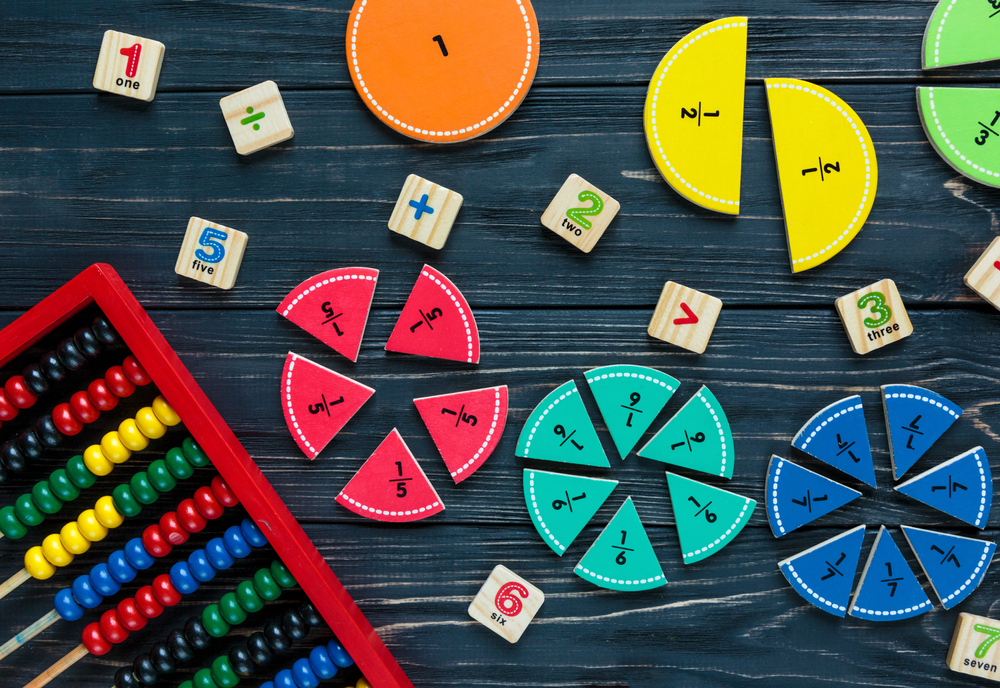





Comparison is a fundamental cognitive skill for children aged 5-7, and it's crucial for parents and teachers to recognize its importance. This developmental stage is marked by a growing understanding of similarities and differences, aiding children in categorizing and organizing their experiences. For instance, when children compare sizes, shapes, or quantities, they enhance their critical thinking and problem-solving abilities, setting a foundation for future learning.
Caring about comparison helps educators and parents foster an environment that encourages inquiry and exploration. Through guided comparisons in everyday activities—like sorting toys, or measuring ingredients in cooking—children strengthen their observational skills and vocabulary. This practice not only bolsters mathematical concepts like greater than, less than, or equal to, but also supports early literacy skills as they learn to articulate their observations.
Moreover, supporting children in making comparisons nurtures their emotional intelligence. It teaches them to understand perspectives, establish empathy, and recognize that different outcomes or choices can arise from similar situations. Ultimately, an emphasis on comparison enriches a child's learning experience and lays the groundwork for lifelong critical thinking and social awareness. Thus, both parents and teachers play a vital role in guiding children through this essential developmental process.








