Extra Challenge Area and Perimeter Worksheets for Ages 3-9
5 filtered results
Difficulty Level
Grade
Age
-
From - To
Subject
Activity
Standards
Welcome to our Extra Challenge Area and Perimeter Worksheets webpage, designed specifically for young learners aged 3-9! These engaging worksheets provide an exciting opportunity for kiddos to deepen their understanding of area and perimeter through fun challenges. With a variety of colorful and interactive exercises, children can develop essential math skills while enjoying the learning process. Perfect for teachers, parents, and homeschooling activities, our worksheets cater to different learning levels, ensuring every child is challenged appropriately. Spark curiosity in mathematics and help your little ones explore the world of shapes and measurements with our thoughtfully crafted challenges! Explore now!
Favorites
With answer key
Interactive
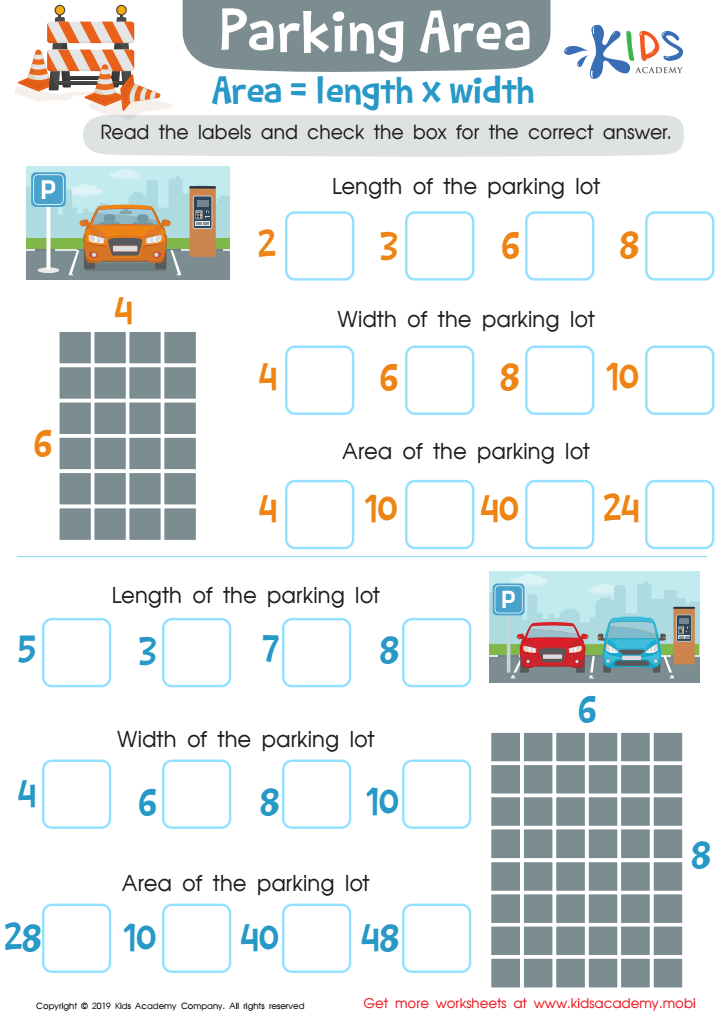
Parking Area Worksheet
Math may not be your child's favorite, but that doesn't mean they can't excel. Math can seem intimidating, but with practice, they can learn it's not so hard. In this worksheet, your kids will calculate the area of a parking lot, by adding length and width. Help them read the labels and select the correct answer.
 Assign to My Students
Parking Area Worksheet
Worksheet
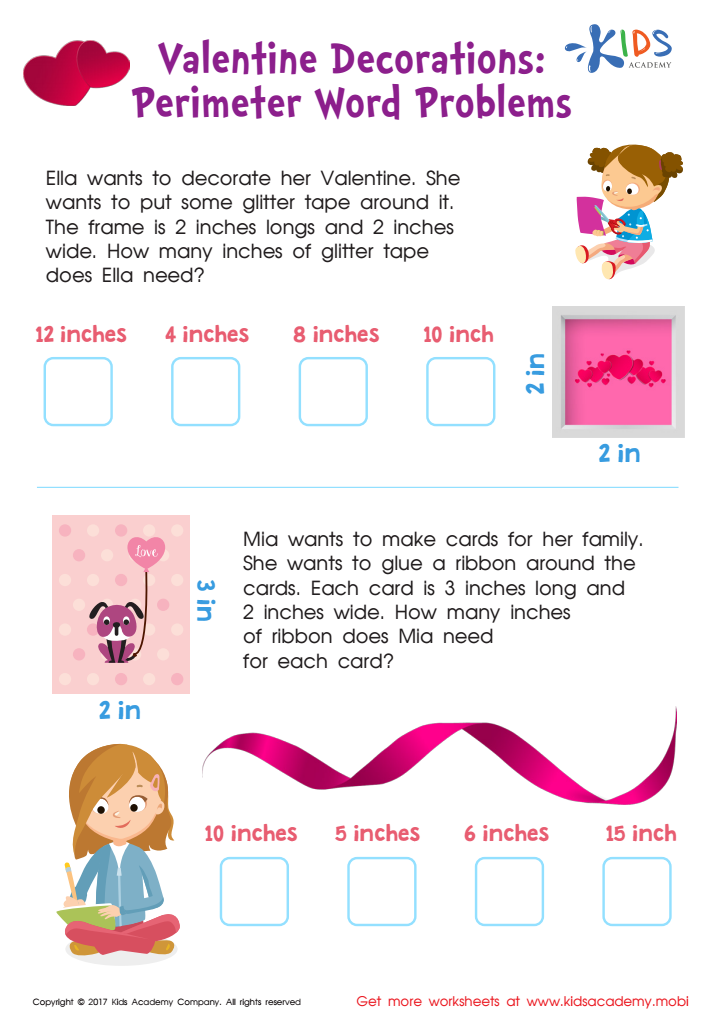
Perimeter Word Problems Worksheet
Celebrate Valentine's Day by solving perimeter word problems! This 3rd grade worksheet offers a fun, realistic way to practice. Help kids figure out how much material they'll need to make beautiful valentines!
Perimeter Word Problems Worksheet
Worksheet
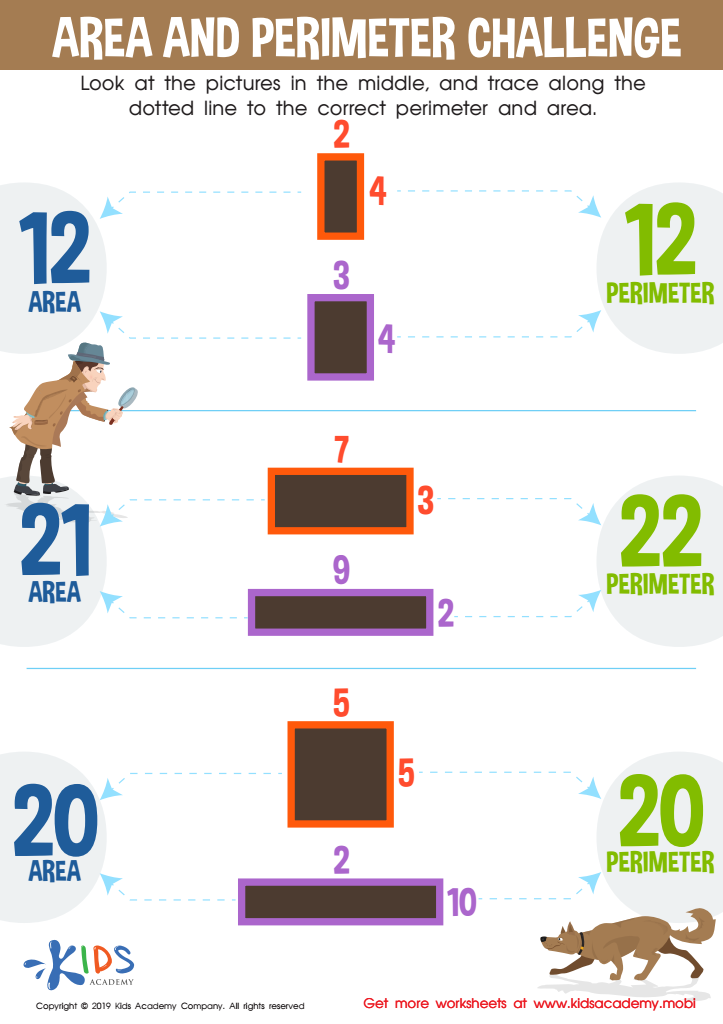
Area and Perimeter Challenge Worksheet
Calculating objects can seem tricky, but with your guidance your students will soon be pros. To help them, give them exercises to practice. Eg. Trace the dotted line on the worksheet to calculate perimeter and area. With practice, they'll soon be geometry experts.
Area and Perimeter Challenge Worksheet
Worksheet
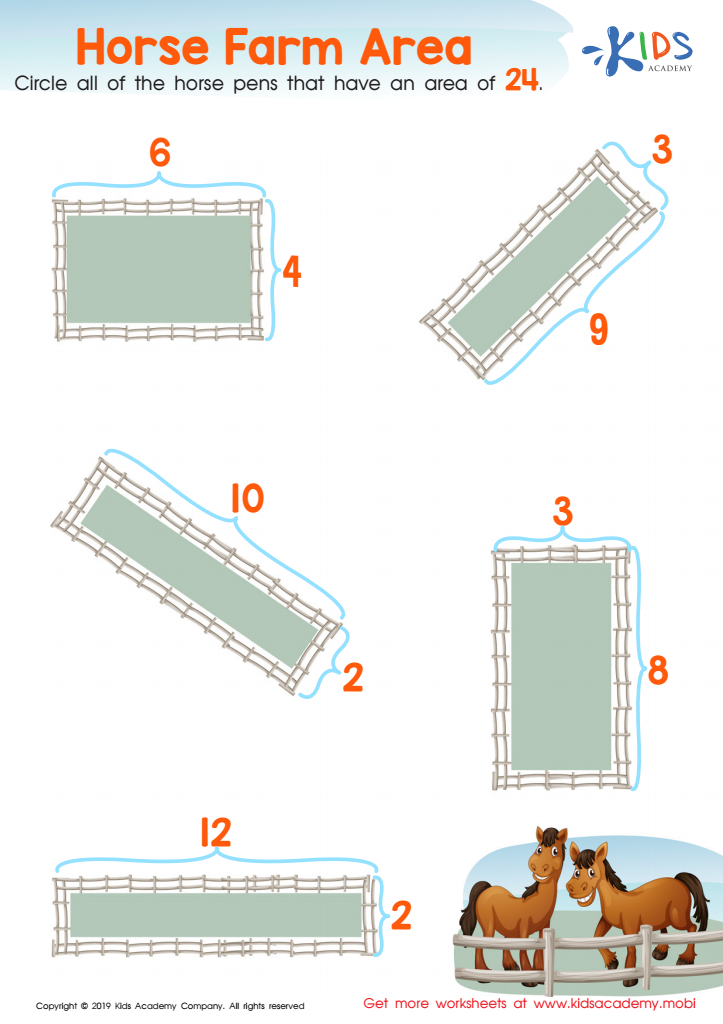
Horse Farm Area Worksheet
Take your kids to a horse farm! They'll love it – there's lots to explore, plus they can ride horses. Then challenge them with a geometry worksheet: help them calculate the area of all the horse pens, then circle the ones with an area of 24.
Horse Farm Area Worksheet
Worksheet
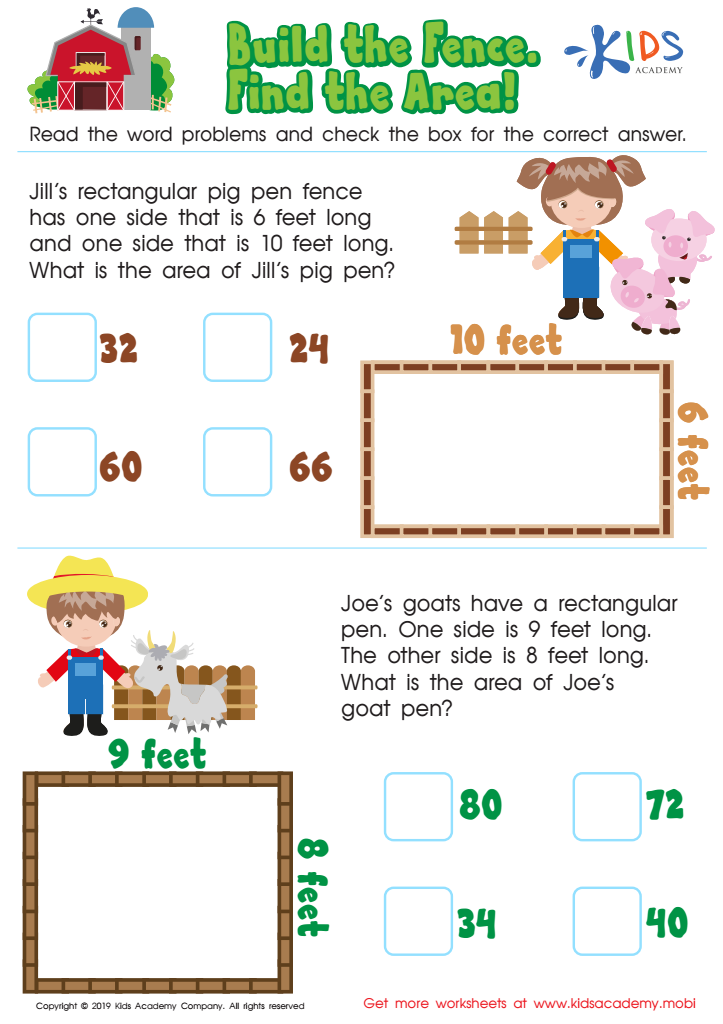
Build the Fence, Find the Area Worksheet
Help your kids gain skills in mathematics with this simple worksheet. Kids can refresh their addition and subtraction to solve geometry problems. Read the word problems and then help them check the box for the correct answer if they need extra help. This worksheet is great for improving kids' familiarity with basic equations.
Build the Fence, Find the Area Worksheet
Worksheet
Join Kids Academy for Free
Who is primarily going to use this learning content?








Parents and teachers play a crucial role in early childhood education, and focusing on concepts like area and perimeter can significantly enhance children's spatial awareness and problem-solving skills. For children ages 3-9, understanding area and perimeter goes beyond mere mathematics; it lays the foundation for critical thinking and the ability to visualize shapes and spaces in the world around them.
Introducing these concepts in engaging ways, such as through hands-on activities or play, can stimulate curiosity and creativity. For example, measuring the area of a play mat or the perimeter of a sandbox can make learning tangible and enjoyable. This approach not only reinforces mathematical concepts but also promotes language development, as children communicate their thought processes and solutions.
Moreover, mastering area and perimeter not only aids in mathematics but also in sciences like geometry and architecture as they grow. As they become comfortable with these concepts early on, they build confidence and a positive attitude toward learning.
In essence, by prioritizing understanding of area and perimeter, parents and teachers equip children with essential skills that foster a love for learning, boost cognitive development, and enhance future academic success.