Normal Consonant Digraphs Worksheets for Ages 3-6
13 filtered results
-
From - To
Our "Normal Consonant Digraphs Worksheets for Ages 3-6" are specially designed to help young learners recognize and practice common consonant digraphs like "ch," "sh," and "th." Perfect for early grade students, these engaging worksheets make learning fun with vibrant illustrations and interactive activities. By incorporating these worksheets into your curriculum, you facilitate your child's phonemic awareness, laying a strong foundation for reading and spelling skills. Explore a variety of exercises that encourage kids to identify, trace, and match digraphs, enabling them to become confident and proficient readers. Visit our website to start this exciting learning journey today!
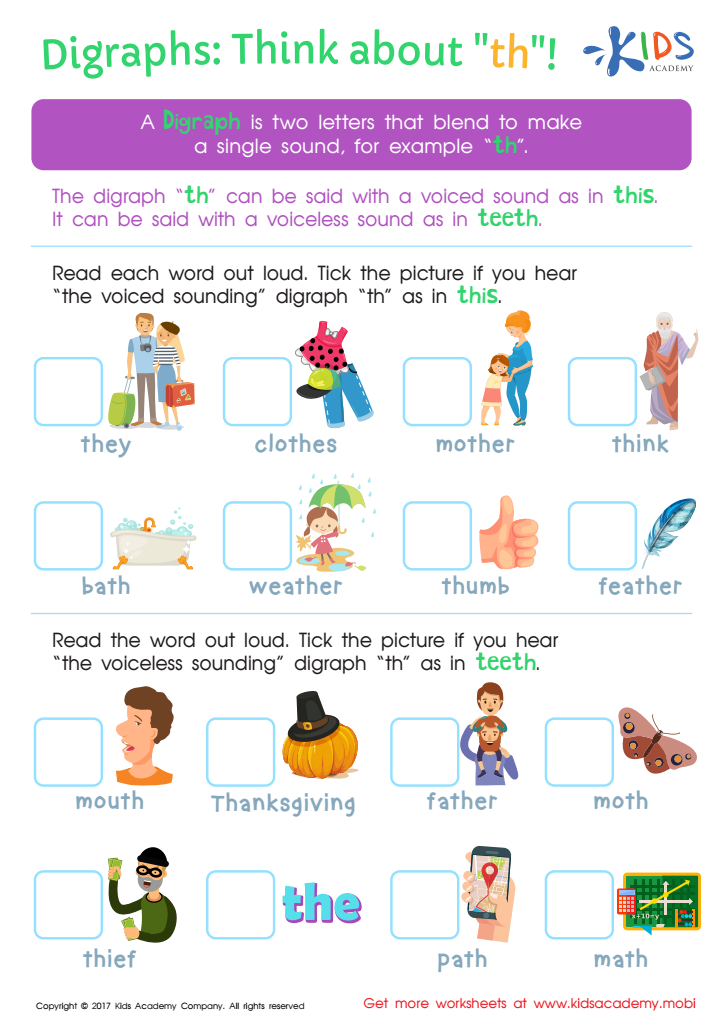
Digraphs: Think About "th" Worksheet
 Assign to My Students
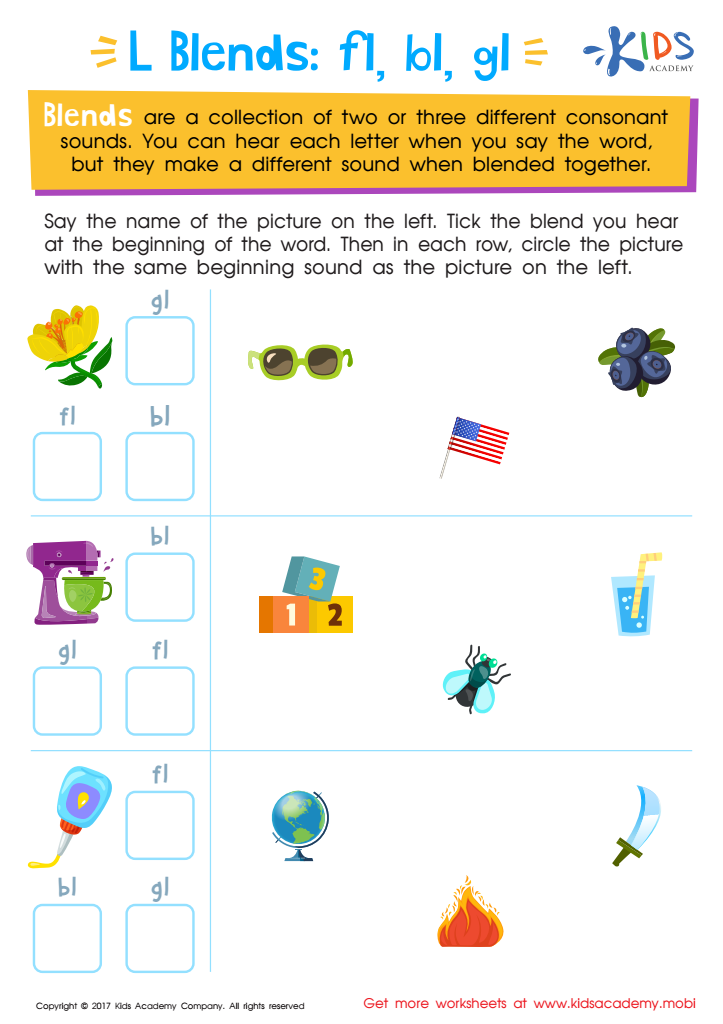
Blending Consonants: "Fl", "Bl" and "Gl" Printable
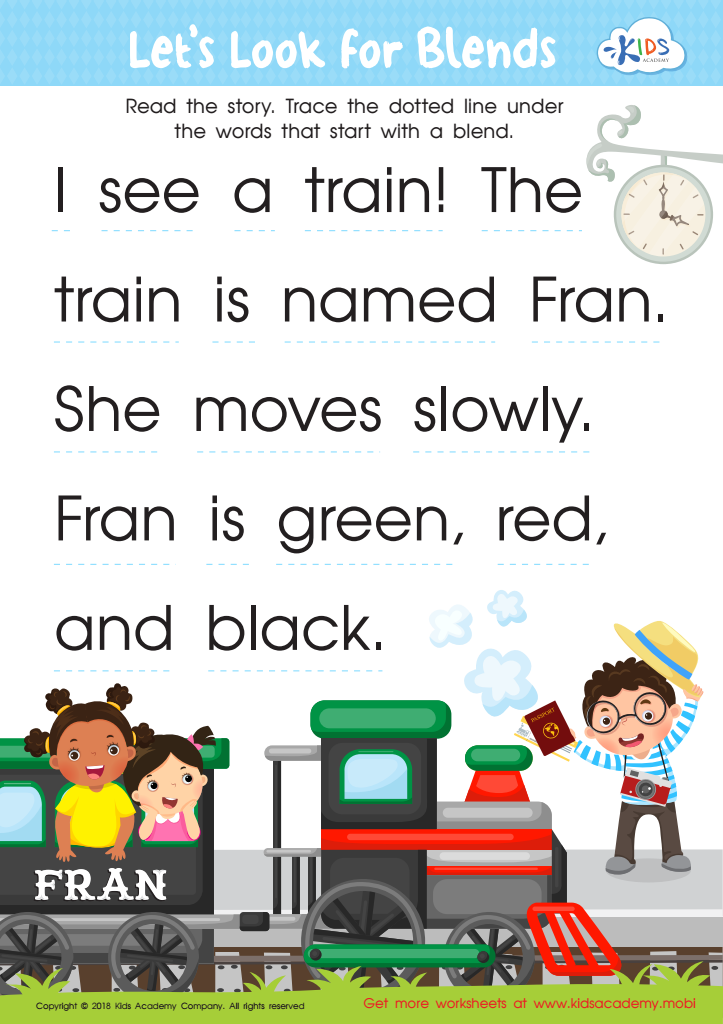
Let's Look for Blends Worksheet
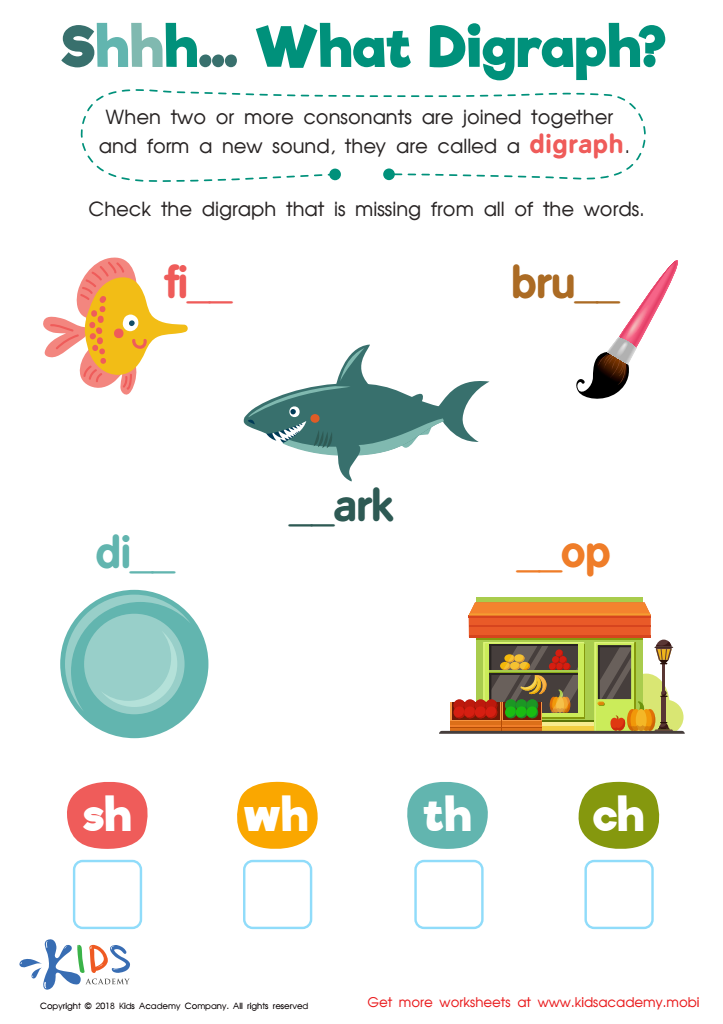
Shhh... What Digraph? Worksheet
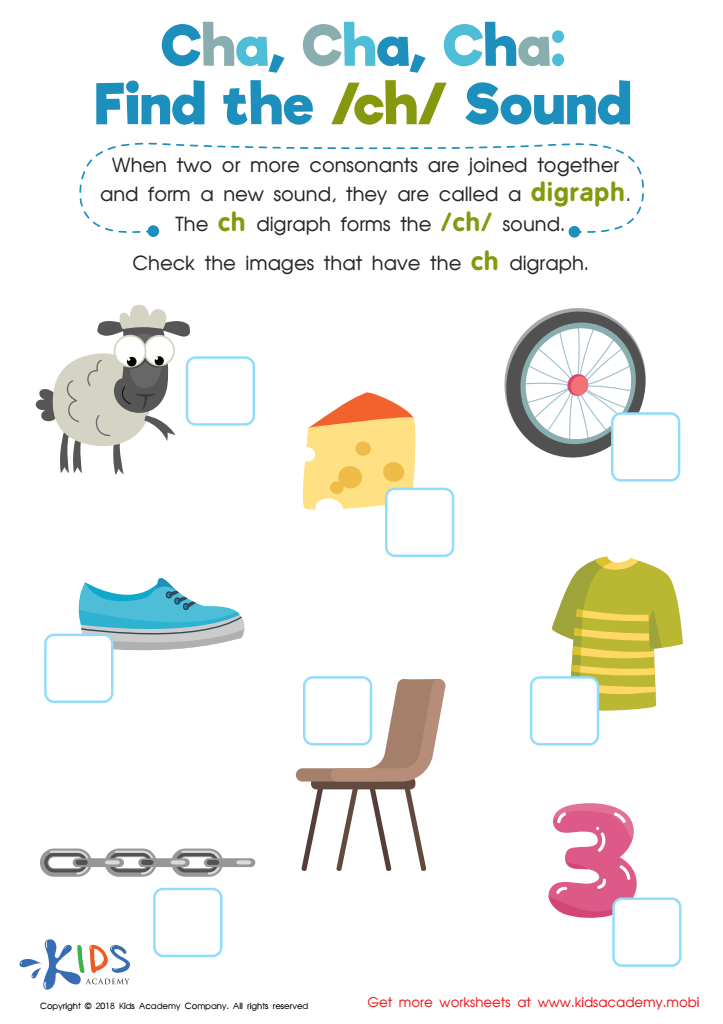
Cha, Cha, Cha: Find the /Ch/ Sound Worksheet
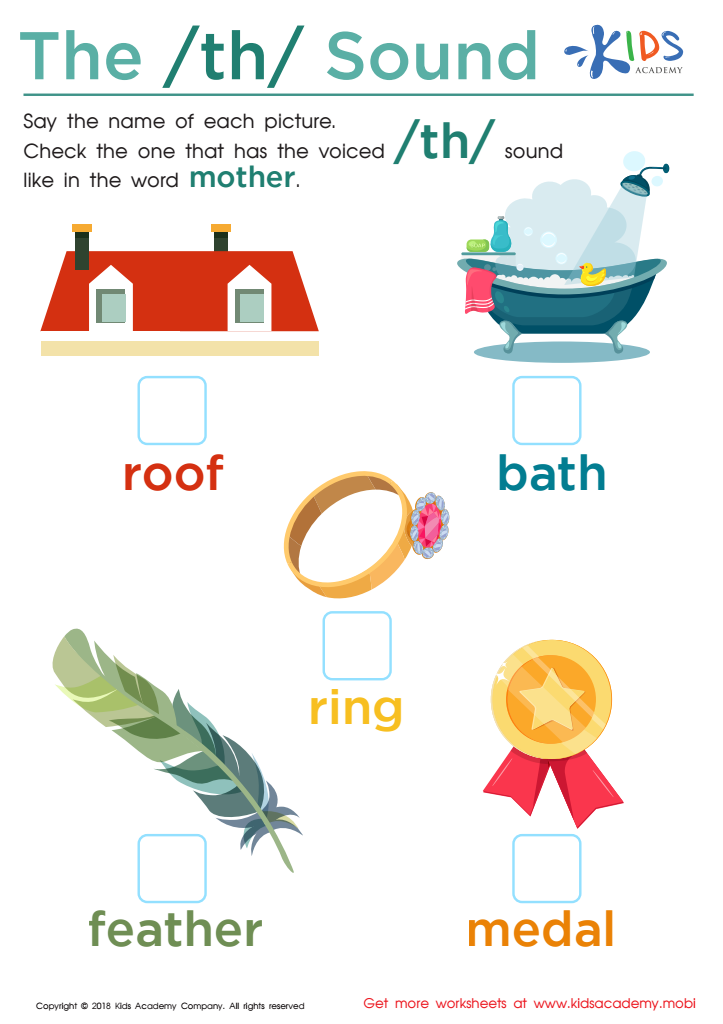
The /th/ Sound Worksheet
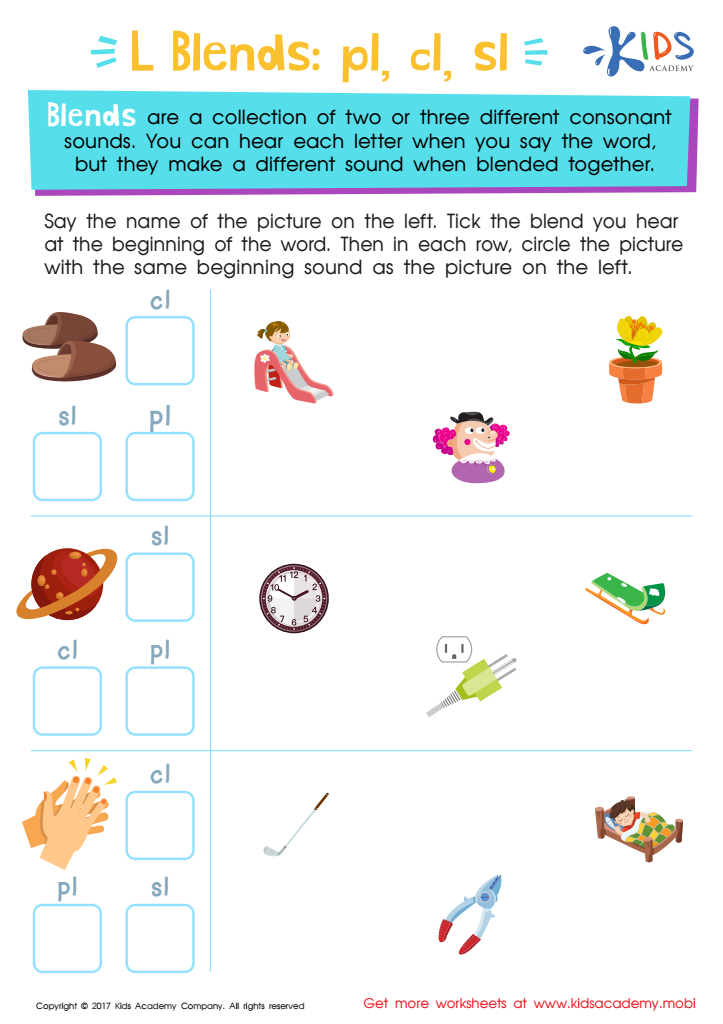
L Blends: "Pl", "Cl" and "Sl" Printable
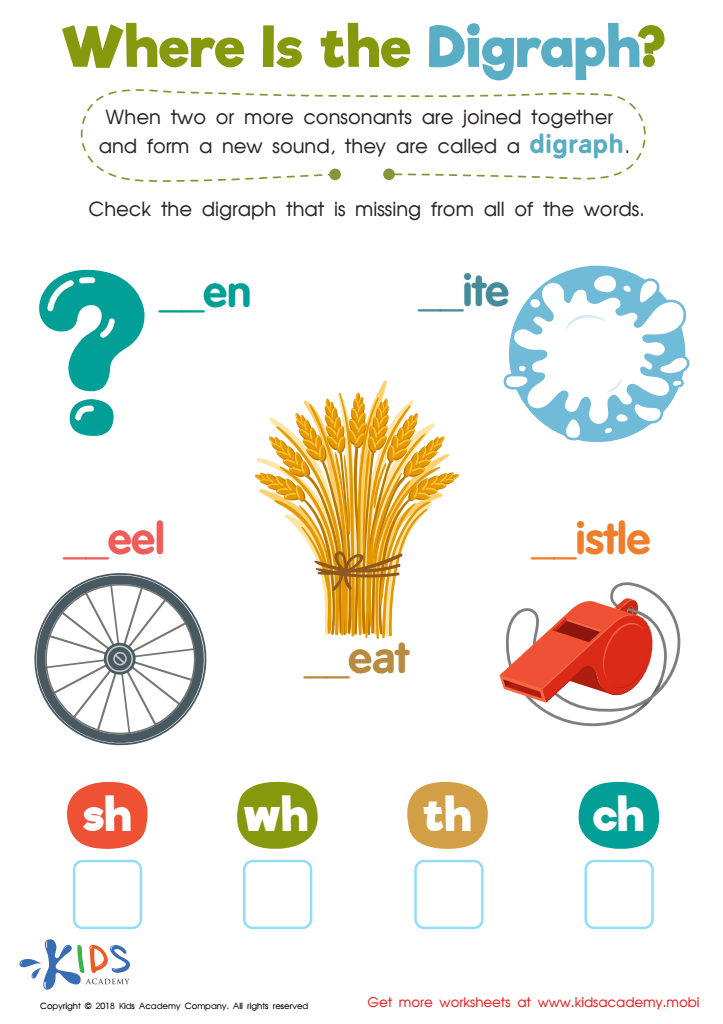
Where Is the Digraph? Worksheet
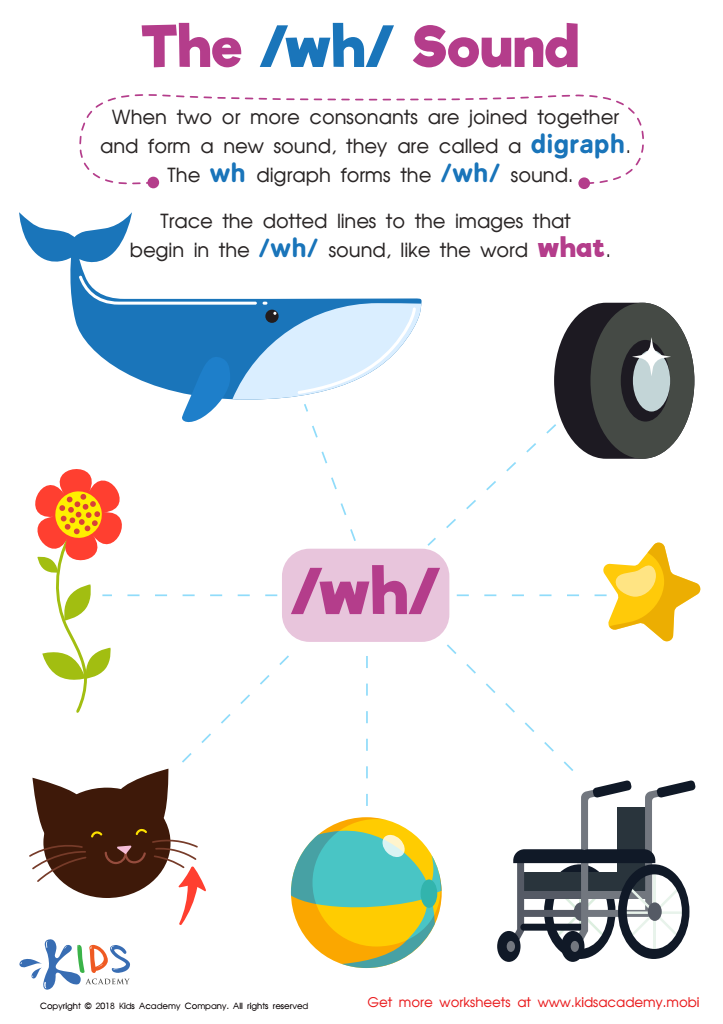
The /wh/ Sound Worksheet
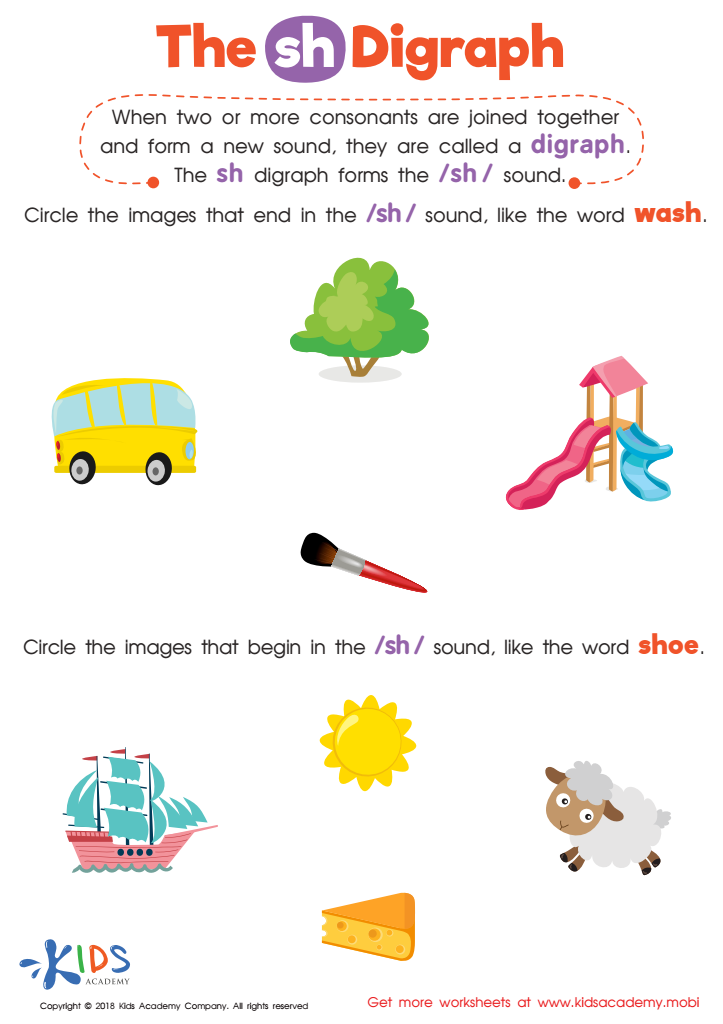
The SH Digraph Worksheet
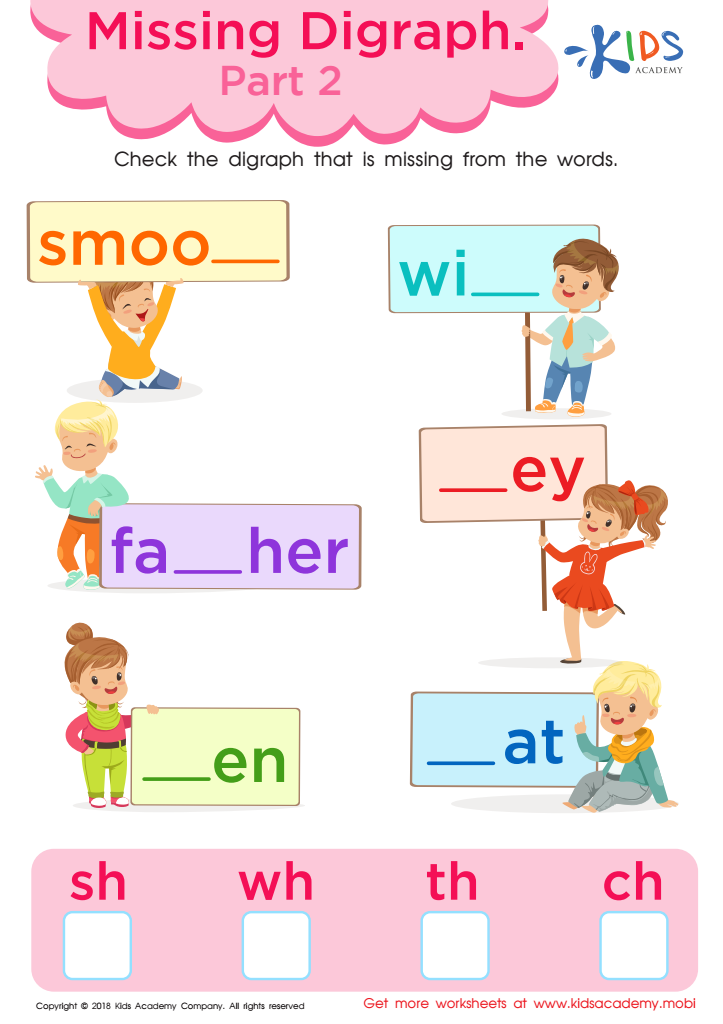
Missing Digraph: Part 2 Worksheet
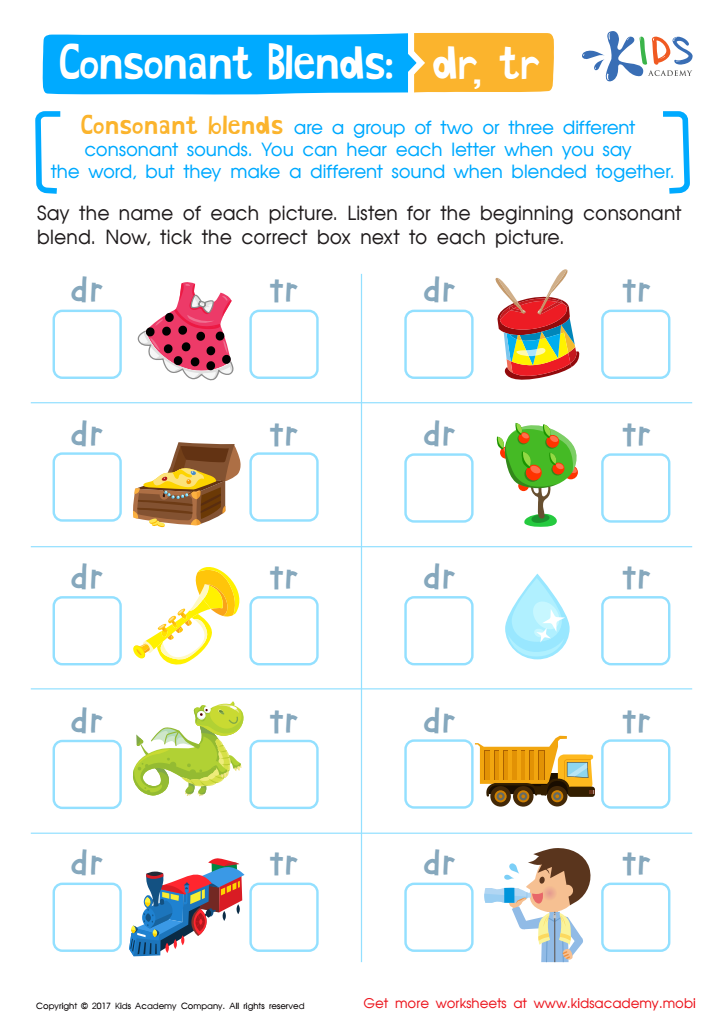
Consonant Blends: "Dr" and "Tr" Printable
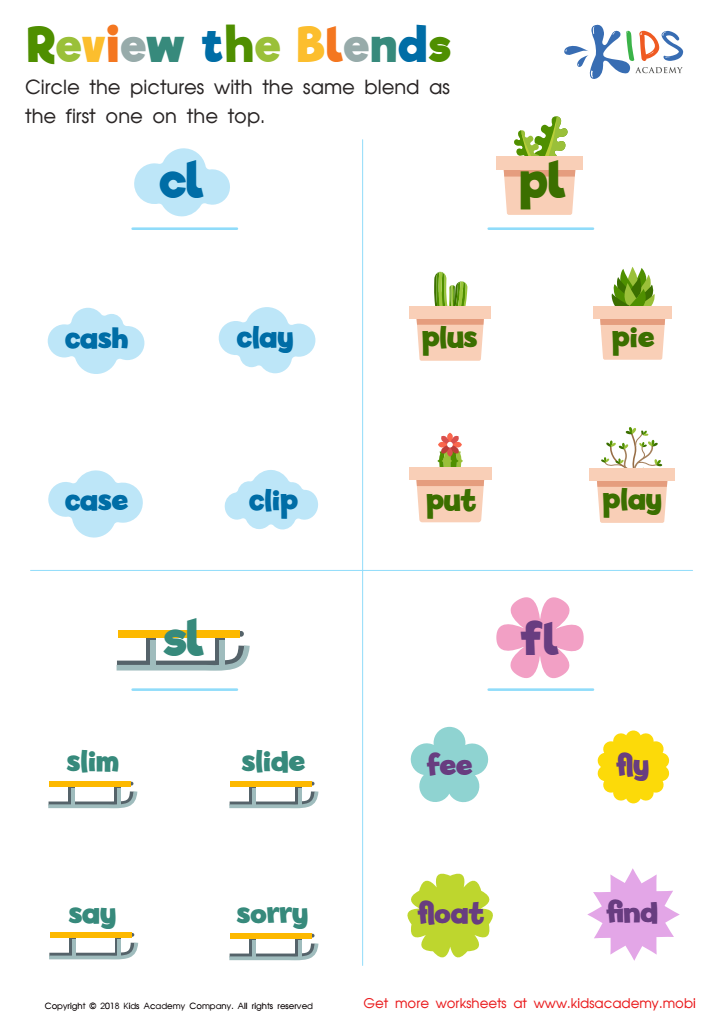
Review the Blends Worksheet


Parents and teachers should care about normal consonant digraphs for children ages 3-6 because these digraphs play a fundamental role in early literacy development. A consonant digraph consists of two consonants that together produce a single sound, such as "ch," "sh," "th," and "wh." Understanding these digraphs is crucial because they appear frequently in basic vocabulary words. By mastering these digraphs, children can improve their decoding skills, which helps them read more smoothly and confidently. Early recognition and knowledge of digraphs also enhance spelling abilities, making writing clearer and more accurate.
Children during the ages of 3-6 are also in the critical period of language acquisition and phonemic awareness. Introducing consonant digraphs at this stage supports their phonological development by teaching them to recognize and differentiate sounds, which is foundational for reading readiness. Additionally, grasping these concepts early can boost a child’s confidence and foster a love for reading, paving the way for academic success.
Parents and teachers who actively engage with children on consonant digraphs lay a strong educational foundation. Through playful reading activities, songs, and educational games, children can internalize these sounds in an enjoyable and effective manner, setting them up for future literary achievements.