Filters

6 filtered results

Clear all filters
Favorites
With answer key
Interactive

6 filtered results

Difficulty Level

Grade


Subject

    Discover our engaging Normal Consonant Blends worksheets designed specifically for children ages 3-8! These educational resources help young learners master the art of blending consonants to form new sounds and enhance their reading abilities. Each worksheet offers a variety of fun, interactive activities that promote phonemic awareness while keeping children excited about learning. Perfect for home or classroom use, our worksheets feature colorful illustrations and age-appropriate tasks that make learning enjoyable. Encourage your child's literacy journey today with a collection of carefully crafted worksheets that support their growth in phonics and reading readiness. Explore our printable resources and watch your child thrive!

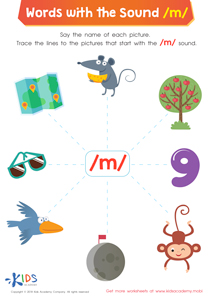
    Check out this FREE Trial Lesson on Consonant Blends for age 3-8!

    Review Blends

    Favorites
    With answer key
    Interactive
    • 3-8
    • With answer key
    • Consonant Blends
    • Normal
    Find The Missing Word Worksheet
    Find The Missing Word Worksheet

    Find The Missing Word Worksheet

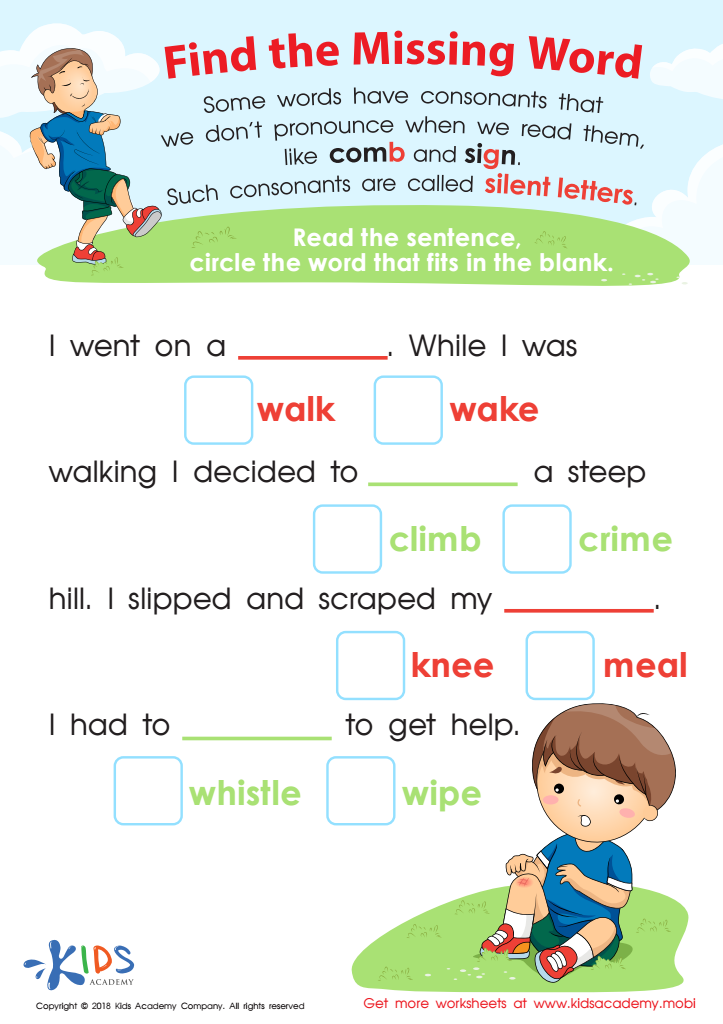
    Master silent letters like "b" and "k" with this illustrated worksheet! Read the sentences and fill in the blanks with the correct word, checking the box. Read all the way to the bottom and review words containing silent letters. A great way to help your little learner tackle a tough topic!
    Find The Missing Word Worksheet
    Worksheet
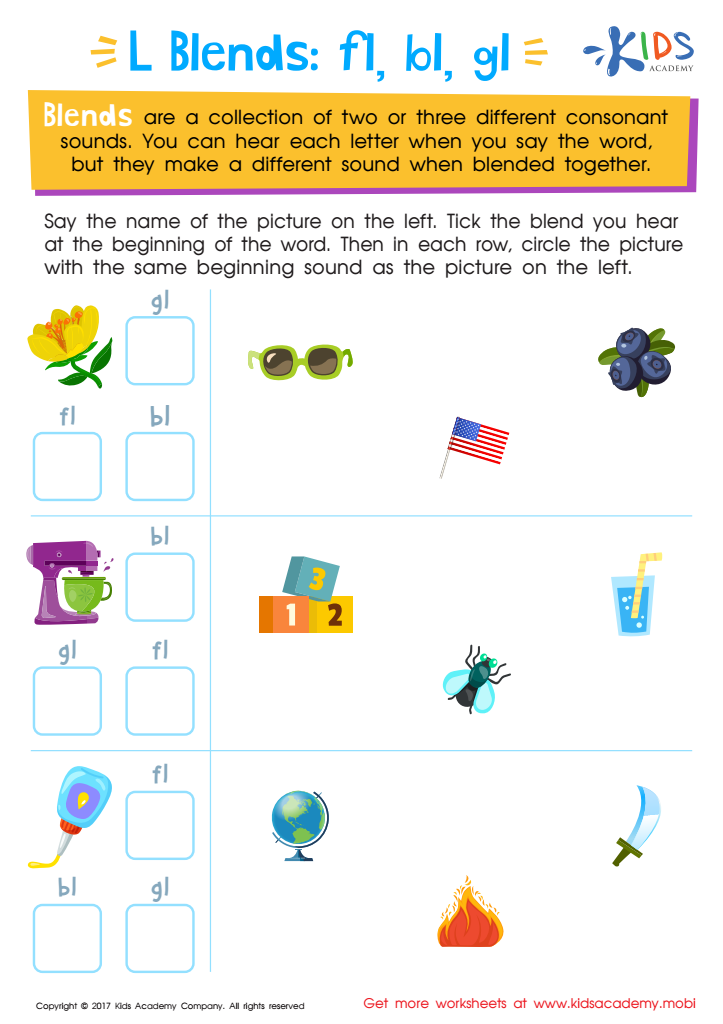
    Consonant Blend Fl, Bl, and Gl Printable Worksheet
    Consonant Blend Fl, Bl, and Gl Printable Worksheet

    Blending Consonants: "Fl", "Bl" and "Gl" Printable
    Help your child master consonant blends Fl, Bl, and Gl with this printable worksheet. Find words associated with the pictures and learn to better understand the difference between consonant blends. Vibrant images motivate and aid in learning. Download now for improved phonics success!
    Blending Consonants: "Fl", "Bl" and "Gl" Printable
    Worksheet
    Let's Look for Blends Worksheet
    Let's Look for Blends Worksheet

    Let's Look for Blends Worksheet

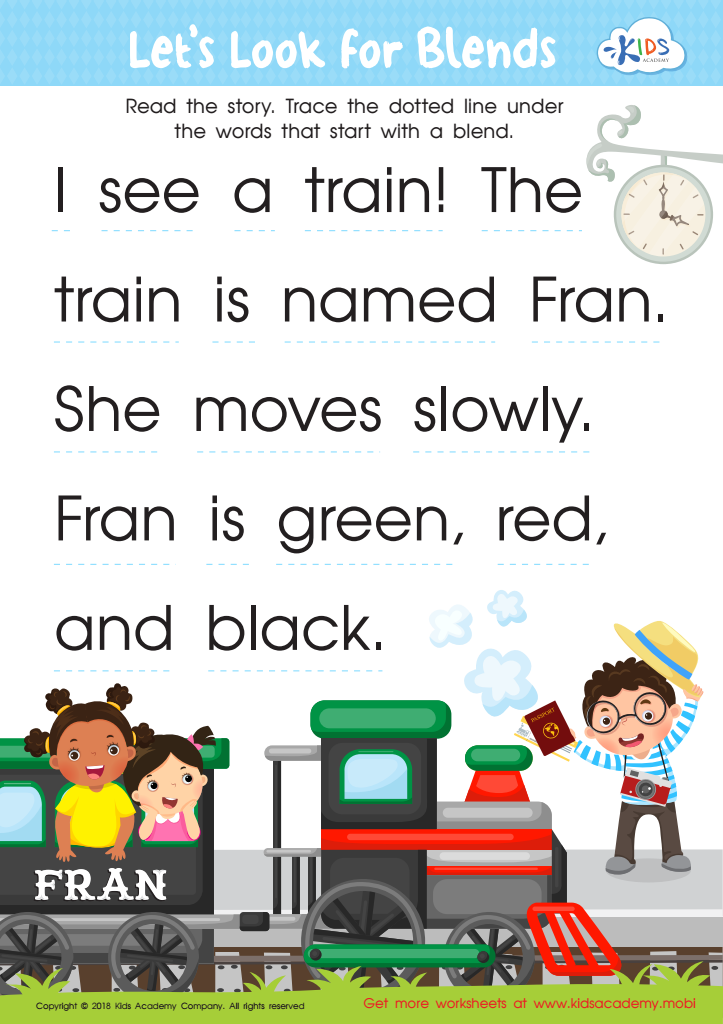
    Does your child love trains? Get them to read the story or help them read it aloud. Ask them to trace the words that start with blends on the dotted lines. This exercise will help them improve their blend-identifying skills!
    Let's Look for Blends Worksheet
    Worksheet
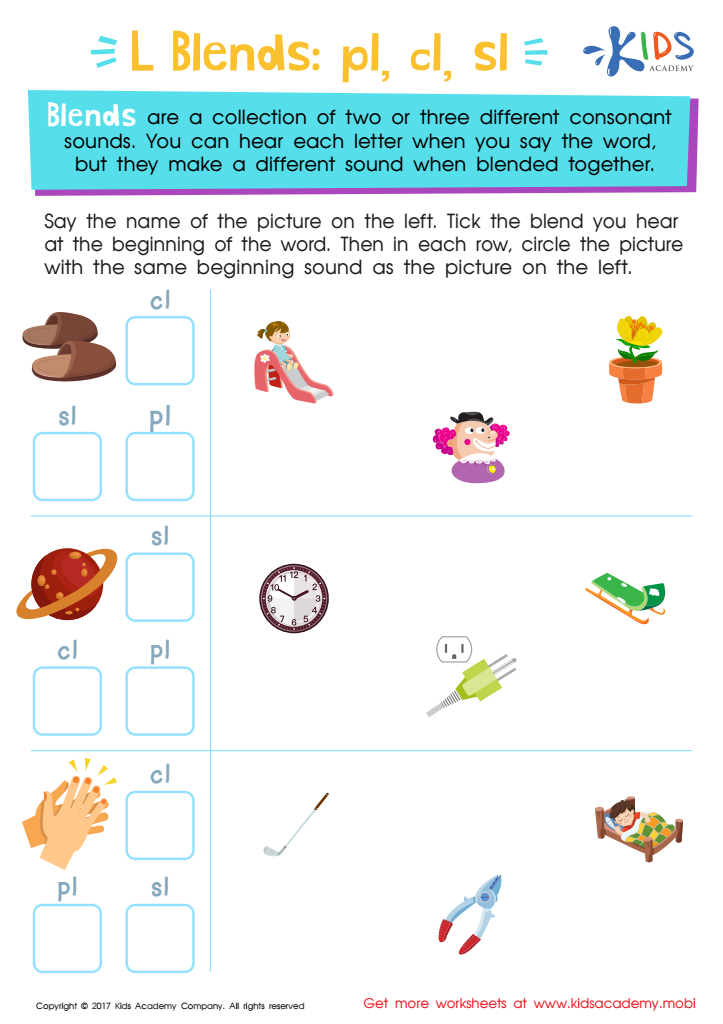
    Consonant Blends Pl, Cl, and Sl Printable Worksheet
    Consonant Blends Pl, Cl, and Sl Printable Worksheet

    L Blends: "Pl", "Cl" and "Sl" Printable
    This printable worksheet will help your child recognize and identify the Pl, Cl, and Sl consonant blends, sound them out, and identify them in print. Improve your child's reading and writing skills with fun and colorful phonics practice!
    L Blends: "Pl", "Cl" and "Sl" Printable
    Worksheet
    Consonant Blend Dr and Tr Printable Worksheet
    Consonant Blend Dr and Tr Printable Worksheet

    Consonant Blends: "Dr" and "Tr" Printable
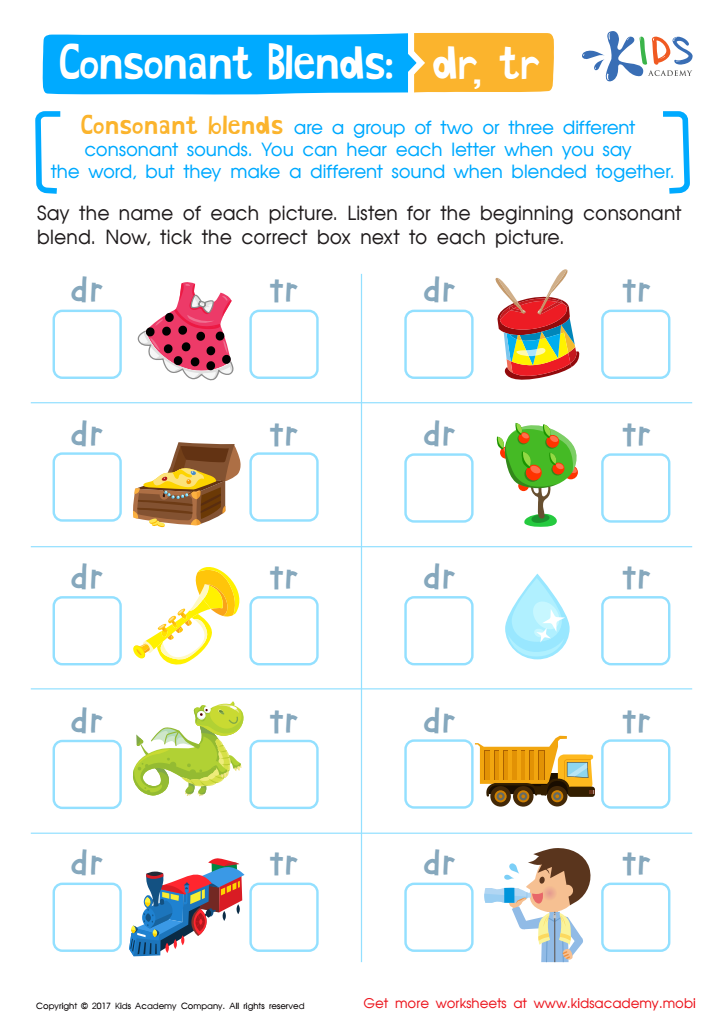
    Pictures of the words provide a visual cue, and sound-outs help with auditory cues.
    Consonant Blends: "Dr" and "Tr" Printable
    Worksheet
    Review the Blends Worksheet
    Review the Blends Worksheet

    Review the Blends Worksheet

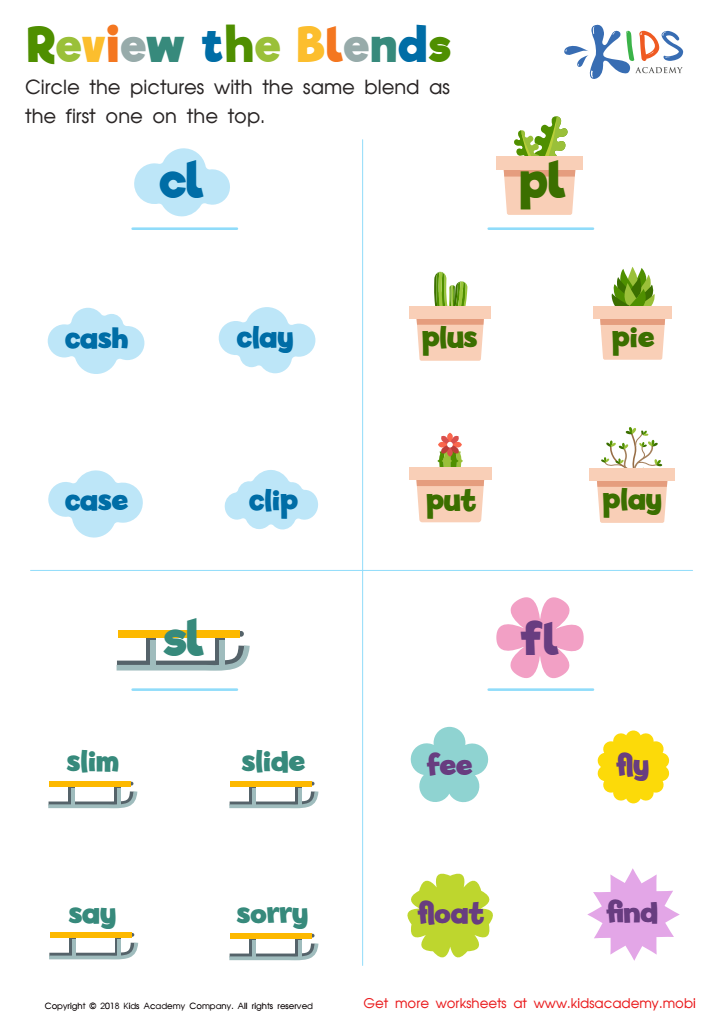
    Consonant blends are two or three consonants that make a sound when pronounced together. L-blends like cl, bl, sl, fl and 3-letter blends like str, slp are common. This phonics worksheet helps early readers identify words containing two letter L-blends. Students must circle the words then read them aloud.
    Review the Blends Worksheet
    Worksheet


    Normal consonant blends are crucial for children's language development and literacy skills, particularly for ages 3-8. Understanding these blends—combinations of two or more consonants in words, like "bl," "st," or "tr"—helps young learners decode words more efficiently. As children begin to read, recognizing and pronouncing these blends lays the foundation for fluency and comprehension.

    For parents and teachers, integrating consonant blends into daily activities encourages early reading success and builds confidence. Simple practices such as reading books with blend-rich vocabulary or engaging in fun phonemic games foster important listening and speaking skills. Additionally, recognizing blends enhances children's ability to sound out new words, which accelerates their learning process.

    Focusing on consonant blends also supports broader literacy goals, helping children expand their vocabulary and spelling abilities. This proficiency is essential for effective communication and critical thinking as children progress in school. By emphasizing consonant blends in early education, parents and teachers are equipping children with valuable tools that promote active engagement with language, setting the stage for lifelong learning and effective literacy skills. Prioritizing these elements ensures that children are not only prepared for academic success but also for the myriad of communication demands they will face in their lives.