
Normal Division Worksheets for Ages 3-9
17 filtered results
Difficulty Level
Grade
Age
-
From - To
Subject
Activity
Standards
Dive into our carefully designed "Normal Division Worksheets for Ages 3-9" to nurture young minds in mastering basic division concepts. These engaging and educational worksheets cater to early learners, ensuring they grasp the fundamentals of division through fun activities and visually appealing printables. Our resources gradually introduce the division process, making it accessible and enjoyable for children aged 3 to 9, helping them to develop strong mathematical foundations. Whether practiced at home or in the classroom, these worksheets support parents and educators in providing a solid start in math learning. Unlock your child’s potential with our comprehensive division worksheets today!
Favorites
With answer key
Interactive
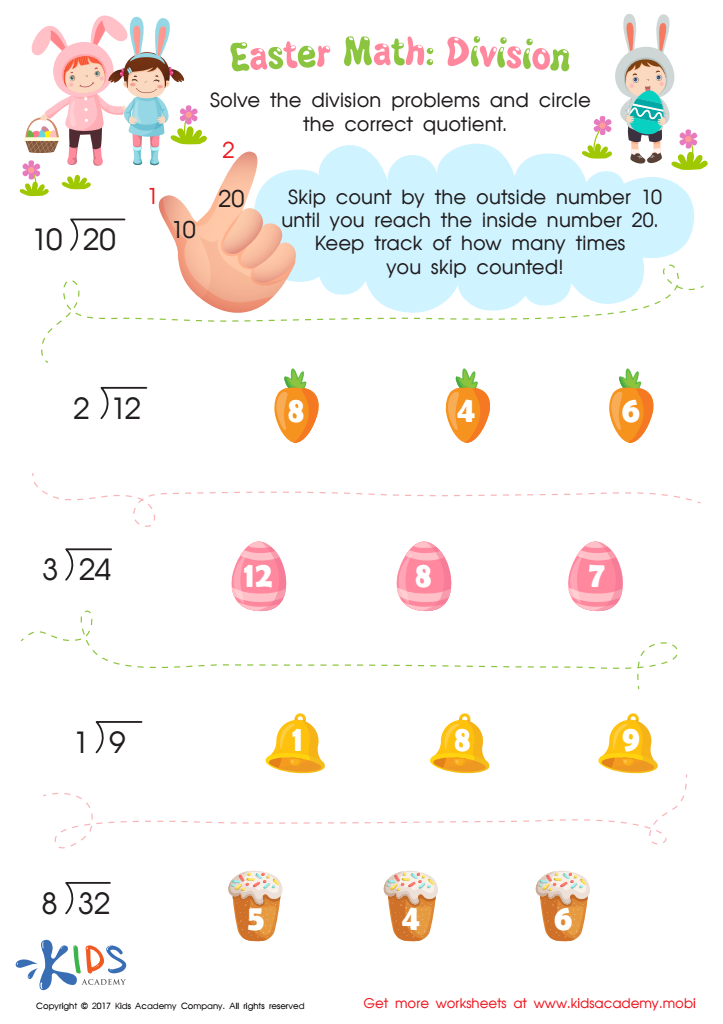
Division Worksheet
Try this Easter-themed PDF worksheet for grade 3: perfect for teaching division with a fun, new trick! It's full of bright, colorful pictures your child will love, and it's as easy as skip counting to solve the problems.
 Assign to My Students
Division Worksheet
Worksheet
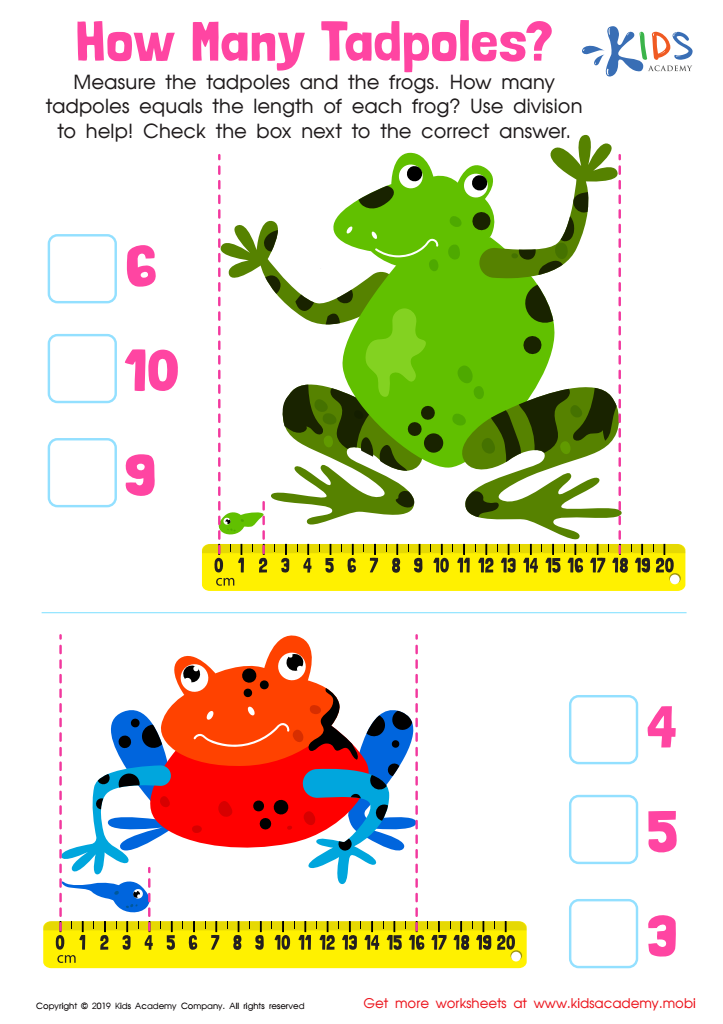
How Many Tadpoles Worksheet
Kids love tadpoles! They'll have fun using them to work out the measurements of their frog friends. By dividing the length of the frogs by the length of the tadpoles, children can deduce how many tadpoles it takes to equal a frog. With the use of 'how many' and 'each' they'll solve math problems without realizing it!
How Many Tadpoles Worksheet
Worksheet
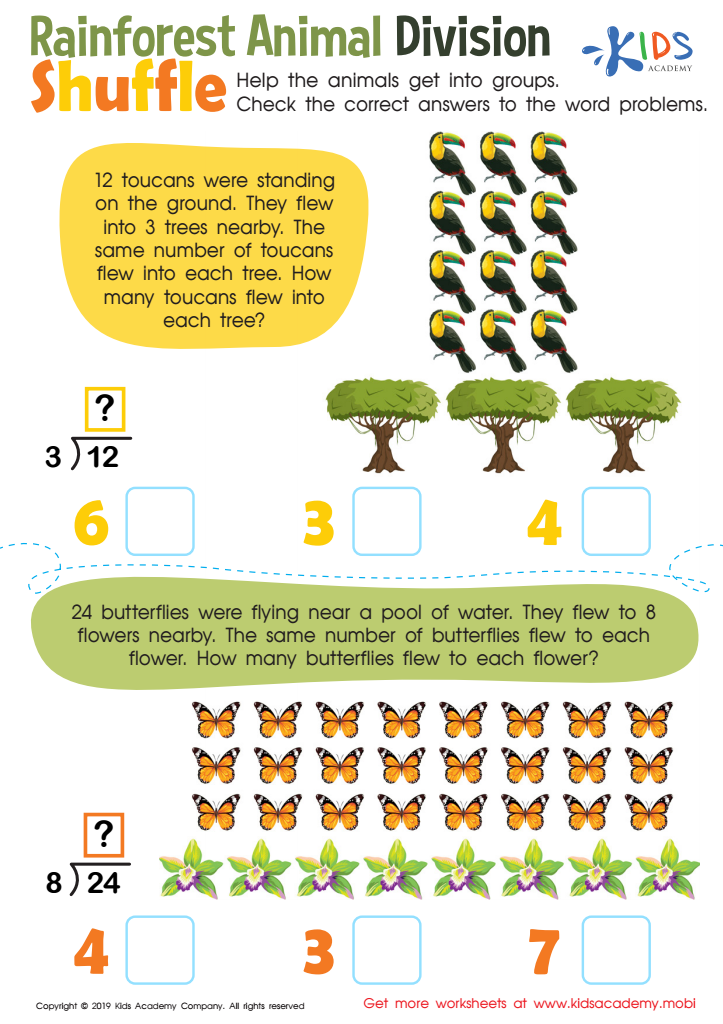
Rainforest Animal Division Worksheet
Children can save the rainforest and learn about division with this worksheet! It helps kids understand that division involves creating equal groups of specific numbers, and with its visual representation, they can grasp the concept more easily. They'll have fun learning about their place in the world and their role in protecting the environment.
Rainforest Animal Division Worksheet
Worksheet
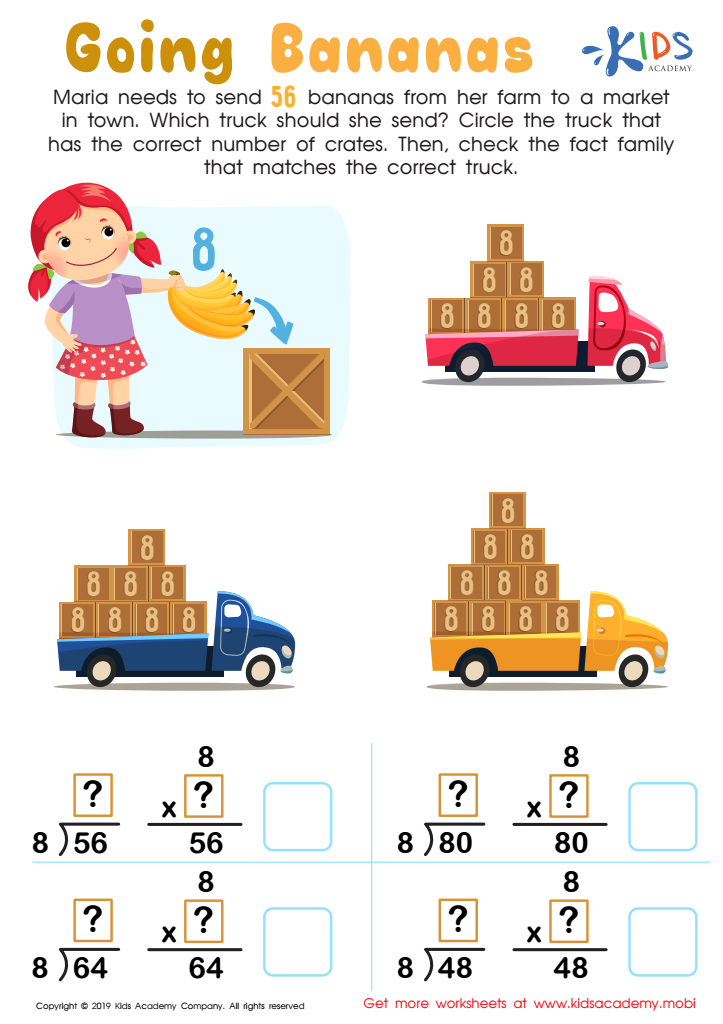
Going Bananas Worksheet
Marla needs to send 56 bananas in batches of 8. Help your child practice division and learn about fact families with this free worksheet. It'll help boost their multiplication skills and increase speed when solving problems.
Going Bananas Worksheet
Worksheet
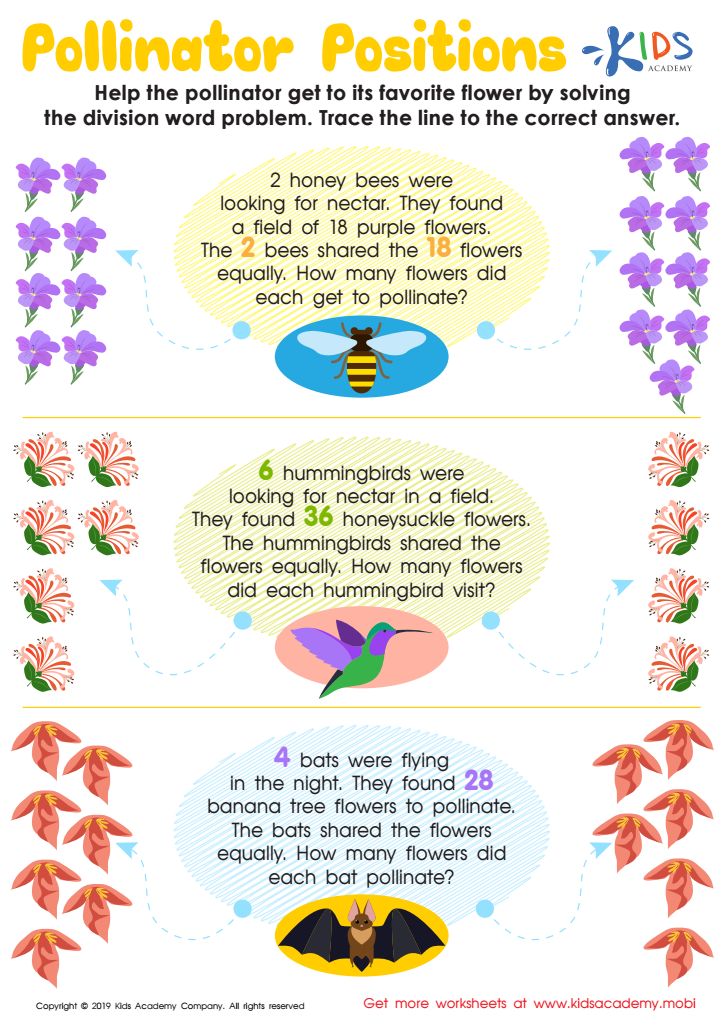
Pollinator Positions Worksheet
Kids will love learning about pollinators and how vital they are. Help their favorite friends get to the right flowers with this fun PDF. Children can solve the problems without even knowing they're doing division; just read the word problems and use the highlighted numbers. Finish by tracing the lines to the correct quotient!
Pollinator Positions Worksheet
Worksheet
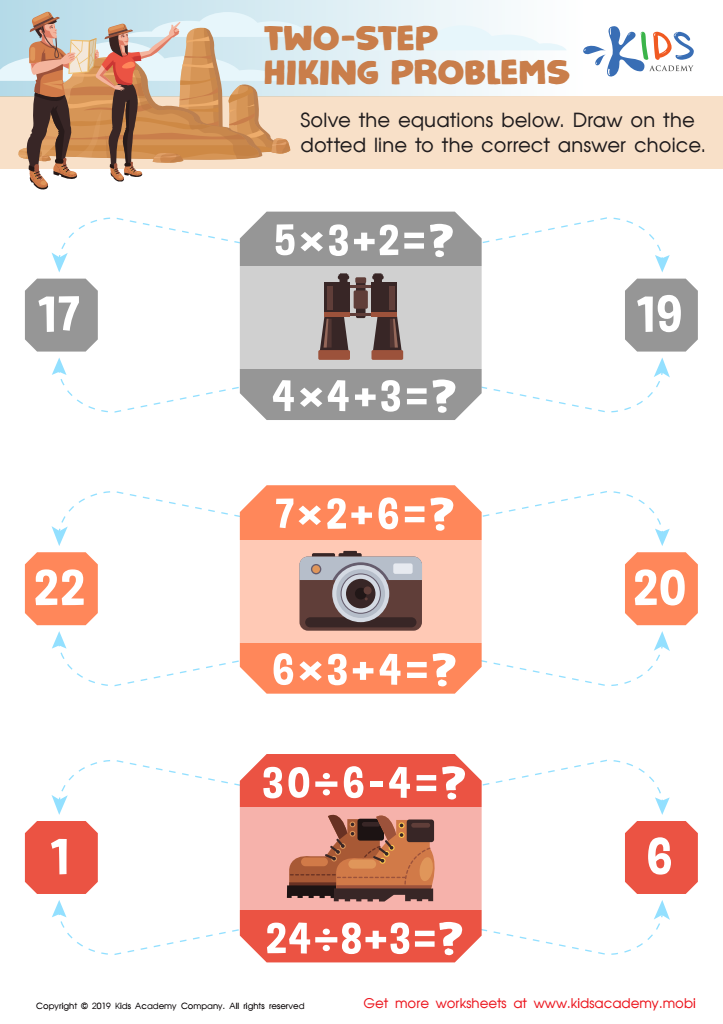
Two-Step Hiking Problems Worksheet
Help your kids ease into math with this worksheet. Solve the three basic equations, then draw on the dotted line to the correct answer. You can help your kids make their journey smoother by guiding them through it.
Two-Step Hiking Problems Worksheet
Worksheet
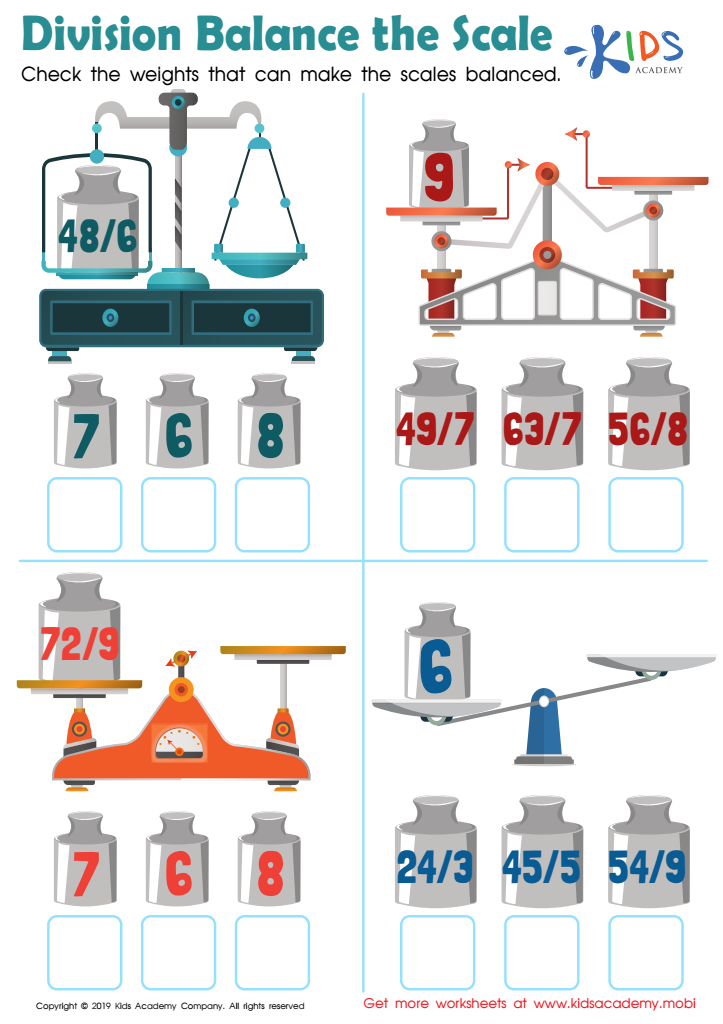
Division Balance the Scale Worksheet
Students can learn math better when they understand the relationships between numbers. This free worksheet helps them practice division: solving problems and matching the correct quotient to balance the scales. Fun visual boxes make it a unique way to engage with the material.
Division Balance the Scale Worksheet
Worksheet
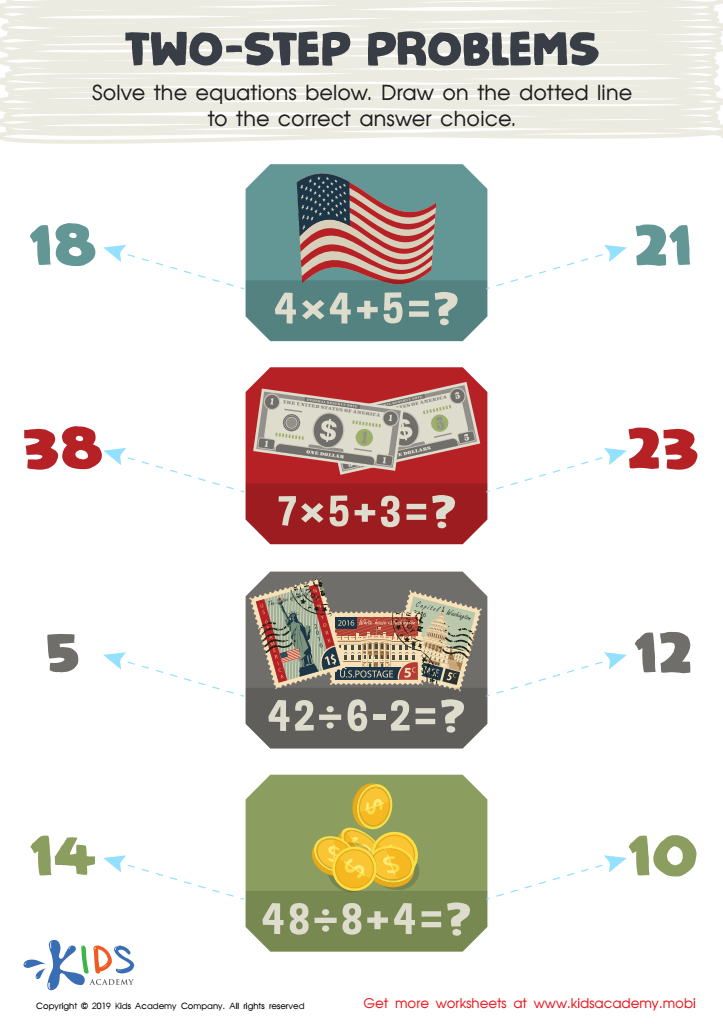
Two-Step Problems Worksheet
Help your child practice their math problem-solving skills with this worksheet. It covers the basics of subtractions, additions, multiplications, and divisions. With four simple equations, your kids can solve them and draw the correct answer on the dotted line. Reduce their strain and give them the help they need.
Two-Step Problems Worksheet
Worksheet
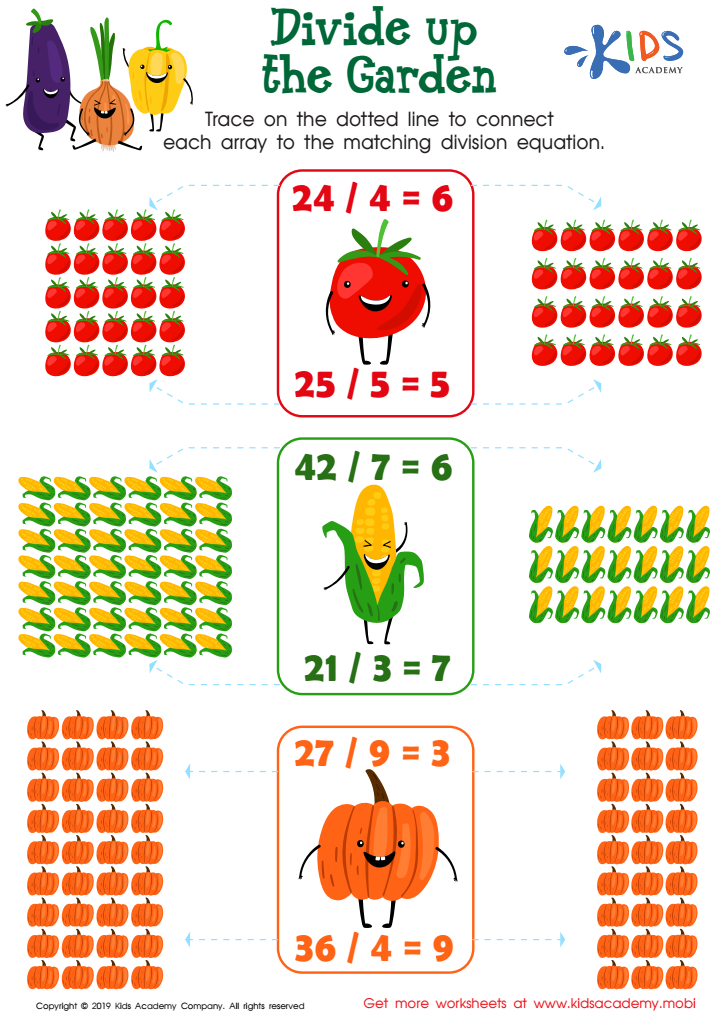
Divide up the Garden Worksheet
Dividing is simply grouping items into equal sets. This worksheet helps kids see division problems in array form. They'll match each equation with a picture group, using the lines provided. It's a great way for beginners to understand division more concretely.
Divide up the Garden Worksheet
Worksheet
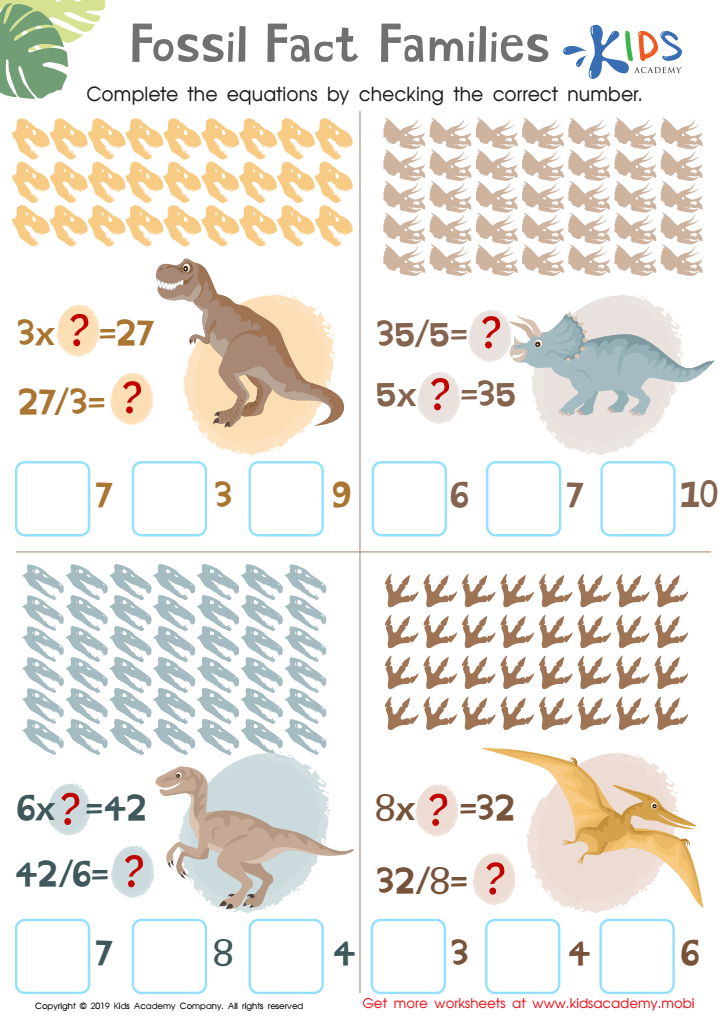
Fossil Fact Families Worksheet
Kids love dinosaurs, so why not learn about fact families with some fun prehistoric friends? This PDF worksheet uses picture arrays to help kids understand the relationships between multipliers and dividends. It helps them build automaticity with multiplication facts so they can quickly solve division problems and see the relationships between the two fact families.
Fossil Fact Families Worksheet
Worksheet
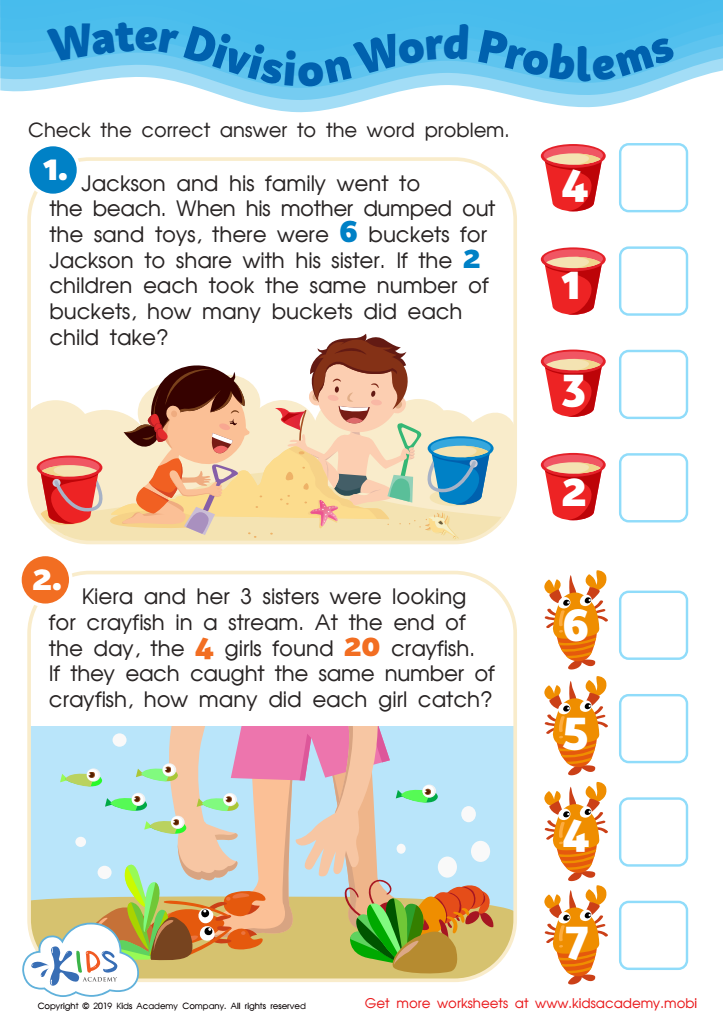
Water Division Word Problems Worksheet
Kids can sharpen their math skills with this fun PDF! They'll see pictures of friends at the beach, plus bold numbers and colorful pictures. All they need to do is read and understand the problem to find the answer - without even realizing they're doing division. A great way to make math enjoyable!
Water Division Word Problems Worksheet
Worksheet
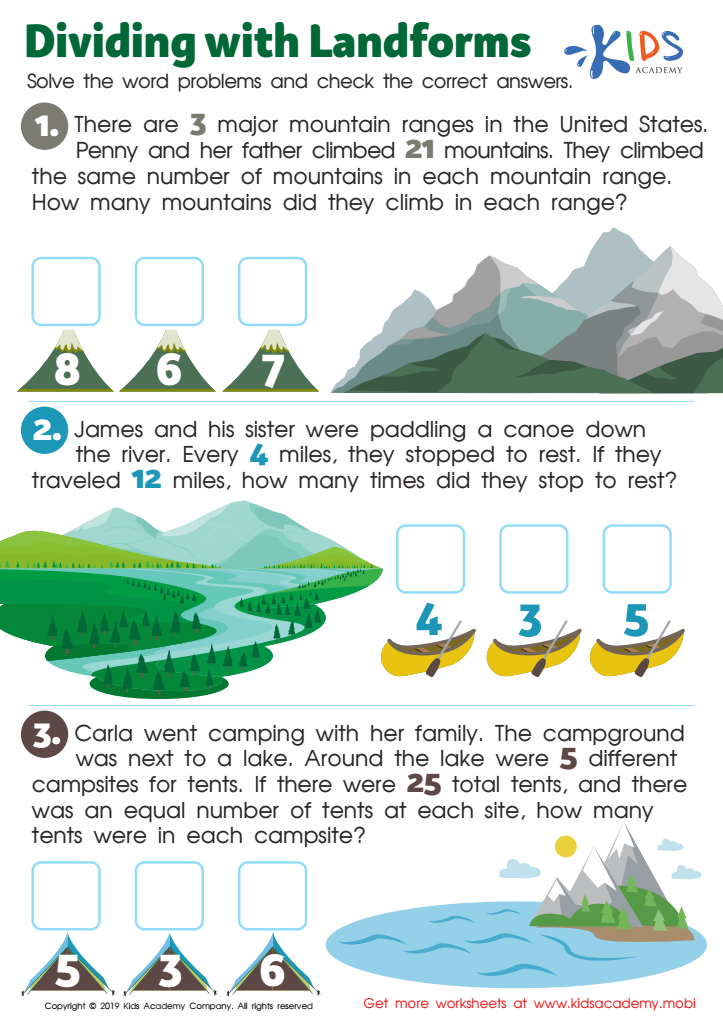
Dividing with Landforms
Mixing subjects to help your child learn is always nice. This worksheet combines landforms, problem-solving and division. The PDF highlights numbers, uses bold colors and provides pictures to help your child understand the questions and answer choices, making them feel empowered, not intimidated.
Dividing with Landforms
Worksheet
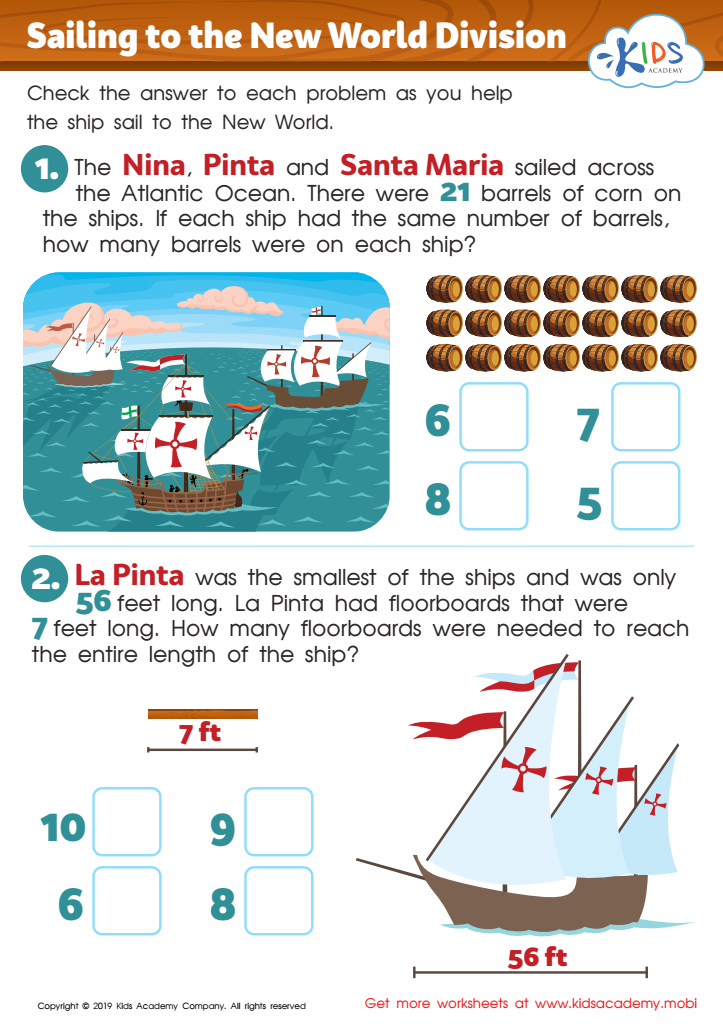
Sailing to the New World Division Worksheet
This worksheet combines history and math, helping kids make sense of problem-solving. Christopher Columbus sailing the ocean blue is combined with picture representations of division word problems in bold colors and highlighted numbers. Kids can learn while having fun figuring out the problems, regardless of whether it's math or history.
Sailing to the New World Division Worksheet
Worksheet
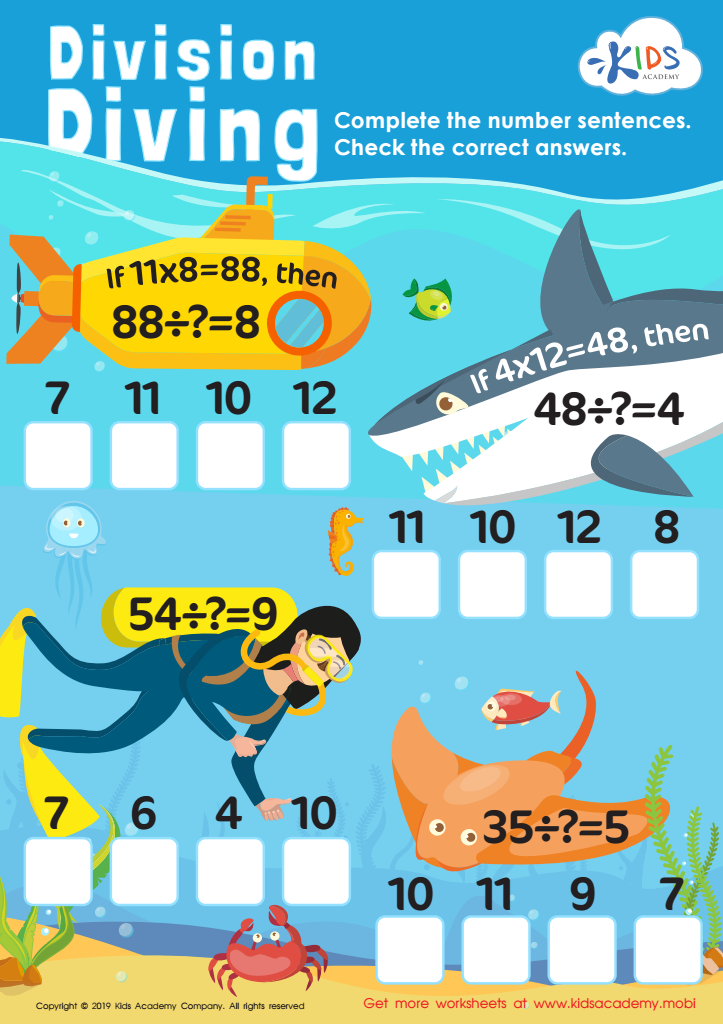
Division Diving Worksheet
Kids love exploring water and this free PDF worksheet is a great way to bring the fun and math together! Kids can help the underwater friends with number sentences, and use their fact family knowledge to solve for the missing number, then choose the correct answer. This worksheet is an enjoyable way for them to practice division!
Division Diving Worksheet
Worksheet
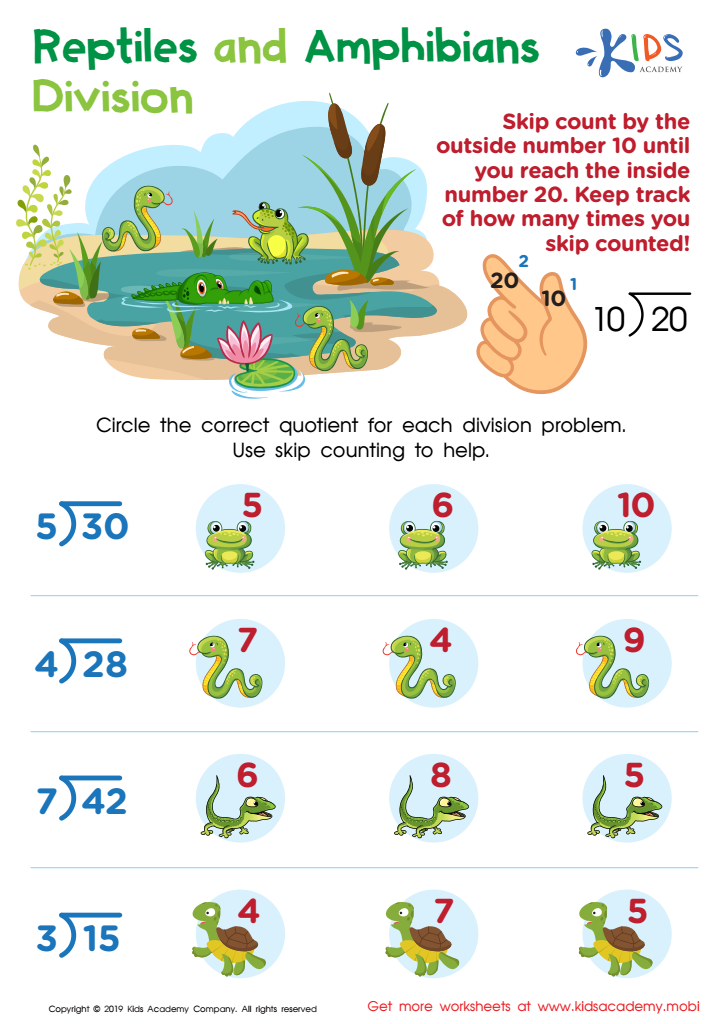
Reptile and Amphibians Division Worksheet
Skip counting is key in division. This PDF worksheet helps children practice this skill with fun reptile and amphibian friends. They must circle the right quotient among the choices given to reinforce their pattern recognition. Perfect for mastering division!
Reptile and Amphibians Division Worksheet
Worksheet
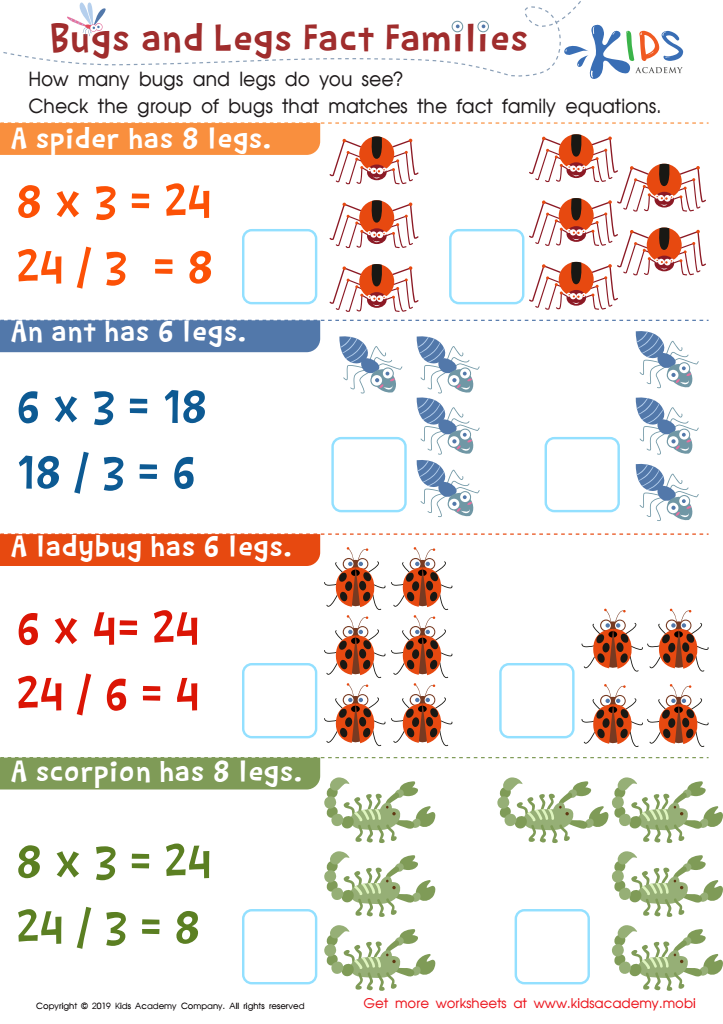
Bugs and Legs Fact Families Worksheet
This free worksheet uses bugs and insects to help young math students learn about fact families and recognize patterns in multiplication and division. It's a fun and colorful way to gain automaticity and efficiency in computation skills, without even realizing it's math!
Bugs and Legs Fact Families Worksheet
Worksheet
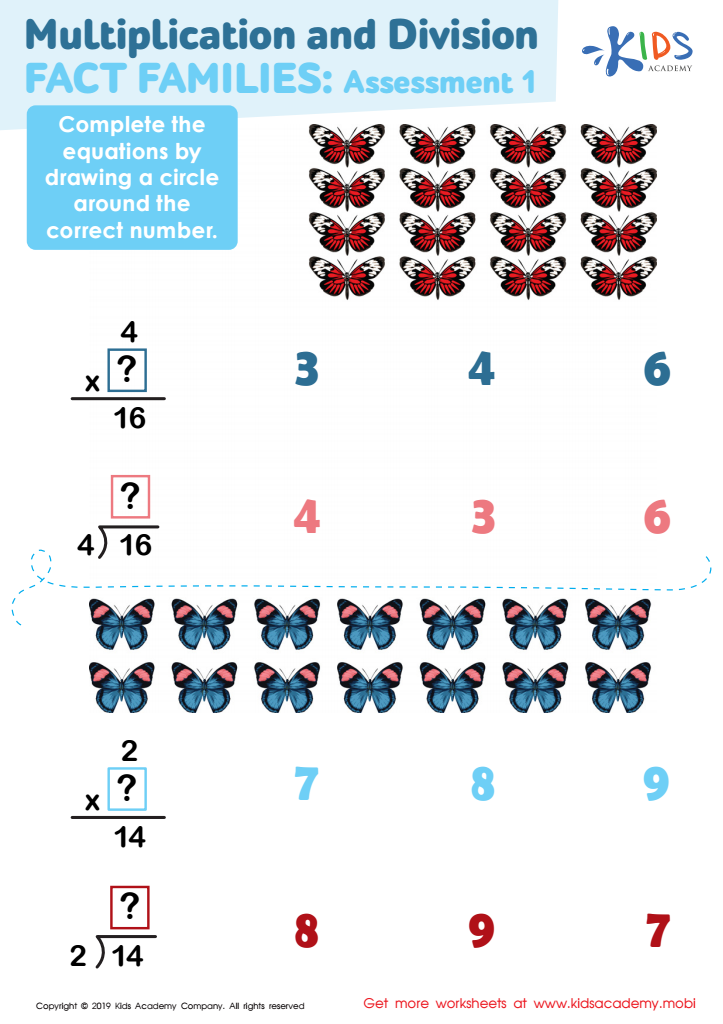
Multiplication and Division Fact Families Assessment 1 Worksheet
When it comes to multiplication and division, automaticity and efficiency are key. Test your child's understanding of fact families with this free butterfly worksheet. They'll practice equations, picture concepts and fact families to arrive at the correct number. Repetition will help them develop strong skills and confidence.
Multiplication and Division Fact Families Assessment 1 Worksheet
Worksheet
Join Kids Academy for Free
Who is primarily going to use this learning content?








Understanding normal division is crucial for young children's mathematical development and overall cognitive growth. For ages 3-9, engaging with the concept of division lays a foundational pillar necessary for advanced mathematics and problem-solving skills. Here's why parents and teachers should prioritize it:
1. Fundamental Math Skill: Division is a basic arithmetic operation that complements addition, subtraction, and multiplication. Mastery in division helps children break down problems into smaller, more manageable parts, crucial for tackling complex tasks later.
2. Critical Thinking: Learning division encourages logical reasoning, pattern recognition, and analytic thinking. Kids learn to ask questions like, "How can I evenly distribute these items?" promoting a robust problem-solving mindset.
3. Real-World Applications: Division connects to everyday scenarios such as sharing snacks, grouping items, or even understanding halves and quarters. Children understand the practical relevance of maths in their daily lives.
4. Enhanced Number Sense: Developing strong division skills also supports a better understanding of number relationships, fractions, and equivalence, which are key concepts in higher-grade math.
5. Confidence Building: Successfully learning division can boost a child's confidence. They see progress and feel more competent in handling mathematical challenges, which positively affects their overall academic performance.
Incorporating division in early education establishes a strong foundation for future learning, offering children tools to navigate more complex mathematical concepts and fostering an inquisitive, numerate mindset.








