Normal History Worksheets for Ages 4-7 - Page 2
25 filtered results
-
From - To
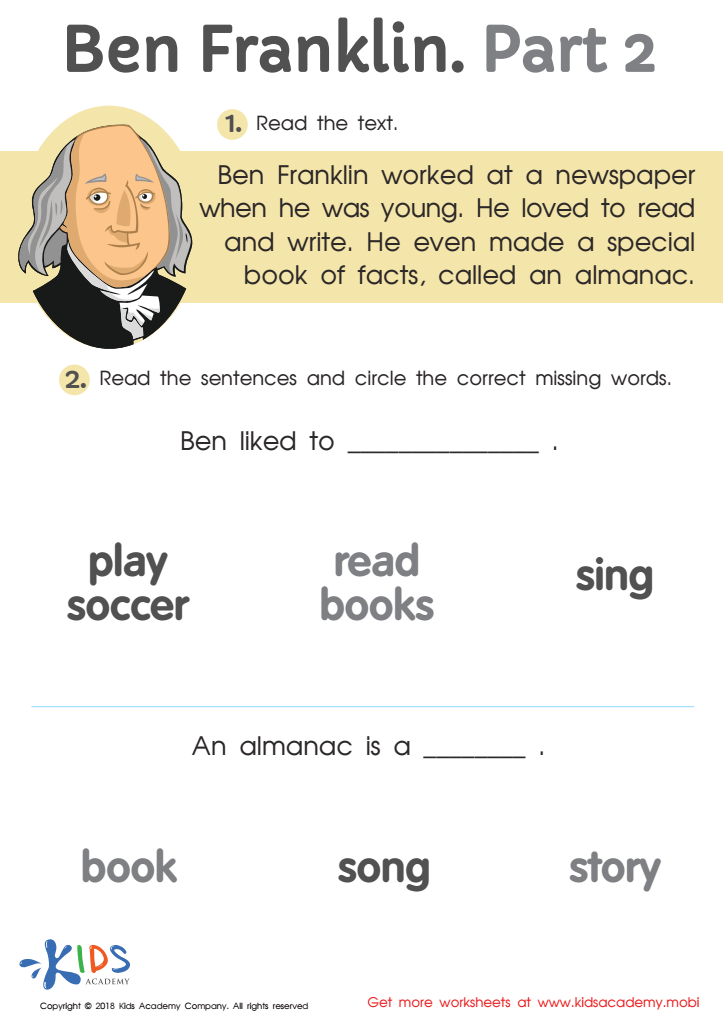
Ben Franklin Part 2 Worksheet
 Assign to My Students








Normal History for Ages 4-7 is crucial because it introduces young children to foundational concepts about the world around them. At this age, children are naturally curious and are beginning to form their understanding of social contexts, relationships, and cultural norms. Teaching Normal History helps tap into this curiosity and nurture a sense of identity and belonging.
Engaging children with narratives that reflect diverse experiences promotes empathy and fosters awareness of different cultures and historical perspectives. It also aids in the development of critical thinking skills as they learn to question and analyze various viewpoints. Furthermore, Normal History can enhance communication skills, allowing children to express their thoughts and feelings about what they are learning.
Incorporating Normal History into early education curriculum encourages a love for learning and exploration. By utilizing age-appropriate storytelling, activities, and discussions, educators can create a rich learning environment that validates children’s experiences while also exposing them to the wider world.
Ultimately, both parents and teachers play an essential role in shaping children's understanding of history, empowering them to grow into well-rounded individuals who appreciate their own history and that of others. This foundational knowledge lays the groundwork for informed, empathetic future citizens.