Normal Addition Worksheets for Ages 6-8 - Page 3
68 filtered results
-
From - To
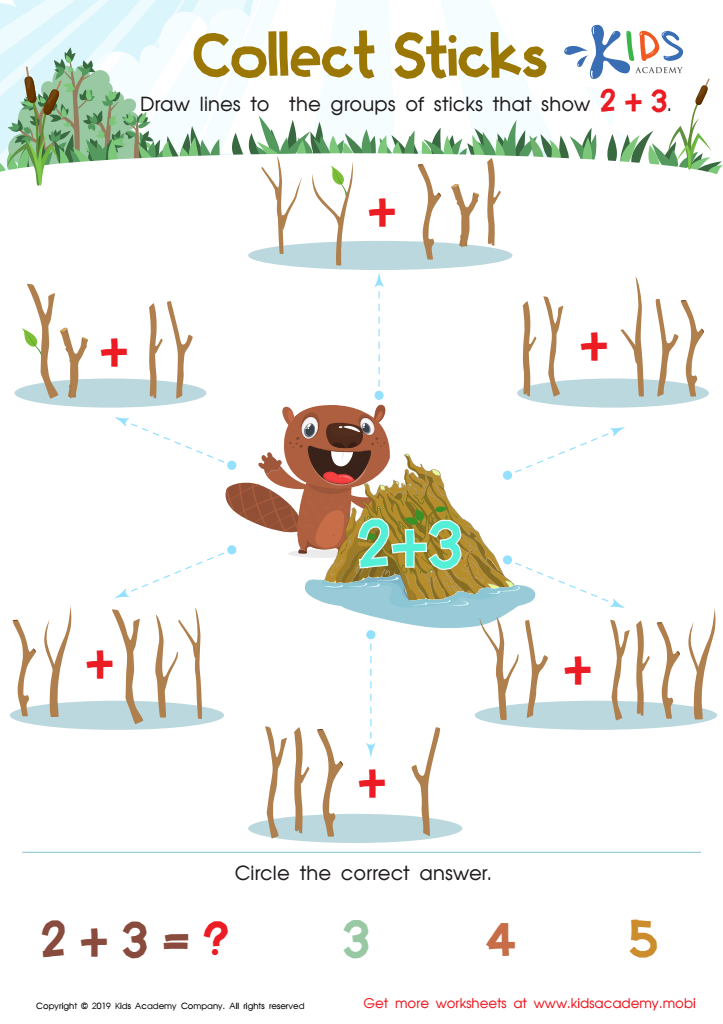
Collect Sticks Worksheet
 Assign to My Students
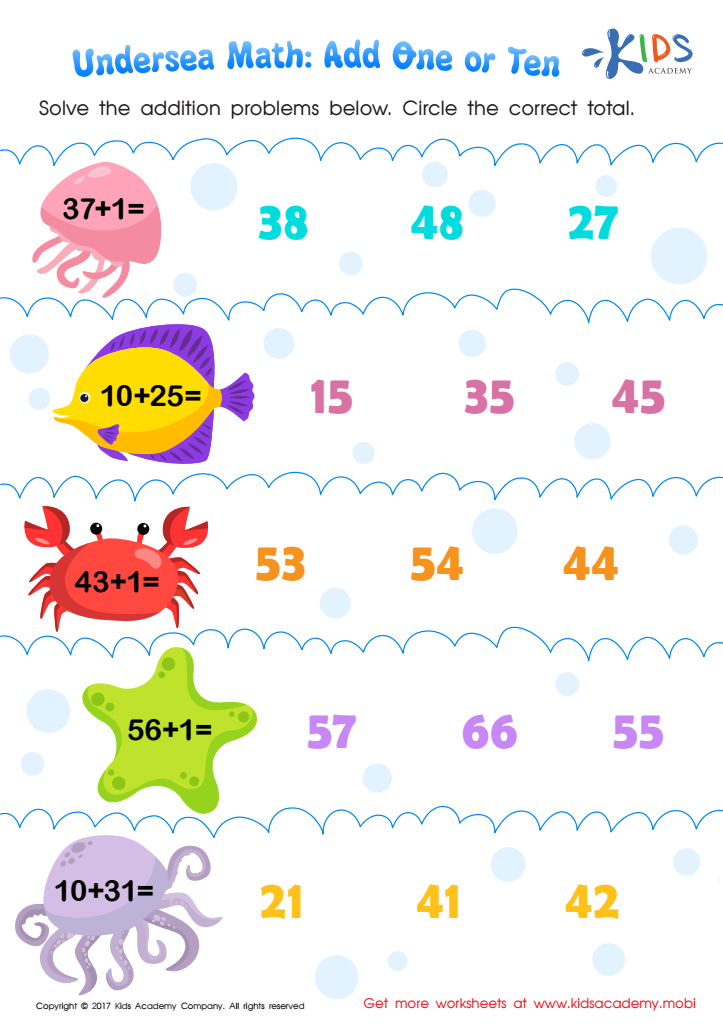
Undersea Math Worksheet
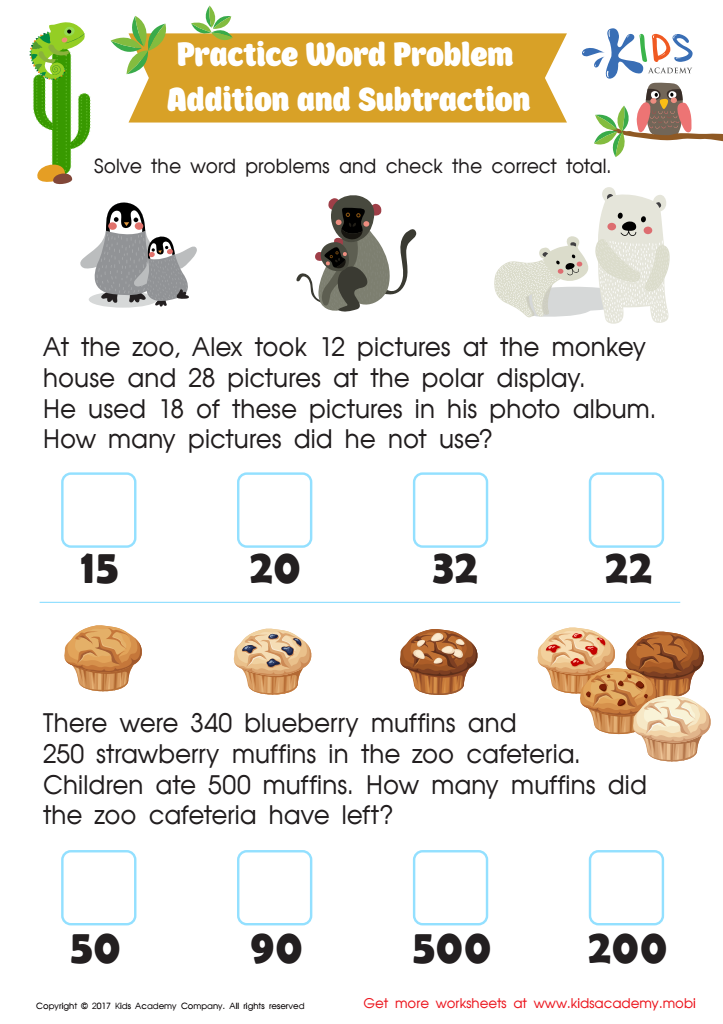
Addition and Subtraction: Word Problems Worksheet
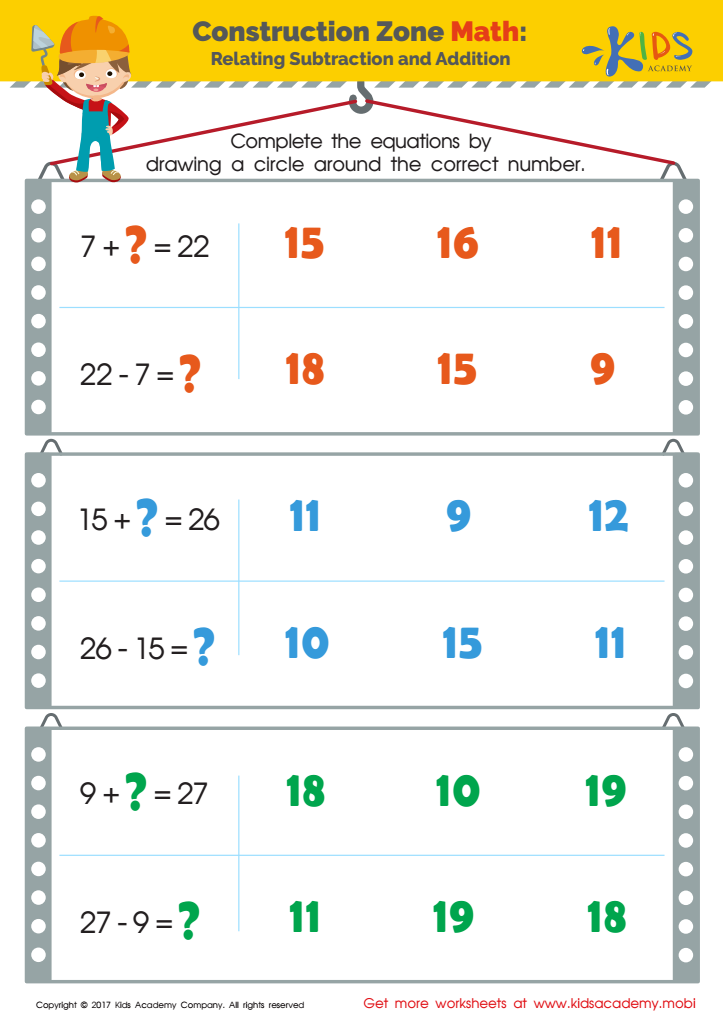
Related Addition and Subtraction Facts Worksheet
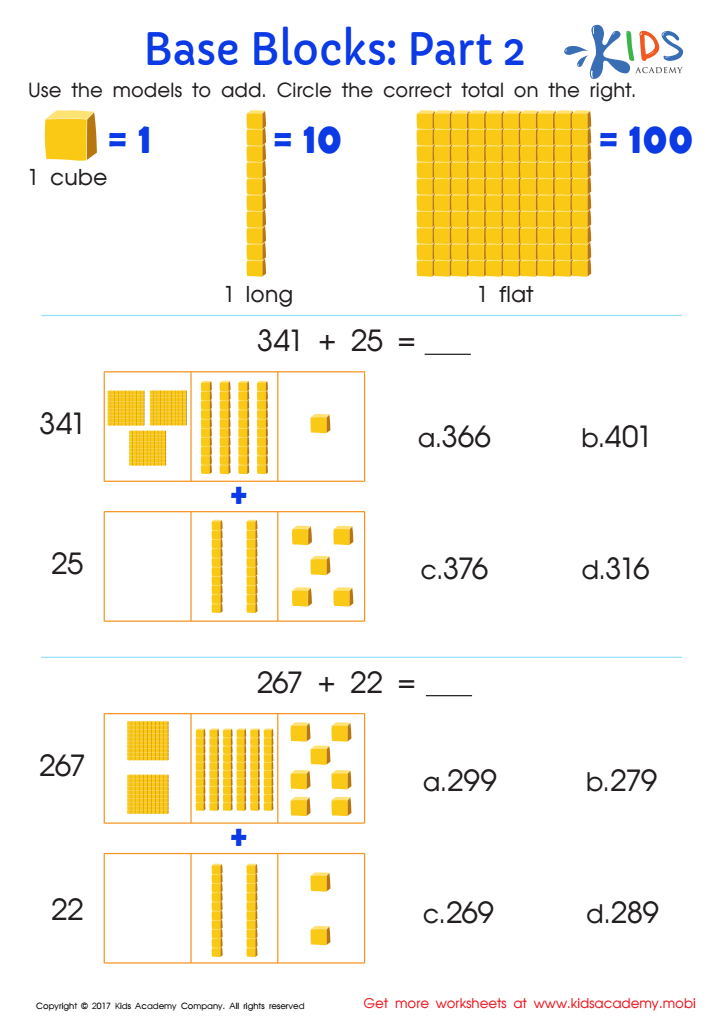
Base Ten Blocks Worksheet: Part 2
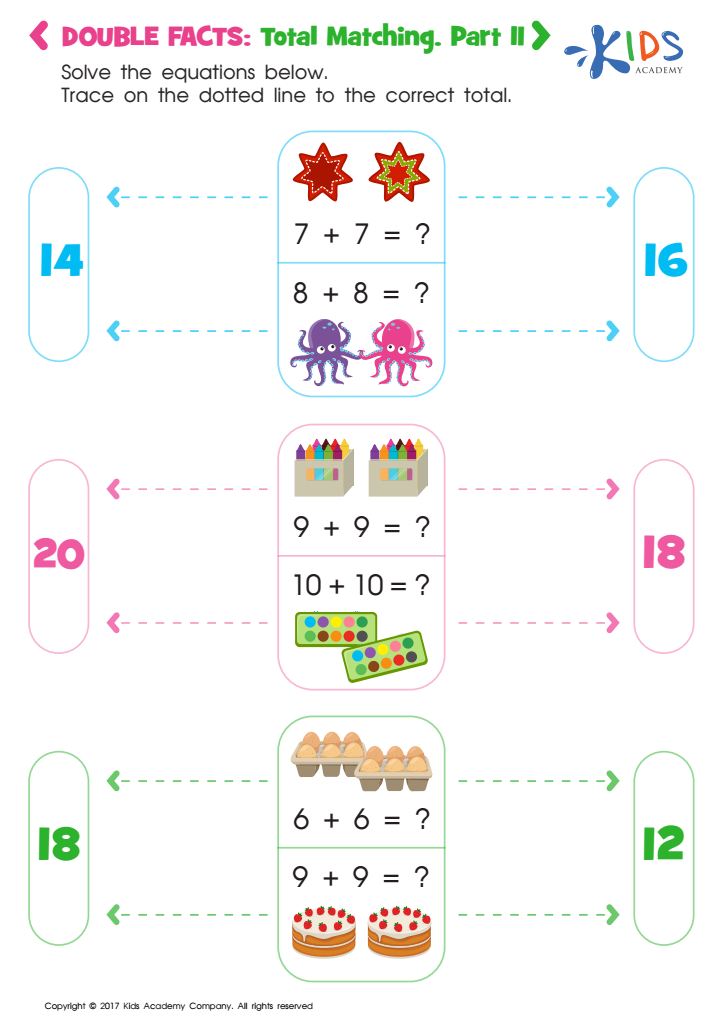
Double Facts: Total Matching 2 Worksheet
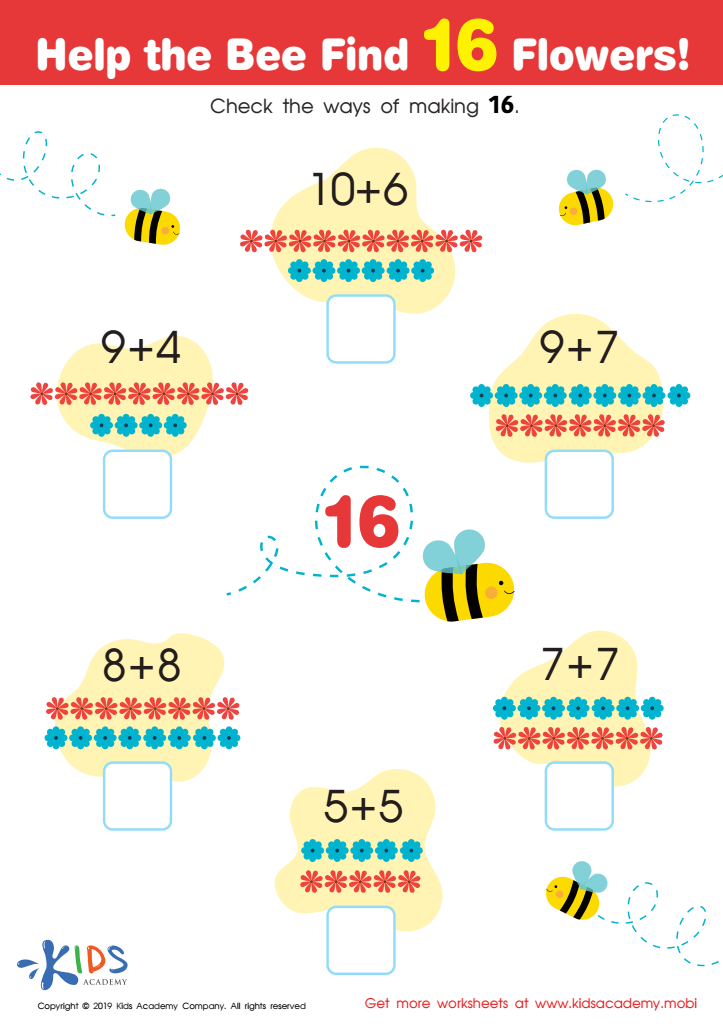
Help the Bee Find 16 Flowers Worksheet
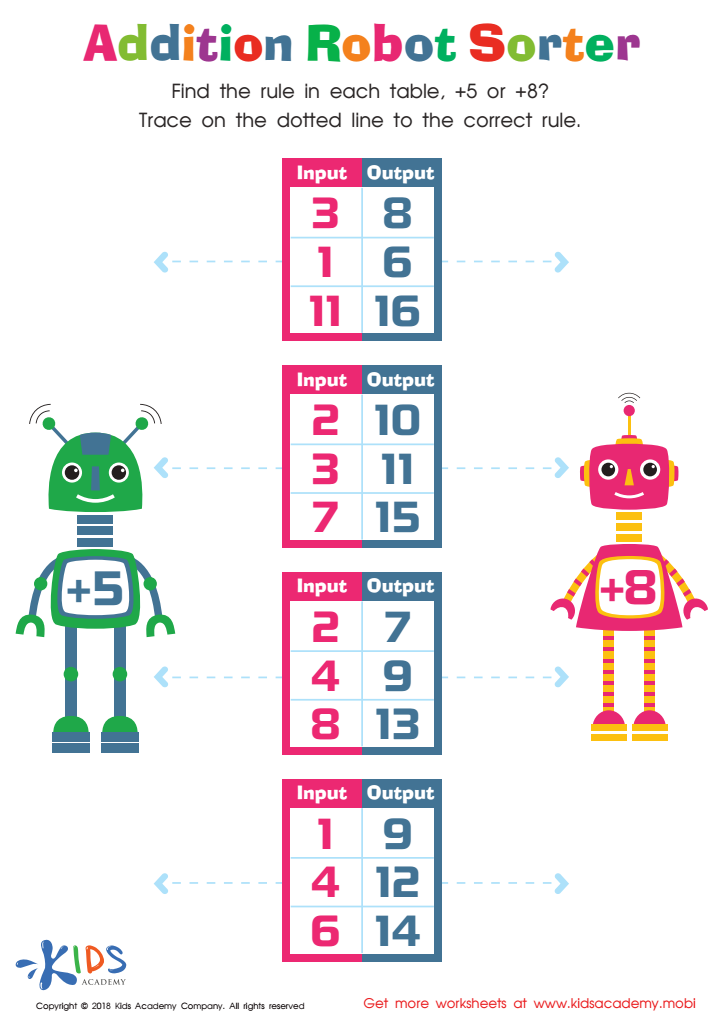
Addition Robot Sorter Worksheet
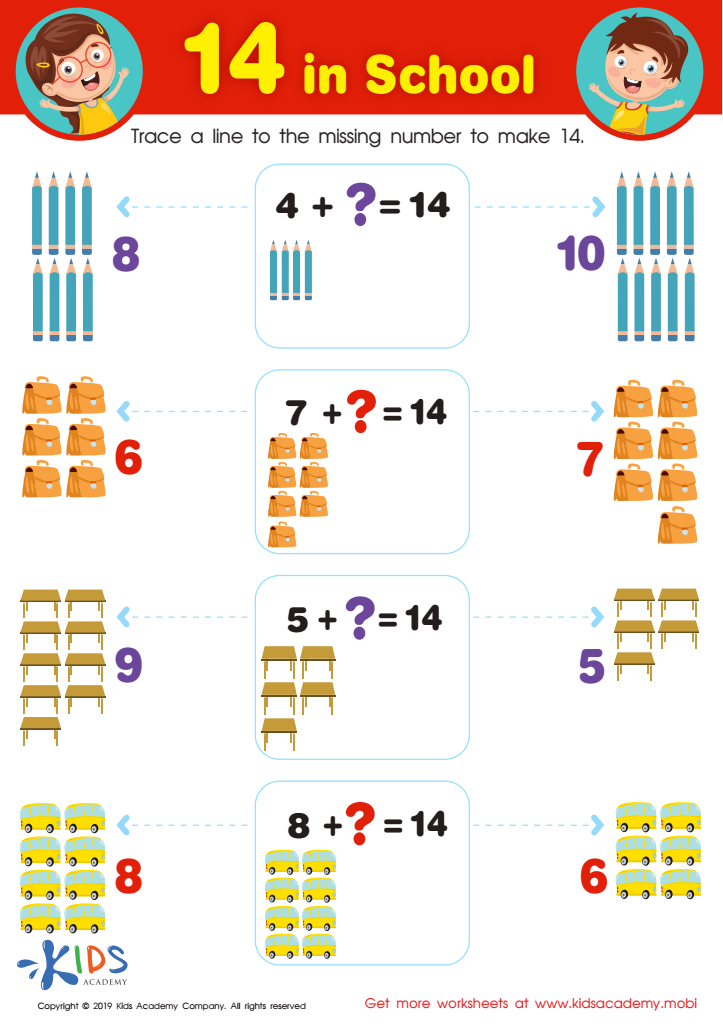
14 in School Worksheet
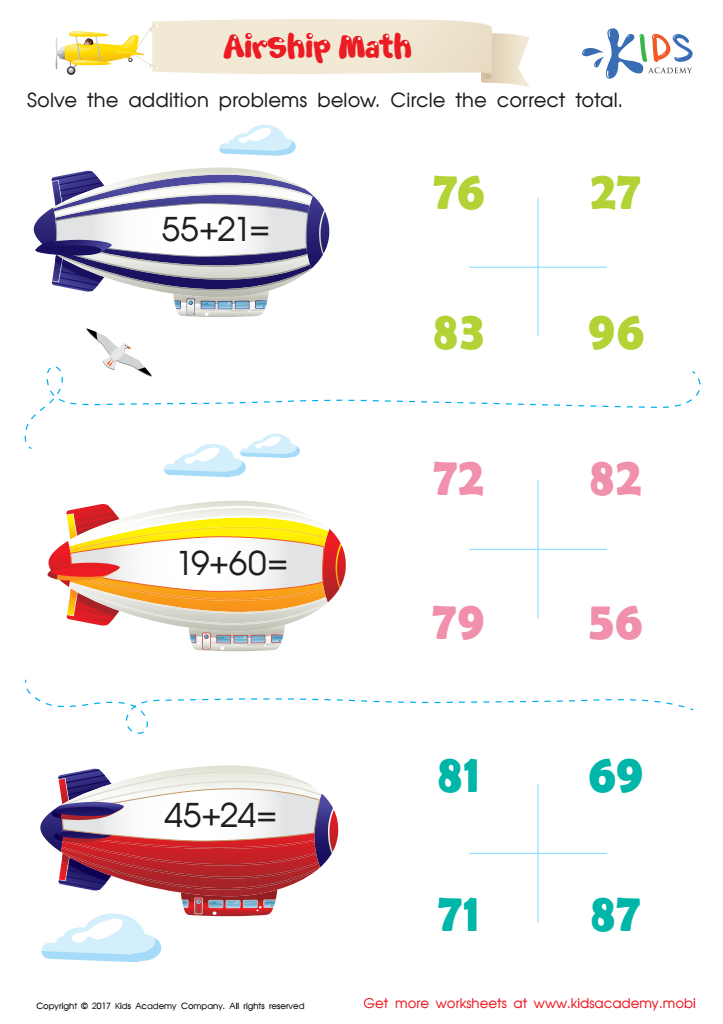
Airship Math Addition Printable
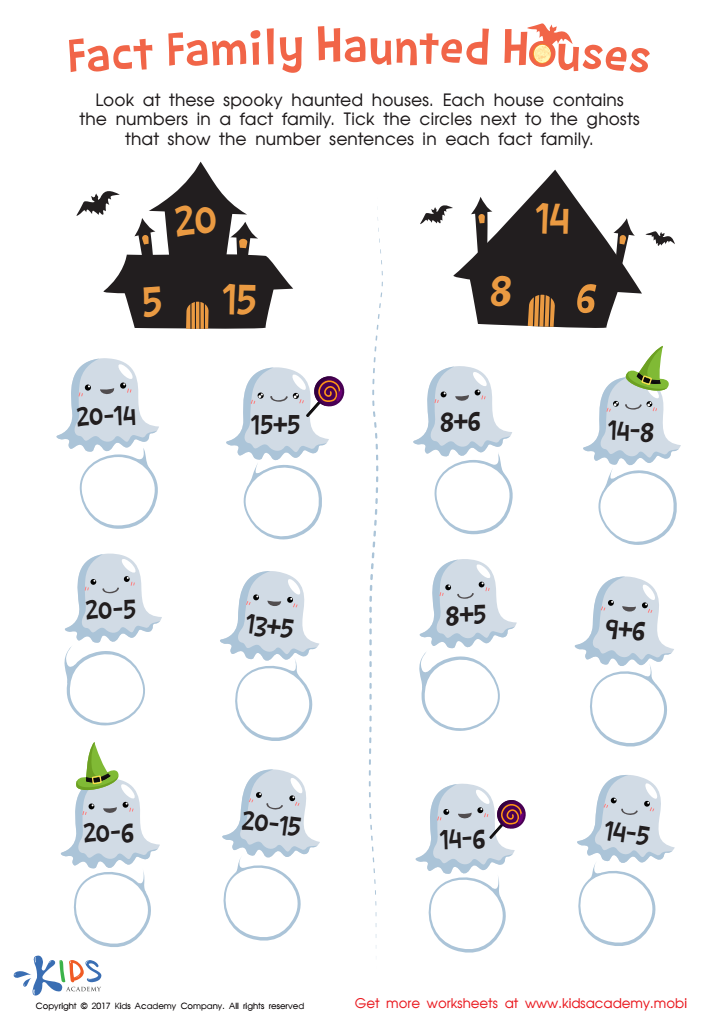
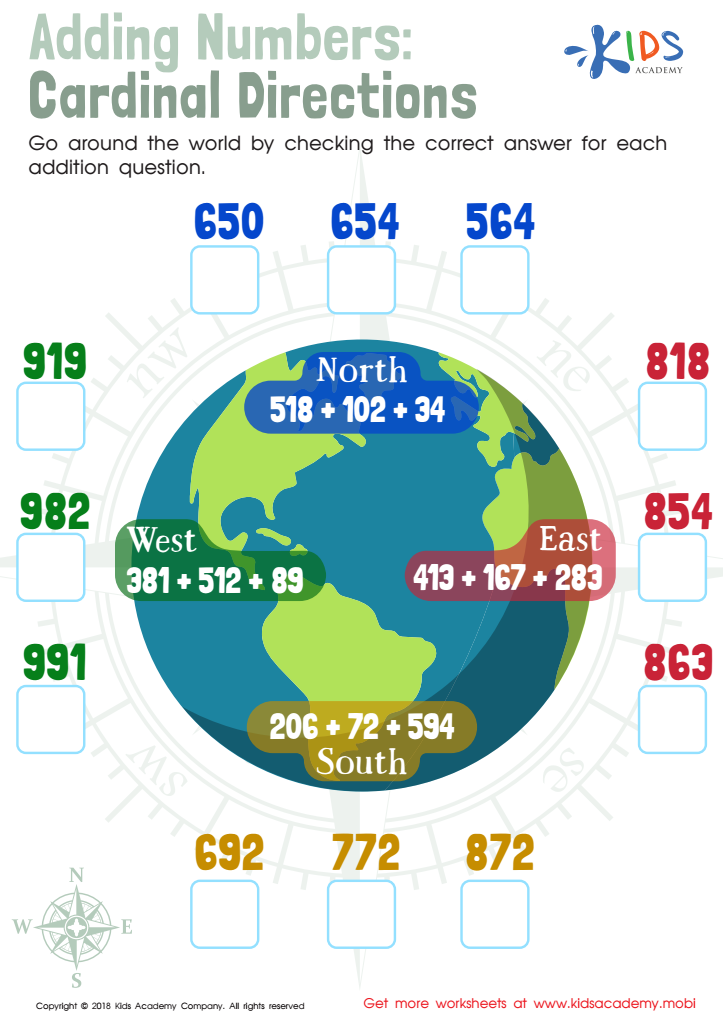
Adding Numbers: Cardinal Directions Worksheet
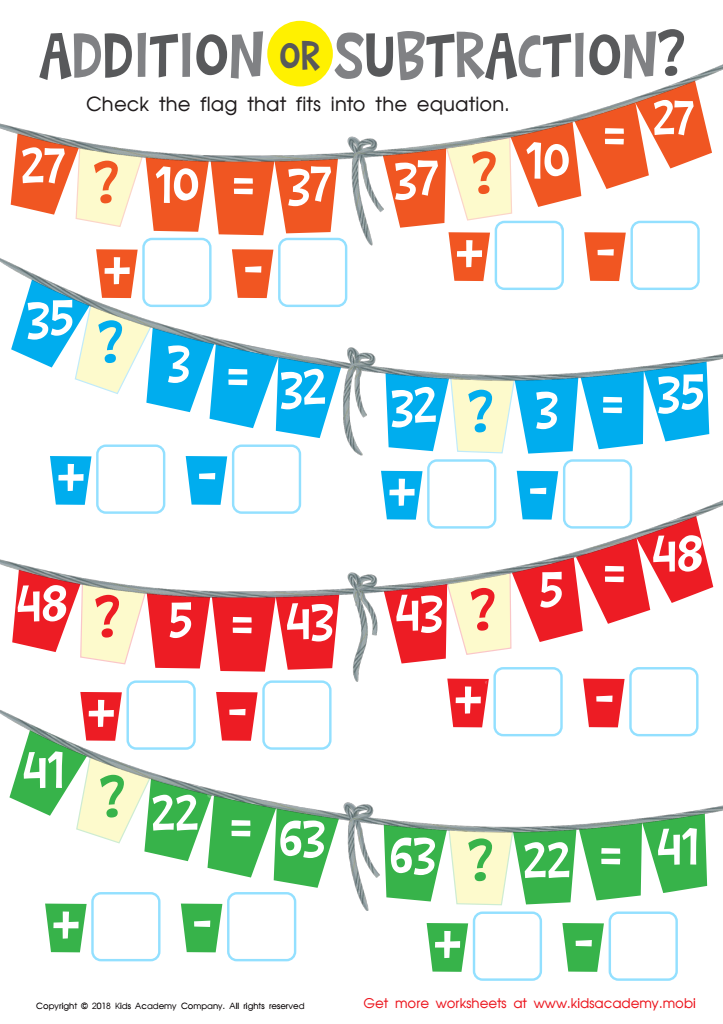
Addition or Subtraction? Worksheet
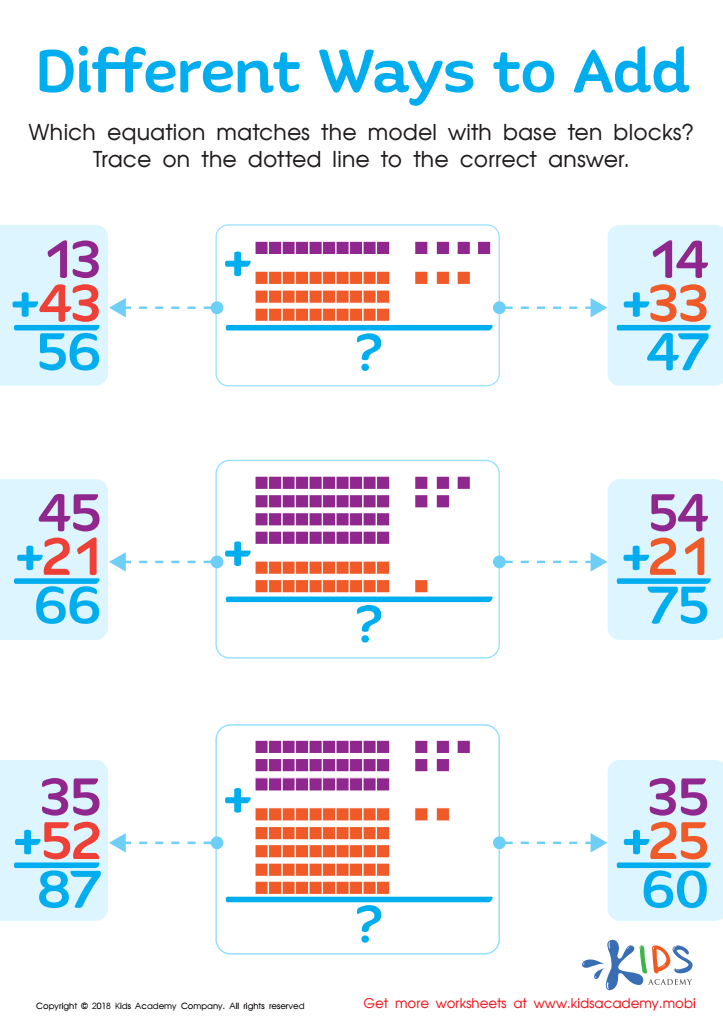
Different Ways to Add Worksheet
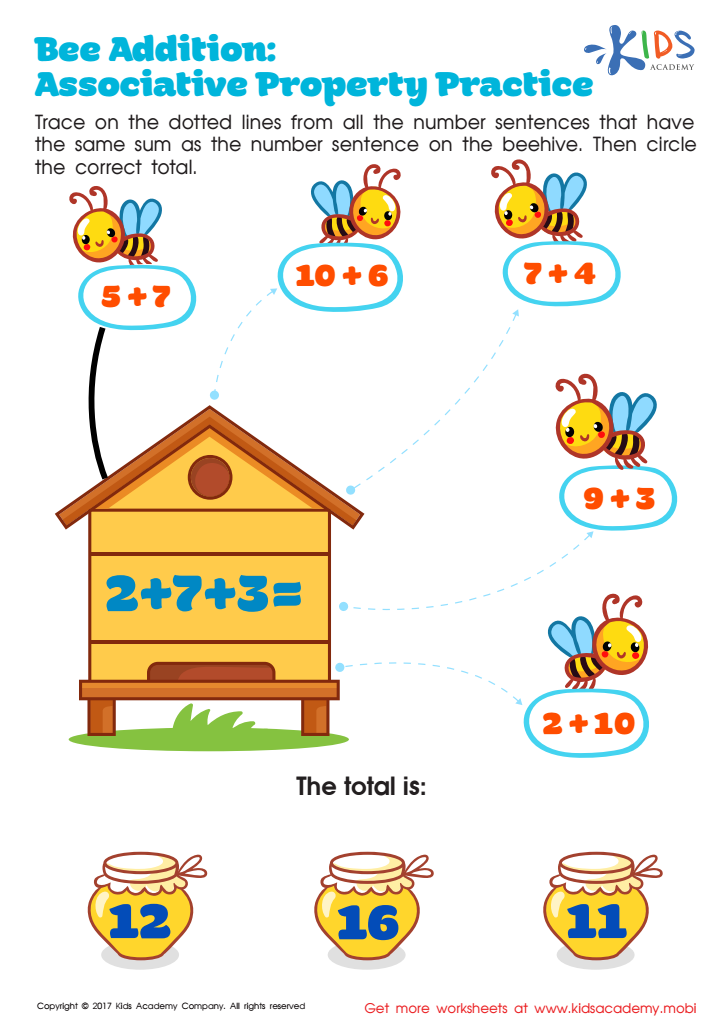
Bee Addition: Associative Property Practice Worksheet
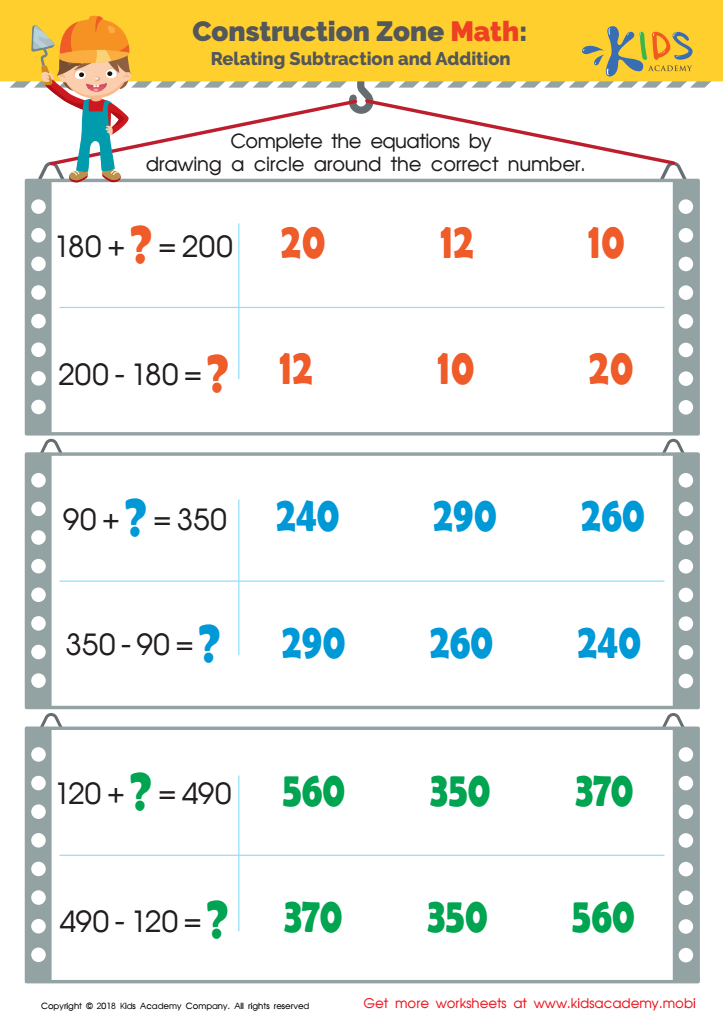
Construction Zone Math: Relating Subtraction and Addition Worksheet
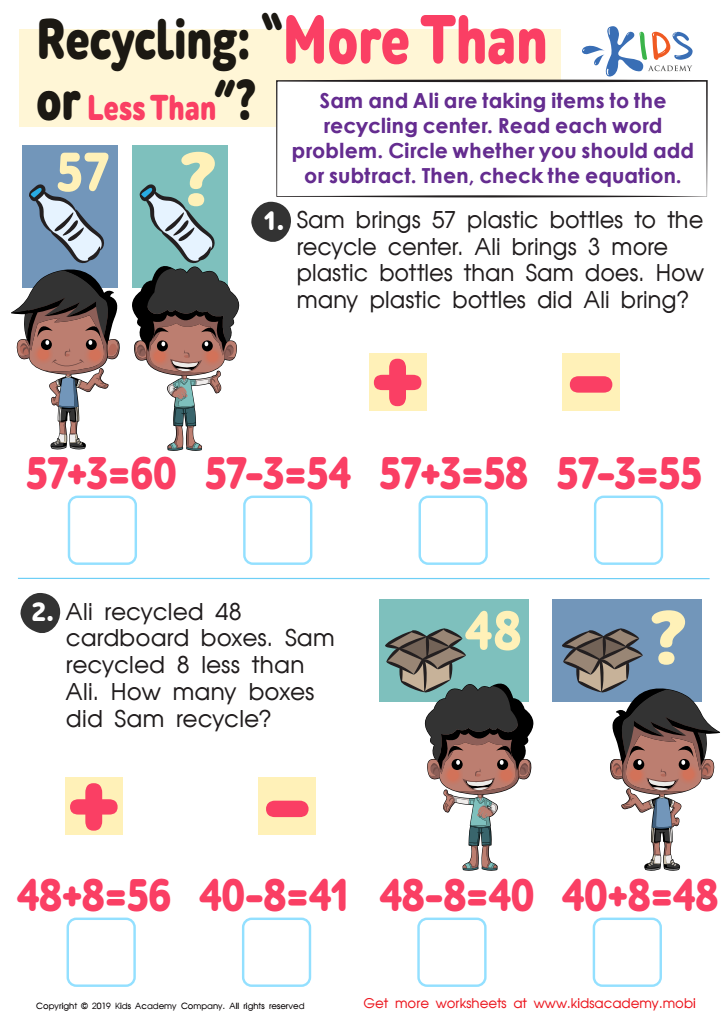
Recycling - More or Less Worksheet
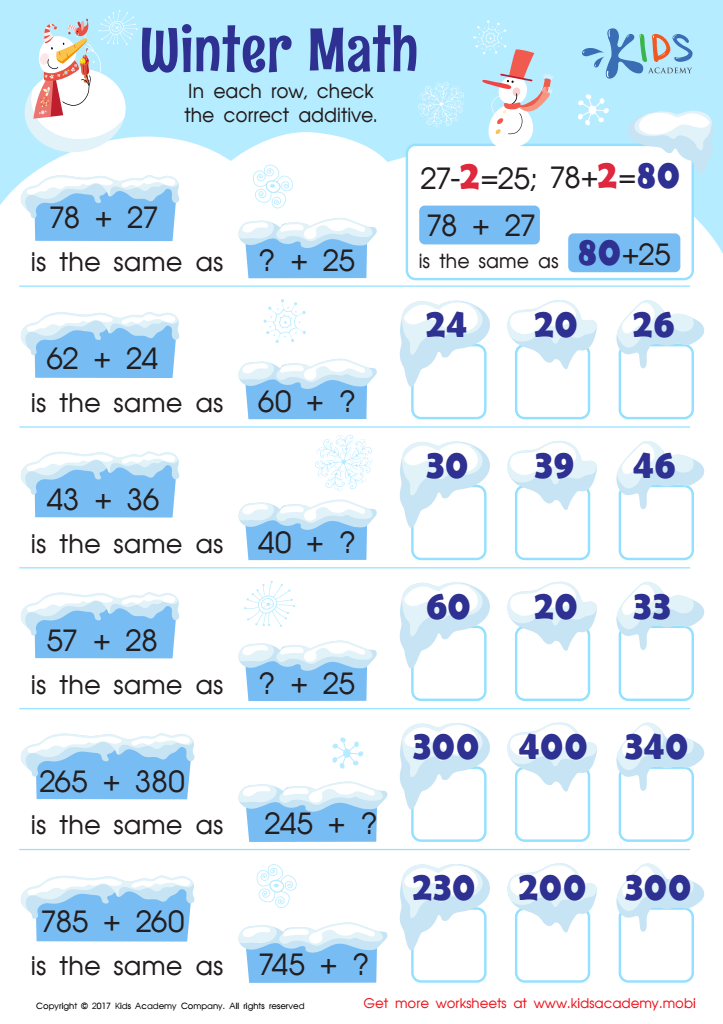
Free Addition Worksheet
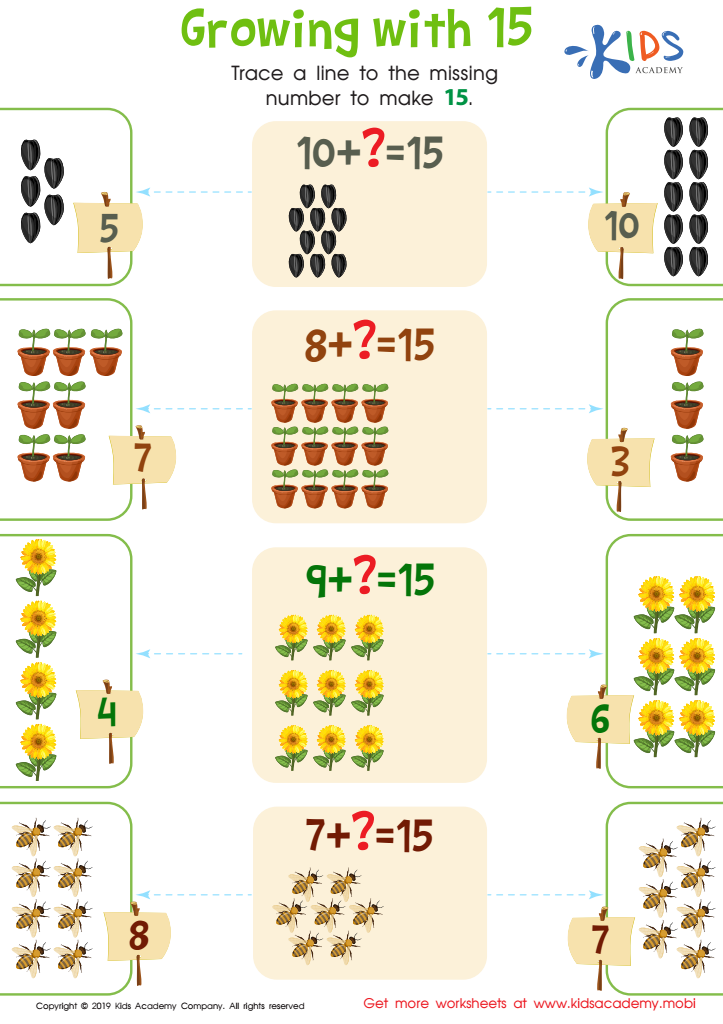
Growing with 15 Worksheet
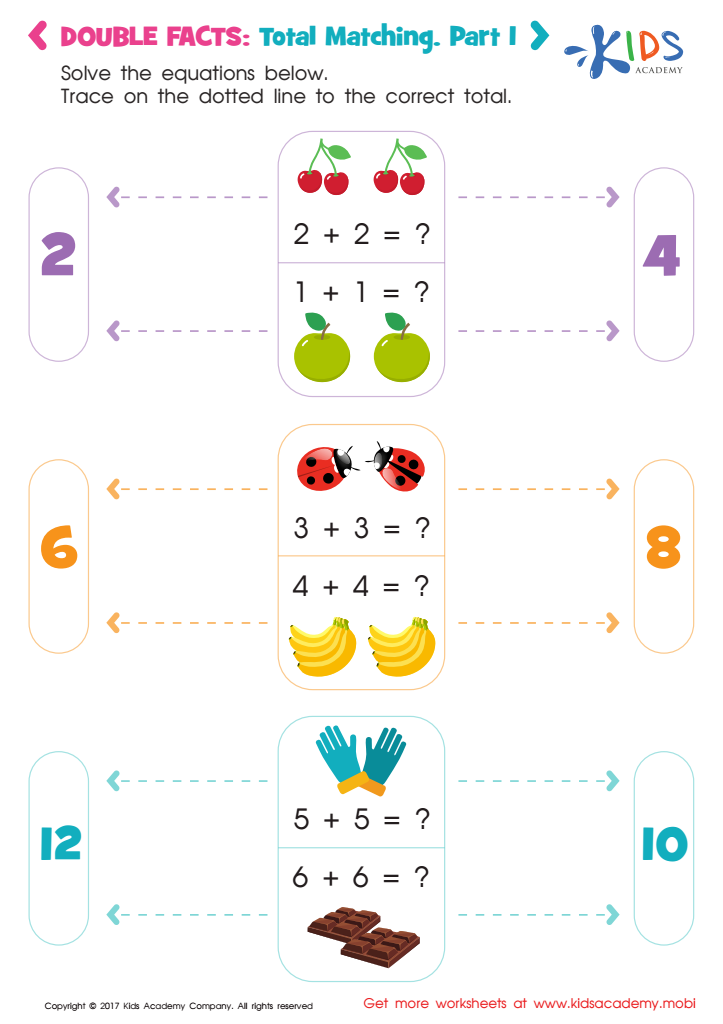
Double Facts: Total Matching Worksheet: Part 1








Parents and teachers should prioritize teaching normal addition to children aged 6-8 because it lays the groundwork for their mathematical understanding and critical thinking skills. At this developmental stage, children are forming a fundamental grasp of numbers and their relationships. Mastering addition not only helps students perform basic arithmetic but also enhances their problem-solving abilities, enabling them to tackle more complex mathematical concepts in the future.
Moreover, understanding normal addition fosters confidence in students, making math less intimidating. By engaging children with interactive methods, such as games or real-life applications, educators and parents can create a positive learning environment that enhances retention and enjoyment of the subject. With strong addition skills, children are better equipped to understand concepts like subtraction, multiplication, and division, which are essential for their overall academic success.
Additionally, nurturing these skills early on supports cognitive development, helping children to strategize, estimate, and work through problems systematically. Therefore, by emphasizing normal addition, parents and teachers inspire a lifelong interest in math, encourage persistence in overcoming challenges, and lay a solid foundation not only for future mathematics education but for everyday life skills as well. Engaging with this critical area of learning is a worthwhile investment in a child’s future.