Normal Rounding Worksheets for Ages 7-9
16 filtered results
-
From - To
Introduce your child to the essentials of rounding numbers with our engaging Normal Rounding Worksheets for ages 7-9. Perfectly crafted for young learners, these printable worksheets from Kids Academy make learning both fun and effective. Easy-to-follow exercises guide students through rounding to the nearest 10 and 100, helping them grasp key math concepts. With colorful visuals and practical examples, our worksheets ensure that children gain confidence in their math skills. Suitable for classroom or home use, these resources cater to diverse learning styles and pave the way for math success. Explore more at Kids Academy and watch your child's math abilities round up!
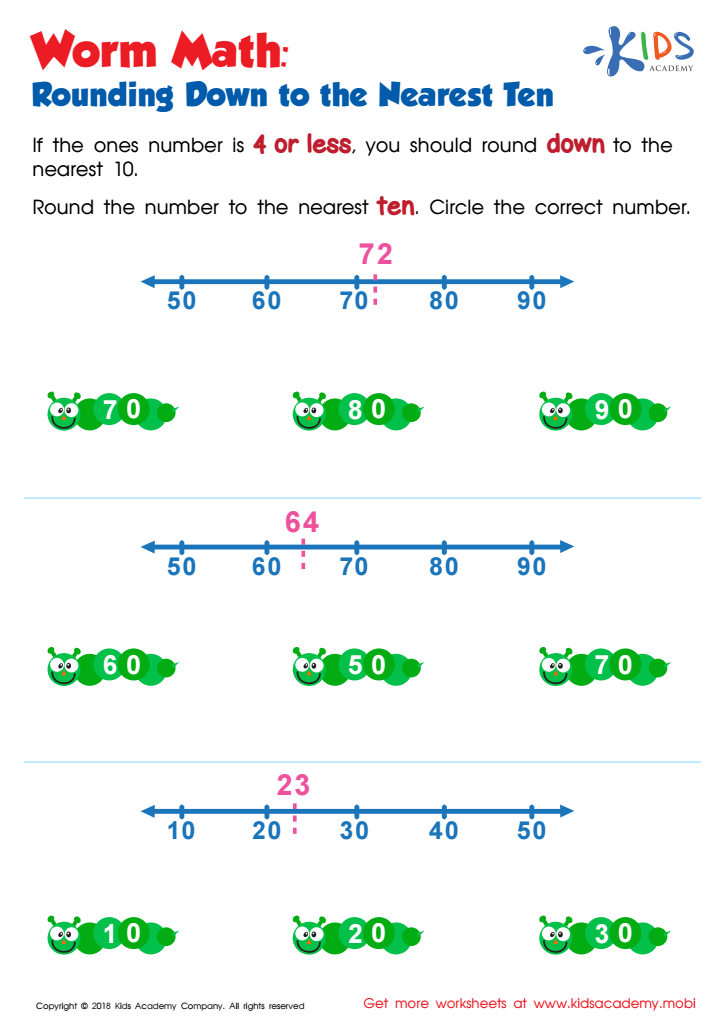
Worm Math Rounding Down to the Nearest Ten Worksheet
 Assign to My Students
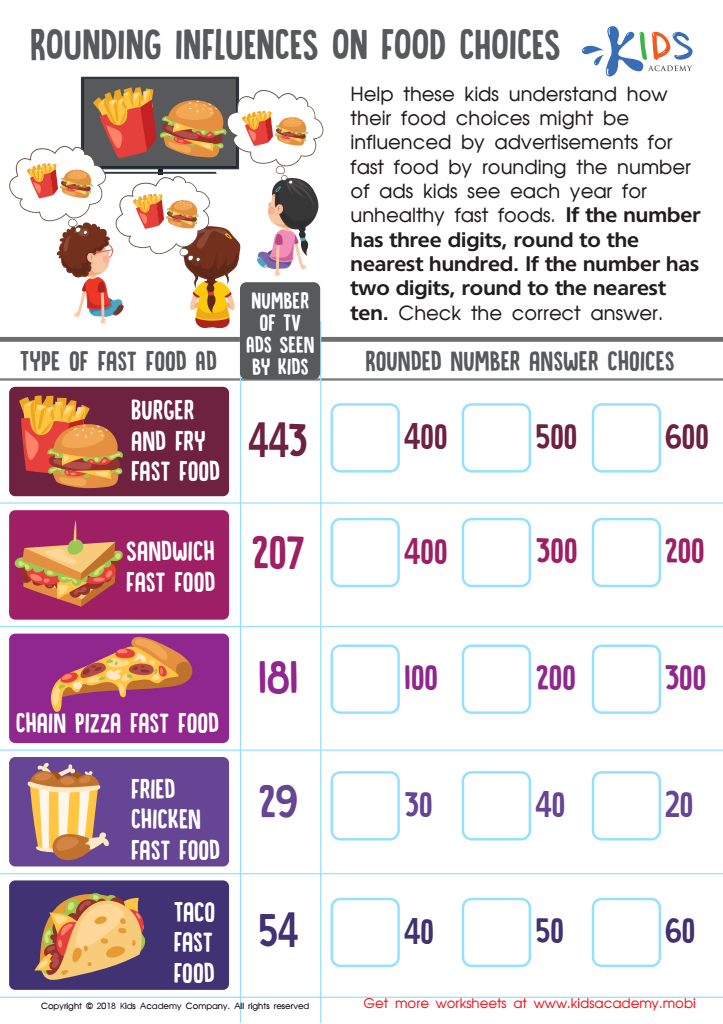
Rounding Influences Food Choices Worksheet
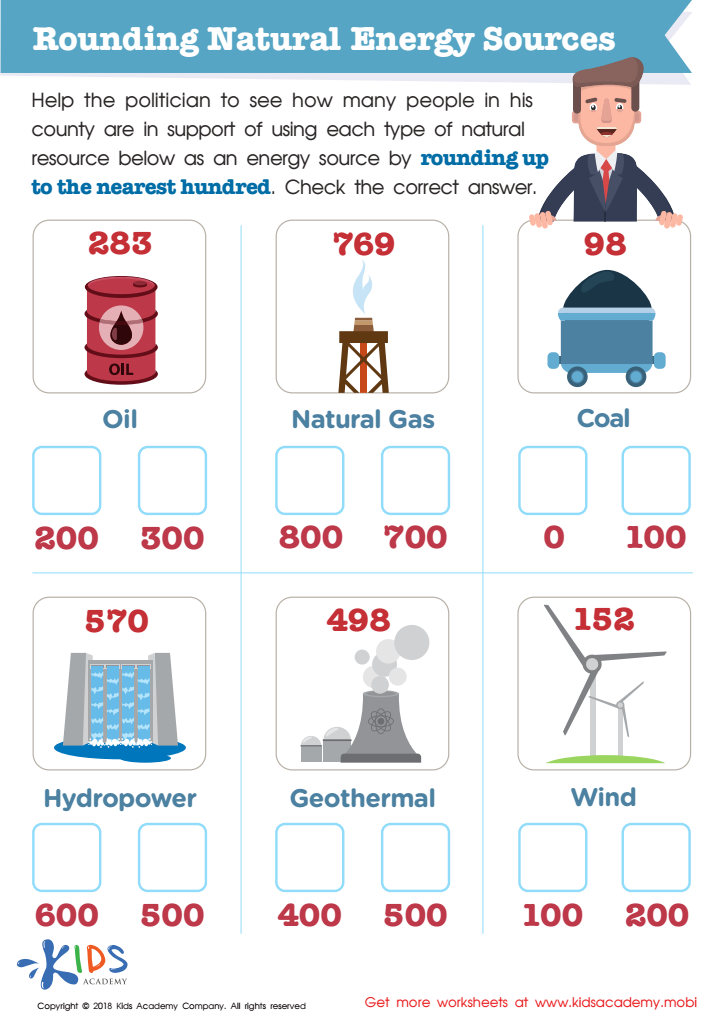
Rounding Natural Energy Sources Worksheet
Rounding Down Printable Worksheet
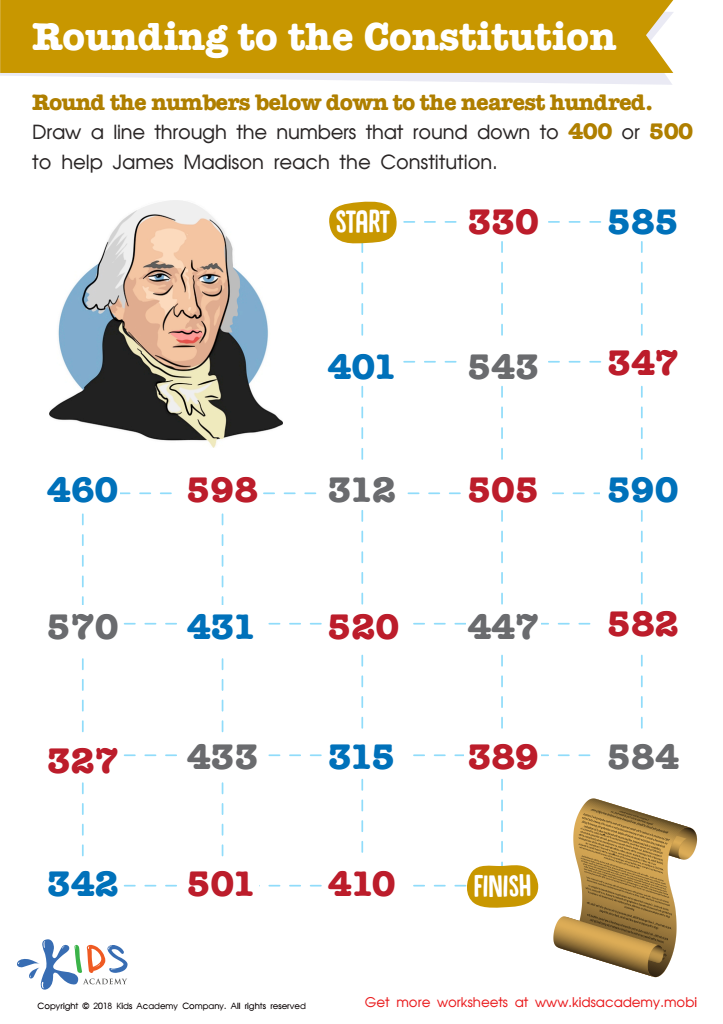
Rounding to the Constitution Worksheet
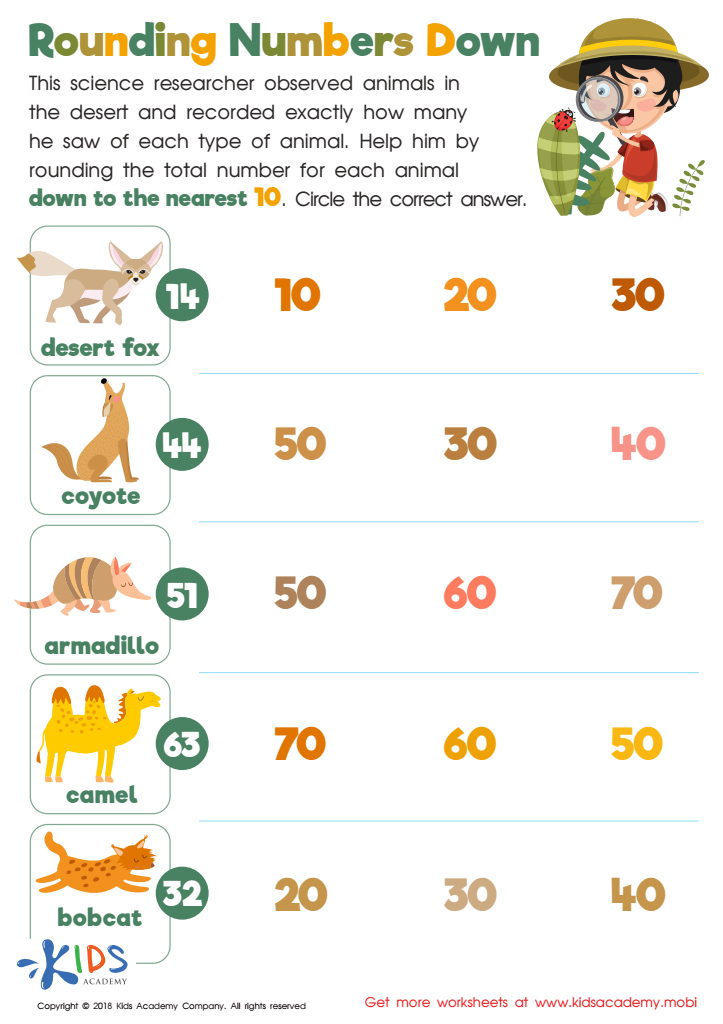
Rounding Numbers Down Worksheet
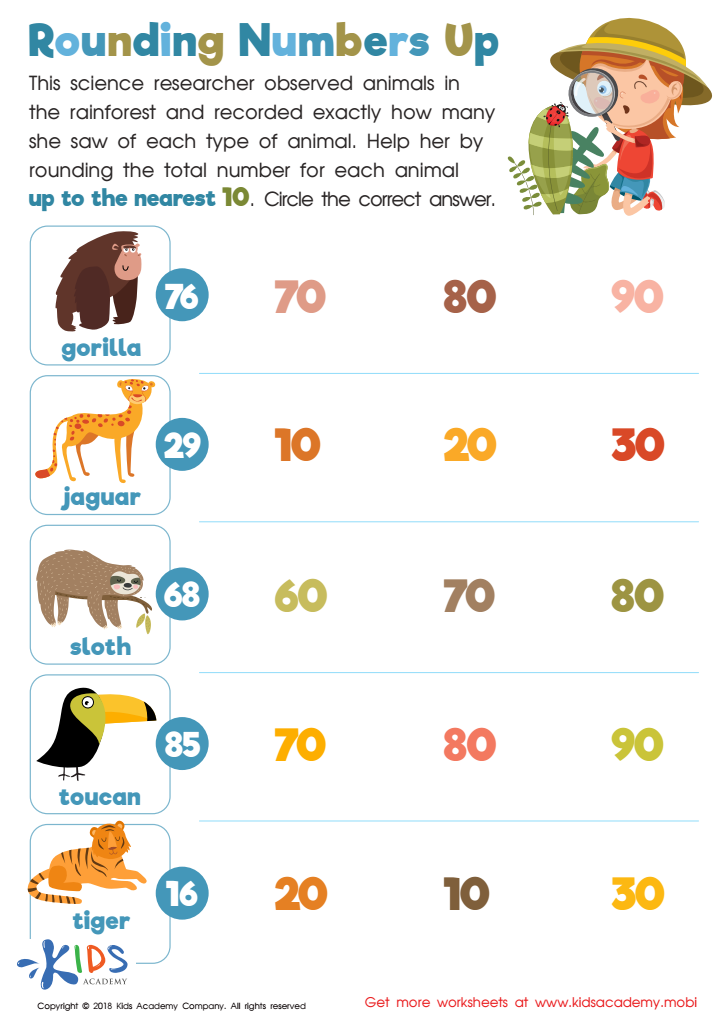
Rounding Numbers Up Worksheet
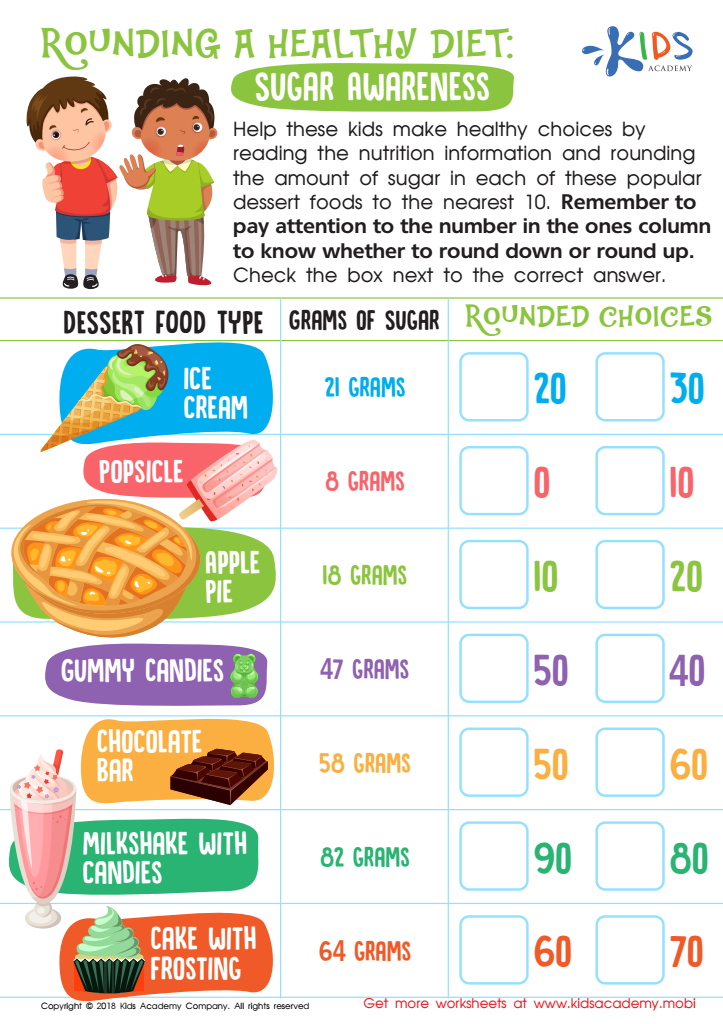
Rounding Healthy Diet Worksheet
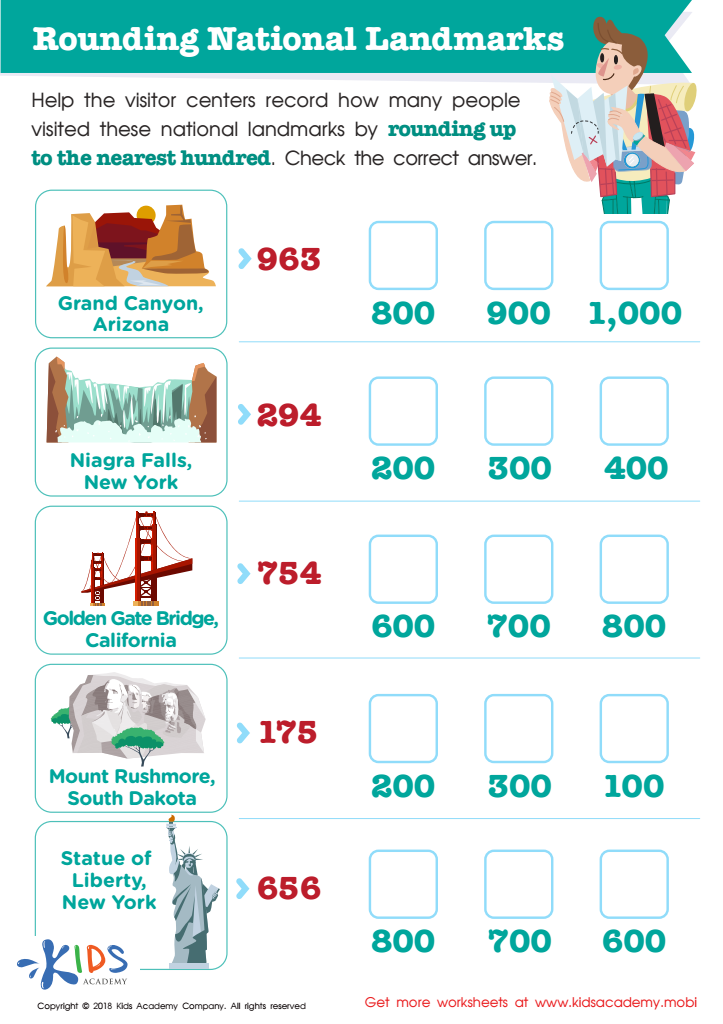
Rounding National Landmarks Worksheet

Rounding on the National Mall Worksheet
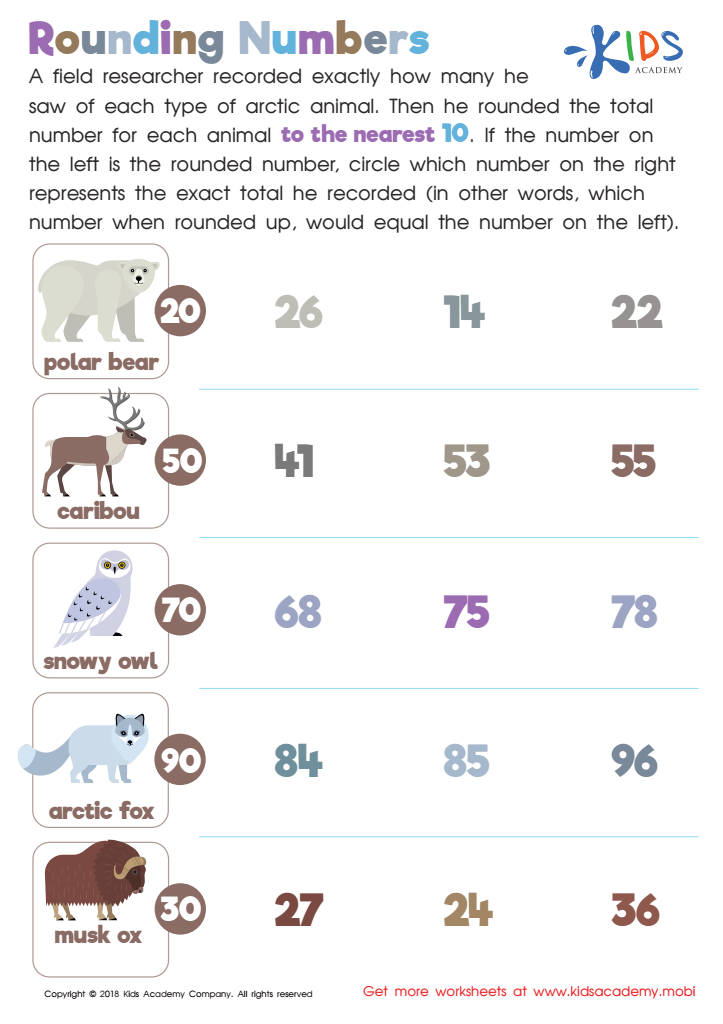
Rounding Numbers Worksheet
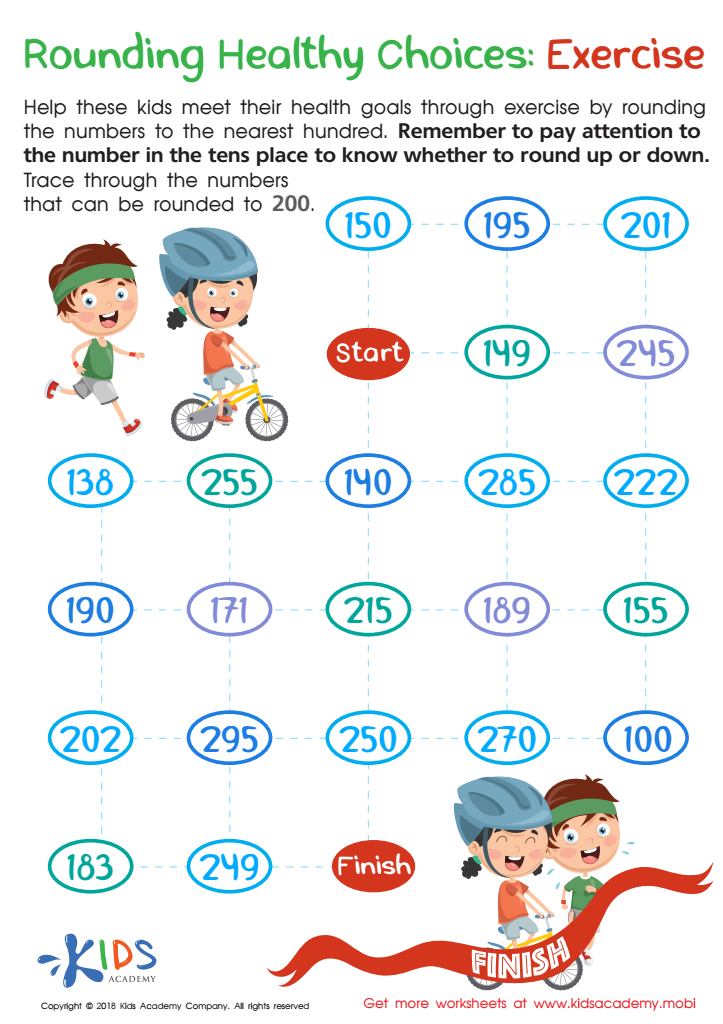
Rounding Healthy Choices Exercise Worksheet
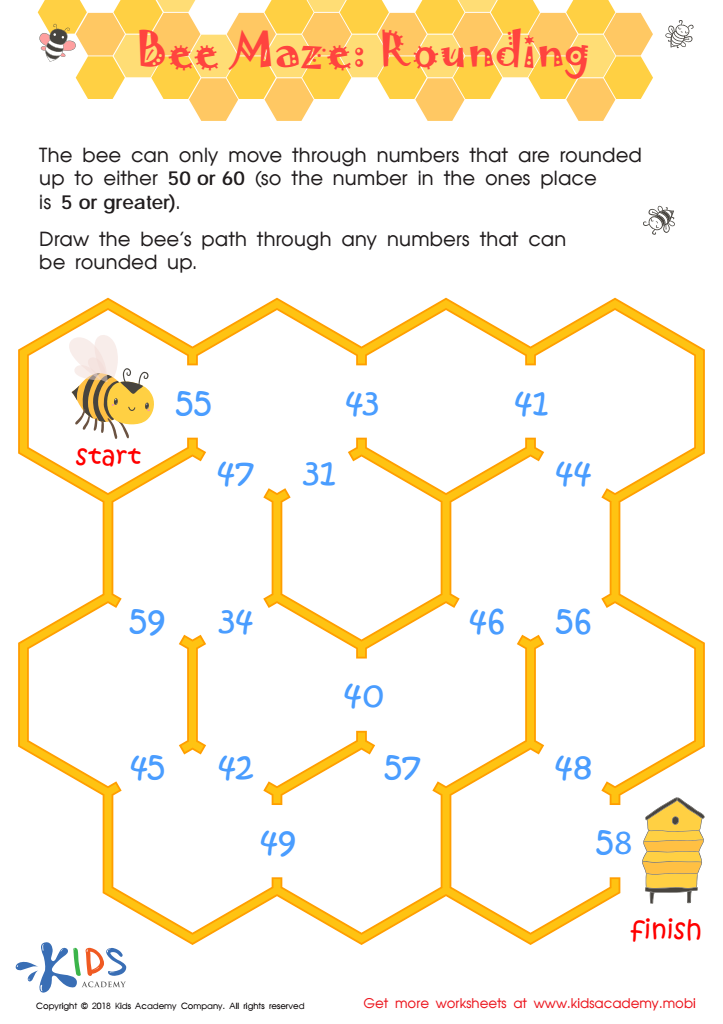
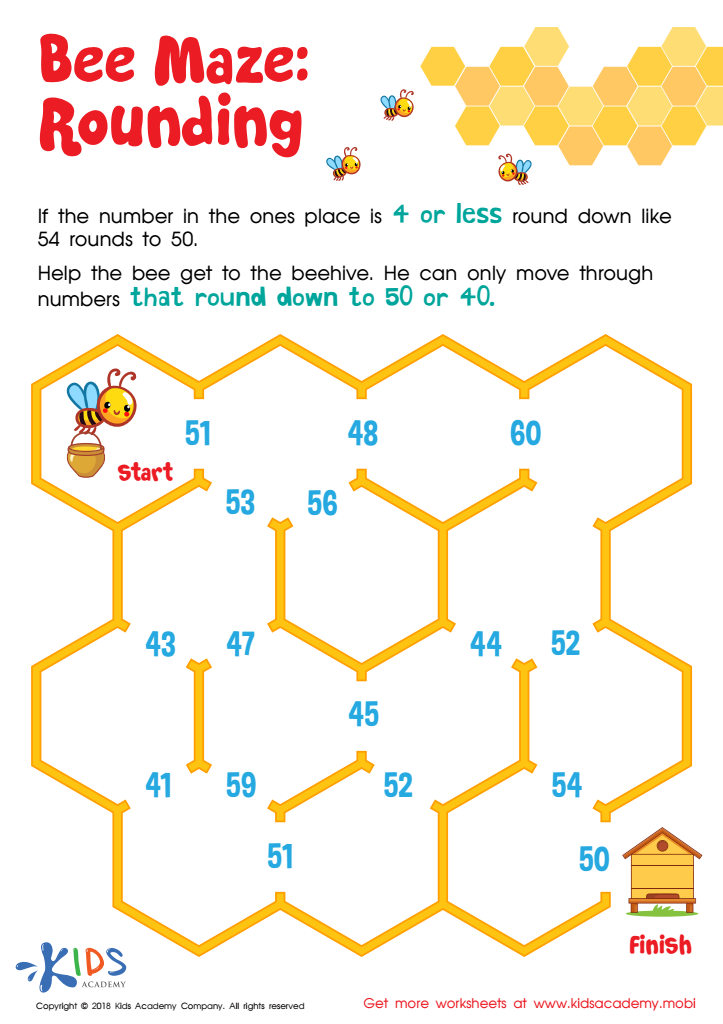
Bee Maze Rounding Worksheet
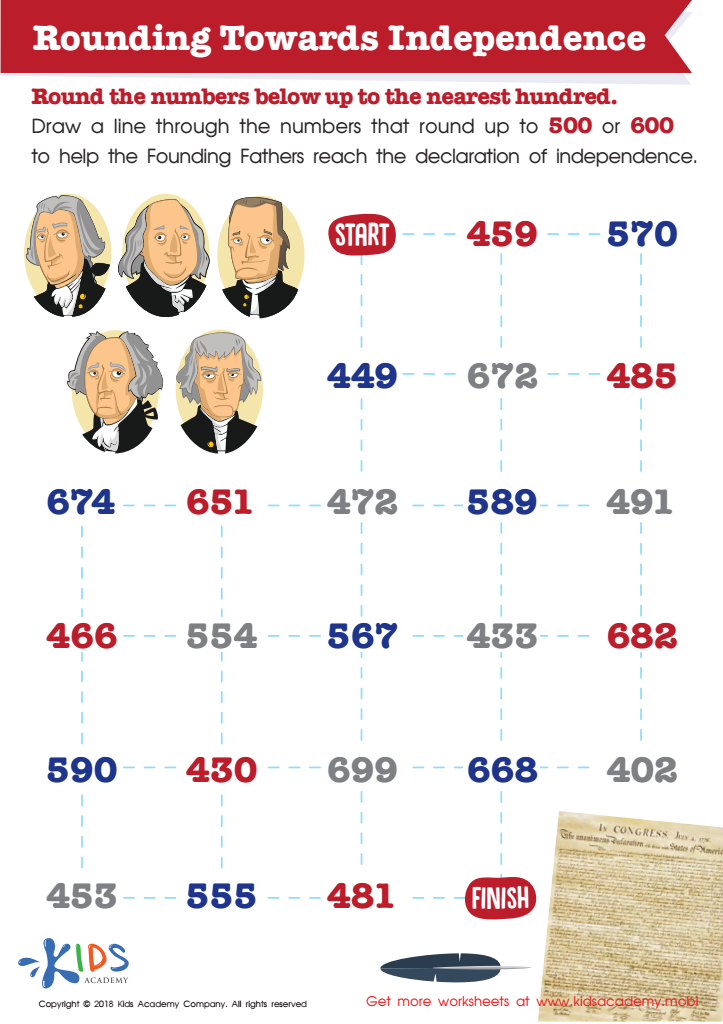
Rounding Towards Independence Worksheet
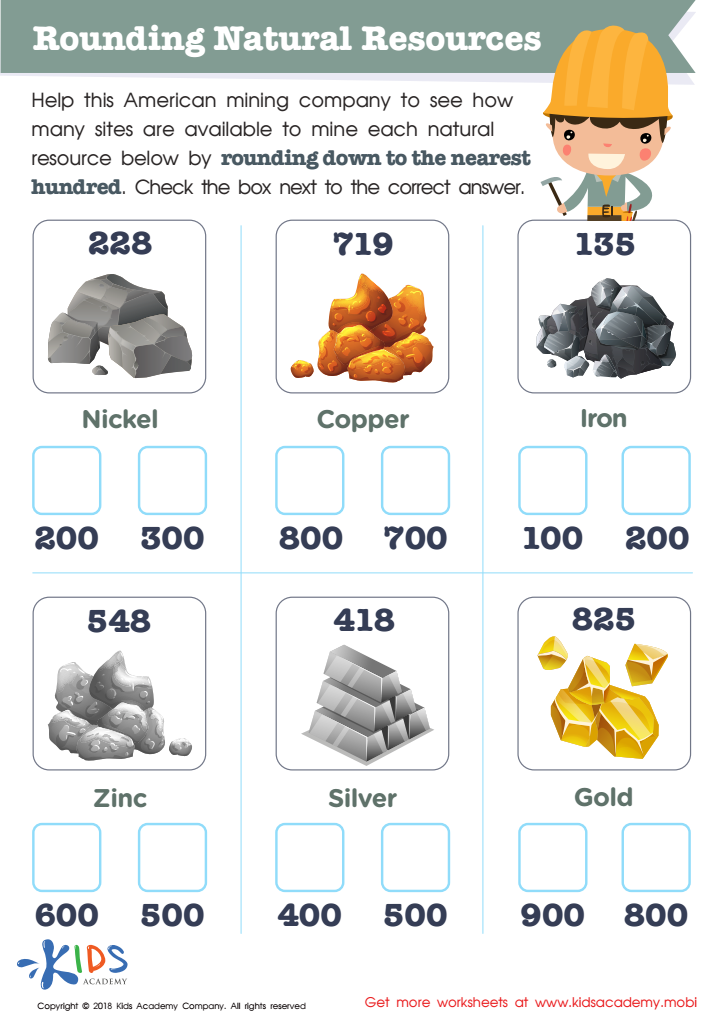
Rounding Natural Resources Worksheet
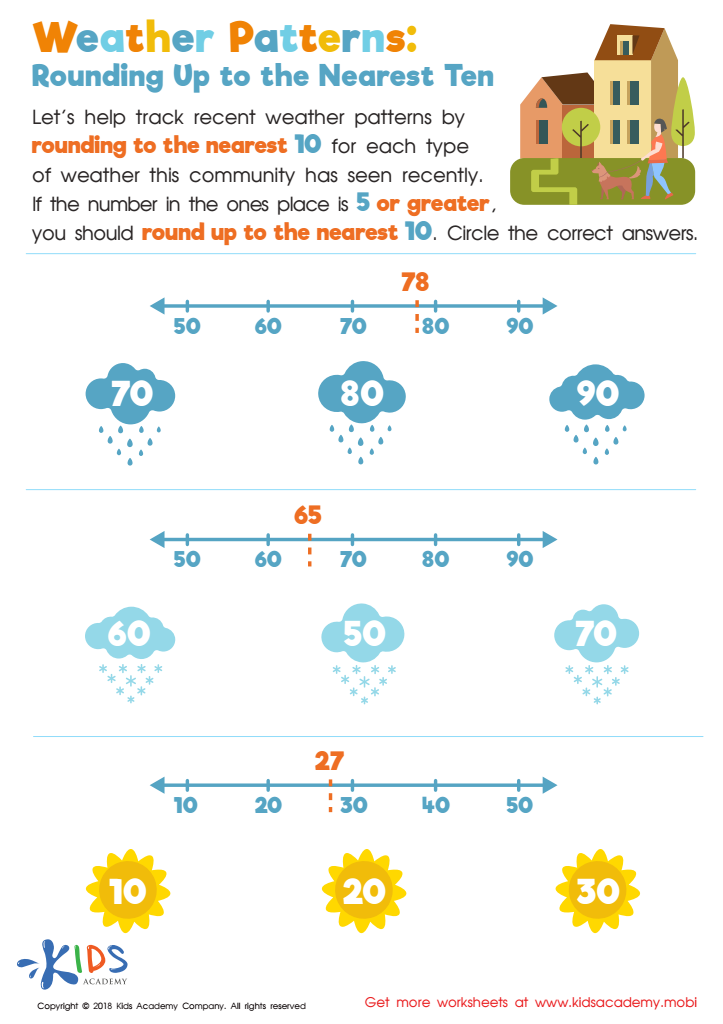
Weather Patterns Worksheet






Parents and teachers should care about normal rounding for children aged 7-9 because it is a foundational mathematical concept that helps develop their number sense and estimation skills. Learning how to round numbers to the nearest ten or hundred allows children to simplify complex numbers, making arithmetic operations like addition, subtraction, and even multiplication more manageable. This skill is not only essential for their academic success but is also practical for day-to-day activities such as handling money, measuring, or making quick calculations.
Understanding normal rounding aids in boosting a child's confidence in math by providing them with straightforward techniques to approximate and check the reasonableness of their answers. This supports the development of logical reasoning and problem-solving skills. Additionally, it aligns with curriculum standards that expect students to demonstrate proficiency in these areas.
Furthermore, proficiency in rounding fosters more advanced mathematical understanding as children progress through school. It lays the groundwork for concepts like significant figures in science or determining averages. Therefore, giving targeted attention to normal rounding for children at this developmental stage is crucial, as it encourages a positive attitude towards math and equips them with lifelong numerical skills.
By prioritizing this learning, parents and teachers can ensure that children are building a strong mathematical foundation, vital for their future learning and everyday functioning.