Understanding fractions Extra Challenge Worksheets for Ages 3-8
11 filtered results
-
From - To
Explore our "Understanding Fractions Extra Challenge Worksheets" designed for ages 3-8! This collection of engaging activities helps young learners grasp the concept of fractions in a fun and interactive way. Each worksheet features colorful visuals and age-appropriate challenges that encourage children to develop their mathematical reasoning and problem-solving skills. From identifying fractions in everyday objects to comparing and manipulating them, these worksheets create a solid foundation for future math success. Perfect for classroom use or at-home practice, our resources will enhance your child's understanding and confidence in working with fractions. Unlock your child's potential today with our educational tools!
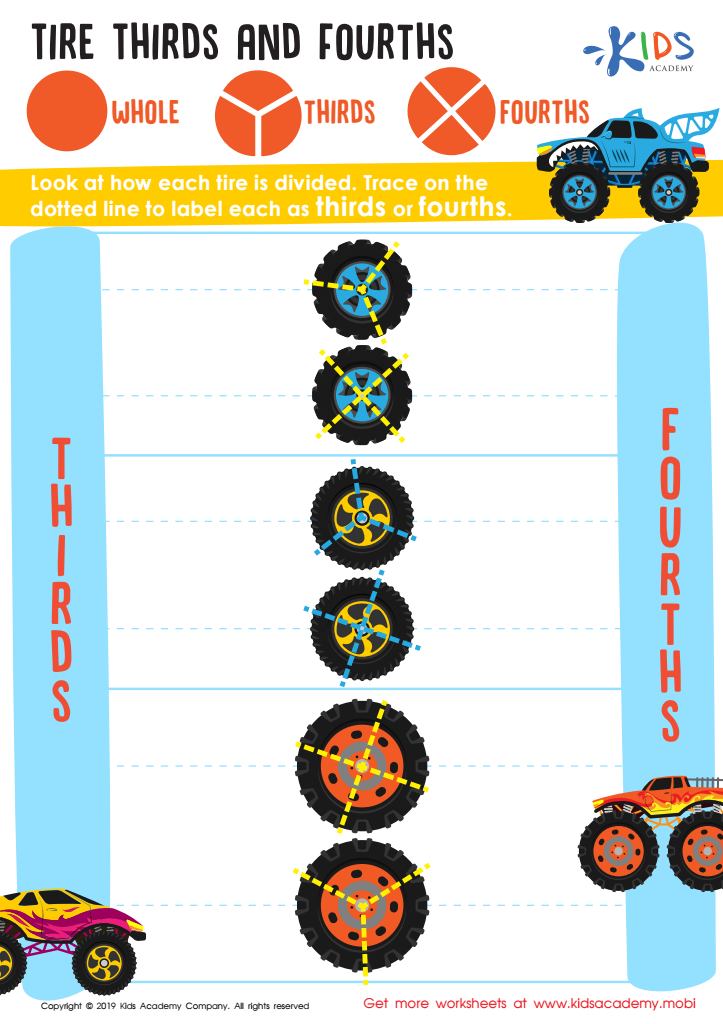
Tire Thirds and Fourths Worksheet
 Assign to My Students
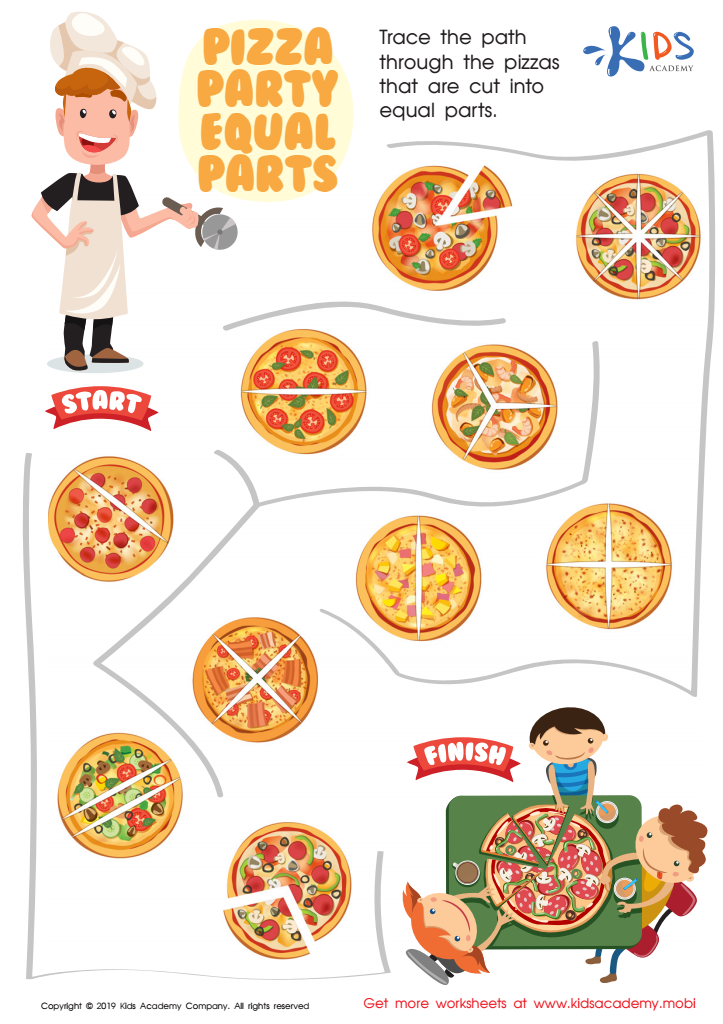
Pizza Party Equal Parts Worksheet
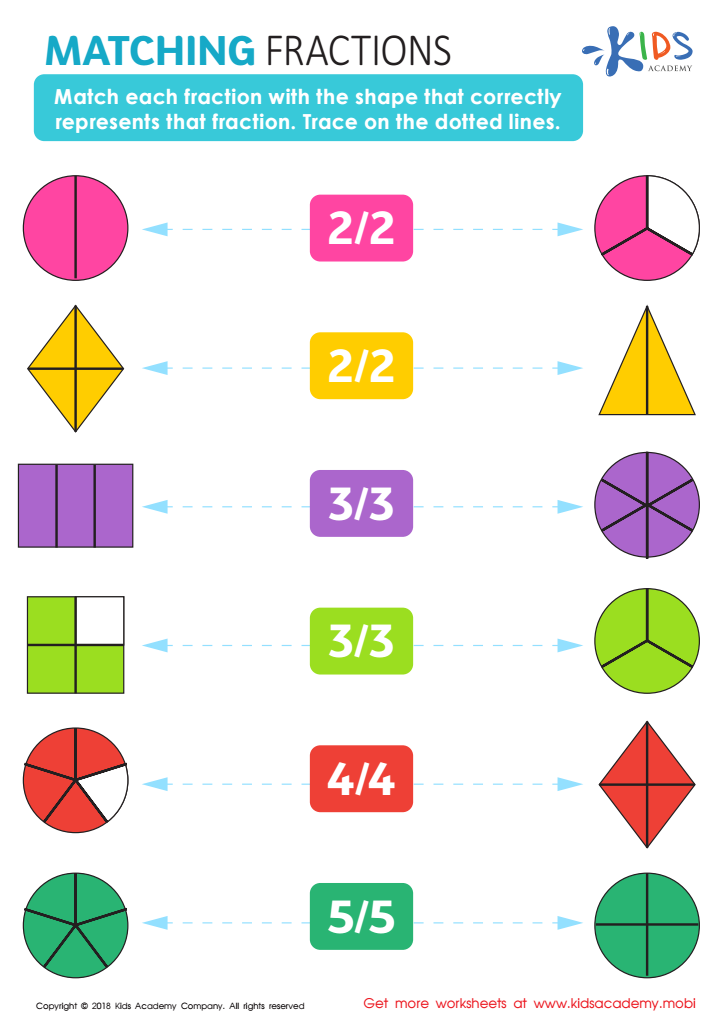
Matching Fractions Worksheet
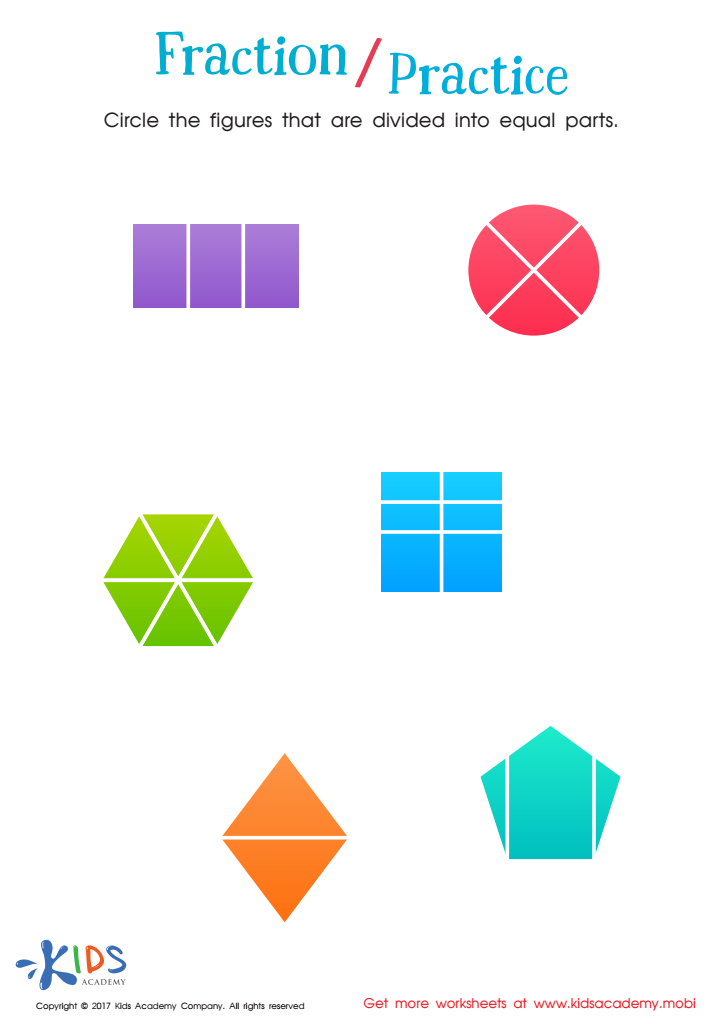
Fractions: Shapes Worksheet
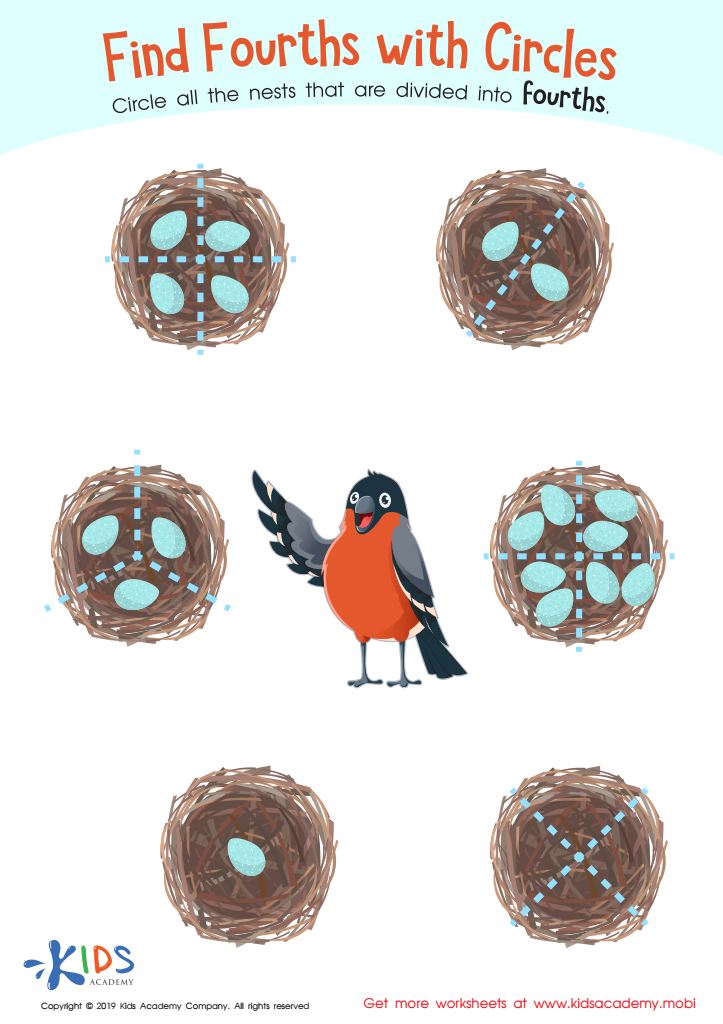
Find Fourths Circles Worksheet
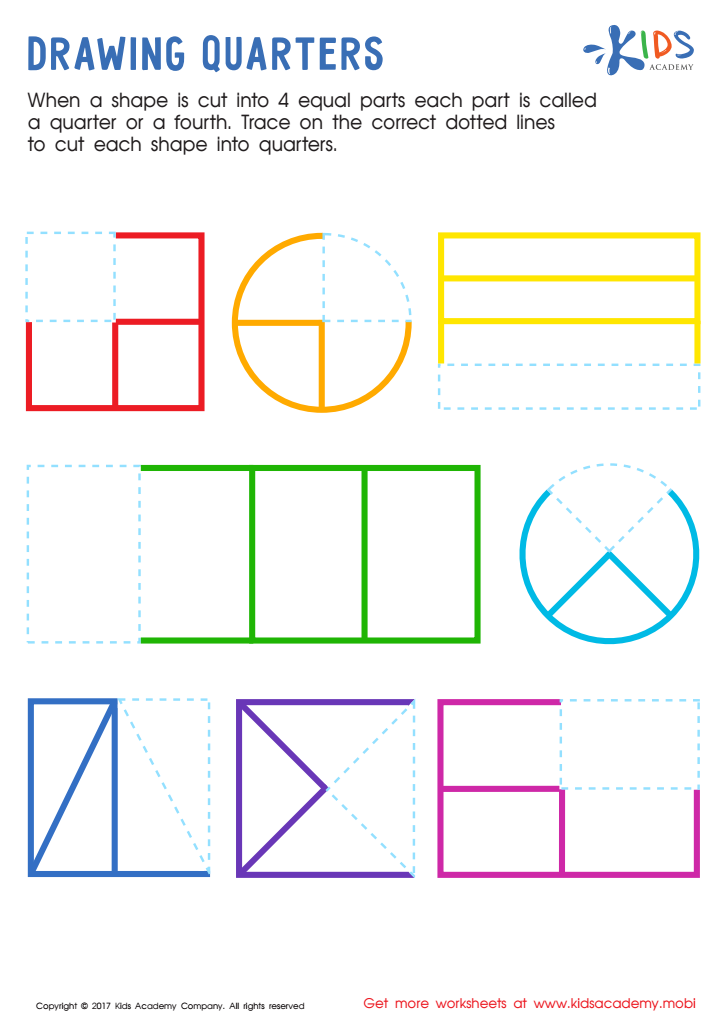
Drawing Quarters Worksheet
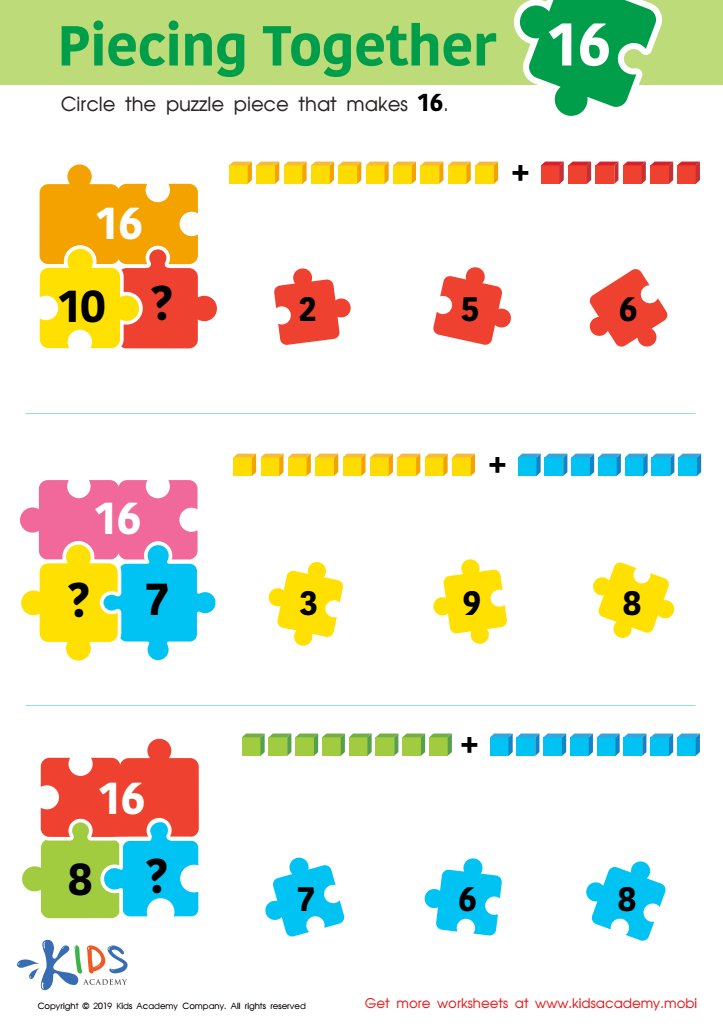
Piecing Together 16 Worksheet
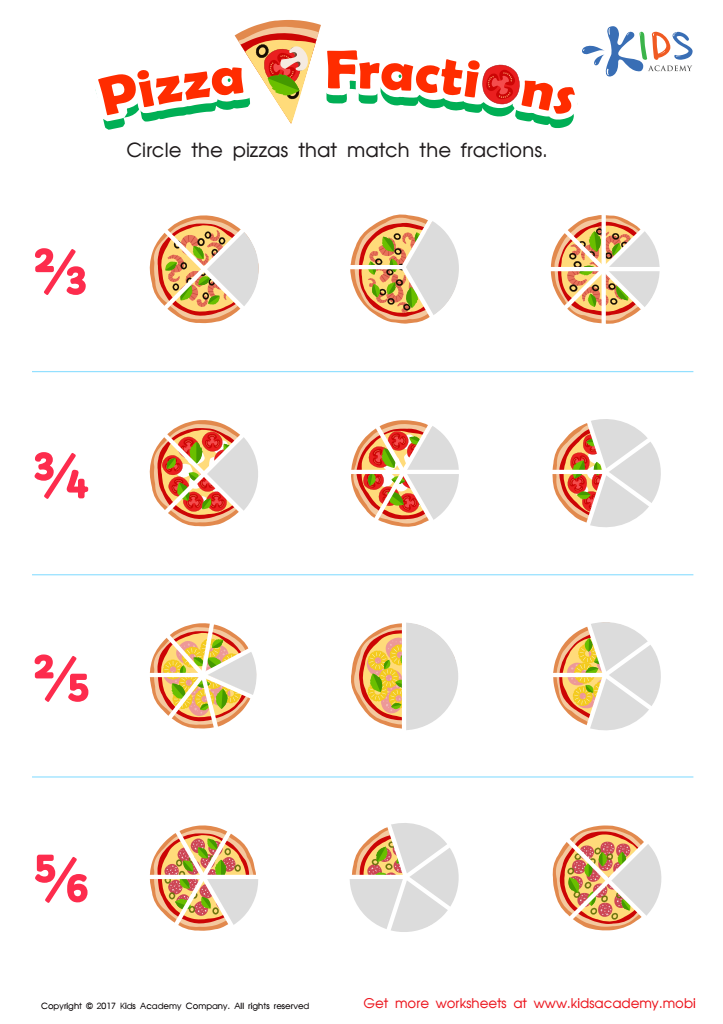
Fractions: Pizza Printable
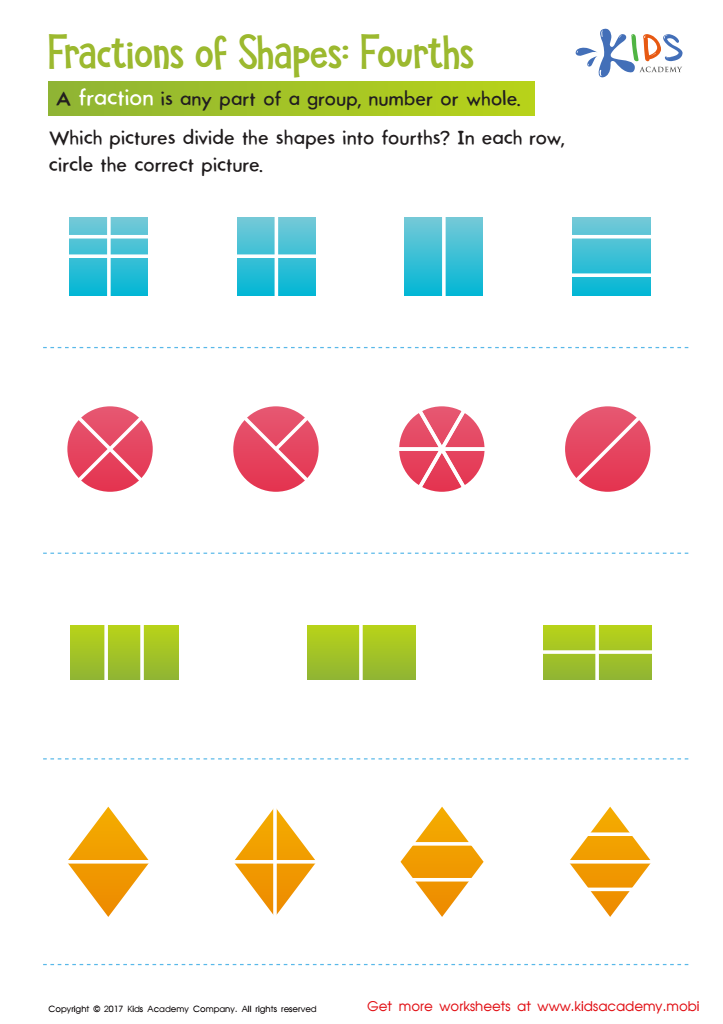
Fractions of Shapes Worksheet
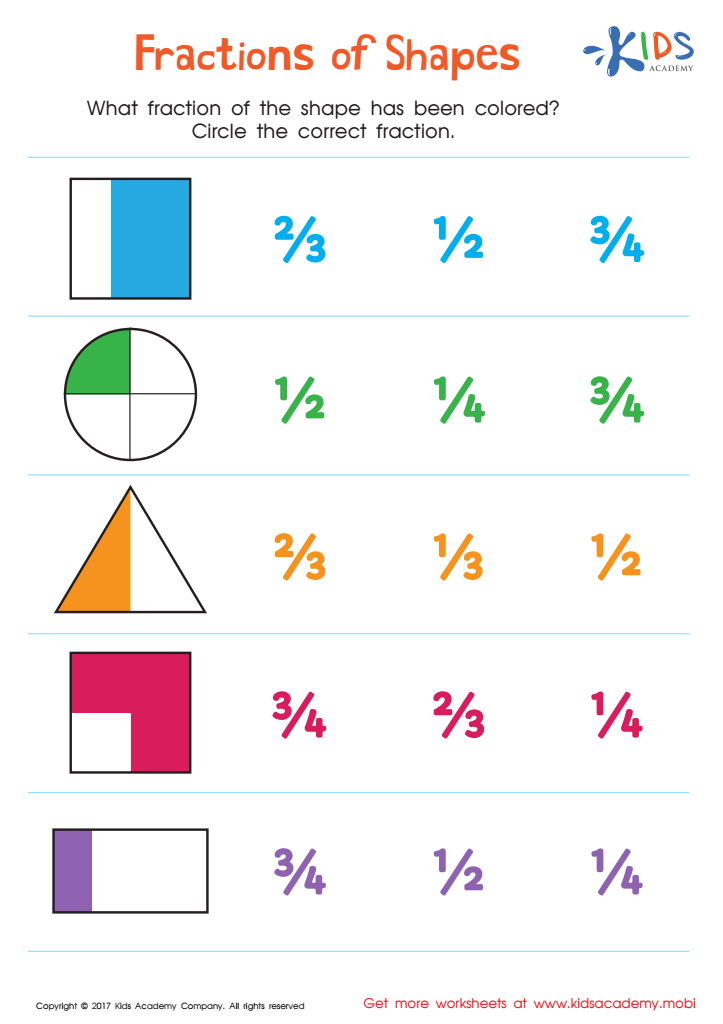
Fractions of Shapes: Math Concept Worksheet
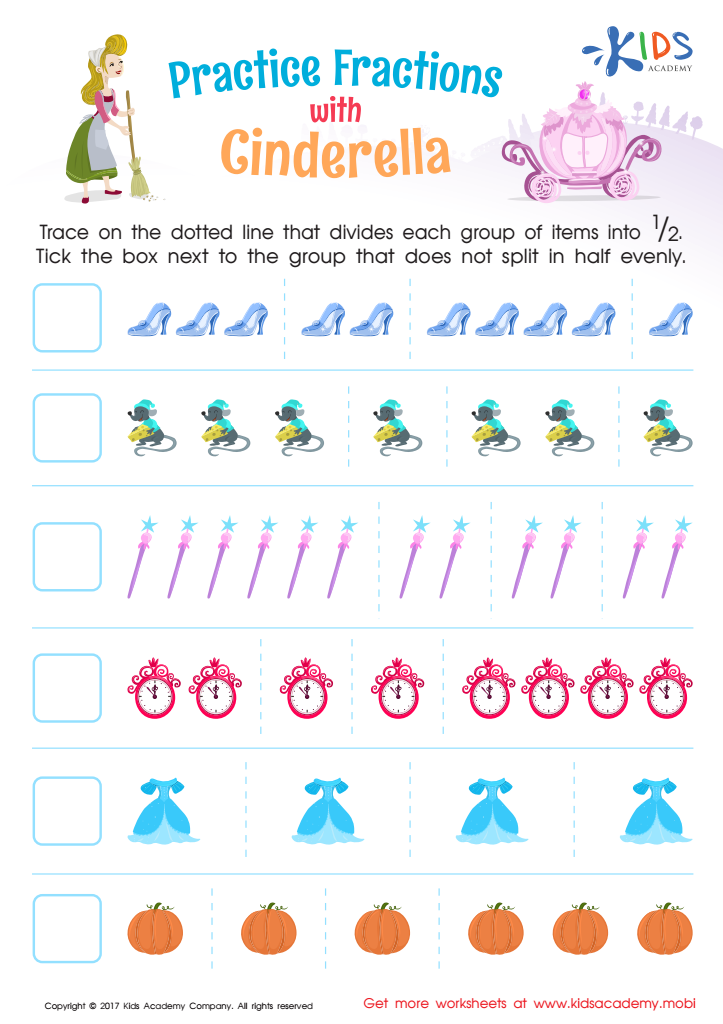
Fractions: Cinderella Printable








Understanding fractions is fundamental for children's mathematical development, especially for those ages 3-8. Teaching young learners about fractions equips them with essential skills for everyday life. By grasping the concept of parts of a whole, children gain a foundation for understanding more complex mathematical principles later on.
Parents and teachers play a critical role in fostering this understanding. Early exposure to fractions through engaging activities can make math exciting and concrete. For instance, utilizing visual aids like pizza slices or shared snacks can illustrate how fractions work in a relatable context. This hands-on approach not only helps in conceptual learning but also enhances logical reasoning and problem-solving skills.
Moreover, understanding fractions encourages teamwork and collaboration when children share or divide objects, fostering social skills. It aids in developing critical thinking as learners evaluate different problems, comparing parts and wholes in various contexts.
Furthermore, implementing a structured “Extra Challenge” reinforces concepts with progressively difficult tasks that promote mastery. All of this cultivates a positive attitude toward mathematics, setting the stage for a greater eagerness to learn. Therefore, parents and teachers should actively engage young learners in understanding fractions, paving the way for confident and competent mathematicians.








