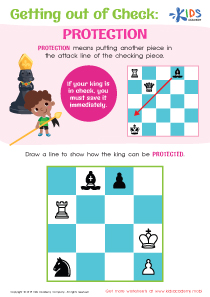
Problem-Solving Skills Extra Challenge Chess Worksheets for Ages 6-7
12 filtered results
-
From - To
Unleash your child's potential with our "Problem-Solving Skills Extra Challenge Chess Worksheets" designed for ages 6-7. These engaging worksheets combine the strategic world of chess with essential problem-solving exercises, fostering critical thinking and logical reasoning in young minds. Through fun and challenging puzzles, kids will learn to analyze situations, develop their strategies, and make decisive moves. Perfect for classroom activities or at-home practice, our worksheets provide a well-rounded educational experience that enhances cognitive skills while keeping your young learners entertained. Seek the checkmate, solve the puzzles, and watch your child's confidence grow! Start the adventure today!
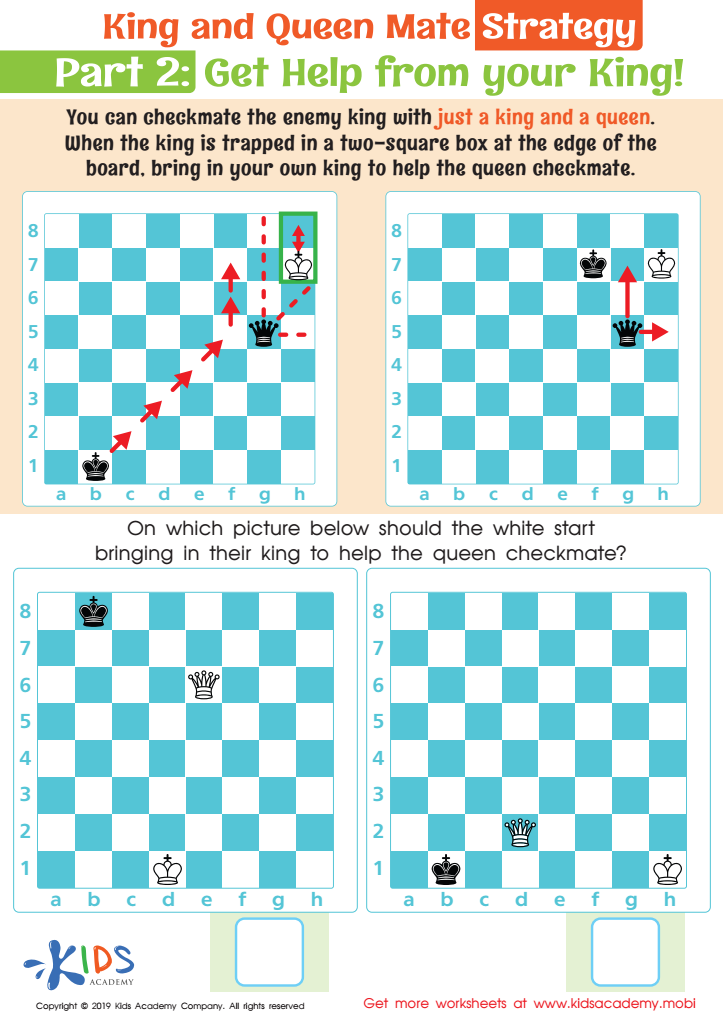
King and Queen Mate Strategy: Part 2 Worksheet
 Assign to My Students
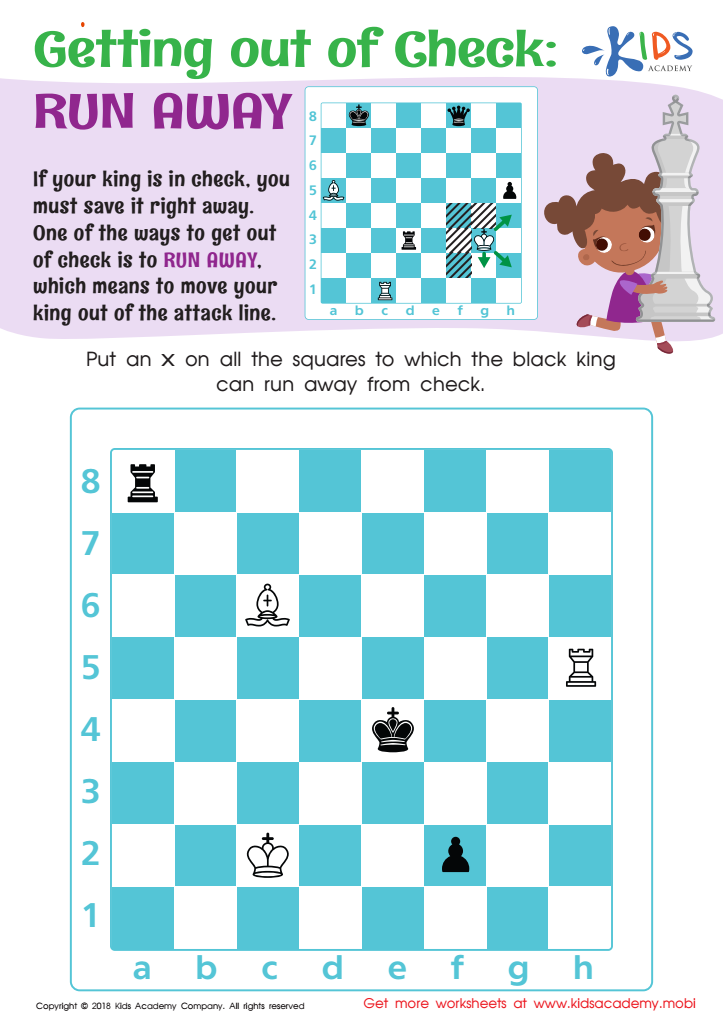
Getting out of Check: Run Away Worksheet
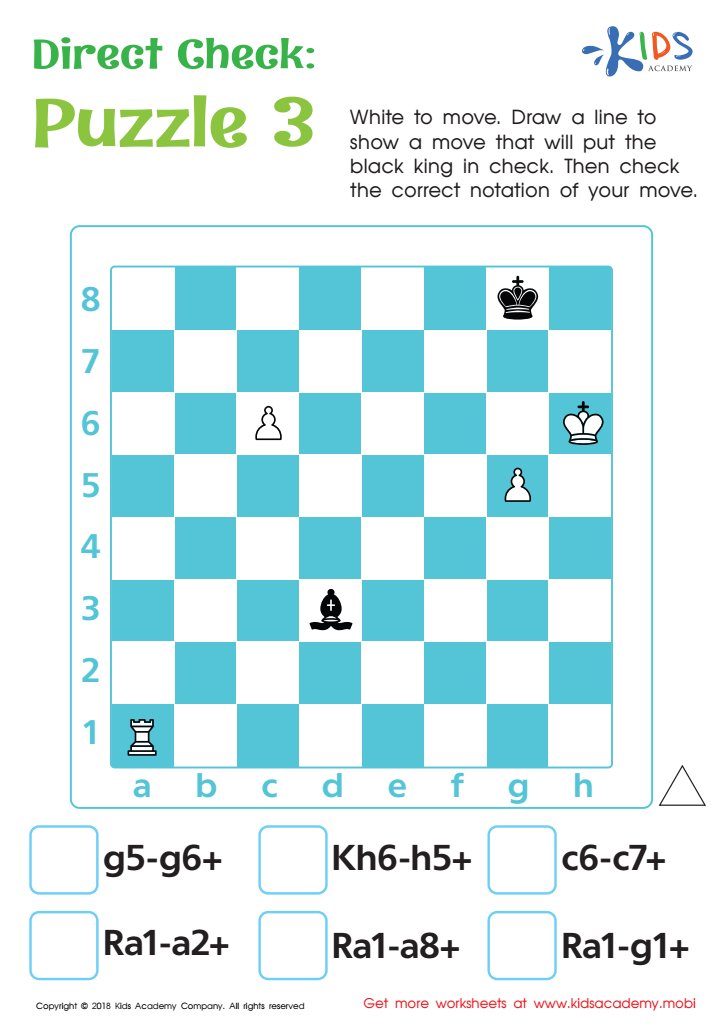
Direct Check: Puzzle 3 Worksheet
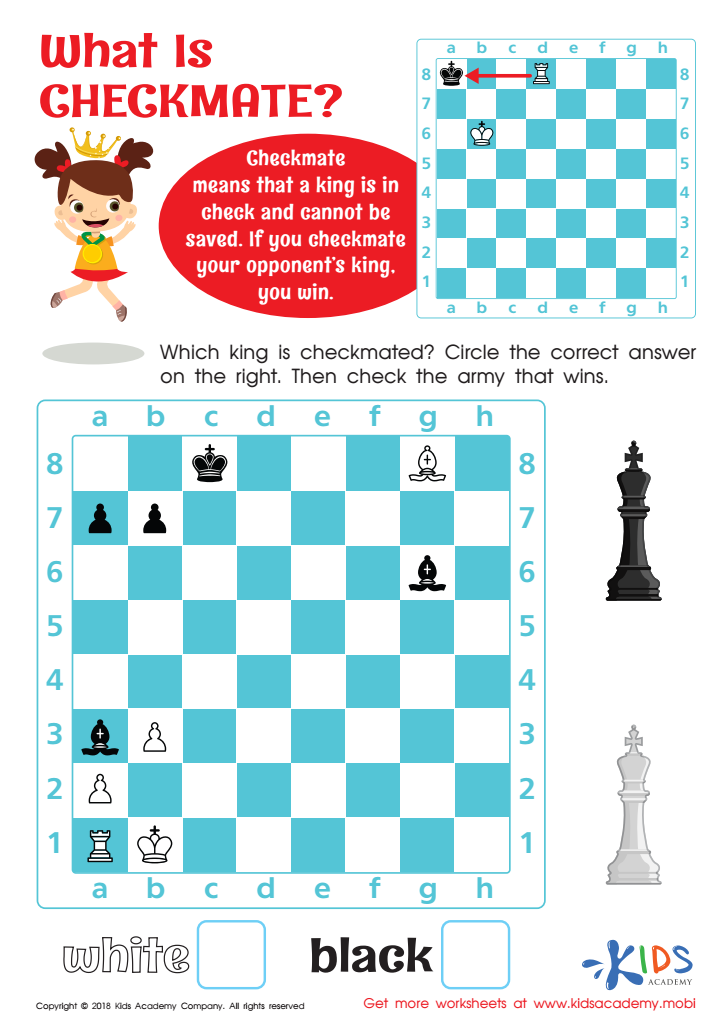
What is Checkmate? Worksheet
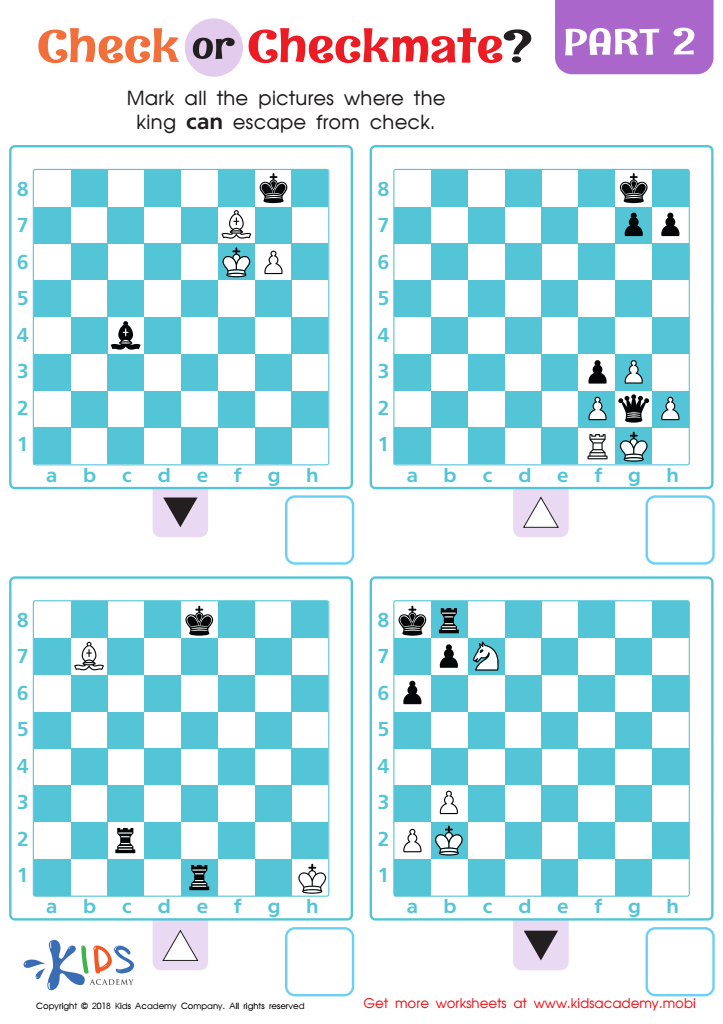
Check or Checkmate: Part 2 Worksheet
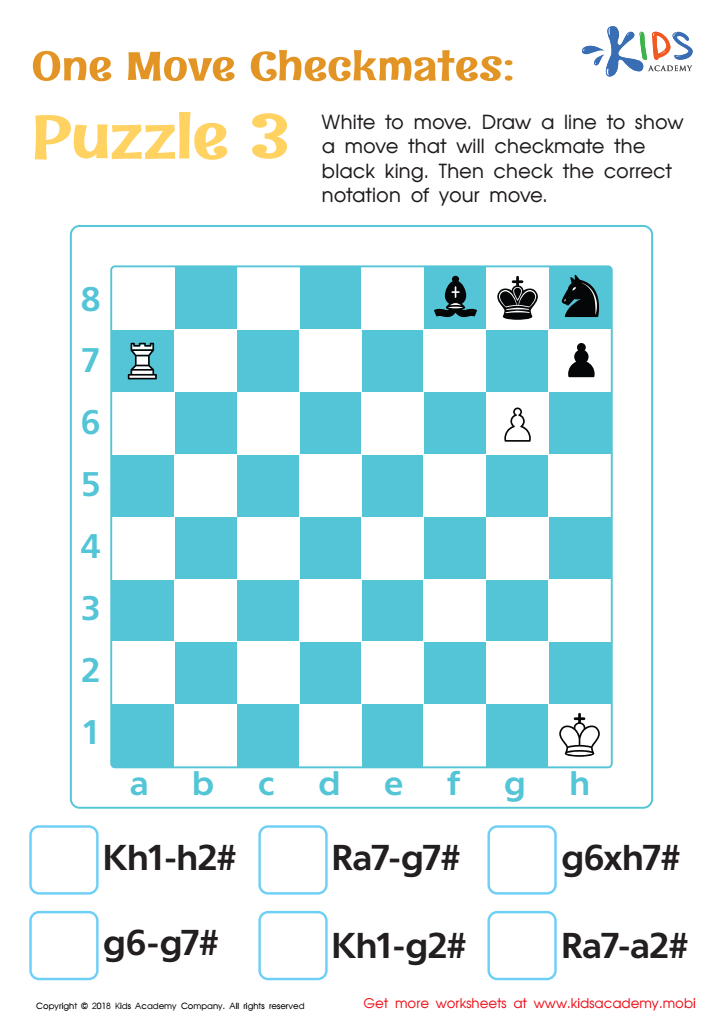
One Move Checkmates: Puzzle 3 Worksheet
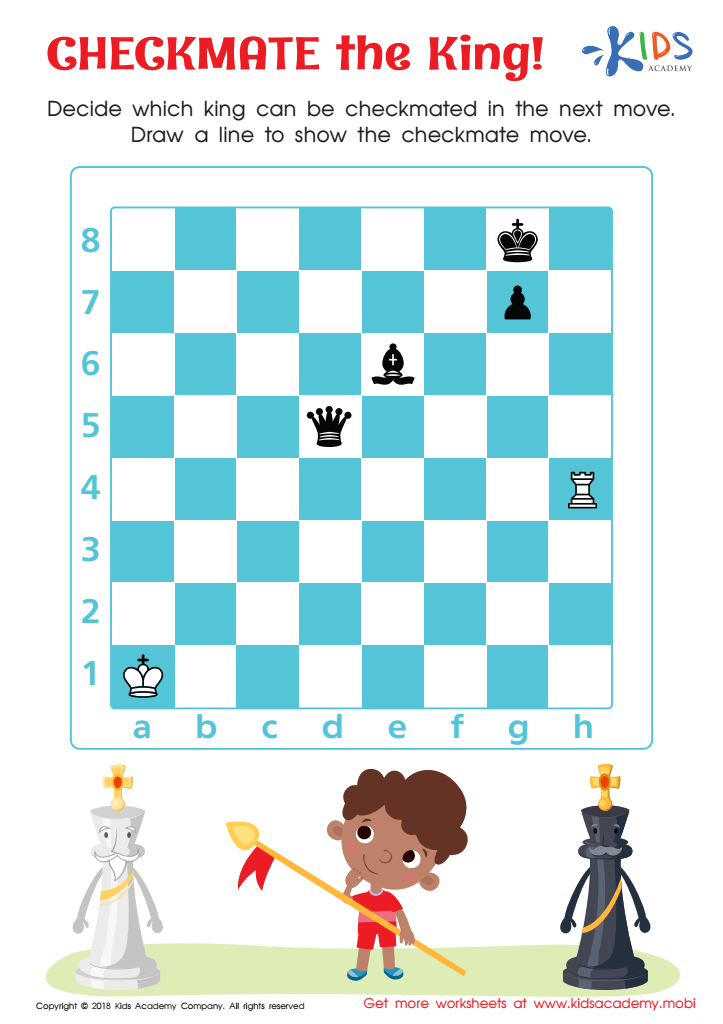
Checkmate the King Worksheet
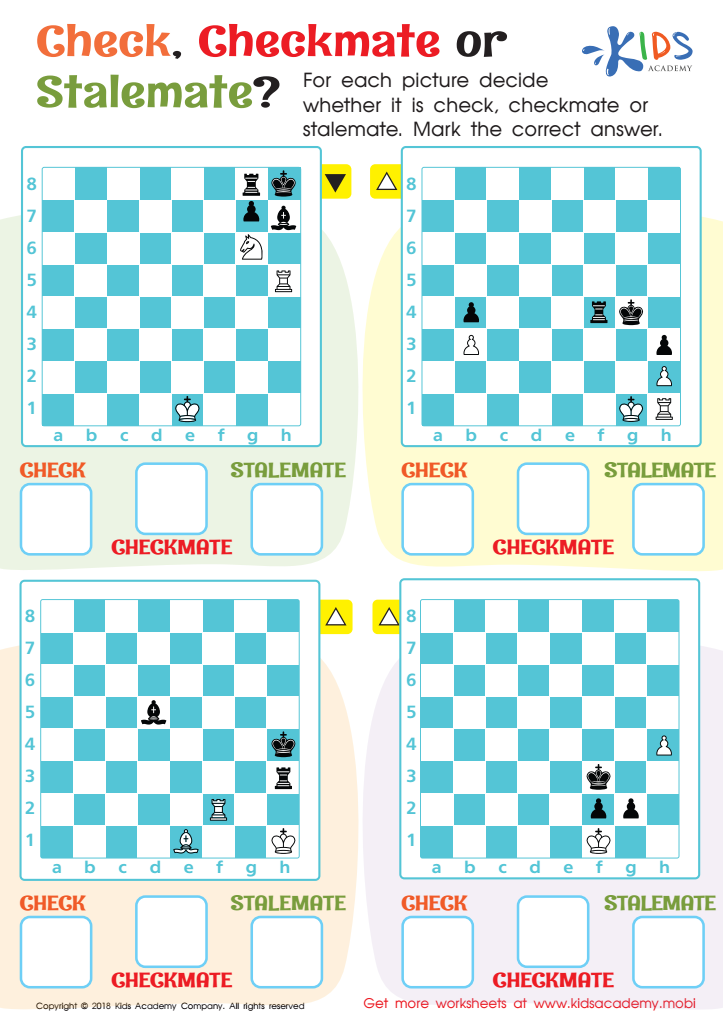
Check. Checkmate or Stalemate? Worksheet
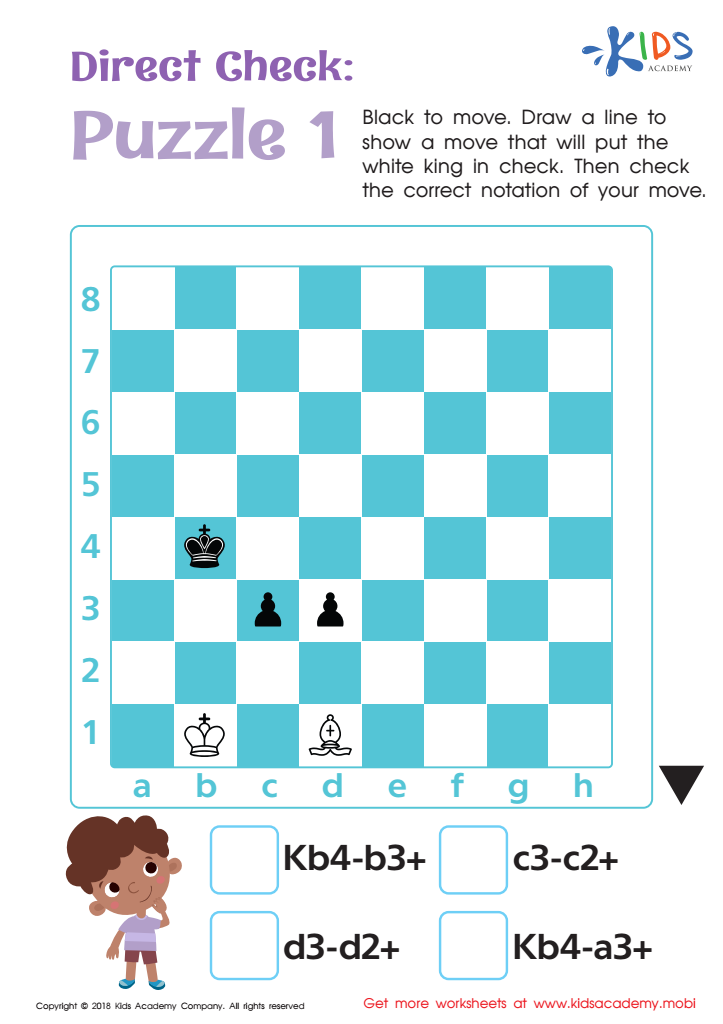
Direct Check: Puzzle 1 Worksheet
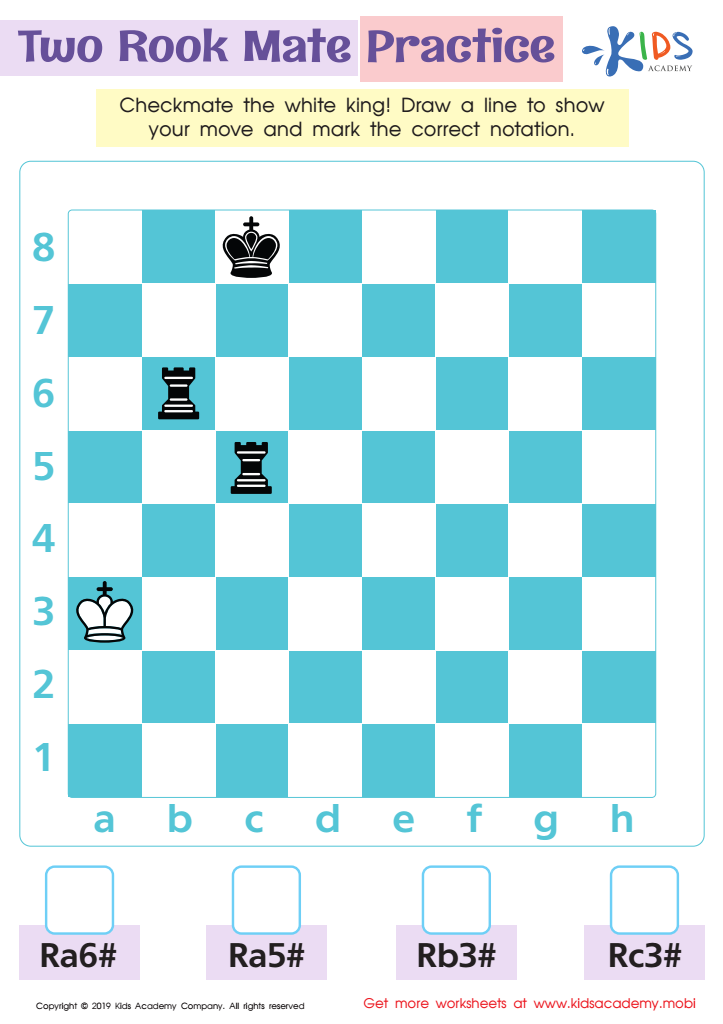
Two Rook Mate Practice Worksheet
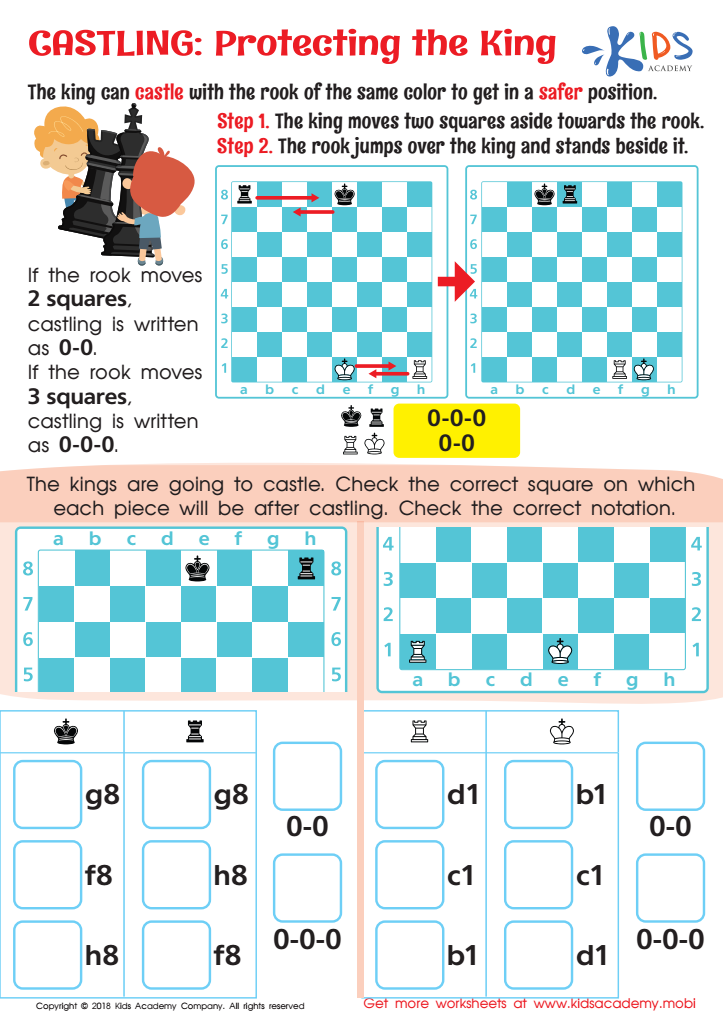
Castling: Protecting the King Worksheet
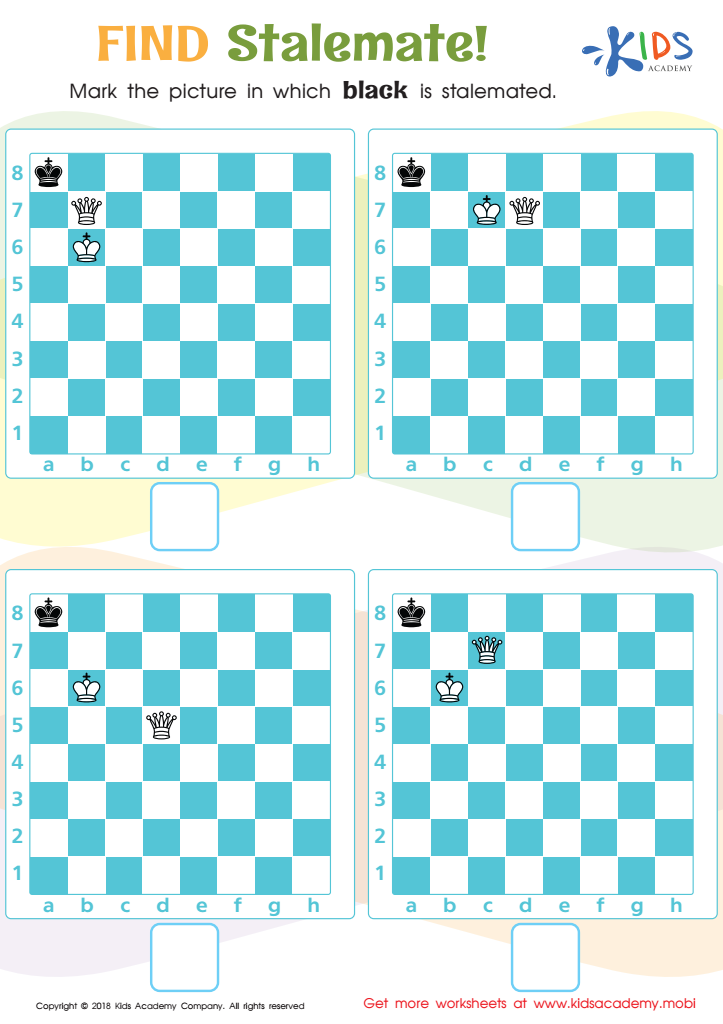
Find Stalemate! Worksheet






Parents and teachers should care about Problem-Solving Skills Extra Challenge Chess for ages 6-7 because it cultivates critical thinking and cognitive development at a young age. Chess is a strategic game that encourages children to think ahead, analyze situations, and develop plans. By engaging in chess, children learn to assess challenges, consider multiple outcomes, and make informed decisions—all essential skills for academic success and everyday life.
Moreover, this age is crucial for building foundations in logical reasoning and problem-solving. The structured nature of chess teaches kids to work through challenges methodically, fostering resilience when they encounter setbacks, such as losing a game. It also enhances creativity, as players must think outside the box to outsmart their opponents, and it boosts concentration and patience, as strategic planning often requires sustained focus.
Additionally, introducing chess early on not only sharpens analytical abilities but also promotes social skills. Playing with peers fosters communication, teamwork, and sportsmanship. Ultimately, Problem-Solving Skills Extra Challenge Chess provides a fun and engaging way for young learners to develop essential skills that will benefit them academically and socially throughout their lives. Investing time into such educational tools is a step toward holistic child development.