Understanding fractions Extra Challenge Worksheets for Ages 6-7
10 filtered results
-
From - To
Discover our "Understanding Fractions Extra Challenge Worksheets for Ages 6-7," designed to deepen young learners' grasp of fractions through engaging exercises. These worksheets provide an interactive approach to mastering key concepts such as identifying halves, quarters, and more. Tailored for children aged 6-7, each activity is crafted to stimulate critical thinking and enhance problem-solving skills while keeping learning fun. With colorful illustrations and relatable scenarios, students will not only strengthen their fraction comprehension but also develop confidence in math. Perfect for classroom use or at-home practice, our worksheets offer an exciting way to explore the world of fractions!
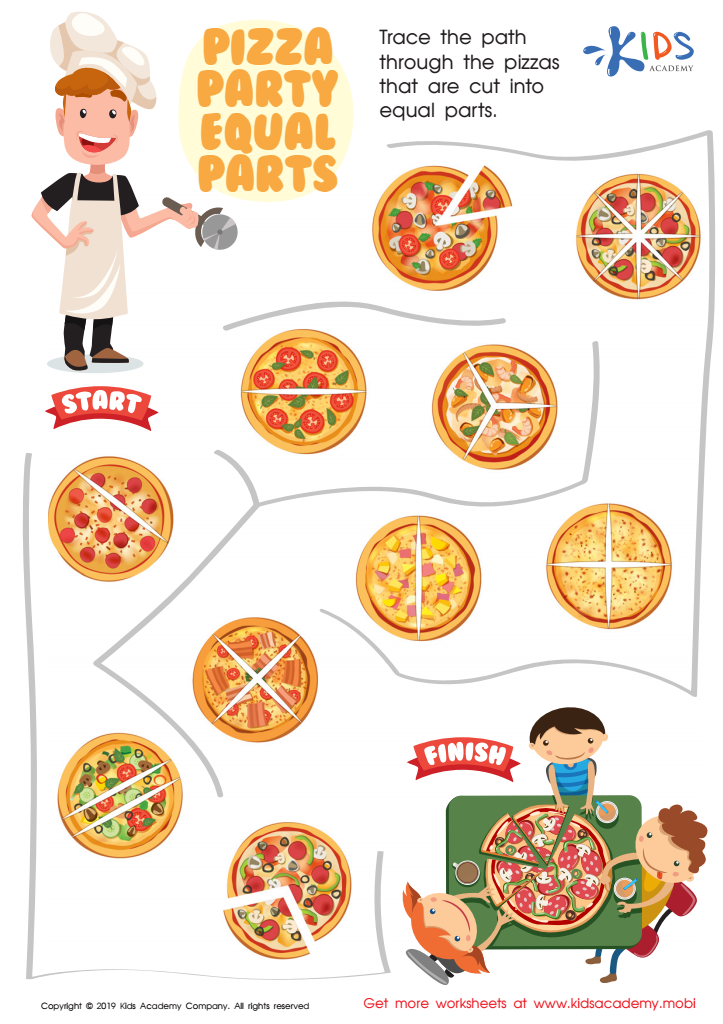
Pizza Party Equal Parts Worksheet
 Assign to My Students
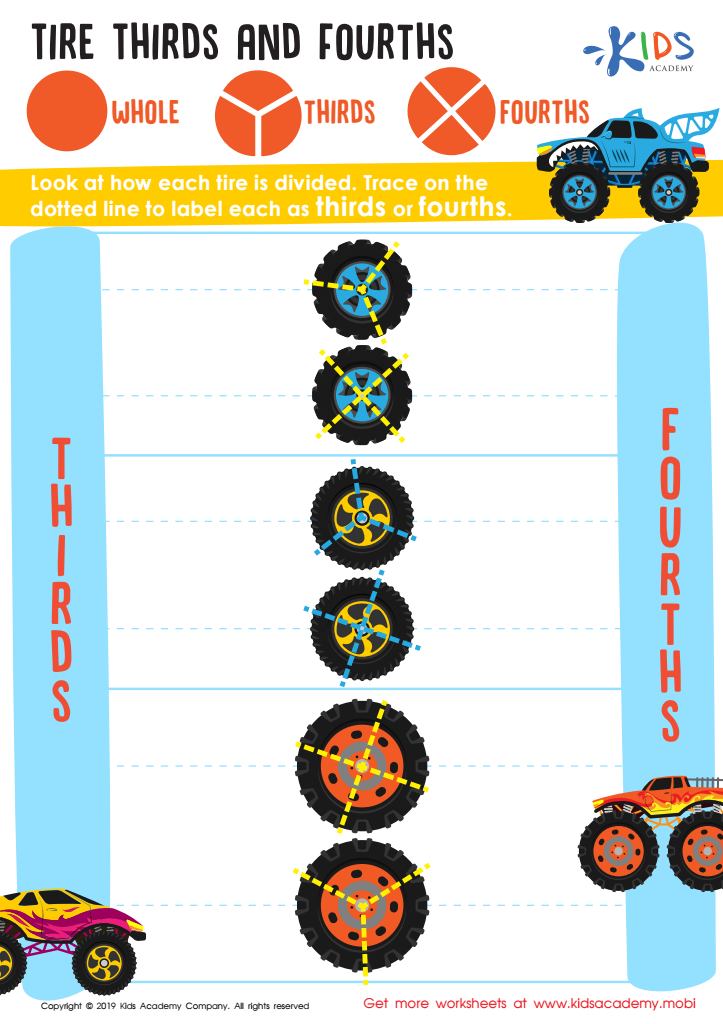
Tire Thirds and Fourths Worksheet
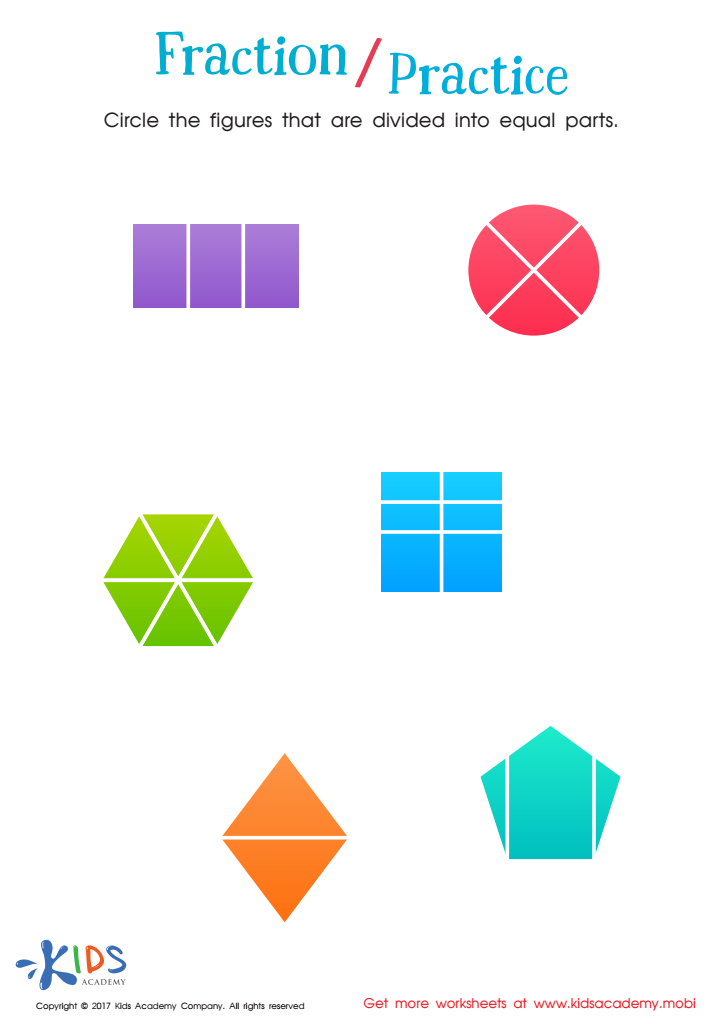
Fractions: Shapes Worksheet
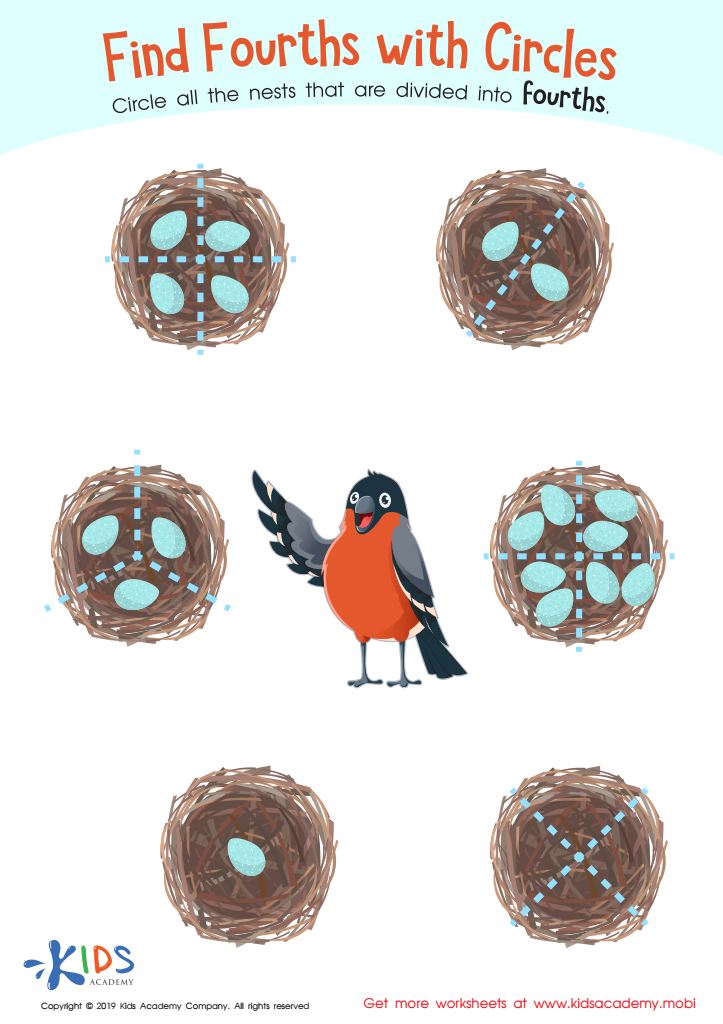
Find Fourths Circles Worksheet
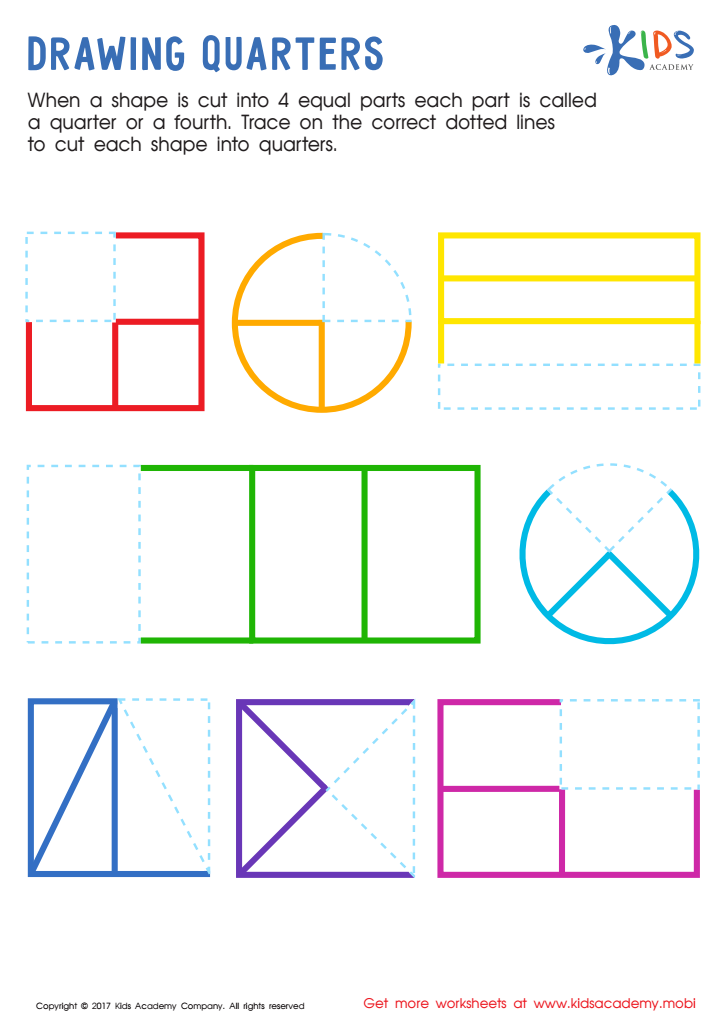
Drawing Quarters Worksheet
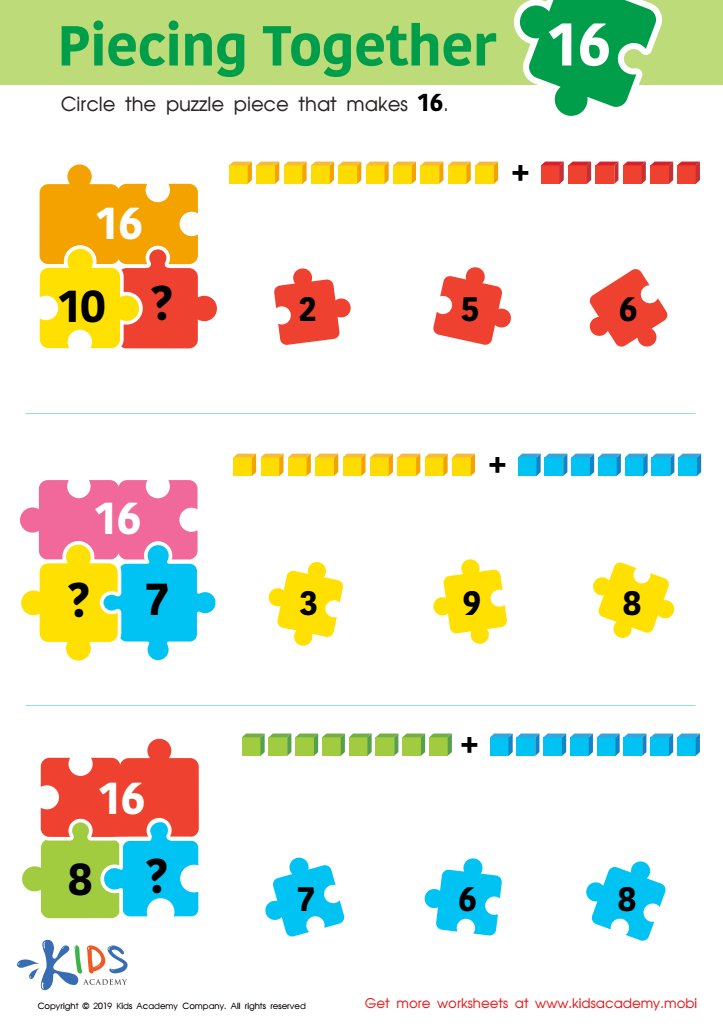
Piecing Together 16 Worksheet
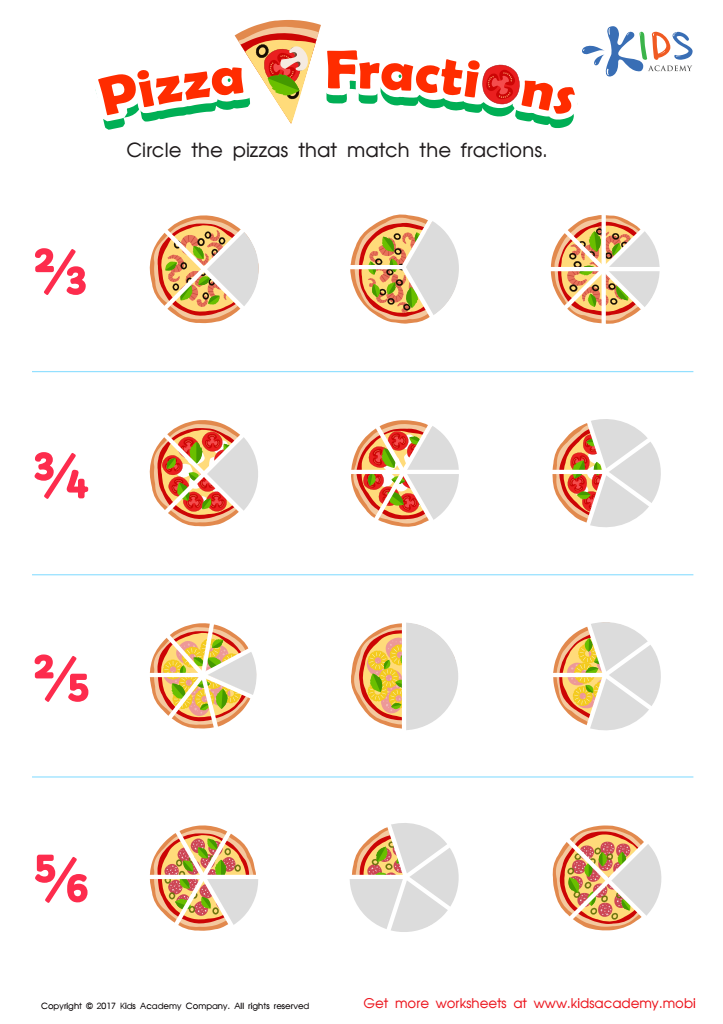
Fractions: Pizza Printable
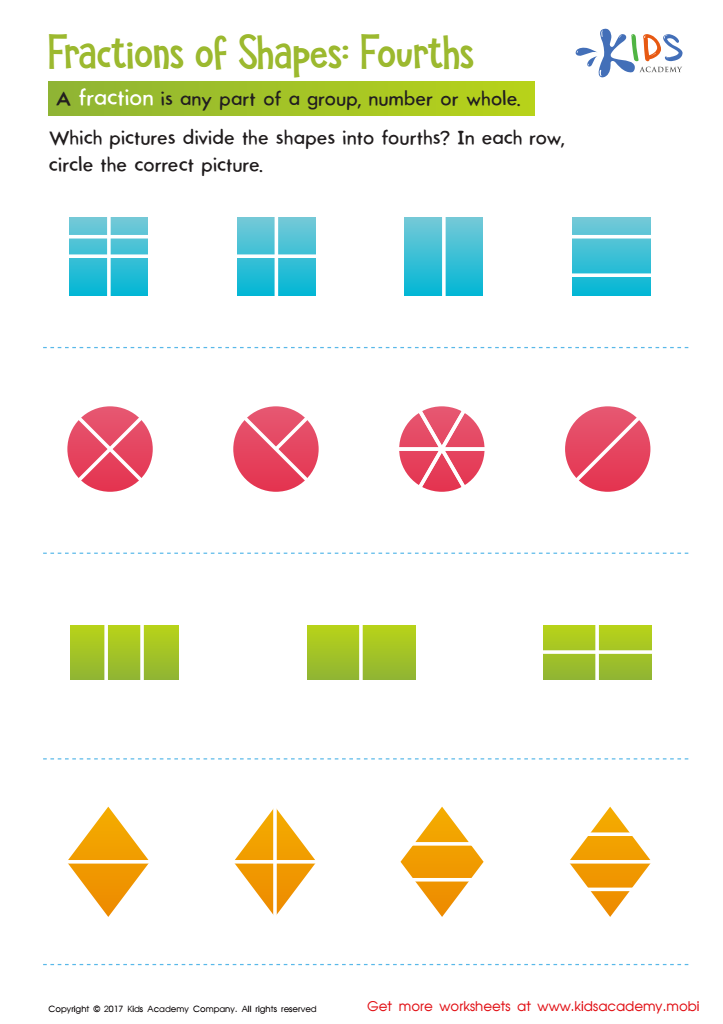
Fractions of Shapes Worksheet
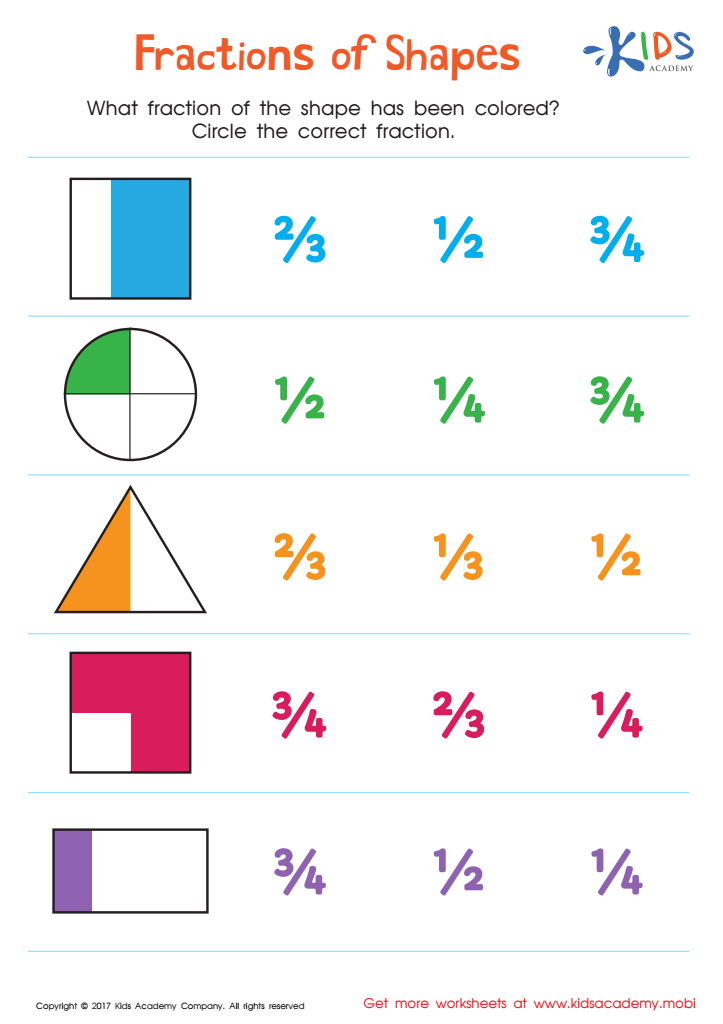
Fractions of Shapes: Math Concept Worksheet
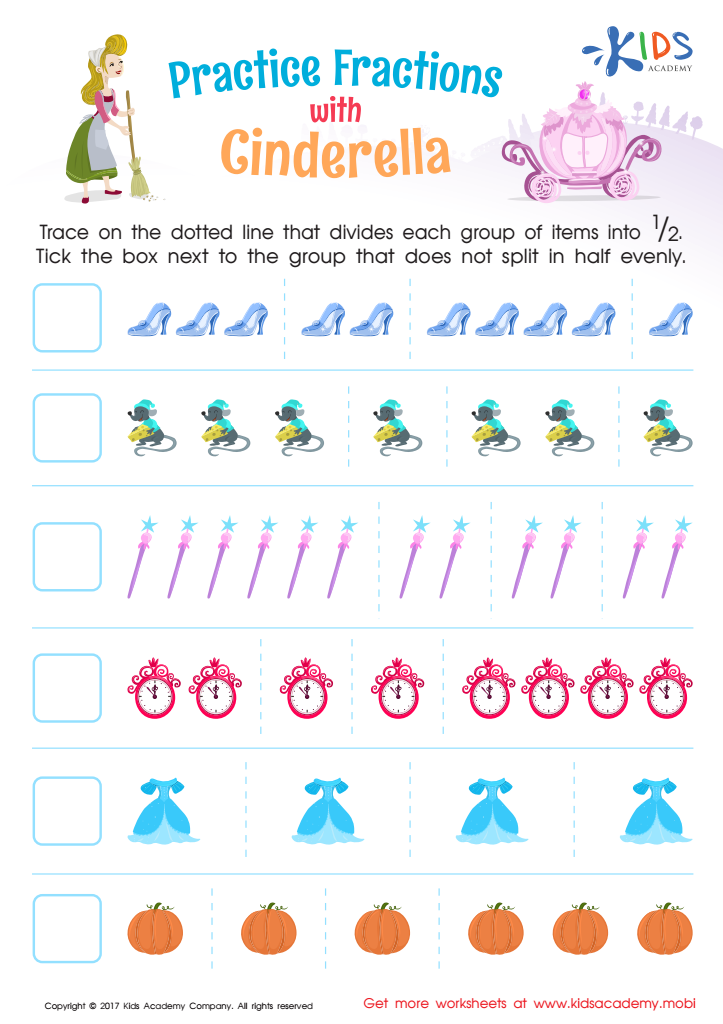
Fractions: Cinderella Printable





Understanding fractions is crucial for children aged 6-7, as it lays the foundation for future mathematical concepts. At this age, children begin to explore the idea of parts of a whole, which is essential not only in math but also in real-life situations. For parents and teachers, grasping this concept goes beyond numbers; it fosters critical thinking and problem-solving skills that are vital across all subjects.
When children learn about fractions, they develop the ability to compare, create, and manipulate parts, leading to a deeper understanding of division, ratios, and ultimately, the more complex concepts that follow in later grades. Moreover, integrating visual aids and hands-on activities can make learning fractions engaging, helping to maintain motivation and interest in math.
Investigating extra challenges or advanced materials in fractions encourages a growth mindset. It teaches students resilience as they navigate complex problems and discover new strategies. Engaging with fractions nurtures a child's confidence in their mathematical abilities and equips them with vital skills needed in daily life, such as cooking, crafting, or sharing. Therefore, parents and teachers should prioritize understanding fractions to ensure children are well-prepared for future learning while enjoying the journey of discovery and growth in mathematical understanding.








