
Pattern recognition Matching Worksheets
9 filtered results
Difficulty Level
Grade
Age
-
From - To
Subject
Activity
Standards
Enhance your child's cognitive development with our "Pattern Recognition Matching Worksheets." Tailored for early learners, these engaging worksheets help kids identify, analyze, and complete patterns through fun and interactive matching activities. From shapes and colors to sequences and numbers, these expertly designed worksheets sharpen problem-solving skills, boost critical thinking, and foster a love for learning. Ideal for preschoolers and kindergarteners, our pattern recognition exercises make learning both enjoyable and educational. Empower your child to recognize, create, and predict patterns – the foundational skills for future mathematical and analytical success. Dive into our collection and watch your child's abilities grow!
Favorites
With answer key
Interactive
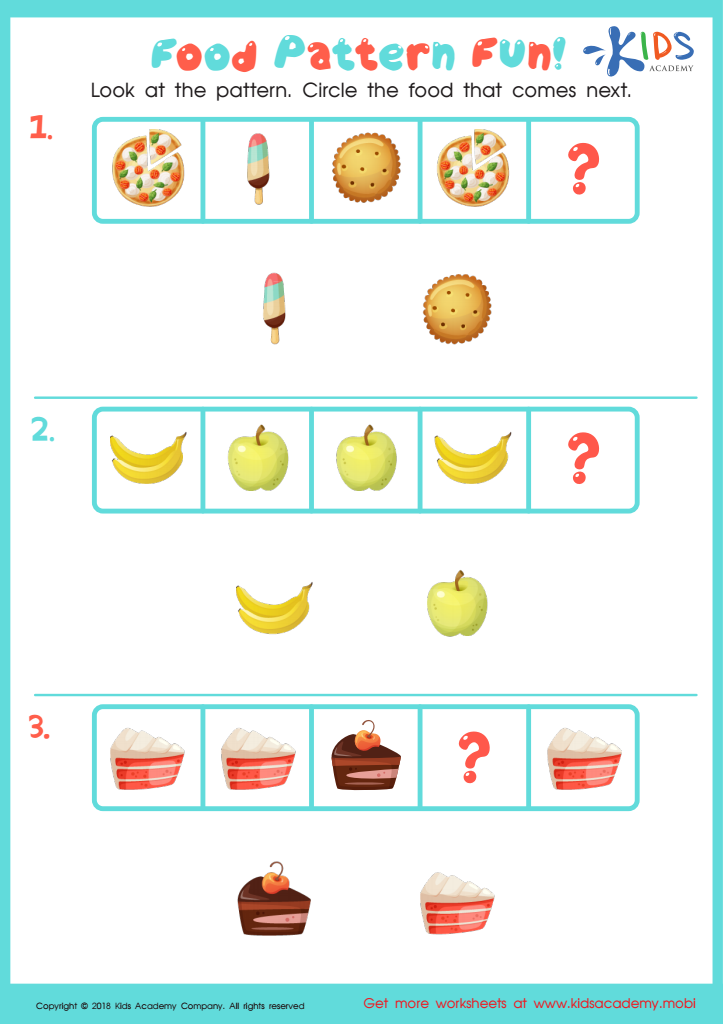
Food Pattern Fun Worksheet
Got kids who love snacks? Get them excited with this fun food pattern worksheet! Ask them to identify the foods in the printout then spot the pattern and circle the next food in each row. It's a great way to get them thinking and have fun at the same time!
 Assign to My Students
Food Pattern Fun Worksheet
Worksheet
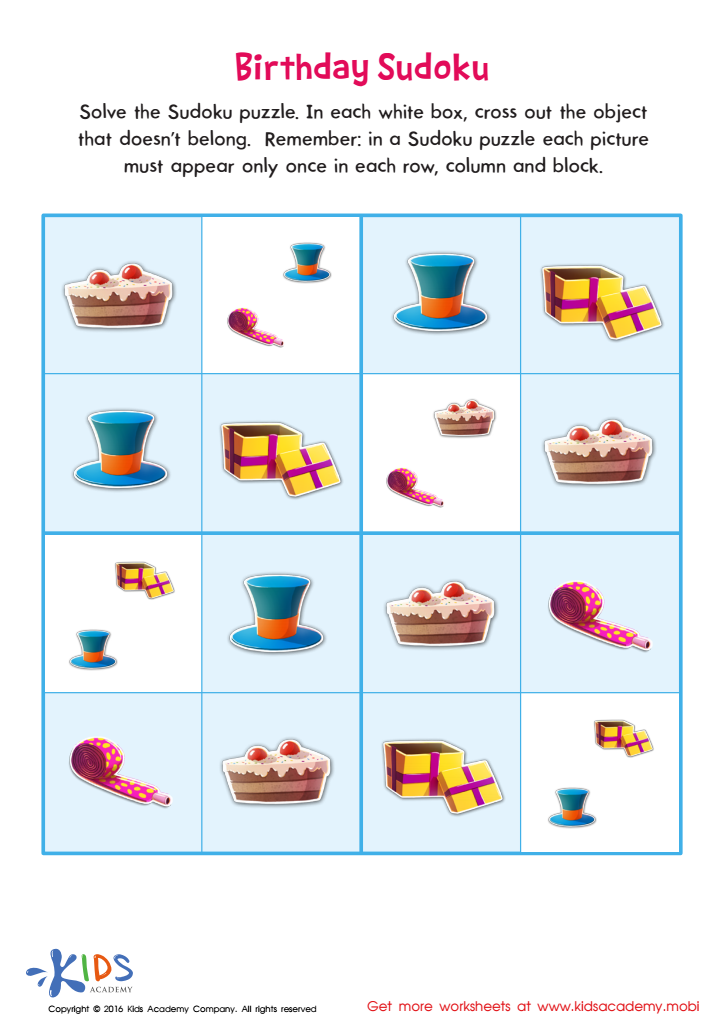
Birthday Sudoku Sorting Worksheet
With this Sudoku printable, your child will have fun and strengthen their problem-solving skills.
Birthday Sudoku Sorting Worksheet
Worksheet
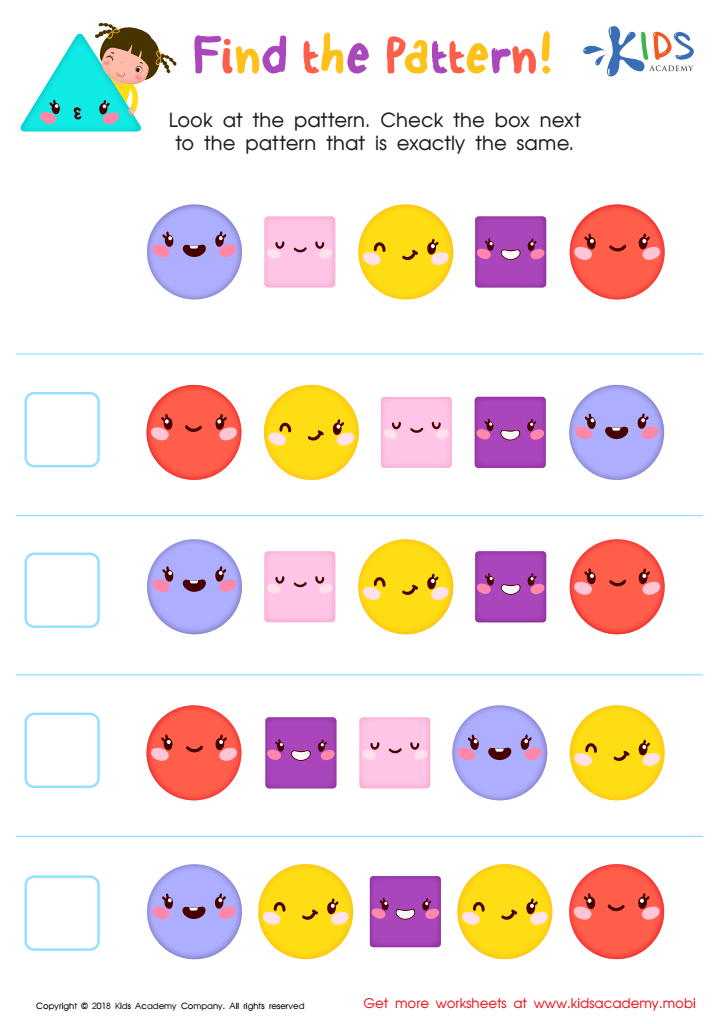
Find the Pattern Worksheet
This colorful pattern worksheet is perfect for testing your kids' pattern recognition. The bright colors will keep them engaged, while they check the box next to the pattern that is the same. Ask your kids to identify the colors used and see how well they can spot similarities!
Find the Pattern Worksheet
Worksheet
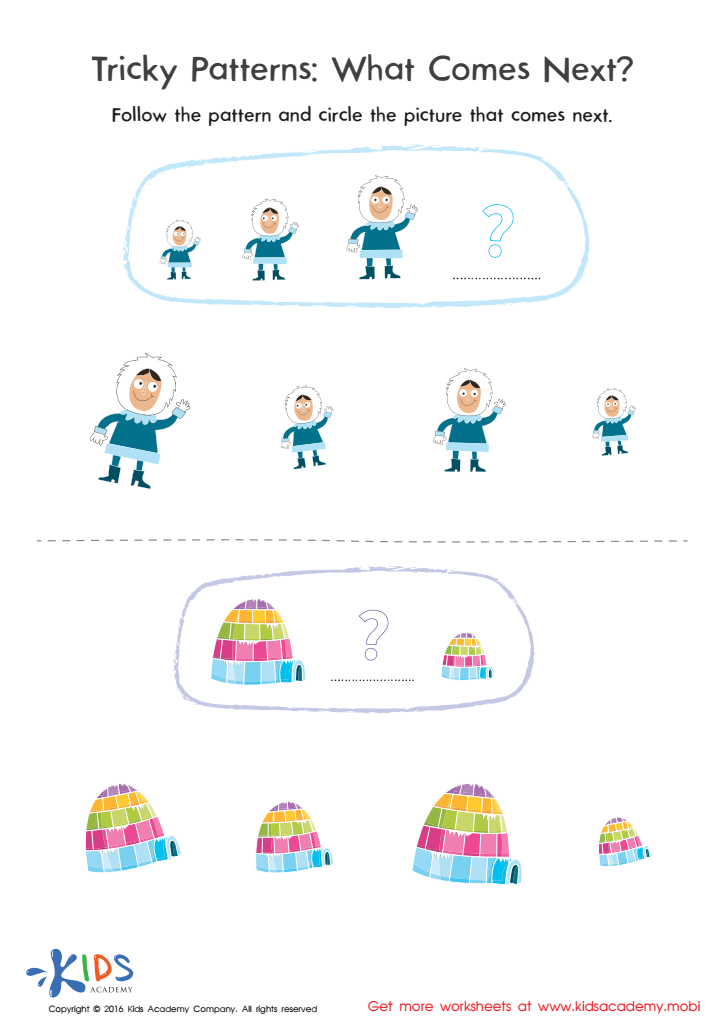
Tricky Patterns Size Worksheet
Give your child a head start on critical thinking with this picture pattern worksheet! It's an intriguingly fun way to help them master important skills like spatial reasoning, critical thinking, and logical reasoning. They'll differentiate between shapes, complete the pattern with a logical answer, and look for and understand patterns. It's the perfect foundation for future math skills, setting them up for future success!
Tricky Patterns Size Worksheet
Worksheet
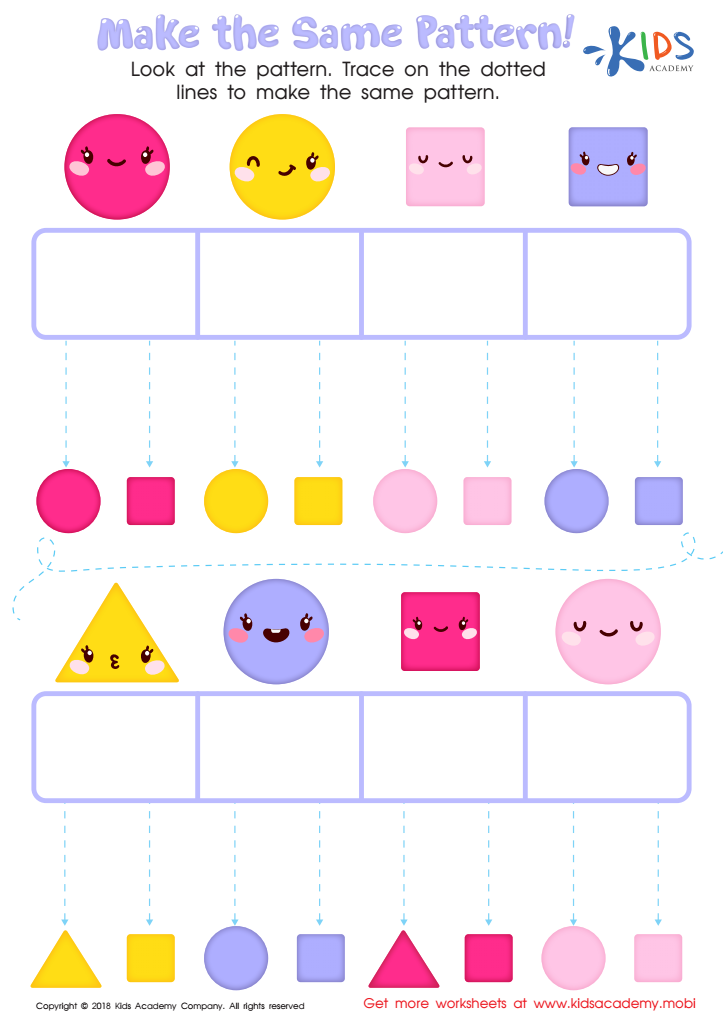
Make the Same Pattern Worksheet
Help your child look at the patterns in the tracing sheet and guide them to trace the dotted lines to match the shapes. This exercise tests their ability to copy pictures correctly, so emphasize the importance of paying attention to the instructions and details.
Make the Same Pattern Worksheet
Worksheet
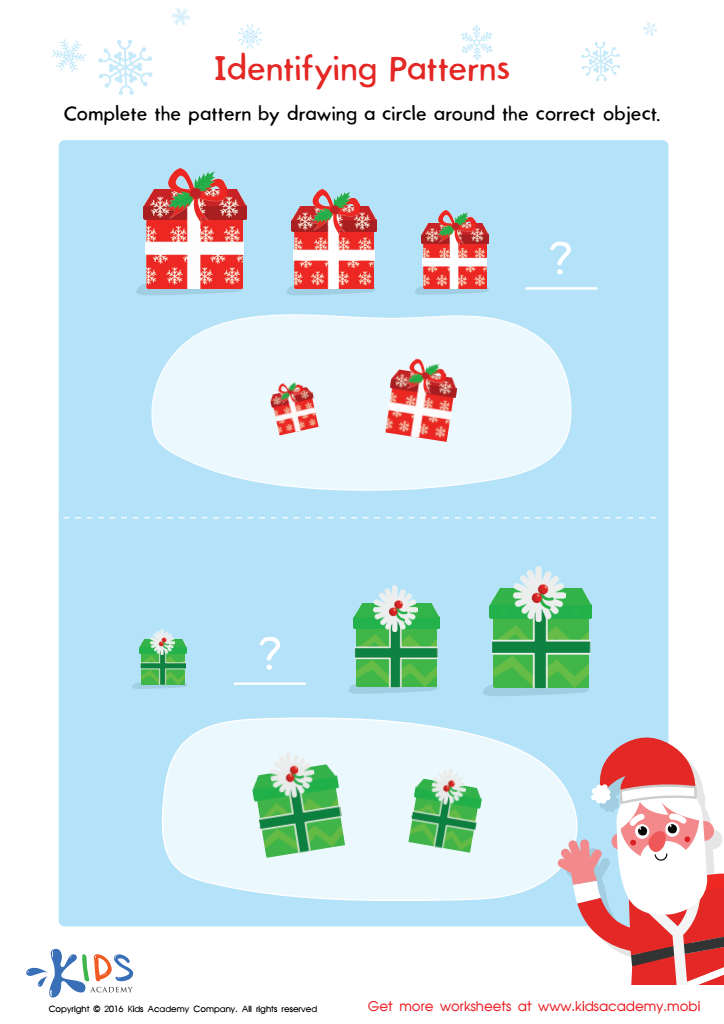
Identifying Patterns Worksheet
Kids can have fun as they learn with this festive worksheet! They'll practice early math skills while identifying patterns with colorful Christmas presents. Have your child get ready for the holidays by finding out which box comes next in the pattern!
Identifying Patterns Worksheet
Worksheet
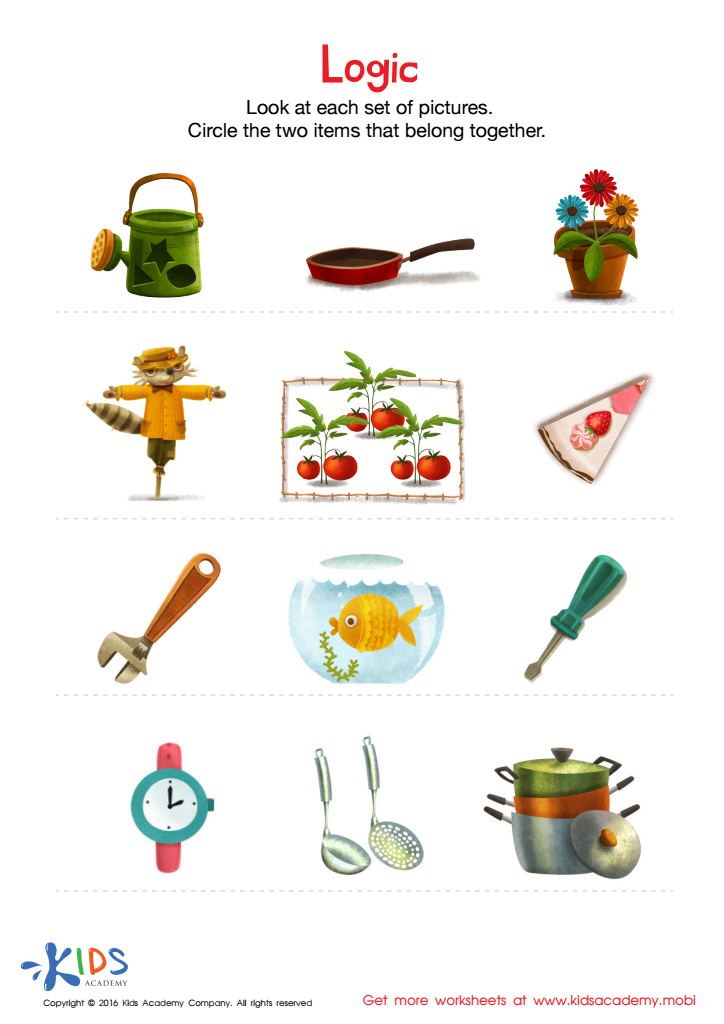
Logic Game Sorting Worksheet
Start your child's logic and reasoning development early with this fun matching worksheet! Through cute images and simple conversations, your little one can learn problem-solving, categorization, and matching skills. Plus, it's a great way for children to explore how items are used in real life. Try it and watch them boost skills with ease and fun!
Logic Game Sorting Worksheet
Worksheet
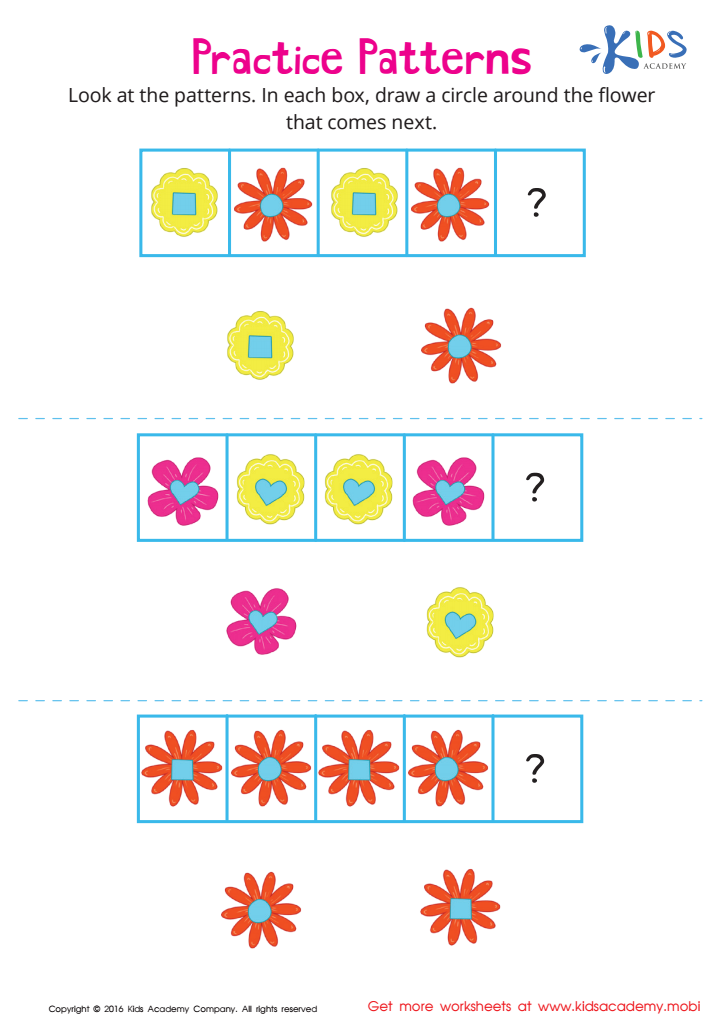
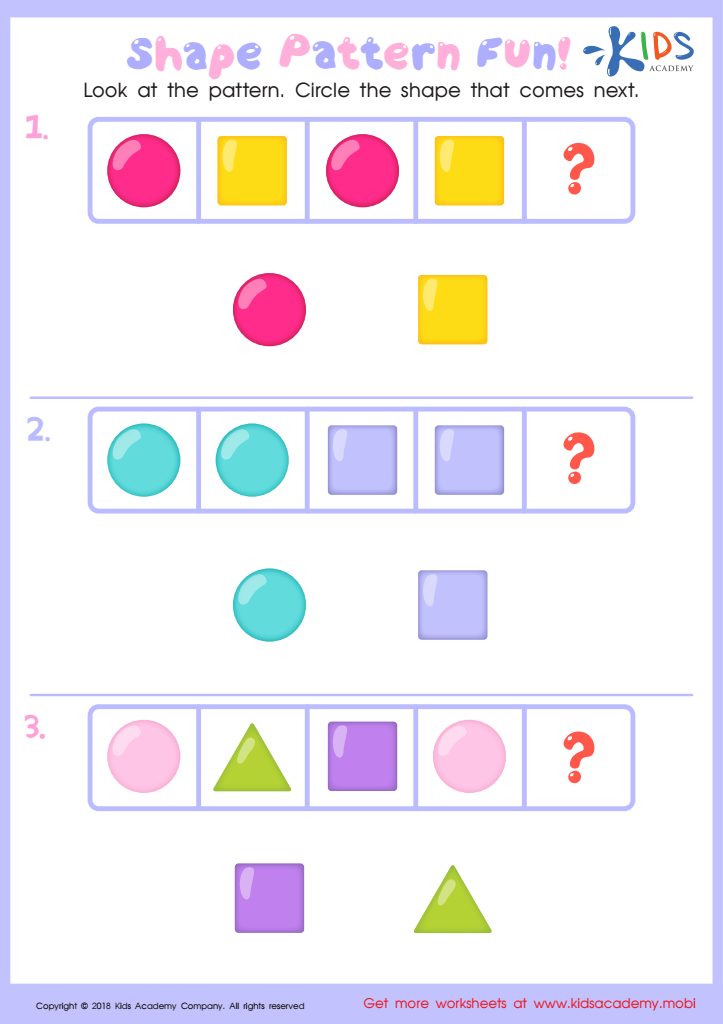
Shape Pattern Fun Worksheet
Challenge your kids to look at the pictures and identify colors, shapes and patterns. Ask them to circle the shapes that follow the sequence. See if they can spot the pattern and stick to it!
Shape Pattern Fun Worksheet
Worksheet
Join Kids Academy for Free
Who is primarily going to use this learning content?







Pattern recognition is a fundamental cognitive skill that plays a crucial role in early childhood development, making it essential for parents and teachers to focus on its enhancement. This capability underpins many aspects of learning, from basic literacy and numeracy to more complex problem-solving and critical thinking skills.
When children recognize patterns, they develop an understanding of how things go together and anticipate what comes next. This skill is foundational for learning to read, as it allows children to predict and recognize letter sequences and word structures. Similarly, in mathematics, pattern recognition is critical for understanding number sequences, properties of shapes, and solving mathematical problems efficiently.
Moreover, recognizing patterns can help children make sense of the world around them, boosting their comprehension and retention abilities. It supports memory by enabling children to categorize and organize information, leading to better academic performance.
For teachers, incorporating pattern recognition in the curriculum means fostering a learning environment that encourages students to identify sequences, trends, and relationships. For parents, engaging their children in activities like sorting, matching, sequencing games, and puzzles at home can reinforce these skills.
In summary, nurturing pattern recognition in young learners builds a robust cognitive foundation, essential for their academic journey and everyday problem-solving. Therefore, parents and teachers should care about and actively support the development of this pivotal skill.








