Counting skills Normal Worksheets for Ages 3-6 - Page 3
100 filtered results
-
From - To
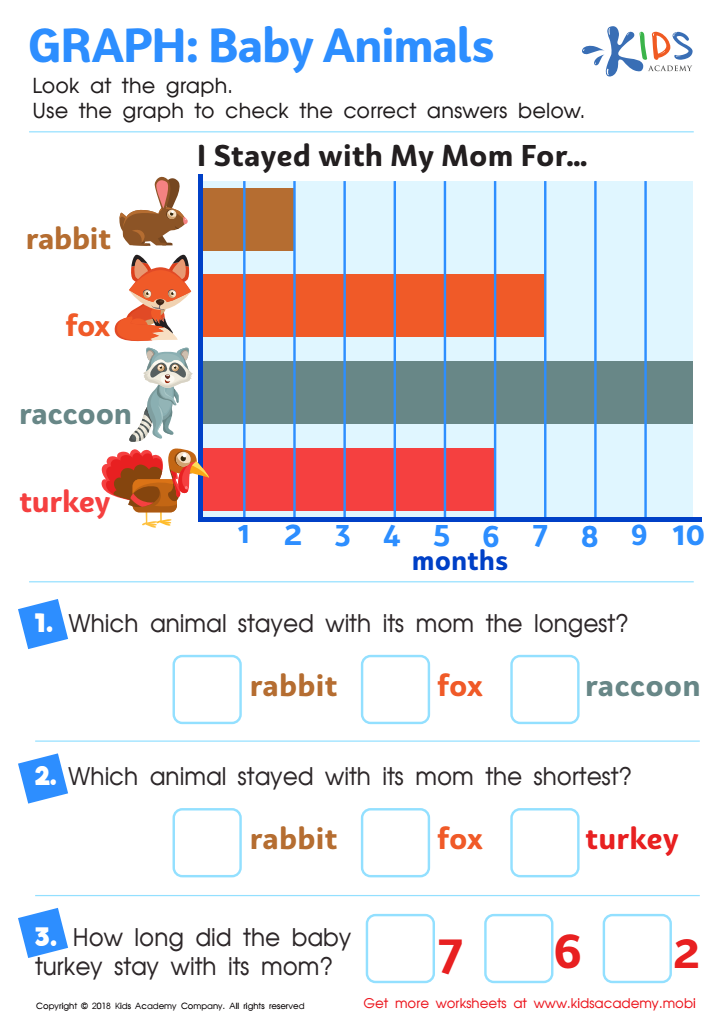
Graph: Baby Animals Worksheet
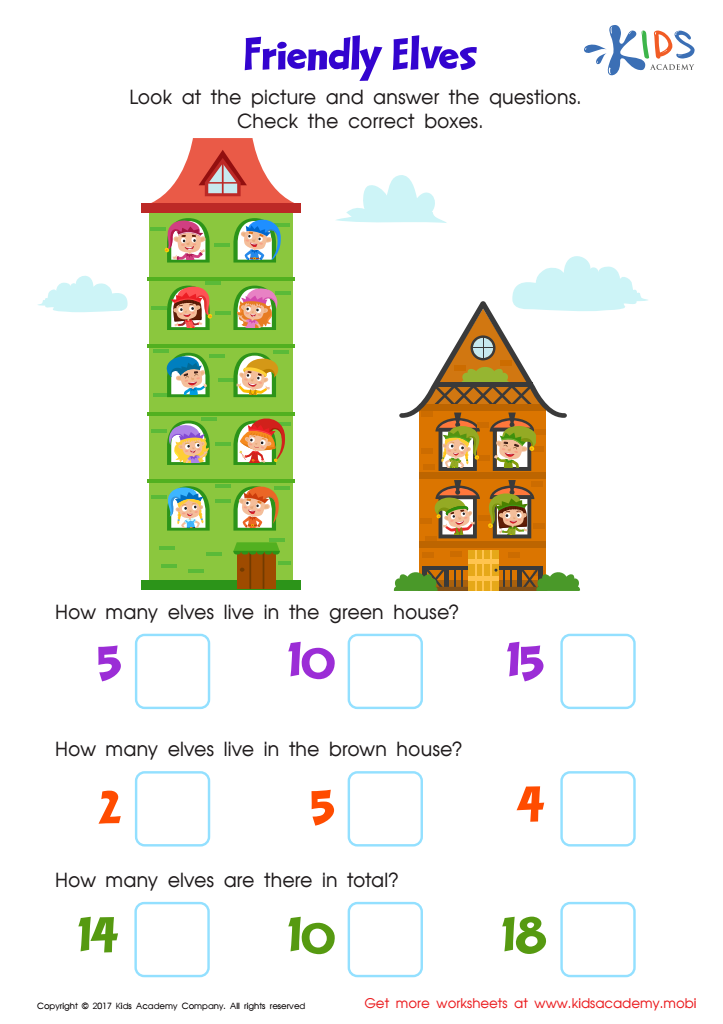
Place Value: Friendly Elves Worksheet
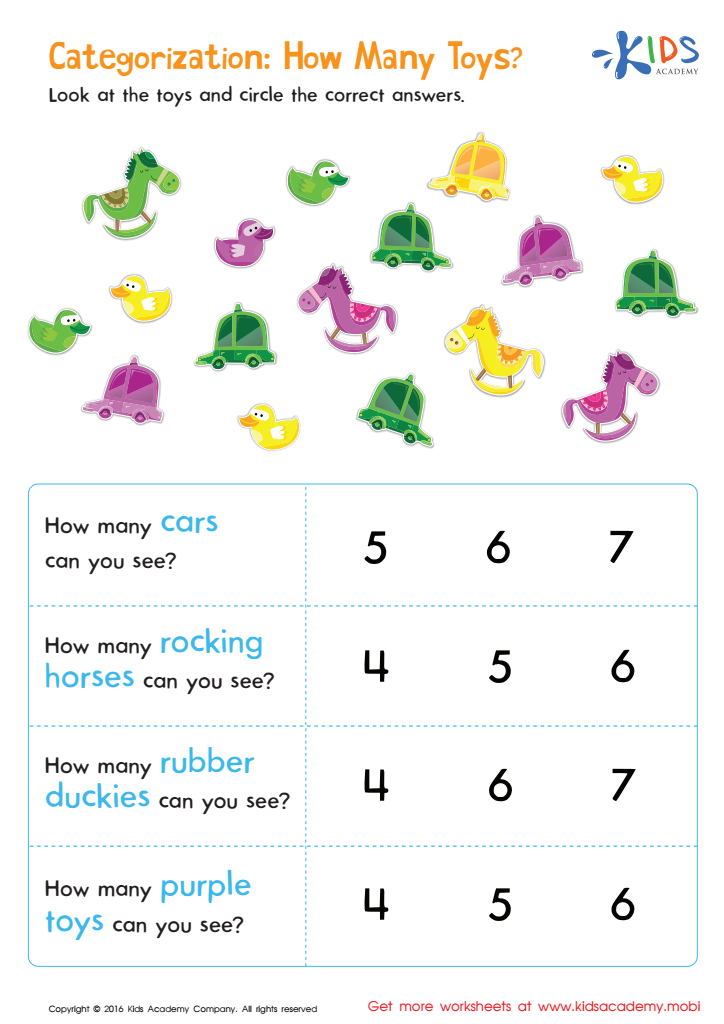
Classifying Toys by Type and Color Sorting Worksheet
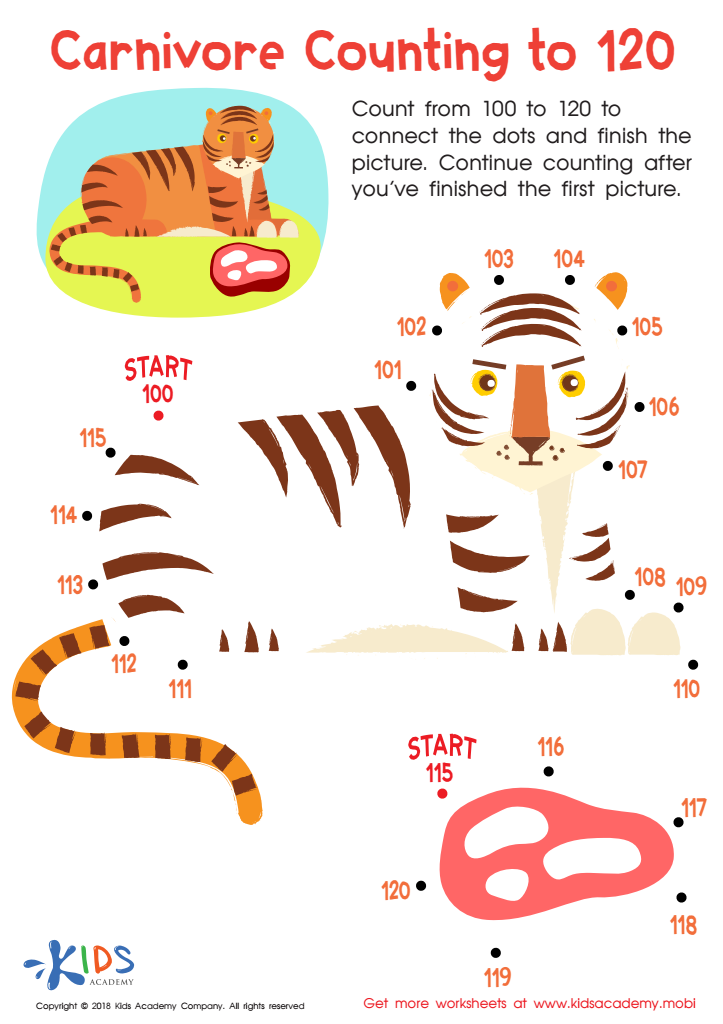
Carnivore Counting to 120 Worksheet
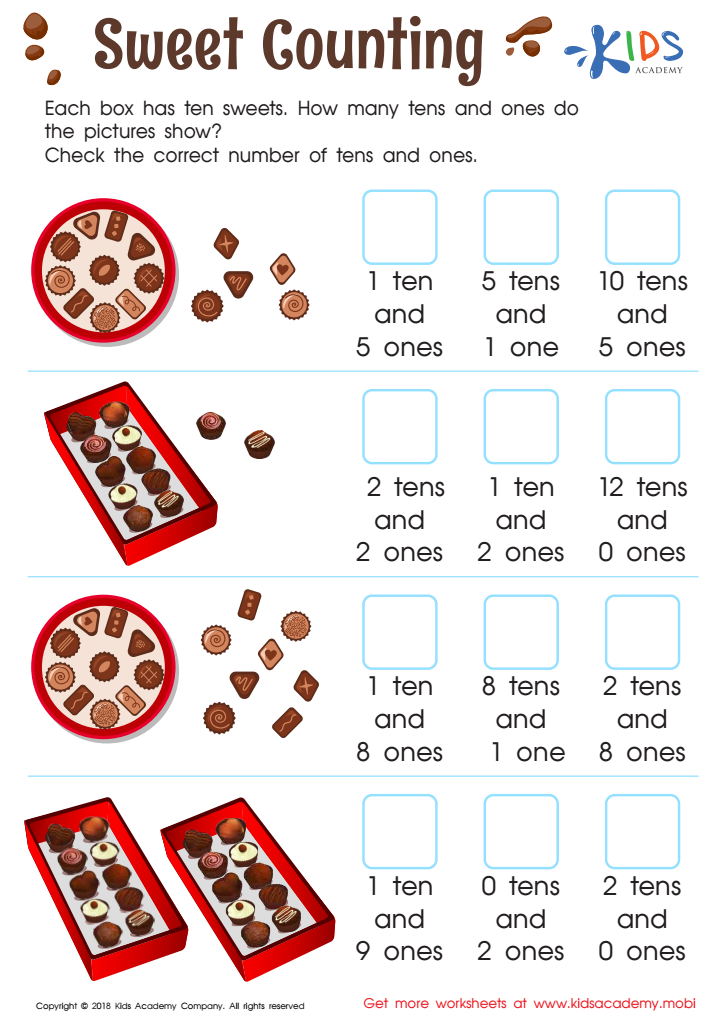
Sweet Counting - Part 2 Worksheet
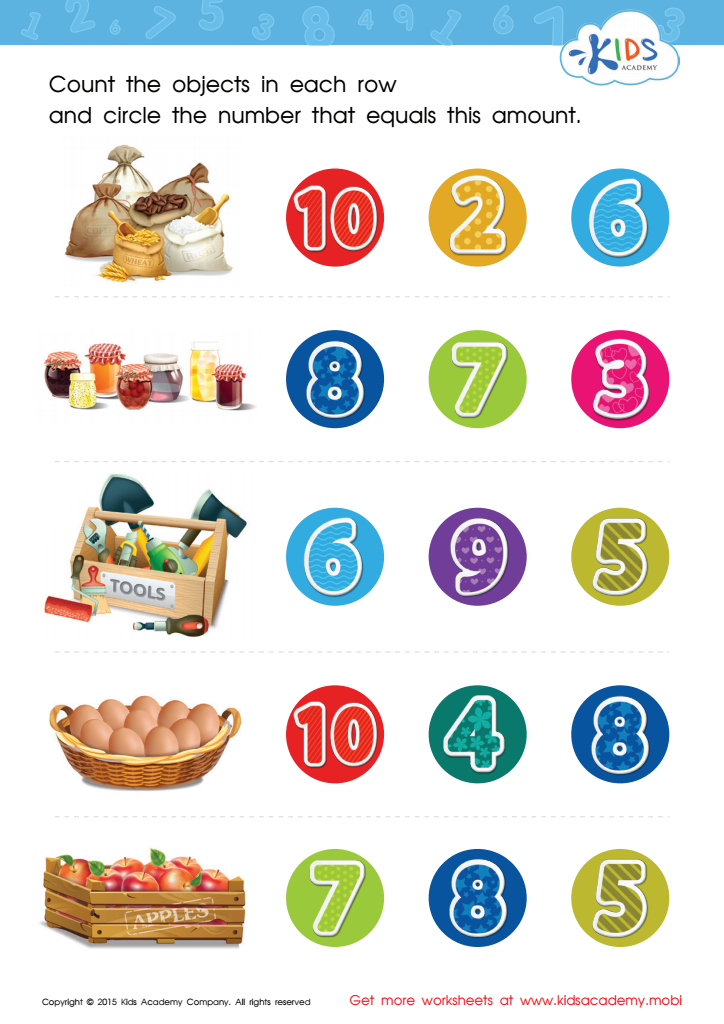
Count and Match 6 – 10 Math Worksheet
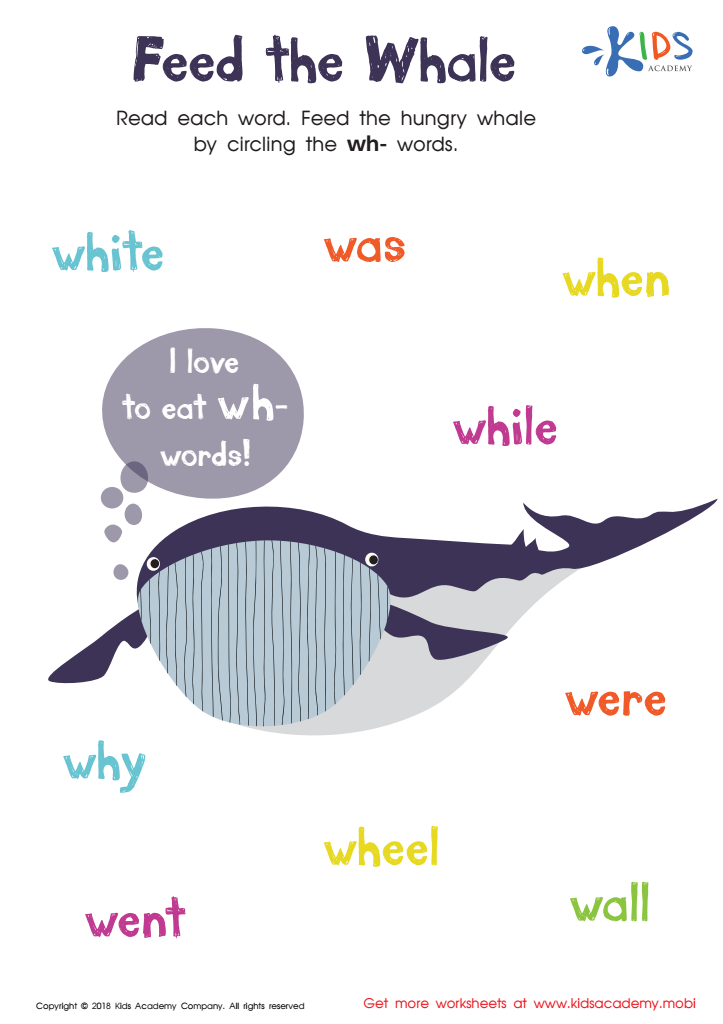
Feed the Whale Worksheet
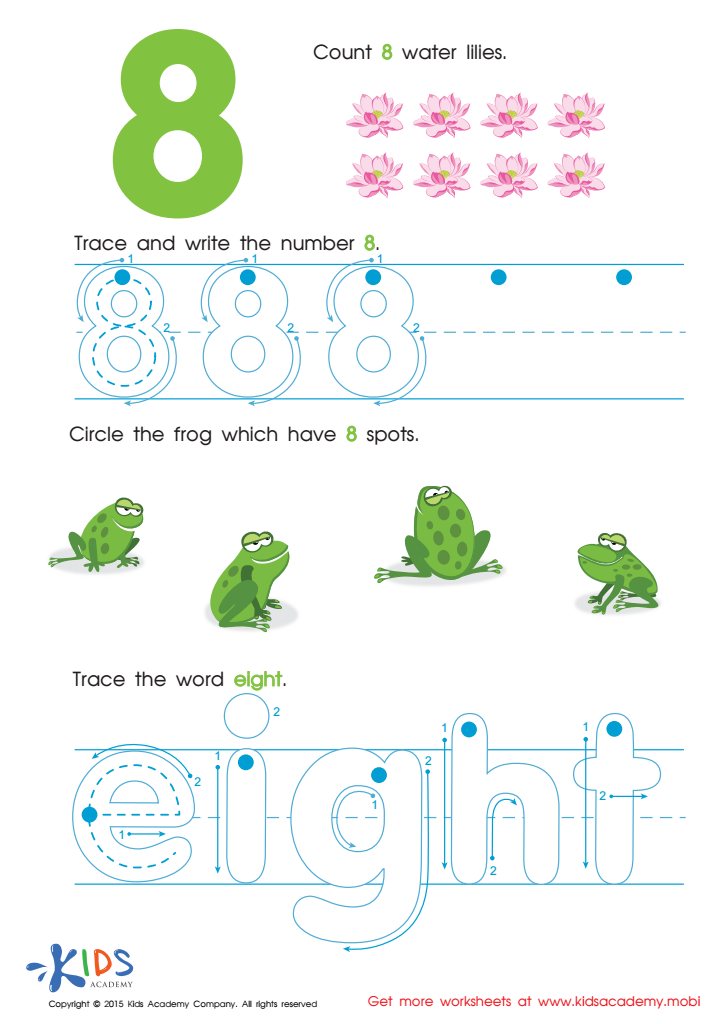
Learn Number 8 Easily Worksheet
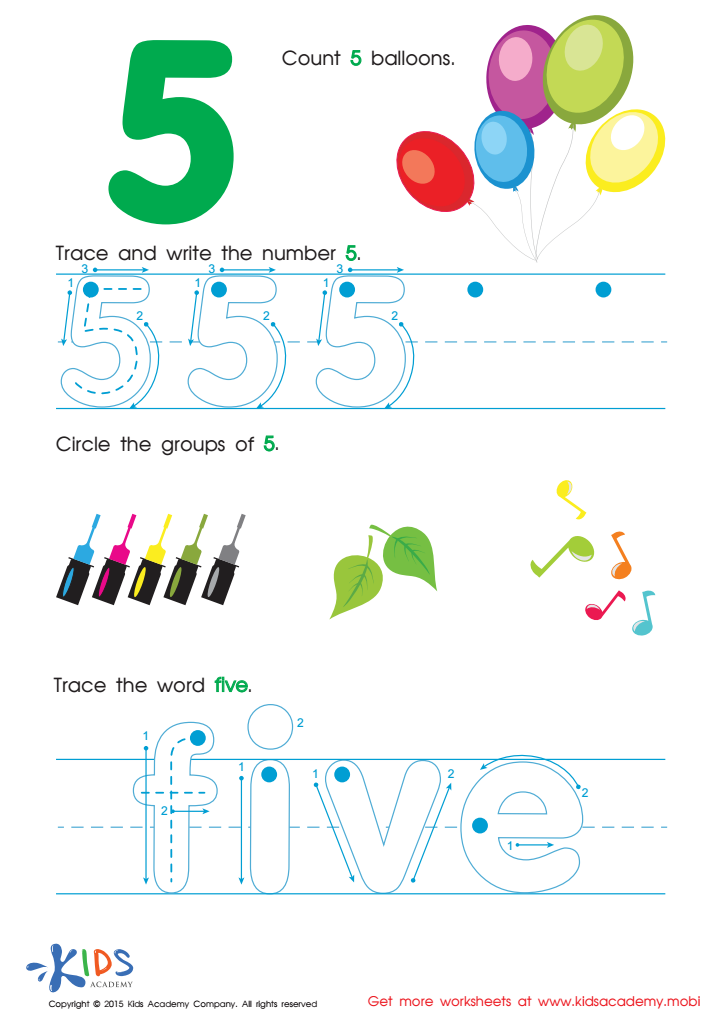
Practice Writing Number 5 Worksheet
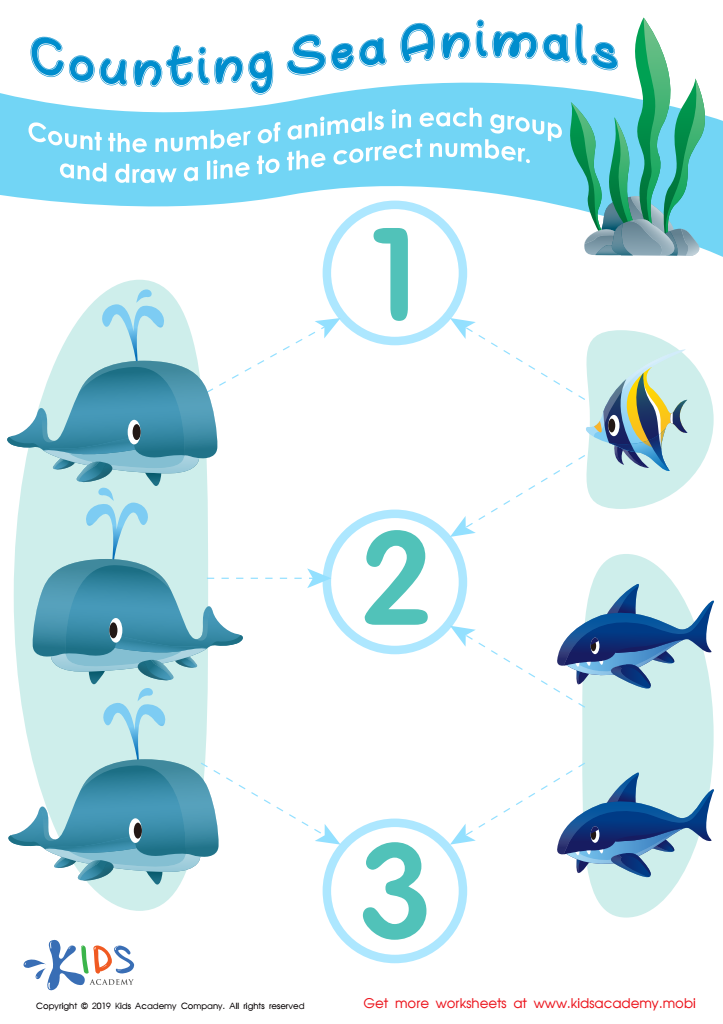
Counting Sea Animals Worksheet
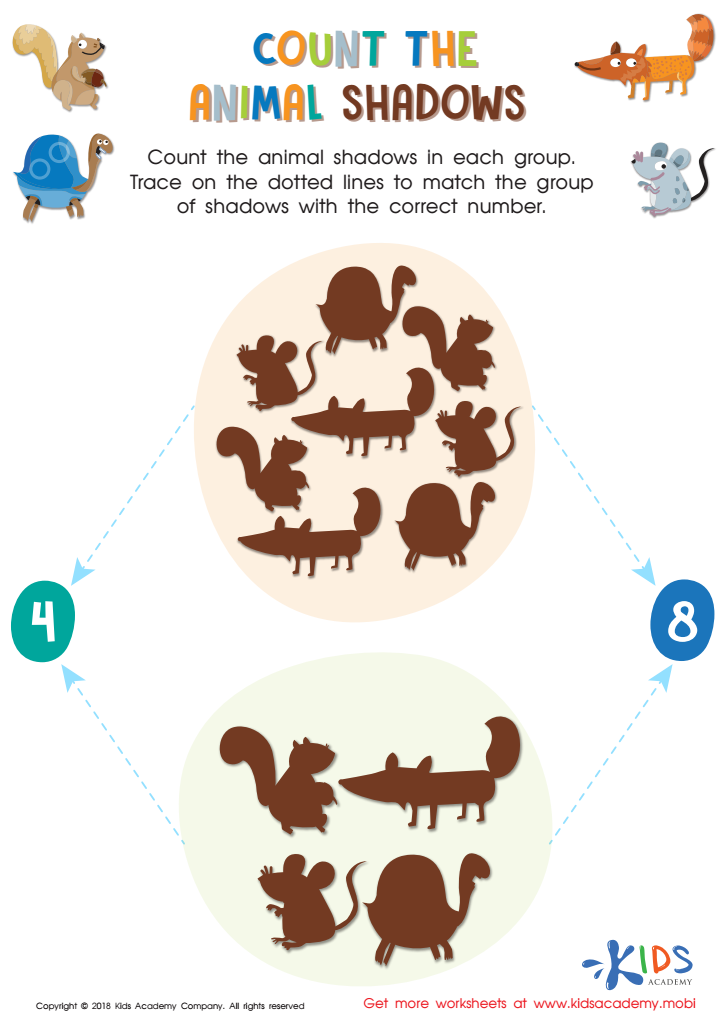
Count the Animal Shadows Worksheet
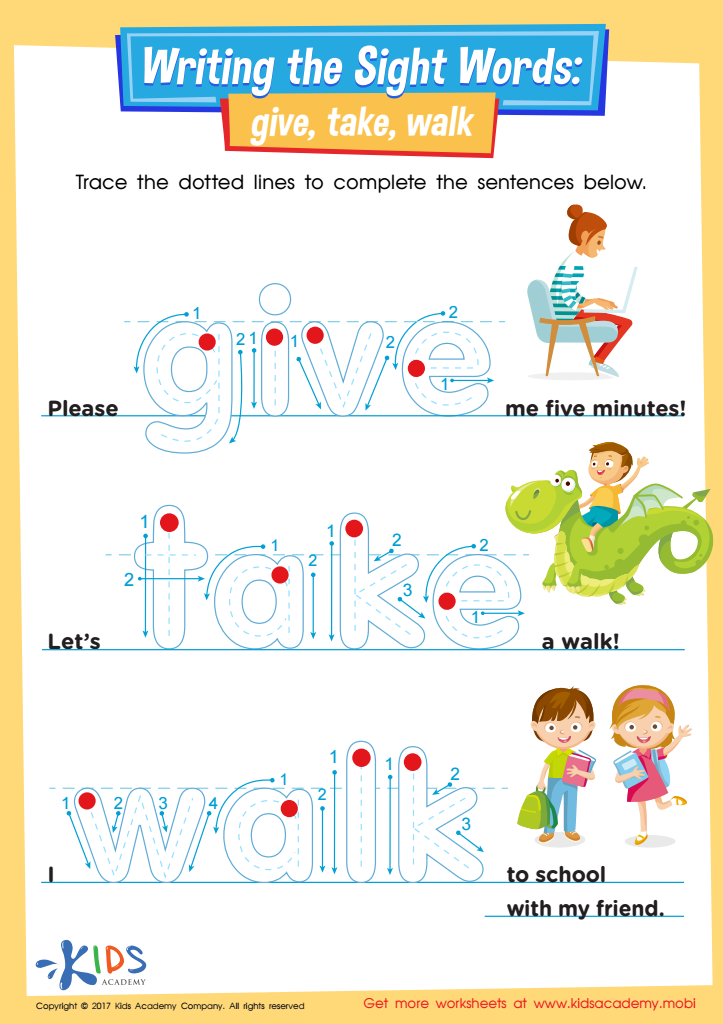
Give, Take, Walk Printable Sight Words Worksheet
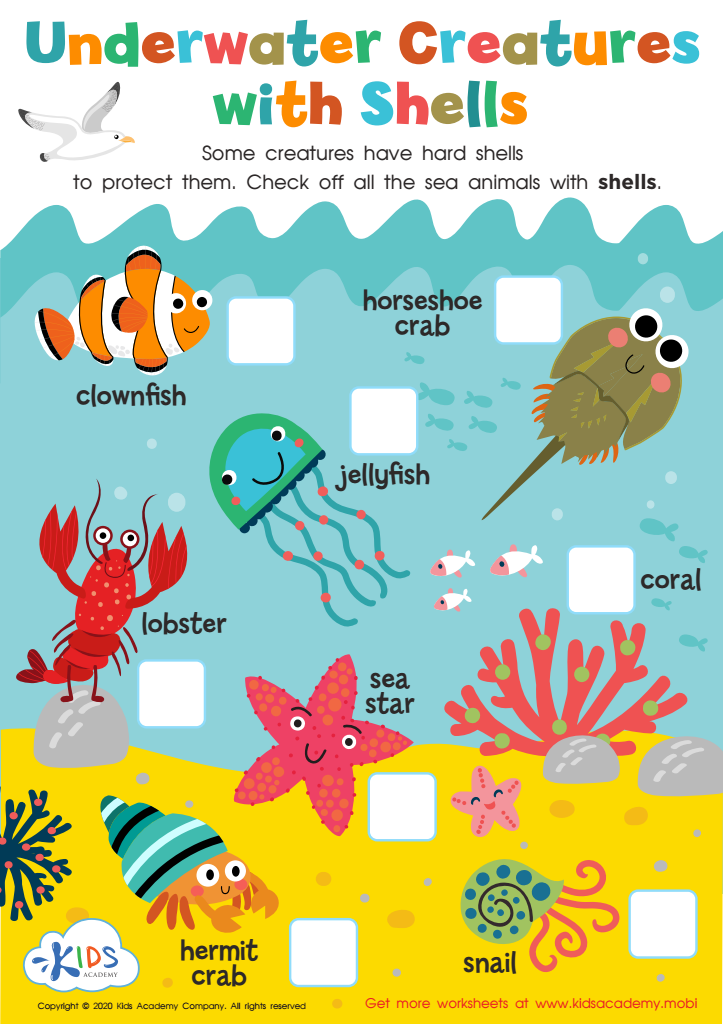
Underwater Creatures with Shells Worksheet
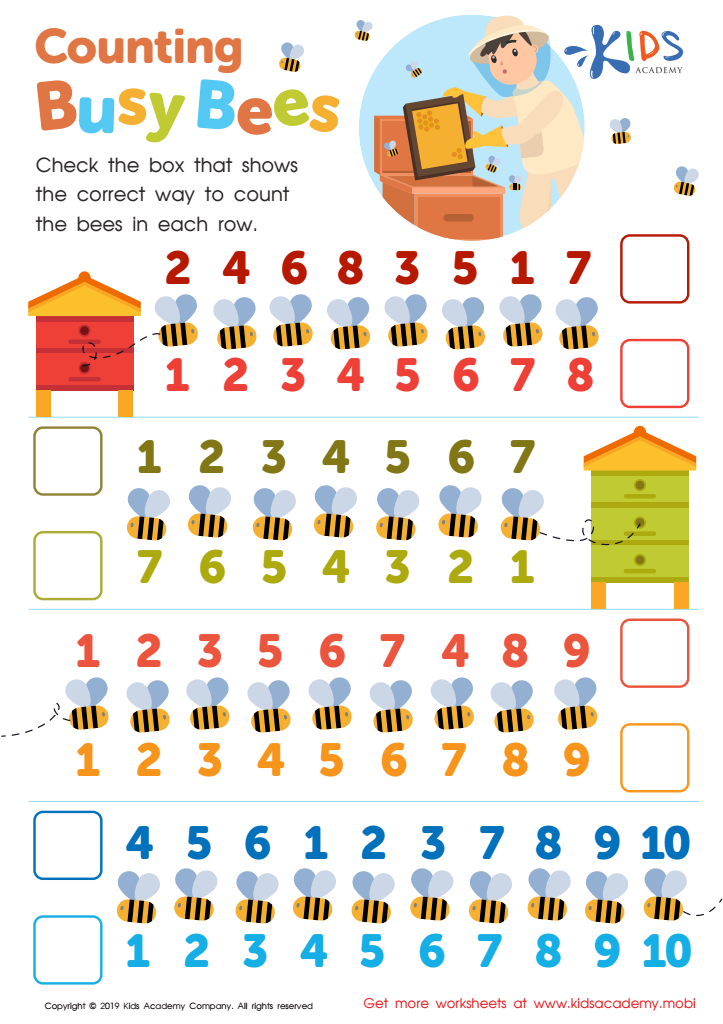
Counting Busy Bees Worksheet
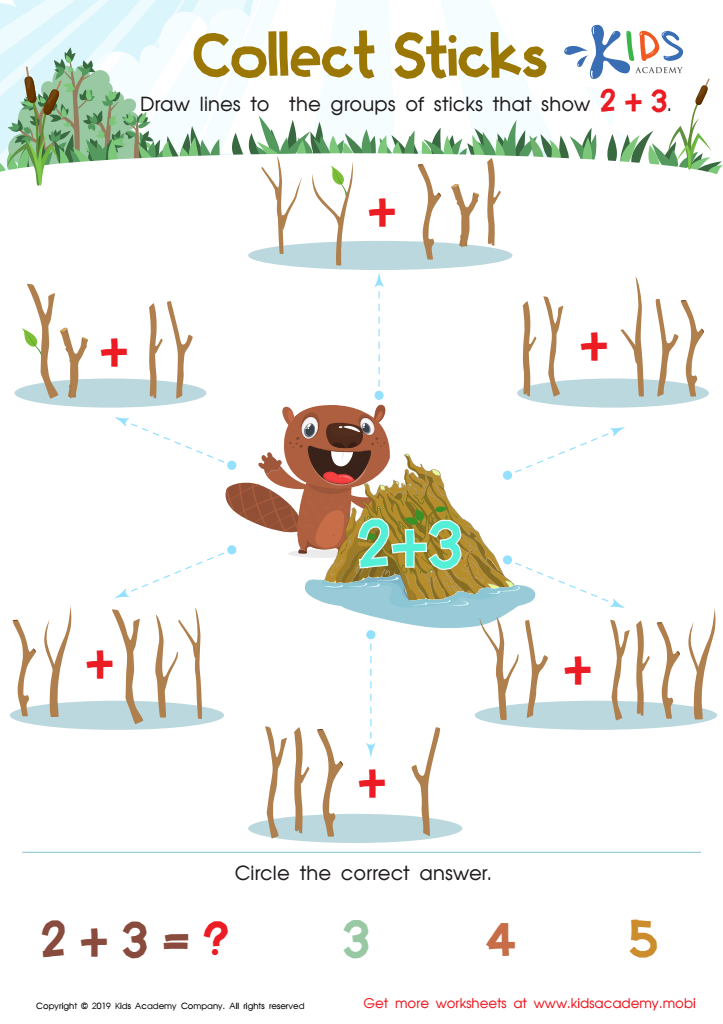
Collect Sticks Worksheet

Easter: Easter Eggs Worksheet
 Assign to My Students
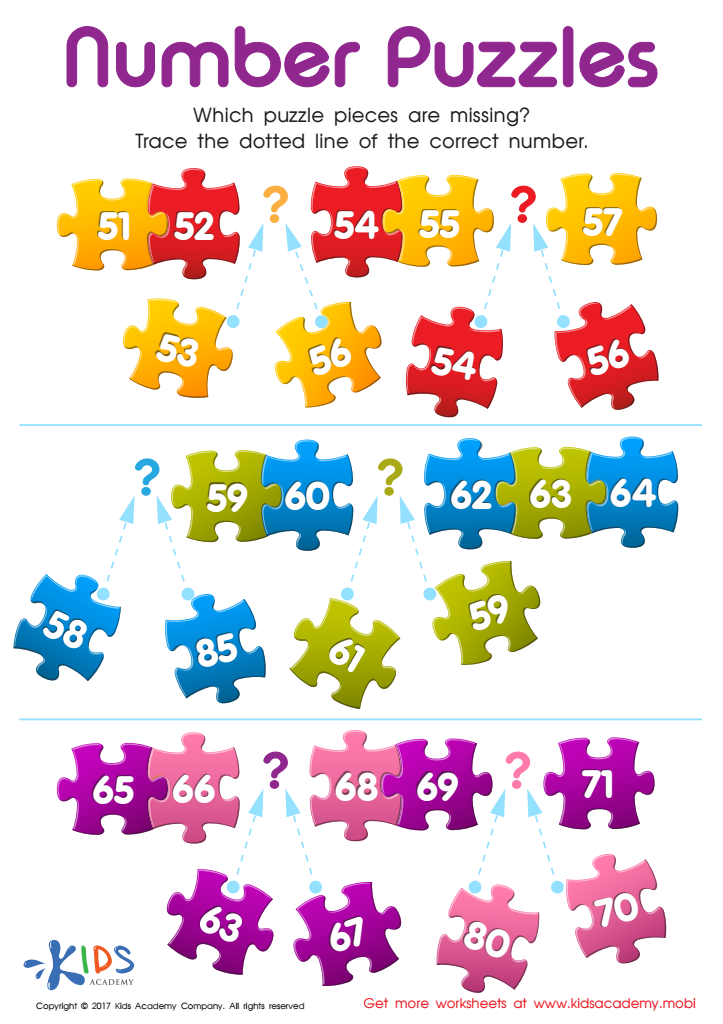
Number Puzzles Worksheet
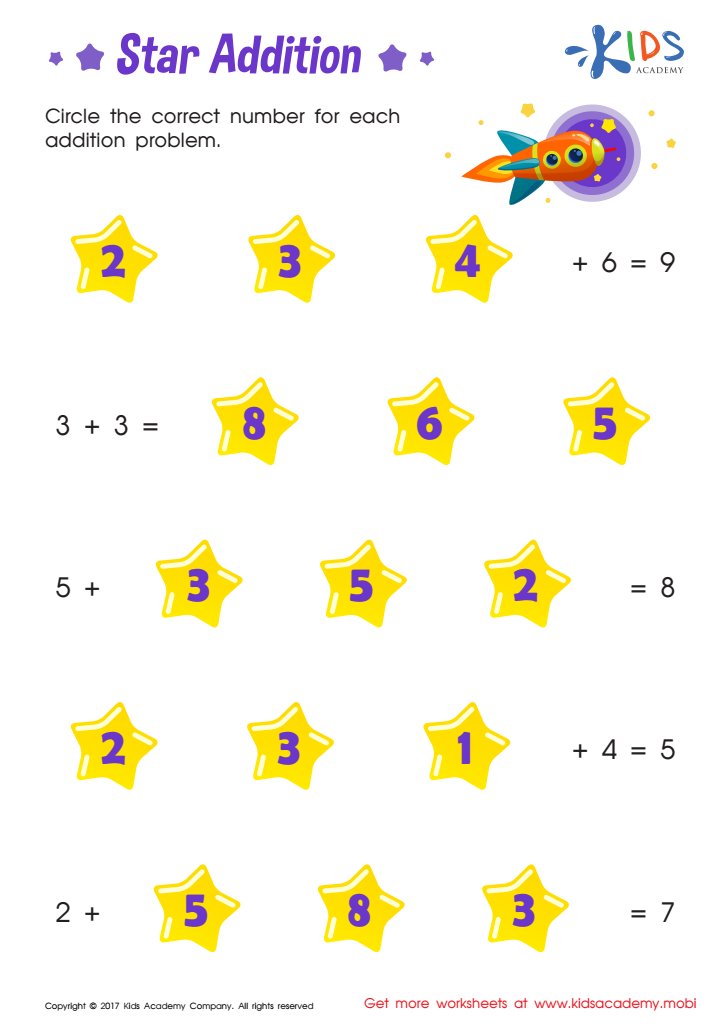
Star Addition Printable

Count and Match Vegetables 2 – 8 Math Worksheet

Count and Match Vegetables and Points Math Worksheet
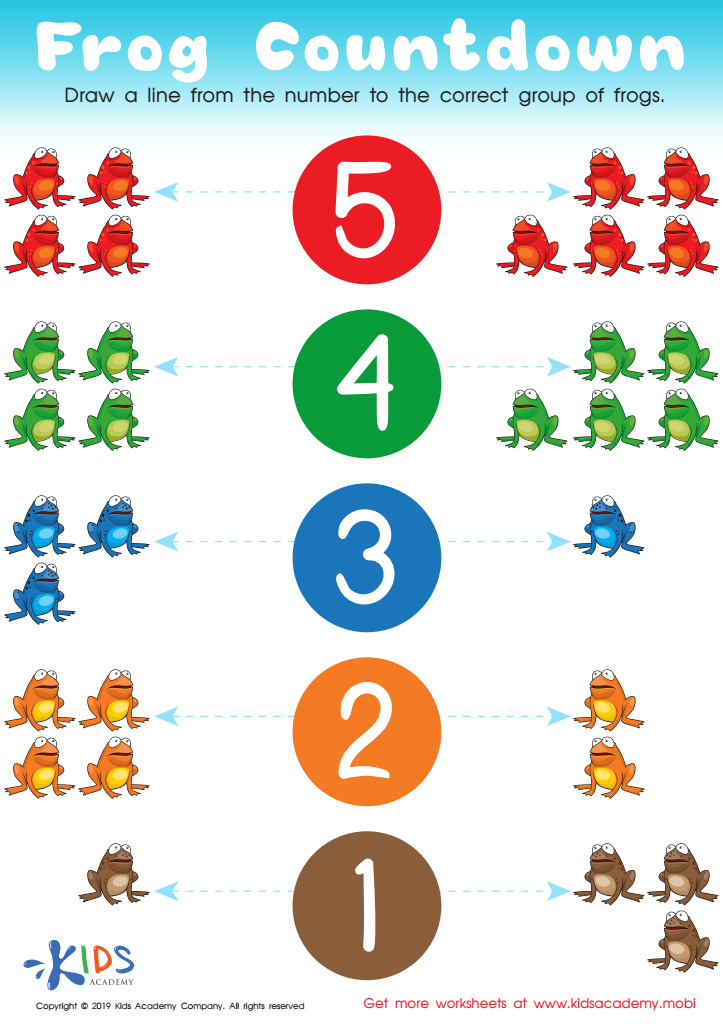
Frog Countdown Worksheet
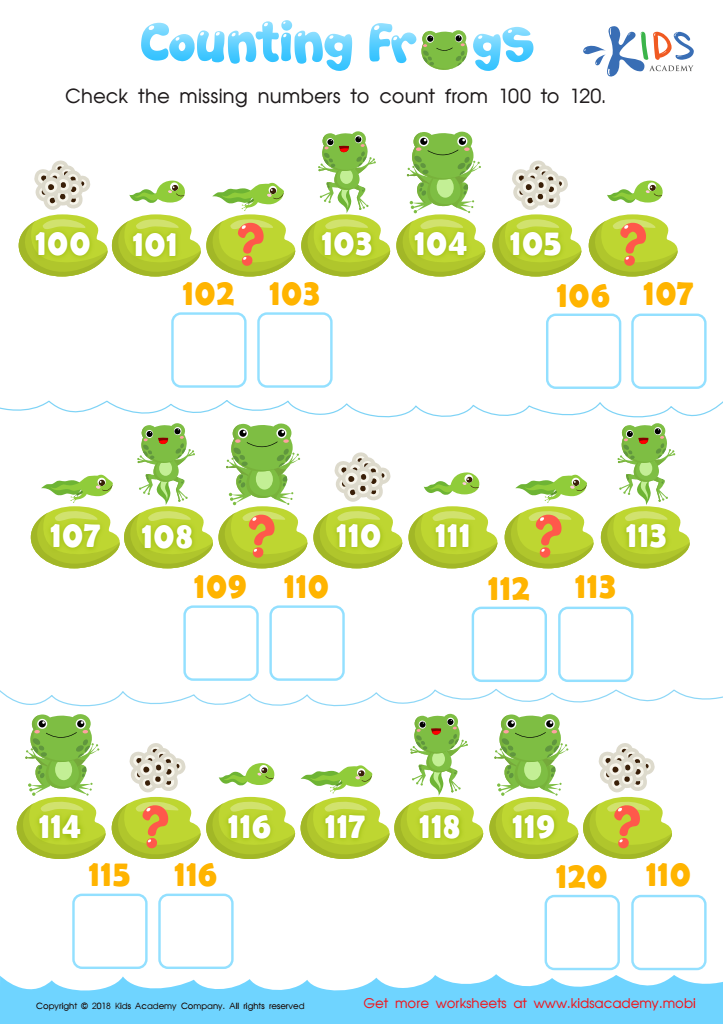
Counting Frogs Worksheet
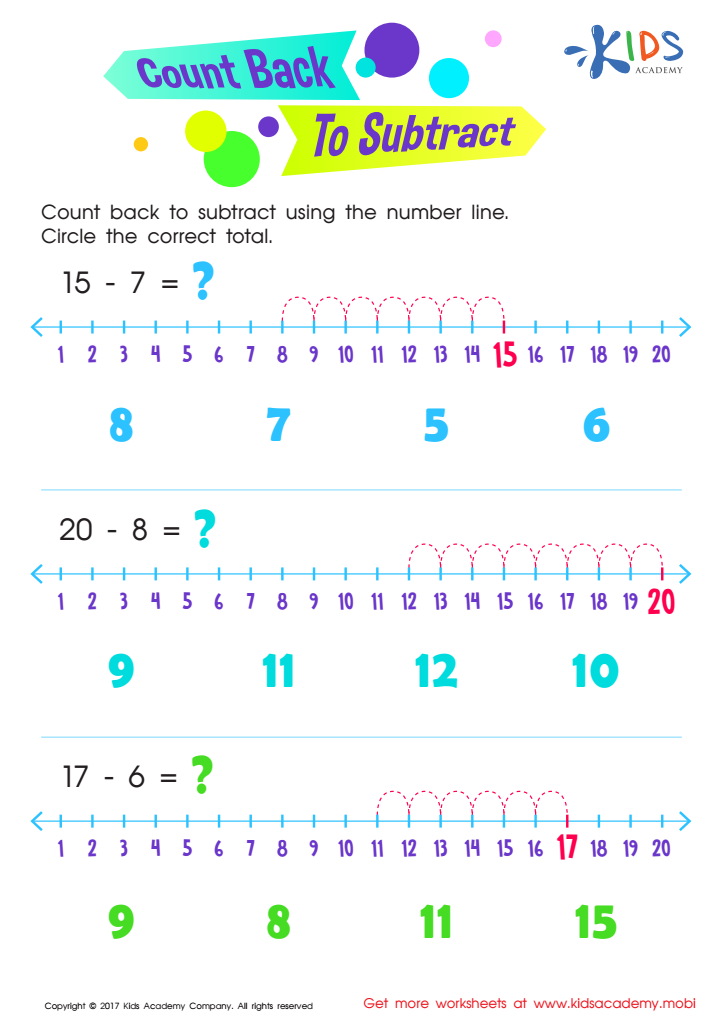
Count Back to Subtract Substraction Worksheet
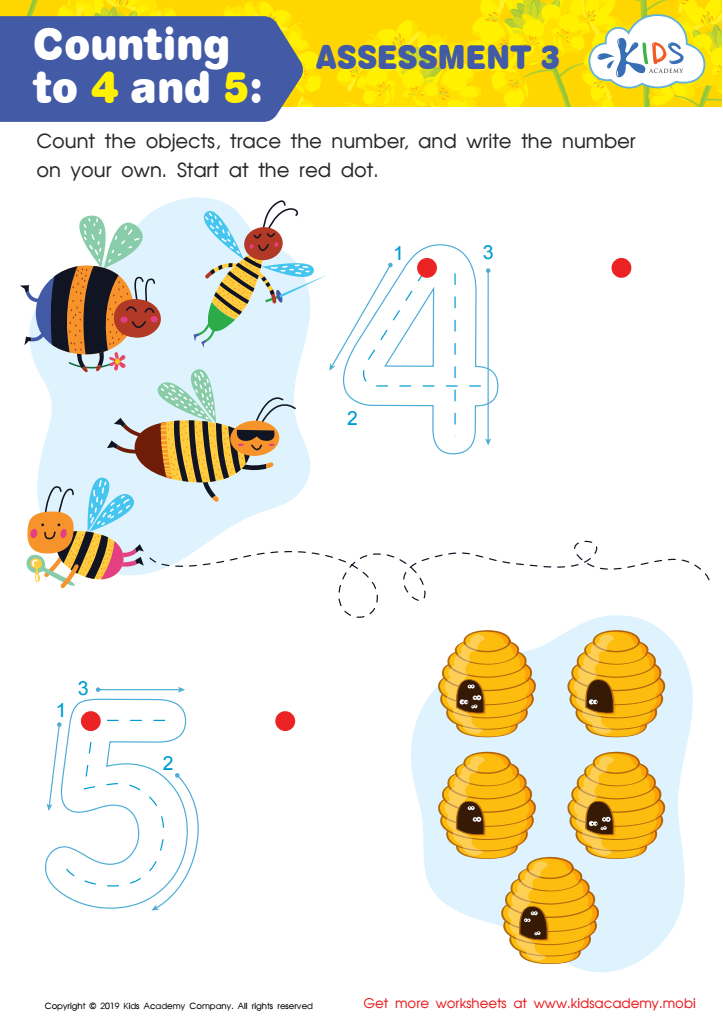
Counting to 4 and 5: Assessment 3 Worksheet


.jpg)





Counting skills are foundational for early childhood development and are crucial for mathematical understanding as children grow. For ages 3 to 6, developing these skills supports cognitive growth, enhances problem-solving abilities, and promotes critical thinking. When children learn to count, they also grasp the concept of quantity and can begin to understand more complex mathematical ideas in later years.
Parents and teachers should prioritize counting skills because they help foster a child's confidence and independence. Counting is often used in everyday situations, such as during playtime, snack time, or while organizing toys, making it a natural part of their learning experiences. Engaging children in counting activities not only helps develop numerical competence but also strengthens language skills, as they begin to articulate numbers and discover patterns.
Furthermore, strong counting skills enhance a child’s ability to access the broader curriculum, preparing them for subjects like science, technology, engineering, and math (STEM). Early intervention and support in counting can prevent future challenges in math education. Ultimately, promoting counting skills in early childhood lays the groundwork for successful lifelong learning and academic achievement, making it a vital focus for both parents and educators.








